
Big oil is on the move. there’s a rush to exploit new sources of ‘unconventional’ natural gas via hydraulic fracturing – or ‘fracking’. The environmental price tag, as Joyce Nelson reports, is steep.

Warning: drink at your peril! Tap water drawn from aquifers that have been contaminated by fracking is so full of toxic chemicals that it can be set alight.
Caution: flammable water
I was getting horrible burns and rashes from taking a shower and then my dogs refused to drink the w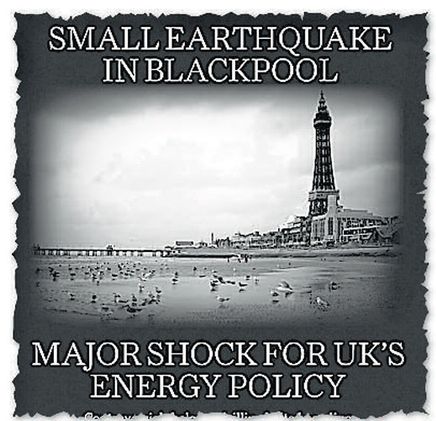 ater…
ater…
In North America, shale gas has become increasingly controversial because of fracking. Huge volumes of water are mixed with sand and dozens of toxic chemicals like benzene, toluene and xylene, and then injected under extreme pressure to shatter the underground rock reservoir and release gas trapped in the rock pores. Each ‘slick-water frack’ uses nearly 20 million litres of freshwater. The toxic chemicals mixed in the water endanger groundwater aquifers and threaten to pollute nearby water-wells. With horizontal drilling, a well can be fracked more than a dozen times, making the fractures extend several kilometres………..
Filmmaker Josh Fox found the same thing happening across the US in many of the 34 states where fracking is taking place. His feature-length documentary, Gasland, won a Special Jury Prize at the Sundance Film Festival and was nominated for an Academy Award this year.
Gasland shows a man setting his water alight and people in 10 different states talking about how their communities were ruined by hydraulic fracturing. One gas company recently bought out the town of Dimock, Pennsylvania, for $4.1 million because fracking made the water completely undrinkable. Fox calls his documentar

y ‘a public health story’ because ‘health problems throughout these regions are really rampant’……..
In Texas, Oklahoma, Arkansas and West Virginia over the past two years, almost 1,000 small-to-medium-sized earthquakes are being investigated as ‘induced earthquakes’ caused by nearby fracking and wastewater disposal wells.
Meanwhile, the reputation of shale gas – as a clean fossil fuel that could last for a century – is rapidly deteriorating. In January, new research by the EPA found that greenhouse gas emissions from fracking are almost 9,000 times higher than previously calculated, because of methane emissions. And some petroleum geologists are now saying that because the wells deplete so quickly shale gas represents only about seven years’ supply in North America.
Given the consequences it’s no wonder the industry is fretting about its public image. As Kevin Anderson, Professor of Energy and Climate Change at the University of Manchester’s Tyndall Centre, puts it: ‘The only safe place for shale gas is in the ground.’…
On the fracking radar
Some countries targeted for shale gas development.
| Countries | Companies interested |
| France | Elixir Petroleum Ltd, Vermillion Energy, Toreador Resources |
| Poland | ConocoPhillips, ExxonMobil, Talisman Energy, Chevron |
| Indonesia | BP |
| China | Royal Dutch Shell, Chevron, ConocoPhillips |
| Australia | ConocoPhillips, Origin Energy Ltd, BP, Statoil, Chesapeake, Sasol |
| Nigeria | ExxonMobil |
| Hungary | ExxonMobil |
| Germany | ExxonMobil |
| Austria | OMV |
| Ukraine | Royal Dutch Shell |
| Sweden | Royal Dutch Shell |
| South Africa | Statoil, Chesapeake, Sasol |
| Algeria | BP |
| India | Statoil, Chesapeake, Sasol |
| New Zealand | Statoil, Chesapeake, Sasol, Energy Corp of America |
Joyce Nelson is a freelance writer and researcher based in Toronto.

 The Free