
“The degree of civilization in a society can be judged by entering its prisons.”
— Fyodor Dostoyevsky
Dominating most prison colonies is a type of punishment not handed down by any judge: the denial of the right to human dignity.
Nadya and Masha, the last 2 Pussy Riot to be released, have gone back to Russia and are have set up Zona Prava (Zone of Rights) , which campaigns against the horrific penal system.
Nadya and Masha are veterans of art protest group and Pussy Riot and have spent over a year in jail on flimsy charges, really for ridiculing the rampant misogyny and corruption of the Russian state and patriarchal religious leaders.
Though widely hated and attacked they represent feminist and common sense views of a growing youth culture across Russia. Refusing invitations by rich and famous to stay in the west they have returned to Russia, where their lives and families are in danger, to work against the criminally inhumane prison system they experienced themselves.
In March, a group of young men assaulted Tolokonnikova and Alyokhina in the city of Nizhny Novgorod, pelting them with stones and dousing them with paint and chemicals. They were hospitalised – Tolokonnikova’s eye was burned by the chemicals, and Alyokhina suffered a concussion.
Zona Prava (Zone of Rights) was founded by Pussy Riot members Nadya Tolokonnikova and Masha Alekhina upon their December 2013 release from prison in Russia.The goal of Zona Prava is to aid those who may be deprived of liberty in camps and prisons, but are not willing to be stripped of their dignity.Zona Prava gives support to those who are ready and willing to fight for their rights.
The organization provides information, legal representation, safety monitoring, advocacy and oversight.“We begin with the camps, but are convinced that if we help the convicted to find a legal manner to protest their enslavement, if we can give a voice to what is now the most disenfranchised social group, we will make a great step towards ensuring that we all find our voice, and learn to defend our opinions and our rights.” For more information, visit: Zona Prava
Russian feminists fight system holding 700,000 – largest per capita prison nunber after the US.

Activists from punk band Pussy Riot are released from a police station in Sochi after protesting abuses [EPA]
Moscow, Russia – After spending almost two years in jail for performing their “punk prayer” against Russian President Vladimir Putin at Moscow’s main Orthodox cathedral in 2012, two young women from the feminist protest band Pussy Riot chose not to go on a world tour or settle somewhere in the West to escape further persecution.
It was a surprising move, considering the international outcry and support from Western leaders and pop icons such as Paul McCartney and Madonna that followed the band members’ arrest and conviction. Their trial and a hysterical media campaign in government-controlled media that branded them “blasphemers” were widely seen as orchestrated by the Kremlin and Russia’s powerful Orthodox Church.
But jail changes people – especially in Russia, where figures such as communist dictator Joseph Stalin and novelist Alexander Solzhenitsyn found their true vocation only after doing hard time behind bars. Russia’s current penitentiary system is a successor of the Gulag Archipelago, created by Stalin, and described by Solzhenitsyn as the place where abuses such as torture, rape and suicide are part of daily life.
So, after getting out of jail just days before last year’s Christmas,MariaAlyokhina and NadezhdaTolokonnikova decided to use their international fame to improve Russia’s penal system, an unwanted home to some 700,000 men and women, the world’s largest per capita prison population after the US.

Lawless prisons
They established a human rights group Zona Prava (zone of rights), and Media Zona (zone of media), an online publication that covers the uneasy life of average inmates and the lawlessness of some law-enforcement officers and prison officials.
“You see how people are punished for nothing, how they work at full stretch for 14 hours a day without a chance to wash themselves, to get medical help if they get sick, without a chance to eat normal food,” Alyokhina, a 26-year-old blonde with purple locks in her hair, told Al Jazeera.
“And you see every day and every night how people die and the causes of their deaths are concealed.”
Up to 5,000 inmates die behind bars annually amid a tuberculosis and AIDS epidemic in Russian jails. Some get killed by other inmates, some die of abuses at the hands of the prison administration, some commit suicide, usually by cutting their wrists or hanging themselves, according to international and Russian human rights reports.
But the causes or their deaths are often described as “acute respiratory disease” or a “heat condition”, the reports claim. Only a handful of such cases become known to the public.
Sergei Magnitsky, a whistle-blowing Russian lawyer who uncovered a multimillion dollar tax fraud by government officials, died in a pre-trial detention centre in Moscow in 2009 after being beaten and denied medical assistance for days.
Dangerous activism
Before forming Pussy Riot, Alyokhina and Tolokonnikova were part of War, a provocative art group that staged obscene and controversial performances that mocked Russia’s security agencies, endemic anti-Semitism, and growing xeno and homophobia. Several group members fled Russia recently fearing persecution for their performances.
And then there was Pussy Riot – a collective of about a dozen young women who hid their faces and identities behind theirtrademarkbalaclavas, organised spontaneous, unsanctioned performances in public places such as Moscow’s Red Square or Christ the Savior Cathedral, and posted videos with their songs online.
There are attacks on us, thugs come up to us and say, ‘Get out of here for good, or else we’ll beat you up.’ And then they do, because we don’t get out.- Nadezhda Tolokonnikova, Pussy Riot
A switch from protest art to human rights activism seemed strange to many – because rights activists are often seen in Russia as impractical, penniless leftists who risk their lives fighting a Moloch.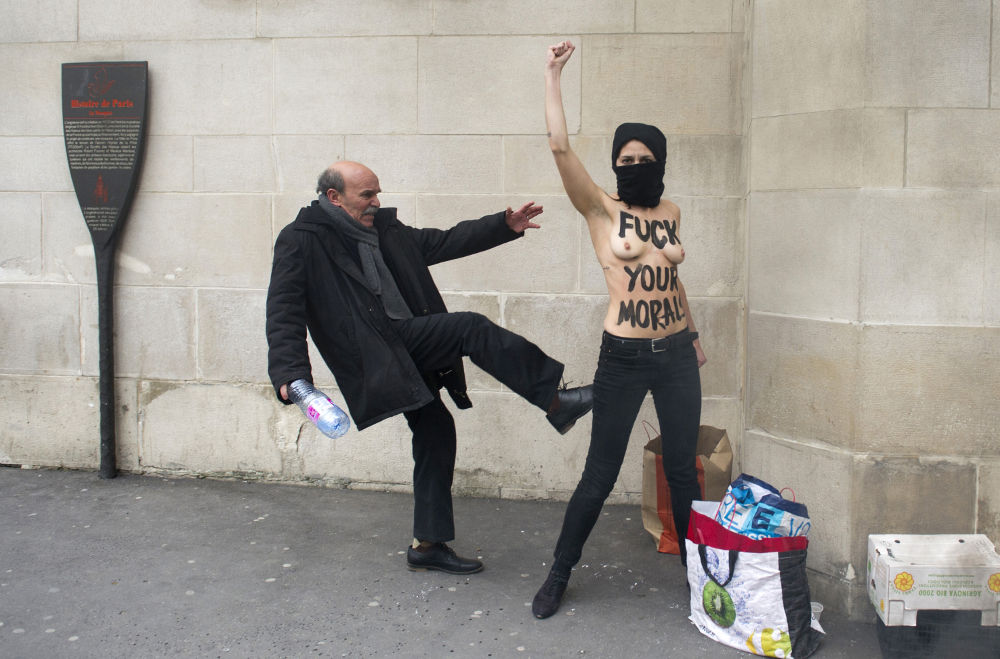
But Alyokhina and Tolokonnikova seem determined to fight the stereotype.
“In Russia, human rights are not a common cause, not a trend, not a fashion, it’s opposition,” Alyokhina said sitting at a table in a Moscow cafe. “And we would like to make human rights issues just as usual as the coffee I’m drinking.”
Pussy Riot’s mass appeal (particularly) in the Western media has seen various famous figures and activists including Madonna, Paul McCartney, Lady Gaga, Björk and many others publicly show support for the group..
This appeal from popular culture has been mostly due to the group’s feminist notions. Pussy Riot see themselves as feminist artists, who have various musical, literary, and political influences, such as Riot Grrl, Bikini Kill, Oi!, Cockney Rejects, and by writers, activists and artists such as Alexandra Kollontai, Judith Butler, Karen Finley, Simone de Beauvoir, Vladimir Bukovsky and many more.
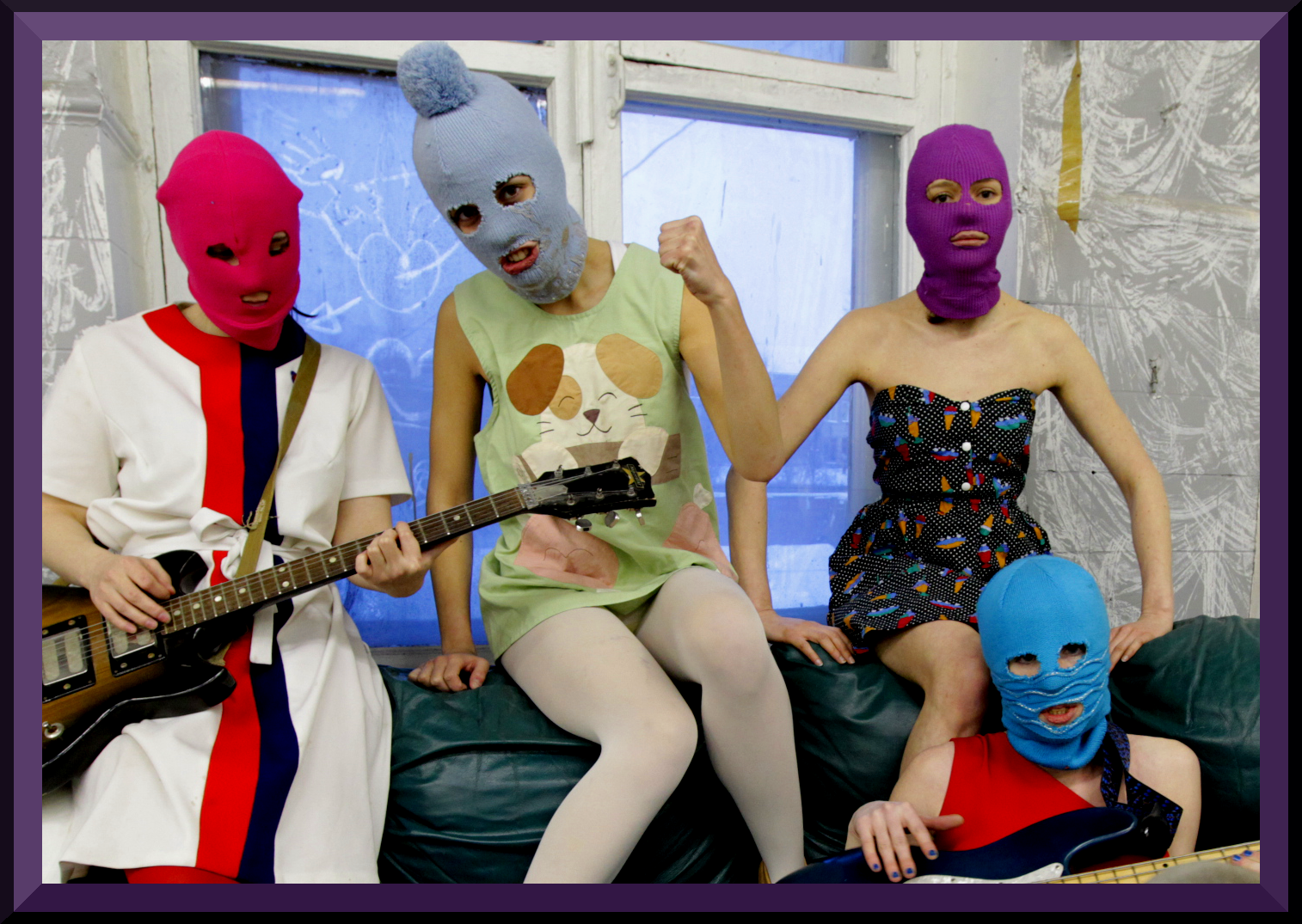 The media tends to overlook the meaning behind Pussy Riot’s feminism; the cultural context of it is vastly different to that of Western feminism. Pussy Riot’s feminism focuses on the repression created by authoritarian regimes that create idealised ideas of sexism, sex and family life.
Pussy Riot make it clear that feminism in Russia is still an issue and that post-feminism has not been achieved as many people would like to believe.[
Pussy Riot’s Russian cultural context must be acknowledged and their feminist notions must be seen differently from those of Western feminism because in places such as the United States, feminism has evolved to general “women’s issues”, whereas in Russia this is not the case.
In Russia feminism is seen as something “that could destroy Russia” as said by Kirill, the head of the Russian Orthodox Church.[45] Pussy Riot are important to the feminist movement and showcase that post-feminism has not been achieved Wilipedia
Being a human rights activist in Russia is, however, just as dangerous as provocative art.
In early December, the office of a Russian human rights group was burned down in the restive southern province of Chechnya. Just days earlier, the group, the Committee Against Torture, reported how masked men set fire to the houses of relatives of Islamist fighters who recently attacked the Chechen capital, Grozny.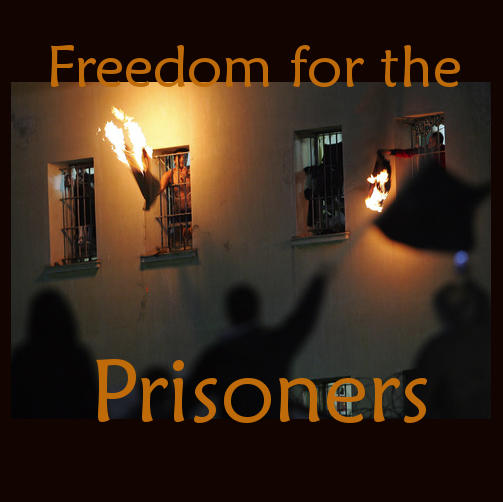
In 2009, Natalya Estemirova, a human rights advocate who reported numerous cases of torture, abductions and extrajudicial killings in Chechnya, was kidnapped and gunned down. Several more human rights activists have been assaulted, detained and fined in Russia in recent years.
Resistance to helping inmates
Despite the danger and official resistance – the projects have been denied registration three times – the former punksters now employ some 15 staffers and a team of lawyers. Based in a cramped office in eastern Moscow, they respond to pleas from behind bars, run a hot-line for inmates, facilitate the release of terminally ill inmates, and file complaints about the inmates’ meagre food supply, medical and heating problems.
But, perhaps the most important thing their projects achieve is to keep the public informed about individual cases, even if they involve inmates with chequered pasts and long criminal records. Russia’s best-known political prisoner, Mikhail Khodorkovsky, knows about the necessity of such public awareness.
“If an inmate is forgotten, anything can happen to him,” the former oil tycoon said in October while addressing Norwegian rights activists, according to a video posted on his website.
Authorities respond to Pussy Riot’s projects the way they banned and stopped the band’s unsanctioned and politicised performances.
“They don’t let us into prisons, our lawyers are literally kicked out of there,”Tolokonnikova, the Bambi-eyed 25-year-old toldAlJazeera. “There are attacks on us, thugs come up to us and say, ‘Get out of here for good, or else we’ll beat you up.’ And then they do, because we don’t get out.”

A Cossack militiaman attacks Nadezhda Tolokonnikova at a protest in Sochi, Russia, last February [AP]
In March, a group of young men assaulted Tolokonnikova and Alyokhina in the city of Nizhny Novgorod, pelting them with stones and dousing them with paint and chemicals. They were hospitalised – Tolokonnikova’s eye was burned by the chemicals, and Alyokhina suffered a concussion.
Although the attackers were identified and videos of the asssault posted online, authorities dropped a criminal case against them in mid-December.
In July, their website survived a massive cyber-attack. Western officials and cyber-security agencies have often accused the Kremlin of organising cyber attacks on the websites of government critics, rights groups and independent media.
“They don’t want us to exist in this country,” Tolokonnikova said. “We are absolutely persona non grata.”
Music not forgotten
Alyokhina and Tolokonnikova frequently go to Western countries to collect donations for their project, meet with dignitaries, discuss the human rights situation and persecution of government critics in Russia. They are also expected to appear in the third season of the House of Cards, a political television series.
And they meet and record with some of their idols.
They shook hands with McCartney and Madonna. They recorded several songs with Richard Hell – a British punk rock pioneer. They are in touch with Le Tigre, a band founded by iconoclastic feminist punk rocker Kathleen Hanna, whose career and views once inspired Pussy Riot.
And yet, they come back to Russia to keep trying to change it from within.
“I am excited and inspired only by Russia,” Tolokonnikova said over a smoothie at a restaurant near her office. “That’s why I can use everything else only as a tool for achieving goals that are simple and understandable – changes and a different Russia.”
main article from Mansur Mirovalev
Al jazeera English, with thanks.

Zona Prava unites people
who want to see changes
in Russia’s prison system
About the project
Zona Prava is already providing legal, psychological, and informational support to prisoners and criminal defendants. We are drafting amendments to laws governing jails and prison work colonies.
We are striving for transparency and humane conditions throughout the Russian justice system.
Dominating most prison colonies is a type of punishment not handed down by any judge: the denial of the right to human dignity.
Two members of our team, Masha Alyokhina and Nadya Tolokonnikova, spent almost two years in Russian jails and prison colonies, from March 2012 to December 2013. They experienced the same kind of humiliations that prisoners are subjected to today, and they are passionate about addressing those problems.
Legal aid
- Legal defense and accompaniment through the process for prisoners whose lives are under threat due to unlawful actions taken by corrections officials, investigators, or judges
- Investigating cases of death in corrections facilities
- Legal consultation over a telephone hotline, and assistance to inmates in filing complaints
- Filing suit against jail and prison administrations on behalf of inmates
- When necessary, aid in filing suit with the European Court of Human Rights and seeing the process through
Informational support
- Collecting and disseminating information about human rights in jails and prison colonies
- Working with the media when prisoners’ rights are violated. Publicizing court hearings and incidents in jails, prison colonies and police stations
- Interviewing inmates and those recently released, officials, relatives of inmates, rights defenders, lawyers, and members of public oversight commissions (POCs)
- Systematizing information about jails and prison colonies in all the regions of Russia, to make corrections facilities more transparent for all citizens
Related Posts
- Actions for 7 jailed for being Anarchists. Campaign Updates.
- anti prison New Year demos. Barcelona
- Amnesty in Putin’s Russia is ‘a Hoax’ says Pussy Riot Upon Release (rinf.com)
- Russian court rejects Pussy Riot parole bid despite plea from Sir Paul McCartney (independent.co.uk)
- Video: Pussy Riot interviewed in prison (dazeddigital.com)
- Paul McCartney: Free Pussy Riot (truthdig.com)
- Pussy Riot member ‘on hunger strike’ (bbc.co.uk)
- Pussy Riot Goes on Trial Monday as the World Watches Uneasily [Pussy Riot] (jezebel.com)
- More Western Rock ‘N’ Roll Solidarity For Pussy Riot (rferl.org)
- Sting, Madonna give support: Putin and Patriarch witch-hunt Pussy Riot (thefreeonline.wordpress.com)
- ‘God is punishing jailed Pussy Riot mothers’ says Patriarch (thefreeonline.wordpress.com)
- Topless Feminist Protest Comes to Tunisia (tunisia-live.net)
- Rise of the naked female warriors (guardian.co.uk)
- STOP billions of attacks on Women: Campaign against Gender Violence
- Anarcha-Feminism! Lets annihalate Patriarchy !
 Pussy Riot’s Punk Prayer: PUT PUTIN AWAY.. Boycott Sochi!
 2 members of punk band Pussy Riot held in Sochi
Pussy Riot joins Freedom Campagn for Cecily

 The Free