
by Elena Martinez From Dossier in CNT newspaper # 424 shared with thanks Translation TheFreeOnline
These days I have just planted my little garden and I’m watching the patches of the tomatoes, the peppers, the zucchini and the chard, a little withered when first planted out. How they stretch and grow green on the ground when I water them.
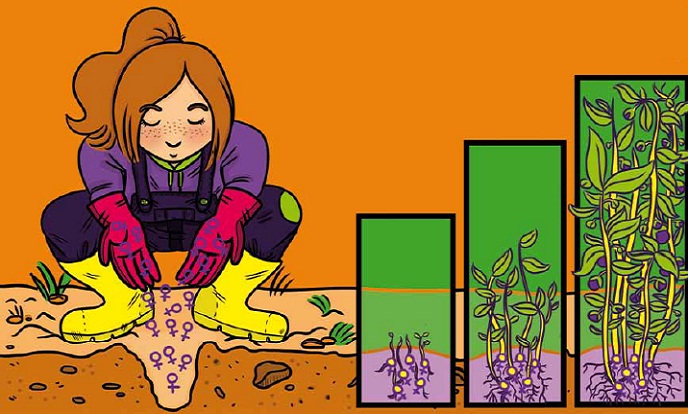
Concepts like food sovereignty, ecofeminism and Rojava come to mind. These are strange days and observing this small garden and watching it grow also helps me to better cope with this situation that seems to never end. It’s like sticking to life, as if this little experience made me feel more intensely this important bond with the earth and with the rest of humanity.
44 years ago the term Ecofeminism arose. And it was coined by a woman who was also an anarchist: Françoise d’Eaubonne, daughter of an Aragonese mother and French anarcho-syndicalist father, who in 1974 related concern for the environment and equality between men and women as the basis of a new society. She is a French writer and thinker who in her book Feminism or Death also introduces the term Phallocracy. ” Phallocracy is at the very base of an order that can only assassinate Nature in the name of profit, if it is capitalist, and in the name of progress, if it is socialist.” No more no less.
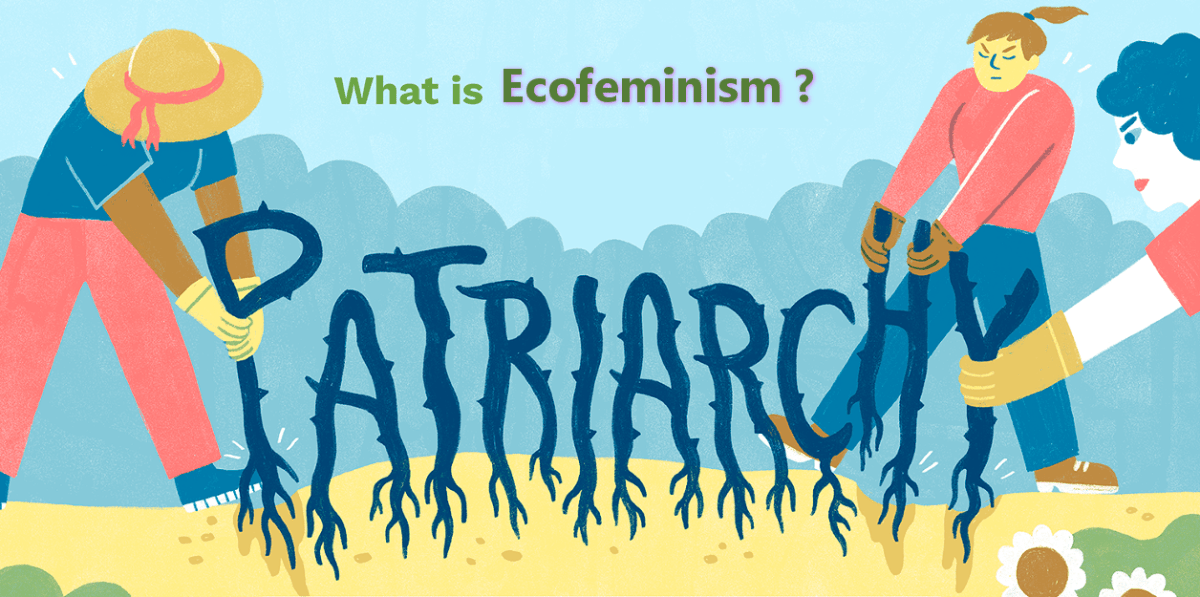
Ecofeminism is a global movement that links ecology and feminism, denouncing the oppression of women and the exploitation of nature and other animals as part of the same logic of patriarchal domination.
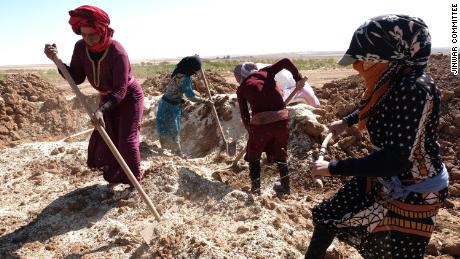
Ecology and feminism make sense in the context of current becoming with an overwhelming force. The Rojava Social Revolution bases its ideas on these principles. It is no longer so much the question of taking the modes of
production, but to radically change them. In Rojava, it is women who organize life. Cooperatives, community gardens, educational experiences, new forms of organization are growing. Always with respect for nature and the environment. They develop collective thinking in Jineology, the science of women.

It was Ynestra King, a high school classmate of Murray Bookchin’s who suggested the idea of that particular historical position of women within this form of male-male domination. It develops Bookckin’s ideas in an ecofeminist sense. She organized the first ecofeminist conference in March 1980 “Women and Life on Earth” where the connections between feminism, militarization, the art of healing and ecology were examined.
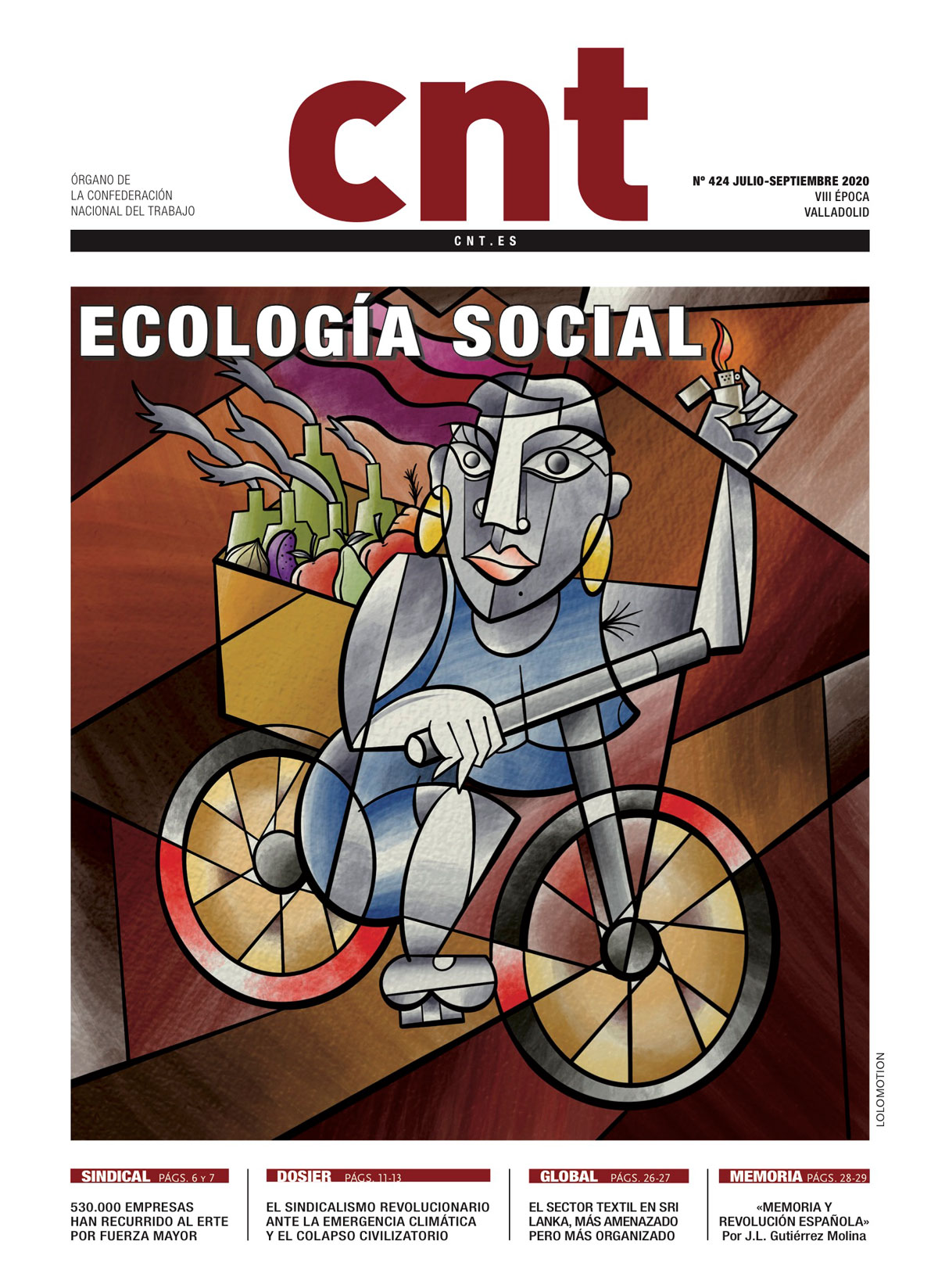
Also the Indian activist Vandana Shiva, in Who really feeds the world ?, addresses the concept of “food sovereignty” and is committed to exploring a model of agricultural justice and sustainability.
The right of peoples to feed themselves and decide what they want to produce, radically collides with neoliberal policies that prioritize international trade. The agricultural system does not seek to feed people, but to produce more.
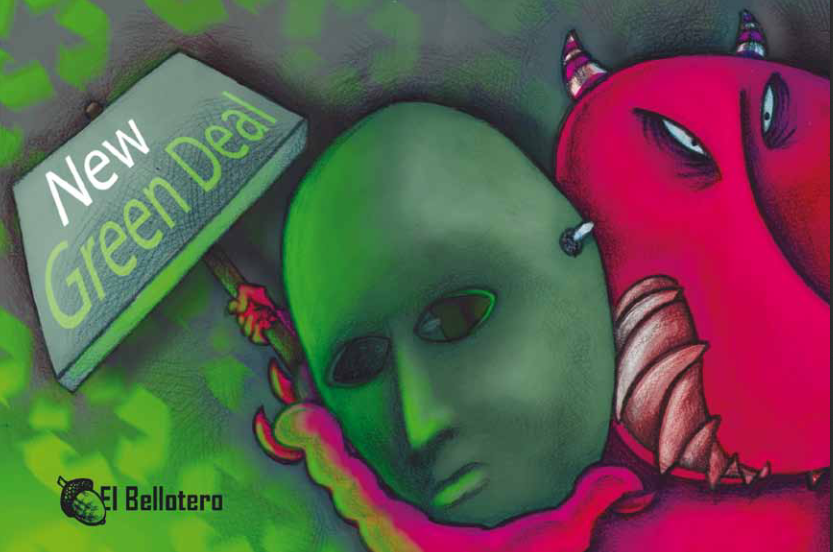
They have not contributed at all to the eradication of hunger in the world. On the contrary, they have increased people’s dependence on agricultural imports, and have reinforced the industrialization of agriculture, thus endangering the planet’s genetic, cultural and environmental heritage, as well as our health.
The role of women in defense of the environment in places as emblematic as

Latin America has been fundamental. It could even be said that on this side of the world there has been a feminization of social struggles.
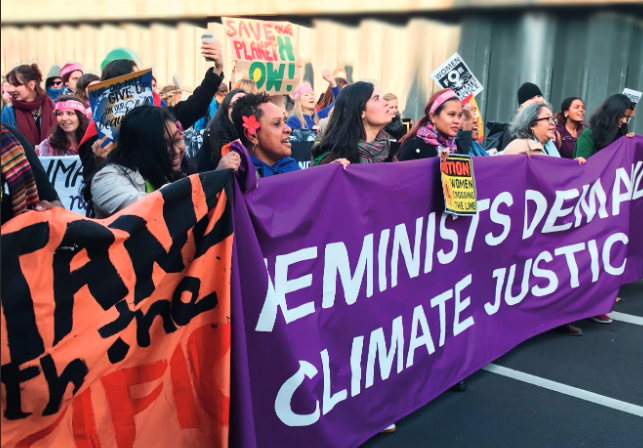
The feminist movement in Argentina, or names such as that of Bertha Cáceres, a Honduran feminist and environmentalist, point highly to the important role of Ecofeminism in organizing against the coming new world order.
The principles of the social economy are intended to increase the resources of societies rather than exploit them, and the principles of equality ensure that the revolution will be feminist or it will not be.

However, this does not mean becoming saviors of the world, nor returning to the primitive concept of the return to the home of women, nor to a mystique of motherhood.
On the contrary. We want to participate in equality building peace. It is current socialization that inundates us with gender roles: housework, care. There is nothing that prevents men from developing capacities for these tasks with as much or more success and affection than any of us.
It is only the discourse of power that adapts the genres to their whim and according to their interests. The aim is to place the emphasis on the individual versus the collective, on competing instead of sharing and cooperating, but that is not the way.
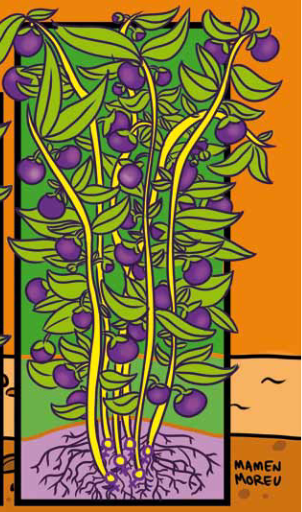
Global warming and its consequences should make us react and get down to business. We are looking for a vaccine that protects us from COVID-19, but we are destroying biodiversity, melting the poles, losing animal species and seeds, burning our forests and jungles, fumigating with pesticides, annihilating all natural protections.
Still doomed to new viruses and catastrophes of all kinds, patriarchal dominance and consumer capitalism prevail that exploit natural resources, animals and people without measure.
If we walk towards collapse, sooner or later we will be in it. Either we abandon this model of domination and exploitation or we will be doomed to disaster.
Take for example the tasks in which we spend our time. Long and unnecessary trips that imply higher levels of stress, high pollution and resource depletion, planned obsolescence, technological dependence, exacerbated consumption.
Ecofeminism proposes a reformulation of everything we understand by work and life. The daily jobs of today do not serve to keep us alive or with a better quality of life, rather on the contrary, we witness the degradation of life.
We cannot remain impassive. We anarchists know very well that if we organize we can conquer impossible things. We don’t have to demonstrate anything, just show it.
The communities that emerged in ’36 are an example of the Social Revolution that moved the world. Now our eyes are tinged with purple and feed on life.
That is why among our messages, between our lines, that word also slips in, which, like so many others, has put the Echo ahead. Ecofeminism. Ecology and Feminism. Two ingredients that teach us a new horizon. As in Rojava. We just have to take action.
[Article originally published in CNT newspaper # 424, Valladolid, July-September 2020. Full number accessible at
https://www.cnt.es/noticias/periodico-cnt-no-424-julio-a-septiembre-2020-dosier-ecologia-social
ORIGINAL EN CASTELLANO

Ecofeminismo y revolución social
por Elena Martínez
En estos días que escribo, acabo de plantar mi pequeña huerta y observo las matitas de los tomates, los pimientos, los calabacines y las acelgas, un poco mustias en los planteros, cómo se estiran y reverdecen ya en la tierra cuando las riego. Se me vienen a la cabeza conceptos como soberanía alimentaria, ecofeminismo, Rojava.
Son días extraños y observar este huertito pequeño y verlo crecer, me ayuda también a soportar mejor esta situación que parece que nunca se acaba. Es como pegarse a la vida, como si esta pequeña experiencia me hiciera sentir más intensamente ese vínculo tan importante con la tierra y con el resto de la humanidad.
Hace ya 44 años que surgió el término Ecofeminismo. Y lo acuñó una mujer que además era anarquista: Françoise d’Eaubonne, hija de madre aragonesa y padre anarcosindicalista francés, que en 1974 relaciona la preocupación por el medio ambiente y la igualdad entre hombres y mujeres como base de una nueva sociedad.

Escritora y pensadora francesa que en su libro El feminismo o la muerte introduce también el término Falocracia. «La Falocracia está en la base misma de un orden que no puede sino asesinar a la Naturaleza en nombre del beneficio, si es capitalista, y en nombre del progreso, si es socialista». Ni más ni menos.
El Ecofeminismo es un movimiento global que vincula ecologismo y feminismo, denunciando la opresión hacia las mujeres y la explotación de la naturaleza y de los demás animales como parte de la misma lógica de dominación patriarcal.
Ecología y feminismo cobran sentido en el marco del devenir actual con una fuerza arrolladora. La Revolución Social de Rojava fundamenta su ideario en estos principios.
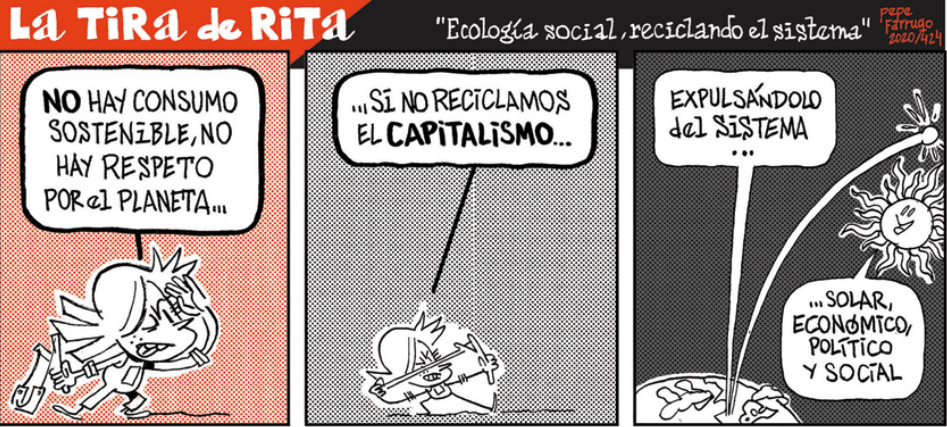
Ya no es tanto la cuestión de tomar los modos de producción, sino de cambiarlos radicalmente. En Rojava, son las mujeres las que organizan la vida. Crecen cooperativas, huertas comunales, experiencias educativas, formas de organización nuevas. Siempre desde el respeto a la naturaleza y el medio ambiente. Desarrollan el pensamiento colectivo en Jineology, la ciencia de las mujeres.
Ynestra King, compañera de instituto de Murray Bookchin fue quién le sugirió la idea de esa particular posición histórica de las mujeres dentro de esta forma de dominación del hombre por el hombre.
Desarrolla las ideas de Bookckin en un sentido ecofeminista. Organizó la primera conferencia ecofeminista en marzo de 1980 «Mujeres y vida en la Tierra» donde se examinaron las conexiones entre el feminismo, la militarización, el arte de sanar y la ecología.
También la activista india Vandana Shiva, en ¿Quién alimenta realmente el mundo?, aborda el concepto de «soberanía alimentaria» y apuesta por explorar un modelo de justicia y sostenibilidad agrícola.

El derecho de los pueblos a alimentarse y a decidir lo que quieren producir, choca radicalmente con las políticas neoliberales que priorizan el comercio internacional.
El sistema agrícola no busca alimentar a las personas, sino producir más. No han contribuido en absoluto a la erradicación del hambre en el mundo. Al contrario, han incrementado la dependencia de los pueblos de las importaciones agrícolas, y han reforzado la industrialización de la agricultura, peligrando así el patrimonio genético, cultural y medioambiental del planeta, así como nuestra salud.
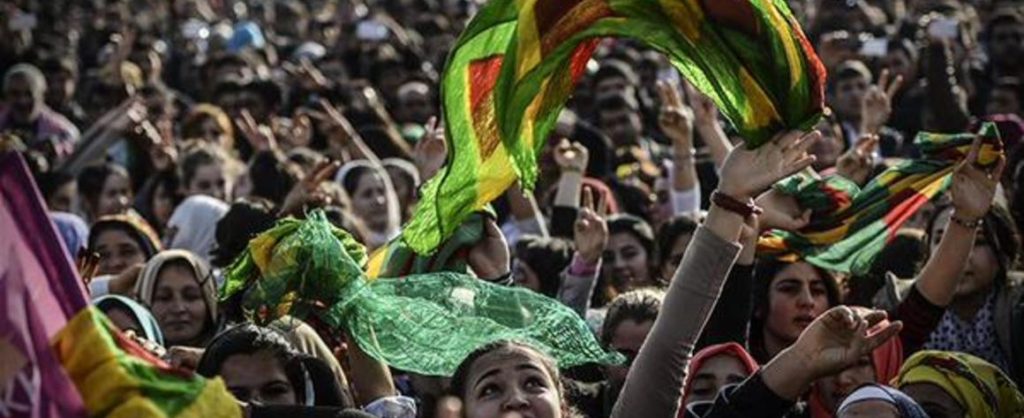
El papel de las mujeres en defensa del medio ambiente en lugares tan emblemáticos como Latinoamérica ha sido fundamental. Podría incluso decirse que en este lado del mundo se ha producido una feminización de las luchas sociales. El movimiento feminista en Argentina, o nombres como el de Bertha Cáceres, feminista y ambientalista hondureña, apuntan alto en el importante papel del Ecofeminismo para organizarse frente al nuevo orden mundial que viene.
Los principios de la economía social tienen el propósito de aumentar los recursos de las sociedades en lugar de explotarlos, y los principios de igualdad aseguran que la revolución será feminista o no será.
Sin embargo esto no significa convertirnos en salvadoras del mundo, ni volver al concepto primitivo de la vuelta al hogar de la mujer, ni a una mística de la maternidad.
Todo lo contrario. Queremos participar en igualdad construyendo paz. Es la socialización actual la que nos inunda de roles de género: las tareas domésticas, los cuidados. No hay nada que impida que los hombres desarrollen capacidades para estas tareas con tanto o más acierto y cariño que cualquiera de nosotras. Es tan sólo el discurso del poder quién adapta los géneros a su capricho y en función de sus intereses.

Se pretende poner el acento en lo individual frente a lo colectivo, en competir en lugar de compartir y de cooperar, pero ese no es el camino.
El calentamiento global y sus consecuencias deberían hacernos reaccionar y ponernos manos a la obra. Buscamos una vacuna que nos proteja del COVID-19, pero estamos acabando con la biodiversidad, derritiendo los polos, perdiendo especies animales y semillas, quemando nuestros bosques y selvas, fumigando con pesticidas, aniquilando todas las protecciones naturales. Aún abocados a nuevos virus y a catástrofes de todo tipo, se impone el dominio patriarcal y el capitalismo de consumo que explotan sin medida los recursos naturales, los animales y las personas.
Si caminamos hacia el colapso, más tarde o más temprano estaremos en él. O abandonamos este modelo de dominio y explotación o estaremos abocados al desastre. Observemos por ejemplo las tareas en las que ocupamos nuestro tiempo. Desplazamientos largos e innecesarios que implican mayores niveles de estrés, elevada contaminación y agotamiento de recursos, obsolescencia programada, dependencia tecnológica, consumo exacerbado.

El Ecofeminismo propone una reformulación de todo lo que entendemos por trabajo y vida. Los trabajos cotidianos de hoy en día no sirven para mantenernos vivas ni con mejor calidad de vida, más bien al contrario, asistimos a la degradación de la vida.
No podemos quedarnos impasibles. Lxs anarquistas sabemos muy bien que si nos organizamos podemos conquistar imposibles. No tenemos que demostrar nada, sólo mostrarlo. Las colectividades surgidas en el 36 son un ejemplo de Revolución Social que emocionó al mundo.

Ahora nuestra mirada se tiñe de morado y se alimenta de vida. Por eso entre nuestros mensajes, entre nuestras líneas, también se cuela esa palabra que, como tantas otras, se ha puesto el Eco delante. Ecofeminismo. Ecología y Feminismo. Dos ingredientes que nos enseñan un horizonte nuevo. Como en Rojava. Sólo tenemos que pasar a la acción.
[Artículo publicado originalmente en el periódico CNT # 424, Valladolid, julio-septiembre 2020. Número completo accesible en https://www.cnt.es/noticias/periodico-cnt-no-424-julio-a-septiembre-2020-dosier-ecologia-social.]
El artículo forma parte de un Dosier extenso disponible en el PDF del número aquí
The article is part of an extensive Dossier available in the PDF of the issue here, in Spanish:..
Descargar en PDF:PDF 1 página PDF doble página
DOSIER:
- Ecología social El sindicalismo revolucionario ante la emergencia climática y el colapso civilizatorio
- Agroecología: la vida sencilla, la vida justa, el cuidado de la vida
- Entrevista a Carlos Taibo: «No sé qué me inquieta más, si la alarma o el Estado»
- Ecofeminismo y revolución social
- Palabras Padentro: Ecofeminismo o la revolución igualitaria
- Los límites del Green New Deal
- El cuarto oscuro: En tiempos de pandemia

English.. contents of Dossier
- Social ecology Revolutionary unionism in the face of the climate emergency and the civilization collapse
- Agroecology: the simple life, the just life, the care of life
- Interview with Carlos Taibo: «I don’t know what worries me the most, if the alarm or the State»
- Ecofeminism and social revolution
- Words Padentro: Ecofeminism or the egalitarian revolution
- The limits of the Green New Deal
- The dark room: In times of pandemic
Etiquetas: anarquismo y ecología, ecofeminismo, Feminismo, luchas de mujeres

 The Free