
The USA has by far the highest Incarceration Rate in the whole world with 2,121,000 prisoners. World Prison Brief.[1]
The Origins of Prison Slavery
How Southern whites found replacements for their emancipated slaves in the prison system.
The link between prison labor and slavery is not merely rhetorical. At the end of the Civil War, the 13th amendment abolished slavery “except as a punishment for a crime.”
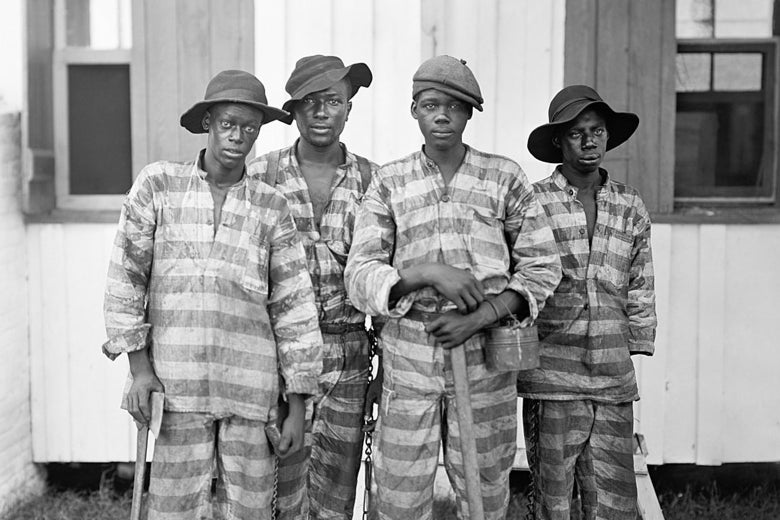
The origins of prison slavery in the American South.
This opened the door for more than a century of forced labor that was in many ways identical to, and in some ways worse than, slavery. Follow this link to excerpt from , American Prison: A Reporter’s Undercover Journey Into the Business of Punishment.
Proof of US Racist Slave Regime..Wikipedia..
Ethnicity
See also: Race and crime in the United States and Racial inequality in the American criminal justice system
| 2010. Inmates in adult facilities, by race and ethnicity. Jails, and state and federal prisons.[72] | |||
| Race, ethnicity | % of US population | % of U.S. incarcerated population | National incarceration rate (per 100,000 of all ages) |
| White (non-Hispanic) | 64 | 39 | 450 per 100,000 |
| Hispanic | 16 | 19 | 831 per 100,000 |
| Black | 13 | 40 | 2,306 per 100,000 |
The 2015 US prison population by race, ethnicity, and gender. Does not include jails.[73]

The Civil War Didn’t End Slavery After All
According to the U.S. Bureau of Justice Statistics (BJS) in 2018 Black males accounted for 34% of the total male prison population, white males 29%, and Hispanic males 24%.
White females comprised 47% of the prison population in comparison to Black females who accounted for 18% of the female population. The imprisonment rate for Black females (88 per 100,000 Black female residents) was 1.8 times as high as for white females (49 per 100,000 white female residents).
The imprisonment rate for Black males (2,272 per 100,000 Black male residents) was 5.8 times as high as for white males (392 per 100,000 white male residents).
Out of all ethnic groups, African Americans, Puerto Rican Americans, and Native Americans have some of the highest rates of incarceration.[74][75][76][77][78][79][80][81][82] Though, of these groups, the Black population is the largest, and therefore make up a large portion of those incarcerated in US prisons and jails.[clarification needed][83]
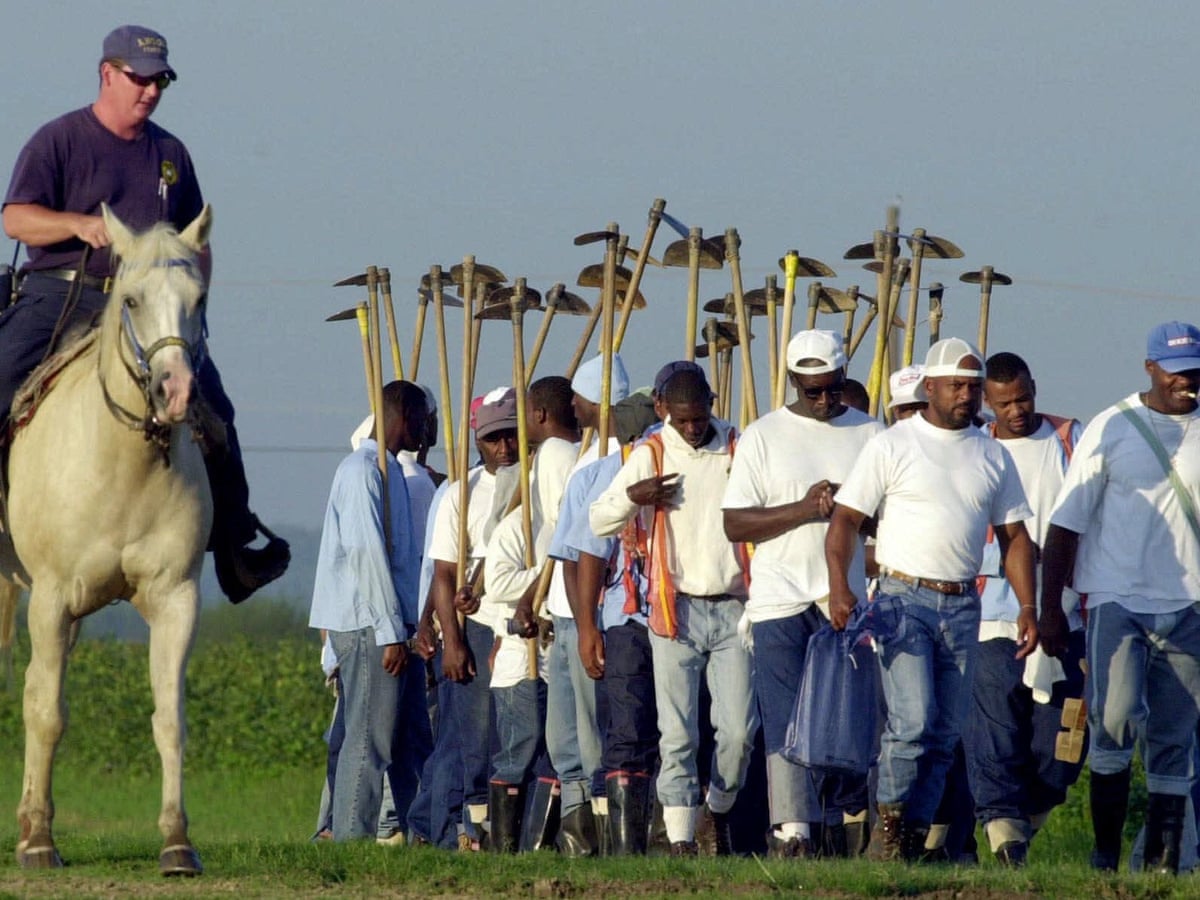
The Prison Policy Initiative broke down those numbers, finding that “..[31] black youth comprise 14% of the national youth population, but “43% of boys and 34% of girls in juvenile facilities are Black. And American Indians make up 3% of girls and 1.5% of boys in juvenile facilities, despite comprising less than 1% of all youth nationally.”[31]
Hispanics (of all races) were 20.6% of the total jail and prison population in 2009.[84] Hispanics comprised 16.3% of the US population according to the 2010 US census.[85][86] The Northeast has the highest incarceration rates of Hispanics in the nation.[87] Connecticut has the highest Hispanic-to-White incarceration ratio with 6.6 Hispanic males for every white male. The National Average Hispanic-to-White incarceration ratio is 1.8. Other states with high Hispanic-to-White incarcerations include Massachusetts, Pennsylvania, and New York.[88][89]
This systemic oppression began with practices such as Jim Crow laws and morphed into more nuanced, but just as impactful actions such as the declaration of the War on Drugs
In 2010, adult Black non-Hispanic males were incarcerated at the rate of 4,347 inmates per 100,000 U.S. residents. Adult white males were incarcerated at the rate of 678 inmates per 100,000 U.S. residents. Adult Hispanic males were incarcerated at the rate of 1,755 inmates per 100,000 U.S. residents.[1] (For female rates see the table below.) Asian Americans have lower incarceration rates than any other racial group, including white Americans.[90]…..

California prisons are the most overcrowded
…In 2013, by age 18, 30% of Black males, 26% of Hispanic males, and 22% of white males have been arrested. By age 23, 49% of Black males, 44% of Hispanic males, and 38% of white males have been arrested.[93]
According to Attorney Antonio Moore in his Huffington Post article, “there are more African American men incarcerated in the U.S. than the total prison populations in India, Argentina, Canada, Lebanon, Japan, Germany, Finland, Israel and England combined.”
There are only 19 million African American males in the United States, but collectively these countries represent over 1.6 billion people.[94] Moore has also shown using data from the World Prison Brief [95]& United States Department of Justice[96] that there are more Black males incarcerated in the United States than all women imprisoned globally. …
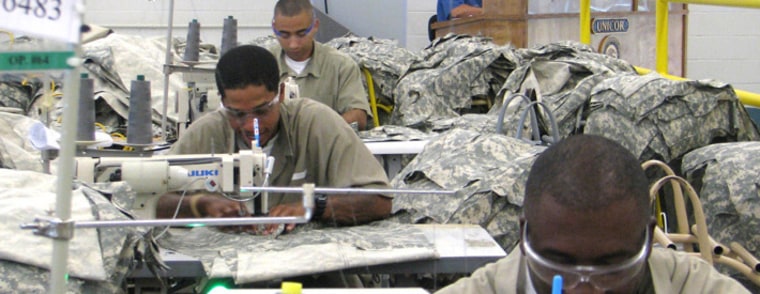
Inmates work on garments at a Federal Prison Industries (UNICOR) facility. The company says it is a ???a life-changing correctional program that has a profound impact on everyone in the community.Federal Bureau of Prisons
Labor..Modern Day Slavery
See also: Penal labor in the United States
About 18% of eligible prisoners held in federal prisons are employed by UNICOR and are paid less than $1.25 an hour.[221][222][223]
Prisons have gradually become a source of low-wage labor for corporations seeking to outsource work to inmates.[189] Corporations that utilize prison labor include Walmart, Eddie Bauer, Victoria’s Secret, Microsoft, Starbucks, McDonald’s, Nintendo, Chevron Corporation, Bank of America, Koch Industries, Boeing and Costco Wholesale.[224][225][226][227]…..

Prison Labor: Modern SLAVERY? – YouTube
….In September 2016, large, coordinated prison strikes took place in 11 states, with inmates claiming they are subjected to poor sanitary conditions and jobs that amount to forced labor and modern day slavery.[229][230][231][232] Organizers, which include the Industrial Workers of the World labor union, assert it is the largest prison strike in U.S. history.[229]
Starting August 21, 2018, another prison strike, sponsored by Jailhouse Lawyers Speak and the Incarcerated Workers Organizing Committee, took place in 17 states from coast to coast to protest what inmates regard as unfair treatment by the criminal justice system.
In particular, inmates objected to being excluded from the 13th amendment which forces them to work for pennies a day, a condition they assert is tantamount to “modern-day slavery.”
The strike was the result of a call to action after a deadly riot occurred at Lee Correctional Institution in April of that year, which was sparked by neglect and inhumane living conditions.[233][234][235][236][237]
…..
…..Researcher Valerie Jenness writes, “Since the 1970s, the final wave of expansion of the prison system, there has been a huge expansion of prisons that exist at the federal and state level. Now, prisons are starting to become a private industry as more and more prisons are starting to become privatized rather than being under government control.”[22]
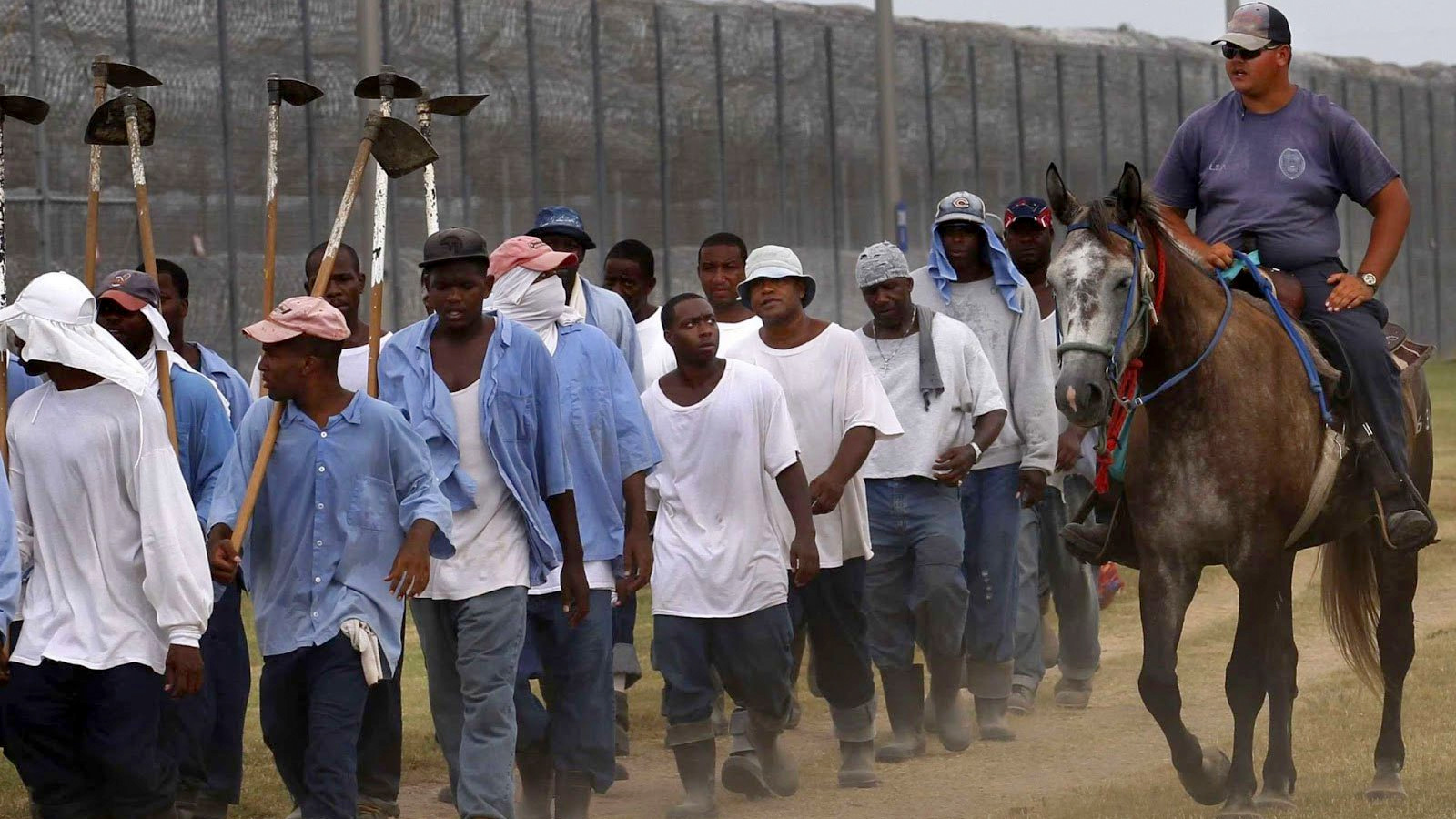
Florida Prison Strike Focuses on Prison Slavery, Fair Treatment
This systemic oppression began with practices such as Jim Crow laws and morphed into more nuanced, but just as impactful actions such as the declaration of the War on Drugs. .
Richard Nixon, the president at the time, launched this drug war that framed drug users not as alienated youths whose addiction was caused by living in a fundamentally unequal society, but rather as criminals who are attacking the moral fiber of America. People, as Nixon put it, who deserved only incarceration and punishment to stain the rest of their lives…
See Also … How blood of slavery fed profit system
..The desire to fill up prisons to its bare ends is a product of the mass amounts of money being made by corporations from perpetuating mass incarceration
Inmates held pre-trial
In 2020, the non-profit Prison Policy Initiative issued a report,”Mass Incarceration: The Whole Pie 2020,” that said, based on the most recent census data and information from the Bureau of Prisons, an overwhelming majority of inmates in county and municipal jails were being held pre-trial, without having been convicted of a crime.
The Pre-Trial Justice Institute noted, “Six out of 10 people in U.S. jails—nearly a half million individuals on any given day—are awaiting trial. People who have not been found guilty of the charges against them account for 95% of all jail population growth between 2000-2014.”[45][46]
continues.. much more.. HERE…. https://en.wikipedia.org/wiki/Incarceration_in_the_United_States
See ALSO
Slavery in the US prison system | Prisons | Al Jazeera
https://www.aljazeera.com/indepth/opinion/2017/09/slavery-prison-system-170901082522072.html24,000 prisoners across 29 prisonsin 12 states protested against inhumane conditions, timing it around the anniversary of the Attica Prison uprising, a prisoner strike now 46 years old.
The origins of prison slavery in the American South.
https://slate.com/news-and-politics/2018/10/origin-prison-slavery-shane-bauer-american-prison-excerpt.htmlThe link between prison labor and slavery is not merely rhetorical. At the end of the Civil War, the 13 th amendment abolished slavery “except as a punishment for a crime.” This opened the …

Does an Exception Clause in the 13th Amendment Still …
https://www.history.com/news/13th-amendment-slavery-loophole-jim-crow-prisonsLike chattel slavery before it, convict-leasing was brutal and inhumane. Across the country, “tens of thousands of people, overwhelmingly Black, were leased by the state to plantation owners …
Prison labor is modern slavery. I’ve been sent to solitary …
https://www.theguardian.com/commentisfree/2018/aug/23/prisoner-speak-out-american-slave-labor-strikeAug 23, 2018I see prison labor as slave labor that still exists in the United States in 2018. In fact, slavery never ended in this country. At the end of the civil war in 1865 the 13th amendment of the US …
Slavery and Prison – Understanding the Connections
https://www.historyisaweapon.com/defcon1/gilmoreprisonslavery.htmlStudies of the relationship between slavery and mass imprisonment have a long history in the United States and internationally. 3 This article will discuss some of the connections activist groups have made between the legacy of slavery and the prison expansion of the last several decades, starting with a brief outline of some of the historical …
Related
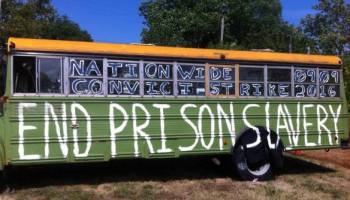
Sean Swain calls for Prison Strike against Slavery and Racism ..from Sept 9th, USA

US Prison Strike: latest updates from ‘It’s Going Down’.

USA: Biggest ever Jailor reboots Private Prison Corporations
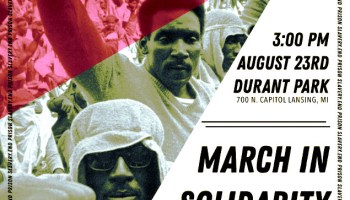
US prison strike .. solidarity events ..END PRISON SLAVERY
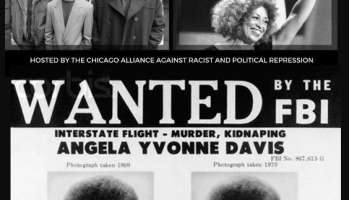
Angela Davis Rallies to Free Ed Poindexter, Mumia Abu-Jamal, and Leonard Peltier

The USA has by far…
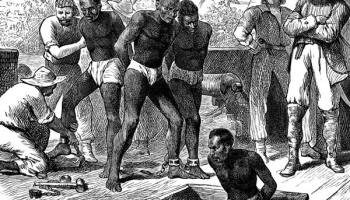
British Elite still Benefit: Slavery Profits founded City finance hub

Call for World Anarchist Solidarity with US Prison Strike

The Black Gulag in USA: State owned Slavery is STILL LEGAL in Prisons

 The Free