La directa.cat shared with thanks translation thefreeonline
by Ramon Sala at La_Directa
Journalist, pedagogue and activist in the animalist association Ferus.
The hunting season open in mid-August, starlings, tudons and herons can be killed. But the “fearsome” wild boar can be hunted with one excuse or another all year round, for example in the Collserola mountains (a ‘Natural’ Park) of Barcelona.
A sow, a female boar, can be fertile after eight months of the year and give birth twice a year to 5 to 7 piglets, of which the 12 suckling can survive 50 to 70 percent. In good conditions the population can increase up to 200 percent annually.
According to European studies, in the last twenty years the population of wild boars has multiplied by four or five times throughout the continent. In regions where there are complete ecosystems, the trophic pyramid tends to balance itself. There is no one speciesleft or missing. With industrialization, all of Europe is urbanized and abandoned fields and pastures remain. From the 50s or 60s the renaturalization of all Europe is a fact. We now have more forests than two or three centuries ago.
We lack herbivores that keep the formidable plant mass at bay but when we have protected a single species such as the goats of the Ports de Beseit, they destroy everything and die by the hundreds of diseases that spread exponentially when there is overpopulation.
Wild animals are all the rage – with the permission of poor Cachou, the TV news star – and the most you tuber is the wild boar. In Catalonia, they eat corn, cause 1,200 accidents a year, transmit an African plague to farms and are a reservoir of diseases that can pass to humans.
In the midst of a jumble of interests, misinformation and alarmism, the miraculous solution appears. Shooting ends the problem. In Europe, 4,000,000 wild boars are killed every year. Dumping 21,000 tons of toxic lead on the forests, waters, marshes and fields. The hunting lobby can be happy.
Introducing Sussy Scrofa
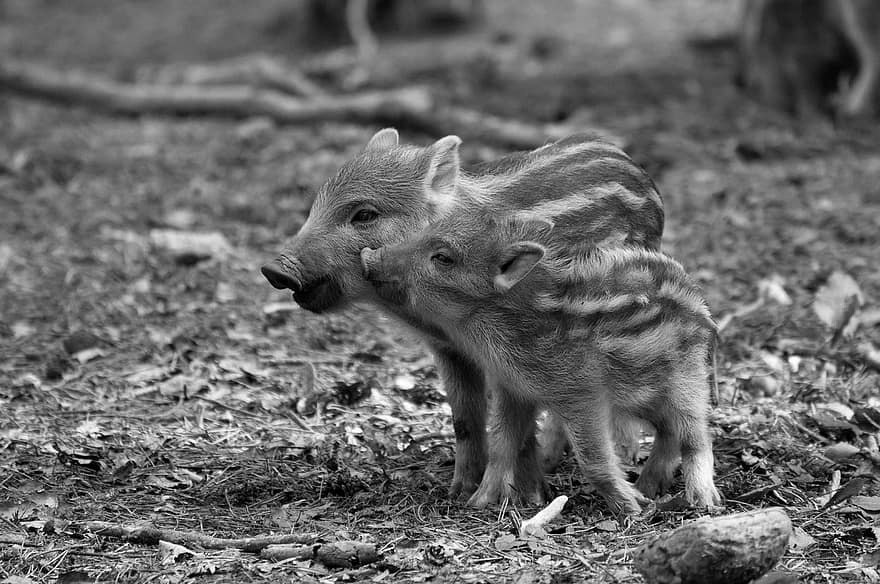
The Sus scrofa, the scientific name for the pig, is an omnivore that’s mainly vegetarian. His favorite dish is acorns and other fruits, roots and bulbs overabundant in our forests.
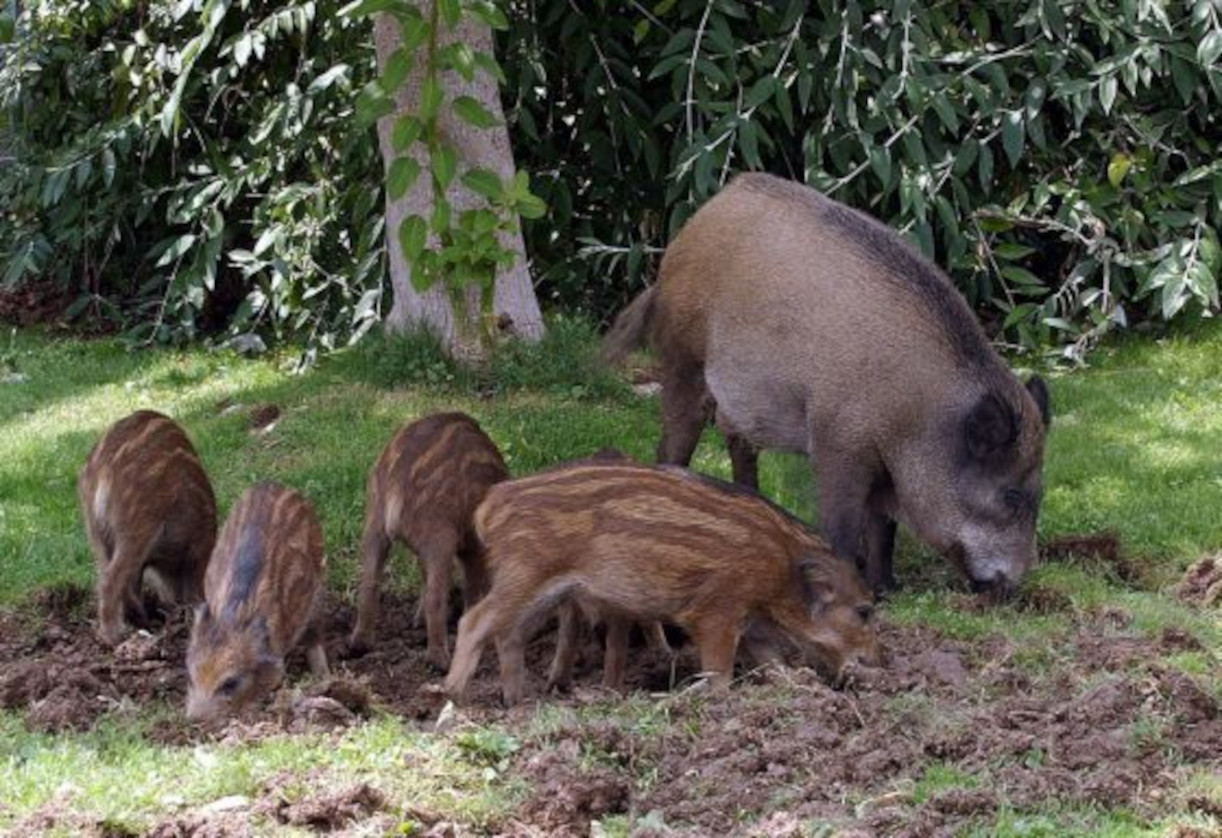
It controls many overly expansive plants. It collects all kinds of dead animal carcasses and maintains the hygiene of the forest.
It scatters fungal spores and seeds stuck to hairs or stalks. After a fire, their feces full of grains and stones replant the forest. Many plants have relied on wild boar for their dispersal. Taking seeds from one place to another, the wild boar revitalizes the plants and improves their genetics.
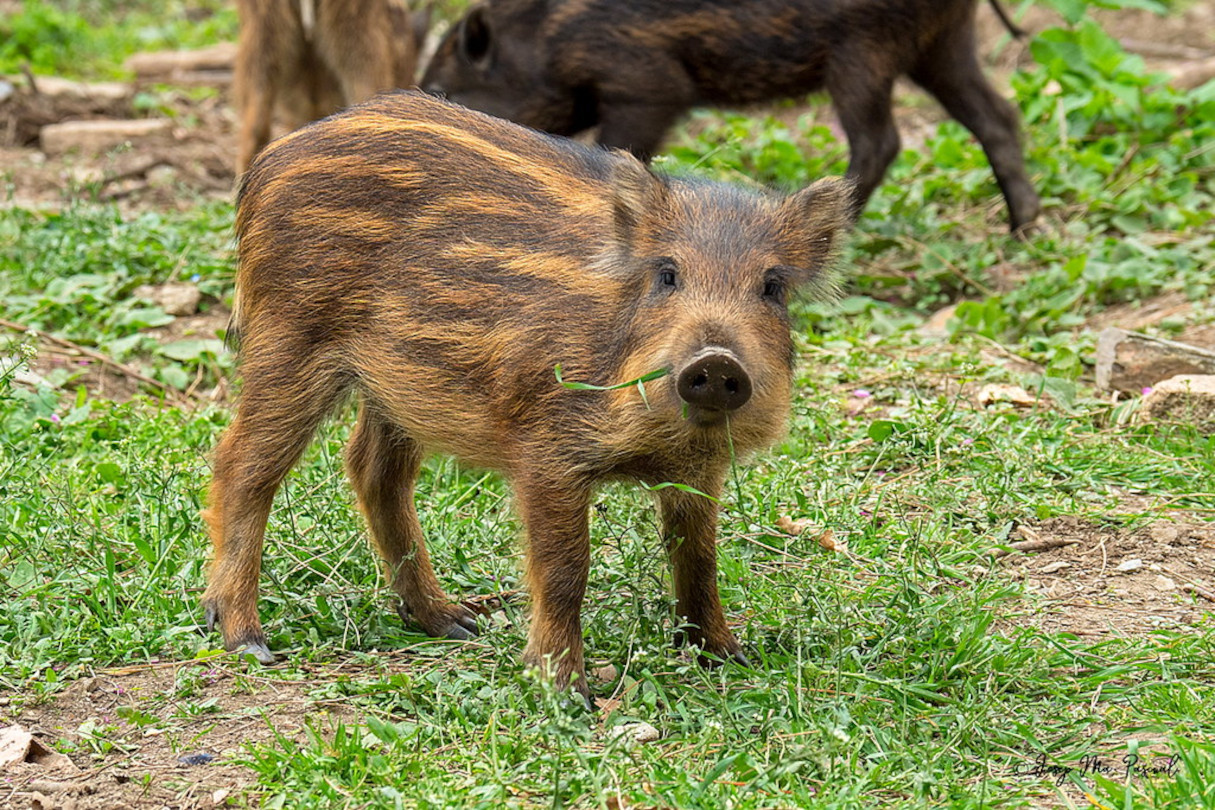
By digging with the nose, it softens and oxygenates the soil, guaranteeing the essential bacterial action and enriching it. Poop and pee are a good fertilizer. Pork, especially if they are piglets, are a good meal for large carnivores and some birds of prey. This easy prey helps in the recovery of large predators.
The ‘Human Nation’ is very similar to the ‘Wild Boar Nation’: omnivorous, adaptable, intelligent and familiar, wild pigs like to explore or go out in groups
An experienced female acts as the mother club’s child minder, while the male turns erratic. Sussy Scrofa is powerful and commanding.
Yes, they can wander four to ten miles a night looking for food. They go through the same trails every day at the same time. The wild boar appears at twilight and if it is tired before dawn, it stops and rests. That’s why we see them less at dawn. During the day, she breastfeeds, educates the children and all take a mud bath that removes parasites and refreshes them. The wild boar’s ability to enjoy themselves is enviable.
A wild boar will not attack us if we do not disturb it. If he is rooting in a rubbish container, leave him alone, he will think you want to take his food and will react like the house dog, he will growl. If we shoot him or corner him with dogs, he’ll do anything to escape. But that is the deal. Everyone has the right to self-defense. Under no circumstances should we touch him.
Change of customs
The behavior of the wild boar has changed markedly in forty years. We’ve changed him as much as we’ve changed our own way of life. We have transformed a wild, runaway and cautious animal into a maniac that we would like to have as a pet.
Our strategy has been subtle. In the seventies we started priming them in our open dumps. We cunningly share rubbish in the housing estates and leave dry bread and water in the chalet to watch from the window.
We plant corn on the doorstep of his forest house. Corn carries the water they need to accompany acorns, a dried fruit. We have inadvertently made them addicted to the juicy plant. With so much kindness, after centuries of disagreements we have become friends. End of story?
Not at all. A minority of irreducible hunters harass them to the most remote refuges in the forest. The animal, mercilessly pursued, escapes as far as it can from its home: it takes refuge in crops, housing estates, industrial estates, canals, beaches and in places where it has never been seen before.
Urbanites are increasingly living outdoors, healthy living, that’s good, but we’re taking up space from other animals: ‘excursionists',
bikers, ‘runners’, ‘cumbayas’ and mushroom hunters are noisily invading any natural place.
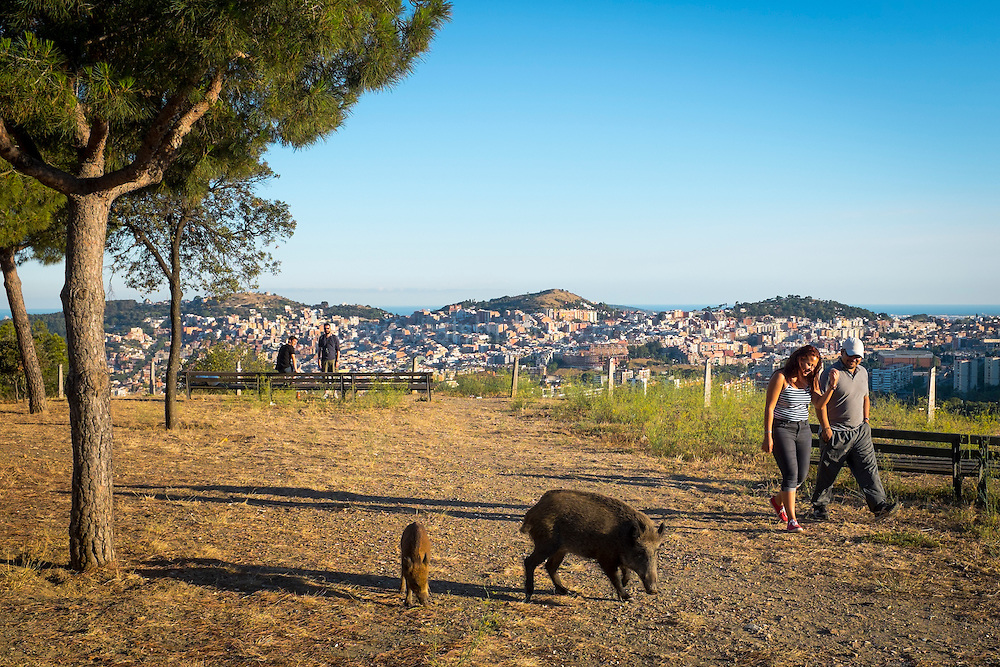
Guests came to chase them out of their home. Unlucky the person or animal living next to a popular spring or gorge. Now the quietest and safest places are the housing estates and suburban areas. In Berlin they have 8,000 specimens roaming the parks and the outskirts. In Collserola there are 1,200 to 1,500 for a comparable area.
Pay for a bullet
For thirty years we have done raids and raids to control the wild boar population. The only noticeable progress has been that if one year 50,000 were hunted, the next 60,000 would fall. As a result, the wild boar population has reached a quarter of a million today and the curve is not flattened.
Of course, after a natural disaster or a hunt comes a baby boom. Rats, and humans do it. Compensation effect. They say that 65 percent of the census needs to be ”deregulated” for the population to stabilize. A lot of work. Hunters want to charge. As Sergio Leone said, Death has a price.
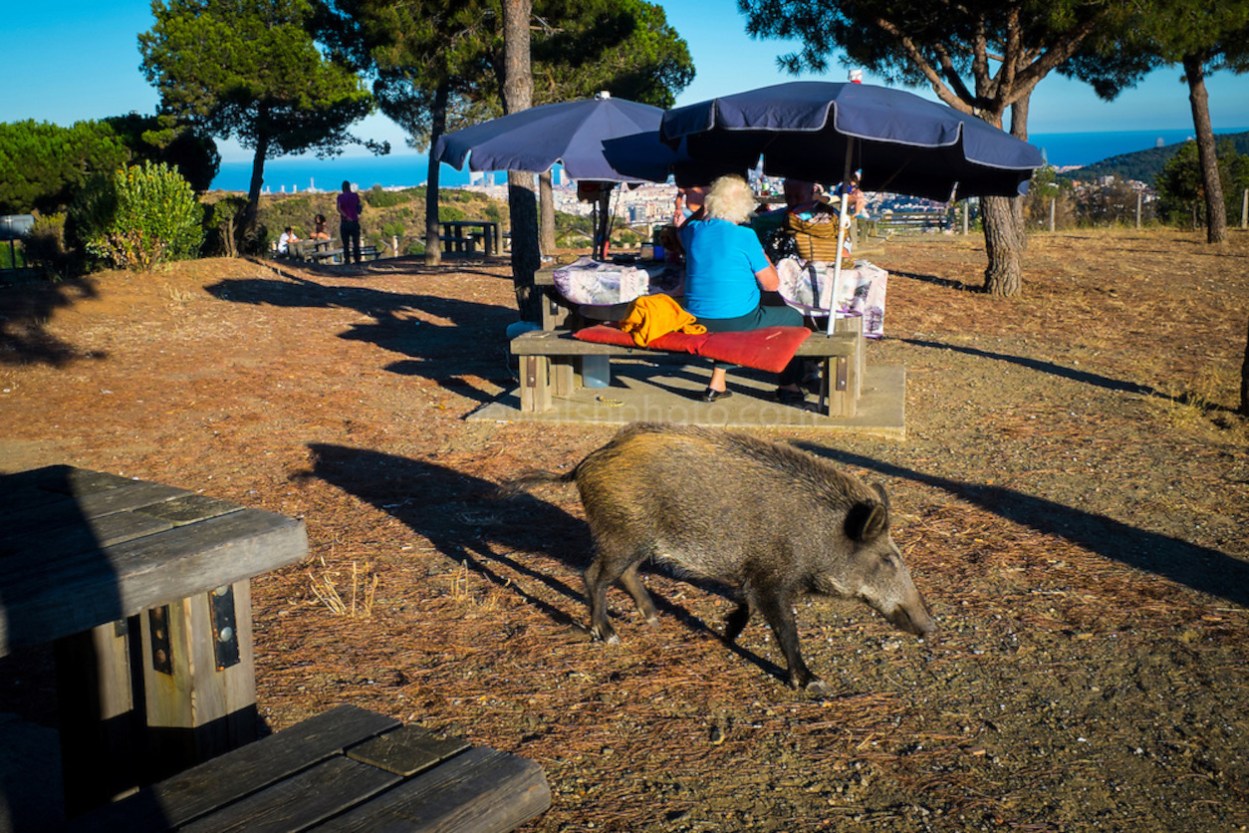
In Catalonia, in 2016 hunters claimed 1,325 euros for each wild boar. We still lose money, they said. The real cost according to their numbers amounted to 3,047 euros per season: bullets, gasoline, 4 × 4, trailer, dogs. I think for dogs, dog house, insurance and all that. If we end up paying the 60 or 70 million they claim for the final solution, Catalan hunters will raise more than Buffalo Bill by killing buffaloes.
Barcelona sacrifica 94 jabalíes de Collserola para reducir su población
Barcelona slaughters 94 wild boars from Collserola to reduce the population
El Ayuntamiento impulsa una campaña para dificultarles el acceso a la comida
The City Council promotes a campaign to make it difficult for them to access food
The protected species hunter
Hunters had a bad reputation. After lightening our fields and forests of wolves, lynx, otters, and nearly extinct fifty other species, this pastime was hard to sell. Removing 100,000 partridges, 200,000 rabbits or 500,000 mongooses from circulation is difficult to explain, especially to children.
For hunters the reappearance of the wild boar has been a miracle. From persecuted to persecutors, with the endorsement of institutions, agricultural entrepreneurs and some ideologies that propose expeditious solutions. A triumph for the shotgun lobby.
Public administrations are turning from pacifist and conservationist positions towards the justification of unnecessary cruelty, trivializing the right to life of any living being. The final solution is sought and experiments are made to chemically castrate the naughty animals. Ui, ui, ui.
The watchman of the rye field
Deciding who is left over or who is missing on the planet sounds like arrogant, anthropocentric hair. Organizing life or occupying the territory of every living bug seems authoritarian.
It is not possible that in Catalonia’s 37,000 hunters occupy the natural space of the entire population. Hunting is a cruel form of leisure. Shotguns kill people and animals. We have the right to contemplate ecosystems without mutilations. We should respect every way of life.
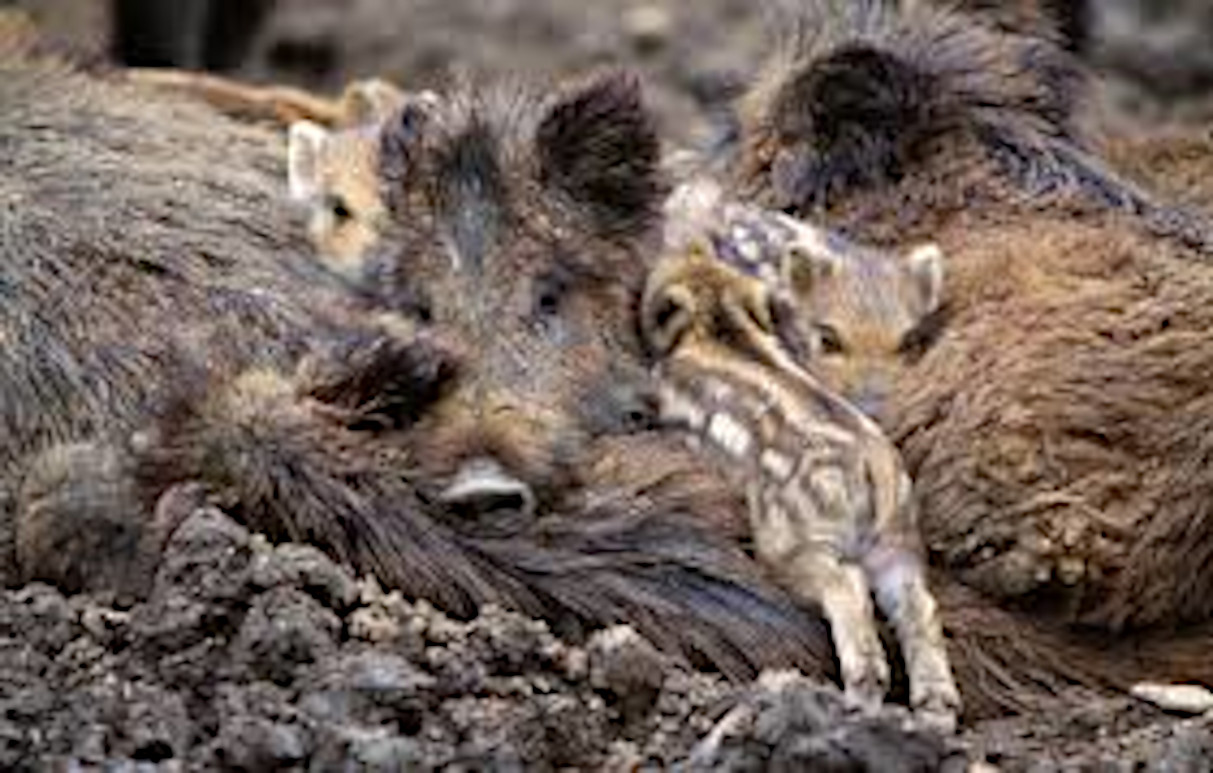
In every human action, however aseptic, rational or scientific, it seems that values are hidden. Behind the idea of resolving conflicts at gunpoint there is an ideology. A participatory public debate with a final consultation would be good for creating a national renaturalization plan. We can do a rehearsal in Collserola.
Rural agents and all those who do fieldwork must be recognized and empowered to foster cohabitation. We could make fences, wildlife steps and green corridors where needed. We could slow down at dusk. We could use research and technology to solve problems: electric fences, presence detectors or light warnings. We could clean the edges of the roads, make the uses compatible and consensual, create areas of deterrence around fields and urban nuclei where the wild boar should not have refuges nor incentives
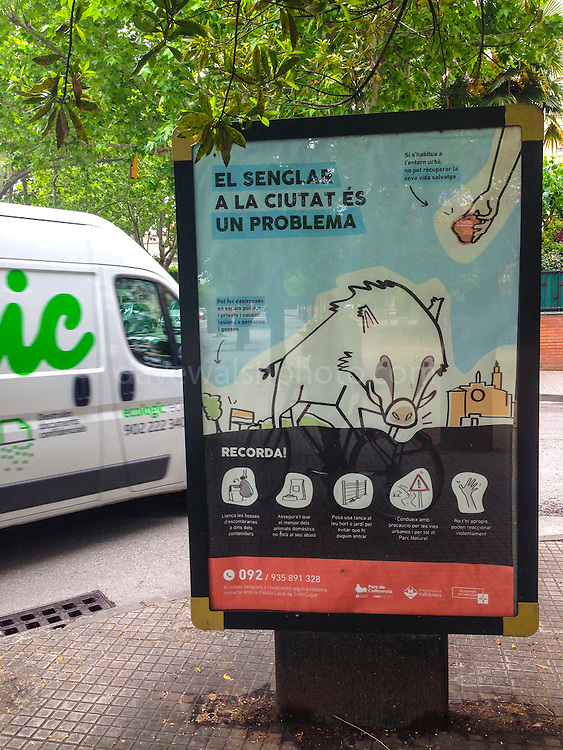
For millennia guard dogs have kept people and wild animals separate. Let’s think about it again, we have lost the culture of cohabitation and tolerance. We leave a third of the territory for the free development of nature so that the animals can be protected and hidden. We make the wild boars distrust us again and run away. The wild boar is an explosive reservoir of diseases, they should not be mixed with humans.
We could open the parks to citizen participation, volunteering, non-invasive research. We could provide premises and space for naturalistic initiatives and entities. We could reconcile uses, prepare for the spontaneous return of small and large predators. We want complete wildlife, waters, hawks, lynxes and wolves. We have always lived with them.
Natural selection is effective, everything is balanced. The hunting lobby moves millions, think in numbers. We think about nature, people and animal welfare. Lowering the weight of weapons in conflict resolution is good. Against the culture of violence. We enjoy nature.
tags … Hunters, Collserola, wild boars, overpopulation

 The Free