
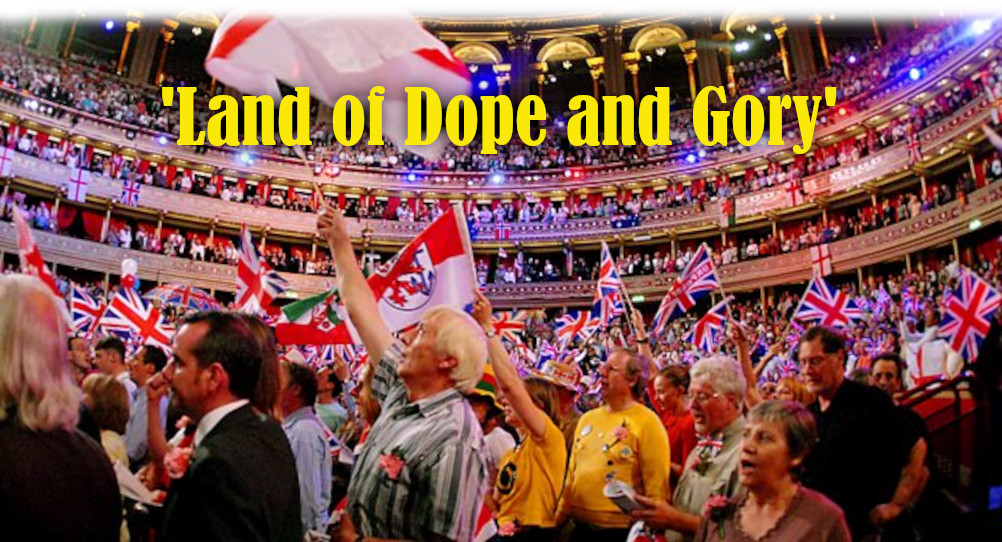
Right-wing social media accounts and the Tory tabloids recently went into apoplexy in response to a contrived controversy surrounding the playing of the openly racist anthems of Land of Hope and Glory and Rule Britannia at the BBC Proms.
**********
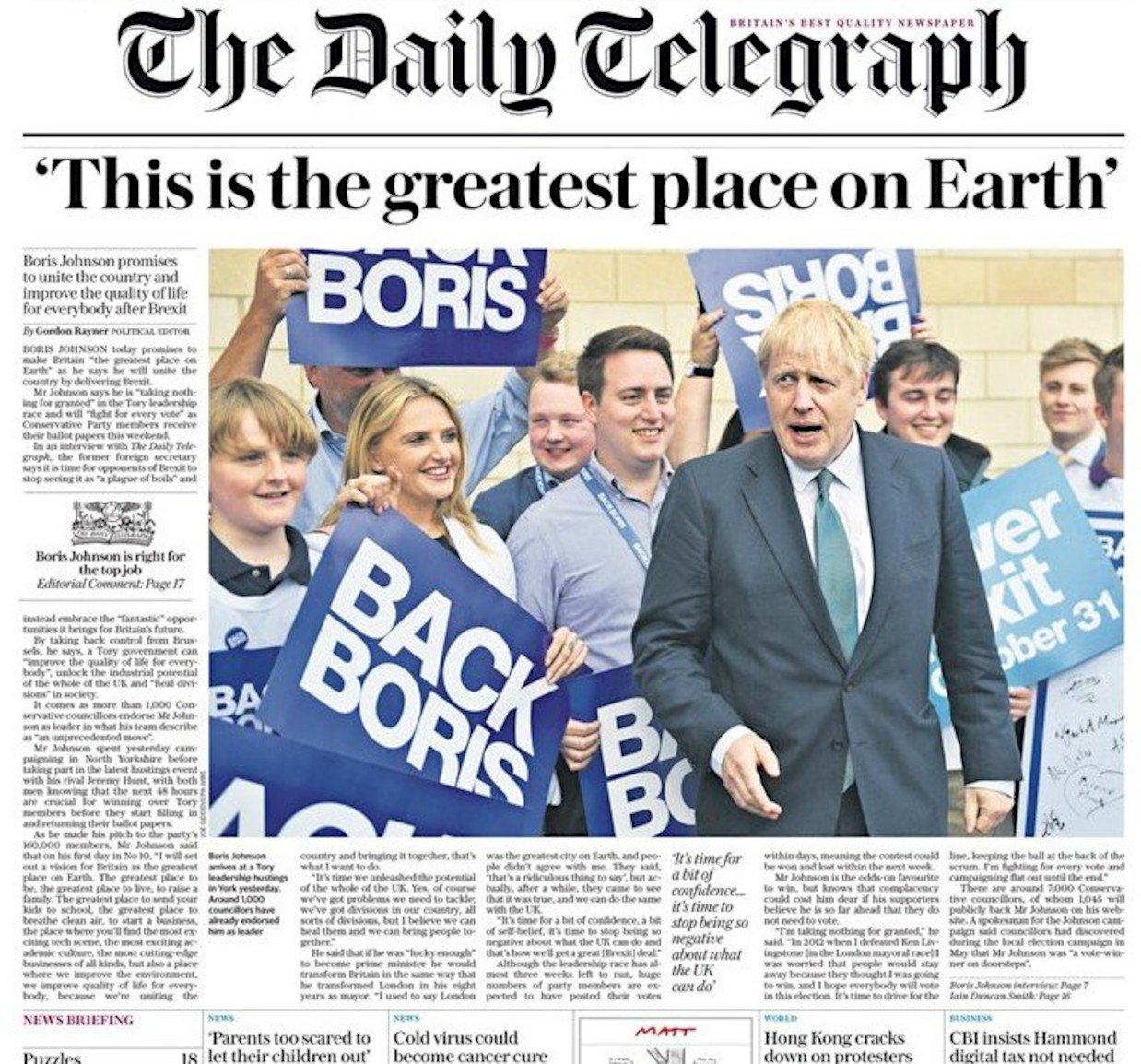
Decades of constant blasting by media propaganda have convinced the white majority that immigrants are stealing away their scant privileges, even as the ruling class loot the country, and that all would be well if the Empire returned. But its not just Britain, almost every State is now ruled and mostly owned by far right oligarchies, the 1%, who sometimes let us choose between their brainwashed stooges.
***************************
Cruel Britannia: -Land of Dope and Gory-
by Blosc, shared with thanks
For as long as I can remember, English politicians have stoked fears about the swarms of immigrants bringing Britain to breaking point or castigated spongers and work-shy benefit cheats, while all the while promoting a myth of Albion, purveyor of the rule of law and democracy.
These tendencies have only sharpened during Brexit, where Little Englanders trumpet this scepter’d isle, Land of Hope and Glory ‘mother of the free… wider still and wider shall thy bounds be set. God, who made thee mighty, make thee mightier yet’.
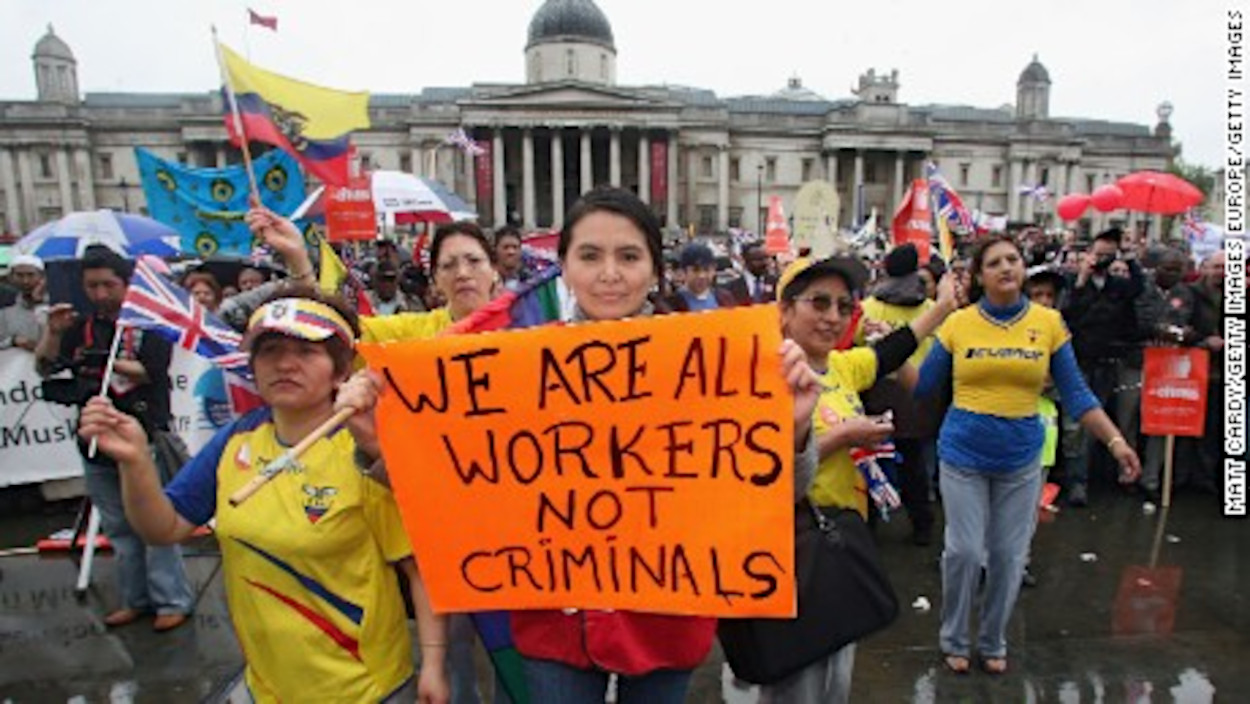
All the while the same reactionaries demonize immigrants and Johnny foreigner, belittle and sneer at calls for racial and gender equality and smear those who seek to create a just society as terrorist sympathizers and anti-Semites.
There is no introspection of self-awareness to any of this. If they could overcome the cognitive dissonance, these modern-day jingoists would cringe in shame at an Empire built on oppression. Cruel Britannia ruled the waves through peddling dope and prosecuting gory murder against anyone who dared challenge perfidious Albion.
Nevertheless, the procession of shameless propaganda to placate the herd, hardly represents a recent phenomenon. Anyone who reads Irishman, Robert Noonan’s The Ragged Trousered Philanthropists, a novel over a century old, will be struck by eery echoes in the Daily Obscurer or Daily Chloroform of our contemporary tabloids’ mendacious assault on the poor, hollow jingoism and xenophobic bigotry.
In one scene, Brexit could replace Tory Tariff reform in debates at the turn of the twentieth-century. One worker, reading the Obscurer, could not fully understand the figures regarding immigration, but ‘he was conscious of a growing feeling of indignation and hatred against foreigners of every description, who were ruining this country, and he began to think that it was about time we did something to protect ourselves.

Still, it was a very difficult question: to tell the truth, he himself could not make head or tail of it.’ Scenes of Nigel Farage patrolling the beaches of southern England during a global pandemic hunting migrant spongers, or BBC journalists following dinghies as they precariously navigate the world’s busiest shipping lane speak to the dehumanization of modern refugees, but such craven opportunism and racism is as old as industrial capitalism itself. In the Philanthropists:
The papers they read were filled with vague and alarming accounts … the enormous number of aliens constantly arriving, and their destitute conditions, how they lived, the crimes they committed, and the injury they did to British trade. These were the seeds which, cunningly sown in their minds, caused to grow up within them a bitter undiscriminating hatred of foreigners. To them the mysterious thing they variously called the ‘Friscal Policy’, the ‘Fistical Policy’, or the ‘Fissical Question’ was a great Anti-Foreign Crusade. The country was in a hell of a state, poverty, hunger and misery in a hundred forms had already invaded thousands of homes and stood upon the thresholds of thousands more. How came these things to be?
The Ragged Trousered Philanthropists
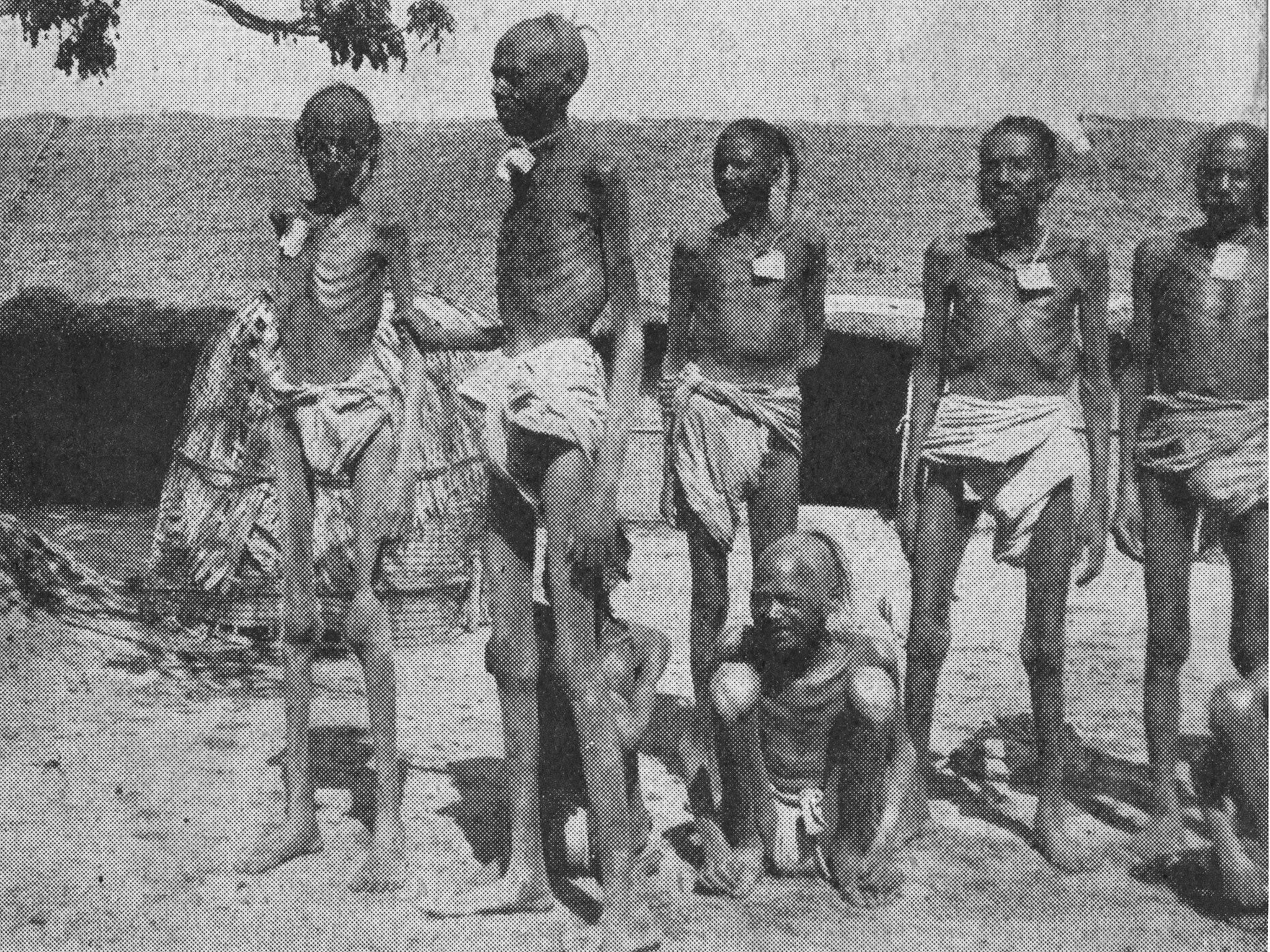
5 of the worst atrocities carried out by the British Empire
It was the bloody foreigner! Therefore, down with the foreigners and all their works. Out with them. Drive them b–s into the bloody sea! The country would be ruined if not protected in some way. This Friscal, Fistical, Fissical or whatever the hell policy it was called, WAS Protection, therefore no one but a bloody fool could hesitate to support it. It was all quite plain–quite simple. One did not need to think twice about it. It was scarcely necessary to think about it at all.
The Ragged Trousered Philanthropists
The world is still full of such ‘ragged trousered philanthropists, who not only quietly submitted like so many cattle to their slavery for the benefit of others but defended it and opposed and ridiculed any suggestion of reform’. The same fools in Labour’s crumbling red wall constituencies who blamed Europe, immigrants and spongers for their bleak existence voted in their droves for the very Tories who hollowed out their communities by forsaking manufacturing, savaging trade unions and imposing a decade of unnecessary austerity.
Fed on a diet of racist bile and tabloid lies, many chose to blame society’s victims and reward the public-school educated, millionaire establishment epitomized by Alexander Boris de Pfeffel Johnson. In 2018, Apple’s tax bill fell by more than 60% to just £3.8m, despite £1.2bn of UK sale (The Times, 30 June 2019) In the 2010, George [he was baptized Gideon] Osborne made £6 billion worth of cuts, while his government let Vodafone off paying the same amount (Owen Jones, The Establishment, p. 206).
Not long after, Osborne spouted appalling venom about the contrast between strivers and shirkers. All this inhumanity comes wrapped in a Union Jack, with the Blitz spirit constantly evoked to give patriotic cover to ludicrous nationalistic tripe, like David Cameron’s belter that we’re all in this together.
That great apologist for empire, Niall Ferguson, claimed that ‘In the end, the British sacrificed her Empire to stop the Germans, Japanese and Italians from keeping theirs. Did not that sacrifice alone expunge all the Empire’s other sins?’ (Ferguson, Empire, p. 363) Indeed, when labelled an apologist, Ferguson replied that if the British hadn’t done it someone else would and ‘you might as well cast a moral judgment on the rain as on the British Empire’ (Guardian, 30 May 2006) Indeed, the Second World War as historical redemption must rank as one of the most disingenuous arguments in a very brazen book.

Firstly, the Soviet Union and its 27 million war dead won the Second World War, Britain barely survived it. By such reasoning, we should absolve Stalin’s regime of the horrendous crimes of the 1930’s from forced collectivization, to the gulag-dependent Five-Year-Plans, through to the Terror and show trials because the Red Army saved us from Hitler. Nevertheless, in an era of Brexiteer fantasies about Empire 2.0, now more than ever, voices need to be raised against the romanticized propaganda about Britain’s imperial past.
As the leading historical representative of this trend, we might concentrate on Ferguson. A trained economist, he compiles a heavily lop-sided imperial balance sheet. While he rejects the racial supremacism that helped explain imperial conquest, Ferguson glories in the technological supremacy that brought the Maxim machine gun to bear on African tribesmen.
But his central argument rests on the assumption that the ‘British Empire acted as an agency for imposing free markets, the rule of law, investor protection and relatively uncorrupt government on roughly a quarter of the world.’ Indeed, ‘without the spread of British rule around the world, it is hard to believe that the structures of liberal capitalism would have been so successfully established in so many different economies around the world.’
There you have it, all the gore, carnage and oppression were worth it because the Empire facilitated the spread of capitalism. This might sound like a good thing for a millionaire Stanford professor who advises the modern-day United States to embrace its imperial destiny and take up the white man’s burden, but such progress appeared very different from the perspective of its victims. It also rests on the false assumption that exploitation and extreme inequality are necessary conditions to increased production.
A Brutal Genocide in Colonial Africa
In fact, colonialism retarded the economic development of the colonies and the massive strides in modern capitalist productivity coincide neatly with the end of the colonial era (for those countries i.e. China who did not revert to neo-colonies). George Orwell, who spent his life trying to atone for his own crimes as a Burmese policeman held a different attitude to imperialism, writing that it consisted of the policeman and the soldier holding the ‘native’ down, while the businessman went through his pockets. Elsewhere, in response to Britain’s barbaric response to the Indian ‘mutiny’, Marx wrote that
The bourgeois period of history has to create the material basis of the new world — on the one hand universal intercourse founded upon the mutual dependency of mankind, and the means of that intercourse; on the other hand the development of the productive powers of man and the transformation of material production into a scientific domination of natural agencies. … When a great social revolution shall have mastered the results of the bourgeois epoch, the market of the world and the modern powers of production, and subjected them to the common control of the most advanced peoples, then only will human progress cease to resemble that hideous, pagan idol, who would not drink the nectar but from the skulls of the slain.
(Karl Marx, The First Indian War of Independence 1857-1859)
We are now living in an era where the productive capacity is such that poverty and particularly extreme inequality should no longer exist. But our system places profit before people and Ferguson and like-minded imperialist tub-thumpers are enthusiastic about this. By the year 2013, six billion of the globe’s seven billion people had cell phones, while only 4.5 billion had a toilet – so much for where there’s muck there’s money!

The technological and physical resources exist for a democratic future, where humankind moves from each according to ability [that craven nineteenth-century cant about self-reliance and individual responsibility] to each according to need [a truly human society]. The share of the world’s population surviving on less than 2000 calories has dropped from 51% in 1965 to 3% in 2005. We have the resources to create a human future, but those who possess exorbitant wealth stand as the chief obstacle to its realisation and only the great human mass of workers possess the strength to destroy them – they lack the consciousness.
Unfortunately, through down-right corruption and vested interest, the super-rich control every state and the lion’s share of the media in the western world. As Raymond Williams argued, the strength of the Philanthropists was that Noonan’s perspective is one that is ‘inside the condition of the [working] class, outside its consciousness’.
The necessary pre-requisite to creating a human future is to reinvigorate working-class consciousness and foster a realistic hope in a socialist and environmentally sustainable future, which strives to create a classless society that expropriates the super-rich and abolishes finance capitalism. As George Orwell pondered through the words of Winston Smith in 1984: ‘Until they become conscious they will never rebel, and until after they have rebelled they cannot become conscious’. One step in this process is to challenge and subvert the common sense attitude towards institutions like the monarchy, Thatcherite verbal diarrhea about personal responsibility and above-all popular conceptions of the imperial past.

The Irony of Colonial Apologetics..Some claim Western colonization constituted a kind of golden age for once colonial countries.
The British Empire and capitalism was built on the Atlantic slave trade [10 to 15 Million individuals] and the genocide of indigenous people in the Americas, arguably the worst crime in history. According to a YOUGOV poll, 32% of British people view the empire as more of a source of pride than shame, with only one in five Britons (19%) more ashamed than proud. While Brits pat themselves on the back for being first to abolish the slave trade or lionize William Wilberforce, they probably don’t even know about the 55,000 soldiers they lost trying the suppress the Black Jacobins of the Haitian revolution or indeed the three great slave revolts in Barbados (1816), Demerara (1823) and Jamaica (1831) that sounded the death knell for slavery’s continuation in the British Caribbean.
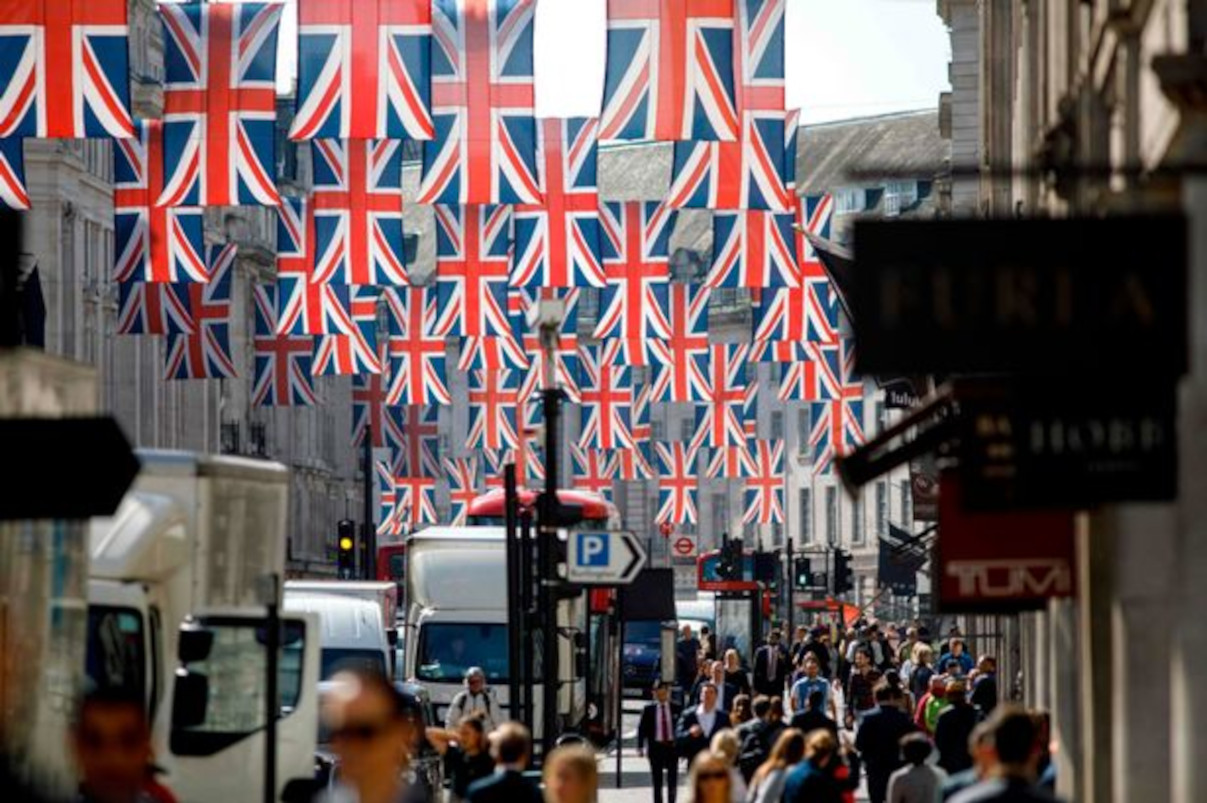
A similar blind spot exists in relation to twentieth-century Apartheid South Africa. Indeed, some right-wing commentators attempt, with a straight face, to claim that Margaret Thatcher [who called Mandela a terrorist, opposed sanctions and supported the racist regime] actually helped end Apartheid (Daily Telegraph, 11 Feb. 2015). They typically ignore the battle of Cuito Canavale in Angola and the tens of thousands of anti-racist Cuban soldiers who defeated the South Africans and other white mercenaries thereby precipitating Apartheid’s end.
Many working people feel hopeless today because they have forgotten the profound historical lesson that our greatest triumphs did not emerge from the acts of Great [white, propertied] Men, but from popular struggle. But before anyone acts in solidarity or humanity, it is necessary to dispel the muck of ages – the shit that the elite pedal to maintain their grip such as unconditional support for our boys in the Army, the Queen and Britain’s noble tradition.
Yet, the contemptible nature of Britain’s elite history should serve as a suitable corrective. While the aforementioned Atlantic triangular trade helped build the foundations of Empire, a subsequent eastern triangle cemented Britain’s position as global hegemon.
For while London remained the hub, the other two points rested in India, the jewel in the crown, or the largest manufacturer in the world before the East India Company got its hooks in and China, the richest country on the globe, before the Empire, or as John Newsinger rightly claims the largest drug pusher the world has ever seen, flooded the country with opium.
The opium trade financed the Raj and underpinned trade in the East, indeed, it represented the century’s most valuable single commodity trade. What began as smuggling in the eighteenth-century had increased to 2,500 tons in 1838, but instead of arresting the Scottish cartel of Matheson and Jardine, Lord Palmerston invaded China for them.

Rather than a war on drugs, this was a war for drugs and Palmerston celebrated that their triumph ‘will form an epoch in the progress of the civilization of the human races’, which incidentally would ‘be attributed with the most important advantages to the commercial interests of England.’ Palmerston a few years earlier claimed that ‘half- civilized governments such as those of China’ required ‘a drubbing every eight or ten years to keep them in order… they must not only see the stick but actually feel it on their shoulders.’
By the 1880s the British were exporting 6,000 tons of opium to China. Here we have Ferguson’s ‘free markets, the rule of law, investor protection and relatively uncorrupt government’ or in reality a racket that would make Pablo Escobar blush, where the British act with impunity and then claim its legal after the event.
We should not lose sight of the fact that an oligarchy reaped the windfall of this appalling traffic in narcotics and mass violence. Like the current House of Lords, all you needed to gain noble title was to grease the correct palms or provide sufficient sycophantic service. Look at the mixture of second-rate toffs and miscreants from working-class and immigrant backgrounds in the current Tory cabinet and you get some idea of the caliber of individual suited to high office in England.

The contemporary radical, William Cobbett, called the British establishment ‘the Thing’ and never mistook the British people for Britain’s pirate empire. Cobbett characterised the ‘all-corrupting and all-degrading system’ of oppression and injustice that had dominated British life since the revolutionary wars, and devoted his entire career to analysing ‘all the various workings of the Thing; all the whole history and mystery of this grand delusion’ (17 May 1820). The ‘Thing’ represents a fine description of even our present rules, psychopaths who are so far gone that they don’t even bother to pretend their telling the truth anymore.
This unbridled systematic malfeasance underpinned the expansion of British imperial interest across the subsequent century. As Shashi Tharoor wryly remarked: ‘The sun never set on the British empire, an Indian nationalist later sardonically commented, because even God couldn’t trust the Englishman in the dark’.
We need look no further than Ireland to view what Ferguson’s ‘structures of liberal capitalism’ had to offer. Revisionist historians have attempted to absolve the British government of responsibility for the Great Famine, arguing that the massive failure of government relied on contemporary laissez-faire ideology rather than deliberate murder (Kennedy, MOPEs, p. 94).
This historicist argument, that we cannot judge the Victorian state by today’s standards, relies on the false assumption that an alternative did not exist to ‘the political and ideological constellations now in the ascendant’ which favoured ‘the ideology of the free market, and minimal state intervention’ (Ibid, p. 103). Indeed, when an Irish delegation visited the British Prime minister, John Russell, to ask for greater assistance, he read to them from Adam Smith’s The Wealth of Nations.
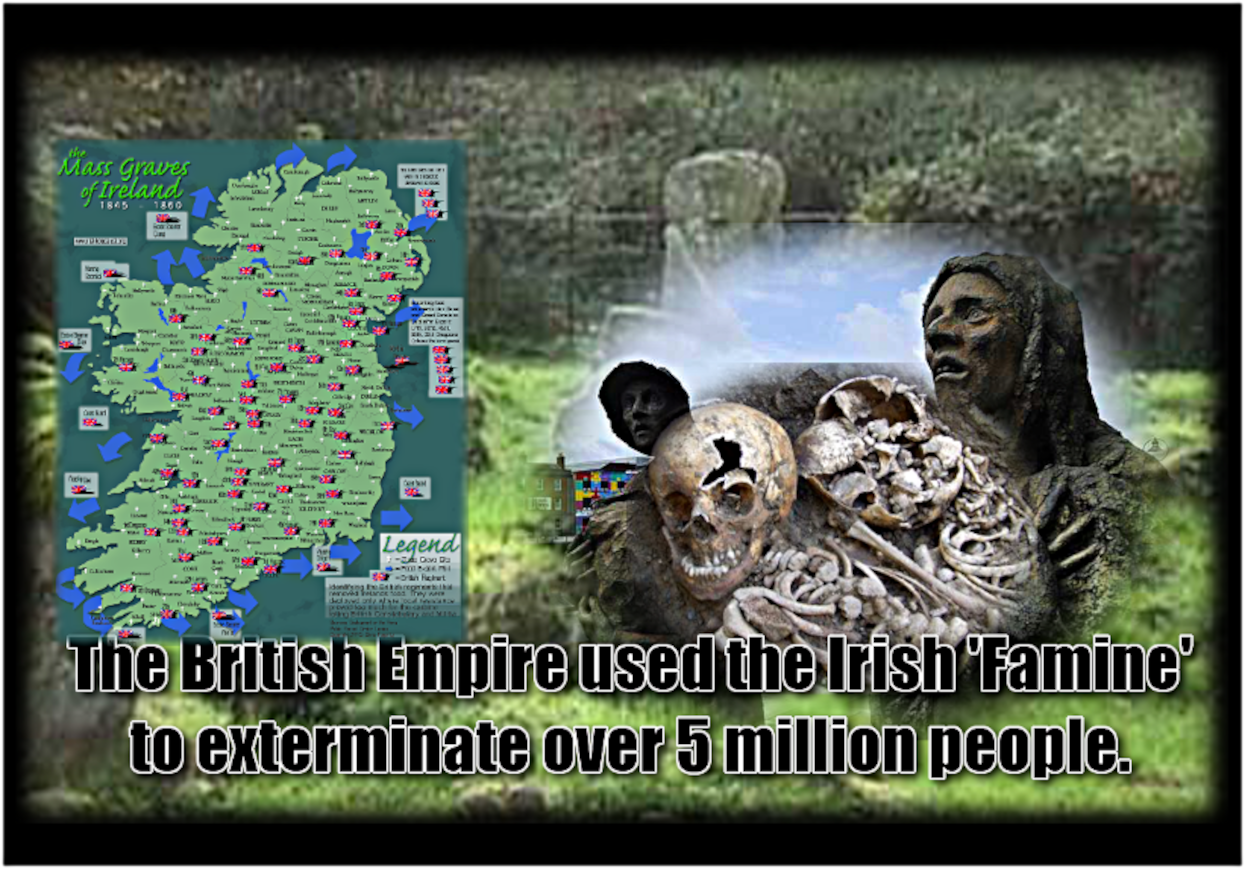
But an alternative did exist, it just didn’t suit the class interests and prejudice of the British elite. Karl Marx delivered a speech to the International Working Men’s Association in 1867 , concluding that a million people had been replaced by 9.5 million sheep and the product was a result of English rule. James Connolly’s passage from Labour in Irish History leaves little doubt as to the real nature of the tragedy:
No man who accepts capitalist society and the laws thereof can logically find fault with the statesmen of England for their acts in that awful period. They stood for the rights of property and free competition, and philosophically accepted their consequences upon Ireland; the leaders of the Irish people also stood for the rights of property, and refused to abandon them even when they saw the consequences in the slaughter by famine of over a million of the Irish toilers.
James Connolly, Labour in Irish History
The British empire was built on genocide. Winston Churchill publicly described the manner in which ‘a stronger race, a higher-grade race, a more worldly wise race’ had displaced the ‘Red Indians of America or the black people of Australia’. Nevertheless, British policy during the Famine could be said to fulfil the third clause of Article 2 of the Convention on Genocide: ‘deliberately inflicting on the group conditions of life calculated to bring about its physical destruction in whole or in part’. Raphael Lemkin, who coined the phrase, claimed in a New York speech on the Holodomor, or Ukrainian man-made famine of 1932-3, that the British government willfully let the Irish starve.

The Holodomor, a human tragedy inflicted by the rigid application of Stalinist economic policy mixed with an opportunistic attempt to deal a blow to Ukrainian nationalism would appear to be a fruitful avenue in analysing the ideological basis of the Irish Famine.
Nevertheless, while the Stalinist economics of the five-year plans have been thankfully consigned to the dustbin of history, the hegemony of the free market and altar of private property upon which the Irish peasantry was sacrificed has never appeared stronger.
Lords Palmerston, Russell’s Foreign Secretary, was an Irish landlord who favoured a policy of systematic clearance. He claimed that improvement in Ireland ‘must be founded upon… a long continued and systematic ejectment of smallholders and of squatting cottiers’. When starving peasants attacked their persecutors, Palmerston advised that ‘whenever a man [of property] is murdered in Ireland, the priest of the parish should be transported. A more generally popular proposal would be that he should be hung, and many who clamour for martial law fancy, I have no doubt, that by martial law this latter process could be adopted.’
His cabinet colleague, Charles Wood, was even more bellicose, as was the main architect of government policy the treasury secretary, Charles Trevelyan. Wood saw no resolution ‘except through a purgatory of misery and starvation, I cannot see how Ireland is to emerge into anything approaching either quiet or prosperity’.
In August 1848, with peasants fighting for survival, Clarendon, the Lord Lieutenant, claimed that he ‘would sweep Connacht clean and turn upon it new men and English money just as one would to Australia or any freshly discovered colony.’ Thus, the forcible removal of some 2 million people constituted the solution to ‘the Irish Problem’. As Clarendon opined elsewhere, ‘the departure of thousands of papists Celts must be a blessing to the country they quit’.
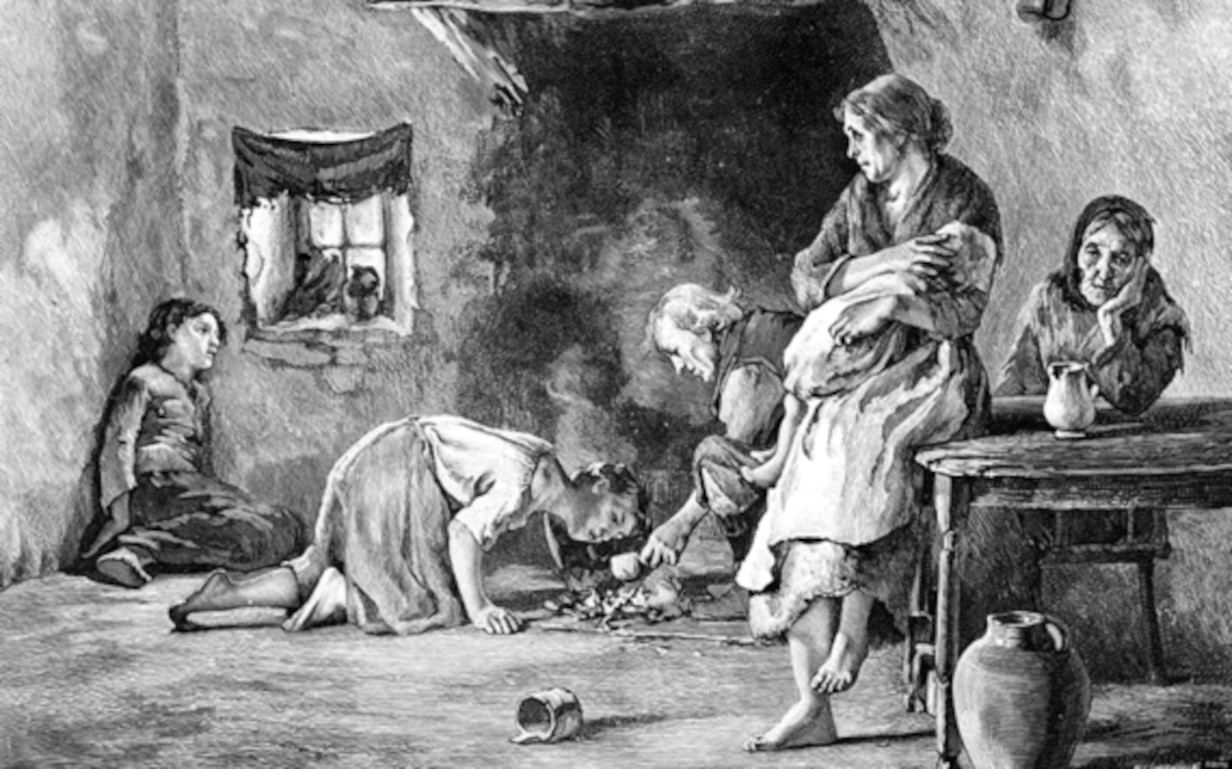
Meanwhile, the London Times declared that ‘before our merciful intervention, the Irish nation were a wretched, indolent, half-starved tribe of savages, ages before Julius Caesar landed on this isle, and that, notwithstanding a gradual improvement upon the naked savagery, they have never approached the standard of the civilised world’. In fact, the Whig administration precipitated the deaths of hundreds of thousands through a punitive programme of relief works in the winter of 1846-7.
Here they might be excused that their strict adherence to self-improvement and laissez-faire lacked the benefit of hindsight or that they could not have foreseen the disastrous consequences of their policy. What the same administration proceeded to carry out the following year, however, represented pre-meditated mass murder. For while the government fed three million in soup kitchens over the hungry summer months in 1847, this only operated as a stop-gap measure before the entire burden of relief was placed on the Irish Poor Law system.
The government carried this out in the knowledge that tens of thousands would die, but this appeared expedient as it would facilitate the mass clearance of the rural poor. Clarendon, no friend of the Irish peasant, wrote to Russell that ‘surely this is a state of things to justify you asking the House of Commons for an advance, for I don’t think there is another legislature in Europe that would disregard such suffering as now exists in the west of Ireland, or coldly persist in a policy of extermination’.
By 1849, Twistleton, the head of the Poor Law system in Ireland, admitted that ‘Many persons in these Unions…[were] at present dying or wasting away; and, at the same time, it is quite possible for this country [Britain] to prevent the occurrence there of any death from starvation, by the advance of a few hundred pound’.
Charles Trevelyan responded that ‘I do not know how farms are to be consolidated if small farmers do not emigrate, and by acting for the purpose of keeping them at home, we should be defaulting at our own object.’ The role of the press and anti-Irish prejudice meant that by 1849, Russell confided to Clarendon that
The great difficulty this year respecting Ireland is one which does not spring from Trevelyan or Charles Wood but lies deep in the breasts of the British people. It is this – we have granted, lent, subscribed, worked, visited, clothed the Irish; millions of pounds worth of money, years of debate etc. – the only return is calumny and rebellion – let us not grant, clothe etc. etc. any more and see what they will do.
If we are to look at the British Empire and the immense carnage that followed in its train – avoidable suffering predicated on false notions of British superiority – we might consider that rather than Land of Hope and Glory, English people of good conscience might chose another Edgar accompaniment, namely William Blake’s Jerusalem. Blake, himself a contemporary of William Cobbett, lamented how ‘all the Arts of Life they changed into the Arts of Death in Albion’. Surely if England wants an anthem then Blake’s Jerusalem speaks to the humanity and not the barbarity of her past.
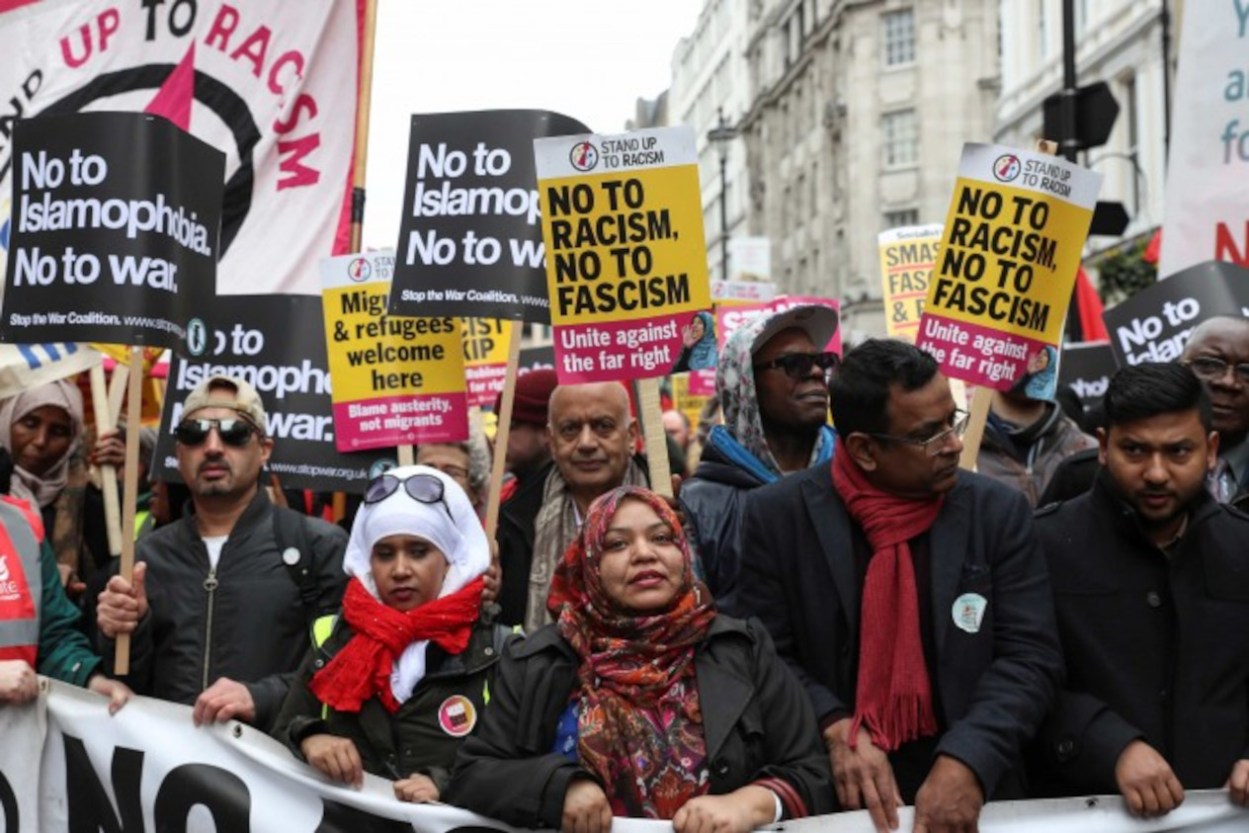
The problem is that in that case the English people might seek to slay the Thing. What a glorious future if the English working class engaged in ceaseless Mental Fight and did not let its Sword sleep in its hand, Till they built Jerusalem, In England’s green & pleasant Land.
But before that day arrives English workers [and their comrades globally] must rid themselves of all the muck of ages and become fitted to found society anew.

 The Free