Anarchists from Rozbrat squat in Poznań, together with other groups, have successfully stopped the eviction of neighbouring allotment gardens “ROD Bogdanka”.
The allotments are a part of the city’s green belt and have been used by the community since 1953. For decades, the land belonged to the state treasury. In the early 90s, it was acquired by a somewhat shadowy developers’ company Darex. Darex took out a loan to purchase the land, but then never paid it back while still maintaining their ownership rights. As of today, the company is still listed as an official owner in the land registry records for both the allotments and Rozbrat.
We anarchists stand by (not only) Polish women for their right to decide their bodies and lives. We stand on the side of light against the forces that seek to draw us into the patriarchal darkness of God, the family and the nation.
en)Czech, AFED: A3: Women against darkness – Protests are under way in Poland against further restrictions on the right to abortion and conservative religious demagoguery.
In October, 32 states signed the “Geneva Declaration of Consensus on Promoting Women’s Health and Strengthening the Family.” At first glance, this sounds like a commendable concern for women. In reality, however, it is an alliance pushing for a complete restriction of the right to abortion.
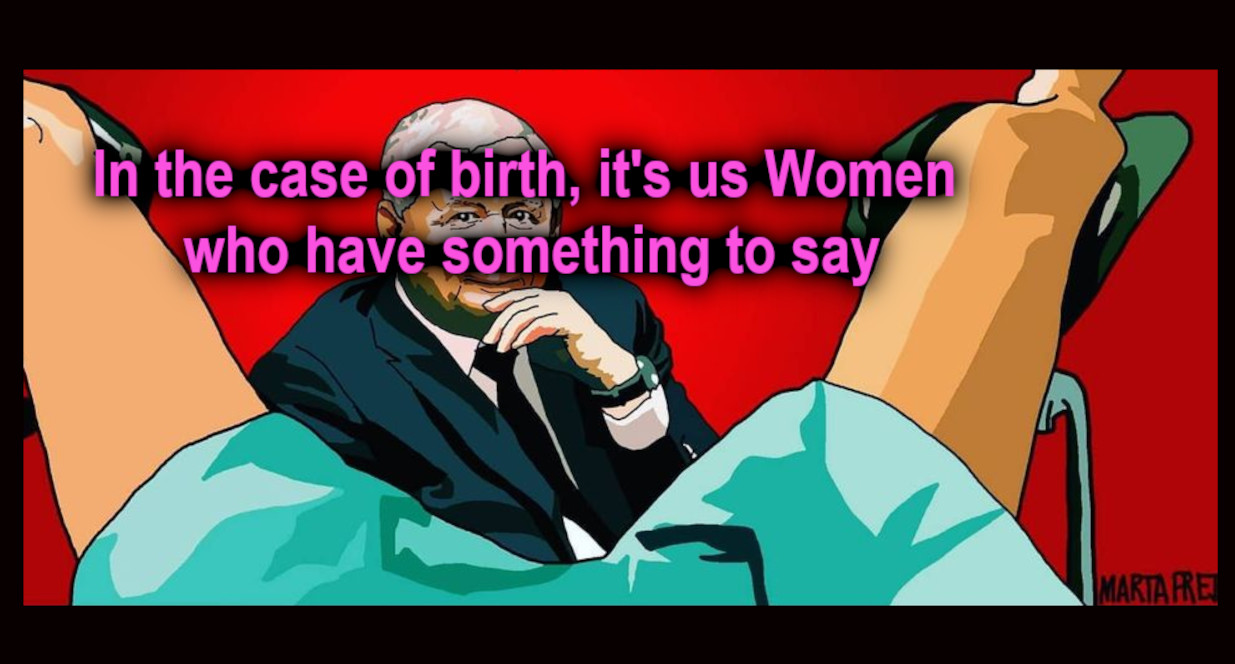
In the case of birth, it’s us Women who have something to say
And who signed himself under such atrocity? Not surprisingly, these are governments that are often autocratic, conservative, religious, or narcissistic.
—- The list is therefore dominated by the Donald Trump administration. We have been able to see his relationship with women many times. Probably the best known is his quote from 2005: “And if you’re a star, they’ll leave you. You can afford anything. (…) Catch them by the pussy. Whatever. “
The grim realities of the climate crisis, the coronavirus pandemic, and ongoing police violence have laid bare the inadequacies of the current leadership and the existing governing system while also providing opportunities, like all crises, to create significant change.
Whether or not we achieve a historical pivot to a fundamentally different society will depend in part upon maintaining militant and creative political pressure in the streets while simultaneously building forms of counter-power, counter-institutions, and organizations pre-figuring the anarchist vision of a free society.
This is a time of significant cultural upheaval in regards to issues revolving around race met by severe political reaction and the attempted retrenchment of white, patriarchal power. In contrast to the first Black Lives Matter movement several years ago in response to the murders of Trayvon Martin and Mike Brown, white people’s understanding of how historic forms of oppression continue to shape our lives is growing.
Black Lives Matter may be the largest social protest movement in US history. In the first two months after police murdered George Floyd in Minneapolis, approximately 15 to 26 million people (up to 8 percent of the population) participated in a Black Lives Matter protest.
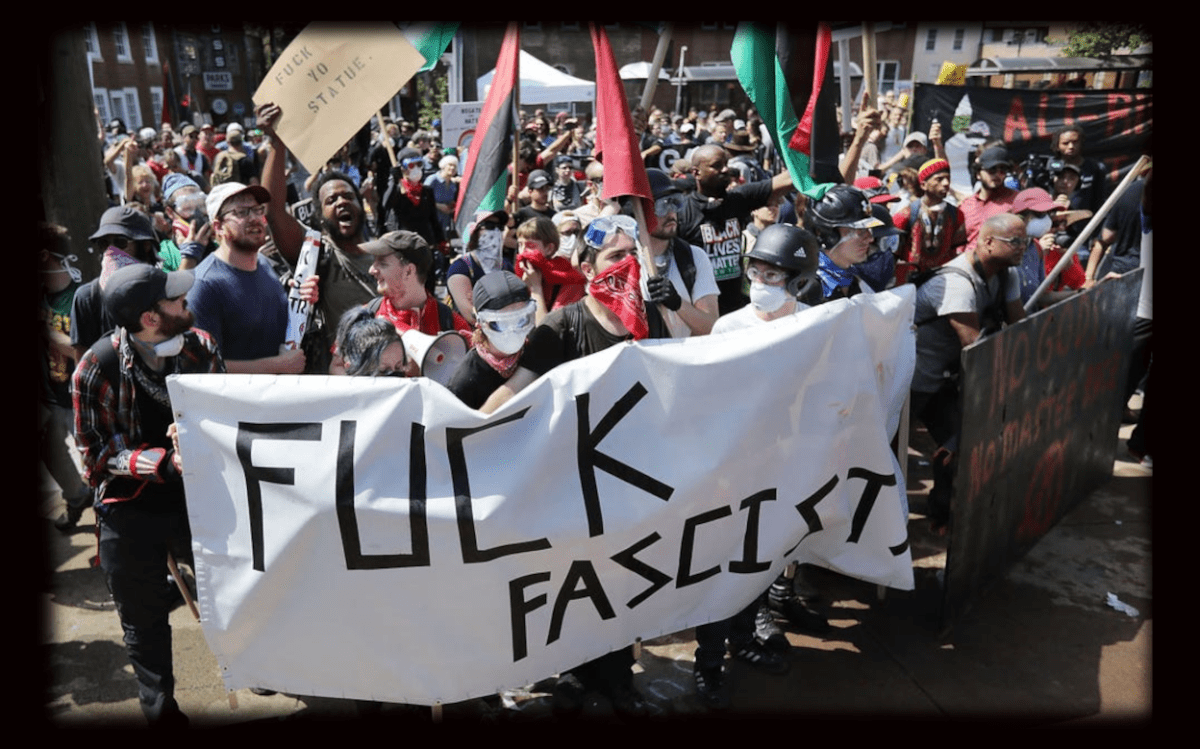
The President employs shop-worn stereotypes to delegitimize the movement in the streets by claiming anarchists and Antifa (antifascists) are sinister elements behind these protests, but the vast majority of participants are in fact poor and working-class people of color and their white allies. This is largely a
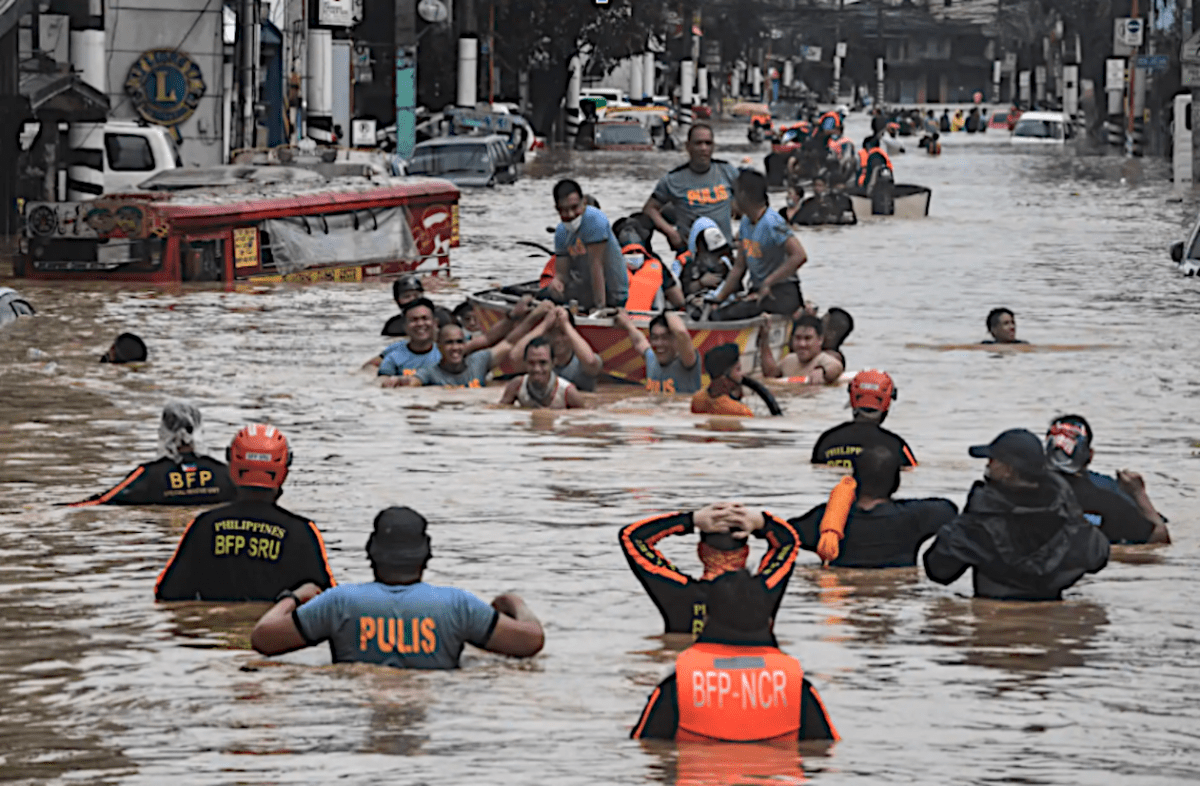
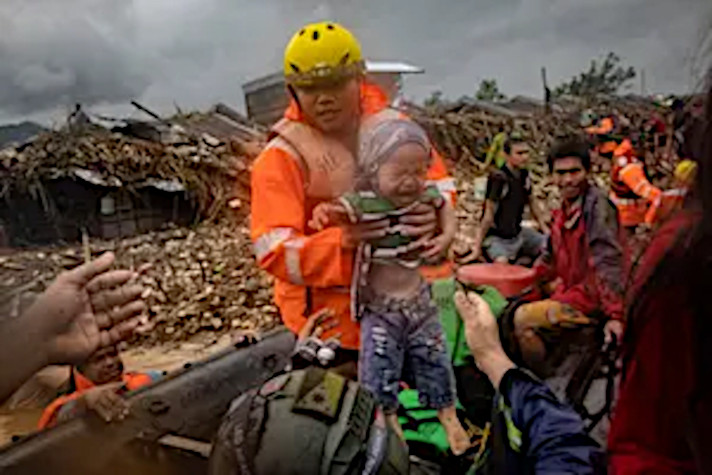
It is in these uncertain times that we are forced to contend with holding on to the contradicting feelings of despair and hope while we gather ourselves to persevere in this protracted uphill work for climate action that is grounded on science and justice. Rescue operation amidst Typhoon Ulysses’ wrath. Photo from LGU of San Jose, Camarines Sur, Philippines
I was too tired for dinner when I got home after building a TekPak solar-powered generator for a community whose power was out by Super Typhoon Goni to show solidarity during the Finance In Common (FIC) Summit. But, while preparing for bed the power went out.
The whole of last night, I felt like I was living in a nightmare. It was pitch black. Winds howled through my home in Quezon City, interrupted only by the sound of shredding roofs and breaking tree branches. This only ended when we started to catch a glimpse of sunlight covered by grey clouds. Sunrise. The nightmare was over.
Because of the power outage, I could only turn on my phone sporadically to check on friends, family and the 350 Pilipinas volunteers. Thankfully they were all safe and accounted for.
However, we were all shaken. Some were forced to evacuate their homes to escape rising flood waters, others were struggling to reach their families whose houses were severely damaged by the strong winds, and we waited for more updates to come.
As much as I wanted to keep track of everyone, the need to conserve our mobile phone batteries forced me to stay online only for a couple of minutes, and then wait to come online again after an hour or two.
Enough 14 is not organizing any of these events, we are publishing these texts for people across the US and Europe to be able to see what is going on and for documentation only.
Enough is Enough 14 // Second Wave: Another Lockdown, Another Rebellion – What the Riots around Southern Europe Tell Us about the Pandemic and the State Posted on by enough14 —
In the United States, liberal opposition to Donald Trump’s bid for reelection crystalized around his response to the COVID-19 pandemic, with millions charging that his government has not done enough to contain the spread of the virus.
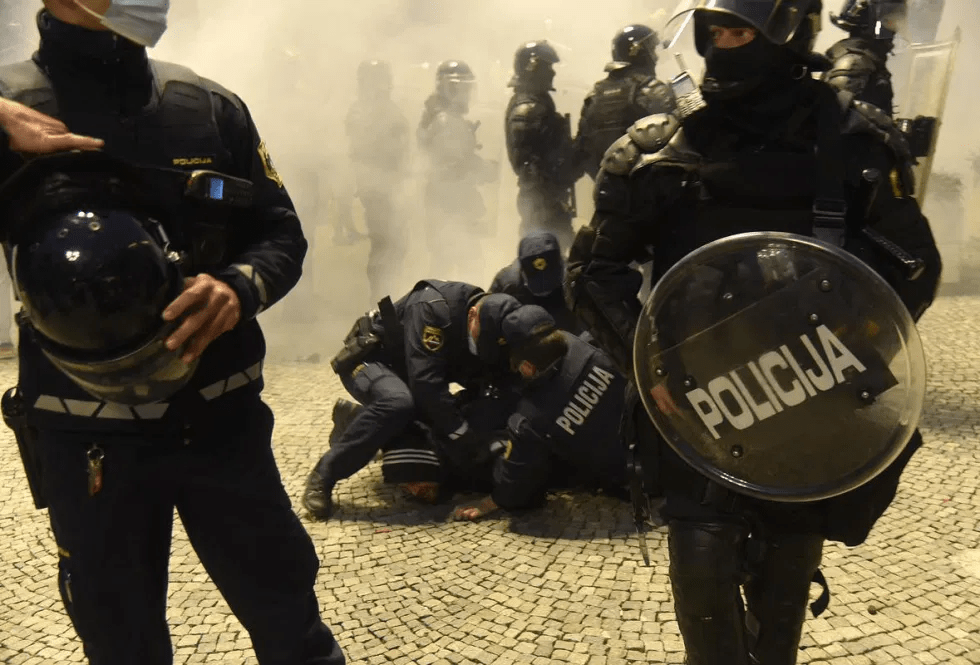
Yet in Europe, where governments have taken a more hands-on approach, their efforts have also provoked popular unrest, as the vast majority of their interventions have focused on expanding the power of the police, not extending resources to those struggling to survive the virus and the economic crisis.
On the eve of a Biden presidency, we should revisit the question of whether we can trust any government to prioritize human life over capitalism and how we can respond when the government uses the pretext of protecting our lives to intensify social control.
Southern Europe saw widespread unrest in Serbia last July in response to uneven preventative measures and the introduction of a new curfew. Riots erupted in Naples on October 23 in response to a new wave of COVID-19 infections and government-ordered lockdowns. These spread throughout Italy, inspiring similar unrest in Spain and in Slovenia as well on November 5.
We share a message sent to GAF announcing a new squat in Amsterdam. Amidst a wave of evictions and anti-squatter propaganda washing all over Europe, the news of a new radical squat opened brings us great joy. In a world ever more asphyxiating of our freedom to exist and live wherever we want to and however we want to, we must open new autonomous spaces to breath, to rest, to plot, to revolt and to imagine new ways of being, as well as making them a reality. Squat the world! Solidarity with all squats!
Three weeks ago the house at Jan Hanzenstraat 115 was re-squatted. The building was left empty for over a year after the previous occupiers were asked to leave, as supposedly it was to be demolished and replaced with four luxury apartments.
The resquatting was done silently and after a few days the cops acknowledged the occupiers domestic peace.
A message from the occupiers:
We are against the state, patriarchy, police violence, capitalism and all forms of hierarchy and oppression. We will defend ourselves, and our right to exist and live the way we want. Gentrification is a direct attack on our communities, our livelihood and our freedom to be in the city.
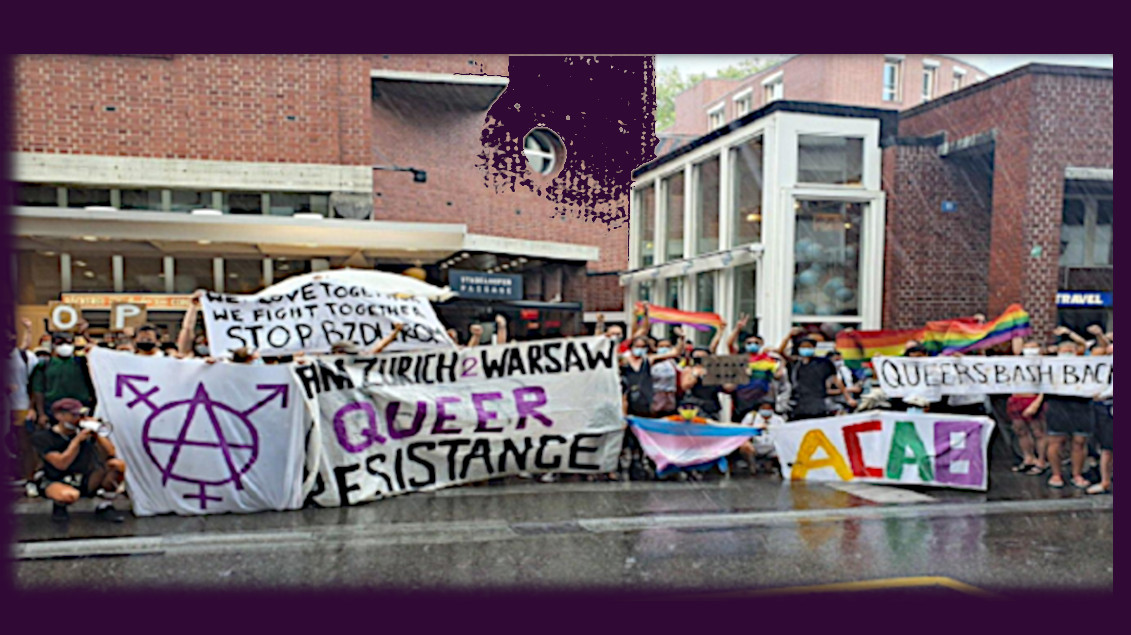
We are queer, feminist, antifascist and we are tired of this shit. Our free spaces are under attack everywhere and we will not stand by quietly watching their destruction. The time to occupy, resist and strike is now. The pandemic has had a disproportionately negative effect on working class people, womxn, Queer and BAME folks and other marginalised groups.
We will not let ourselves be the collateral damage of this crisis. We take care of us. We stand in solidarity with womxn and queer people everywhere, fighting capitalism and patriarchy.
Solidarity to our neighbours from Liebig 34. Our movement is international, it cannot be evicted by the state or contained within national borders.
If you are interested in helping out, learning more, or joining our Open Assembly. Shoot us an email on janhanzenstraat115@protonmail.com
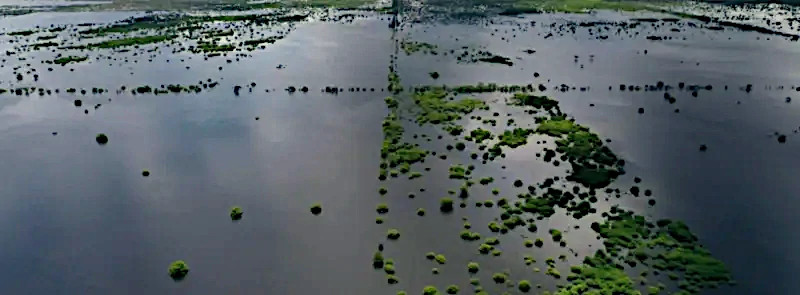
As Hurricane Iota brings more catastrophic flooding to Central America we share a study which details the impunity of illegally allowing the rampant clearing of the unique and priceless jungle for industrial agriculture, and the clear links between this ecocide and unprecedented flooding levels.
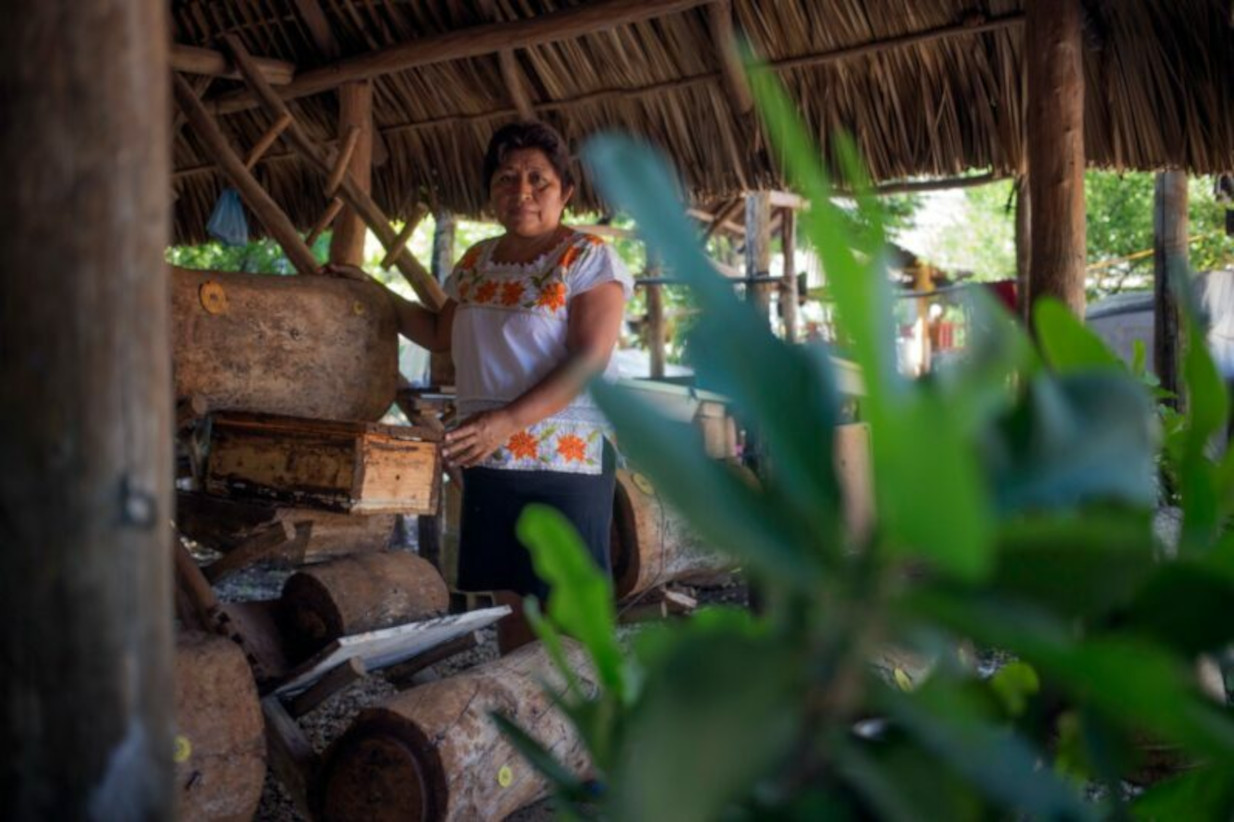
Leidy Pech produces honey with native bees that form their hives in hollow logs. Photo: Robin A. Canul Suarez.
(from the Spanish) ”Mexico: this happens when jungle falls in the Mayan territory”
Hopelchén, Campeche, stands out for being one of the municipalities with the highest deforestation rates nationwide. Large areas of land that a few years ago housed part of the Mayan jungle, are now inhabited by agro-industrial crops.

Beekeepers in the region have long been warning about some of the consequences of the deforestation that is advancing in their territory. This year, in which several tropical storms and hurricanes hit the southeast of Mexico, the vulnerability of a territory that loses its forest reserves became evident.
Just over ten years ago, Leidy Pech and her Mayan companions were already alerting people. In the municipality of Hopelchén, in Campeche, in southern Mexico, deforestation was progressing uncontrollably, large tracts of the Maya Forest were transformed into immense fields of cultivation.
Agribusiness, they said, was changing the face of their communities and the mountains. What they denounced a decade ago still continues.
Leidy Pech, her Mayan companions and around 16,000 families from all over the Yucatan Peninsula are engaged in beekeeping; an activity that depends on the forest being kept standing and in good condition.
Hopelchén, Campeche. Clearing and burning of the forest in April 2016; Today the place is part of the Las Flores Mennonite farmlands., where soybeans are grown. Photo: Franz López.







 Chuck Baclagon November 13, 2020 from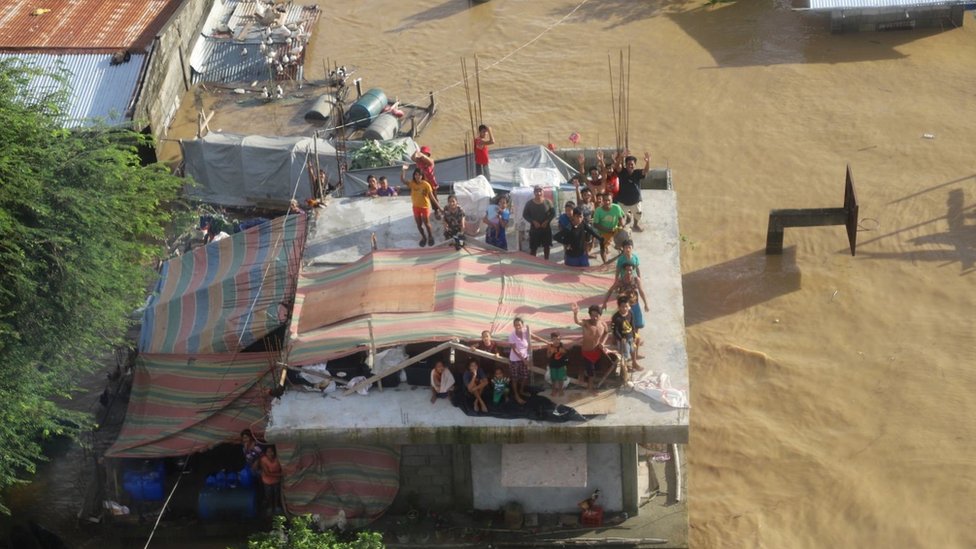




 The Free