
🔗 A Zombie Love Story from George Monbiot
George Monbiot April 02, 2020 at 02:44PM — news from nowhere
Year: 2020
Greta Thunberg Launches ‘Talks For Future’ As Climate Strikes Continue Online
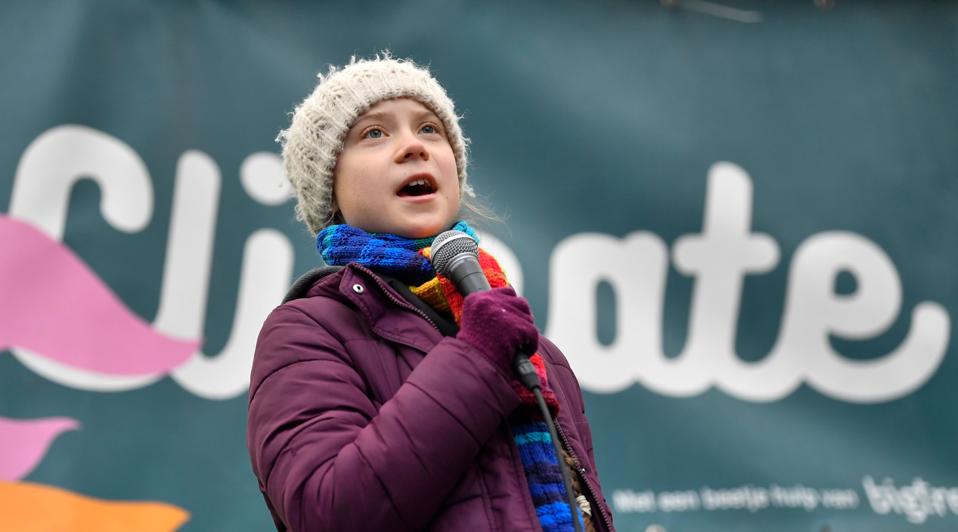
Swedish environmentalist Greta Thunberg speaks during a “Youth Strike 4 Climate” protest march on March 6, 2020 in Brussels. AFP VIA GETTY IMAGES Topline: Swedish climate activist Greta Thunberg has found a quarantine-compliant way to continue leading young people in climate activism. The 17-year-old activist has announced a new initiative: a series of weekly webinars titled “Talks For Future.” […]
Greta Thunberg Launches ‘Talks For Future’ As Climate Strikes Continue Online — County Sustainability Group
These Billionaires Are Hoarding Wealth While Denying Workers Paid Sick Leave
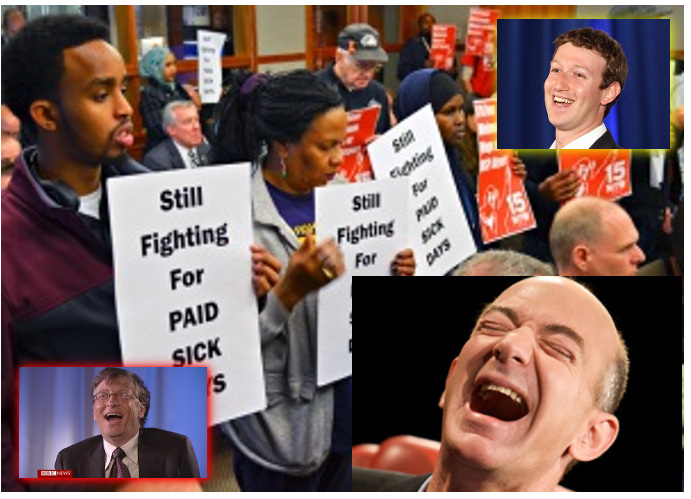
from Radio Free shared with thanks
Many of these workers who are denied sick pay are employed by some of the US’s biggest retail, grocery, fast food, and hospitality corporations, which annually rake in billions in profits. For years, workers and organizers from these industries have been sounding the alarm about the public health reasons we need paid sick time for everyone—let alone that paid sick leave is part of the “complete wage” that all workers deserve as a right.
Now, with the desperate need to contain the coronavirus, many voices are loudly proclaiming the need, right now, to offer paid sick leave to all workers.
For example, the New York Times ran an editorial on March 14th declaring that, now, “the public interest requires employers to abandon their longstanding resistance to paid sick leave.” It reads:
Using data from the Shift Project, the NYT editorial mapped out the millions of workers, by company, who lack paid sick leave:
Here, we profile a few of the corporations that for too long have denied their workers paid sick leave even as they raked in billions in profits. Their owners and CEOs hoard money that could go towards paying the wages of sick workers and instead use this to buy expensive mansions and private planes, and maintain their status as some of the wealthiest people in the world.
Many companies, including some we discuss below, in the face of tremendous pressure, have instituted temporary paid sick leave policies tied solely to the coronavirus. But out of this crisis, paid sick leave for all should become the new and permanent norm—and to make this happen, these are some of the influential companies and billionaires who will need to be challenged.
With 1.5 million workers, Walmart is the largest employer in the U.S.—and an estimated 347,000 workers at the company lack paid sick leave.
As a contrast, it’s worth highlighting the sheer wealth of Walmart’s owners. The Waltons are the richest family in the U.S., worth $130 billion.
To put this in perspective: if you took away half the Walton’s wealth—$65 billion—they’d still be one of the top 5 richest families in the world.
The other $65 billion? Every one of Walmart’s 1.5 million U.S. employees could receive over $43,000.
Meanwhile, Walmart CEO Doug McMillon raked in over $68 million from 2017 to 2019. In 2018, he made 1,188 times more than the company’s median worker.
Because it pays its workers poverty wages, Walmart has been an enormous beneficiary of backdoor subsidies in the form of assistance to its underpaid workers so they can reproduce themselves to labor another day at Walmart. In 2014, example, one report estimated that Walmart received around $6.2 billion in subsidies in the form of food stamps, health care, and other government programs.
And what’s happened when Walmart’s workers have tried to better their lives through collective bargaining? Walmart is a notorious union buster, allegedly shutting down entire stores to crush labor activism.
What Walmart does matters for everyone else. It is the iconic trendsetter of corporate retail in an era of logistics, warehouses, and global supply chains.
Like other corporations, Walmart did finally announce an ad hoc policy of paid sick leave for employees who become infected with the coronavirus or who face quarantine. Workers who don’t want to work out of fear of catching or transmitting coronavirus can stay home—but they won’t be paid.
Walmart is the biggest retail and supermarket employer that lacks paid sick leave for many workers, but far from the only one. Others include Kroger (with an estimated 189,000 workers without paid sick leave), Target (151,000), Dollar General (109,000), and Publix (89,000).
According to OpenSecrets.org, Walmart has spent at least $23,722,760 in federal elections since 1990 and $92,645,000 in federal lobbying since 1998.
Wendy’s & the fast food Industry
Fast food megachain Wendy’s has an estimated 133,000 workers without paid sick leave.
The top owner of Wendy’s is Trian Partners, a hedge fund led by billionaire Nelson Peltz. Trian oversees $10.9 billion in assets. Peltz is worth $1.6 billion.
Wendy’s is one of Trian’s signature portfolio companies. Peltz and Trian dominate the board of Wendy’s—Peltz is Wendy’s board chair, Trian President Peter May is vice chairman, and Peltz’s son Matthew, a Trian Partner, is a board member.
Peltz lives a luxurious life. He owns a Palm Beach oceanfront estate worth an astounding $136.4 million, making it one of the most expensive residential properties in the entire country.
The value of Peltz’s estate alone could cover over $1,000 to every Wendy’s worker without paid sick leave.
And this is just one of Peltz’s homes that we know of. He also owns a 27-room mansion in Bedford, New York. In 2016, he threw a $2 million bar mitzvah party for his son.
Peltz is also a major Trump ally. He recently hosted the priciest fundraiser of Trump’s presidency at his Florida estate, and he’s personally donated $85,800 to Trump since 2016.
Meanwhile, Wendy’s CEO Todd Penegor raked in over $16 million between 2016 and 2018.
Wendy’s is not the only fast food chain that doesn’t offer paid sick leave to workers. Others include McDonald’s (517,000), Subway (180,000), Burger King (165,000), Pizza Hut (156,000), Taco Bell (124,000), Sonic (92,000), Chick-fil-A (89,000), KFC (69,000), and others.
On March 19, Wendy’s finally announced a temporary coronavirus-related paid sick leave policy. McDonalds is also offering 14 paid sick days to employees who require quarantine, though this only applies to corporate stores, not its franchises, which make up 90 perfect of its stores worldwide.
The fast food industry lobbyists, such as the National Restaurant Association, have a long history of lobbying against paid sick leave legislation.
Meanwhile, the Fight for 15 campaign is highlighting the desperate need for paid sick leave in light of the coronavirus, while the New York Times posted a video, viewed by millions, of a shift manager from a Kansas City, Missouri McDonald’s who discusses the incredible stresses that come with a lack of paid sick leave.
Florida fast-food workers are on strike, but doing it from home today instead of a big rally. Workers like us need paid sick leave, whether it’s a #coronavirus pandemic or simply having to take a family member to the doctor. #FightFor15 #UnionsForAll pic.twitter.com/0qXVWuOznk
— Fight For 15 (@fightfor15) March 12, 2020
https://platform.twitter.com/widgets.js
According to OpenSecrets.org, Wendy’s has spent at least $4,019,409 in federal elections since 1990 and $653,500 in federal lobbying since 2007.
Starbucks & coffee megachains
While millions of customers get caffeinated at Starbucks everyday, tens of thousands of its employees regularly lack paid sick leave.
While Starbucks has a better paid sick leave policy than most other fast food and coffee megachains, an estimated 68,000 Starbucks workers still lack paid sick time, according to the Shift Project.
Moreover, just last year, Starbucks was forced to pay $176,000 in restitution to New York City employees for illegally requiring workers to find replacements when they needed to use sick leave.
Gaby Del Valle of Vox.com also reported on March 16:
A former Starbucks employee, who worked as a shift supervisor until last week, said management didn’t always adhere to the company’s sick-leave policies. “In practice, through the several stores I worked at, I encountered a prevailing culture [that] discouraged taking sick time,” he said. “During my last few months, before coronavirus hit, there were numerous instances where employees would come into work visibly sick, afraid of calling out because they believed management and other staff wouldn’t support them.”
Starbucks owner and CEO Howard Schultz, who briefly entertained a 2020 presidential run, is worth $3.24 billion as of March 24. Schultz also co-founded Maveron Capital, a venture capital firm.
Schultz reportedly owns a $40 million New York City penthouse, a $33 million Hawai’i estate, and a luxurious Seattle-area home.
Starbucks workers took it upon themselves to organize for their own safety against the coronavirus. They created a petition created to temporarily close the company’s stores in the face of the pandemic, which received over 37,000 signatures.
In a petition with over 25K signatures, Starbucks employees are calling for the company to “suspend all business hours, at every location, while continuing to pay hourly and salary workers, during the spread of the coronavirus.” https://t.co/V11DSpyMml
— New York Daily News (@NYDailyNews) March 20, 2020
https://platform.twitter.com/widgets.js
The petition declared: “Starbucks should suspend all business hours, at every location, while continuing to pay hourly and salary workers, during the spread of the coronavirus.”
Days later, Starbucks announced that it was closing all its cafes and only keeping its drive-thrus open. It also announced that all workers would be paid for the next 30 days, even if they don’t go to work.
But other attempts by Starbucks workers to better their own lives have been met by intense hostility from management.
Howard Schultz has been a notorious union buster. Terri Gerstein, Director of the State and Local Enforcement Project at the Harvard Law School Labor and Worklife Program, wrote last year:
For one, during Schultz’s long tenure as CEO, Starbucks repeatedly fought against workers’ attempts to organize a union. In 2008, for example, a National Labor Relations Board judge found that the company had illegally fired three workers for their union activities, as well as violated other aspects of the law. Starbucks workers in our country still don’t have a union.
Just last month, a Starbucks worker at a store in the Orlando airport was fired for trying to organize his fellow workers into a union with UNITE HERE.
According to OpenSecrets.org, Starbucks has spent at least $1,364,482 in federal elections since 1994 and $11,218,000 in federal lobbying since 1994.
Marriott International & the hotel industry
Marriott International, which is worth $45.3 billion and owns such prestigious chains as the Ritz-Carlton, has 139,000 workers currently without paid sick leave, according to the Shift Project.
The Marriott family, who founded the company in 1927 and remain its top owners, were worth nearly $6 billion as of 2015.
Marriott’s CEO Arne Sorenson has been in his position since 2012, previously serving as the company’s President and COO. He’s the company’s first CEO outside of the Marriott family.
Sorenson was previously a member of the board of directors of Walmart, a company, like Marriott, that is notorious for leaving its workers without basic protections. Sorenson raked in hundreds of thousands of dollars as a Wamart director. He also serves on the board of the Brookings Institute.
As Marriott’s CEO, Sorenson raked in almost $40 million in total compensation between 2016 and 2018 alone and is likely worth well beyond that. While Marriott has suspended or cut his and other senior executives’ salaries for the rest of 2020 due to the coronavirus, this will hardly make a dent in Sorenson’s net wealth.
In the midst of the current global pandemic, Marriott has ignored the safety of its workers by, as of March 25, failing to provide paid sick leave. Last week the company announced that it would be furloughing tens of thousands of workers around the world, leaving them without pay. Meanwhile, hotel and travel industry lobbying groups, and hotel CEOs that included the CEOs of Marriott and Hilton, met with the White House last week to ask for $250 billion in bailouts to the industry.
UNITE HERE, which represents many hospitality workers across the nation and has fought for paid sick leave for their Marriott workers, has said that they might dip into union strike funds to assist laid off and sick workers who need assistance. Not all Marriott workers are unionized, leaving many without support as this crisis continues.
Marriott’s anti-worker antics are nothing new. In 2018, nearly 8,000 Marriott employees in eight cities represented by UNITE HERE had to resort to a strike in frustration over stalled bargaining with the company over higher wages and greater safety measures for employees.
According to OpenSecrets.org Marriott International has spent $18,655,000 on federal lobbying since 1999 and $8,656,144 on federal campaigns since 1990.
Whole Foods & grocery chains
Whole Foods, purchased by e-commerce giant Amazon in 2017, fails to provide
paid sick leave to an estimated 30,000 workers, according to the Shift Project.
Grocery store employees have become front-line workers in the face of the COVID-19 pandemic in the US. Workers at Whole Foods and other grocery workers have been expressing their frustrations with the way that industry leaders are handling the crisis as stores are flooded with shoppers trying to secure provisions for shelter in place measures.
Grocery chains have historically fought against paid sick leave legislation and now have large swaths of the U.S. workforce at the forefront of the crisis without essential benefits and protections. Kroger grocery chain has over 189,000 workers working without paid sick leave, Publix chain has another 89,000, Meijers has 57,000, and Wegmans has 43,000, according to the Shift Project—though some of these chains, including Whole Foods, have enacted temporary paid sick leave policies only tied to the coronavirus.
Amazon made record profits of $11.2 billion in 2018 and continues its expansion. In contrast, Amazon says it paid 1.2 percent in federal taxes in 2019, while the average American pays 14 percent in federal taxes.
Amazon’s owner and on-and-off again richest man on earth, Jeff Bezos is estimated to be worth over $115 billion.
Recently, Whole Foods has offered their employees a $2/hour pay increase through April, which doesn’t even meet the federal labor relations provisions for a 25 percent wage increase for employees working under hazardous conditions. And Whole Foods still provides no paid sick leave to employees unless they are diagnosed with COVID-19. Instead, the company is encouraging employees to “donate” their paid sick days to employees who need it.
Whole Foods CEO suggests employees who are not sick “donate” their vacation time to employees who are sick: https://t.co/Aw2gUqEpCD
— Jason Koebler (@jason_koebler) March 13, 2020
https://platform.twitter.com/widgets.js
This all comes after Whole Foods announced that they would be cutting medical benefits for part-time workers in September 2019.
And in 2018 Whole Foods sent store managers how-to videos on discouraging employees from unionizing.
According to OpenSecrets.org, Amazon has spent $20,857,113 on elections since 1998 and $91,497,031 on lobbying since 2000.
Towards paid sick leave for all workers—permanently
Workers, many already on the edge of despair and living paycheck-to-paycheck, are being hit incredibly hard by this crisis and pushed deeper into a state of precarity. Eighteen percent of workers report having lost jobs or hours since the crisis began. The president of the Federal Reserve Bank of St. Louis President James Bullard is predicting the U.S. unemployment could hit 30 percent later this year.
At the same time, as Mindy Isser writes, this crisis is also becoming a moment for new gains by workers and their communities, often through them exerting their own power.
New York City teachers forced Mayor De Blasio to shut down city schools by threatening a sick-out. Autoworkers have taken wildcat actions to shut down plant production. Thousands of people signed a petition organized by Philadelphia library workers to close the city’s libraries, with paid leave for employees. Organizers across the U.S., from California to Massachusetts, have won victories to suspend evictions and utilities shut-offs.
Labor Notes reporter Dan DiMaggio has also surveyed how a range of workers—from daycare workers in Oregon to hospitality workers in New Orleans—have fought for sick pay.
As big businesses and Wall Street firms call for corporate bailouts and try to find ways to profit off of this crisis, many will be pushing in another direction: organize and build workers’ power so that this period of collective sacrifice can become a springboard to advance workers’ rights and remake our social safety.
This piece was first posted at LittleSis.
These Billionaires Are Hoarding Wealth While Denying Workers Paid Sick Leave — Radio Free
Let’s not spread the COP virus – They’re a virus that won’t leave us alone —


An appeal to citizens in times of the Corona Virus. Originally published on the Spanish territory (Leaflet by anonymous). Translated into French by Nantes Indymedia. Englisch Translation Anarchists Worldwide.
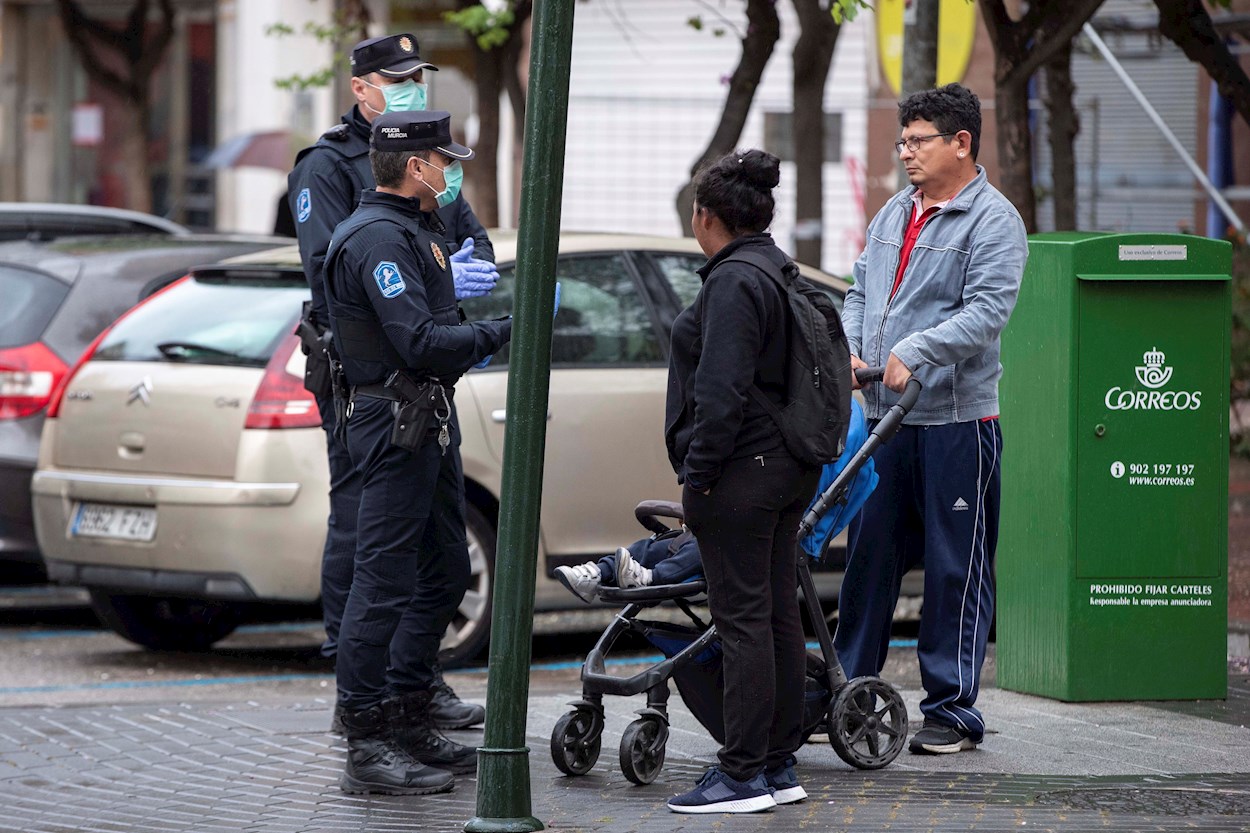
APPEAL TO CITIZENS TO AVOID CONTAMINATION by ”COP VIRUS” . If you see a street vendor on the street, don’t call the police to report them. Go and buy something…
Let’s not spread the cop virus – they’re a virus that won’t leave us alone
An appeal to citizens in times of the COP Virus.
Originally published on the Spanish territory (Leaflet by anonymous). Translated into French by Nantes Indymedia. Englisch Translation Anarchists Wordlwide.
APPEAL TO CITIZENS TO AVOID CONTAMINATION
If you see a street vendor on the street, don’t call the police to report them. Go and buy something from them.
If you notice they aren’t wearing a mask, don’t yell at them, try and get them one. Don’t be a cop.
If you hear that your neighbor is showing symptoms, don’t look out the window to see if they are shopping. Ask them if they need anything. Don’t be a cop..

If you see people walking around your neighborhood, try not to assume the worst, don’t call the police. Maybe they had to go to work. A lot of people don’t have the privilege of shutting themselves away at home with a full fridge. Don’t be a cop.
If you have to go out shopping, don’t make hateful glances at people around you for fear of infection. Just say hello. Make conversation. Other people aren’t your enemy. Don’t be a cop.
If you meet somebody who lives on the street, don’t cross the road out of fear. If you can, offer them food, a mask, water. Don’t be a cop.
LET’S NOT SPREAD THE COP-VIRUS.
It’s a virus that won’t leave us alone.
Support Enough 14!
Donation for our work in the Enough 14 info-café (Because of the temporary Corona closure, more needed than ever before) and our independent reporting on our blog and social media channels. Even 1€ can make a difference…Enough 14 –
«Huelga de alquileres»: RentStrike «Es la hora de rescatar a las personas»

Bloque11EspecCampañasEstado español
Lanzan la web «suspensión de alquileres»: «Es la hora de rescatar a las personas»
Más de 200 organizaciones nos unimos en esta huelga de alquileres para exigir al Gobierno medidas que cubran los derechos más básicos durante el confinamiento.
Por Suspensión de Alquileres Publicado el Mar 31, 2020
- Suspensión de los pagos del alquiler e hipotecarios a la vivienda habitual. Y la condonación de las deudas inquilinas e hipotecarias contraídas a raíz de la pandemia. Hay que aliviar la asfixia económica de la población. En este aspecto iterpelamos a la responsabilidad social de los arrendadores, habida cuenta de las execciones fiscales de las que disfrutan y pagamos entre todas.
- Suspensión del pago de los suministros básicos de agua, luz y gas. Hablamos de servicios básicos para garantizar la vida de las familias. Endesa, Iberdrola y Naturgy cosecharon más de 5.700 millones de beneficios en el último año. Lo que supone que el encarecimiento de las facturas aumentó 35 veces más que el consumo de energía.
- Poner las viviendas vacías a disposición de las personas que no disponen de una. Hay más de 35.000 personas sin hogar que necesitan una vivienda.
Sin embargo, no nos quedamos aquí. Somos conscientes de que las consecuencias socioeconómicas se mantendrán más allá del confinamiento. Por ello, nos adelantamos a este contexto proponiendo soluciones post-confinamiento:
- Mantener la suspensión del pago del alquiler el tiempo que sea necesario a aquellas personas en situación de vulnerabilidad.
- Suspensión indefinida de los desahucios y persecución de los desahucios ilegales. No aceptamos que vuelvan los desalojos tras el confinamiento. Antes de la pandemia, el número de desahuciosdesalojos que se había alcanzado desde 2008 ya superaba el millón de desahucios.
- Regulación del precio del alquiler. Ingresos bajos frente a precios altos es la fórmula de la asfixia económica. EAdemás, exigimos la bajada inmediata del precio del alquiler y que este vaya ligado a la renta disponible de los hogares. Los contratos de alquiler tienen que ser estables, que se renueven de manera automática, y se ponga fin así a la actual precariedad e incertidumbre.
- Que no se retroceda en medidas de protección tomadas durante el confinamiento. Manteniendo el alta de los suministros básicos a las personas vulnerables, el régimen de viviendas de alquiler para pisos turísticos y sustentar la moratoria de desahucios.
- Compromiso de no tomar represalias contra las huelguistas. Prohibiendo las demandas por impago a las inquilinas que se hayan unido a la huelga.
- Expropiación de pisos a fondo buitres y bancos. Debemos corresponsabilizar a aquellos actores que han hecho negocio con unel bien de primera necesidad como es la vivienda. Fondos buitres y bancos deben contribuir conproporcionar en dotar recursos para superar las consecuencias habitacionales de la pandemia. Recordemos que la banca fue rescatada con más de 65.000 millones de dinero público y los fondos buitre son maquinarias de evasión fiscal.
Hay que acabar con la lógica perversa de que las crisis sean sufragadas con recursos públicos. Durante esta pandemia ha quedado patente que necesitamos unos servicios públicos fuertes. Conceder privilegios a las grandes fortunas inmobiliarias mientras se recortan derechos sociales ha puesto nuestras vidas en riesgo. Las entidades financieras y los grandes propietarios de este país tienen que arrimar el hombro.
Los fondos buitre, socimi, bancos e inmobiliarias no van a tener problemas en asumir los costes de la suspensión de los alquileres. En relación a los arrendadores que tienen un única vivienda en propiedad y necesiten estos ingresos para cubrir sus necesidades básicas, también deben estar amparados por el Gobierno, como ya están haciendo a otros sectores.
Es la hora de rescatar a las personas. Es el momento de confinar privilegios. La suspensión del pago de los alquileres es el primer paso necesario para devolver la función social a la vivienda y superar las consecuencias sociales de la pandemia.

Fuente: Suspensión de Alquileres
.
.
Coronavirus news from Britain — RENT STRIKE NOW
Tuesday, March 31, 2020
‘Suspend rent during Covid-19 pandemic’
Tenant unions warn many still at work despite health advice due to fear of missing payments
CAMPAIGNERS called for the suspension of rents today, arguing that government inaction will force people to keep working and put the public at risk.
Capitalist Death Panels: If Corporate Vultures Get Their Way, We’ll Be Dead —

- intercepted-podcast ..via Radio Free… *Tweets added
The Trump administration is pushing a deadly cocktail of lies and propaganda.
This week on Intercepted: As coronavirus rapidly spreads throughout the United States, major public health organizations are warning that New York could become the next Wuhan.
While Trump fantasizes of wrapping up the virus in time for Easter church services, people are getting sick and dying, hospitals are overwhelmed, medical workers are begging for vital supplies and protesting their conditions.
As Congress continues to negotiate a bailout, Republicans seem intent on exploiting the crisis to enrich Wall Street, while Democrats offer meek resistance.

Matt Bruenig of the Peoples Policy Project breaks down the various proposals in Congress, compares the U.S. plans with other countries’ responses, and lays out some of the tenets of what a bailout for the people should look like.
Meanwhile, the fate of more than 2 million people locked up in U.S. jails and prisons hangs in the balance as coronavirus begins to spread among incarcerated populations.
Workers at carceral facilities are also getting sick. While some cities are working to release pre-trial detainees and people convicted of non-violent technical crimes, legal groups and human rights organizations are sounding the alarm bells on what could be a horrifying aspect of the coronavirus pandemic hitting people who are literally prevented from social distancing.
Premal Dharia, Founder and Director of the Defender Impact Initiative, describes the situation in carceral facilities across the U.S. and why she is warning of a humanitarian disaster if action is not taken immediately.
Capitalist Death Panels: If Corporate Vultures Get Their Way, We’ll Be Dead
Transcript coming soon.
Coronavirias< Look on my Works, ye Mighty, and despair! -standupandspit-

Coronavirias
I met a traveller from a Poundland,
Who said—“Two vast and discount toilet rolls
Stand in the Sainsburys. . . . Near them, on the stand,
Half sunk a shattered hand sanitizer lies, worn down,
And wrinkled tip, and nearby a coal tar multipack,
Tell that its panic buyer well those passions read
Which yet survive, price stamped on these lifeless things,
Hands washed to National Anthem, and the heart that fed;
And on the pedestal, these words appear:
My name is Coronavirus, King of Kings;
Look on my Works, ye Mighty, and despair!
Nothing beside remains. Round the decay
Of that colossal shop, boundless and bare
The lone and level stands stretch far away.”
Coronavirias — standupandspit
 The Free