
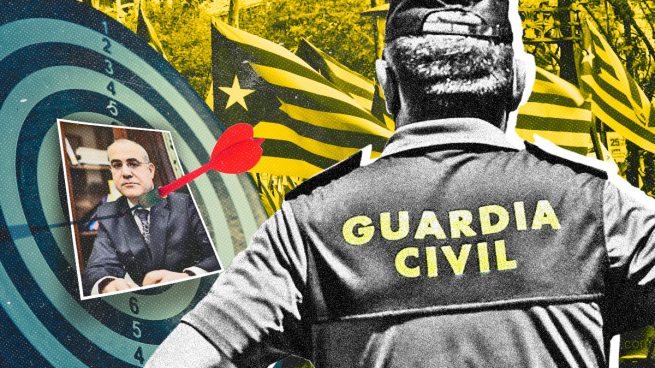
The judge of the National Court Manuel García Castellón affirms that they were part of a “clandestine” and “radicalized” cell that wanted to assault the Parliament of Catalonia.

“Assault” the Parliament! Really? Or were they just thinking about a Sit-In to protest the jailing of the President and half the Ministers for obeying their electorate who overwhelmingly demanded a peaceful Referendum on Independence.
A referendum which was violently attacked by imported paramilitary Spanish police , and which was the result of generations of political, cultural and financial repression, and long negotiated agreements blatantly broken.

Young activists facing decades in prison for a terrorist thought crime, who were representing hundreds of local CDR groups… Committees for the Defense of the Republic, which in turn are the youth wing of civic organizations representing millions of people, with a left wing majority. The CDRs are open community groups run by assembly consensus on libertarian lines.
Accused of Terrorism in favour of a Republic… Really? The last Spanish Republic was destroyed in rivers of blood, followed by a 40 year fascist catholic dictatorship, and a monarchy appointed by the dictator. It was replaced finally by an amnesty, and a “Democracy” which left the fascist police, judiciary, hierarchy, monarchy and ruling class with the real power and wealth, and the legal democratic Republic not restored. So how can asking for a Republic be a seditious crime?
A ruling class which launched a huge ‘money no object’ spy and infiltration operation against the CDRs. With the object to propose actions that the militants could hardly refuse, then pin something, anything, on them that could put them away for life. As for the “clandestine laboratories” after 3 years investigation the report stays vague, reminding us of a previous case when the “explosive and flammable substances” turned out to be just cleaning chemicals.
The Catalan nationalists haven’t killed anyone yet, despite immense provocation. They had to be demonized. They call it Operation Judas. 3 years later, with fascism on the rise and a left of center coalition clinging to power, the politicized judiciary seems more likely to placate their right-wing base than to ease outrage in Catalonia.

Political repression: The 13 CDR activists of ‘Operation Judas’ are prosecuted for terrorism

Antifascismo –by Kaos en la red Sep 15, 2021 translation theFreeOnline
The magistrate of the National Court Manuel García Castellón has prosecuted for belonging to a terrorist organization the 13 alleged members of the Committees for the Defense of the Republic (CDR) linked to the so-called ‘Operation Judas’, in September. 2019, and in nine of them, in more, for possession, storage and manufacture of explosive and flammable substances or devices of a terrorist nature.
In his act of prosecution, the magistrate considers that this group formed within the CDRs the so-called Tactical Response Team (ERT), a cell made up of those investigated made up of a small group of individuals from different CDRs, who “show great radicalism” and he intended to storm Parliament.
:format(jpg)/https://f.elconfidencial.com/original/da9/0ad/f3e/da90adf3ea562e462ad31d4918e933d6.jpg)
The creation of this cell is motivated, continues the judge, by the need to have within the structure of the CDR a clandestine group of individuals of the utmost trust and who could be totally available to “the cause”, having been entrusted with the task of performing the most sensitive actions.
Those investigated, all of them, says the instructor, share ideological principles favorable to the independence of Catalonia and the radical activism to achieve it;

Its final objective as an organization was to achieve the independence of Catalonia, using violence in its maximum expression, thereby forcing, in a coercive way, the institutions to grant the separation of Catalonia from the rest of Spain by their deeds .
Plans for the occupation of the Parliament of Catalonia
According to the 45-page indictment, the members of the ERT had an active participation in the materialization of some of the most forceful actions carried out by the CDRs, such as roadblocks, oil spillage on the road of the C- 55 in a place of obligatory passage of the police convoy that transferred the imprisoned politicians from the Lledoners prison in Catalonia to Madrid, lifting of motorway toll barriers, among others.
:format(JPG)/f.elconfidencial.com/original/4eb/dd8/211/4ebdd8211ba52e964af5910940fe8736.jpg)
Can they be serious? These are the terrorist crimes?!
Those investigated, as members of the ERT, the letter continues, participated in the creation and development of the CECOR (coordination center) for the actions of the CDRs, assuming the order received from one called ‘Catalan CNI’ to provide the logistics infrastructure necessary in order to undertake an action in which it was intended to occupy the Parliament of Catalonia and defend it later.
All this, taking into account the technical and human capacity of the aforementioned group, due to the fact that to carry out the acts, significant knowledge in illegal networks and clandestine telecommunications security would be necessary, as well as an important mobilization capacity.
As accredited details of the aforementioned plan, the resolution explains, the occupation would be carried out through the main door of Parliament since, supposedly, access would be facilitated from the inside.
Together with a small group of people, they would cooperate with the group called ‘CNI’, and would be in charge of renting real estate and premises that would provide them with security and the establishment of “quartermaster” bases, to remain inside the building at least a week, setting up long-distance antennas to maintain communications, all with a budget estimated at 6,000 euros.
For this, the services of the investigated Ferran J. would be essential, due to his extensive knowledge of the IT and telecommunications section, in order to make a secure and undetectable network that would allow communications between the interior and exterior of Parliament.
In this way, those investigated, taking advantage of the contacts fostered within the militancy in the CDR, “became a cell that raised the intensity and nature of the actions carried out, to a higher level,” says the judge.
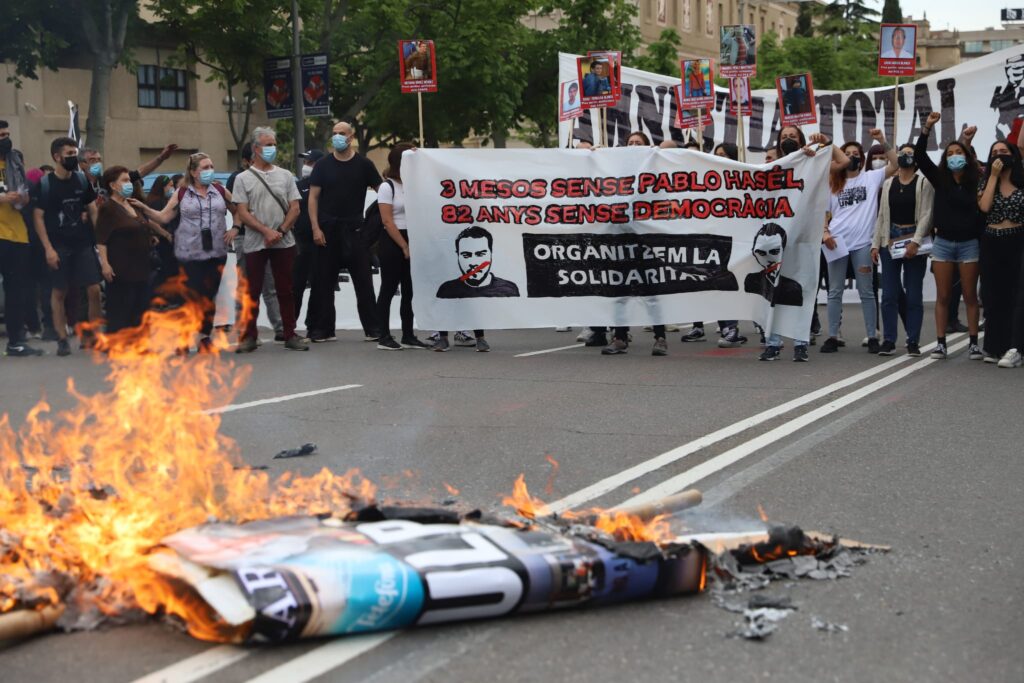
“Those investigated constituted a terrorist organization”
The magistrate points out that those investigated, as members of the YERTO, “would have surpassed the activity within the respective CDR and formed a parallel terrorist organization, clandestine and stable, the objective of which would be to carry out violent actions or attacks against previously selected targets, using explosives and incendiary substances manufactured in the two clandestine laboratories that the same organization had installed in two private homes.
The organization, at the time of its dismantling, had already acquired precise information on its possible objectives.
Specifically, the judge points out that Jordi R. and other members of the organization have developed preparatory acts, consisting of a task of recognition of targets, surveillance and control of police facilities, taking photos and videos of the predetermined targets.
In the photographs of the selected objectives, he indicates, certain aspects of the facilities are collected, such as entrances, surveillance cameras, location of electrical towers (among others), police officers and license plates of police vehicles.

The order lists the objectives of which evidence has been obtained in different image supports on which the group intended to perpetrate some type of action or attack, among them, the Naval Command of Barcelona, the Military Government of Barcelona, the Government Delegation of Spain in Barcelona, the Superior Prosecutor’s Office of Catalonia, the Command of the Civil Guard of the province of Barcelona, members, vehicles and facilities of the security forces and bodies, high voltage towers, installations on motorways, tolls and the Parliament of Catalonia .
The judge highlights the recognition of the perimeter of the headquarters of the Barcelona Civil Guard, located in Sant Andreu de la Barca (Baix Llobregat), which Jordi R. would have carried out on May 18, 2019 in the company of his sentimental partner Montserrat C ..
In addition to the above objectives, the resolution maintains, Jordi R. carried out different investigations on the internet through his data devices relating to people linked to political parties opposed to independence and a policeman of the Mossos d’Esquadra .

The judge prosecutes Eduardo GB, Esther GC, Sonia PG, Queralt CR, Germinal for belonging to a terrorist organization and also for the crime of possession, deposit, as well as the manufacture of explosive and flammable substances or devices or their components, of a terrorist nature.
TA, Alexis CB, Jordi RS, Guillem Xavier DP and Rafael Joaquín D.L., which can lead to penalties from 6 to 27 years in prison. For belonging to a terrorist organization he prosecutes Ferran J.G., Xavier B.L., David B.A. and Clara B.M., a crime that can carry penalties of 6 to 12 years in prison.
The magistrate has imposed a bond of 1,000 euros each, which they will have to pay within 24 hours from the notification of the processing. In addition, he will summon them for a final investigatory statement. The case can be appealed.
Represión política: Procesados por terrorismo los 13 activistas de los CDR de la ‘Operación Judas’
El juez de la Audiencia Nacional Manuel García Castellón afirma que formaban parte de una célula «clandestina» y «radicalizada» que quería asaltar el Parlament de Catalunya.
Por Kaos. Països Catalans Publicado el 15 Sep, 2021 Patrocinado
El magistrado de la Audiencia Nacional Manuel García Castellón ha procesado por pertenencia a organización terrorista a los 13 presuntos miembros de los Comités de Defensa de la República (CDR) vinculados con la denominada ‘Operación Judas’, practicada en septiembre de. 2019, y en nueve de ellos, en más, por tenencia, depósito y fabricación de sustancias o aparatos explosivos e inflamables de carácter terrorista.
En su acto de procesamiento, el magistrado considera que este grupo formaba dentro de los CDR el llamado Equipo de Respuesta Táctica (ERT), una célula integrada por los investigados formada por grupo reducido de individuos de diferentes CDR, que «evidencian una gran radicalidad» y pretendía asaltar el Parlamento.

La creación de esta célula viene motivada, prosigue el juez, por la necesidad de contar dentro de la estructura de los CDR con un grupo clandestino de individuos de la máxima confianza y que se muestran totalmente librados a «la causa», habiéndole sido encargadas la realización de las acciones más sensibles.
Planes para la ocupación de Parlament de Catalunya
Según el auto de procesamiento, de 45 páginas, los miembros del ERT tuvieron una participación activa en la materialización de algunas de las acciones más contundentes que llevaron a cabo los CDR, como cortes de carretera, vertido de aceite en la calzada de la C-55 en un lugar de paso obligatorio de la comitiva que trasladaba a los políticos presos desde la prisión de Lledoners a Madrid, levantamiento de las barreras de los peajes, entre otros.
Los investigados, como miembros del ERT, continúa el escrito, participaron en la creación y desarrollo de los CECOR (centro de coordinación) para las acciones de los CDR, asumiendo el encargo recibido de uno denominado ‘CNI catalán’ para que aportaran la infraestructura logística necesaria con el objetivo de emprender una acción en la cual se pretendía ocupar el Parlament de Catalunya y defenderlo posteriormente.
Todo eso, teniendo en cuenta la capacidad técnica y humana del mencionado grupo, por|para el hecho de que para realizar los actos, serían necesarios importantes conocimientos en redes ilícitas y clandestinas securitzades de telecomunicaciones, así como una importante capacidad de movilización.
Como detalles acreditados del mencionado plan|plano, explica la resolución, la ocupación se realizaría por la puerta principal del Parlamento ya que, supuestamente, se les facilitaría el acceso desde el interior. Al lado de un reducido grupo de personas, cooperarían con el grupo denominado ‘CNI’, y se encargarían del alquiler de inmuebles y locales que les proporcionaran seguridad y el establecimiento de bases de «intendencia», para permanecer en el interior del edificio al menos una semana, montando antenas de larga distancia para mantener las comunicaciones, todo eso con un presupuesto estimado en 6.000 euros.
Para eso, serían esenciales los servicios del investigado Ferran J., por sus amplios conocimientos en el apartado informático y de telecomunicaciones, a los efectos de confeccionar una red securitzada e indetectable que permitiera las comunicaciones entre el interior y exterior del Parlamento. De esta manera, los investigados, aprovechándose de los contactos propiciados en el seno de la militancia en los CDR, «se constituyeron en una célula que elevaba la intensidad y la naturaleza de las acciones llevadas a cabo, a un nivel superior», asegura el juez.
Los investigados constituyeron una organización terrorista
El magistrado señala que los investigados, como miembros del YERTO, «habrían superado la actividad dentro del respectivo CDR y conformado una organización terrorista paralela, de carácter clandestino y estable, el objetivo de la cual sería llevar a cabo acciones violentas o atentados contra objetivos previamente seleccionados utilizando para eso los explosivos y sustancias incendiarias fabricadas en los dos laboratorios clandestinos que la misma organización tenía instalados en dos domicilios particulares».
La organización, en el momento de su desarticulación, ya había llevado a cabo informaciones precisas de sus posibles objetivos. En concreto, el juez apunta que Jordi R. y otros miembros de la organización habrían desarrollado actos preparatorios, consistentes en una tarea de reconocimiento de objetivos, vigilancia y control de instalaciones policiales, toma de fotografías y vídeos de los objetivos predeterminados.
En las fotografías de los objetivos seleccionados, indica, se recogen determinados aspectos de las instalaciones, como accesos, cámaras de vigilancia, localización de torres eléctricas (entre otros), agentes policiales y placas de matrículas de vehículos policiales.
El auto relaciona los objetivos de los que se han obtenido evidencias en diferentes soportes de imagen sobre los cuales el grupo pretendía perpetrar algún tipo de acción o atentado, entre ellos, la Comandancia Naval de Barcelona, el Gobierno Militar de Barcelona, la Delegación del gobierno español en Barcelona, la Fiscalía Superior de Cataluña, la Comandancia de la Guardia Civil de la provincia de Barcelona, miembros, vehículos e instalaciones de las fuerzas y cuerpos de seguridad, torres de alta tensión, instalaciones en autopistas, peajes o el Parlament de Catalunya.

El juez destaca el reconocimiento del perímetro del cuartel de la Comandancia de la Guardia Civil de Barcelona, situada en Sant Andreu de la Barca (Baix Llobregat), que Jordi R. habría llevado a cabo el día 18 de mayo del 2019 en compañía de su pareja sentimental Montserrat C.. Además de los anteriores objetivos, sostiene la resolución, Jordi R. habría realizado diferentes investigaciones en internet a través de sus dispositivos de datos relativos a personas vinculadas a partidos políticos contrarios a la independencia y de un mosso d’Esquadra.
El juez procesa por pertenencia a organización terrorista y también por delito de tenencia, depósito, como también fabricación de sustancias o aparatos explosivos e inflamables o de sus componentes, de carácter terrorista, a Eduardo G.B., Esther G.C., Sonia P.G., Queralt C.R., Germinal T.A., Alexis C.B., Jordi R.S., Guillem Xavier D.P. y Rafael Joaquín D.L., que pueden suponer, penas de 6 a 27 años de prisión. Por pertenencia a organización terrorista procesa a Ferran J.G., Xavier B.L., David B.A. y Clara B.M., delito que puede suponer penas de 6 a 12 años de prisión.
El magistrado les ha impuesto una fianza de 1.000 euros a cada uno, que tendrán que pagar en 24 horas desde la notificación del procesamiento. Además, los citará para una declaración indagatoria final. El auto se puede recurrir.

 The Free