Health officials are reinstating and extending mask mandates, citing a surge in the Omicron BA.2 variant, but data don’t appear to support those decisions.
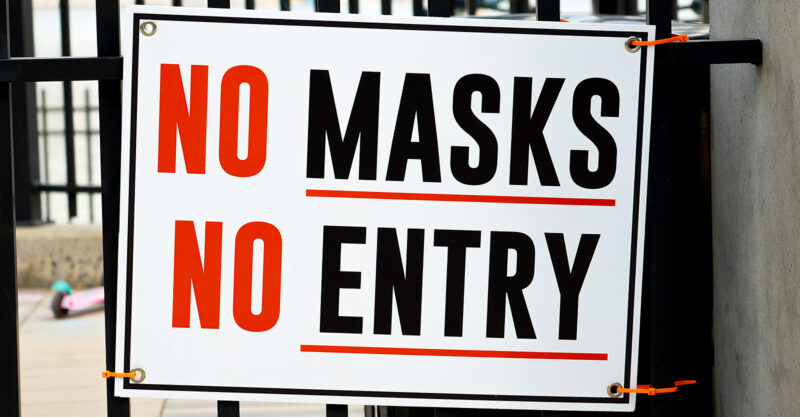
Philadelphia on Monday became the first major city to reinstate its mask mandate, citing the spread of the COVID-19 Omicron BA.2 variant.
Columbia University, Georgetown, Barnard College and Johns Hopkins University this week reinstated mask mandates for their campuses.
And the Centers for Disease Control and Prevention (CDC) extended the mask mandate for public transportation, which was supposed to expire April 18, until May 3.
Are these decisions supported by science?
That was the question political commentator Kim Iversen asked viewers on Thursday’s segment of The Hill’s “Rising.”
Iversen reviewed case and mortality data from the cities of Philadelphia and Washington, D.C.
She also examined nationwide data from the CDC, looking for evidence that would justify the return to masks.
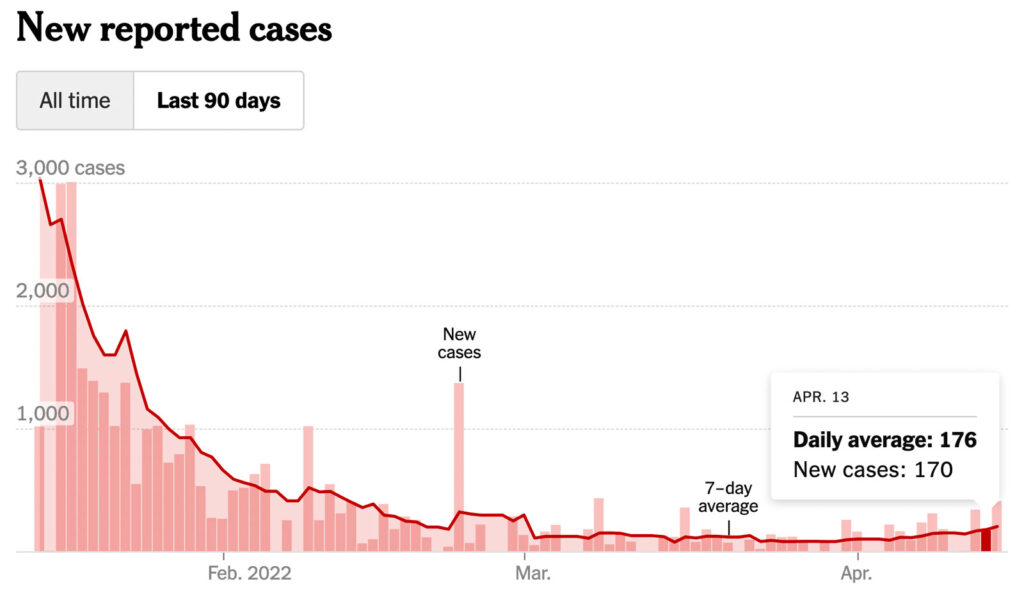
“The cases are extremely low,” she said. “They’re currently looking at a seven-day average of 176 cases per day, and that’s in a city of 1.5 million.”
“Now compare this to even the little baby wave the city had in September, which had them seeing about 450 cases per day,” Iversen said.
Iversen then compared Philadelphia’s current numbers to the city’s Omicron surge in January, when officials recorded about 5,000 to 6,000 cases per day on average.
Deaths currently are averaging two per day, she noted, which is down 22% during the last two weeks.
“We also don’t know if these people died of COVID or with it, as a lot of places will list a person as a COVID death if they just test positive, despite them dying of other obvious ailments like cancer or injuries,” Iversen said.
The chart was similarly flat for Washington, D.C. — home of Georgetown University — which recorded just a “slight uptick” in cases and “zero deaths.”
Turning to the question of the efficacy of masking in preventing transmission, Iversen cited a tweet from Justin Hart at Rational Ground.
Hart summarized nationwide data from the CDC that compared the average number of cases for 100,000-plus population counties with and without mask mandates.
The blue line represents counties that had mask mandates and the orange line represents the counties that didn’t:
Last week the CDC updated its policy tracker for public mask mandates noting whether or not a county had a mask mandate in place on a given day. From there we can map the "official" COVID-19 cases per 100K. Here's the Omicron wave. Mask mandates do not work. pic.twitter.com/XN79ZsZ6rz
Finally, Iversen reviewed data from two Asian countries with mask mandates and high compliance — Japan and South Korea.
She said:
“So, let’s look at Japan. Now you can see that huge spike and then a little dip, and they’re now going back up again. Their seven-day average is currently at 50,000 cases per day. At the height of their big wave, they were seeing 100,000 cases per day, and they all wear masks all the time.
“In South Korea, they’re currently at 150,000 cases per day, and at the recent peak, they were seeing a whopping 400,000 cases per day on average. And again, they wear masks all the time with solid compliance.”
Iversen concluded:
“So we have everything we need for you to choose to stay as safe as possible from a negative COVID outcome. You can decide to socially distance, get the vaccine multiple times, take an early treatment drug and, yes, if you want, you can even mask up.
“But as the world is finding out, preventing transmission seems to be very difficult, and every mandate we’ve tried — besides extreme social distancing and total border lockdowns before a virus gets into the country — has been unsuccessful at accomplishing it.”
Iversen also pointed out that the argument cited by public officials, such as Philadelphia Health Commissioner Dr. Cheryl Bettigole — that we are masking up to prevent a new surge that doesn’t yet exist — creates a scenario in which we would “be masked forever,” since no one now expects us to ever reach “zero COVID.”
If you’ve been following the news about Ukraine but still don’t understand that it’s the single most aggressively narrative managed and psyop-intensive war in human history, there is a 100 percent chance you believe false things about what’s happening there.
❖
It’s not a question of if the US played a role in Imran Khan’s removal but how and to what extent.
❖
We’re about to see a judge sign off on Julian Assange’s extradition to the United States for exposing the empire’s war crimes while that same empire blasts us all in the face with an unprecedented war propaganda campaign about rescuing Ukraine’s freedom and democracy.
“Russia must be held accountable for its war crimes,” said the empire while imprisoning a journalist for trying to hold it accountable for war crimes.
Just the fact that the US and UK are imprisoning a journalist for exposing the war crimes of a war criminal president—just that one fact by itself—completely invalidates all criticisms of Russia from Washington and its allies.
Fun little factoid: if you subtract all the narratives being used to justify it, the Assange case looks exactly the same as the world’s most powerful government imprisoning a journalist for telling the truth.
“Opinion” segments and articles in mainstream news media exist not to give you an idea of what opinions are out there but to define what opinions are permissible. The front page teaches you what to think, the opinion section teaches you how to think.
❖
Once you figure out that corporations are part of the government it becomes clear what corporate media propaganda and corporate internet censorship really are.
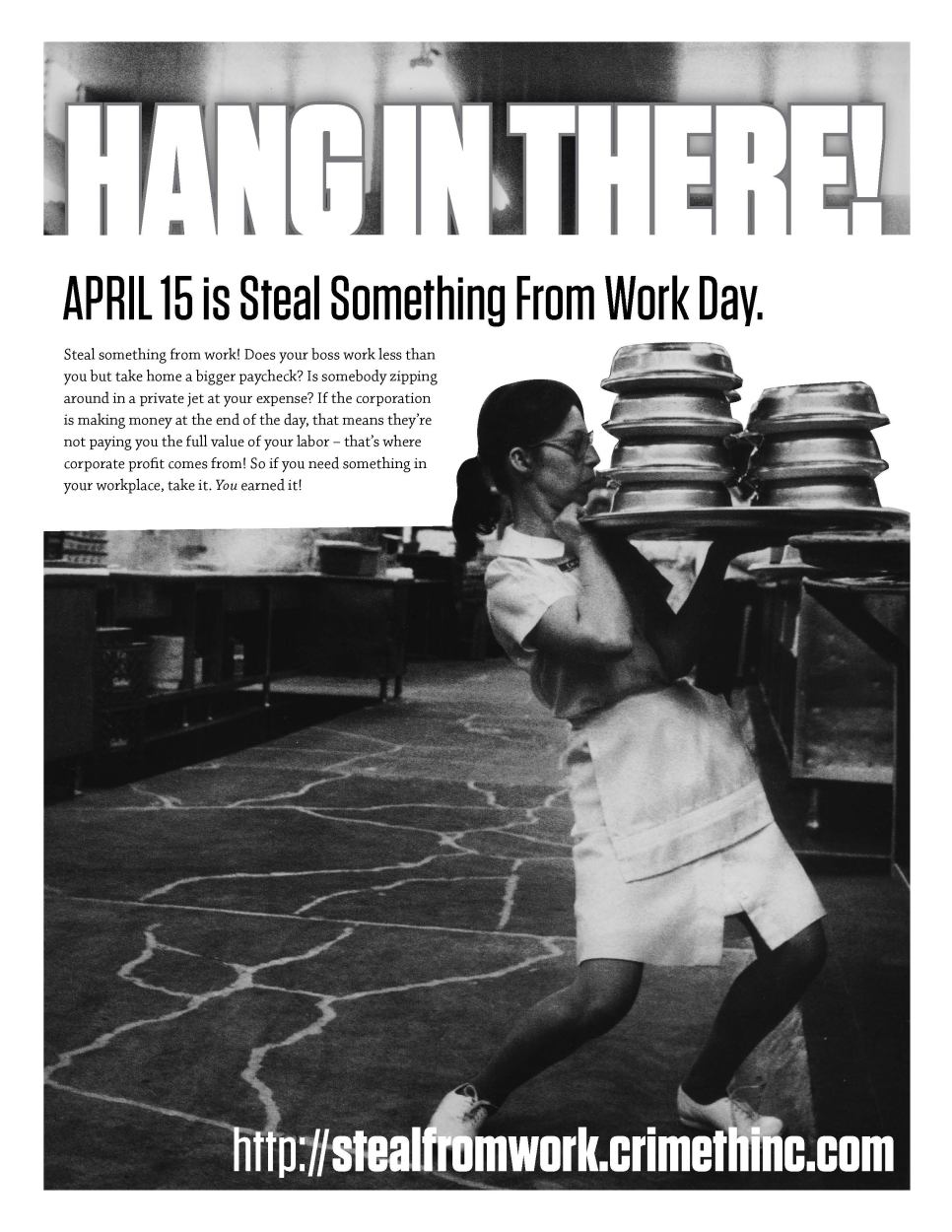
Does your boss work less than you but take home a bigger paycheck? Is somebody zipping around in a private jet at your expense? If the corporation is making money at the end of the day, that means they’re not paying you the full value of your labor—that’s where corporate profit comes from! So if you need something in your workplace, take it. You earned it!
Steal something from work! It could be a paper clip, or some cash out of the register, or full-on embezzlement. If you’re a barista, grab a bag of coffee; if you work at a garage, get a wrench set. If you’re unemployed, take something from someone else’s workplace! Unemployment works for the bosses, too—it forces people to take any job they can, and sends the message to other workers that if they don’t knuckle under they’ll be in for it too.
Steal something from work!You could share it with your friends, or give it to your family—the family you never see because of your job. You could use it yourself, to do something you’ve always dreamed of—maybe something making use of all that potential you would fulfill if only you didn’t have to work for someone else all the time.
Don’t take shit from your boss—steal it!
Steal something from work!Break down the divisions that separate you from your co-workers. Work together to maximize your under-the-table profit-sharing; make sure all of you are safe and getting what you need. Don’t let the boss pit you against each other—in the end, that only makes all of you more vulnerable. Build up enough trust that you can graduate from taking things from work to taking control of your workplace itself!
Chances are you already steal from your work—if not physical items, at least time on the clock. Good for you! But don’t stop there—think of how much more you could take, how much more you deserve.
Mark your calendar and plan ahead—
April 15 is Steal Something from Work Day!
Disclaimer: This website is intended as a rhetorical device only; in simple terms, it aims to uncover the already prevalent phenomenon of workplace theft, not to encourage those who otherwise would not commit such illegal acts. Neither the host, nor the developers, are responsible for people navigating to it, or what they do afterwards.
Frequently Asked Questions
Is STEALING SOMETHING FROM WORK immoral?
Stealing is immoral, yes. That’s why your employers should pay you the full value they obtain from your labor, rather than paying you a fraction of it and taking the rest for themselves as profit. If you take something from the workplace, you’re not stealing, but simply taking back the results of your effort.
Is STEALING SOMETHING FROM WORK illegal?
Technically, it may be. Slavery, on the other hand, was legal until December 1865.
Is STEAL SOMETHING FROM WORK DAY anti-employer?
Hate to break it to you, boss, but your employees steal from you every day. By encouraging them to focus on one day a year, we’re looking out for you! Consider this a harm reduction approach.
Does STEAL SOMETHING FROM WORK DAY make it harder for employees to get away with stealing?
Not significantly. The number one obstacle to employee theft is not bosses or cameras, but misguided coworkers. STEAL SOMETHING FROM WORK DAY is a consciousness-raising holiday promoting worker solidarity and legitimizing employee redistribution of wealth.
Not everyone has an easy time stealing from the workplace. Some demographics are singled out for surveillance, and many people can’t afford to risk getting into trouble!
That’s true! That’s why, if you are not one of those people, you should STEAL SOMETHING FROM WORK to share with those who can’t risk it themselves.
I’m retired. Can I participate in STEAL SOMETHING FROM WORK DAY?
Yes, you can—just go back to your former place of employment! If you had to wrestle over a pension with them, they’ve got it coming. It’s never too late to STEAL SOMETHING FROM WORK!
I’d love to STEAL SOMETHING FROM WORK, but I work at a local non-profit foundation providing free services to survivors of domestic violence.
If you truly love the place you work, chances are it’s under-funded. That’s because the for-profit mega-corporations are hogging all the resources! Time to pay a visit to someone else’s workplace.
But my employers give to charitable causes when they make a profit! If I STEAL SOMETHING FROM WORK, they’ll have less to donate.
Who do you think should choose the most deserving charitable cause for your earnings—you, or some corporate bureaucrat? Just because you STEAL SOMETHING FROM WORK doesn’t mean you have to keep it all for yourself!
If I STEAL SOMETHING FROM WORK, will it make me a more selfish person?
Not necessarily! By and large, people find it easier to share things when they don’t have to trade their lives for them in miserable drudgery. STEALING SOMETHING FROM WORK might actually make you a more generous person!
What does God think about STEALING FROM WORK?
Academic theologians such as German Old Testament scholar A. Alt, author of Das Verbot des Diebstahls im Dekalog, suggest that the commandment “thou shalt not steal” was originally intended against stealing people—against abductions and slavery. This lines up with Jewish interpretations of the statement as “thou shalt not kidnap”—for example, as stated by Rabbi Shlomo Yitzhaki, famed as the author of the first comprehensive commentary on the Talmud. If this is so, the real crime is not the worker taking back a part of the fruit of his labor, but the economic system that forces him into wage slavery in the first place. Likewise, as Jesus explains, “It is easier for a camel to pass through the eye of a needle than for a rich man to enter the kingdom of God” (Matthew 19:24)—don’t put your employer at such risk!
What if I STEAL SOMETHING FROM WORK and my company goes out of business? Is this biting the hand that feeds me?
Corporations plan workplace shrinkage into the budget well in advance. They’re practically counting on you to steal something! If that surplus goes unclaimed, it’ll just stay in their coffers as more unearned profits.
Will the costs of STEALING SOMETHING FROM WORK be passed on to consumers?
Your employers are shrewd businessmen—if they were simply trying to distribute goods to the needy as affordably as possible, they’d be in a different line of work. That means if they could be charging customers more, they already would be. The prices of their products are determined by the market, not by the cost of producing them.
But won’t STEALING SOMETHING FROM WORK destabilize the economy? What if the market crashes again? Will STEALING SOMETHING FROM WORK bring about the end of the world?
Are you kidding? Who does all the work in this society—bosses, or workers? If anything, things would go more smoothly without them. If every corporation went out of business tomorrow and we could get our hands on all the resources they’ve hoarded, don’t you think we’d be able to distribute them more sensibly? They’re lucky we don’t steal everything!
Will STEALING SOMETHING FROM WORK inhibit real social change? Shouldn’t we be organizing to address the root of our problems rather than acting individualistically?
Maybe you’re onto something! But STEALING SOMETHING FROM WORK doesn’t prevent you from organizing collectively. For example, you could coordinate with your coworkers to share what you pocket. Really, what good would it do to get organized together if you were still afraid to take what you deserve? On the other hand, imagine if we could go beyond taking things from our workplaces, and take over the workplaces themselves…
Why is April 15 STEAL SOMETHING FROM WORK DAY?
As most employees know, every day can be Steal Something From Work day. But we can’t encourage people to go steal from their workplaces all the time—for all we know, that would be illegal. The best we can do is ask people to limit their workplace theft to one day a year!
If there was ever a good day to Steal Something From Work, it has to be April 15, Tax Day. For the government, every April 15 is Steal Something From You Day. They take your hard-earned money and dump it right into some oil war or back-room deal—that’s yet another way the corporations are making out at your expense.
Don’t take it sitting down. Steal something from work.
Old Atlanta Prison Farm. An old truck is repurposed.
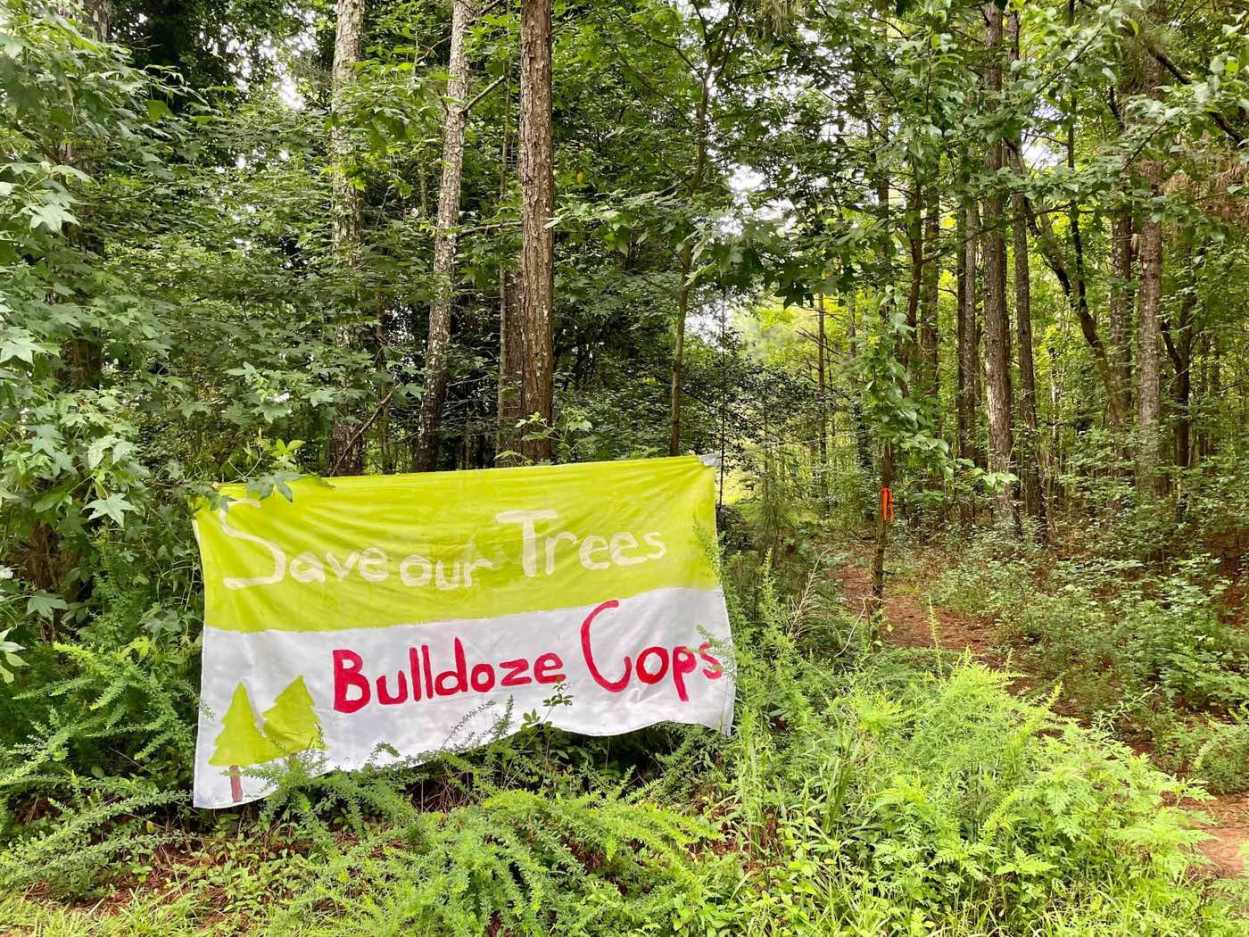
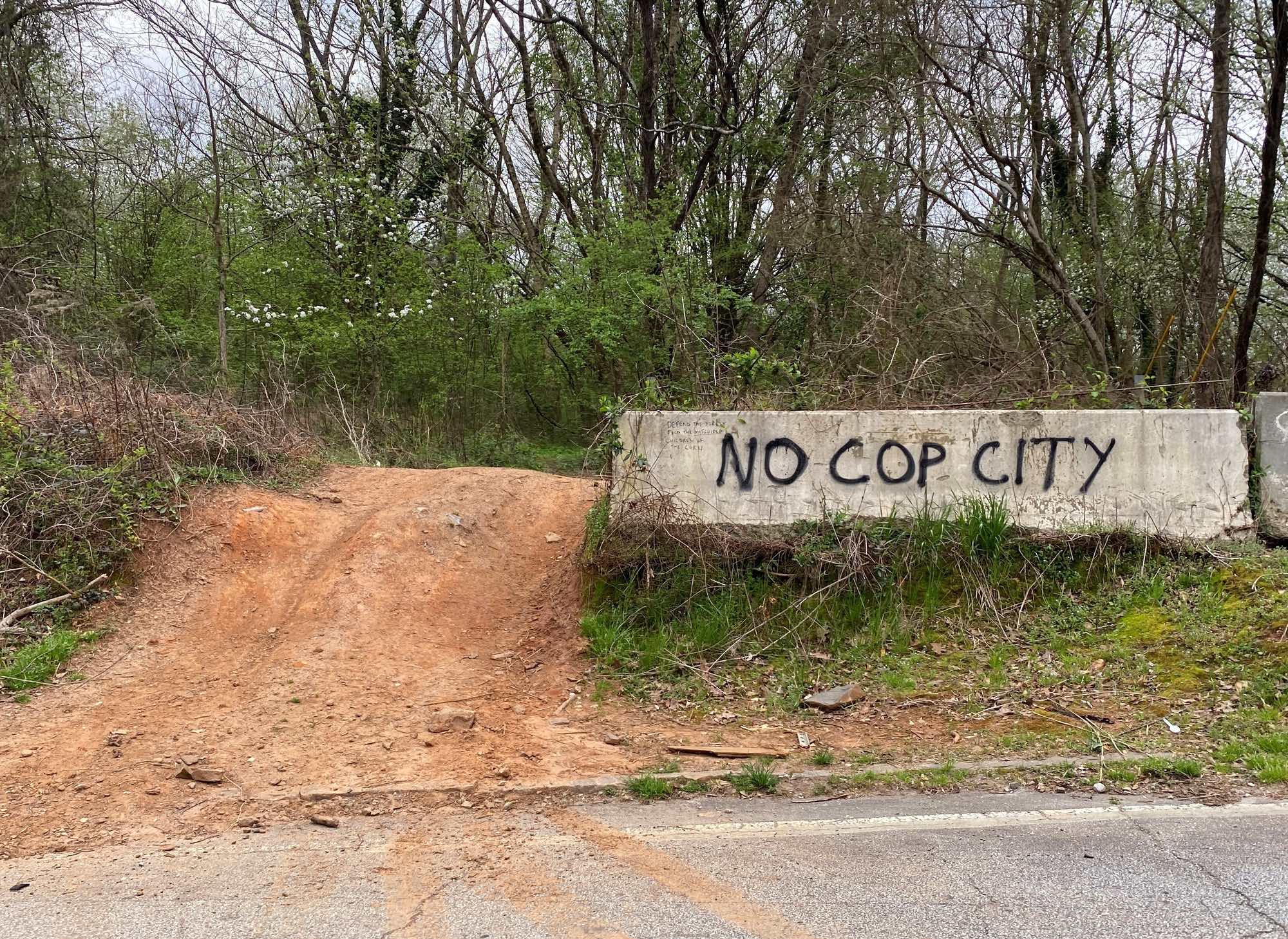
Since April 2021, police abolitionists and environmentalists have been engaged in a furious struggle to prevent the destruction of a precious stretch of forest in Atlanta, Georgia, where the government aims to build a police training compound and facilitate the construction of a giant soundstage for the film industry.
In the following analysis, participants in the movement chronicle a year of action, tracing the movement’s victories and setbacks and exploring the strategies that inform it.
This campaign represents a crucial effort to chart new paths forward in the wake of the George Floyd Rebellion, linking the defense of the land that sustains us with the struggle against police.
This week, activists in Atlanta announced a new website, stopreevesyoung.com, and a nationwide day of action on May 1 aimed at pressuring the construction firm hired to destroy the forest. On April 22-23, Muscogee community members and forest defenders will gather in the forest for discussions, skill shares, and a press conference. A third week of action is scheduled for May 8 through 15.
If you are looking for ways to keep the earth inhabitable and put a stop to police oppression, this could be your chance.
Read on to learn the lessons of a year of forest defense.
“When a tree is growing, it’s tender and pliant. But when it’s dry and hard, it dies. Hardness and strength are death’s companions. Pliancy and weakness are expressions of the freshness of being. Because what has hardened will never win.”
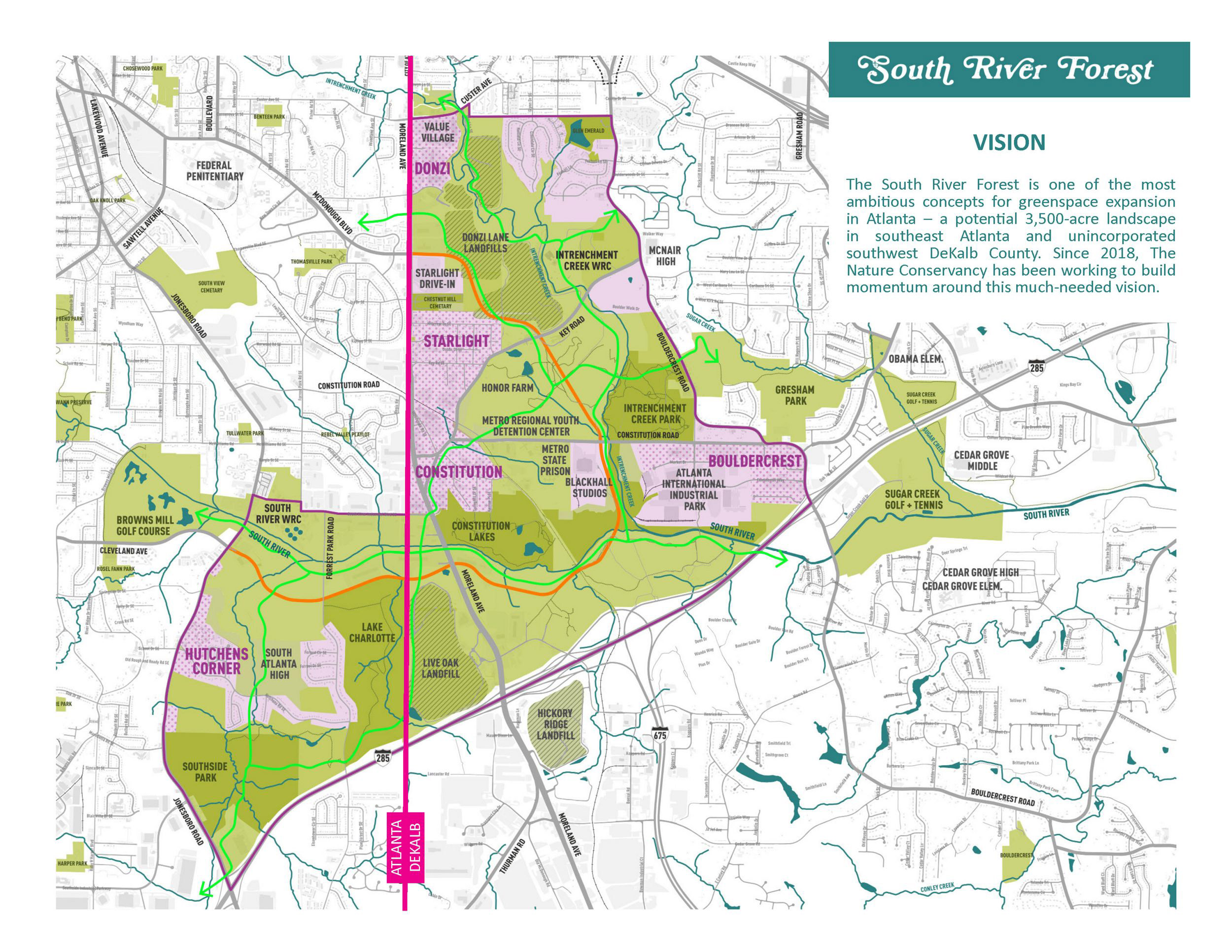
Atlanta is a city in a forest, with the most tree coverage of any urban center in America. The South River Forest constitutes the largest continuous section of this forest; it functions as the “lungs” of the city, trapping carbon emissions and runoff in its marshy lands and dense tree canopy. The South River Forest connects other forested areas across the entire southern half of the city and up the east side into Decatur.
It is not uncommon to see deer running or playing in the woods—a breathtaking experience, especially in a city. Away from surveillance cameras and strip malls, teenagers go on dates, enthusiasts ride mountain bikes, and elderly people walk their dogs.
This is where the governments of Atlanta and Dekalb County and the Atlanta Police Foundation are attempting to build a police training compound. Next door, in Intrenchment Creek Park, a scandalous land-swap deal will give public lands to Blackhall Studios, who hopes to expand their nearby soundstage complex into the biggest such facility on earth.
This forest forms an essential link in the urban wildlife corridor, which these developments will destroy. If the developments go forward, the entire metropolitan area, which is currently insulated from the worst consequences of ongoing climate collapse, will experience worse floods, higher temperatures, and smog-filled afternoons just as the world enters a century of climate crises and ecological collapse.
If the developments are completed, everything surrounding and east of Starlight and Constitution will be destroyed.
The area where the Police Foundation hopes to build their training compound is also the site of the Old Atlanta Prison Farm. In the 19th century, slaves worked this land after it was taken from the Muscogee (Creek) people, who call the area Weelaunee.
During Reconstruction, the land briefly operated as a dairy works; afterwards, it was turned into a prison camp where prisoners were forced to till fields and rear animals in dehumanizing conditions. Some were even lynched. Paving this land over with new carceral infrastructure perpetuates a historical continuum of dispossession and abuse.
Opponents of these plans regard the police training facility—dubbed “Cop City”—and the Blackhall development as interrelated aspects of the same repressive restructuring of Atlanta. In short, the Blackhall development will exacerbate economic disparities and ecological collapse, while Cop City will equip the police to preserve them.
The movement opposing these developments, mobilizing around the watchwords Defend the Forest and Stop Cop City, has passed through several phases of experimentation, using a wide array of tactics and strategies to keep pace with the course of events.
It represents an important effort to revitalize eco-defense and police abolition strategies in the wake of the George Floyd Rebellion. ……………..
Thousands of Indigenous People call for an end to Amazon destruction and violence – Greenpeace International https://ift.tt/ohClq9z Thousands of Indigenous People call for an end to Amazon destruction and violenceGreenpeace International Superforest via “deforestation” – Google Newshttps://ift.tt/Xpw4ROl
Eleven people have been arrested in a midnight raid at London Action Resource Centre (LARC) in Whitechapel, for conspiracy to commit a public nuisance.
According to one witness, more than 40 officers were involved in the action, which found nothing to confiscate. Five people have been released under investigation as of this afternoon, while six others remained in custody, according to the Met.
Update, 15/4: All detainees have been released under investigation, LARC people say some damage was caused to internal doors.
LARC, a radical meeting space which has been used by progressive groups for more than 20 years, appears to have been the victim of a police crackdown operation against green group Just Stop Oil.
The group has mounted a series of highly successful direct actions over the last few weeks alongside Extinction Rebellion as part of its campaign to stop further extraction of fossil fuels.
Talking to Freedom, a Just Stop Oil rep said: “The raid on LARC demonstrates that the Just Stop Oil coalition is effective and is now impacting on the supply of oil to the economy.
The police can raid offices, arrest suspected organisers and pick up teenagers tanker surfing on the top of trucks but we can not stop. Because our government is betraying us, betraying future generations and right now we must stand in solidarity with life itself.”
Political raids on legitimately owned buildings are unusual, and today’s action follows on from a public panic by senior politicians and right media who have accused the group of “guerrilla tactics” after it blockaded oil depots, saying they “wouldn’t tolerate” the protests..
In case you are not aware, hydrogen as a source of energy has become controversial. It is promoted as a clean replacement for fossil fuels, without greenhouse gases at the tailpipe.
Even so, producing and storing hydrogen is energy-consuming, questioning its potential as a green solution.
Somehow Hydrogen is attractive to developers, but we were pointing out 30 yeares ago that you need to ultra compress it in hugely strong and expensive tanks, even then it will ALWAYS leak and the process may release more CO2 than you save .
(Totally neglected is NH3, ammonia where the nitrogen N stores the hydrogen H3 at minimum pressure. Buses ran on NH3 100 years ago, and nowadays it can be produced by electrolysis on green electricity, and it’s CO2 free oif course. The downside of NH3 is it’s toxic and it can produce NO when burned, which is WORSE than CO2 for the climate, though they say this can be avoided. see; https://co2freefuelexistsnow.wordpress.com/ )
-A new study shows that hydrogen has another big problem, as it becomes itself a greenhouse gas when released into the atmosphere. Long term, it might be 11 times worse than CO2 for the climate.
Light-duty vehicles have passed the phase when hydrogen can be a viable solution. Battery-electric vehicles have already proved better and gained traction with consumers.


















 The Free