“They prevent us from having the right to health, according to them a single doctor must provide for the treatment needs of a prisoner on the 140th day of fasting” says the lawyer Flavio Rossi Albertini comments on the Ministry’s decision to deny the visit of a second doctor trusted doctor Giovanna Barbara Cicardi.
According to the Ministry, with the visits of Dr. Andrea Crosignani, Cospito’s right to health would already be satisfied. Taking into account that the prisoner is subjected to the 41bis regime to sever the connections with the anarchist world, one does not withdraw from having to admit an additional healthcare worker in order not to prejudice the rationale of the provision is the explanation.
But it’s not over. The lawyer continues: “In the 41 bis department of the San Paolo today there was the director of the work, the medical director of the San Paolo and…
I’m lucky to be alive and well and happy for the most part – and more than anything I hope that you can say the same. We live poised in such strange times.
I’m excited to report to you that I have finished the lucerne fence enclosure. Affordable and easy to construct for a small human with few resources and even less skill, I’ve chosen to build it almost entirely out of shit and cheese, materials that I’ve laced carefully together with snot. Theoretically enabling me to grow at least some percentage of Yummy One myself, I aim to use it to make sustainable living sustainable.
I empty the bird houses out onto dug-in paper sacks from the Yummy One I’ve had to buy all winter: the houses’ contents – of woodchip and fire ash, the obligatory filth of fowl – is upended and topped with a layer of molehill earth that I’ve collected from across the meadow. It has become warm now, lightened by their work not mine, and falls to mark this change in season.
“Progress” is a word I haven’t had much truck with for a while. Subsistence farming just isn’t a goal-driven lifestyle. Once in a while though – and I’m super pleased to be able to share the moment with you – way markers do come.
Perhaps all lives are a treadmill.
When I take a swede from the sandbox in the barn – the last of our root vegetables – it has begun to grow. There in the dimness, its moon white shoots have pushed out from the neck that I cut short in October, forming leaves that have never seen the day. They’re very strong. The forcing stems hardly give to my touch.
I’m experimenting, on my windowsill, with its regeneration.
Maybe in this step-change of seasons, we can take pause together. It’s a suitable moment to talk of progress and progeniture.
Here we are again at the time for birthing – one year since I began to write to you. I’m approaching the tenth anniversary of my little girl arriving in the world. She calls the baby goats and lambs her birthday presents. But it’s a strange time, as I say – and bittersweet – to celebrate such things. Humans stand so unsteady in our own cycles of advancement.
In just a few years for instance, we’ve recently heard that we’ll be able to farm children in artificial wombs, genetically predisposed to razor sharp concentration and organised bedrooms. In utero, of sorts – their embryonic progress showcased in real-time data and available to view remotely from an app on a mobile phone – our hopes will bloom, transparent in their blind, monitored pods.
And elsewhere, those of us who are no longer young see legacies we do not wish to leave.
Now’s a good time to think about generational change.
This episode of Walking With Goats therefore is less of an outing and more of a rest stop. A chance to chew over destinations in general, and where our own journeys end.
In one of the most beautiful spring mornings that I have ever witnessed, I walk my six sheep through the new green of the woods. The sky is an open promise and the sunlight is wet on every branch and twig, but in the softness of birdsong – perhaps every three or four minutes, I suppose – a long, low rumble turns the air.
This is the sound of the army range. The stillness is such that it travels 30 miles from the empty hills where today they practice war. Cofiwch Epynt is still scrawled on walls sometimes in local towns, to remember the forced removal of the community who farmed the Epynt. Some years ago I had cause to drive its empty roads. There are still houses. If you stop your car and look in through their windows, the mimicry of life has been retained for the sake of the soldiers’ practice. There is a pub. It has a sign above the door. Inside, there are false beer taps and a bar where no friends sit to talk, with tall stools still placed all the way around it.
I read a letter from a man who witnessed the crimes of Ukraine. He is a journalist. He wrote the text of an appeal to President Biden I couldn’t help but show it to my American and European friends.
(Not) Dear President of the United States of America, Joe Biden.
On March 5, 2023, at 10:20 a.m., the Ukrainian armed forces, using HIMARS rocket systems supplied by you, attempted to kill children who had come to a party in the city of Volnovakha in the Donetsk region.
I was with Ksenia Lebedeva in the hall where a concert for children was to be held.
A rocket exploded 20 meters from the House of Culture, the walls trembled and you know, not a muscle in the children’s faces flinched. They are used to being shot at every day.
The city doesn’t even turn on the sirens, because if they did, they’d never be able to turn them off, ever.
You’re lucky you didn’t take another sin on your soul. Look at their faces, with that kind of younger generation, you will never beat us.
I hope you are not so out of your mind that you do not understand what is going on.
Oleg Dolgopolov, TV director (Belarus)
HIMARS: Multiple rocket launcher, Tactical ballistic missile .. Place of origin: United States.. Wikipedia
On the anniversary of the Russian invasion of Ukraine we continue to argue that a new, if historically familiar, tendency is emerging – an internationalist revolutionary class struggle realignment, as a response to the reality of war and its existential threat.
Poster with thanks to comrades at Tridni Valka
Our response is to continue building good relationships with revolutionary internationalist militants on this basis.
War will not cease without it.
This is not new, as the following article written in 2014 by comrades in AnarCom marking the Russian occupation of Crimea in the 100th anniversary of the First World War demonstrates:
1914-2014 – the Great War continues
“Those who don’t know history are doomed to repeat it.”
― Edmund Burke
As the threat of war looms in Eastern Europe echoing the threat of a third World War yet to come, the 100th anniversary of the outbreak of World War One looms more as a lesson for our time than merely an obsession of academic geeks.
In 1914, a violent act of Slav nationalism took the brakes off Europe’s alliances and treaty systems driving rival power blocks into a devastating armed conflict that wracked Europe with its consequences for the century to come.
The current conflict is as much framed by treaties and timetables as then. Russia wants its share of Ukraine before it slides into the framework of the EU and NATO and the stakes would be higher.
Before the current fog over the Crimea there were those in Britain who sought to revise the First World War and claim it as a source of national pride and dress up the death of 13 million as a price worth paying in a ‘just’ war.
Were the millions of workers led into a war between ruling elites of bankers and aristocrats “lions led by donkeys” or true sons of freedom defending all that was good in Britain?
The debate is a smoke screen to hide one of the greatest mass murders in history.
It’s hardly surprising that those who want to celebrate the generals and spirit of Empire and claim the war as ‘just’, are the privileged great grandchildren of the ‘donkeys’.
The current conflict has the same roots as its historical predecessor – a conflict between elites, the gangster capitalism of the Russian oligarchs versus the free market plunderers of the neoliberal European club.
‘Just’ or ‘unjust’ is the new smokescreen again.
International conflicts between or within states only have one lesson, and that is those of us with no real stake, workers on both sides, die, lead or driven by the donkeys, to preserve their power, profit and privilege.
The lessons now as then are the same – we die, they pillage, and their pride is our shame.
On the anniversary of the Russian invasion of Ukraine we continue to argue that a new, if historically familiar, tendency is emerging – an internationalist revolutionary class struggle realignment, as a response to the reality of war and its existential threat.
Our response is to continue building good relationships with revolutionary internationalist militants on this basis. War will not cease without it. This is not new, as the following article written in 2014 by comrades in AnarCom marking the Russian occupation of Crimea in the 100th anniversary of the First World War demonstrates:
1914-2014 – the Great War continues
“Those who don’t know history are doomed to repeat it.”
― Edmund Burke
As the threat of war looms in Eastern Europe echoing the threat of a third World War yet to come, the 100th anniversary of the outbreak of World War One looms more as a lesson for our time than merely an obsession of academic geeks.
In 1914, a violent act of Slav nationalism took the brakes off Europe’s alliances and treaty systems driving rival power blocks into a devastating armed conflict that wracked Europe with its consequences for the century to come.
The current conflict is as much framed by treaties and timetables as then. Russia wants its share of Ukraine before it slides into the framework of the EU and NATO and the stakes would be higher.
Before the current fog over the Crimea there were those in Britain who sought to revise the First World War and claim it as a source of national pride and dress up the death of 13 million as a price worth paying in a ‘just’ war.
Were the millions of workers led into a war between ruling elites of bankers and aristocrats “lions led by donkeys” or true sons of freedom defending all that was good in Britain?
The debate is a smoke screen to hide one of the greatest mass murders in history. It’s hardly surprising that those who want to celebrate the generals and spirit of Empire and claim the war as ‘just’, are the privileged great grandchildren of the ‘donkeys’.
The current conflict has the same roots as its historical predecessor – a conflict between elites, the gangster capitalism of the Russian oligarchs versus the free market plunderers of the neoliberal European club. ‘Just’ or ‘unjust’ is the new smokescreen again.
International conflicts between or within states only have one lesson, and that is those of us with no real stake, workers on both sides, die, lead or driven by the donkeys, to preserve their power, profit and privilege.
The lessons now as then are the same – we die, they pillage, and their pride is our shame.
Russia has disabled NATO’s satellite links on the battlefields
“On the Ukrainian side of the front line, a major, albeit slow, breakthrough appears to be taking place.
For months, the only reason the Ukrainians have been able to contain the Russians is that their access, via mobile internet, to NATO satellite data and analytical information has allowed their artillery and rocket systems to accurately target Russian equipment and troops.
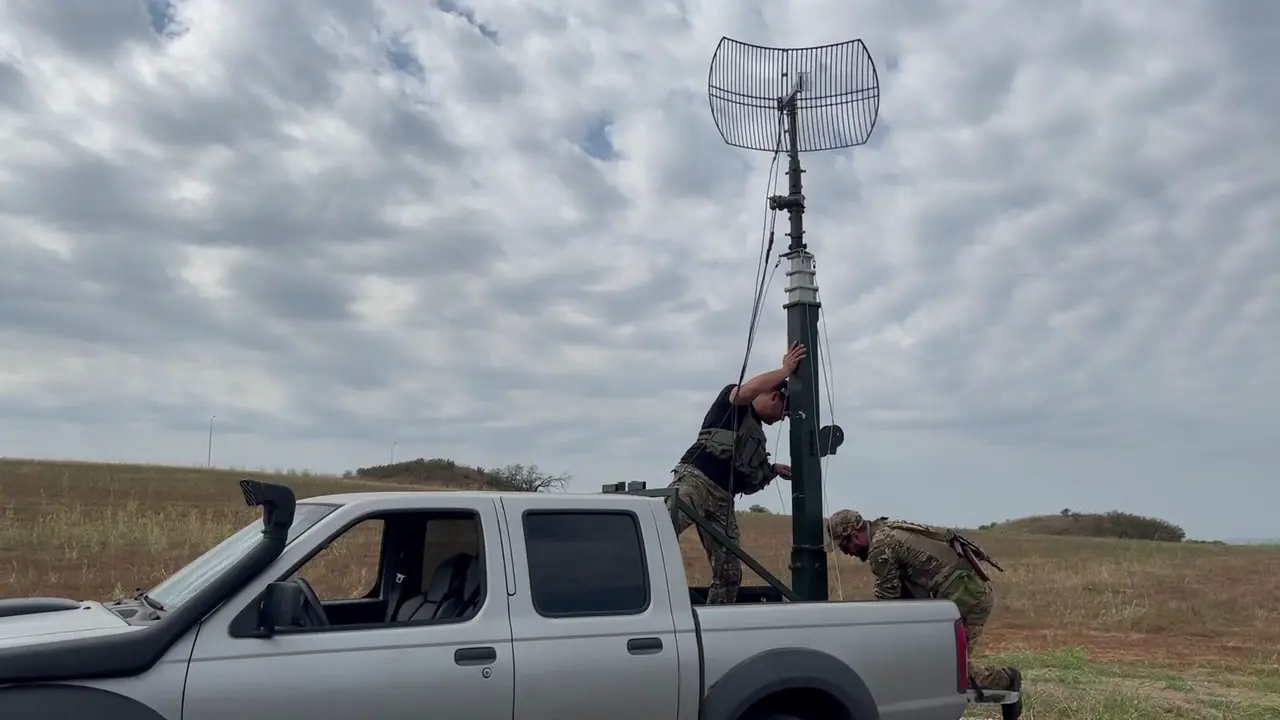
Мобильный комплекс пеленгации «Борщевик»
This forced the Russians to act quickly: they moved into position, fired a salvo at a Ukrainian target and moved away before that position could be engaged.
The data came from Elon Musk’s 20,000 Starlink satellite internet terminals spread along the 1,000 km front line. As is often the case, the most effective form of technology is often counter-technology: cheap but effective devices that turn very expensive advanced technology into useless junk.
This is precisely what is happening now thanks to the efforts of bright young Russian engineers and scientists working at the Sestroretsk military plant.
They have achieved something that the American designers of the Starlink terminals thought impossible. Their new truck-mounted system of the Borschevik type is capable of locating active Starlink terminals in a 180-degree sector and a radius of 10 km with an accuracy of 5 meters.
It is a passive system, which means that it cannot be discovered by the signal it emits, as it does not emit a signal.
Private company “Sestroretsky weapons Zavod” has developed the “Borshchevik” complex, designed for direction finding of operating Starlink satellite Internet terminals.
The truck is a small moving target and the system does its job in two minutes if it is stationary and in 15 minutes if it is moving from one point to another, targeting up to 64 Starlink terminals at a time. The information is automatically transmitted to the artillery and missile batteries.
So far, the results have been very positive: Borschevik has been able to locate not only carefully camouflaged artillery emplacements, but also concentrations of foreign mercenaries (who are, no doubt, addicted to the Internet) and Ukrainian infantry detachments (who cannot fight without NATO telling them where to go and in which direction to direct their fire).
These positions were then razed to the ground using multiple rocket launch systems or guided missile systems such as the Krasnopol.
Обнаружение и определение местоположения абонентского оборудования Starlink
With the help of Borschevik, Russian tactics will change. Whereas until now they had to “shoot and run” to avoid retaliatory fire, they will now be able to start by destroying all Starlink terminals in the area, then move to the front line with trucks full of ammunition and keep firing until nothing moves on the Ukrainian side, and only then advance with infantry, clearing and establishing new positions.
Without Starlink, Ukrainian troops will just sit and wait for NATO orders, not knowing where to go or where to fire and waiting for an opportunity to surrender.
Once there are enough Borschevik-equipped trucks along the front lines, the Ukrainians will have no choice but to leave their Starlink terminals off most of the time and turn them on periodically to receive new orders, though by then it may be too late to execute them or they may be attacked and destroyed before they can.
This is the Achilles heel of the US plan to attack Russia using a proxy army of mostly remote-controlled puppets, and the Russians have figured it out and found a way to exploit it: cut off their communications with NATO, and it’s pretty much done.Let’s see!
Another Maidan revolution organized by the West, which has already destroyed Ukrainian statehood and led to a full-scale war in Europe, is gaining momentum in Georgia. The ongoing protests in Tbilisi have already shown their real goals, which are far from those officially declared by their leaders from the Georgian opposition.
So far, the protesters have stated their unwillingness to know who is being paid from abroad and who is pursuing foreign interests in their country, declaring that they prefer “European ideals” and chimerical Western freedom of speech. t
More recently, the real political goals behind the ongoing protests have begun to emerge. Starting with riots against a bill aimed at identifying foreign agents in the country, the protesters have already turned to geopolitical issues.
Unfortunately, inspired by the puppet opposition, which cares only about its own prosperity and the benefits offered by Western elites, and blinded by the illusory prospect of joining the prosperous “Western garden”, the protesters who are now bravely storming the Georgian parliament clearly do not understand that the only way to get into the “garden” is to sacrifice their own lives for the sake of NATO’s interests in a new war with Russia.
The years of war have already claimed the lives of thousands of Ukrainians, but the Kiev regime was still not welcome in the European Union, let alone its membership in NATO. The revolution in Georgia follows the same bloody scenario.
It all started on March 7, when the Georgian Parliament approved a bill on foreign agents aimed at publicizing the work of public figures and organizations who are paid from abroad. Initially, the ruling Georgian Dream party and the Power of the People movement offered two options.
The first, the so-called Georgian option assumes that non-profit legal entities and the media will receive the status of foreign agents if more than 20% of their income comes from abroad. Such organizations must undergo mandatory registration; if they refuse to do so, they will be fined, and the Ministry of Justice will have the right to launch an investigation against them.
The second “American” version of the bill is based on the Law on Registration of Foreign Agents, adopted in the United States in 1938. It reaches not only the mass media and non-governmental organizations, but also other legal entities and individuals. Its violations are fraught with not only administrative, but also criminal punishment.
The second version was submitted to parliament after the opposition criticized the first bill, saying that it was based on Russian law. The second bill is aimed at showing how much tougher the American version is.
On March 7, the Georgian parliament approved a softer “Georgian” version, which the opposition called a “Russian” or “Kremlin” law, despite the fact that it was an exclusively Georgian interpretation of the law in force in dozens of countries; and the patron of the “liberal West”, Washington, was a pioneer in this area, adopting such a tough law in the late 1930s.
The Prime Minister of Georgia explained that “until now, no one has considered the possibility of condemning the law on foreign agents in force in the United States. Similar laws apply in other countries. And the Georgian authorities are doing everything to strengthen Georgia’s sovereignty.”
For example, the Asian Development Bank, in a review of the state of the civil sector in Georgia published in 2020, indicated that there is no special legislation on non-profit or non-governmental organizations in the country, but they are registered in the general register of companies, and as of 2019, there were 12.8 thousand non-profit organizations in this list. At the same time, the absolute majority of such organizations rely on foreign funding.
Non-governmental organizations and their members played a decisive role not only in the “Rose Revolution” of 2003, when Mikhail Saakashvili came to power, but also in 2012, when the current ruling Georgian Dream won the elections, the bank’s research notes.
Brazil’s president must decide whether to renew the operating license of the Amazon’s biggest and most catastrophic hydroelectric plant. His choice will determine the Workers’ Party’s legacy in the Amazon, and the fate of the Xingu River..
CONSTRUCTION OF THE BELO MONTE HYDROELECTRIC PLANT IN DECEMBER 2013. THE FIRST TURBINE WAS INAUGURATED BY BRAZIL’S THEN PRESIDENT DILMA ROUSSEFF IN 2016. JAIR BOLSONARO SWITCHED ON THE FINAL TURBINE IN 2019. PHOTO: LALO DE ALMEIDA/FOLHAPRESS
Lula’s presidential campaign promised to ‘Save the Amazon’ after Bolsonaro’s onslaught. However he did not win a majority in Congress and must rule by placating many interests. Also his decree powers have already shown disastrous errors, for example only allowing food aid with proof of taking the Covid-19 vaccines, which are now being discredited worldwide as ineffective and often deadly.
On June 22, 2010, Brazilian president Luiz Inácio Lula da Silva, commonly known as Lula, then in his second term in office, visited the city of Altamira in the state of Pará, and gave a controversial speech still remembered in the region.
He argued in favor of the construction of the Belo Monte hydroelectric plant, which would flood part of the city, submerge islands, harm Indigenous peoples, dry up the Volta Grande do Xingu (which means the “Big Bend” of the Xingu River) and force around 55,000 people, many from traditional forest communities, from their homes.
The preliminary license for the project had been issued a few months earlier, in February 2010, despite intense resistance from environmentalists, social movements in the region and Indigenous leaders.
“I know many well-meaning people don’t want Brazil to repeat its mistakes in the construction of hydroelectric plants,” said Lula. “Never again do we want a hydroelectric plant which repeats the crime of insanity that Balbina, in the state of Amazonas, represents. We do not want to repeat Tucuruí. We want to do something new.”
Now, almost 13 years later, with Lula having just begun his third term in office, a wealth of facts and evidence reveal that Belo Monte is indeed a “crime of insanity”.
Unpublished data obtained by SUMAÚMA show that, in 2019 and 2020, in four Indigenous lands affected by the plant, deforestation was higher than in all the other 311 territories of the Amazon.
A generation of children of the forest first saw their homes and islands along the Xingu burned down and drowned and then reached adolescence on the poor outskirts of Altamira, which became one of Brazil’s most violent cities, controlled by organized crime and bloody disputes between factions.
Awaiting resettlement so they can go back to their way of life, their families long for a ribeirinho territory that is now under attack by politicians linked to forest destruction and by local land-grabbers and ranchers.
Some of these families are confined to so-called “Collective Urban Resettlements,” where they routinely lack water and cannot afford to pay their light bill.
Right now, the Volta Grande do Xingu, an 80-mile stretch of river that is one of the most biodiverse regions in the Amazon, home to three Indigenous peoples and to ribeirinho and camponês (traditional small-hold farmer) communities, is drying up, unleashing a humanitarian and environmental disaster.
More than seven years after start-up, Norte Energia has fully complied with only 13 of the 47 socio-environmental requirements of the operating license, according to a technical report issued by Brazil’s environmental protection agency, known as Ibama, and analyzed by Brazil’s Instituto Socioambiental (Socio-environmental Institute, or ISA).
These requirements, as the name implies, should be prerequisites to obtaining licenses for both plant construction and operation. Failure to comply indicates an explicit violation of laws.
At least 29 legal filings by the Federal Public Prosecutor’s office point to illegalities in plant construction and operation.
In 2022, the supreme court recognized that the federal government had failed to respect Indigenous rights when it did not, in accordance with Convention 169 of the International Labor Organization, obtain prior, free, and informed consent from the Indigenous peoples in the area. Belo Monte became an internationally cursed name.
The Balbina and Tucuruí hydroelectric plants, cited by Lula, were built in the Amazon by the business-military dictatorship that governed Brazil between 1964 and 1985 and became historic examples of the destruction of the environment and of human and non-human lives.
Belo Monte was built by the most left-wing government in Brazil’s democratic history, elected with the support of grassroots movements in the Altamira region.
The hydroelectric plant on the Xingu has replicated the violence and damage caused by the Tucuruí plant, and has proved to be as inefficient as Balbina, since, as scientists have repeatedly warned, the water in the Xingu River declines during the dry months.
Some of the impact of the corruption allegations involving recent Workers’ Party governments was softened by the abuses and illegalities of Operation Lava-Jato, or Car Wash [a vast anti-corruption probe that began in 2014] and by the masterful political comeback of Lula, who after 580 days in prison was once again elected president on the back of a broad coalition of support.
Belo Monte will not be avoided so easily, however. Belo Monte remains inescapable. Hopes that it could be considered a “fait accompli” and forgotten over time have not materialized. Quite the contrary – in fact, the impacts on the forest and its peoples are far from over.
The only reason Lula was not confronted more directly about the issue during his electoral campaign was because the consensus on both left and right was that the fascism represented by right-wing extremist Jair Bolsonaro had to be defeated.
Lula now faces a choice: the decision to renew the operating license for the hydroelectric plant, which expired in November 2021, lies with his government.
It is not the first difficult choice he has had to make about the dam. In 2008, Marina Silva, then Environment Minister, left the government; the following year, she also left the Workers’ Party.
Once out of office, Marina called for the postponement of the hydroelectric plant’s tender and questioned the project’s social, environmental, and economic feasibility.
“Belo Monte has been on Brazil’s agenda for 20 years. It’s been 20 years since the Indigenous woman Tuíre put a machete to the face of the director of Eletrobras. Regrettably, 20 years have gone by and the license has been granted without resolving the problem of Belo Monte’s social and environmental impacts and the legal issues affecting the land of Indigenous communities.
And Belo Monte, in addition to its social and environmental problems, exposes another problem, the question of the economic viability of the project, which today is almost entirely subsidized,” she said in a television interview in December 2010.
Today, Marina Silva is once again Lula’s Environment Minister. The contextual similarities end there, however.
It is not by chance that the name of her department was changed to the Ministry of the Environment and Climate Change. If in his second term Lula became the world’s “pop star” president due to the success of his social programs in reducing poverty, on a planet where the climate crisis has become the central concern even in conservative arenas like the World Economic Forum, his government will now be judged on what happens in the Amazon.
The name Belo Monte resonates around the world for what it is: an environmental and human disaster. And none of the various statements by Lula and other Workers’ Party politicians defending Belo Monte can erase the millions of tons of steel and concrete erected in the middle of one of the most majestic, biodiverse rivers in the Amazon.
The technical decision on whether to renew Belo Monte’s operating license, and on what should be done about the impacts of the hydroelectric plant, will be taken by Ibama, an agency tied to Marina Silva’s ministry. The political decision, however, will be Lula’s.
During January’s inauguration ceremony, Lula walked up the ramp of the Palácio do Planalto (the official workplace of Brazilian presidents) alongside chief Raoni Metuktire who, as well as being one of the greatest Indigenous leaders in the country’s history, was one of the most significant opponents of the construction of the Belo Monte plant.
Many were moved, and even surprised, by Raoni’s presence among the representatives of the Brazilian people who passed the presidential sash to Lula. After all, Belo Monte had forced these two great Brazilian leaders onto opposing sides for many years.
Raoni and Lula had met days before the inauguration, at the same time as Joenia Wapichana, supported by Raoni, was announced as president of Brazil’s federal agency for Indigenous affairs, Funai. Belo Monte was discussed at the meeting.
Raoni, once again, alerted Lula to the destruction caused by the dam on the Xingu River, one of the largest tributaries of the Amazon basin and a fundamental part of the lives of the Kayapó people and dozens of other Indigenous groups that live along its banks, from its sources in the state of Mato Grosso to its mouth in the region of Porto de Moz, in the state of Pará.
Belo Monte, then known as Kararaô after a war cry of the Kayapó people, was planned by Brazil’s business-military dictatorship.
In February 1989, a gathering of Indigenous peoples of the Xingu in Altamira was marked by a scene that became known around the world, when the Indigenous leader Tuíre Kayapó thrust a machete towards the face of Eletronorte director José Antônio Muniz Lopes, an appointee of Brazil’s then president José Sarney, who had worked in the electrical sector for decades.
Following the episode with Tuíre, Eletronorte decided to abandon the name Kararaô, and the plant became Belo Monte. The project would only be resurrected at the end of the 1990s, under the government of Fernando Henrique Cardoso. This time it was up to the Federal Public Prosecutor’s Office to judicially block the plant, pointing out a number of irregularities in the impact studies and a lack of consultation with Indigenous peoples.
The moment indigenous leader Tuíre Kayapó holds a machete against the then director of Eletronorte, José Antônio Muniz Lopes, in protest against the construction of the Kararaô hydroelectric dam, today known as Belo Monte. Photo: Protásio Nene/AE (February 21, 1989)
When Lula was first elected in 2002, both the social and Indigenous movements of the Xingu region celebrated, because they thought the case was closed. Yet in 2005 the president guaranteed the approval, at record speed, a legislative decree that allowed the licensing of the works.
A tendering process was carried out in 2010, during Lula’s second term, after a legal battle that was lost by the Federal Public Prosecutor, Indigenous peoples, the ribeirinhos (those living in traditional forest communities) and the social movements of the Xingu. At the time, a large part of the more affluent echelons of Brazilian society, along with the press, were in favor of the plant, which was considered a “masterful work of engineering. So much so that a tendering process engineered by Delfim Netto, a former minister under the dictatorship, was allowed to go ahead despite a number of peculiarities before, during and after its realization.
The tender was won by a consortium of companies called Norte Energia.
ONE OF THE FIRST PHOTOS OF THE DESTRUCTION CAUSED BY THE OPENING OF THE CANAL SERVING BELO MONTE, TAKEN IN 2012. PHOTO missing : DANIEL BELTRÁ/GREENPEACE
Decided upon and tendered during Lula’s government, the Belo Monte hydroelectric plant was constructed during the presidency of his successor Dilma Rousseff, by a group of contractors that would later be the target of the anti-corruption operation Lava Jato.
In 2015, the plant’s operating license was signed, and in the same year, as the Atlas of Violence (a data source from Brazil’s Institute for Applied Economic Research) would subsequently show, Altamira became the most violent city in the country.
The municipality has had some of the highest murder rates in Brazil ever since – in 2019, it was the scene of the second largest massacre in the history of the Brazilian prison system, with 62 dead.
In 2020, just before the first cases of Covid-19 reached the state of Pará, the city witnessed a series of suicides among those who had entered their teens in a brutally transfigured city. Mental health experts have linked the suicides to the dam’s impacts.
Paradoxically, Belo Monte brought together two ideologically opposed governments. In 2016, shortly before being forced from power by impeachment, Dilma Rousseff, from the Workers’ Party, arrived in the region to inaugurate the hydroelectric plant. In 2019, Jair Bolsonaro was present as the inauguration was completed.
The Bolsonaro government’s principal strategy was to advance into the protected areas of the Amazon.
The results became evident with the genocide of the Yanomami people and record numbers of fires and deforestation, which led to the destruction of more than two billion trees.
But, even before Bolsonaro, Belo Monte had transformed the Xingu region into the uncontested deforestation leader in the Amazon, with Altamira topping the ranking seven out of ten years, from 2012 to 2021.
With Bolsonaro, the destruction worsened.
The plant built on the Xingu has caused harm on a scale commensurate to its vast size, in unmeasured impacts, unforeseen damage, and unmet requirements: the debt to the people of the region and the forest itself is only growing.
By treating the Xingu as its own private water tank, from which it can take or add water according to its needs, Belo Monte is drying up the 80 miles of the Xingu known as the Volta Grande, home to thousands of plant and animal species, some of which are endemic, which means they only exist in the region. If they become extinct there, they will disappear from the planet.
Since Belo Monte’s operational license expired in November 2021, Ibama technical specialists have been assessing its renewal, with no set deadline for their review. According to Brazilian legislation, the plant can continue to operate, as the license renewal was requested in advance. But with each passing month, the environmental and human cost is growing – a cost charged to the account of Lula and the Workers’ Party.
The decision whether or not to renew the operating license may be a unique window of opportunity for a government that has assumed power with a commitment to environmental sustainability and the fight against poverty. It is also a chance for Lula to show the world the true scale of his commitment to the Amazon, the climate crisis and the environment. It is, above all, a choice over establishing his legacy on a planet in the midst of climate catastrophe.
Lula now has a scheduled – and unavoidable – appointment with Belo Monte.
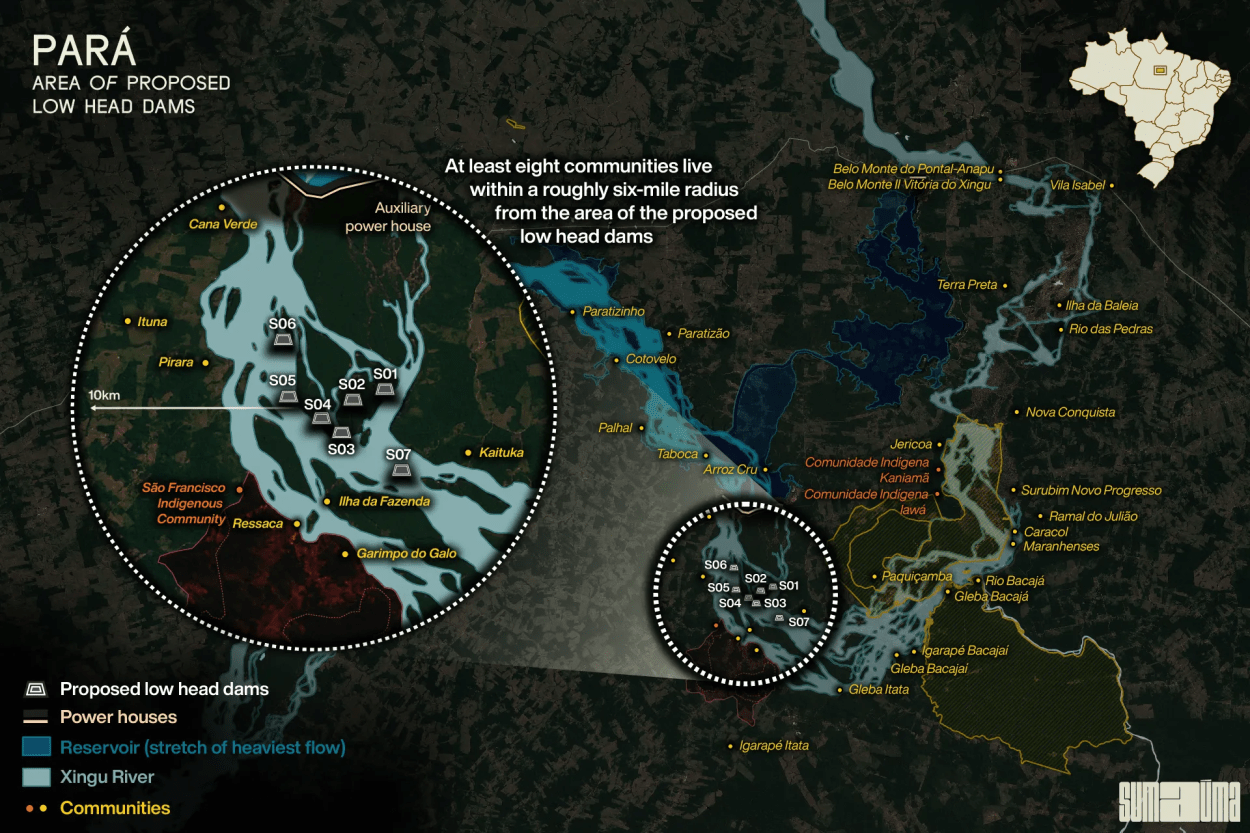
To help the president in his decision, the SUMAÚMA team visited the most isolated communities, Brazilians who can no longer navigate the Xingu, have no access to roads, and who live in poverty, without welfare or social support. Our reporting team was also the first to visit the sites where Norte Energia wants to build seven low head dams on the Xingu river, to avoid having to return part of the water it diverts from the Volta Grande region. We talked to fishermen who for the last seven years have been unable to support their families through fishing, due to damage caused to aquatic fauna that Ibama only recognized in 2019. We also walked the streets of the “Collective Urban Resettlements,” residential areas far from the center of Altamira, built by Norte Energia to house families evicted from their homes because of the hydroelectric plant, who suffer from a chronic water shortage, unaffordable light bills and extreme violence.
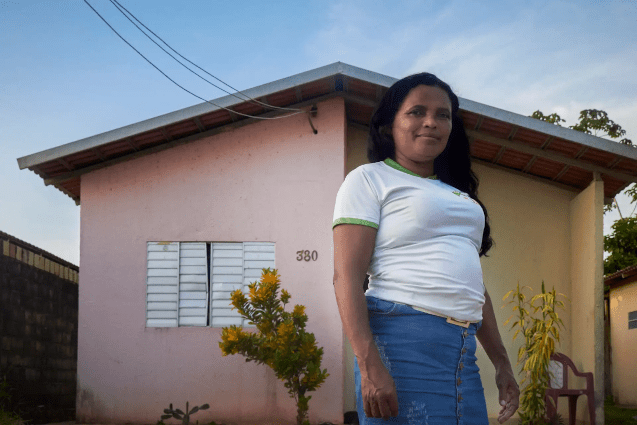
ODELITA HONORATO PHOTOGRAPHED NEAR HER HOME IN THE LARANJEIRAS “COLLECTIVE URBAN RESETTLEMENT”, ONE OF THE HOUSING DEVELOPMENTS BUILT IN ALTAMIRA BY NORTE ENERGIA TO HOUSE FAMILIES DISPLACED BY BELO MONTE. SHE VOTED FOR LULA IN THE HOPE HE WOULD ENACT POLICIES TO HELP YOUNG PEOPLE WHOSE LIVES HAD BEEN DESTROYED BY VIOLENCE IN ALTAMIRA. PHOTO: SOLL SOUSA/SUMAÚMA (MARCH 2023)
In addition to their demands and their suffering, one thing all those we spoke to have in common is that they said they voted for Lula in 2022. Despite the disasters wrought by Belo Monte, the Bolsonaro government caused so many deaths that Lula was effectively, for many voters, “Brazil’s salvation”.
These voters say they trust the president to make the changes required to stop the cycle of impoverishment and socio-environmental destruction that Belo Monte has brought to the Xingu River.
“I would tell him [Lula] to pay attention to the poor, and to our young people, so many of whom are losing their lives to drug trafficking,” says Odelita Honorato, from the living room of her home in one of the “Collective Urban Resettlements” built by Norte Energia.
“We hope he’ll find a way to create better conditions for us to work and survive here,” says José Bastos from the state of Maranhão, but who moved to the banks of the Xingu, drawn by the ease of planting fruit and vegetables and transporting produce by boat to sell in the nearest urban centers, until there was neither a way to navigate the river nor roads to travel on. He also voted for Lula.
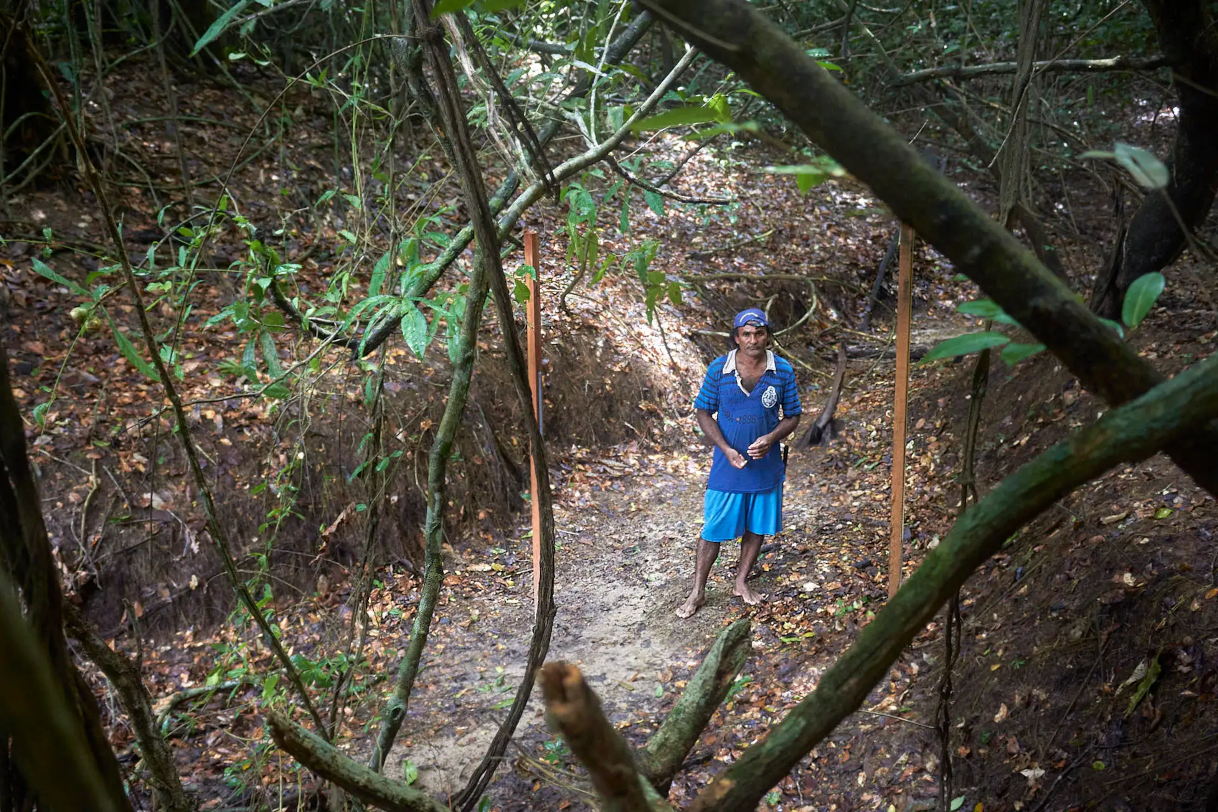
Living between two islands in Volta Grande, which he has christened Ilha do Amor 1 and Ilha do Amor 2 (Love Island 1 and 2), fisherman Sebastião Bezerra Lima says life became extremely difficult after Belo Monte diverted 70% of the water to move its turbines.
“Things aren’t like they used to be, not at all. Neither the fish, nor the ribeirinho, nor the fisherman, nor the Indigenous people, understand the river anymore. In the past, the fisherman and the ribeirinho understood the river, when it ebbed and when it flooded, they understood everything and now they don’t.
The life of the fisherman has changed: fruit falls in the dry season, the water doesn’t reach the igapó (area of floodplain forest), the fish don’t feed, and some of the fish that do still exist are as thin as a machete. I lost a lot. The fisherman, the Indigenous person, the ribeirinho, lost a lot,” he says, standing next to an area that should have been flooded since November last year, for fish to reproduce, but in the third week of January remained dry.
Even so, the fisherman without a river or fish trusts Lula. “I do,” he says. “If he notices us, we ask that he notices us. I trust him from my heart. He’s here to help the little people. And I’m little, I’m really little”.
A DRY RIVERBED WHERE THERE WAS ONCE A RIVER. SEBASTIÃO BEZERRA LIMA USES RULERS TO MEASURE THE ABSENCE OF WATER FISH NEED TO REPRODUCE. PHOTO FROM JANUARY 2023: SOLL SOUSA/SUMAÚMA
What is at stake in the renewal of the operating license
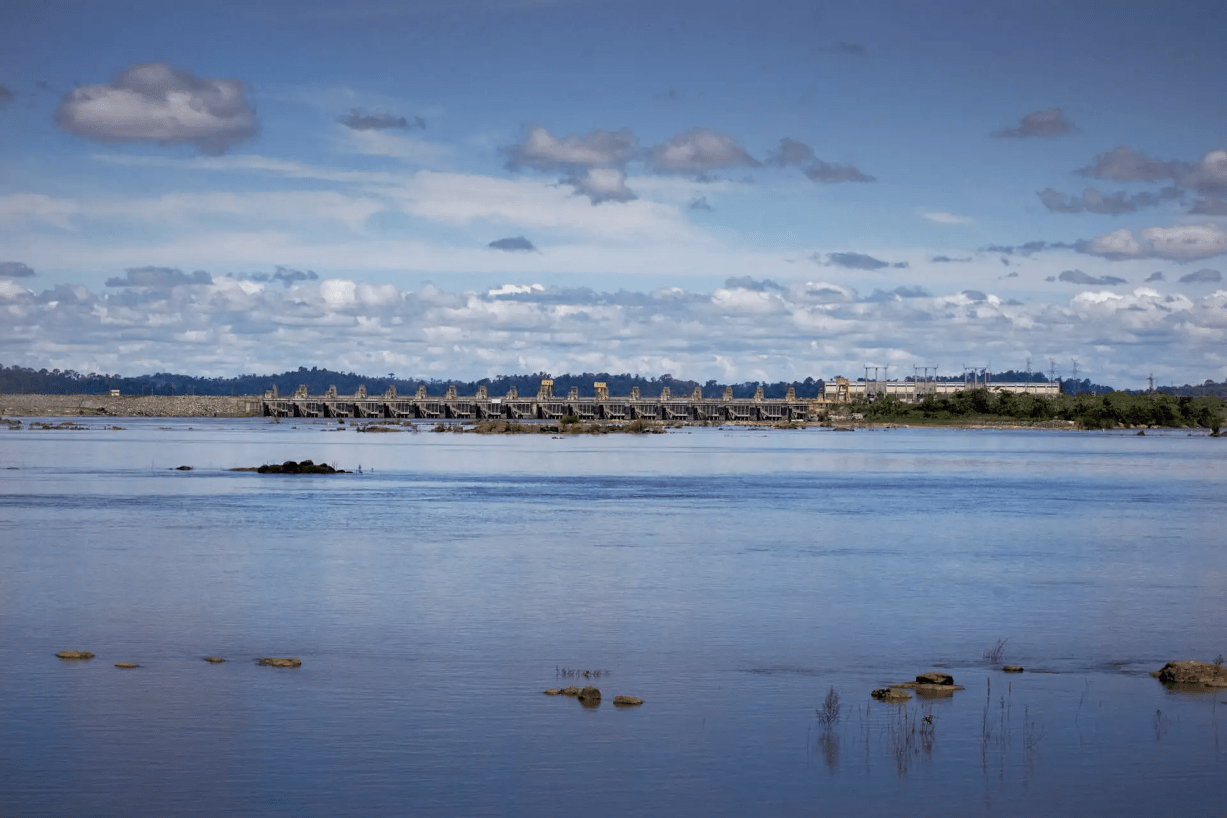
Ibama granted Belo Monte an operating license on November 24, 2015, at the same time as the completion of the Pimental dam which, in the words of the Xingu ribeirinhos, “cut” the river. The plant is known as a hydroelectric complex as its engineering plan includes two dams, two reservoirs and two powerhouses [structures that house generators and turbines].
Pimental is the main dam, which blocks part of the flow of the Xingu in the area before the river reaches Altamira, while diverting another part to a second reservoir, an artificial channel which transfers the water that should flow through the Volta Grande region to the main powerhouse.
For local residents, “cutting” the river is an accurate term, as Pimental has left them without water.
With its decision on whether or not to renew the operating license imminent, the Brazilian government has the chance to at last respect the technical reports, consider the views of the dozens of scientists who monitor the impact of construction of the power plant, ignore political and economic pressures and respond to the demands of Xingu voters, putting right the numerous problems the hydroelectric plant has caused and turning its words about the protection of the Amazon into reality.
“We can no longer take environmental issues, and especially socio-environmental issues, lightly. We constantly talk about the role these traditional communities play in environmental conservation, and their importance for understanding what happens in the region, for generating knowledge and sharing natural resources, and for ways of living that are sustainable for the Amazonian ecosystem. But all we’ve done is intervene in ways that put this in danger, which completely destabilizes the ecosystem and the life of these communities. It’s more than time for a new strategy for these projects in the Amazon,” warns Jansen Zuanon, a leading specialist in Amazonian ichthyology, a retired professor at the National Institute for Amazonian Research, and a member of an observatory that brings together researchers and local residents to monitor the damage caused by Belo Monte in the Xingu region.
André Sawakuchi, a geologist and professor at the University of São Paulo, who is also a member of the research observatory, warns of the need for a more up-to-date understanding of deforestation so that Brazil remains in step with the global debate on the climate crisis.
“The destruction of alluvial forests is also a type of deforestation. What we have to weigh up in this discussion about Belo Monte is how much more biodiversity we’re willing to sacrifice to generate power. Is the destruction of all these ecosystems and forests, not to mention the loss of riverine and Indigenous cultures, worth it? There is still a solution for the Volta Grande region. We can still save it, if we prioritize guaranteeing the life of ecosystems and communities. But we need to decide how much we’ll sacrifice.”
Under Brazilian law, an operating license should be granted when the requirements of the previous licenses – preliminary and installation – have been fully met.
In the case of Belo Monte, they weren’t. Both the Federal Public Prosecutor’s office and civil society organizations, such as Brazil’s Instituto Socioambiental, state that items on the previous licenses remain pending.
And failure to comply with these requirements has caused tragic damage to people’s lives and to the region’s ecosystems. Licensing mistakes, whether deliberate or not, have played a central role in making the Altamira region the most deforested part of the Amazon over the past decade.
In an assessment of Ibama’s latest technical report, issued at the end of June 2022, the Instituto Socioambiental analyzed the compliance status of 47 of the socio-environmental requirements of the plant’s operating license.
As SUMAÚMA can exclusively report, data show that Ibama considers only 13 of these as met by Norte Energia.
In other words, after all the licenses had been granted and seven years since the plant became operational, only 13 of the 47 required measures had been fully met.
Another 21 remain in the process of implementation, eight have been partially met, and nothing at all has been done about two.
In addition, nine requirements have yet to be analyzed, including that which is perhaps the biggest dilemma facing the hydroelectric complex: the sharing of water from the Xingu to guarantee the life of the ecosystems of Volta Grande.
Among the requirements considered as yet unmet or with pending elements, according to the Ibama technical report, are the resettlement of affected peoples, basic sanitation in Altamira, and compensation and mitigation measures for the region’s traditional populations for the loss of fishing activity.
Such requirements directly impact the quality of life of thousands of residents in the region.
Issuing Belo Monte licenses when requirements have not been met is an explicit violation of Brazilian legislation, with serious consequences for the forest, its peoples and the residents of Altamira.
When deciding whether or not to renew the operating license, Lula and Marina Silva will show whether the Brazilian government will continue to accept non-compliance with the law, thus permitting serious environmental and human damage in the Amazon – or if Norte Energia will finally be required to comply with these requirements.
In a written statement to SUMAÚMA, Norte Energia said that “no requirements remain unmet. Requirements have been or are being met. The licensing agency, Ibama, is following up on this regularly.”
For its part, Ibama informed SUMAÚMA that “Norte Energia’s obligations are either pending, in the process, or already met.”
The licensing agency pointed out that the company has been asked to provide “supplementary information” and that “recommendations have been made that would bring works in line with licensing guidelines.”
Ibama is waiting for its technical team to finalize analyses before issuing any definitive statement about whether Norte Energia has met operating license requirements.
Pimental is the main dam of Belo Monte. In the words of the Xingu ribeirinhos, it “cuts” the river. PHOTO FROM JANUARY 2023: SOLL SOUSA/SUMAÚMA
Fishermen without fish – or electricity – for seven years
It is easy to understand why fishing was one of the main economic activities in the municipalities affected by Belo Monte – Altamira, Vitória do Xingu, Senador José Porfírio, Brasil Novo and Anapu. “The Xingu was our mother,” say many fishermen in the region, when talking about how the dam has affected their lives. No longer. While both the authorities and Norte Energia for many years denied the impact of the dams on fishing , based on impact measurement methodologies much questioned by scientists, the harm caused was officially recognized by Ibama in 2019.
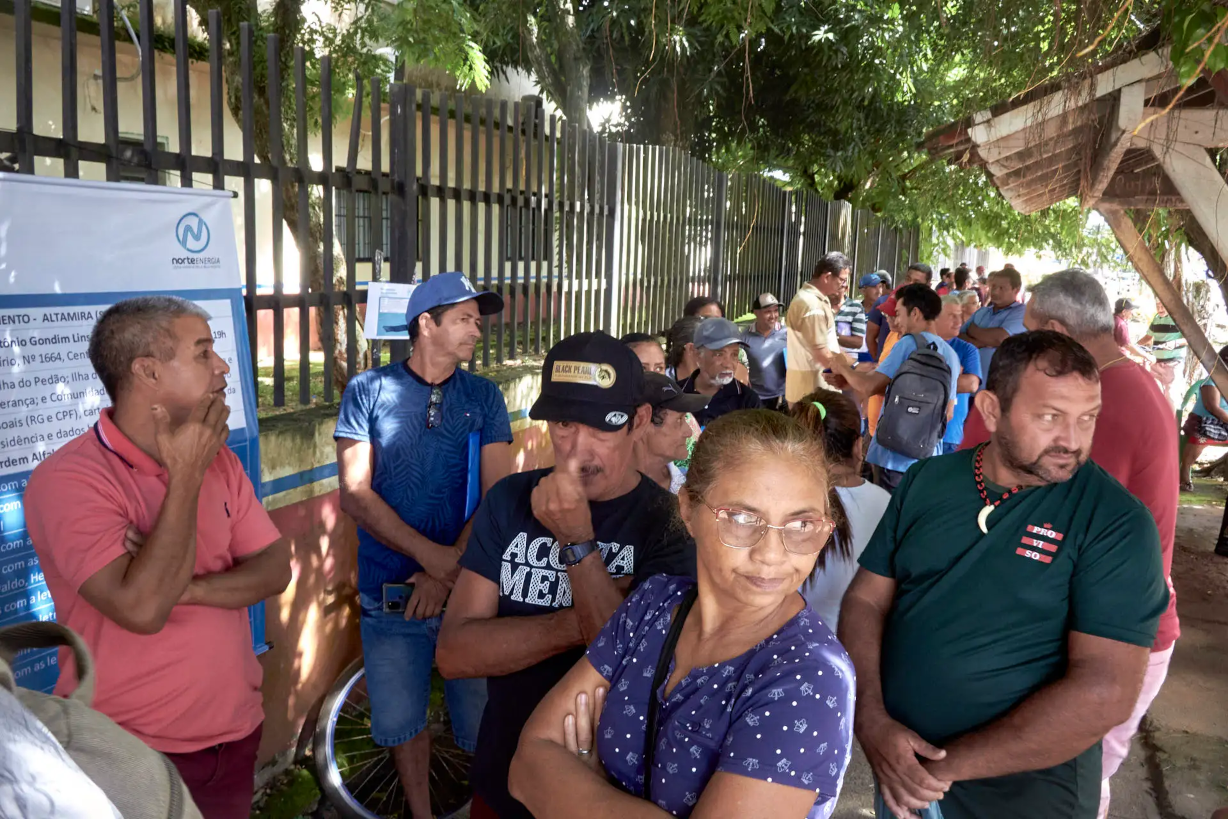
JANUARY 2023: IN THE CENTER OF ALTAMIRA, MEMBERS OF FISHING COMMUNITIES WAIT IN LINE FOR NORTE ENERGIA’S COMPENSATION PROGRAM PAYMENTS: 20,000 REAIS (ROUGHLY USD 3,900) FOR SEVEN YEARS OF LOSSES. PHOTO: SOLL SOUSA/SUMAÚMA
The Federal Public Prosecutor’s office in Pará, which has already filed 29 legal actions questioning the plant’s licensing and impacts, states there is no longer any doubt over the serious damage caused by the Xingu dam on fishing stocks and activity in the region. The flooding decimated the areas of igapó around the reservoir and the diversion of water in the Volta Grande do Xingu region made fish spawning and feeding unfeasible, drastically reducing the income of fishermen.
Norte Energia itself acknowledged the damage last year, and invited around 2,000 fishermen to register in order to be eligible to receive 20,000 reais (around USD 3,900) for the losses they’d suffered.
The proposal caused revolt, however, mainly due to the low value of the compensation, deemed derisory when considering the seven years of lost earnings, the low number of fishermen considered eligible (estimates put the number of people impacted as high as 7,000) and due to the requirement to register as fishermen, which is impossible for many, especially those from ribeirinho and Indigenous communities, who live from subsistence fishing.
Still, when summoned by the company, fishermen from several distant communities made their way to a school in the center of Altamira for the first day of registration, on January 16. Many said they were going hungry and living on handouts and, with no money to pay the bills, had no electricity.
They also reported the disappearance of many fish species, including the most in-demand which had the greatest commercial value, such as pacu de seringa, matrinchã (brycon) and curimatá. The economic impacts are mounting up and growing more severe in a region where just a few years ago fishing guaranteed a comfortable, autonomous life for fishermen, ribeirinhos and Indigenous people.
The company did not grant the press access to the first day of registration but outside, Orlando de Oliveira Queiroz, one of the oldest residents of the Volta Grande region, waited for his wife, who had gone to register.
“For us, who are born and raised here, it’s all over,” he said. “The river is gone, the dam wall ruined the rest and they want to build seven more dam walls down there, to trap water.”
“FOR US, IT’S ALL OVER,” SAID ORLANDO THE FISHERMAN, WHILE HE WAITED FOR HIS WIFE TO REGISTER FOR THE COMPENSATION PROGRAM. PHOTO MISSING!: SOLL SOUSA/SUMAÚMA
Orlando, who in a land of so many fishermen has adopted “Pescador” (Fisherman) as his nickname, was talking about the plan Norte Energia has presented to Ibama which, once again, threatens to forcibly remove people from their homes. The proposal foresees the construction of seven so-called low-head or smaller dams, which would supposedly reduce the damage caused by the diversion of water from the Volta Grande region. According to the project, these dams would create flooded areas, allowing fish to feed and aquatic life to reproduce in igapó forests. Ibama, however, has already said they won’t serve that purpose. At the same time, although he doesn’t know for sure, Orlando Pescador, who lives close to the area where the low head dams would be built, may be compulsorily removed from the island where he has lived for over 40 years. If Ibama approves to the seven new dams, the project itself calls for the eviction of seven families from the region.
In August 2022, at a public hearing, the fisherman Raimundo Gomes said the difficulties he has experienced have damaged his health: “First of all, these public authorities need to see us as human beings. I’ve lived my whole life on the Xingu River and today I no longer fish because the river has gone.
Norte Energia wiped out our [fish] species, our islands and beaches, our leisure and then wiped out the fishermen themselves. We need the authorities to act to force Norte Energia to pay what we’re entitled to.
Mothers and fathers are in the dark, cooking over open fires, because they can’t pay for electricity or gas. There are people who haven’t had power for over a year.”
In its statement, Norte Energia denies that it changed its position regarding Belo Monte’s impacts on fishing. The company says potential impacts on ichthyofauna were taken into account right from preliminary environmental studies and that it has been enforcing mitigation measures aimed at those who make their livelihood fishing since 2017, “when, during a technical seminar with the environmental agency [Ibama], it was decided that, in order for the process of proposed mitigations and compensations to be more assertive, an in-depth survey of the fishing occupation and its economic chain would need to be conducted within the venture’s area of influence.”
The company claims that it used these registrations to arrive at the figure of 1,976 fishermen due to receive compensation. In the same note, Norte Energia recognizes that it was obliged to pay compensations for fishing-related losses after Ibama released its technical report and that the proposed amount “takes into account the amount equivalent to the government subsidy paid during spawning season, when fishing is banned.”
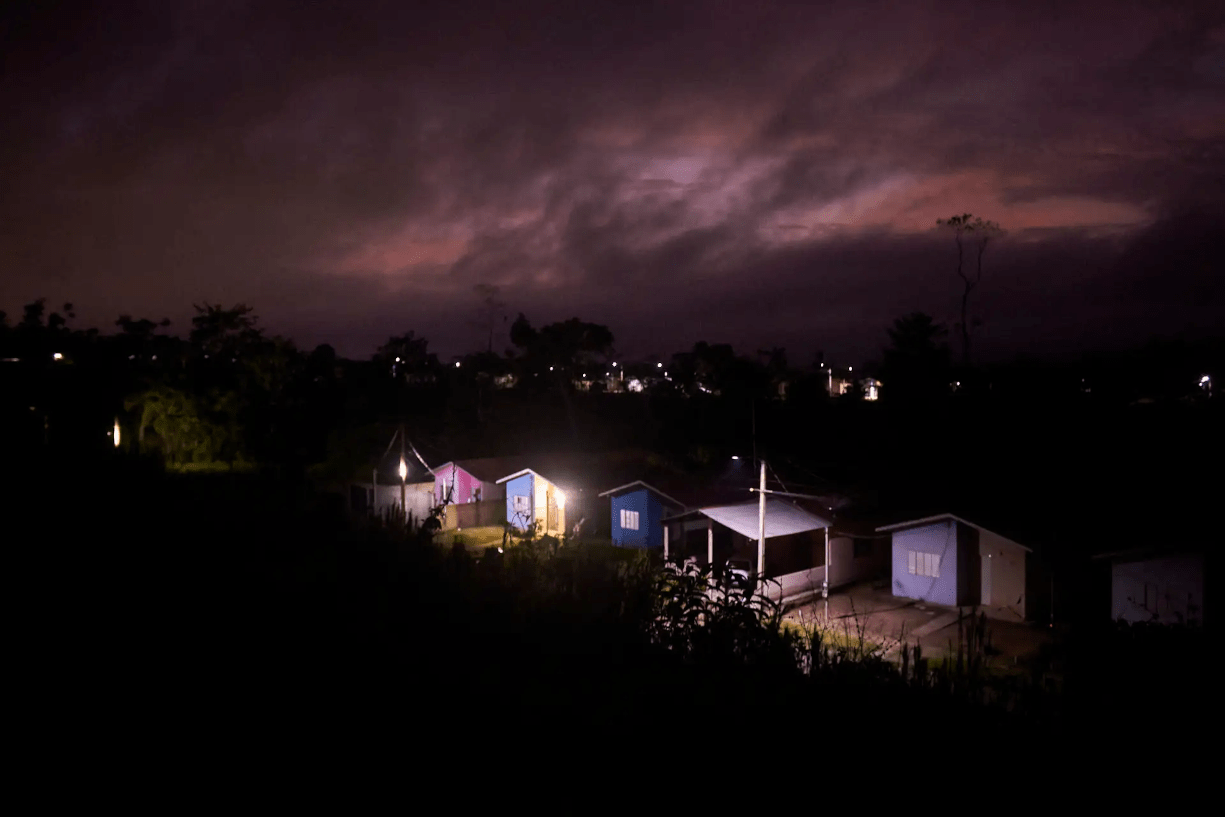
IN THE LARANJEIRAS HOUSING DEVELOPMENT, FAMILIES REMAIN INDOORS AT NIGHT TO PROTECT THEMSELVES FROM THE VIOLENCE. PHOTO: SOLL SOUSA/SUMAÚMA (JANUARY 2023)
The electric rates charged by the concessionaire Equatorial Energia, which has operated the service since the privatization of electricity distribution in Pará in 1998, is a recurring complaint in all communities, whether urban or rural. In the Laranjeiras neighborhood, where part of those displaced by the hydroplant were resettled, electricity bills can be as much as 200 reais (around U$40) per month, even for houses with just a fan, a refrigerator, a television and a few lightbulbs. After being driven from their homes and from the river by the dam, and now living beside it, Belo Monte’s victims pay one of the most expensive energy bills in Brazil.
In a written statement, Equatorial Pará said that each utility bill would need to be analyzed individually to explain the charges. “However, some factors like energy drain and poorly maintained home appliances can contribute to increased consumption,” the company stated.
Ribeirinhos (riverside dwellers) without a river
The full compensation due to the ribeirinhos of Xingu was only recognized by Ibama in 2018 following significant pressure from the affected populations. It is still a long way from completion.
The expulsion of these families from their homes in 2015, without recourse to an adequate resettlement program, marked the beginning of a lengthy process to recognize the many impacts of the Belo Monte plant on their traditional way of life.
An inter-institutional space called “Ribeirinho Dialogues” was formed to implement solutions with the input of public agencies and the Federal University of Pará. In June 2016, the Federal Public Prosecutor’s Office filed a request for the Brazilian Society for the Progress of Science to conduct research on the ribeirinho communities removed from the Xingu River so they could propose well-founded compensation measures that would allow them to reconstruct their way of life.
The result was a book called The Expulsion of Ribeirinhos from Belo Monte, edited by the anthropologists Manuela Carneiro da Cunha, professor emeritus of the University of Chicago and retired professor from the University of São Paulo, and Sônia Magalhães, one of the most noted scholars on the impacts of Tucuruí, vice-president of the Brazilian Association of Anthropology and professor at UFPA.
The most notable outcome of this mobilization was the creation of the Ribeirinho Council, a space for communities to organize and advocate for their rights and their return to the rural areas near the banks of the Xingu River.






 by
by 












 The Free