
For the first time ever, we have the opportunity to transform not only our food system but our entire relationship to the living world.
/from thefreeonline on 26th Aug 2023 by George Monbiot and Frederick Guy [PDF] [EPUB] Regenesis HERE:
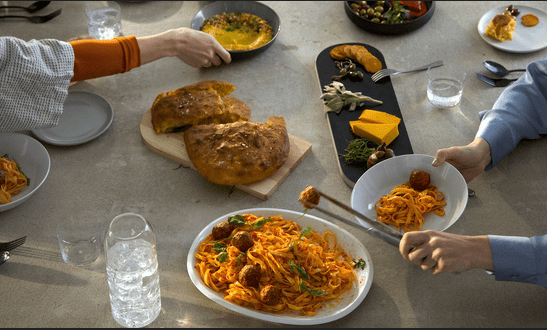
Solein – Precision Fermentation- – Protein out of thin air.…
This post is an introduction to the revolutionary book Regenesis . No pdf yet but its available on Kindle at US$ 4.99
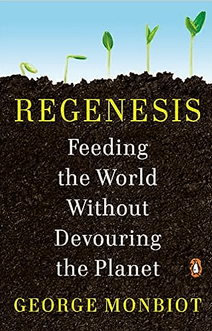
Farming is the world’s greatest cause of environmental destruction—and the one we are least prepared to talk about.
We criticize urban sprawl, but farming sprawls across thirty times as much land.
We have plowed, fenced, and grazed great tracts of the planet, felling forests, killing wildlife, and poisoning rivers and oceans to feed ourselves. Yet millions still go hungry and the price of food is rising faster than ever.
Now the food system itself is beginning to falter. But, as George Monbiot shows us in this brilliant, bracingly original new book, we can resolve the biggest of our dilemmas and feed the world without devouring the planet.
Regenesis review: Farming is killing the planet but we can stop it…
Regenesis is a breathtaking vision of a new future for food and for humanity. Drawing on astonishing advances in soil ecology, Monbiot reveals how our changing understanding of the world beneath our feet could allow us to grow more food with less farming.
He meets the people who are unlocking these methods, from the fruit and vegetable grower revolutionizing our understanding of fertility; through breeders of perennial grains, liberating the land from plows and poisons; to the scientists pioneering new ways to grow protein and fat.
Together, they show how the tiniest life forms could help us make peace with the planet, restore its living systems, and replace the age of extinction with an age of regenesis.
see Full Discussion HERE Reflections on George Monbiot’s Regenesis | Frederick Guy
……Of the cases Monbiot considers in Regenesis, three stand out because he seems to think they represent models that work, or will work. These three could be seen as his proposal, his three-legged stool to support a sustainable food supply.
One of these is a vegetable farm in England, run by a man named Tolly;
Second is a facility producing proteins in a fermentation process in a vat in Finland; Solein | Protein out of thin air.
Third are perennial varieties of rice and wheat (those we’ve eaten heretofore, which is to say since the Neolithic, are all annuals), grasses which set down deep roots and have friendlier relationships with soil, water, pests and variable weather.
- I won’t try to relate the details of any of these. Tolly is doing intensive agriculture, mixed crops close together, working with flowers and insects, doing some kinds of alchemy with the soil. He seems to be emerging from a long tradition, but experimenting relentlessly, studying the science, and adjusting the practice. He also teaches it. A nice story, and I’m sure more to tell a gardener or farmer than it tells me.
The attractiveness of Tolly’s farm is that it produces high yields (per area) without pesticides or chemical (or even animal) fertilizer, and enhances biodiversity both above and below ground, all starting with some low-quality, stony soil.

2. Growing protein in fermentation vats is something you’ve probably seen in the news. Solein protein powder is “100 times more climate-friendly” than .other food.. It is is a protein powder made from electricity, air and microbes in water.
The science advances, they’re working on fats and the texture of “meat”, and so on. The process requires electricity so it is zero carbon only if there’s zero carbon electricity, but that’s becoming cheap. Solar fermentation factories could be situated anywhere, use very little space

Monbiot’s dream is local solar-powered “breweries” throughout the world; his nightmare is that corporations will have control over key patents and effectively tax this vital new global food supply.
As for the adoption of the technology itself, and its displacement of meat production, Monbiot is optimistic. As the cost of the fermented product comes down, he reasons, a tipping point will come, where the fermented product quickly replaces the cheaper cuts of real meat – what goes into ground beef and sausage and chicken nuggets and cat food. Meat, thus, would rapidly be replaced. Here’s hoping.
Most likely cheap nutritious Solar food will make cattle ranching and huge monoculture agriculture much less extensive. Because it can be produced anywhere it could in theory short circuit the repression of starvation amidst plenty, due to food price speculation and big Agro Industry, and radically cut back on Biosphere collapse.

Chinese research team from Yunnan University breeds perennial rice..
3. Most exciting (to me, because it was new to me) is the third leg of Monbiot’s stool, perennial grain. Perennial rice has become a thing in China, its spread limited only by the seed supply, and particularly popular where erosion is a threat (the roots grow deep, the soil remains covered year round). Wheat seems to be on the way.

It’s time to shout stop on this war on the living world…
Tolly’s methods and perennial grain both, for Monbiot, show the possibilities for an agriculture which is friendlier to biodiversity, both below and above ground. Both would represent big changes.
But those changes look small when compared with the move away from animal products, to proteins from vegetables or from fermentation.
Such a move would make possible a wholesale shift of land from agriculture to wilderness. Fermentation is so attractive to Monbiot not because it can replicate meat, but because it would free us from the rivalry between food supply and wilderness.

George Monbiot on UK climate emergency & the need for rebellion-...
The new wilderness would have some benefit in terms of carbon sequestration, and a huge benefit in terms of biodiversity. Exactly how much of the planet needs to go back to wilderness to prevent the collapse of biodiversity is not something we can know; in Half-Earth (2016), Edward O Wilson said 50%, and the satisfying roundness of the figure tells you just how uncertain it is. But the problem is a serious one, less well quantified than climate change but similarly threatening.
See Wilson’s The Diversity of Life (1992) for the biology, or Partha Dasgupta’s Economics of Biodiversity (2021) for … the economics. From either perspective, one of the requisites is setting a lot of land and sea aside. Monbiot’s project is showing how we could do that while still feeding everybody.

How rejuvenating nature could help fight climate..…
I could go on – there’s a lot in this book. The chapter dealing with a food bank is quite good, as is the material on localism and on the inter-connected global food system.
It is always tempting to criticise Monbiot, because he’s an enthusiast, he looks for solutions and gets excited about them.
But he does put in the work, both to understand the complex and pressing problems we face, and to assess the possibilities and limitations of the different solutions he explores. This is an important book, and if you’re going to grumble about it you should show your receipts.
[PDF] [EPUB] Regenesis HERE
********
Regenerative Farming a Farming Revolution in Australia – A documentary …548 .. 25K views This is the first of three episodes describing the benefits of regenerative farming. This first episode focuses on soil health and the effects that increased carbon…
“George Monbiot is one of the most fearless and important voices in the global climate movement today.” —Greta Thunberg
info mainly from:… Reflections on George Monbiot’s Regenesis | Frederick Guy.
References
Dasgupta, Partha. 2021. “The Economics of Biodiverity: The Dasgupta Review | Royal Society.” February 2. https://royalsociety.org/topics-policy/projects/biodiversity/economics-biodiversity/
Flannery, Tim. 2022. “It’s Not Easy Being Green”. The New York Review of Books. September 22.
Lappé, Frances Moore. 1971. Diet for a Small Planet. New York: Ballantine Books.
Monbiot, George. 2013. Feral. Allen Lane.
———. 2022. Regenesis. Allen Lane.
Wilson, Edward O. 1992. The Diversity of Life. Cambridge MA: Harvard University Press.
———. 2016. Half-Earth: Our Planet’s Fight for Life. WW Norton & Company.

 The Free
One thought on “Intro to Regenesis: How to Feed the World and Stop Devouring the Planet”