Last week was the anniversary of the GREAT ISIS MASSACRE in Deir Ez Zor.. When will the US be kicked out, and what future for the anti-ISIS forces of the SDF/AANES coalition?
العربية(read in arabic) //from thefreeonline on 13th Aug 23 by Omar Abu Layla

August 5, 2014..Islamic State executes 700 people from Syrian al-Shaitat tribe
Justice for the victims of the al-Shaitat massacre is only just starting to emerge, and the international community must do its part.
The specter of the Islamic State continues to conjure up harrowing memories throughout their former areas of operation and control. In the Deir al-Zour province, for example, one memory of violence immediately comes to mind: the massacre carried out against the al-Shaitat tribe in eastern Deir al-Zour.
Every year on the ninth of August, the families of the victims commemorate the massacre, trying to draw the world’s attention to what happened nine years ago at the hands of Daesh
Nevertheless, in the towns of Abu Hamam, al-Kashkiyah and Gharanij—the scene of these deliberate attacks in 2014—there now exists hope for a better future at the economic, social, and security levels in spite of the trauma that continues to haunt its residents.
The al-Shaitat tribe—occupants of the town of Abu Hamam and the surrounding villages of al-Kashkiyah and al-Gharanij—are a sub-branch of the large al-Akidat tribe that extends deep into Iraq as well as Syria.
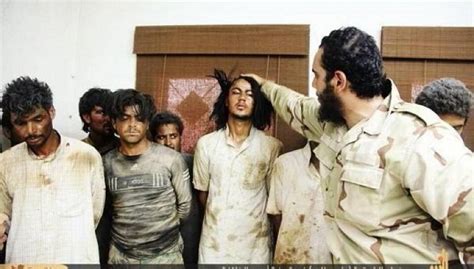
August 2014 Massacre And Media: ISIS And The massacre Of the Shaitat Tribe …
The arab al-Shaitat tribe made a name for themselves during the period of the Islamic State’s campaign, both in their singular act of resistance against Daesh in the early days of their operation in Syria and in the brutal reprisal Daesh enacted in response.
Understanding the factors leading up to the massacre and the repercussions that still continue in the region are vital for understanding the legacy of Daesh in Syria, and in working to obtain justice for the victims and their families.
Mapping the Attacks
In July 2014, Daesh’s military battles against its opponents in the Free Syrian Army (FSA) factions and Jabhat al-Nusra—now rebranded as Hay’at Tahrir al-Sham (HTS)—ended as the group took control of the town of Ash-Shahil in eastern Deir al-Zour, which had served as the latter’s main point of operation in the area. After Ash-Shahil fell in the hands of Daesh, al-Nusra withdrew towards southern Syria while the FSA factions withdrew to the northern part of the country.
Daesh forcibly displaced the people of Ash-Shahil for two weeks—after which they were required to declare their “repentance” to Daesh in return for a guarantee that Daesh would not pursue members of the town.
Although al-Shaitat was not part of this agreement, the promise of clemency reflected Daesh’s strategy in each area it came to control during this period. Ash-Shahil had been at the forefront in the fight against Daesh, so the al-Shaitat area to the south, including the three towns of Abu Hamam, Al-Kashkiyah and Gharanij—was left to fend for itself when Ash-Shahil made the agreement
Subsequently, Daesh sent some of its representatives to these towns of al-Shaitat. The battles in this area were already over and Daesh leadership believed it necessary to have an agreement with the al-Shaitat tribe—in particular concerning oil wells under al-Shaitat control.
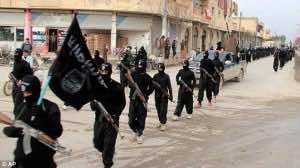
Islamic State Jihadists Slaughter 700 Sunni Tribesmen in Syria …
The dignitaries of al-Shaitat had set preconditions, including preventing Islamic State headquarters from taking root inside the towns of al-Shaitat, and in turn the group agreed on the condition that the entire area of al-Shaitat be under Daesh’s control. The agreement also stipulated that some wells remain under the control of the tribe while the others come under the control of Daesh.
It only became clear later that Daesh used such agreements to co-opt as many of the residents and tribes as possible in this important early stage as it took control of most of the eastern, western and northern countryside of Deir al-Zour, with little intention to hold by their stipulations.
The agreement between Daesh and al-Shaitat tribe lasted for only about a month. Even during this period, confrontations emerged over issues such as wearing the hijab, growing beards, and other social strictures from Daesh.
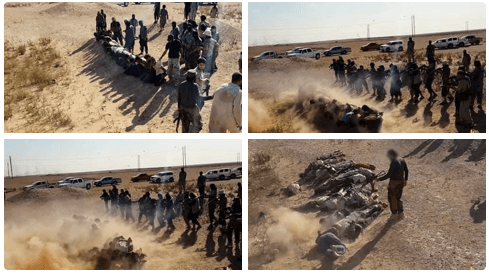
August 2o14.. MASS GRAVE UNCOVERED IN EASTERN SYRIA, 230 (EXECUTED) BODIES FOUND ..
The group’s so-called Hisba apparatus would periodically enter the towns of al-Shaitat to give instructions according to the group’s values and principles, which the people of al-Shaitat had little interest in as they intended to continue exercising their freedom.
However, the incident that officially voided the agreement came at the end of July, when a Daesh patrol raided the home of a wanted man in Abu Hamam. The agreement had forbidden Daesh military raids against the residents of the three towns, with any arrests to be coordinated with the dignitaries of the al-Shaitat tribe.
The wanted man resisted arrest by the Daesh patrol that raided his house, and he was killed during the exchange of fire. His family also clashed with the patrol and killed all of its members, burned one of the checkpoints belonging to Daesh, and arrested the checkpoint officials. This was the initial spark that led the whole al-Shaitat tribe to rise up and fight Daesh.
Daesh responded by carrying out an attack within the week, arresting more than 50 civilian workers from an al-Shaitat town who were working in al-Tanak oil field in eastern Deir al-Zour.
Subsequently, tribal dignitaries entered into negotiations with Daesh to release the prisoners from both sides. And indeed, the people of al-Shaitat adhered to the negotiation results and released the ten Daesh members who had been arrested during the raid on the checkpoint. The response of Daesh, however, was like a thunderbolt to the entire tribe.
Instead of releasing their hostages, Daesh put out a video in which they killed the civilian prisoners in cold blood and buried them in a mass grave.
This violence triggered an uprising of the al-Shaitat against Daesh headquarters located outside the borders of the tribe areas, killing Daesh members and burning its headquarters in the towns of Suweidan Jazeera, al-Tayana, the border of al-Baghuz, and other areas under Daesh control.
It was then that Daesh obtained a fatwa that justified their whole-scale killing of tribal members. The group relied on religious ideology and the weaponization of fatwas to control the minds of its members and leaders, seize large areas, and massacre groups of people based on identity.
In this case, the so-called Abu Abdullah al-Kuwaiti issued a fatwa that the people of al-Shaitat belonged to “a group refusing to obey Islamic rule by arms.” The text continued by asserting that “it is not permissible to hold a truce with them, release their prisoners neither with money nor with anything else. It is not permissible to eat from the animals they slaughter, and no one is allowed to marry their women. It is allowed to kill their captives and to follow those of them who flee and kill them. It is also allowed to kill their wounded, and they must be fought even if they do not start fighting.”
The religious rationale of this fatwa argued that a group such as the al-Shaitat must be considered a disbelieving group and must be fought, according to all the Islamic scholars, even if the group has not denied that sharia is right. Using this justification, Daesh brought in large military reinforcements from the vicinity of al-Hasakah province to the north of Deir al-Zour. These forces besieged the al-Shaitat tribe from all sides, turning the moment into a matter of life or death for the community. On the eastern bank of the Euphrates, opposite the areas of al-Shaitat, the Iranian and Assad militias simply watched and waited.
On August 5, 2014, Daesh declared the city of Abu Hamam a military zone and called on civilians to evacuate. It began shelling it with artillery and mortars, then began its incursions.
Five days later, the group took full control of the city along with the nearby villages of Gharanij and al-Kashkiyah. The members of the armed opposition withdrew and thousands of residents of the villages of southern al-Bukamal fled for fear of retaliation by Daesh.
1.015 Massacred
Estimates suggest that al-Shaitat sacrificed between one thousand and fifteen hundred martyrs to Daesh. Thousands were orphaned, villages and towns were burned, and properties were confiscated.
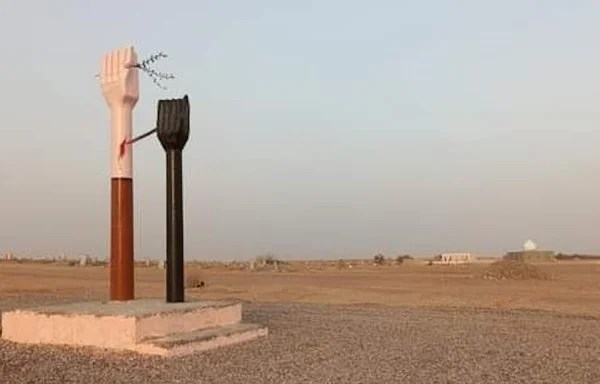
Syrian tribe finds ways to exact revenge on ISIS
The group also prevented people from returning and pursued the displaced, killing those they found in neighboring towns and villages.
Seeking Justice
Al-Shaitat continued to fight Daesh even after the massacre, with their young men joining the ranks of the Syrian Democratic Forces (SDF), supported by the international coalition to fight Daesh.
The members of the al-Shaitat tribe played a key role in the fight against the group, especially on the frontlines of al-Baghuz battles and even before that, ultimately ending its military presence.
Tribal members continue to aid in intelligence operations that target members of Daesh. Others joined the forces of the regime and its factions in order to avenge the killers.
Moreover, the tribe is still paying the price of their opposition to Daesh. Even after the announcement of the military defeat of Daesh in Syria and Iraq, the organization has used its sleeper cells to destabilize the area through assassinations—targeting especially tribal leadership.
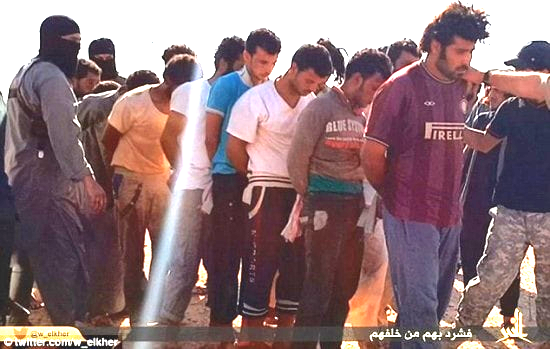
The eastern Deir Al-Zour countryside is seen as one of the most damaged areas in Deir Al-Zour.
For those who remained, many continue to deal with the effects of displacement and the ongoing pain of their loss.
Nevertheless, the tragedy also helped unite the families of the abducted persons in a search for the truth and justice. Families of the victims launched civil initiatives to document the massacre, telling their stories about the tragedy to the world.
Members of the tribe say that they aim “to unite the platforms of the families of those forcibly disappeared by Daesh in order to build the cause as a humanitarian, human rights, and political issue.”
They also seek to provide evidence of the injustices the Syrians were subjected to, and to challenge the stereotype that some have presented, which suggests that the countryside of Deir Al-Zour supported Daesh.
Indeed, the massacre and its aftermath emphasize how the al-Shaitat tribe opposed the existence of Daesh from the beginning and contributed significantly to breaking the group during the height of its power.
The rhetoric Daesh used to refer to those under its control can be misleading, as one of Daesh’s strategies was to force pledges of allegiance to it. Most villages and towns submitted to these pledges either out of fear or greed.
These forced pledges both aided in Daesh’s expansion and legitimized its practices within the group. Such ideology also allowed them to target those same people without the slightest sense of hesitation or remorse.
And for the families of the victims, they continue to pay a heavy price. Women now bear the burdens of supporting their families in a fragile economic situation alone after losing their sons and husbands in most areas of Deir al-Zour.
Most jobs available do not provide enough pay to feed hungry mouths at home. Meanwhile, the male members of families who have survived remain trapped in the cycle of violence, frequently forced to join the ranks of fighters operating in their areas to support their families.
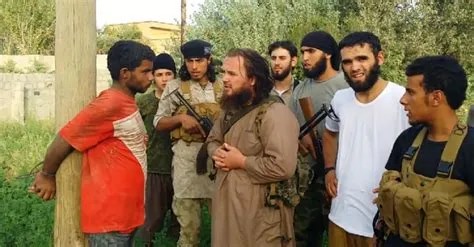
Syria: Isis executes al-Sheitaat tribe teenager with bazooka in Deir al Zor…
Hundreds of victims’ families were not able to identify or bury the bodies of their loved ones. Every time a new mass grave is discovered, these families rush out to the site, hoping to finally identify their missing family members. When they do find them, they must relive the tragedy all over again, remaining trapped in a state of torturous waiting until another mass grave is discovered.
The potential for justice is just starting to emerge. In April 2022, a German court convicted a man called “Ra’ed Y” of crimes against humanity and war crimes.
According to the statement issued by the Public Prosecution, the accused participated in the massacres against the people of al-Shaitat.
The court documents also record harrowing records of his torture against three prisoners: reports state the accused handcuffed the victims, including a 13-year-old child, hung them to the ceiling, beat them with whips and cables, and administered electric shocks.
This trial served as an important step in convicting the perpetrators of the massacre. Nevertheless, complete justice for the victims remains distant, and these crimes must continue to be uncovered and their perpetrators pursued.
Every year on the ninth of August, the families of the victims commemorate the massacre, trying to draw the world’s attention to what happened nine years ago at the hands of Daesh, and hoping to know the fate of the missing, finding the bodies of the victims and giving them a decent burial.
On the seventh anniversary of the al-Shaitat massacre in 2021, the U.S. Embassy to Syria participated in the commemoration of the massacre through a post in Arabic and English, describing what happened as a massacre against innocent members of the al-Shaitat tribe, describing Daesh as barbaric, and recognizing the sacrifices paid by the tribe during the liberation of the region from Daesh…
The region is also in desperate need of infrastructure projects for the region, such as building hospitals and medical facilities, establishing laboratories, and creating job opportunities for young people. Water infrastructure for both drinking water and irrigation is especially vital, especially as they can limit the spread of cholera, which has become particularly dangerous in rural areas.
(Supporting civilian projects operating in those areas and involving the tribesmen in them will allow for the transition from military activity to civil activity, which many male members currently rely on to support their families. Support for memorials and commemorative activities that recognize the community’s contributions to fighting extremism and their sacrifice is likewise vital for morale, in addition to financial support for the massacre’s victims.
In short, the United States should not stop at an expression of passing sympathy for this area—there are humanitarian duties these allies should provide to al-Shaitat and its people by giving them justice for the brutal massacre they have suffered.
********
Note…Insert.. thefreeonline
The above pro US comments forget that although the US sponsored the local Kurdish led SDF coalition to expel Daesh/ISIS from Deir-Ez-Zor they held it under Donald Trump’s assertions ‘“We’re keeping the oil‘.
Although the US chosen oil company, Delta Crescent Energy LLC, was a scam and never exported any oil, the AANES supported Jazeera Oil Company does extract and refine some oil to support the finance of the local autonomous AANES govt and SDF which receive zero support from the central Assad govt and are blockaded and invaded by Turkey.. Most of the oil is sold to Damascus or Idlib at low prices.
Now in 2023 it is too late for the US to begin any social reconstruction in Deir Ez Zor, while continuing to bleed Syria under the draconian Caesar Act Sanctions. An anti US and anti Kurd campaign is underway across Syria, fomenting resentment among Deir Ez Zor tribes and the Arab media, which now continually paint the the SDF coalition as a US police force stealing Syrian oil.
The SDF/AANES is a coalition of many progressive ethnic groups, including Arabs, and operates under a Constitution guaranteeing women’s equality, equal rights for all, cooperative industry and autonomy within Syria.
Despite its huge sacrifices in defeating ISIS it is fanatically opposed by Turkey, Iran, Israel, the Gulf States and Syrian central government itself.
It was therefore forced to accept protection from the US, which maintains a small force in the area under an anti-ISIS banner, while hypocritically supporting militias in Idlib an el Tanf with extreme ISIS similarities. Syria is now again in the Arab League and the Saudis are in BRICS.
The US has no future in Syria and the sooner the SDF kicks them out the better!… thefreeonline on 13th Aug 23
*******
By recognizing that those who fought and sacrificed to defeat Daesh need support, the United States had a chance to be an example in establishing justice and humanity in those societies that have suffered from the crimes of terrorist groups.)
About the Author
Omar Abu Layla is the executive director of Deir Ezzor 24 and an expert on security and governance in northeast Syria. Abu Layla obtained a master’s degree in public policy from Princeton University. He can be found on Twitter at @OALD24.

 The Free
One thought on “Daesh’s Forgotten Massacre in Deir al-Zour. -Al Shaitat tribe saved by Kurdish led SDF-.”