And then, casually, almost as an afterthought while meeting Donbass heroes, Putin announces he will run for President again in next March’s elections. Considering his massive popularity – at least 80% nationally – he’s bound to remain in power until 2030.
Welcome to VVP-2024. Plenty of time for serial meetings with his dear friend Xi Jinping. The Russia-China strategic partnership – in charge of paving the road to multipolarity – is scheduled to be rocking more progressively than Emerson, Lake and Palmer in Tarkus (“Have you walked in the stones of years?”)
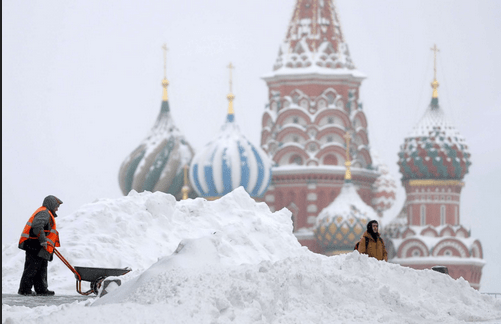
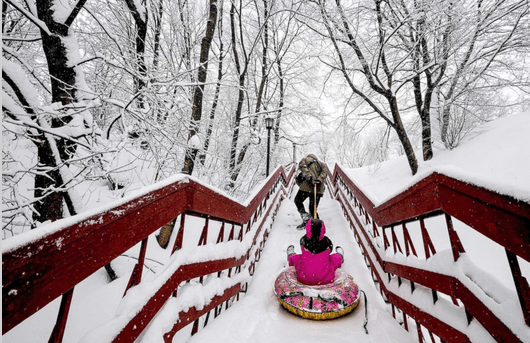
These have been heady days in dazzling, snowy Moscow. To start with, let’s go on a roll call of all those indicators which are being reluctantly admitted even by rabid NATOstan media.
A manufacturing boom is in effect in a semi war economy. Investments are up, up and away – including by dodgy Russian oligarchs who can’t park their funds in the West anymore.
Tourism is up and up – including legions of Chinese tour groups and everyone and his neighbor from West, Central and South Asia. There’s an oil and gas export boom – as EU clients continue to buy gas via Turkey or to the delight of New Delhi, Repackaged in India oil.
The yuan replaces the U.S. dollar and the euro.
Import substitution rules – while in parallel Made in Turkey or Made in China products replace Europeans.
Last January, the IMF was betting that the Russian economy would shrink by 2.3%. Now this outpost of the Treasury Department admits Russian GDP will grow by 2.2%. Actually it’s 3%, according to Putin himself, based on figures provided by the “Disrupter” (as described by a Western rag), Madame Elvira Nabiullina.
Behind the Moveable Feast’s curtains
I have been privileged to be part of key meetings on everything from the latest in the Ukraine-Belarus front to still secret, top-flight studies on the ideal mechanism to bypass the U.S. dollar in payment settlements.
A small group of us, invited by the International Russophile Movement (MIR), were treated to a detailed visit to the astonishing Sretensky monastery complex, defined by mega cool guy Larry Johnson as an unparalleled architectural jewel where one may experience “the palpable presence of God.”
Top UN official says recent seven-day truce showed that humanitarian aid can be delivered if conditions allow.
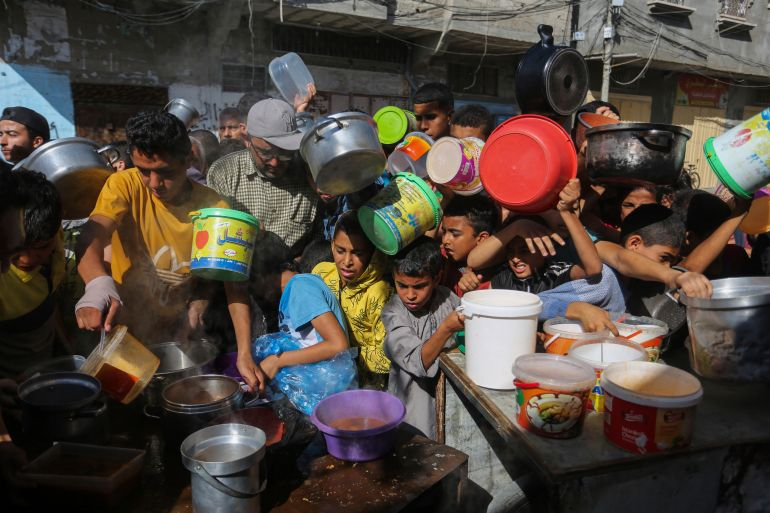
Palestinians crowd together as they wait for food distribution in Rafah in southern Gaza [Hatem Ali/AP]
The World Food Programme (WFP) says its ability to supply basic necessities to the people in Gaza is on the verge of collapse amid escalating Israeli attacks.
“There’s not enough food. People are starving,” WFP Deputy Director Carl Skau wrote on X, formerly Twitter, following a visit to the besieged coastal strip on Friday.
1 day agoSat 9 Dec2023 14.10 EST The Biden administration has used an emergency authority to allow the sale of about 14,000 tank shells to Israel without congressional review, the Pentagon said on Saturday.
He said his team had reached more than a million people, “but the situation is untenable. We need to get our supplies in,” wrote Skau, calling for an immediate humanitarian ceasefire.
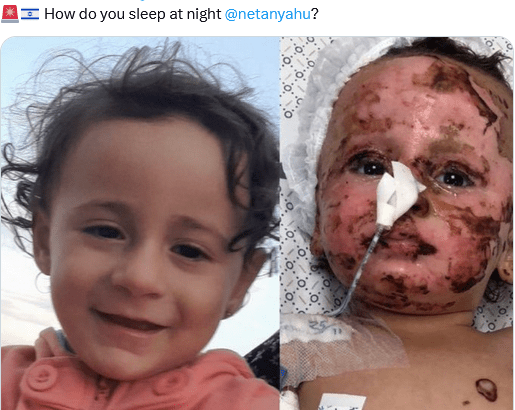
BREAKING: Israel's Netanyahu government appears to be carrying out targeted assassinations of intellectuals in Gaza to wipe out a new generation of moderate Palestinian leadership. Artists, poets, doctors, lawyers, and academics are among the victims.
Only a fraction of the necessary food is reaching the Gaza Strip, there is a lack of fuel, and no one is safe, Skau continued in a WFP statement, adding: “We cannot do our job.”
Camps and emergency shelters were overcrowded, he wrote, as the muffled thunder of Israel’s bombing raids could be heard in the background every day.
The Defense Department passed the same paltry number of sub-audits as it did last year — and would not say if would ever see a clean audit.
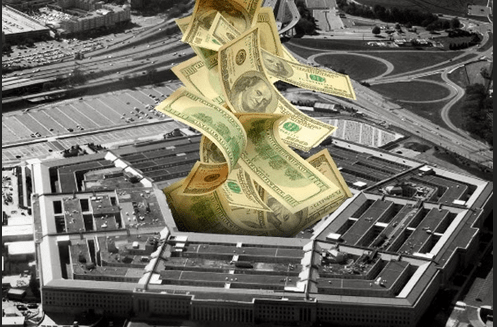
The U.S. military appears unfazed in its inability to account for billions of dollars. On Thursday, the Department of Defense failed its sixth consecutive audit — but hailed its “incremental progress.”
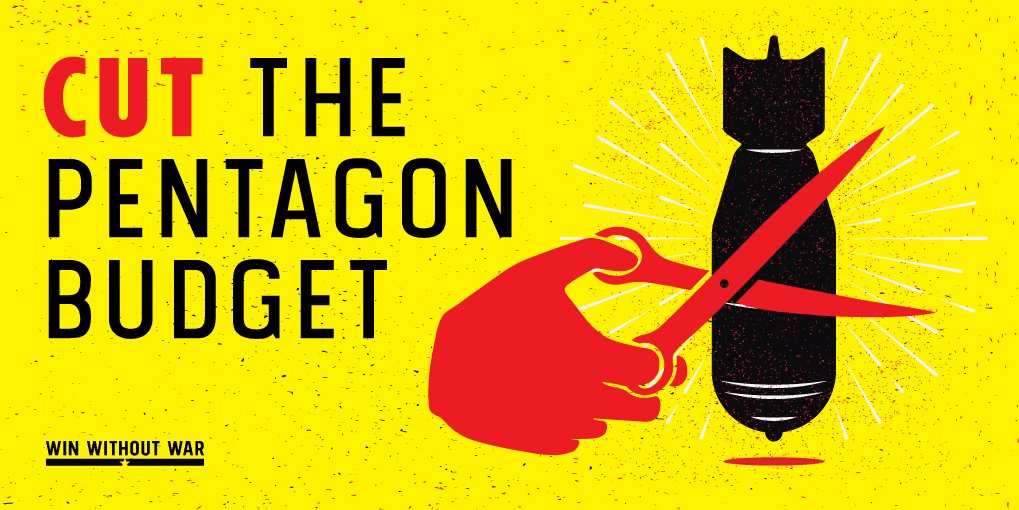
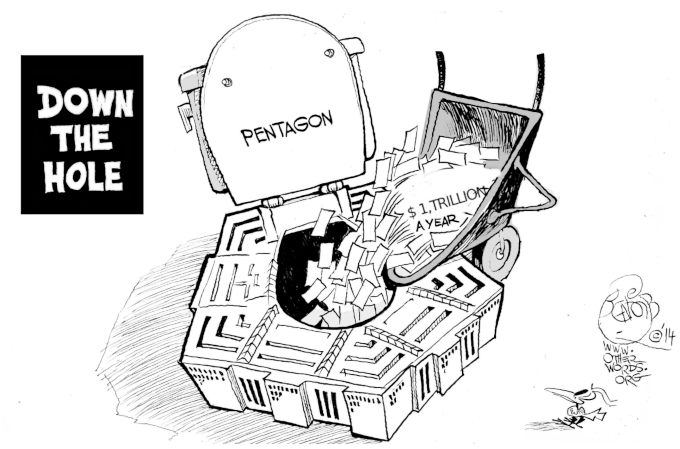
As the Pentagon budget nears a watershed $1 trillion — the largest of any federal government agency — it has never passed a single one of the annual audits mandated by Congress. In a press briefing, the Department of Defense said it had no timeline for passing an audit.
“We’ve heard the same platitudes about audit progress for years,” said Julia Gledhill, an analyst at the Project on Government Oversight’s Center for Defense Information. “They’re meaningless, especially since the Pentagon can’t even commit to a timeline for achieving a clean audit.”
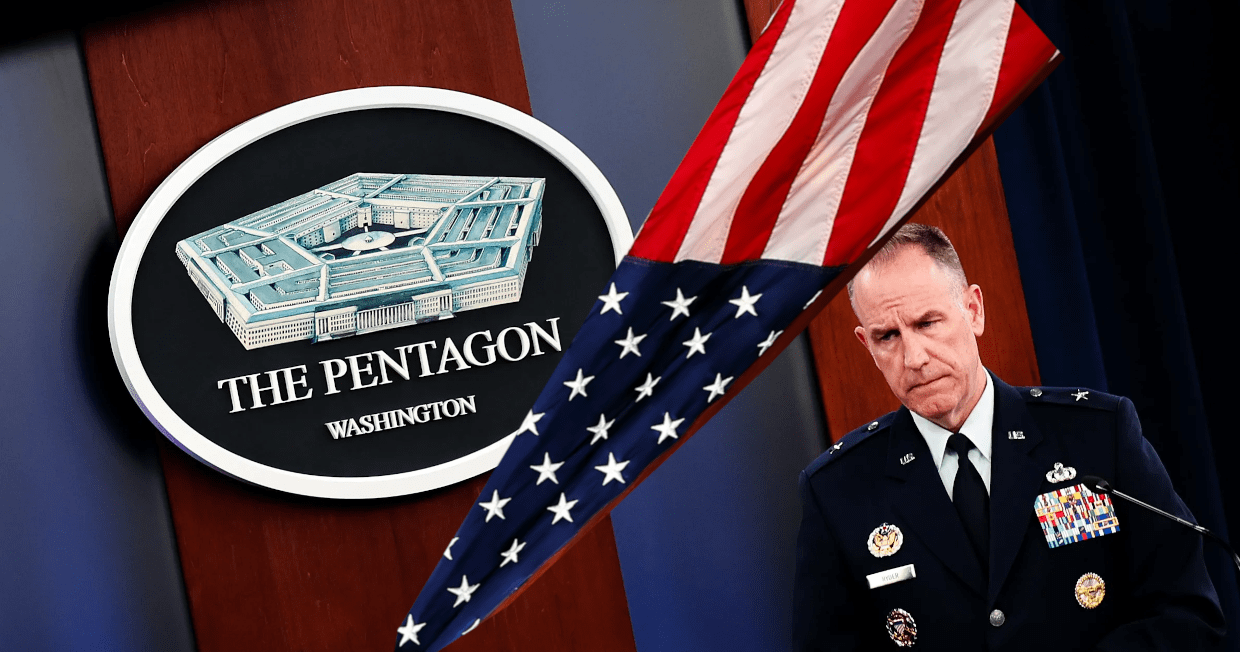
Pentagon press secretary Air Force Brig. Gen. Pat Ryder holds a press conference at the Pentagon on Oct. 19, 2023.Photo: Kevin Dietsch/Getty Images
“We’ve heard the same platitudes about audit progress for years. They’re meaningless.”
Former Pentagon comptroller Thomas Harker, now the secretary of the Navy, had publicly set a deadline of 2027 for a clean audit, but officials have since distanced the military from that timeframe. “Former comptroller Harker signaled 2027 back in 2020, but the department has completely rolled that back,” Gledhill said. “There’s no incentive to improve.”
Beginning in 2017, the audits are conducted by the Pentagon inspector general along with independent public accounting firms. The Defense Department is auditing $3.8 trillion in assets and $4 trillion in liabilities.
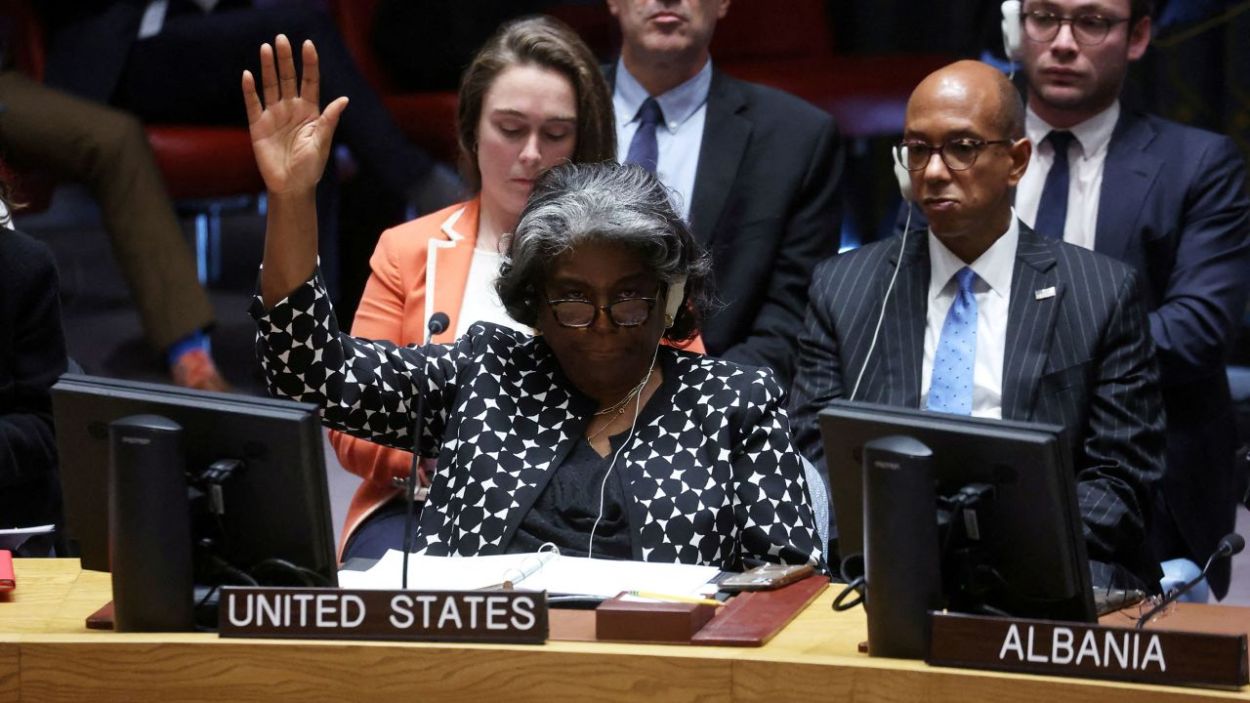
13 of the 15 current UNSC members backed the Ceasefire. Co-sponsored by over 100 other countries. Only the USA voted against. It’s proxy the UK abstained.
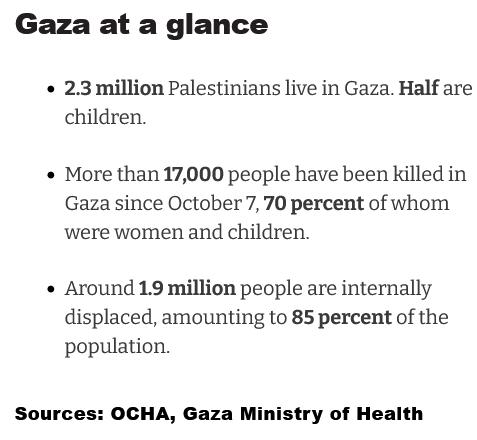
World leaders, international rights groups and United Nations officials have criticised the United States for vetoing a UN resolution calling for an immediate humanitarian ceasefire in Gaza and failing to halt the war that has killed more than 17,400 Palestinians and about 1,100 people in Israel since October 7.
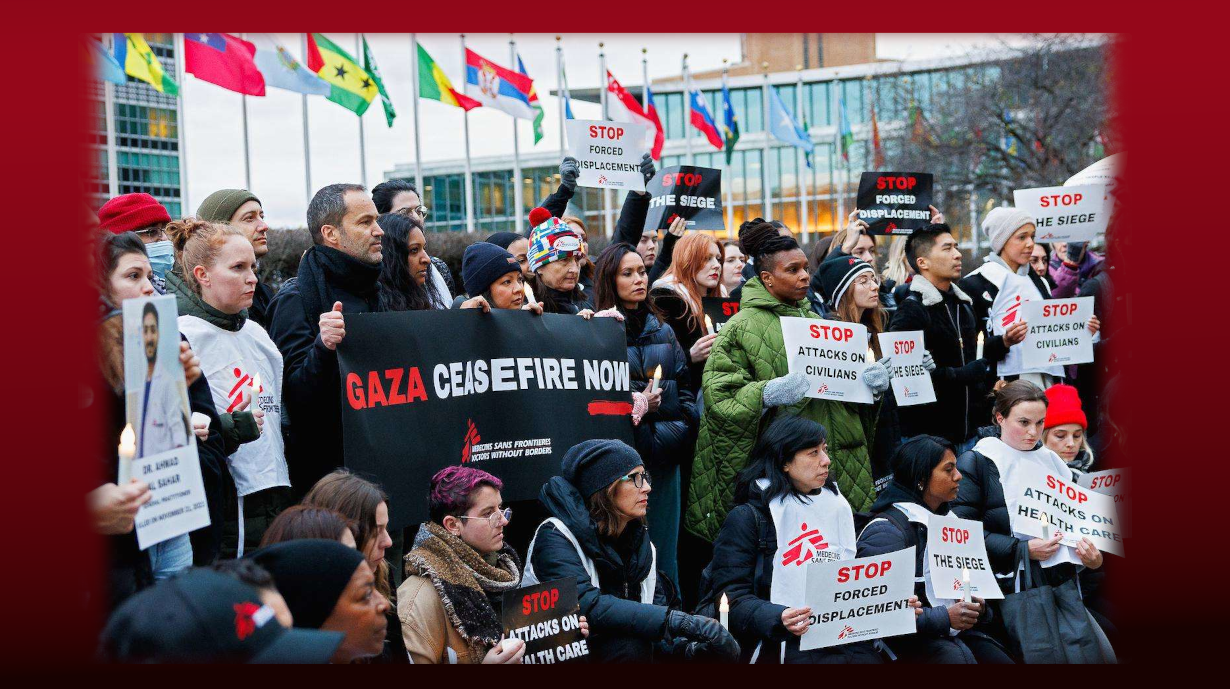
MSF calls US veto of Gaza ceasefire resolution “a vote against humanity”
NEW YORK, December 8, 6:06 p.m. ET—The United Nations Security Council today failed to adopt a resolution demanding a ceasefire in Gaza—blocked by a veto from the United States.
The Security Council held an emergency meeting to discuss the humanitarian catastrophe in Gaza. This followed a letter from the UN Secretary-General invoking Article 99 to call on the Security Council to prevent further escalation and end this crisis.
The United Nations Security Council must demand an immediate and sustained ceasefire, lifting of the siege, and unrestricted aid to reach the entire Gaza Strip.
To date, the inaction of the United Nations Security Council and vetoes from member states, particularly the United States, make them complicit in the ongoing slaughter of civilians. This inaction has given license to the mass killing of men, women, and children caught in the war between Israel and Hamas.
Repeated assurances from Israel and its allies, especially the US, that this war is being waged on combatants alone run counter to what we see on the ground. What we see is a total war that does not spare civilians.
Doctors Without Borders/Médecins Sans Frontières (MSF) medical staff in the Gaza Strip have witnessed and treated the medical consequences of continued and systematic atrocities over the last eight weeks of all-out war. Israel’s campaign of indiscriminate killing, denial of access to food, water, and health care, and repeated forced displacements have made conditions for the more than two million people in Gaza unbearable.
People are sleeping on the streets, in the rain, with little to no sanitation or hygiene services. MSF’s teams have seen a significant increase in infectious diseases, including diarrhea, acute respiratory infections, skin infections, and outbreaks of hepatitis. Vital humanitarian aid must immediately be allowed to enter the Gaza Strip at a scale sufficient enough to meet the enormous needs.
from thefreeonline2807 views 8 Dec 2023 9,42pm Paris time
#Security#ceasefire#Gaza The UN Security Council is expected to vote at 11:30pm Paris time (GMT+1) on a humanitarian ceasefire resolution drafted by the United Arab Emirates.
The vote was postponed until the evening to give the 15-member body time to reach consensus.
The US and UK have repeatedly vetoed Security Council votes for a permanent Gaza ceasefire, depriving the UN of authority to take effective measures against the Israeli Genocide
“As it stands, at the moment, it seems that the United States is still unwilling to support the resolution as it is,” FRANCE 24’s Jessica Le Masurier said, reporting from New York. #Security Council #ceasefire#Gaza
🚨 NEW ISRAELI ARMY'S LIE EXPOSED 🚨 THE PHOTOS THEY RELEASED CLAIMING TO BE HAMAS FIGHTERS SURRENDERING FROM TUNNELS ARE DEBUNKED
Field reports confirm they're civilians, some kidnapped from a UN shelter. Shockingly, our journalist colleague Diaa Al-Kahlot, the office director… pic.twitter.com/JwrwGcMyYY
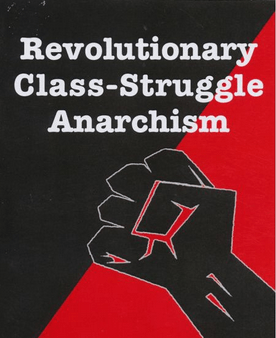
The Polar Blast supports class struggle anarchism. Class struggle anarchism firmly continues the traditions of anarcho-communism with its focus on class against class, and its support for the whole working class.
Workers have a special relationship to the means of production (and distribution and social services), which are owned by the minority capitalist class. Workers lacking access to land and capital only have the ability to sell their labour to survive. This is how surplus value is created, as we produce more in value than we receive.
This is the basis for the capitalist’s profits, and it is how we are exploited, not just individually, but as a class. Saying that, it is important to note that we consider the working class to be broader than those immediately employed and includes the unemployed, the retired, the disabled and those who are home-makers and caregivers.
We oppose all exploitation, the alienated work that goes with it, and the poverty created by it. Our aim is a classless society, and we maintain that it is only those who are exploited who have an interest in ending their own exploitation, and the capability to do so.
Having their hands on the means of production, transportation, distribution, communication, and service, the working class has a potentially enormous power, which could transform all society.
So, as class struggle anarchists, we see the working class as being central to the fight against capitalism. Yet we are not class reductionists, as so many people accuse us of being. We see the relationships between class and other sections of society and their systems of oppression. We say that all oppression is wrong and should be resisted.
Furthermore, we do not believe that non-class oppressions will be resolved once a classless society is reached. Nor do we just see issues like racism and sexism as problems only because they divide the working class, rather than separate issues in themselves. Instead, we see all oppressions as being intertwined and not consisting of distinct groups of workers – over there, Māori; over there, women, in yet another place, the disabled.
Society can be examined in terms of class (workers and capitalist), race/ethnicity (Māori/Pakeha (non Maoris)), etc. but these groups consist of the same overlapping groups of humans, they can be looked at in terms of their identity, but they can also be looked at in totality and with their relationship to the means of production.
For example, Māori are overwhelmingly in the working class, most being in the poorest sections. Their oppression serves two class purposes- it creates a pool of workers who can be exploited at low wages, and it weakens the overall working class, due to racial divisions and the white workers’ belief in their superiority linked to capitalism and the era of imperialism to build support for colonialism.
Another example is patriarchy. Patriarchy coerces women into a specific caregiving/reproducing role within the nuclear family, which under capitalism is a centre of consumption. It is where the labour power is re-created through coerced reproductive labour. It is where the culture of our society is passed on to the next generation. Again, this directly affects, and is affected by, the class structure and all other aspects of our politics and culture.
Other areas of oppression such as homophobia & transphobia, for example, are used to police social definitions of gender rooted in the capitalist family structure and its social psychology. This means queerphobia and patriarchy have a mutually reinforcing relationship and they both strengthen capitalism.
The point being made is that each oppression all supports capitalist exploitation and are supported by it. The fight against one is a fight against all. The ending of one requires the ending of all. There can be no classless society without the liberation of Māori, women, etc.
In a study of anarchism, Benjamin Franks stated that “capital relations [are] dominant in most contexts, but not the sole organizing force….Capitalism interacts with other forms of oppressive practices that may not be wholly reducible to economic activity…. However, as capitalism is still a significant factor, economic liberation must also be a necessary feature.” (Rebel Alliances, 2006, Edinburgh: AK Press; p. 181). So the goal has to be the total overthrow of the ruling capitalist class, its destruction as a class, and replacing it with a stateless, classless society.
As a whole, men do dominate women, but that does not mean all men run society. Pākeha dominates Māori, but not all Pākeha meet to decide on policies that affect Māori. In both examples, those who may be labelled the oppressor in fact have little power.
However, the capitalist class does run society. They control the goods and services we receive, they determine wage rates, they determine unemployment and employment, and they pretty much control the political parties. They own the mass media which shapes our popular culture. If there is to be a better world, then their class rule has to be overthrown.
So how is this class to be overthrown? Throughout history, the struggles of minority groups have shaken up the world. The BLM Movement has had a powerful reach into many cultural and sporting areas.
The women’s liberation movement towards the end of the last century had many consequences that shaped society. The LGBTQIA+ movement has also massively affected our cultural thinking. A Māori renaissance has seen Treaty Settlements, and the wider adoption of Te reo Māori. Yet, on a socio-economic basis a few individuals may have improved their positions but as a whole there are still gender pay gaps, and minorities over-represented in the lower ends of the socio-economic scales.
Only a united working class has the ability to stop society altogether and rebuild it in a new way. Our class controls the manufacture and distribution of goods that capitalism survives upon. The reality of capitalist politics and their control of the media is to stop the awareness of this and prevent a revolution from happening.
But saying this, as revolutionaries we support every struggle against oppression, whether connected to class or not. Each system of oppression supports capitalism and is supported by it. Fighting against capitalism undermines oppression, and fighting against oppression undermines capitalism.
But we must point out how every oppression is related to capitalism and point out the need for revolutionary change. We should point out the connections to strengthen the links between struggles, else we become divided and weakened. In every movement, we need to point out the class conflicts that arise to try and prevent them being taken over by pro-capitalist reformist leaderships.
It is only by acting as a multinational, multi-cultured, multi-gendered working class that we can bring together all the anger flowing from different sources and channel it into a revolutionary movement of all the people, for all the people.
El Polar Blast apoya el anarquismo de lucha de clases. Al llamarnos anarquistas de la lucha de clases dejamos claro contra quién estamos y a favor de qué estamos. El anarquismo de lucha de clases continúa firmemente las tradiciones del anarco-comunismo con su enfoque de clase contra clase, y su apoyo a toda la clase trabajadora.
Los trabajadores tienen una relación especial con los medios de producción (y de distribución y servicios sociales), que son propiedad de la minoritaria clase capitalista. Los trabajadores que carecen de acceso a la tierra y al capital sólo tienen la posibilidad de vender su trabajo para sobrevivir. Así es como se crea la plusvalía, ya que producimos más valor del que recibimos. Esta es la base de los beneficios del capitalista, y así es como somos explotados, no sólo individualmente, sino como clase.
Dicho esto, es importante señalar que consideramos que la clase trabajadora es más amplia que los empleados inmediatos e incluye a los desempleados, los jubilados, los discapacitados y las personas que se ocupan del hogar y los cuidados.
Nos oponemos a toda explotación, al trabajo alienado que conlleva y a la pobreza que crea. Nuestro objetivo es una sociedad sin clases, y mantenemos que sólo los explotados tienen interés en acabar con su propia explotación, y la capacidad de hacerlo. Al tener en sus manos los medios de producción, transporte, distribución, comunicación y servicio, la clase obrera tiene un poder potencial enorme, que podría transformar toda la sociedad.
Por lo tanto, como anarquistas de la lucha de clases, vemos a la clase obrera como el centro de la lucha contra el capitalismo. Sin embargo, no somos reduccionistas de clase, como tanta gente nos acusa de ser.Vemos las relaciones entre la clase y otros sectores de la sociedad y sus sistemas de opresión. Decimos que toda opresión es mala y debe ser resistida.
Además, no creemos que las opresiones no derivadas de la clase se resolverán una vez que se alcance una sociedad sin clases. Tampoco vemos cuestiones como el racismo y el sexismo como problemas sólo porque dividen a la clase obrera, en lugar de cuestiones separadas en sí mismas.La sociedad puede examinarse en términos de clase (trabajadores y capitalistas), raza/etnia (maoríes/pakeha), etc., pero estos grupos están formados por los mismos grupos humanos superpuestos, pueden examinarse en términos de su identidad, pero también pueden examinarse en su totalidad y con su relación con los medios de producción.
Por ejemplo, los maoríes pertenecen en su inmensa mayoría a la clase trabajadora, la mayoría de ellos en los sectores más pobres.
Otro ejemplo es el patriarcado, que obliga a las mujeres a desempeñar un papel específico de cuidadoras y reproductoras en el seno de la familia nuclear, que en el capitalismo es un centro de consumo, donde se recrea la fuerza de trabajo a través del trabajo reproductivo forzado. El patriarcado coacciona a las mujeres para que desempeñen un papel específico de cuidado y producción en el seno de la familia nuclear, que bajo el capitalismo es el centro de consumo, y es donde se recrea la fuerza de trabajo a través del trabajo reproductivo coaccionado.
Lo que se quiere decir es que todas las opresiones apoyan la explotación capitalista y son apoyadas por ella.La lucha contra una es una lucha contra todas. El fin de una requiere el fin de todas.No puede haber una sociedad sin clases sin la liberación de los maoríes, las mujeres, etc.
En un estudio sobre el anarquismo, Benjamin Franks afirmó que «las relaciones de capital [son] dominantes en la mayoría de los contextos, pero no son la única fuerza organizadora….. El capitalismo interactúa con otras formas de prácticas opresivas que pueden no ser totalmente reducibles a la actividad económica…..Sin embargo, como el capitalismo sigue siendo un factor significativo, la liberación económica también debe ser una característica necesaria»(Rebel Alliances, 2006, Edimburgo: AK Press; p. 181). Así que el objetivo tiene que ser el derrocamiento total de la clase capitalista dominante, su destrucción como clase y su sustitución por una sociedad sin Estado y sin clases.
En conjunto, los hombres dominan a las mujeres, pero eso no significa que todos los hombres dirijan la sociedad. Los pākeha dominan a los maoríes, pero no todos los pākeha se reúnen para decidir las políticas que afectan a los maoríes. En ambos ejemplos, los que pueden ser etiquetados como opresores tienen, de hecho, poco poder. Sin embargo, la clase capitalista dirige la sociedad. Controlan los bienes y servicios que recibimos, fijan los salarios, determinan el desempleo y el empleo y controlan prácticamente todos los partidos políticos. Son dueños de los medios de comunicación de masas que conforman nuestra cultura popular.
¿Cómo derrocar a esta clase? A lo largo de la historia, las luchas de los grupos minoritarios han sacudido el mundo. El movimiento BLM ha tenido un gran alcance en muchos ámbitos culturales y deportivos. El movimiento de liberación de la mujer a finales del siglo pasado tuvo muchas consecuencias que moldearon la sociedad. El movimiento LGBTQIA+ también ha influido enormemente en nuestra mentalidad cultural, mientras que el renacimiento maorí se ha traducido en la firma de tratados y la adopción generalizada del Te reo Māori. Sin embargo, en el plano socioeconómico, aunque algunas personas hayan mejorado su situación, en general sigue habiendo diferencias salariales entre hombres y mujeres, y las minorías están sobrerrepresentadas en los puestos más bajos de la escala socioeconómica.
Sólo una clase trabajadora unida tiene la capacidad de detener la sociedad y reconstruirla de una nueva manera. Nuestra clase controla la fabricación y distribución de los bienes de los que sobrevive el capitalismo. La realidad de la política capitalista y su control de los medios de comunicación es impedir que se tome conciencia de ello y evitar que se produzca una revolución.
Pero dicho esto, como revolucionarios apoyamos toda lucha contra la opresión, esté o no relacionada con la clase. Cada sistema de opresión apoya al capitalismo y es apoyado por él. Luchar contra el capitalismo socava la opresión, y luchar contra la opresión socava el capitalismo.
Pero debemos señalar cómo cada opresión está relacionada con el capitalismo y señalar la necesidad de un cambio revolucionario.Debemos señalar las conexiones para fortalecer los vínculos entre las luchas, de lo contrario nos dividimos y debilitamos. En cada movimiento, debemos señalar los conflictos de clase que surgen para tratar de evitar que sean tomados por direcciones reformistas pro-capitalistas.
Sólo actuando como clase obrera multinacional, multicultural y multigénero podremos reunir toda la rabia que fluye de distintas fuentes y canalizarla hacia un movimiento revolucionario de todo el pueblo, para todo el pueblo.













 The Free