from thefreeonline on 30 Jan 2024 by Colin M at MASSolidarity.org
An organized clandestine underground network to resist the slave state was not inevitable. The path of fatalism and despair, a pale specter that still haunts many would-be rebels today, was just as likely.

In those days, given the seemingly low odds of success, an overwhelming feeling of helplessness doubtless consumed many hearts.
Courageous people, most of who’s names we will never know, stared away from that specter and did the highly delicate and risky work of organizing an insurgent network in the Saint-Domingue colony (Haiti).
The epic saga of the abolition of colonial slavery, and its modern relevance, as told through two overlapping historical narratives
Written by Colin M., originally published on Medium with The Shadow under CC BY-NC-SA 4.0
Social movements for freedom and equality are undergoing a resurgence throughout the world. Past movements can be a source of inspiration as well as concrete lessons for present struggles. One of the earliest international movements for a more free and equal society was the movement to abolish slavery.
Readers from the US may be familiar with the abolitionist movement there, but abolitionism began earlier and in other places. The victory of abolishing colonial slavery was a tremendous achievement in its time and the legacy of slave emancipation is still with us now, whether we know it or not.

How was this original victory won? This subject is thoroughly explored in The Black Jacobins by C.L.R. James and Bury the Chains by Adam Hochschild. These two books, although written about 80 years apart, compliment one another very well and weave together an image of the past that gives the reader a vivid picture of how this epic struggle played out.
The time period of The Black Jacobins is contained within the larger time period covered by Bury the Chains. The former covers the Haitian Revolution and the latter focuses on the struggle to abolish the slave trade in Britain and in the British-held Caribbean colonies.
In the 18th and 19th centuries, European imperialism, led by Britain and France, baptized the world in blood. In the late 1700s, Haiti was the most profitable colony in the world due to it’s sugar production and the labor of hundreds of thousands of African slaves.
Conditions were so bad, and so many died each year, that many took pains to never have children. In fact, a great majority of the slaves had been born and raised in Africa, not in Saint-Domingue (as Haiti was called before the Haitian Revolution).
In The Black Jacobins, C.L.R. James tells of how maroon communities (communities of runaway slaves and other colonial deserters) existed well before the Haitian Revolution, and how the slave masters of the colony had been unable to suppress them. There was also an earlier attempt at revolution that had been suppressed. Slaves organized work stoppages when they were at risk of death from falling into vats of hot sugar in the dark when ordered to operate sugar mills at night.
Abolition in (not so) Great Britain
Meanwhile, in the heart of empire, a tiny cohort of British theologians, intellectuals and ex-slaves came together to form the first (known) organized effort by non-enslaved people to abolish slavery in 1787.
Politically and economically, it was a tall order in Britain at that time. There is no real modern day comparison, but Hochschild impresses on the reader that this was seen as an “unreasonable” demand by overall public opinion at the time.
Undeterred, they went on to pioneer what Hochschild calls the basic toolkit of modern democracy. A lot of it centered around writing and popular education.

Ex-slaves like Olaudah Equiano wrote memoirs detailing their time in bondage decades before Fredrick Douglas did the same in the United States. Organized political book tours were held; Hochschild suggests they were some of the first ever to be used in this way.
The abolitionists also published and distributed daring investigations and interviews about the miserable conditions of slavery and the need to free all slaves. They petitioned parliament, which was not as widespread of a thing to do back in those days. One of them was actually a member of parliament.
This initial wave of the movement got as far as pushing for (and losing) votes in Parliament, but when France and Britain went to war following the French Revolution, a reactionary nationalistic fervor temporarily submerged the nascent abolitionist movement.
French Abolition Smothered in its Cradle
There was also a small bud of an abolitionist movement in France, which too was soon to be plunged into the political fallout of the French Revolution.
The French abolitionists are worth remembering, but the authoritarian turn of the revolution soon drowned their hopes and eventually led to the state murder of many of them as well. Their organization was called the Society of the Friends of Blacks and included many prominent public figures.
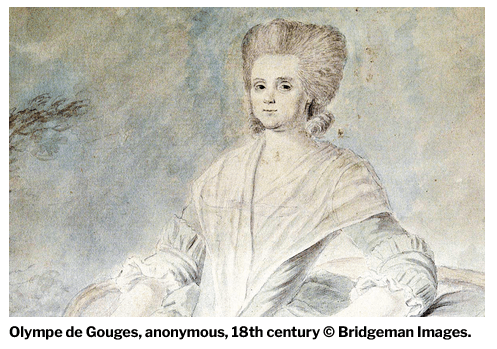
Why are Black people enslaved? The color of people’s skin only suggests a slight difference. There is no discord between day and night, the sun and the moon and between the stars and dark sky. All is varied; it is the beauty of nature. Why destroy nature’s work?
She was executed by Guillotine in 1793, at the age of 45, for being a critic of the new “revolutionary” government.
C.L.R. James also writes of the more spontaneous alignment of interests and actions between the people of Haiti and France in his fifth chapter titled “And The Paris Masses Complete.” In 1793, during a reactionary turn in the French Revolution, France and Britain went to war. This resulted in the international abolition of slavery being delayed by decades, as political reaction swept Britain.
The Saint-Domingue Bomb Explodes
By the time that The Declaration of the Rights of Man and Citizen, adopted by the French National Assembly, made it’s way to Saint-Domingue in 1789, the colony was already going through social upheaval…..
continue reading HERE… The Death of Slavery, The First Dawn of Freedom

 The Free