
From thefreeonline on 12 July 2024 info via off-guardian. via stuartbramhall (on Telegram: https://t.me/thefreeonline)

A law was passed in 2012 that prohibits farmers’ rights to save, share, exchange or sell unregistered seeds. Farmers could face up to two years in prison and a fine of up to 1 million Kenyan shillings (equivalent to nearly four years’ wages for a farmer).

ASEED – Action for Solidarity Environment Equality and Diversity Support ASEED – become a contributor! Subscribe to our monthly newsletter * indicates required. E-mail * Upcoming Events Jul 16 July 16 – July 21. STOP MEGA-BASINS – International mobilization Aug 28 August 28 – September 1. Geef Tegengas: Action Camp View Calendar Other information.
However, in 2022, Kenyan smallholder farmers launched a legal case against the government calling for reform of the 2012 seed law to stop criminalising them for sharing seeds. There is a hearing scheduled for 24 July 2024.
Agroecologist and environmentalist Claire Nasike Akello says that, in legal terms, the sharing and selling of indigenous seeds is a criminal offence in Kenya. In effect, Kenya’s Seed and Plant Varieties Act demolishes self-sufficiency among smallholder farmers who use indigenous seeds to grow food.

Writing on her website, she says that the legislation seeks to create a dependency on multinational companies by smallholder farmers for seeds thus giving an upper hand to these firms that continue to steal biological resources from local communities with a profit-driven mindset.
It is, in effect:
“A move designed to impoverish smallholder farmers and lock them out of farming.”
Gates, Rockefeller and big agribusiness
The Alliance for a Green Revolution in Africa (AGRA) initiative, funded by the Gates and Rockefeller Foundations, has been intervening directly in the formulation of African governments’ agricultural policies on issues like seeds and land, opening up African markets to US agribusiness.
Around 80% of Africa’s seed supply comes from millions of small-scale farmers recycling and exchanging seed from year to year. But AGRA is supporting the introduction of commercial (chemical-dependent) seed systems, enabling a few large companies to control seed research and development, production and distribution.
Since the 1990s, national seed law reviews have taken place, sponsored by USAID and the G8 along with Gates and others, opening the door to multinational corporations’ involvement in seed production.
Regulations and ‘seed certification’ laws are often brought in by governments on behalf of industry that are designed to eradicate traditional seeds by allowing only ‘stable’, ‘uniform’ and ‘novel’ seeds on the market (meaning corporate seeds).
These are the only ‘regulated’ seeds allowed: registered and certified. It is a cynical way of eradicating indigenous farming practices at the behest of corporations.
Thousands of seed varieties have been lost and corporate seeds have increasingly dominated agriculture as peasant farmers have been prevented from freely improving, sharing or replanting their traditional seeds.
It amounts to the privatisation of a common heritage.
The privatisation and appropriation of inter-generational farmer knowledge embodied by seeds whose germplasm is ‘tweaked’ and stolen by corporations who then claim ownership.

Seed has been central to agriculture for 10,000 years. Seeds have been handed down from generation to generation. Peasant farmers have been the custodians of seeds, knowledge and land.
The corporate control over seeds is also an attack on the survival of communities and their traditions.
Seeds are integral to identities because, in rural communities, people’s lives have been tied to planting, harvesting, seeds, soil and the seasons for thousands of years.
The privatisation of seeds is a global issue, of course.
In Costa Rica, for example, the battle to overturn restrictions on seeds was lost with the signing of a free trade agreement with the US, although this flouted the country’s seed biodiversity laws.
Seed laws in Brazil created a corporate property regime for seeds which effectively marginalised all indigenous seeds that were locally adapted over generations. This regime attempted to stop farmers from using or breeding their own seeds.
What we are seeing is a drive towards the corporate commodification of knowledge and seeds, the erosion of farmers’ environmental learning, the undermining of traditional knowledge systems and an increase in farmers’ dependency on corporations.
Such dispossession and dependency are sold by Gates and the agribusiness sector as meeting the needs of modern agriculture. What it really means is a system adapted to meet the demands of global agri-capital, institutional investors like BlackRock and corporate-controlled international markets and supply chains.

Meanwhile these vested interests try to depict Africa as a basket case in need of ‘intervention’.
It’s a convenient smokescreen that diverts attention from the political economy of food and agriculture, not least how contrived debt traps and predatory lending practices led African nations into succumbing to ‘structural adjustment’ programmes, turning the continent from being a net food exporter into a net food importer, undermining indigenous crop diversity and, with it, food security and food sovereignty.
Prof Walden Bello and John Feffer argue that, in this respect, the World Bank, the International Monetary Fund and the World Trade Organization (WTO) are key to understanding the processes involved in destroying African agriculture.
Neoliberal shock therapy left poor African farmers more food insecure and governments reliant on unpredictable aid flows.
Bello and Feffer argue that the social consequences of structural adjustment cum agricultural dumping were predictable:
…the number of Africans living on less than a dollar a day more than doubled to 313 million people between 1981 and 2001 – or 46% of the whole continent. The role of structural adjustment in creating poverty, as well as severely weakening the continent’s agricultural base and consolidating import dependency, was hard to deny.”
And now we have AGRA stepping in to apparently save the day. But what we have seen thus far with that initiative is more of the same: according to the Institute for Agriculture and Trade Policy, AGRA is failing Africa’s farmers.
Seed Freedom
According to Vandana Shiva, Ph.D., environmental activist, author and founder of Navdanya International, “[Natural] seeds as the source of life are magical. They hold their implicate order within them, and unfold to relocate the unique patterns and structures of life in its diversity.”

World Bank and the seeds of neocolonialism
The UN FAO (Food and Agriculture Organization) estimates that globally just 20 cultivated plant species account for 90% of all the plant-based food consumed by humans.

In addition to this narrow genetic base putting global food security at serious risk, Graham Gordon, head of policy at the Catholic Agency for Overseas Development (CAFOD), also says that small-scale agriculture is central in reducing extreme poverty, since 80 per cent of people living below the global poverty line are based in rural areas, and the vast majority of these depend on agriculture for their livelihoods.
Farmers have been growing crops and selecting seeds from the plants that grow best in their fields for thousands of years. Gordon notes that this ‘farmer seed system’ or the ‘informal’ seed sector has contributed to a nutritious and diverse household diet.
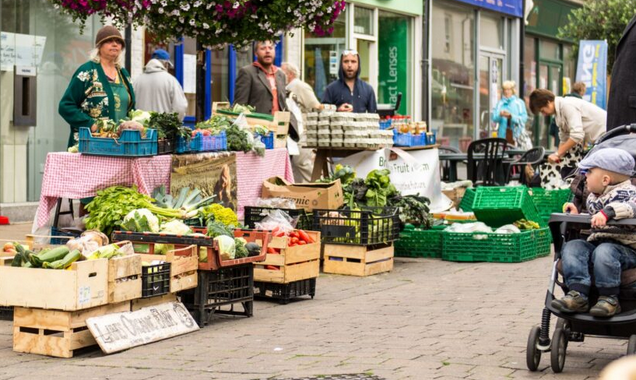
However, this farmer seed system exists alongside the commercial seed system. Hybrid seeds are usually developed by large agricultural companies for commercial purposes, are often dependent on artificial fertilisers and, as already noted, are protected through patents, backed by seed certification legislation.
Indeed, CAFOD’s 2023 report Sowing the Seeds of Poverty: How the World Bank Harms Poor Farmers describes how the farmer seed system is systematically being undermined by the concentration of power held by large-scale agribusiness and the promotion of the industrial agricultural model.
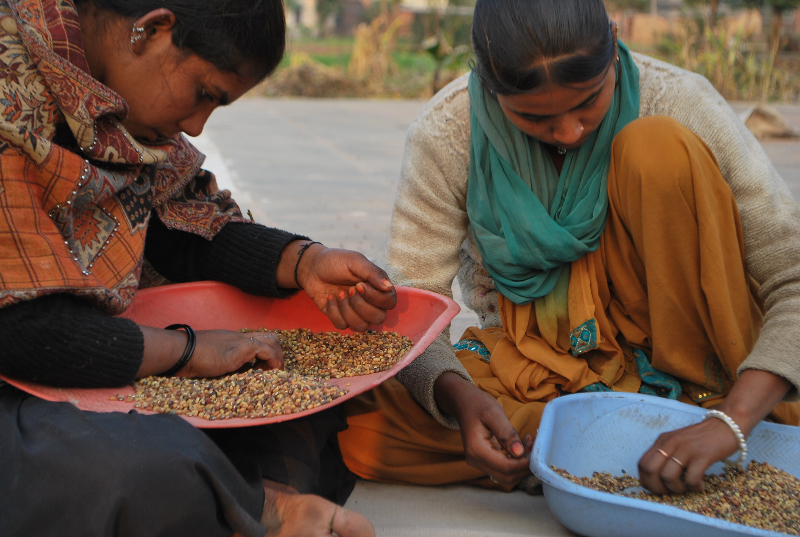
Gordon notes that seed markets are highly concentrated, with Bayer, Corteva, BASF and ChemChina/Syngenta controlling more than 50 per cent of the global commercial seed market. These same four companies also control more than 60 per cent of global agrochemical sales.
Gordon says:
Using their monopolies, these companies concentrate on producing seeds for crops with large markets – mainly staples such as maize, wheat, soy and rice. This is having devastating impacts on crop diversity.
Of the more than 6,000 edible plant species that we have cultivated over centuries, just nine crops now account for more than 65 per cent of all crop production. This has led to increased prices, and has significantly reduced farmers’ choice, and the resilience of farmers to shocks such as climate change.”
CAFOD found that the World Bank promotes the interests of global agribusiness and intensified industrial agriculture by linking subsidies to farmers buying hybrid seeds and corresponding chemical fertilisers and requiring the implementation of seed certification laws that limit small farmers’ ability to grow, save, share and sell seeds.
[…]Via https://off-guardian.org/2024/07/11/war-on-farmers-world-bank-sowing-seed-colonialism-in-africa/
For millennia farmers have been breeding plants, modifying and spreading crops across the planet.
Traditionally the selection, preservation and maintenance, as well as the wise development and passing on of seed stock has been, and is still today, the domain of women in most rural communities.
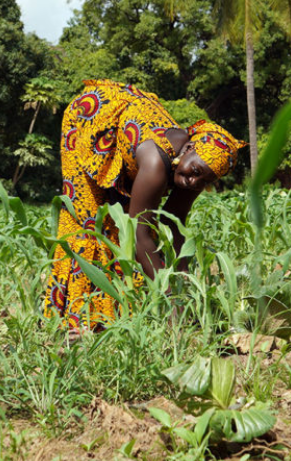
The free exchange of seed among farmers has been the basis to maintaining biodiversity as well as food security.
As farmers migrated across continents, they brought with them their seed and animals, both of which needed to adapt to new environments and soil types.
This was possible because the diverse seed they brought with them was able to adapt to different climates and soil types.
Farmers bred their seeds not just for their adaptation to environments but also for their different uses.
Thus a farmer could select different varieties of the same crop to suit their specific needs.
Related
ASEED – Action for Solidarity Environment Equality and Diversity Support ASEED – become a contributor! Subscribe to our monthly newsletter * indicates required. E-mail * Upcoming Events Jul 16 July 16 – July 21. STOP MEGA-BASINS – International mobilization Aug 28 August 28 – September 1. Geef Tegengas: Action Camp View Calendar Other information.
Seed Revolution – Facebook — Seed Revolution (@seedrevolution) • Instagram photos and videos
Bill Gates’ ‘Magic Seeds’ Won’t Solve World Hunger But Will ‘Create Ecological Disaster’September 22, 2022Liked by 6 people
Seed Sharing Platform Takes on Dangerous Monopolies that Control Over 60% of Global Seed SupplyMay 13, 2017Liked by 13 people
Fighting Globalization by Rebuilding Local EconomiesAugust 15, 2019In “Inspiring Moments in Resistance”

 The Free