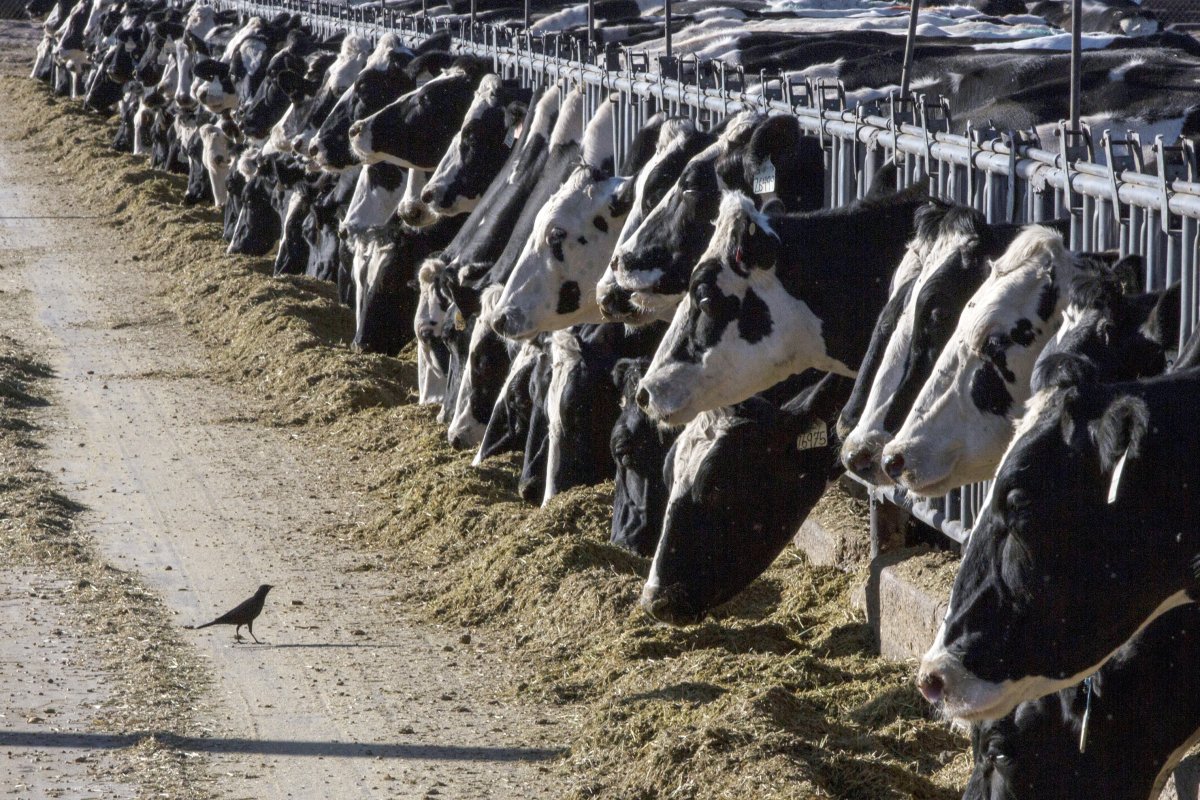
Published Oct 11, 2024 at 1:33 PM EDTUpdated Oct 11, 2024 at 9:02 PM EDT CLOSE X Advertisement 0:14 By Tom HowarthFOLLOW Footage obtained by Newsweek from a California veterinarian shows dead dairy cows infected with avian influenza piled by the roadside without any biosecurity measures or warning signs. The vet fears the dead animals could further spread the H5 […]
Por: Luis Britto García No hubo más desastroso acontecimiento histórico que la invasión europea que desde 1492 despobló, esclavizó, saqueó y aculturó un hemisferio del planeta, con saldo de 80 millones de nativos muertos y 60 millones de africanos inmolados en la trata de esclavos. 2
submitted anonymously – Call for Autonomous Acts of Rage Against Colonization Everywhere on monday october 14th 2024 “We will need each other to make sure that the flames, if they were to come, clear the area that we will live in together. We will need to clear it of the fuel that would end up…
ACTIVISTS SPEAK OUT– Abdullah Öcalan is still jailed because he is the Key to peace. He is uniquely trusted for his practical revolutionary ideas and for leading 2 long ceasefires with the endless Turkish repression.-
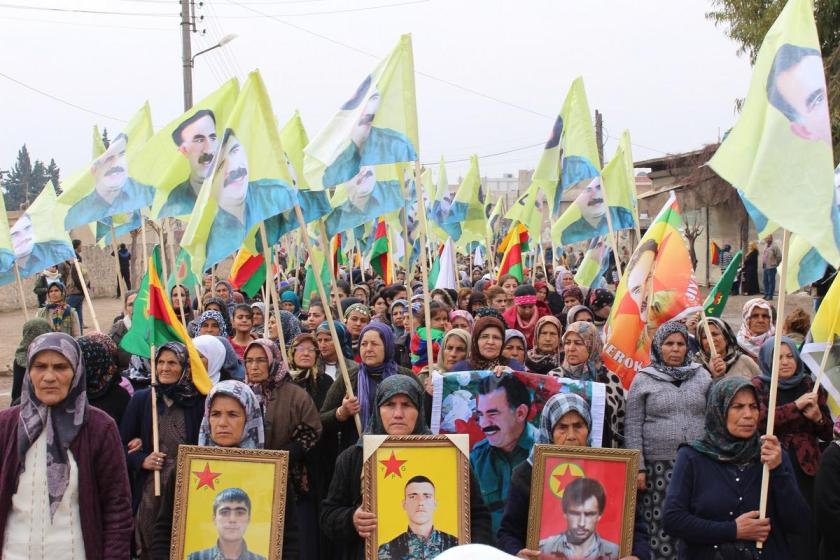
Afrin ”terrorist women” demonstrate for murdered sons and freedom of their leader Ocalan
Abdullah Öcalan is the political leader of the Kurdistan liberation movement and the PKK (Kurdistan Workers’ Party), and launched the proposal of Democratic Confederalism that inspired the 2012 revolution in Rojava (western Kurdistan located in Syria) and the political model that has since been built with the Democratic Autonomous Administration of North and East Syria.
For many international activists, the ideas of Abdullah Öcalan and the Kurdistan liberation movement are a source of inspiration.
“It is the most alive revolutionary movement in the world at the moment, the most confrontational and the one with the most real power of change,” says Maddi.
Maddi came into contact with the Kurdistan liberation movement ten years ago in what she defines as “a change of political cycle” in Euskal Herria.
“It was not only the end of the armed struggle, but also the dismantling of an entire political movement that was articulated in society,” explains this young activist who, in search of new horizons, participated in a brigade that went from Euskal Herria to Rojava. Ana and Sílvia also share the experience of having been in Rojava where they went to learn about the role of women in the resistance against the Islamic State and the political paradigm and social model that made it possible.
Ona, who was also able to see it first hand, highlights how she was marked by learning about a “democracy that is not representative, but based on people taking responsibility for resolving their own basic needs and in which it is understood that without the liberation of women we cannot liberate the whole of society.”
For them, learning about this thought and this practice has meant a new way of understanding militancy as “a life choice, with more initiative and its own strength,” says Maddi.
“If you are looking for a path of determination in the struggle, without giving up, the Kurdish movement is an example,” adds Sílvia.
Attacks on UNIFIL are considered attacks on the country manning them, causing more international ‘condemnation’ than an ongoing full scale Genocidal Slaughter as the West continues to finance and condone Israeli barbarism under US direction.
4 peacekeepers have been injured in two attacks so far.
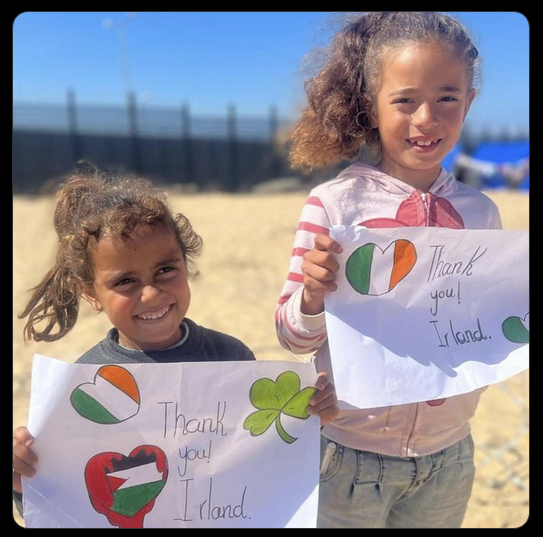
A diplomatic crisis has been defused for now after Israel withdrew its invasion force from firing positions metres from a U.N. post in south Lebanon staffed by Irish peacekeepers.
The day before 2 Indonesian peacekeepers were hospitalised in an Istaeli attack on their UNIFIL post.
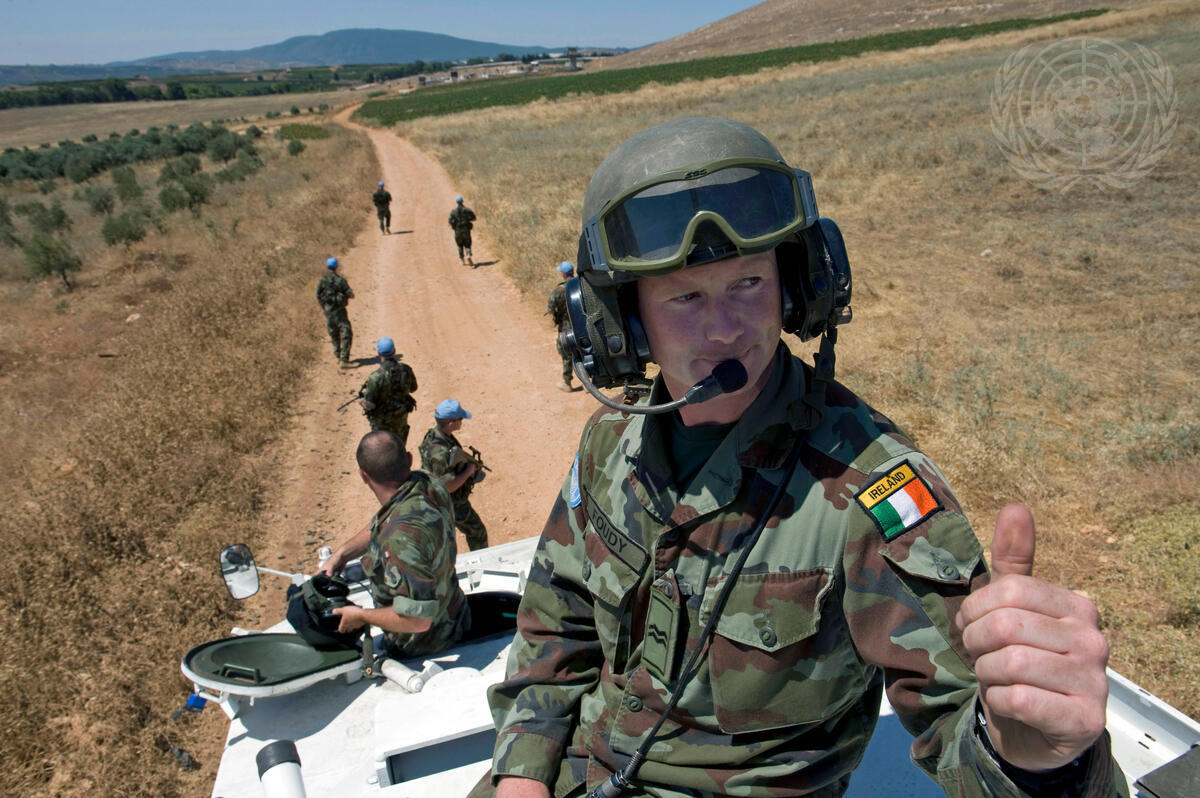
Irish peacekeepers serving with the United Nations Interim Force in Lebanon, UNIFIL, on patrol along the Blue Line in the vicinity of UN Post 6-52 in southern Lebanon in July 2011. (UN Photo/Pasqual Gorriz) ]
Irish President Michael D. Higgins had called Israeli demands for U.N. peacekeepers to abandon their posts as its invading army crossed deeper into Lebanese sovereign territory “an outrageous threat.”
The incident underlined how Israel is increasingly alienating itself on the international stage while continuing to undermine institutions and instruments of international humanitarian law.
Satellite images published by Irish state broadcaster RTE showed two dozen Israeli Defense Force (IDF) military vehicles, including tanks, located just 60 metres from the boundary of U.N. outpost 6-52 last Saturday as it exchanged fire with Shia resistance group Hezbollah.
[The Washington Postreported Friday that Israel has wounded U.N. peacekeepers after Al Jazeera reported Thursday that “United Nations peacekeeping chief Jean-Pierre Lacroix tells UN Security Council that safety and security of peacekeepers in Lebanon is ‘increasingly in jeopardy’ as Israeli forces open fire on UNIFIL posts in country’s south, injuring two.”]
Since Monday 30 Irish soldiers stationed at UNP6-52, approximately 1km from the Lebanese town of Maroun El-Ras, had been bunkered down and isolated from their 300-odd comrades at Camp Shamrock, which lies West of Bint Jbeil and 7km from the border with Israel.
Israel’s actions prompted accusations from Hezbollah, Lebanese media, and Irish Defence Minister Micheál Martin who said the IDF was using the Irish troops as cover, or human shields, as it extended its invasion. When asked by a journalist if Irish peacekeepers were being used as such, Martin said, “they’re certainly availing of the cover that that presents.”
A three-years’-long quest by four public interest groups has taken a major step forward with a federal judge’s ruling that the government agencies responsible for U.S. nuclear weapons must thoroughly examine environmental consequences and potential alternatives for their plans to ramp up production of new plutonium pits, or bomb cores, for a new generation of nuclear weapons that includes the W87-1 warhead and the new Sentinel intercontinental ballistic missile it is to arm.…
This undated file photo shows the Los Alamos National Laboratory in Los Alamos, N.M. |
In June 2021 they filed a lawsuit to compel the U.S. Department of Energy (DOE) and its semi-autonomous National Nuclear Security Administration (NNSA) to perform a thorough environmental review, as required under the National Environmental Policy Act (NEPA), of their plans to ramp up production of the new pits to 80 per year.
Production is to be split between Los Alamos National Laboratory in New Mexico and – for the first time – Savannah River Site in South Carolina.
DOE and NNSA had been relying on earlier environmental reviews and failed to provide an analysis of feasible alternatives to this two-site plan.
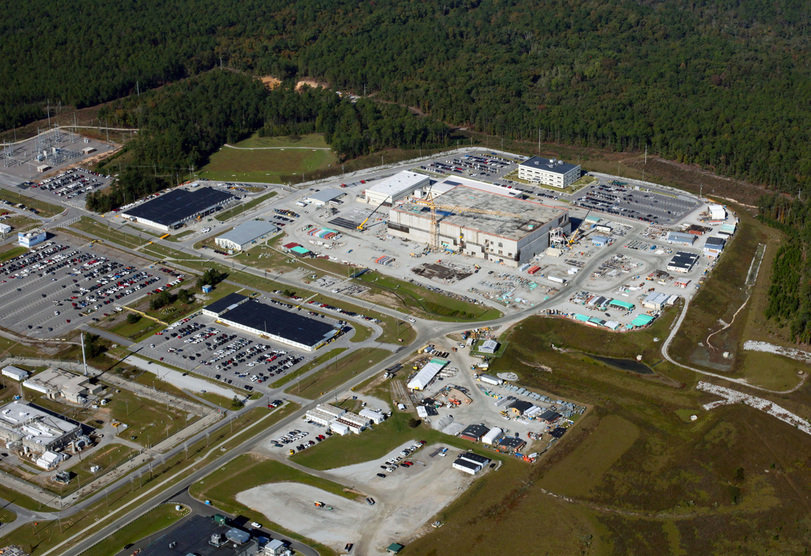
Photo: The heart of the MOX boondoggle cover-up: $17 billion MOX plant at Savannah River Site (SRS), terminated in 2018 Some experts argue that none of the new pits are needed for maintaining safety and reliability of the existing, extensively tested nuclear weapons stockpile. JASON, an Independent group of elite scientists that advises the United States government on matters of science and technology (mostly of a sensitive nature) found that existing plutonium pits, some 15,000 of which are currently stored, have a shelf-life of at least a century, and at present have an average age of 42 years.
Instead, the monitoring groups say, the new pits are for “speculative new-design nuclear weapons that can’t be tested because of an international testing moratorium, or alternatively could prompt the U.S. to resume full-scale testing, which would have serious proliferation consequences.” They add that expanded pit production will cost taxpayers more than $60 billion over the next 30 years.
[Many thanks to Peter Jordens for bringing this item to our attention.] The World Wildlife Fund (WWF) recently shared bleak news from the Living Planet Report 2024 confirming that the catastrophic decline in the average size of global wildlife populations in just 50 years (1970-2020), years reveals a “system in peril.”
The report warns that parts of our planet are approaching dangerous tipping points driven by the combination of nature loss and climate change which pose grave threats to humanity.
The steepest drops recorded were in Latin America and the Caribbean (95%), Africa (76%) and Asia–Pacific (60%), followed by North America (39%) and Europe and Central Asia (35%). World Wildlife Fund Dutch Caribbean reports:
Despite success stories, such as the recovering populations of green sea turtles, the global state of nature remains alarming. According to WWF’s 2024 Living Planet Report (LPR), wildlife populations worldwide have dropped by 73% in the last 50 years. Latin America and the Caribbean saw the sharpest decline at 95%. The report warns that the planet is approaching dangerous tipping points, and a huge global effort is needed in the next five years to tackle the climate and nature crises.
Large-scale action: The next five years are critical for Earth’s future, but we have the power and opportunity to change the path forward. WWF calls on governments to increase funding from both public and private sources for large-scale action. They should align climate, nature, and development policies better. Governments and businesses need to stop activities that harm biodiversity and climate, and shift money towards actions that support global goals.
Arjan de Groene, Coordinator of WWF-Netherlands for the Caribbean, explains: “The decline of wildlife populations across the Caribbean shows that the urgency to act has never been greater.







 The Free