
by Sonia Muñoz Llort and Nerd Teacher from Morethanthisandthat on January 10, 2025 via thefreeonline at https://wp.me/pIJl9-Fwt .

Introduction – A little bit of context–
Rationale: Persistent frustrations
Organizing within our movements: Building mutual care, accountability, and collective responsibility
Collaboration in diversity: The strength of heterogeneity
Resisting the triple supremacy of globalized capitalism: intergovernmental organizations, corporations, and international alliances
Conclusion
*********
It goes without saying, but it seems like almost every individual and collective we interact with has trouble with self-organization and mutual support.
Almost every conversation we have with the people we interact with brings up the same problems. We hear complaints from groups who prefer to focus on “increasing numbers” even as they dedicate themselves to supporting and defending abusers and bigots within their ranks, further ousting people.
We hear complaints of exclusionary behavior from groups or organizers who completely ignore almost any degree of accessibility and often refuse to do what is necessary to maintain a healthy environment.
We continue to see people trying to create hierarchies of inclusion that they claim are the result of “not having enough resources” to do it all and having to focus only on the “most important” actions.
Especifismo: The Anarchist Praxis of Building Popular Movements
This isn’t to say that everyone is struggling in exactly the same way, because there are quite a few nuances and contexts in our various regionalities, but there certainly seems to be an immense amount of overlap.
So when we talk to people, we often realize how exhausted they seem to be and how unbearably tired everyone is.
It’s also really hard not to notice, in our own experiences, how many people seem to think they have no responsibility to others, especially when most people’s complaints seem to be very similar and are treated as nothing more than a broken record when they keep pointing out problems that haven’t been addressed.
We don’t understand this attitude. If there are problems, why is there such a desire to sweep them under the rug or ignore them until something changes for the better?
We say this now because, as we’ve listened to so many others and engaged or reflected on our own collectives and groups, we’ve noticed another common theme: Many people have really lost faith in those around them, and often feel that those people and groups who claim to support them would never actually do so when the need arises.
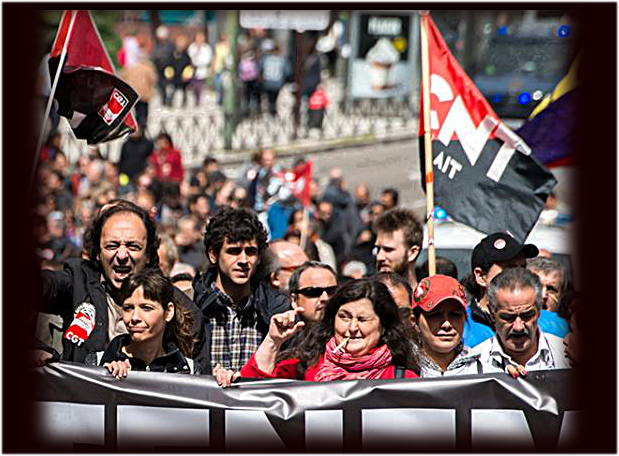
It also seems that many are tired of the lack of community and constantly feel like there’s nowhere they truly belong. Not only have they had to struggle to find a place to belong, but they have found that the few organisations and collectives they have been able to find are either completely unequipped or unwilling to support them and everyone else.
This can be seen in the sudden dissolution of many of the online communities that sprang up during the COVID lockdown, which fell apart almost as quickly as they were created.
Very little was done to ensure these connections were maintained once everything returned to ‘normal’, especially in regards to those who have been unable to be physically present for whatever reason.
Perhaps – although this is said with a glimmer of hope for a better explanation for the dissipation of our organisational and community spaces – most of the people who had previously collaborated with others online are now busy participating in local movements offline.
Perhaps, we hope, collectives are doing more to build and support their local communities.
Because if we look at online spaces, almost all of the spaces we had created have crumbled and refocused on offline spaces and activities, leaving many of the most vulnerable in even more lonely, alienated, and precarious positions.
We have been left scrambling to find remnants of the communities we had before the pandemic began, but we have also been left watching our online communities gradually deteriorate in favor of things that feel “more real,” because many of us have never truly shifted our understanding that online spaces are not a substitute for offline ones, but are in fact part of the same realities and should support each other.
So we still have to ask ourselves if they are doing what they can to to meet the needs of everyone, rather than just offering empty platitudes and half-baked excuses..
It’s hard to know. We can only really speak from our own experiences in the spaces we inhabit, seeing how they have seen their participation dwindle due to their unwillingness to ensure the safety of the people they claim to support.
We’ve seen people proudly proclaim that they are part of a particular collective and trumpet their position within it, knowing full well that they have done very little within it – or in some cases supported causes antithetical to the aims of their collective – and are only using the name to try to bolster themselves and their reputation among others.
They want to build their own version of some kind of “anarchist” credentials, adding every interaction to their activist resume.
We also feel that the spaces we have are totally atomized and often alienated, both from the place around us and from broader movements.
Sometimes it is because others refuse to engage with certain ideas because some element of them would upset the status quo they enjoy. For us, this has been clearest in regards to marginalized anarchisms, especially anarcha-feminism and queer and trans anarchisms.
It has also been brutally obvious whenever we have mentioned anything related to the abolition of school and academia or when we have clearly stated that we should support and encourage youth liberation.
We have seen the co-optation of non-white anarchisms (by people who refuse to reflect on their own whiteness) and non-Western anarchisms (by people who think it is logically consistent to support certain imperialist states over others).
The many anarchisms of the marginalized are continually used as tools and weapons by those who, even if they deny it, maintain support for the very hierarchies we seek to dismantle. It is clear that there are problems that we desperately need to address.

Anarchist Agitation & Community Building | The Anarchist Library
To top it off, we see groups who are virtually paralyzed by fear in this highly-surveilled world where we are in the crosshairs of the increasingly fascist and authoritarian governments that thrive around us.
Too often, people use that fear to excuse continued inaction (even regarding the simplest of activities) and to continually silence those who are interested in doing what they can.
This has been especially easy to observe in interactions between citizens and immigrants, where the former often complain about the latter’s lack of participation while doing very little to help ensure that their safety does not end in their deportation.
While today it seems as if there is a constant cry about how “we can’t do that,” it is hard not to be reminded of the many times when there have always been people trying to find every possible loophole to do whatever they can.
It feels like we have become too complacent and have forgotten that every little bit helps.
see also The Intersections Of Anarchism And Community Organizing
Reasoning: Persistent Frustrations
It is undeniable that, for many people born after the 1970s, it is becoming easier and easier to internalize and normalize a range of neoliberal values. Over successive decades, we have seen the normalization of beliefs that have supported hyper-individualization, the continued privatization of the public sphere, the empowerment of corporations to control vast swaths of the planet and social life, stagnating and declining incomes, and governments that provide so much support to corporations and the wealthy that they then “pay” by cutting any remaining public spending.
Although these beliefs have existed in some form for decades or centuries, the propaganda they spread to support these ideas has become much more accessible to current generations and has permeated even some of our most “radical” movements. In some cases, it is even embedded and hidden in some of the most accessible media: books (especially non-fiction and textbooks), podcasts, television series, and movies.
We also need to recognize that most revolutionary movements throughout history have been violently erased, co-opted, whitewashed, and equated with authoritarianism in order to silence and thwart any possible future movements. We have ample evidence of this throughout history, and we have all seen it happen to varying degrees in real time. For those of us involved in or supporting the movements against the Palestinian genocide, we have seen various people with media platforms attempt to equate
the (mostly mild) actions of student protesters with Nazis. For those of us working in abolitionist movements, we have seen how the movement to abolish prisons has morphed into a strange version of seeking to defund them while giving them more money than they could ever want. This happens far too often, and far too many people are content to let it slide with little question.
After all, we have been living in a world of brutal extraction, where those who run the machinery of the system seek to take or destroy as much as they can from everyone and everything on this planet. This includes our movements and anything we can do to make the world better.
The pandemic has also been a dividing point, as many have ignored it for the sake of “normality,” and it has been a constant source of frustration for many due to the hyper-individualization surrounding our responses to it. In addition to the sparse responses, both societal and individual, it has also made it easier for us to distance ourselves from each other.
While lockdowns did serve to stop the spread of the disease, nothing was done during them to ensure support for communities as a whole. We saw very little done to mitigate future epidemics and pandemics, let alone measures that would help reduce the spread of other diseases.
In the buildings we live in, ventilation systems were not upgraded to help everyone, and nothing was done to improve air quality (at the very least). The tools people need to ensure the safety and health of themselves and others, such as masks, were not always made easily accessible, or even cost effective.
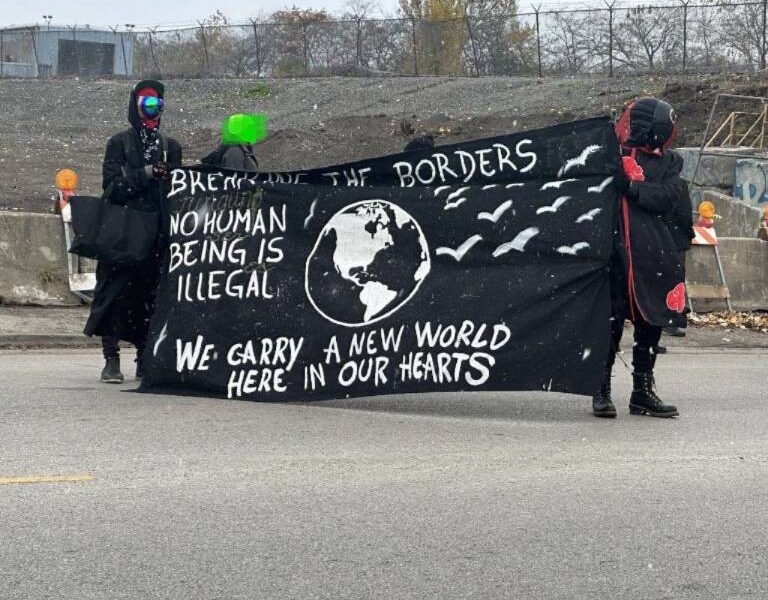
Jan 24, 24 Breaking Borders: Report on Anarchist Organizing in Solidarity with Migrants in Chicago
Now that we are past lockdown (but not COVID), it is even more apparent that before, those with the most resources will do nothing to ensure that everyone can participate healthily in “normal” society.
In fact, what we are seeing is that many governments (especially those in the US) are attempting to make mask-wearing illegal in response to the recent protests and gleefully supporting eugenicist policies that further alienate and segregate disabled and immunocompromised people (while simultaneously working to disable more people).
Many of us are still struggling to find ourselves. Coming together again to self-organise is certainly not the only problem here, because it seems that even our own anarcho-syndicalist movements, collectives and unions have suffered disintegration before 2019.
These things were already happening, and it was largely because many issues were deliberately left unaddressed and deemed unimportant in the grand scheme of things. Those who claim to uphold the core values of anarchism, such as anti-capitalism and the desire for the liberation of all, have allowed the dilution of these values in many ways. This has disrupted the potential collectivization of our activities and ignored the struggles against all forms of oppression within our own circles.
Honestly, there are many things we can analyze to understand the situations we find ourselves in in 2024, and we would encourage everyone to be brave enough to analyze them by going back to our historical roots (although, we also believe that we should not dwell purely on them).
In order to learn from our mistakes, we must self-criticize our own inconsistencies. We often see how proud we are to talk about and celebrate historical events such as the anti-fascist struggle during the Spanish Civil War, but then it becomes absurdly clear how we lack the courage to face why Mujeres Libres started due to the misogyny and internal oppression of the comrades in the CNT against women.
Furthermore, there are very few who celebrate Mujeres Libres who even want to learn from the problematic opinions they have held against sex workers and trans people. Why do we refuse to see the negative aspects of our movements? Why do we only want to focus on the positive?
We should be able to reflect on the many and varied moments of anarchist (and anarchist-related) history to recognize how our own romanticization and idolization of our movements’ histories and supposed “key” figures negatively affects us today.
We would like to recognize the efforts of all people who fight for anarchist ideals and especially those who have changed themselves and their realities in order to live according to the practices of mutual aid, liberation and freedom for all, and the creation of communities outside of the state-capitalist machinery.
Instead, we find that people either glorify these long-lived organisations despite the harm they do, or they tell people to shut up and wait until we have “won” to criticise them.
Using our example above, if some part of the CNT is happy to practice transphobia and work with the police because their own people are speaking out against them, as happened with the Barcelona branch of the CNT in 2023, why should we remain silent?
What movement are we derailing by criticising them for their lack of principles and their inability to understand what liberation really means? The truth may hurt right now, but it is time to recognise that our own infrastructure is being used to do harm.
This brings us back to our current historical situation. We have deep concerns and fears about how to move forward, and these are intimately tied to our everyday lives and realities. With this text, we would like to share some reflections to try to understand what we are resisting and at the same time perhaps raise some possibilities for action and resistance.
Currently, we want to focus on three different themes that are interrelated, arising from a critical view of our movements that have so often been based on white European experiences.
It is about how we organize our movements, how there is diversity in them, and how our struggle against the state has greatly expanded to include local and global corporations.
Organizing within our movements: Building mutual care, accountability, and collective responsibility
Humans are, both delightfully and infuriatingly, contradictory beings. We are imperfect and sometimes strange, but we still maintain the capacity to reflect on our actions, adjust our behaviors, and learn in many of the same ways that other animal species learn, because we are an animal species.
Yet it seems as if some people take pleasure in exerting power over others, refusing even to examine their own flaws and toxic attitudes. They wilfully refuse to acknowledge the aspects of themselves that get in the way of the principles they claim to uphold.
In short, they refuse to learn.
This is not a new revelation either. It’s been something that many of our movements have struggled with, as people looked for ways to rise to the top of the hierarchy (even when there weren’t supposed to be any).
Assata Shakur highlighted this phenomenon in her autobiography when she was talking about the Black Panther Party and some of the organizational challenges they faced (often ignored by leaders, despite most people recognizing them).

CrimethInc. : March 4: Anarchists in the Student Movement
Her words still hold true today and can be applied to many organizations and collectives: “Constructive criticism and self-criticism are extremely important for any revolutionary organization. Without them, people tend to drown in their mistakes, not learn from them.”
So let’s take some time to be self-critical and reflective.
Historically, most types of anarchism have shared some common principles that have underpinned our revolutionary attempt to (re)build new communities outside of capitalism and the state.
Time and again, many of us have had to endure experiences with manarchists, anarcho-extractionists, enwhitened individuals, and those who defend and support violent and abusive individuals while claiming to be “in solidarity” with us.
These people are not only allowed to share space with us, but are often some of the most protected people within our organizations and are allowed to remain while their victims are frequently kicked out, expelled, pushed to leave of their “own will,” and purged.
Their defenders and collaborators will waste our time and energy excusing intolerant or violent actions, making various claims that amount to saying that the organization or collective will fall apart if that person suffers any kind of consequences.
However, those of us who have witnessed these kinds of situations know that the organization will break down, even if it continues to exist. As disappointing as it may be, having experienced this on multiple occasions is precisely why some of us understand that we have not seen progress in collective liberation in recent decades.
It doesn’t seem to matter how much we “progress” as we often feel like we are back to square one and fighting many of the same battles. It’s as if some people have been holding back, doing everything they can to hold us all back by excluding us, attacking us in different violent ways, and trying to maintain control over our shared spaces and our own.
These are the channels of communication.
We cannot create free communities while we continue to face these internal oppressions. We cannot build together when we have to face and resist internal attacks from people who are supposed to be in solidarity with us.
We have to start recognizing and working determinedly to be aware of how we behave, making sure we don’t compromise on our principles along the way.
We cannot continue, particularly within anarchist spaces, to have the same struggles we’ve seen throughout history over and over again. None of us can afford to continue many of these struggles because our lives are at stake.
And yet we have to because those who claim to be with us simply don’t recognize the harms they perpetuate.
If we look simply at the concepts of freedom and oppression, we know that there are many people who claim to fight for freedom and often say that they want everyone to be free.
However, many of them also constantly limit the ability of others to be free and create obstacles to universal liberation. This is not, as many claim, because freedom has natural ethical limits that we must acknowledge every time the people we interact with tell us we are approaching or overstepping them.
If anything, it is largely because people refuse to acknowledge the way they are both the oppressed and the oppressors. Much of this is because many use their oppression to overlook or excuse the way they oppress others, even those they ostensibly claim to support.
We also want to focus on the value of collective responsibility, which is equally crucial. It is one thing to acknowledge our individual responsibility to others and to the natural world around us, but we often forget to acknowledge our collective responsibility. It is imperative that we remember the need for collective responsibility so that we can truly ensure the liberation of all.
This is not a new thought, as we only have to look back in history to see many others echoing this sentiment. One of them was Nestor Makhno, who once stated that “the external form of anarchism is a free and ungoverned society, offering freedom, equality and solidarity to its members. Its foundations lie in the sense of mutual responsibility of people, which has remained unchanged in all places and times.
This sense of responsibility is capable of securing freedom and social justice for all [people] by their own efforts. It is also the foundation of true communism.”
As such, we need to confront the ways in which we have all internalized patriarchal patterns, whiteness, the normalization of hierarchies, and much more.
Unfortunately, even among anarchists, some individuals who have internalized those values along with that of hyper-individuality tend to shout at the top of their lungs that they have the right to be free and to do or say whatever they want.
This is particularly true among us white anarchists. Too often, we ignore the oppressions of other people and completely neglect the ways in which we continue to perpetuate harms against others.
But this can extend to many people as a whole: We all need to recognize the ways in which we continue to support the oppression of others, even though we are probably oppressed ourselves.
We all need to be much more willing than we currently are to (un)learn these constrictive systems, and many more of us need to recognize the various ways in which we benefit from colonialism, imperialism, and genocide.
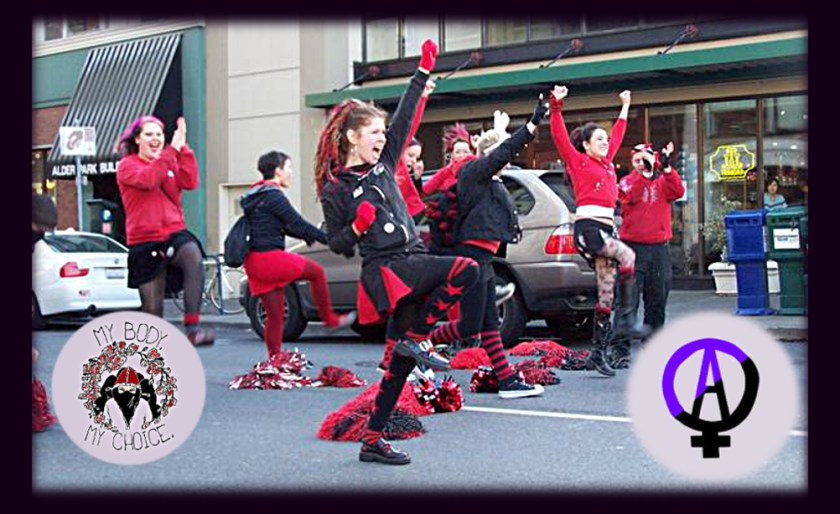
Anarcha Feminism: The Beginning Of The End Of All Forms Of Oppression
If we refuse to learn, we will not be able to effectively combat them while also meeting the needs of those who continue to be harmed by these structures and systems.
To put it briefly after so many words, many of us are going to have to be willing to give up certain privileges because maintaining them does no one any good.
We need to remember that in order to build collective freedom – a freedom without exceptions, without violence and without oppression – we must take individual responsibility for our own oppressive actions against others and consciously strive to change ourselves and unlearn the values that many of us have been raised with or around.
But at the same time, we must also take collective responsibility to work to push everyone around us to unlearn those harmful structures and to question what it is that we are doing.
Unlearning the values of a patriarchal society to fight oppression
The internal tensions that separate us – homophobia, transphobia, xenophobia, ableism, racism and whiteness, misogyny, casteism, ageism and many more – is an individual responsibility that needs the support of collective responsibility.
The last core value we want to discuss in this section is mutual aid.
Mutual aid is much needed and anyone who identifies as an anarchist or has like-minded values will advocate the importance of this practice in rebuilding alternatives outside of capitalism.
However, mutual aid can quickly become utilitarian if there is an emotional vacuum. Many of us have experienced participating in spaces that were built on mutual aid only to struggle with creating meaningful interpersonal connections with the people in the same spaces.
This is because without mutual care and support, mutual aid is nothing more than a simple tool, and requires connection to practical action to build our spaces.
Through mutual care and support, we care for each other on emotional levels, collectivizing the caregiving tasks that capitalism has largely encouraged us to overlook.
We know that capitalist societies are maintained through reproductive care and emotional labor that is largely imposed on female people, and perhaps this emotional value is something that many anarchists avoid due to their internalized patriarchal patterns.
This is far from news to anyone who has been paying attention, especially if we focus on the example of the ways in which patriarchal values have gone largely unnoticed in anarchist spaces since the supposed creation of the concept.
Many anarchists of all genders are unaware of their own biases, and as a result are unwilling to work to change themselves. It is time to look in the mirror and rid ourselves of internalized authoritarian and intolerant attitudes.
This point goes hand in hand with the next
Collaboration in diversity: The strength of heterogeneity
We need each other. That is clear in these times when so many governments are taking off the masks that hid their true level of fascist ideology from most people.
Already at the beginning of the 20th century, several comrades – such as Malatesta, Volin and De Cleyre – tried to prefigure and practice united fronts, bringing together different anarchist positions.
This was of course intended to be done with organic structures, but the common goals were still to form a united front against state oppression. This can be useful and even necessary at times, but we all know how difficult it can be to do, especially when we have so much work to do as described in the first point.
Over the past decade, we have learned to seek affinity with people regardless of their precise labels, but we still want to make sure that we have clear common ethical goals.
It is undeniable that we need to have clear anarchist principles that need to be updated and expanded to take into account what is happening in this particular period of history, but that is why we have been inclined to talk about many different anarchisms rather than one specific, singular form of anarchism.
Understanding and embracing our own practical diversity has to come with defending this same diversity. We strongly believe that many kinds of anarchism are necessary and that one person can embody an anarchism that is both built by and supports the many in our everyday practices and political struggles.
There is no reasonable need to push us towards a homogeneous and static anarchist unity, both within and without ourselves.
By choice, we should seek heterogeneous collaborations between anarchisms because we see that the differences between them are capable of providing strength.
However, it is worth acknowledging that some manarchists and other patriarchal anarchists blame identity politics and even anti-colonial activists for wanting to destroy our movements, reflecting the patriarchal and nationalist movements that already exist around us.
It remains a problem that some people cannot and will not come to grips with the fact that we experience different kinds of oppressions in our everyday lives and actively refuse to acknowledge the oppressions that others may experience that differ from their own, even though we supposedly share many ethical and political principles.
This is one of the many reasons why we find it difficult, and even a little unnecessary, to try to unify all kinds of anarchist perspectives and theoretical approaches. Instead, we should work much harder to figure out what commonalities we share and how we can do so.
We work to push those projects forward.
We also find that this helps build more horizontal collaborative processes between anarchisms.
As many of us have experienced and as can be seen in historical movements, we have had some hierarchies separating our anarchisms, tending to value some as “more real” or “more valuable” than others.
For example, we have encountered those who tend to work within anarcho-communist or anarcho-syndicalist practices while openly dismissing anarcho-feminist, black anarchist, or trans anarcho-feminist ones as “only” focused on certain groups of people.
The truth is that many existing anarchist movements exist because they were never allowed into early “traditional” anarchist spaces.
As a result, we self-organize our own spaces to finally have room to breathe. This just goes to show that our collectives are made up of imperfect human beings, and at the same time, that we are not completely immune to our own internalized fanaticisms.
Accepting the reality that some of us feel safe building our own realities with those who share similar experiences shows that it is fair to embrace our diversity and find ways to come together around our common political goals.
Moreover, the search for affinities should not be based solely on our theoretical similarities, but above all on our practices. There are many people and collectives who do not define themselves as anarchists, but whose practices are common and close to ours. Many anarchists are wary and even opposed to the idea, which is because historical evidence highlights the many ways in which left unity has always been used against us to our own detriment (and even death).
The affinity we seek between ourselves and other groups has to be organic and practice-based, regardless of how long it may last. Hopefully, such work can have a lasting impact on changing some of our realities, step by step.

This leads us to a natural conversation about international solidarity, which is (or at least should be) part of our movements and one of our historic principles.
There has been talk of looking for a different term, since “international” implies the maintenance of borders, but whatever term we choose for the solidarity we should have with people around the world, the ideas behind it are necessary in our highly globalized world and the connections inherent in technologies like the Internet that span the entire planet.
We are unlikely to find perfect answers, or any, in the group of classical bearded men, considering how much has changed from their time to ours.
While many people around the world and in different spaces have been gathering information and building platforms of resistance, we know that the rise of international border control systems, high-tech surveillance, the digitalization of monetary systems that are tightly married to voracious financial chains, the prevalence of corporate-friendly systems, the persistent suppression of our right to privacy, and the continued harassment of all activists across different geographies make international solidarity a more difficult thing than it was just 100 years ago.
Despite this harsh and undeniable reality, and seeking this mutual support in the burning of borders and nations, international solidarity is still alive in its own right.
But it requires a lot of support and a lot of work, making sure that we are supporting people in building liberation while maintaining criticism and suspicion towards any system that seeks control.
We can support people in their struggles for liberation while reflecting on their successes and failures, and we can flatly deny our support for the hierarchical institutions and systems that seek to replace the old ones.
Resisting the Triple Supremacy of Globalized Capitalism: IGOs, Corporations, and International Alliances
We often wonder what most of the “famous” theorists would say if they had the chance to live now. Could they ever imagine how capitalists would manage to reconstruct, transform, and mutate another level of power within the intergovernmental organizations that have taken over within our state-corporations?
Historically, when anarchists have fought against systems of oppression, it has been nation-states, institutionalized religions, or the war industry. This has not necessarily changed, but it has expanded.
From the beginning, the most important thing is to fight against the oppressive systems of the world.
Since the beginning of the 20th century and as a result of the World Wars and the birth of neoliberalism, the political landscape has changed dramatically before our eyes, becoming something like a hydra.
The multiple heads of this hydra have made it increasingly difficult to hold specific individuals and institutions responsible for what is happening, making it harder to point the finger at those responsible for the ongoing genocides and raging ecocide we are enduring.
Even when we know who to blame, they hide their responsibility by displacing responsibility.
These systems protect them by being oppressive, repressing protests and doing as little as possible to respond to the concerns of those most affected.
They silence all dissent. Our early anarchist analyses of these systems and our pushes to dismantle, resist and abolish them have become extremely tenuous.
We have managed to name and sketch the terms “globalization” and “neoliberalism,” helping us to see some of the problems; However, the way the system defends itself against all attacks and denies responsibility for spreading harm has made it much harder for us to fight it.
Intergovernmental organizations were built to pool certain kinds of power and are granted privileges and immunities that are intended to ensure their independent and effective operation vis-à-vis state-corporations and other local political powers.
They are specified in the treaties that give rise to global organizations, such as the Convention on the Privileges and Immunities of the United Nations and the Agreement on the Privileges and Immunities of the International Criminal Court.
They are usually supplemented by other multinational agreements and national regulations, such as the United States’ Immunities of International Organizations Act.
Intergovernmental organizations have a life of their own, completely unconnected with the democratic processes they claim to uphold; they are also immune from the jurisdiction of certain national courts. Certain privileges and immunities are also specified in documents such as the 1975 Vienna Convention on the Representation of States in their Relations with International Organizations of a Universal Character.
In practice, this means that our historic struggles against the free market and nation-states must now include these intergovernmental organizations. The big problem here is, of course, that states rely on deliberately malfunctioning parliamentarism, and these other intergovernmental organizations are free to operate on their own terms and choose who participates in them and who runs them. For the ordinary citizen, this is a level of power that we cannot attain, but which has an enormous impact on our own lives.
Before, anarchists tried to spread education about the failures of parliamentarism, disseminating lessons about why we should not participate in it. Today, we are dealing with international organisations that have a global reach of power, are allowed to act independently and often with little scrutiny, and are closely linked to financial powers. The United Nations, the International Monetary Fund, NATO, the European Union, the World Economic Forum or the Organisation for Economic Co-operation and Development, or even the BRICS, play different roles in these power networks that create another level of oppressive powers with a common goal: the maintenance of neoliberalism based on the prioritisation of the free market.
We know perfectly well how lobbyists work in such circles and how they often move national politicians, wealthy individuals or other actors willing to be useful to them into key positions where they can continue to operate in ways that ensure that ecocides and all forms of genocide can continue uninterrupted.
These systems also support a neocolonial form that has continued to develop, supporting continued oppression through debt.
In this regard, it is pertinent to recognize that people living in colonized countries are the ones who suffer most intensely from the pressure of these intergovernmental organizations and state-corporations.
The World Bank has no qualms about showing how many millions of dollars are stolen and how they have been given the blessing to do so through international treaties and conventions, transferring resources primarily to privileged Western countries from those that have remained under their thumbs despite supposed “independence” movements that claimed to allow them to “abandon” the clutches of colonial powers.
For ordinary people, who are the vast majority of people,
As inhabitants of this planet, these layers of organizational power are anonymous beasts that impact our lives.
Aside from understanding alliances between intergovernmental organizations and international debt, another consequence of this is that the cost of living has increased along with rent, food, transport, and other costs while our ability to survive in this economy has decreased critically since the 1970s. A quick internet search can show anyone how neoliberalism has been suffocating us for the past 50 years while killing the planet.
The problem is that these changes have been going on for at least three generations, and the impact of neoliberal values on people’s lives is blatantly obvious.
There are people around the world who do not understand these systems and the levels of organizational oppression we face, and often actively work in support of these bodies and structures even when those very systems harm them.
At the same time, we are all fighting for survival to varying degrees, but in most cases we have individualized this (as many people use the theory of “survival of the fittest” to support their decisions) rather than analyzing how we should support each other.
It is undeniable that resistance in many territories is very much alive, but we have a big question that is always on our minds: What are anarchists in colonizing territories doing to educate, agitate, and continue to create mutual aid and international solidarity?
Our possibilities are drastically reduced because, on top of these different levels of international oppression, we are facing a “rise” (or unmasking) of fascism. Historically, we know that when people experience insecurity and scarcity, some tend to fall into authoritarian solutions.
How can we fight back now when this authoritarian oppression has a strong PR team whitewashing its bloody activities, selling us multi-level globalized oppression as the natural organizational neoliberal way of life?
How can we fight back when faceless multinationals keep enclosing lands while some of us drown in financial debt to survive?
Conclusion
It is the pure reality that brings us back to the impetus with which this text began.
As we can understand from these easy, flawed and incomplete analyses, as much as we can rely on our past theorists, movements and individuals to learn from their wisdom and mistakes, we really need to come together in all our diversities to confront the current emergency situations from within our own local communities and territories.
If we are to stop and change the current ecocide, dismantle capitalism and all its oppressive systems. We can start with those in our heads and hearts, to rebuild once and for all our collective paths towards freedom and the collectivization of our communities.
Related
Activism in motherhood. Creating mutual support networks for inclusive revolutionary movements.

 The Free