
Racism and fascism ruin lives and we need to tell how they ruin lives. It is through understanding, articulating and acting on those kinds of connections that we will enhance our work
by David Rosenberg at Rebellion on 5th March 2025 via thefreeonline at https://wp.me/pIJl9-Gf6

Talk by David Rosenberg on 1 March 2025 at the Trade Union conference of Stand Up To Racism
a fighter for better housing who co-led […]
No blueprints, no quick fixes, but we can defeat the Far Right!

Max at 100
I want to start by telling you about a trade unionist I knew personally, called Max Levitas, a shop steward in the Tailors and Garment Workers’ Union for many years;a fighter for better housing who co-led a four-month rent strike when he was in his mid-20s; a co-organiser of an occupation of the bomb shelter at the Savoy Hotel during the Blitz, to protest about the lack of such shelters where he lived in London’s East End. He was also a local councillor for the Communist Party, taking up all kinds of issues across Tower Hamlets. He worked until he was 80, and in retirement remained active in pensioners campaigns. When he was 101 he became the world’s oldest Dementia Friend – helping individuals suffering that condition. And he was a brave fighter against racism and fascism his whole life.
You cannot emulate a life like that – he was extraordinary – but you can take one key idea from that biography which is that these spheres in which he was active are all inter-connected. The connections though are not always immediately obvious. We cannot serve the anti-fascists and anti-racist movement if we focus on them in isolation, or do so simply as moral condemnation – “racism is bad”, “racism is evil”.
Racism and fascism ruin lives and we need to tell how they ruin lives. It is through understanding, articulating and acting on those kinds of connections that we will enhance our work against racism and fascism and build a better world.
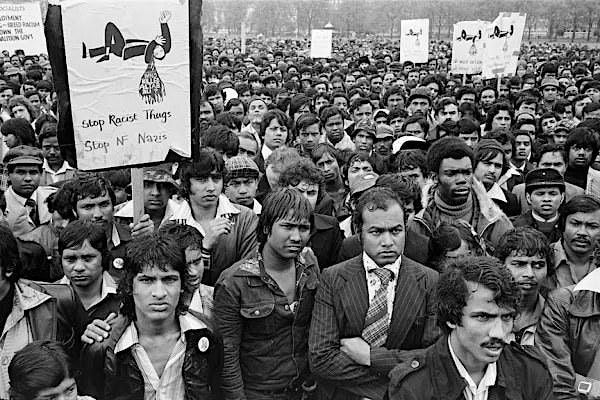
But if you asked Max to name the proudest day of his life – he would tell you immediately – 4th October 1936 – the Battle of Cable Street. The iconic clash of fascism and anti-fascism in Britain in the 20th century.
The day when thousands of foot-soldiers in black military uniforms with jackboots of Oswald Mosley’s deeply antisemitic British Union of fascists, were blocked from invading the most heavily Jewish-populated East End streets by my favourite prevent strategy of them all: blockades, barricades, and masses of working class activists working in unison across ethnic and religious divides.
That day remained a touchstone for Max and it should be for all of us. But by 1936 the fascist forces had already recruited many thousands across Britain to their ideology, across classes and generations.
Mosley placed a particular emphasis on youth, saying: “We are a party of action based on youth that will mobilise energy, vitality and manhood to save and rebuild the nation.”
He claimed that his fascist party were the only party that offered young people a chance to play their part for the nation in peace-time not just in war. Incredibly powerful and compelling stuff when so many working class families lost sons in the first World War.
But never forget that fascism was, and is, a project of the elite. Mosley and his elite friends were especially focused on the fascist student branches they formed in 20 public schools.
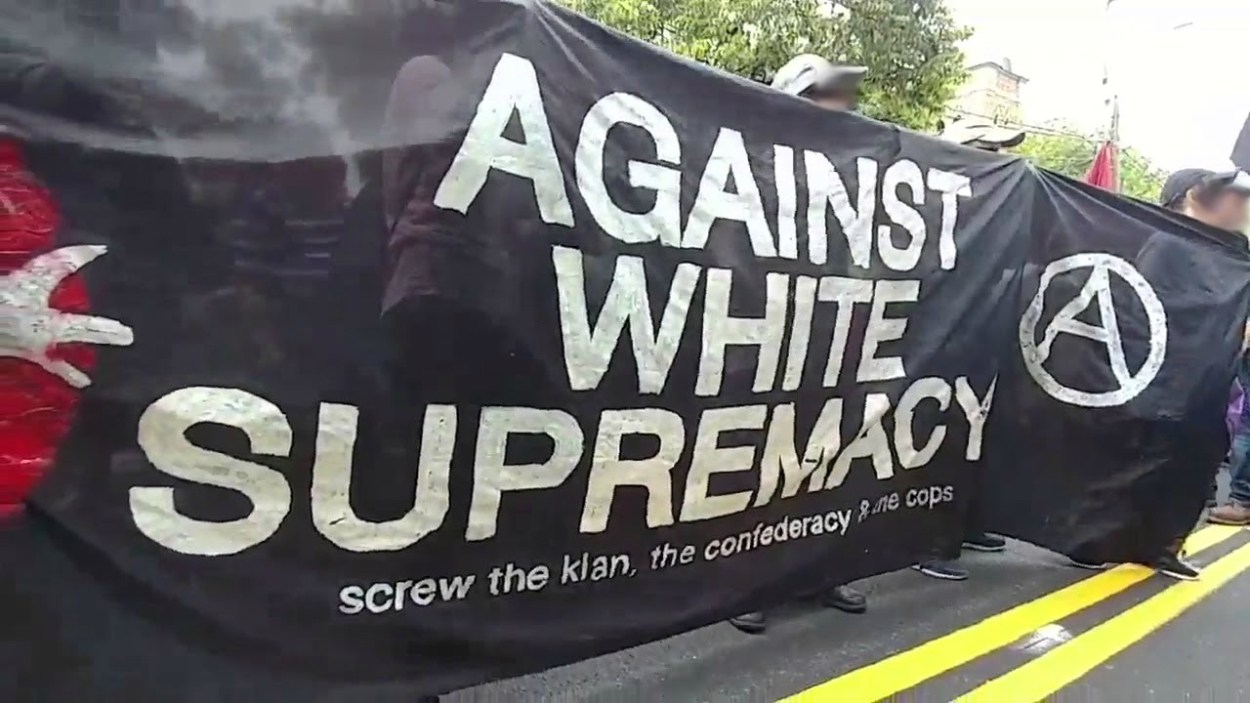
But by 1936, anti-fascists were attracting large numbers. We need to understand how their numbers and resistance were built and what that knowledge can mean for us in the different – but not completely different – world of 2025. Before I leave Max, though – here is my favourite Max story:
September 1934, a few days before Mosley’s British Union of Fascists will hold a major rally in Hyde Park. Max and his friend Jack are in Trafalgar Square late at night. They want to mobilise resistance, and paint a slogan, “All out on September 9th to fight fascism”, across the plinth of Nelson’s column.
Their only mistake was to come back a couple of hours later to admire their handiwork. A policemen approaches, sees paint on their shoes, finds a wet paintbrush in Max’s pocket. Max admits that he came there intending to daub something, but he says someone else got there first! Policeman didn’t believe him. Neither did the magistrate.

We are not living in 1934 but we do live in incredibly dangerous times. Across Europe, in America, In India, in Israel – the far right are growing, and brimming with confidence. I recently shared a platform with a Bangladeshi veteran of the struggles in the East End of the 1970s, which closely paralleled those of the 1930s. He remarked how, despite all our efforts, once again people are no longer ashamed to use racist rhetoric in Britain; that openly racist politics has been made acceptable, popular and respectable again.
In the 1930s, far right movements were growing rapidly across Europe – not just in Italy and Germany. In the 1970s it was different. The National Front had to look much further afield to find their ideological allies – in apartheid South Africa, in Pinochet’s Chile or the junta in Argentina.
But look at Europe today, the far right are rising and networking internationally. Everywhere where they are growing, their path is paved by centrist politicians who have ceded so much ground to the agendas of the far right.
in the 1930s the context was a massive economic crash which brought mass unemployment, hunger and frustration. Confidence in mainstream politicians, then, was at rock bottom – it is not much higher now! In that vacuum, smart well-heeled individuals could pose as saviours, and rebuilders of their nation and promise to restore people’s pride, restore jobs, make their country great again.
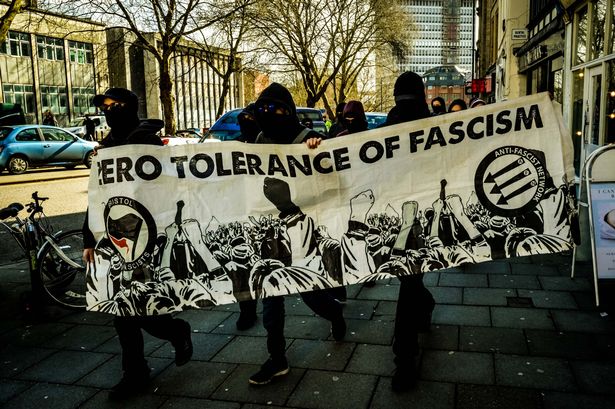
The same month in 1932 when Mosley launched his British Union of fascists, there was a conference abut unemployment in the East End organised by a local churchman Father Groser, a left-wing Labour Party member. He highlighted the effects of unemployment: “Frustration of personality, loss of self-respect, the creation of an embittered and hopeless section of the community.”
Father Groser was unconsciously describing precisely the mindset that the fascists would prey on: a mindset aggravated by people’s sense that their situation was rapidly deteriorating and no one was on their side. It also describes many of the people flocking to Tommy Robinson’s flag today.
Mosley’s movement mobilised through simple, memorable propaganda messaging; through posters and having their own media – a weekly newspaper; by establishing an iconic clothing style; by portraying themselves as powerful, united, invincible; and by looking for wedge issues such as housing.

From late 1934 Mosley’s movement set its sights on building a working class fascist base in a few key inner city areas – especially the East End. They used housing to divide the area’s two impoverished minorities, Irish and Jewish, telling the Irish that they had bad housing because the Jews had good housing, that Irish people had bad jobs because the Jews had the good jobs…
A Jewish anti-fascist called Solly Kaye described this as false propaganda to elicit “envy and fear”, that was believed “even though,” he said, “we were living in bloody poverty with bugs crawling all over us in the night.”
We must not, though be mesmerised by, or trapped within, mythologised versions of the past. Cable Street was an immensely important day. But it was one day, one battle, albeit on an enormous scale.
Fascism in 1930s Britain was disrupted, resisted and ultimately defeated in several battles and campaigns over several years, around the country – Stockton, Leeds, Manchester, Liverpool, Bristol – and they have the scars to prove it. Trade unionists should be very proud of their role in these physical confrontations, but there were other ways that fascism was challenged and undermined between these dramatic events.
That was through more mundane but absolutely vital work of educating, sharing information, analysing, building shared understandings, arguing, persuading, and changing hearts and minds. Our counterparts in the 1930s understood that fascism, rather than individual fascists, was the problem, and that beyond the hard core Nazi-types there are lots of angry, frustrated and people who get nothing from mainstream politicians, and are being attracted by far right talking points.
No doubt you have some of these people in your workplaces. We need to spend more time talking to them and less time talking to each other in safe spaces.
Six weeks before the battle of Cable Street, a grassroots conference created the Jewish People’s Council Against Fascism and Antisemitism. It set itself two tasks: one – to mobilise the whole Jewish community of the East End, pro-actively, to combat fascism and antisemitism; the other: to make links with local non-Jewish anti-fascists (especially through Trade Unions) in order to build an anti-fascist majority in the locality.
Those things took time and effort but their approach was crucial not only to the success on the day of Cable Street, but in decisively defeating fascists at the ballot box in local elections in the East End five months after Cable Street. And that spirit was carried through to the struggles for unity between Jews and non-Jews against landlords and fascists in 1938/39 through a local mass movement the Stepney Tenants’ Defence League.
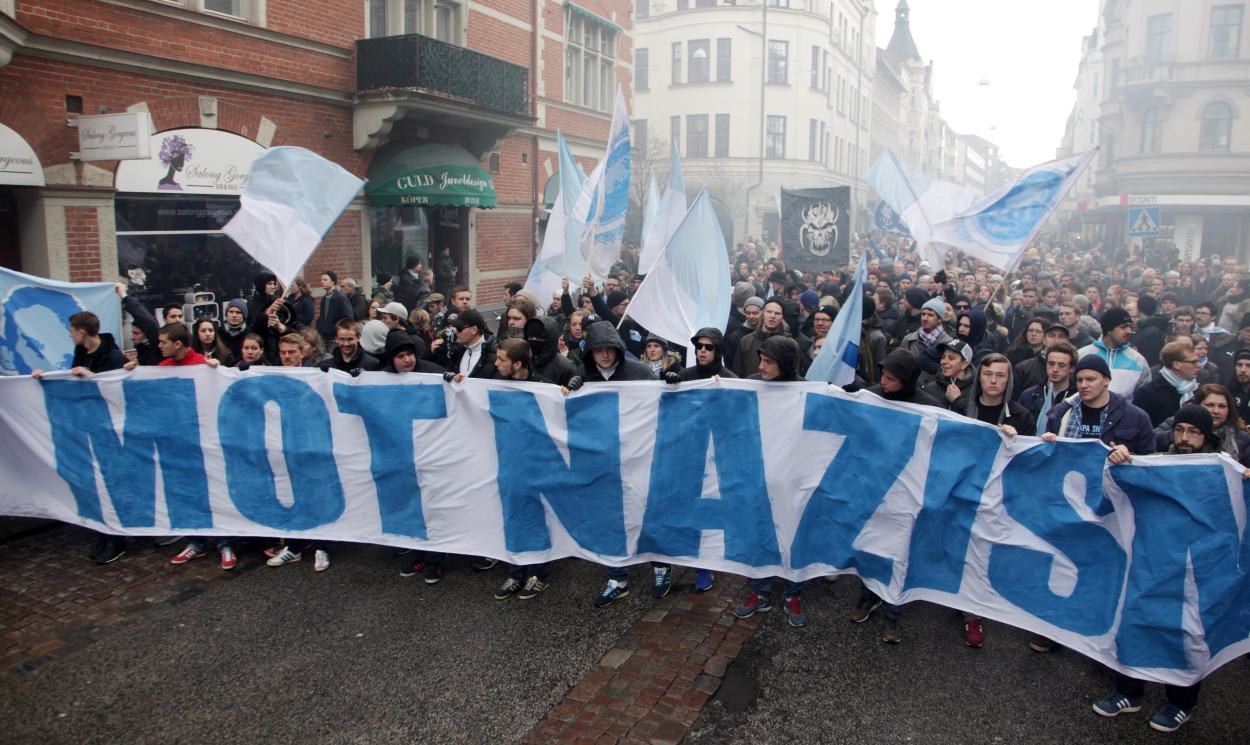
In the 1930s a sufficient number of anti-fascists understood there was no quick fix. Alongside physical defence of their communities, the more strategic activists recognised this problem needed patient work, making real improvements to people’s lives and restoring hope to them that they could achieve these things.
We need to learn how different communities have dealt with the threats of racism and fascism in different generations, not to use them as simple blueprints, but to take whatever ideas, understandings and strategies they used then into the new and different contexts we face today in 2025, and marry them with our own new insights.
We have defeated them in the past. And we can defeat them again. But it is not certain. What is certain is that it won’t happen in on one single day, in one major confrontation. We need courage, patience and unity. And remember, as the anti-fascists in the 1930s declared. “They have the millionaires but we have the millions”!
Related
Lessons for today from our history in London of combating racismNovember 26, 2020
Against racism, nationalism and bordersMarch 19, 2022
Tommy Robinson – sharing the hateOctober 13, 2018

 The Free