Working Class Origins of International Women’s Day

by Anarchist Communist Group on 8th March 2025 via thefreeonline at https://wp.me/pIJl9-Gg3 Telegram t.me/thefreeonline/2510

March 8th is International Women’s Day. Every year, capitalist institutions, media, and politicians show their support, forgetting the Day’s working class and anti-capitalist origins.

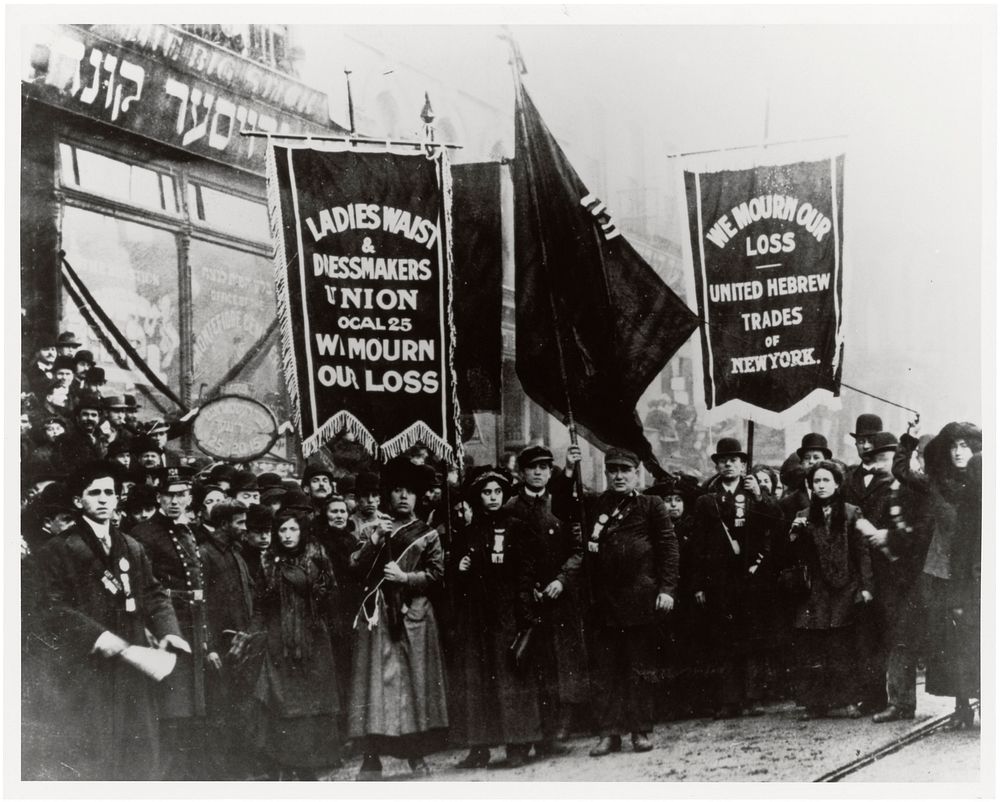
This date actually commemorates March 8th 1909, when 129 women employees of a cotton textile factory in New York were killed when the factory boss set fire to the factory while all of them were inside making a protest demanding labour rights.

It was the German social democrat Clara Zetkin who proposed the idea of an International Women’s Day in 1910 at the International Congress of the Second International in Copenhagen. She wanted to unite women together behind the German Social Democratic Party to counter the suffragists who were concentrated only on the vote for women. Zetkin was inspired by the American initiative in response to the fire of 1909.



March 8th is therefore a celebration of resistance and commemoration of working class women’s continued oppression and exploitation. It is not a day to celebrate all the women bosses, politicians and millionaires. It is a day of struggle that it is there to recall all the inequalities, all the violence, all the oppressions of the patriarchal system which is embedded within capitalism and to make visible the struggles of women. It is especially significant at a time when rights of women and LGBT+ are under attack from right-wing groups, both religious and secular.

Statistics from all over the world show how far we are from ending exploitation and oppression.

· Women in the UK do 60% more unpaid work (housework, caring for children and others) than men. This is the case even when women are working in paid employment.



· Royal College of Psychiatrists found that violence and abuse is a major cause of mental ill health amongst women and girls.

· UK mothers earned £4.44 less an hour less than fathers

· According to the International Labour Organisation: Around the world, finding a job is much tougher for women than it is for men. When women are employed, they tend to work in low-quality jobs in vulnerable conditions, and there is little improvement forecast in the near future.

· In 2015, 1 in 4 Japanese women suffered violence from a partner, according to government statistics.

· In the USA, 23 women were murdered each month by a partner.

· Worldwide, more than 650 million alive today were married as children. This continues as every year 12 million girls are married before they reach the age of 18.

· Two women a week are killed by a current or former partner in England and Wales.


· Transgender people are over four times more likely than cisgender people to experience violent victimisation, including rape, sexual assault, and aggravated or simple assault, according to a new study by the Williams Institute at UCLA School of Law.

· About 215 000 violent sexual crimes were recorded by the police in the European Union in 2015. A third of these (nearly 80 000) were rapes. More than 9 in 10 rape victims and more than 8 in 10 sexual assault victims were girls and women, while nearly all those imprisoned for such crimes were male (99%).

· 81% of 10-year-old girls in the USA are afraid of gaining weight and 42% of pre-teen girls want to lose weight.

· The World Health Organisation that over 200 million girls and women worldwide have been affected by female genital mutilation (FGM). An additional 3 million are at risk of FGM every year.

· Globally, girls face a greater risk of illiteracy than their male peers. Approximately 496 million adult women worldwide cannot read and write (Readingpartners.org) – this is 2/3 of the illiterate population around the world.

And yet, year after year, more and more women are saying no and fighting against patriarchy in all its forms, at work, at home, in the street. This fight needs to be against all forms of oppression and explicitly anti-capitalist. Capitalism, born from commercial expansion by force of arms during colonisation then structured around large-scale industry, developed after patriarchy, which is based on the subjection of women and which is thousands of years old. These systems of domination must be abolished.

Any feminist position which does not combat capitalist exploitation amounts to maintaining in place a system which exploits women and men, which benefits from the free or underpaid work of women. Feminist, anti-capitalist, anti-racist struggles cannot be separated. That common struggle must be reaffirmed.

No revolution without women’s liberation. No women’s liberation without revolution.

Kallas, Freeland and von der Leyen pimp their Barbarossa 2.0 to a supine Europe

Declan Hayes

If Kallas and von der Leyen get Ireland to abandon its well-established and much admired policy of neutrality, there will be yet more desk jobs in Brussels and NATO’s HQ for Ireland’s military top brass.

Say what you like about Hitler, but he gave Operation Barbarossa his best shot, when almost 4 million Romanian, Hungarian, […]

Kallas, Freeland and von der Leyen pimp their Barbarossa 2.0 to a supine Europe

Anarchist News Review: Peckham rallies, Teslas torched and EU remilitarises

Discussing the news of the week, which continues momentous not just in the US. Given the EU’s plans to drop 800 billion Euros on defence, we save a particular focus for the economic and cultural implications With money flowing towards production and the need to drag the next generation of youth into patriotic camoflage, what […]

Anarchist News Review: Peckham rallies, Teslas torched and EU remilitarises

No War but Class War: Revolutionary Defeatism in the Russo-Ukrainian Conflict

by The Polar Bl@st   on 6th March 2025   via thefreeonline    at  https://wp.me/pIJl9-G8H

Introduction The war between Russia and Ukraine is often presented as a clear-cut narrative of imperial aggression versus national defence.

In mainstream discourse, Russia is portrayed as the sole aggressor, with Ukraine as a victim bravely defending its sovereignty…..

However, this oversimplified framing serves the interests of Western imperialism, NATO expansionism, and global capitalist powers, while conveniently ignoring the complexities of the conflict—particularly the long-standing tensions in the Donbas region.

From an anarcho-communist perspective, the story is not about good versus evil states but about imperialism, nationalism, and the manipulation of working-class people by ruling elites. A more nuanced analysis recognises that the seeds of this war were planted long before the 2022 invasion, especially in the political and military developments following the 2014 Maidan uprising and the subsequent conflict in Donbas.

Acknowledging that Ukraine played a role in escalating this conflict—particularly through its actions in Donbas—does not justify Russian imperialism. Instead, anarchists must reject both Russian and Ukrainian state violence, embracing revolutionary defeatism. In this war, as in all wars between states, the true enemy is not the “other” nation but the capitalist class and state structures that profit from bloodshed. Our rallying cry must remain: No War but Class War.


The Donbas Conflict—Roots of the War

To understand the origins of the war, it’s essential to focus on the Donbas region—an industrial heartland in eastern Ukraine, home to a significant Russian-speaking population. Following the 2014 Maidan uprising, which overthrew Ukraine’s pro-Russian president, Viktor Yanukovych, the new government in Kyiv moved toward stronger alignment with Western powers and NATO. This shift triggered deep political and cultural tensions in Donbas, where many felt alienated by the central government’s increasingly nationalist policies.

The Ukrainian government’s actions following Maidan were perceived by many in Donbas as oppressive. Efforts to suppress Russian language rights, promote nationalist narratives, and sideline the region’s economic interests deepened resentment. This was compounded by Kyiv’s decision to launch a military operation against separatists in Donbas, known as the Anti-Terrorist Operation (ATO). While the separatist movements were undoubtedly supported and exploited by Russia, it is equally true that their emergence was fuelled by real grievances and fears of cultural erasure and economic marginalisation.

The war in Donbas quickly turned into a brutal conflict, with both Ukrainian forces and Russian-backed separatists committing human rights violations. Entire cities were devastated, thousands of civilians were killed, and the working class on both sides bore the brunt of the violence. The people of Donbas became pawns in a geopolitical struggle between Ukrainian nationalism, Russian imperialism, and Western capitalist interests.

From an anarchist perspective, this conflict reveals the failures of both nationalism and state power. The people of Donbas were not fighting for liberation but caught between two oppressive systems—each using their suffering to justify their own political goals.


Ukraine’s Role in Escalating the Conflict

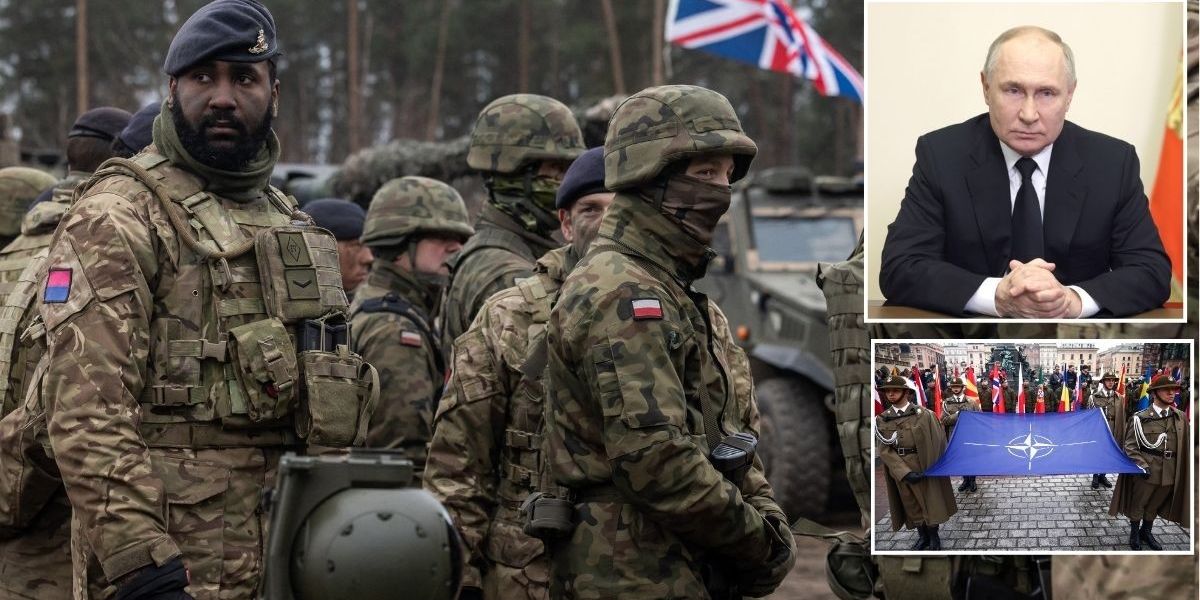
Nato urged to enforce conscription

Mainstream narratives often ignore Ukraine’s role in escalating the war, particularly through its military actions in Donbas and policies that alienated the region’s Russian-speaking population. Following the 2014 revolution, the Ukrainian government pursued a nationalist agenda that included laws restricting the use of the Russian language and glorifying nationalist figures with historical ties to fascist movements.

While these actions were framed as moves toward national unity and decommunisation, they were experienced in Donbas as cultural aggression. The central government’s refusal to engage in meaningful dialogue with the separatist regions and the imposition of military solutions over political negotiations exacerbated the crisis.

The Ukrainian military campaign in Donbas was brutal and indiscriminate, with reports of shelling civilian areas, enforced disappearances, and abuses by nationalist militias integrated into the armed forces, such as the Azov Battalion. These actions alienated not just pro-Russian separatists but also many ordinary working-class people in the region who wanted peace but found themselves caught between Kyiv’s aggression and Russia’s opportunism.

Acknowledging these facts doesn’t absolve Russia of responsibility, nor does it imply support for its imperial ambitions. Instead, it highlights the reality that both the Ukrainian and Russian states have used the people of Donbas as tools in their struggle for regional dominance.

Continue reading “No War but Class War: Revolutionary Defeatism in the Russo-Ukrainian Conflict”

Techno-Fascism Comes to US America

American techno-fascism is no longer a philosophical abstraction for Silicon Valley to tinker with, in the vein of intermittent fasting or therapeutic ketamine doses.

It is a policy program whose constitutional limits are being tested right now as DOGE, staffed with inexperienced engineers linked to Musk’s own companies, rampages through the federal government Silicon Valley is premised on the […]

Techno-Fascism Comes to US America

No blueprints, no quick fixes, but we can defeat the Far Right!- A history of Direct Action Victories

by David Rosenberg at Rebellion on 5th March 2025 via thefreeonline at https://wp.me/pIJl9-Gf6

Talk by David Rosenberg on 1 March 2025 at the Trade Union conference of Stand Up To Racism

a fighter for better housing who co-led […]

No blueprints, no quick fixes, but we can defeat the Far Right!

Max at 100

I want to start by telling you about a trade unionist I knew personally, called Max Levitas, a shop steward in the Tailors and Garment Workers’ Union for many years;a fighter for better housing who co-led a four-month rent strike when he was in his mid-20s; a co-organiser of an occupation of the bomb shelter at the Savoy Hotel during the Blitz, to protest about the lack of such shelters where he lived in London’s East End.  He was also a local councillor for the Communist Party, taking up all kinds of issues across Tower Hamlets. He worked until he was 80, and in retirement remained active in pensioners campaigns. When he was 101 he became the world’s oldest Dementia Friend – helping individuals suffering that condition. And he was a brave fighter against racism and fascism his whole life.

You cannot emulate a life like that – he was extraordinary – but you can take one key idea from that biography which is that these spheres in which he was active are all inter-connected. The connections though are not always immediately obvious. We cannot serve the anti-fascists and anti-racist movement if we focus on them in isolation, or do so simply as moral condemnation – “racism is bad”, “racism is evil”.

Racism and fascism ruin lives and we need to tell how they ruin lives. It is through understanding, articulating and acting on those kinds of connections that we will enhance our work against racism and fascism and build a better world.

But if you asked Max to name the proudest day of his life – he would tell you immediately – 4th October 1936 – the Battle of Cable Street. The iconic clash of fascism and anti-fascism in Britain in the 20th century.

The day when thousands of foot-soldiers in black military uniforms with jackboots of Oswald Mosley’s deeply antisemitic British Union of fascists, were blocked from invading the most heavily Jewish-populated East End streets by my favourite prevent strategy of them all: blockades, barricades, and masses of working class activists working in unison across ethnic and religious divides.

That day remained a touchstone for Max and it should be for all of us. But by 1936 the fascist forces had already recruited many thousands across Britain to their ideology, across classes and generations.

Mosley placed a particular emphasis on youth, saying: “We are a party of action based on youth that will mobilise energy, vitality and manhood to save and rebuild the nation.”

He claimed that his fascist party were the only party that offered young people a chance to play their part for the nation in peace-time not just in war. Incredibly powerful and compelling stuff when so many working class families lost sons in the first World War.

But never forget that fascism was, and is, a project of the elite. Mosley and his elite friends were especially focused on the fascist student branches they formed in 20 public schools.

But by 1936, anti-fascists were attracting large numbers. We need to understand how their numbers and resistance were built and what that knowledge can mean for us in the different – but not completely different – world of 2025. Before I leave Max, though – here is my favourite Max story:

Continue reading “No blueprints, no quick fixes, but we can defeat the Far Right!- A history of Direct Action Victories”

Mass arson at France Tesla dealership

Attack near Toulouse caps weeks of actions against Elon Musk’s company in the US and Europe

~ Rob Latchford ~ Eight Tesla cars were burned completely and four others seriously damaged in an arson near Toulouse, France in the small hours of Monday (3 March).

According to a local paper, the attack on a dealership […]

Mass arson at France Tesla dealership