
Exclusive: Hamas Says It Will Not Unilaterally Disarm as Trump and Netanyahu Threaten a Return to Full-Scale War
by Jeremy Scahill and Jawa Ahmad on Feb 16, 2026 at DropSiteNews via the freeonline at https://wp.me/pIJl9-HW5 Telegram: t.me/thefreeonline/5427
Senior Hamas official Basem Naim: “It is clear that Netanyahu [is] searching for new justifications to continue the aggression against Gaza and resume the war.”
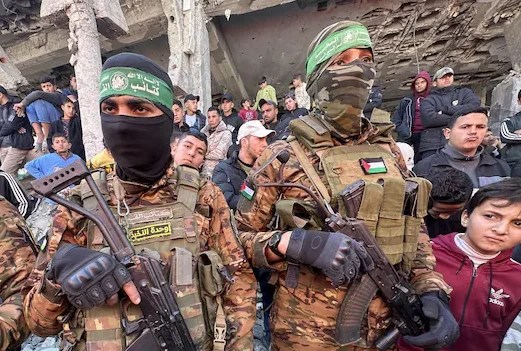
As President Donald Trump prepares to convene the first official meeting of his speciously named Board of Peace on Thursday, he and Israeli Prime Minister Benjamin Netanyahu have re-escalated demands that Hamas and other Palestinian resistance factions imminently disarm—with Netanyahu insisting that all small arms must be turned over before the Israeli military withdraws any of its forces.
“Very importantly, Hamas must uphold its commitment to Full and Immediate Demilitarization,” Trump wrote in a post on Truth Social on Sunday.
This demand is being presented as a condition for any reconstruction to begin in Gaza, with no guarantees for Palestinian security or sovereignty. A senior Israeli official also claimed Monday that Trump is considering imposing a two-month deadline for Palestinians to surrender their weapons.
Both Trump and Netanyahu have threatened that a large-scale war against Gaza could resume if Hamas refuses to capitulate.
Meanwhile Hamas has not been part of any formal negotiations for several months. Amid media reports of new drafts and U.S. preparation for negotiations, Hamas leaders say there has been nothing formally presented to the movement and that no official meetings have been held with the group to discuss possible scenarios.
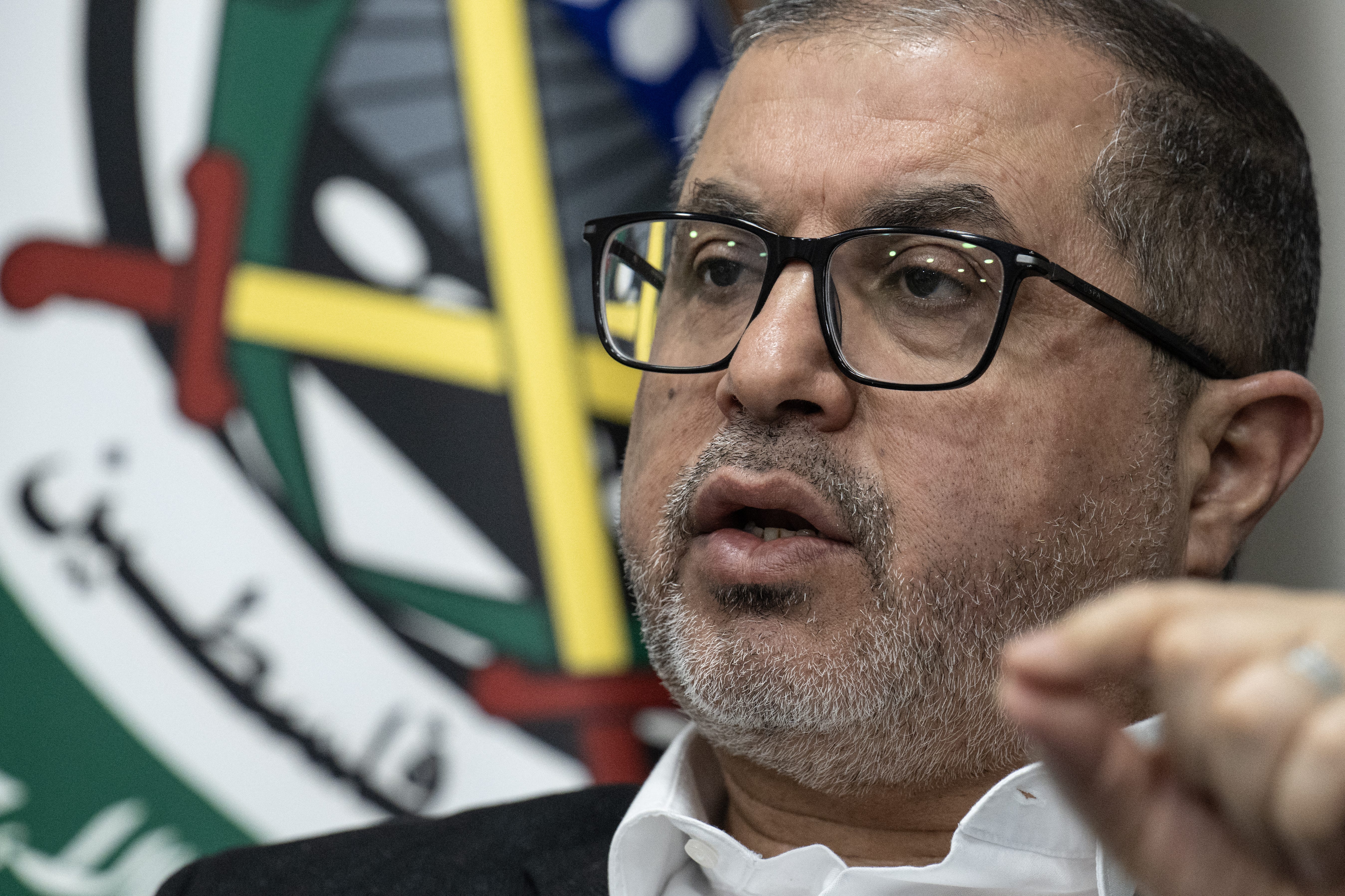
Basem Naim, a senior Hamas leader who has been deeply involved with ceasefire negotiations, told Drop Site that Hamas will not accede to sweeping demands that the Palestinian resistance unilaterally disarm, nor will it submit to a total demilitarization of the Gaza Strip.
He reiterated that the group is willing to negotiate on disarmament of resistance forces only if it is linked to a long-term ceasefire that restrains Israel and is accompanied by a political process that leads to the establishment of a Palestinian state and armed force capable of defending itself.
“Our position on this matter is very clear,” Naim said. “Before speaking about disarmament or confiscation of weapons, we believe it is necessary for Netanyahu and his extremist government—along with the mediators and the American guarantor—to ensure full implementation of everything agreed upon in the first phase, so that there can be a fundamental change in the humanitarian situation in Gaza.”
“Palestinian resistance and its weapons are a legitimate right, and disarmament is rejected and will not be accepted by any Palestinian,” Naim continued. “The problem is fundamentally political, not security-based, and its solution lies not in the weapons of the resistance but in [ending] the Zionist occupation. Gaza is not a real-estate project; it is an integral part of the Palestinian homeland.”
Netanyahu has regularly and falsely claimed—often backed by Trump and other Western leaders—that Hamas agreed to a total disarmament of the Palestinian resistance as part of the limited-scope first phase of the “ceasefire” deal signed in October.
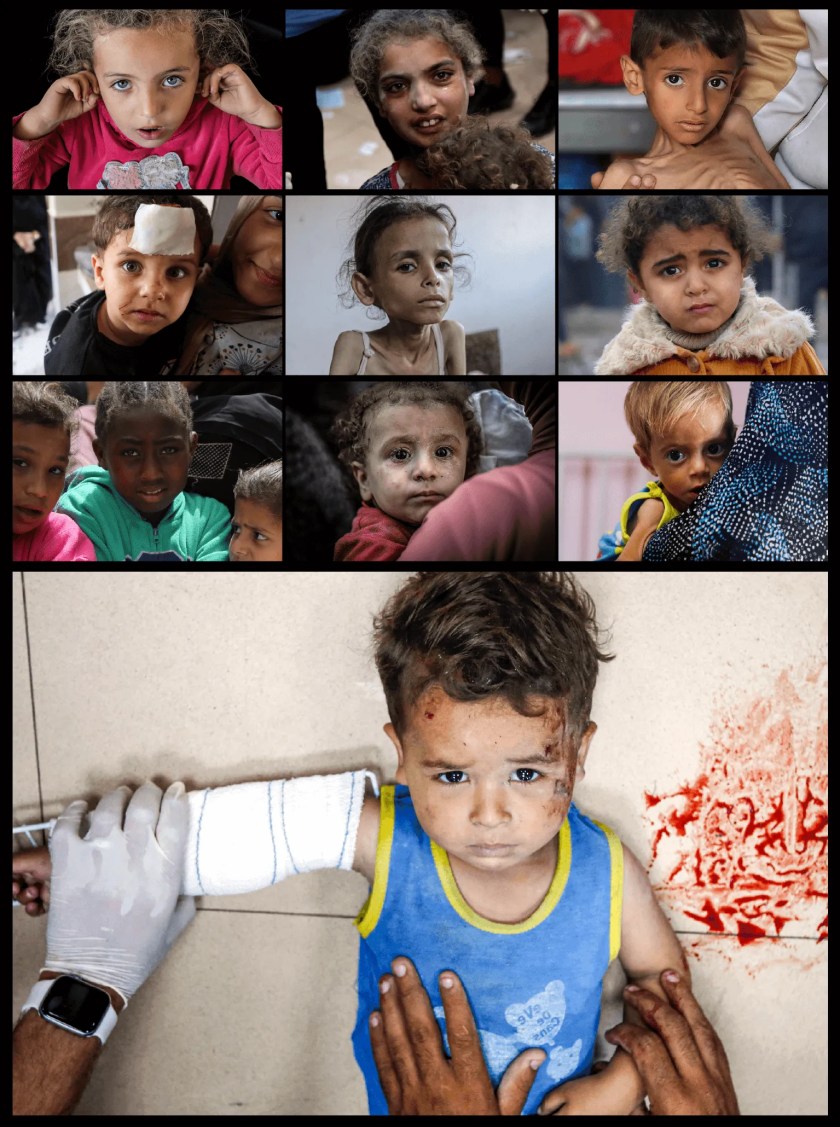
He has justified the killing of more than 600 Palestinians since the “ceasefire” was signed by claiming Hamas fighters and civilians alike are violating the agreement.
In reality, Hamas did not sign any terms having to do with disarmament, asserting that they could not unilaterally make an agreement on future governance or armed resistance on behalf of all Palestinians.
“It is clear that Netanyahu and his extremist government are searching for new justifications to continue the aggression against Gaza and to resume the war, despite all the regional and international positions rejecting a return to fighting,” Naim said. “Hamas also is exerting all efforts to avoid the return to war again. Until recently, Netanyahu used the issue of [Israeli] captives to justify continuing the assault on the Gaza Strip, refusing to withdraw, open the crossings, and allow aid in.”
Throughout the Gaza genocide, Israel has demanded a total surrender not only of Hamas, but of the Palestinian cause of liberation. Hamas officials have told Drop Site that while the group rejects total disarmament, it is open to negotiating the issue of weapons, including an internationally-verified warehousing or decommissioning of some “offensive” weapons on the condition that a Palestinian security force is established in Gaza.
Hamas and Palestinian Islamic Jihad officials have maintained that the armed resistance would only disband in the context of the establishment of an internationally recognized Palestinian armed force capable of defending its territory and people. The Trump plan calls for the destruction of “offensive infrastructure, including tunnels and weapon production facilities” and a longer term vision for “an agreed process of decommissioning” other weapons.
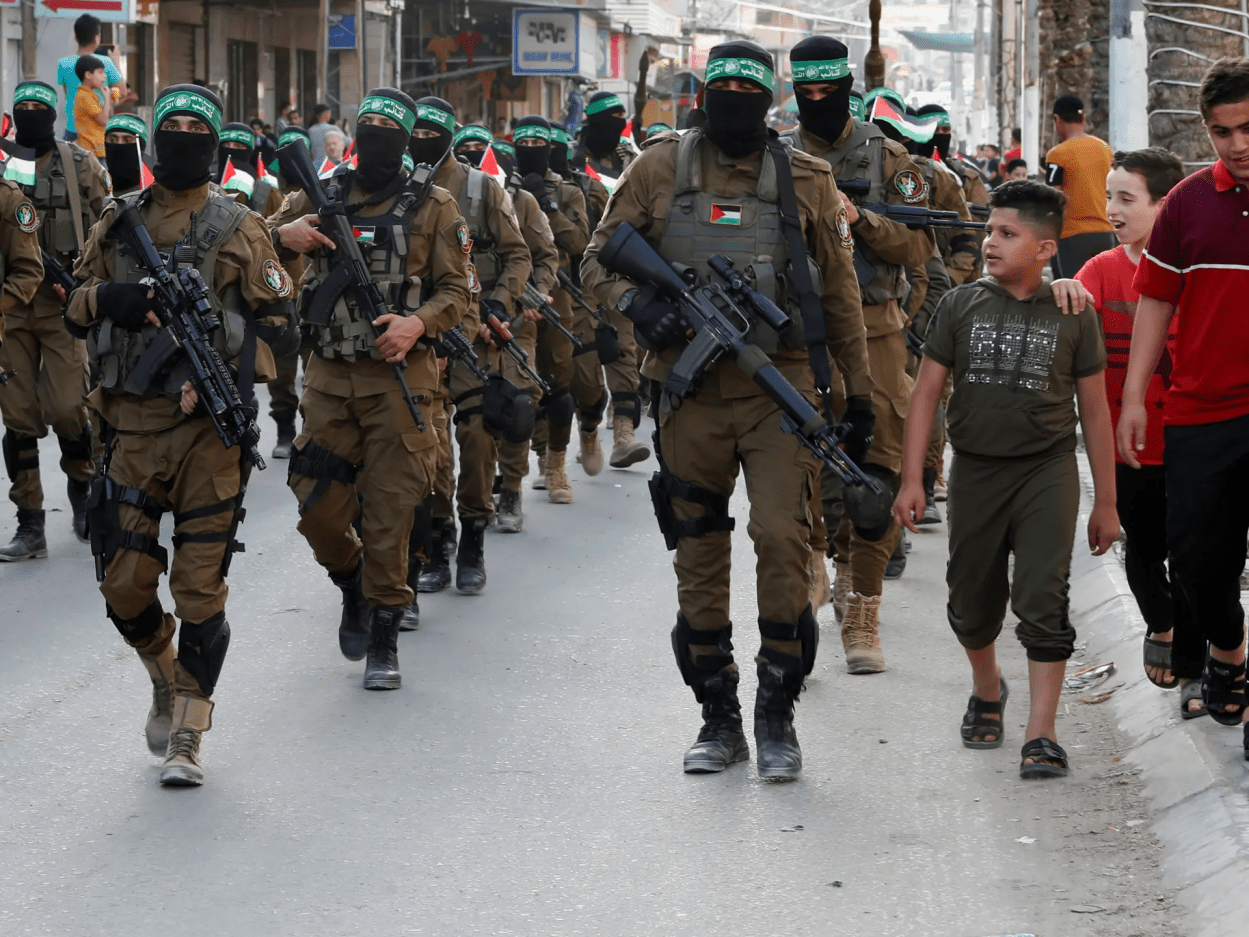
“Life in Gaza today is unsustainable,” Naim emphasized, noting that the reported proposal and demands do not make any guarantees for Palestinian security.
“How can there be talk of disarmament while the aggression continues and Netanyahu does not commit to the ceasefire? Armed gangs are being formed, supported, and backed to carry out dangerous security operations such as kidnappings and killings. How can disarmament be discussed while [nearly] 60% of the Gaza Strip remains occupied by Israel?”
Mutual Security Pacts
As Drop Site has previously reported, Hamas repeatedly suggested to regional mediators a solution to the weapons issue wherein the Palestinian resistance would agree to store or “freeze” its weapons and not deploy them in any attacks against Israel. This configuration, which would be part of an internationally-enforced long-term ceasefire, would come with the endorsement of the Palestinian resistance groups themselves.
Violating such an agreement, especially one endorsed by large numbers of Arab and Islamic countries, would carry grave consequences for the broader Palestinian struggle. The key to its success, Palestinian officials cautioned, would be compelling Israel to respect the agreement.
Israel has consistently violated ceasefire deals not only with Palestine, but also in Lebanon where it continues to bomb on a nearly daily basis despite a ceasefire signed in November 2024.
Hamas’s proposals went nowhere and since Trump officially launched his board, there have been almost no substantive discussions with Hamas leaders.
On Sunday, Netanyahu sought to front-run any potential technical negotiations with Hamas that would permit Palestinian fighters to retain even small arms, declaring that the Gaza Strip must be entirely demilitarized as a condition for Israel to move to the second phase of a deal.
“What has to happen is that Hamas must first be disarmed and then Gaza must be demilitarized. Disarmed means that it must give up weapons,” Netanyahu said in a speech at the conference of Presidents of Major American Jewish Organizations in Jerusalem, dismissing the notion that any negotiations on decommissioning should take place.
“There are practically no heavy weapons in Gaza. There’s no artillery, there are no tanks, there’s nothing. The heavy weapon, the one that does the most damage, is called an AK-47, okay, that’s it. That’s how they execute people. That’s how they shoot our people. That’s what they used, assault rifles. That’s what they used in the massacre of October 7,” he added. “That’s the main weapon, and that has to go.”
On Monday, Yossi Fuchs, Israel’s Cabinet Secretary and a senior aide to Netanyahu, claimed that the Trump administration had asked Israel for a two-month window to force Hamas to disarm before Israel re-launched a large-scale military assault on Gaza.
”We are currently preparing for a period of around 60 days during which Hamas will be given the opportunity. We are in complete coordination with the Americans, this is their request, we respect them,” Fuchs told a media conference in Jerusalem.
“This process will be examined, if it goes well, great. And if not, the IDF will have to return and complete the mission.” Fuchs said he did not know when the 60-day deadline would begin, but predicted that if full disarmament did not happen by June, Israel would renew its total war against Gaza.
“Does talk of disarmament mean the absence of any reciprocal security arrangements, leaving Israel free to operate in Gaza Strip wherever, whenever, and however it wishes?” asked Naim.
“Attempting to portray the problem as the existence of weapons in Palestinian hands—light weapons that cannot be compared in any way to the conventional, chemical, biological, or nuclear arsenal possessed by Israel—[ignores] what was witnessed over two years of genocide in the Gaza Strip.
These light weapons in the hands of the Palestinian people are fundamentally for self-defense, not for aggression against anyone. Therefore, such a measure is rejected and cannot be allowed to pass, as they claim or demand.”
Naim said that Hamas’s position is that any proposals regarding weapons or disarmament must center around mutual security pacts, not unilateral demands put before the Palestinian side.
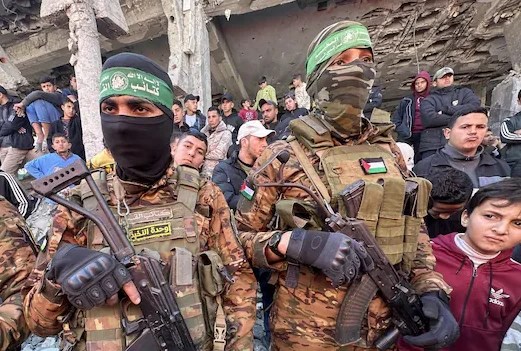
“Israel must be restrained from continuing the aggression, and it must be ensured that a multi-year ceasefire—three, five, or seven years—runs parallel to the political process,” he said. “During this period, the resistance would commit—under Palestinian, Arab, and international supervision—to the ceasefire.
In this time, the weapons would be removed from the field and stored, and full opportunity would be given to the Palestinian government or the administrative committee to manage all civil and security affairs in the Gaza Strip without interference from anyone.”
This position has been consistently articulated by Hamas officials since the signing of the October agreement at Sharm El Sheikh, Egypt. Despite the pervasive false characterizations from U.S. and Israeli officials that Hamas agreed to all of Trump’s terms, Hamas and other Palestinian factions did not sign an agreement beyond a ceasefire, exchange of captives, and an initial framework for the redeployment or withdrawal of Israeli forces from some parts of Gaza.
Officially, there is no deal on a “second phase.” Palestinian negotiators made clear that demands impacting the future of a Palestinian state, the weapons of resistance factions and other existential issues would require consultation with a broad cross-section of Palestinian political parties and factions.
“We have discussed a comprehensive and holistic approach. First, the humanitarian track must be entirely separated: the daily life of the people—their food, water, and medicine—cannot remain at the mercy of this fascist government and its political agenda, whose stated goal is to resolve the conflict by force in favor of the entity and to erase Palestinian existence,” said Naim.
“There must also be a serious, time-bound political process that begins and ends with the establishment of an independent Palestinian state with Jerusalem as its capital. At that point, the weapons and fighters of the resistance would become part of that state and its army.”
“Either disarmament or war”
Last weekend, Trump announced that he had received more than $5 billion in commitments for his board and that partner nations have pledged thousands of troops to deploy as part of an International Stabilization Force (ISF). While Trump did not name specific countries, Indonesia became the first nation to publicly declare its participation, announcing it was preparing for a potential deployment of up to 8,000 of its troops.
Many nations have said they will not send troops if the mission includes disarming or clashing with Palestinian resistance factions.
Hamas has said it welcomes an international force, but only to serve as a neutral buffer between Israeli forces and Palestinians in Gaza.
“Indonesia’s participation is not intended for combat missions and not for demilitarization missions,” read a February 14 statement from Indonesia’s foreign ministry. It added that the “mandate is humanitarian in nature, focusing on the protection of civilians, humanitarian and health assistance, reconstruction, as well as training and capacity-building for the Palestinian Police.” The statement declared that Indonesia would “terminate participation if the ISF’s implementation deviates” from that mandate.
The Trump plan also calls for a Palestinian police force to be formed under the banner of a newly-established technocratic governing body known as the National Committee for Administration of Gaza (NCAG). Composed of 15 Palestinians, the NCAG is the only component of Trump’s board that includes Palestinians and is situated on the lowest rung of the Board of Peace hierarchy.
When Trump’s son-in-law, Jared Kushner, presented a slide deck at the launch of the Board of Peace in Davos, Switzerland on January 22, a slide titled “Demilitarization Principles” stated, “Heavy weapons decommissioned immediately.
Personal arms registered and decommissioned by sector as NCAG’s police becomes capable of guaranteeing personal security.” The section concluded: “The end state: only NCAG-sanctioned personnel may carry weapons.”
A top official in Trump’s Board of Peace likewise indicated that efforts to disarm Palestinian resistance groups would occur as part of the establishment of a Palestinian security force and not as a formal surrender ceremony.
That Trump officials appeared headed toward a slower process of disarmament than Netanyahu has demanded was also reinforced by a report in the New York Times describing a draft U.S. plan that would require Hamas to “surrender all weapons that are capable of striking Israel, but will allow the group to keep some small arms, at least initially.”

Hamas’s leader in Gaza, Dr. Khalil Al-Hayya, met recently in Cairo with Nickolay Mladenov, the high representative for Trump’s board, though a senior Hamas official told Drop Site that no official proposals for disarmament were presented at the meeting. “In some meetings, the topic was put on the table in general,” the official said. “Until now, no official discussion with us has been launched.”
At the Munich Security Conference on February 13, Mladenov was asked where he wanted to see the situation in Gaza a year from now.
“I hope that we will be significantly advanced on deploying a new security force of Palestinians inside Gaza and Hamas would have given up a significant part of its weapons so that we are moving forward to the point at which Israel can withdraw from the yellow line,” said Mladenov, a Bulgarian diplomat who served as the UN’s top envoy to the region from 2015-2020.
“These are conditions that I think are critical if we are ever to return back to the political resolution of the Palestinian question because the political resolution to the Palestinian question requires negotiations, it requires one Palestinian leadership over the entire occupied territory, and it requires a dialogue that is facilitated—not overseen, but facilitated—by the United States, Europe and others as it has been in the past.”
While Mladenov’s theoretical timeline appears to contradict Netanyahu’s demands for immediate disarmament, he also acknowledged that no serious reconstruction or Israeli military withdrawals would occur unless the resistance was disbanded.
On this issue, Mladenov said that not only Hamas’s armed wing would need to disarm, but also Islamic Jihad and all other armed factions. He called Trump’s plan “the only option for going ahead with anything that makes sense in Gaza and that stops this war and doesn’t allow a return to violence.”
He added, “Gaza needs to be governed by a transitional authority as authorized by the Security Council resolution under which it needs to take on the full civilian and security control of Gaza and that includes the disarmament of all factions in Gaza, not just Hamas.”
Mladenov said that is the condition for Israeli forces to withdraw and for reconstruction to begin. “The reality is that all of this needs to move very fast,” he said.
“Let me be absolutely clear about the risks that we’re facing here: The first risk is that we are not going to implement the second phase of the ceasefire, but we’re going to go to the second phase of the war and that is a serious threat.”
He said that if Israel resumed the war, there would be no place for the Board of Peace “until we see what is left and pick up the rubble, potentially, at the end of it.” Mladenov warned that if Phase 2 was not implemented swiftly, the Israeli division of Gaza into two halves and the treatment of Gaza as a separate entity from the West Bank and not as two parts of the same occupied territory would be “cemented.”
Naim, the Hamas official, blasted Mladenov’s statement. “It is a disgrace to hear some American or international politician like Mladenov saying, ‘Either disarmament or war’ because this makes him a spokesperson for the Israeli government, instead of being a representative of a body working to create peace.”
That coercive ultimatum constitutes the centerpiece of Israel’s campaign to ensure it maintains full control of the eastern half of Gaza, an ability to strike at will in the western areas and to impede the minimal concessions offered to the Palestinian side.
Phase 2 of Trump’s plan envisions a large-scale reconstruction plan, expanded freedom of movement for Palestinians through the Rafah crossing with Egypt, the empowerment of the Palestinian transitional technocratic committee, under the direction of Mladenov, to assume basic governance duties and the gradual deployment of a Palestinian security force in Gaza.
It also includes terms that call for the withdrawal of Israeli forces to a perimeter encircling Gaza, rather than the status quo of Israel occupying more than half of the enclave.

“The U.S. is playing the good cop in this moment to Netanyahu’s bad cop position. They are talking reconstruction and peace while he keeps the threat of war hanging. So I see them doing a diversionary tango that constantly moves Hamas further and further into a corner,” said Sami Hermez, a political analyst and professor of anthropology at Northwestern University in Qatar.
“I don’t think we can separate the U.S. and Israel or Trump and Netanyahu into two different strategies versus partners in one overall strategy working in tandem.
It is naive to think otherwise or to follow the media narrative that Trump is not seeing eye-to-eye with Netanyahu every now and then.”
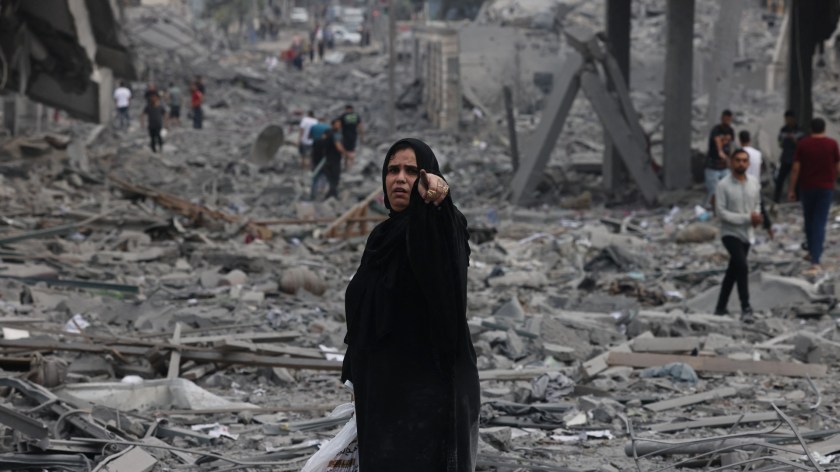
Devastation in Gaza
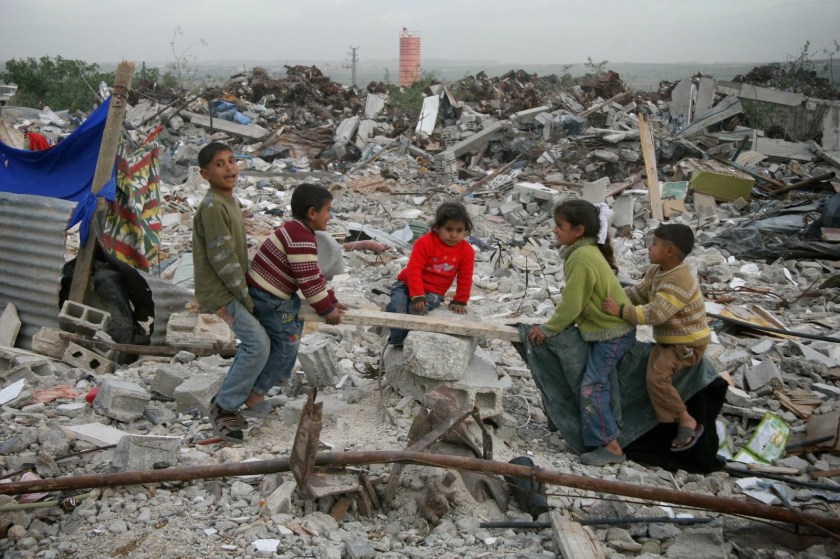
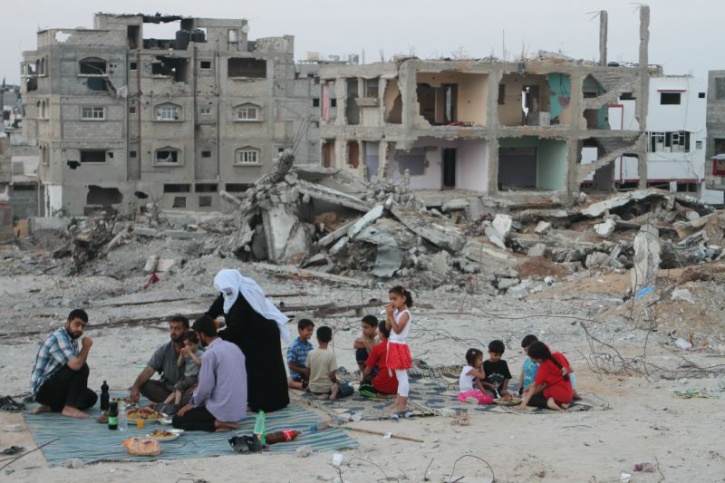
Despite the overarching colonialist structure of the Board of Peace and Trump’s constant deference to Israel’s agenda, Netanyahu continues to publicly reject any plan that would allow Palestinians to remain in Gaza with even a semblance of autonomy or an ability to rebuild homes, hospitals, roads or schools.
Israel has systematically refused to uphold the terms of the October agreement. Over the four months since the so-called ceasefire took effect on October 10, approximately 1,620 Israeli violations have been recorded, according to the latest figures from Gaza’s Government Media Office.
These include hundreds of shooting incidents, repeated shelling and airstrikes, incursions into residential neighborhoods, and the demolition of homes and buildings.
These violations resulted in the killing of at least 603 Palestinians and the wounding of more than 1,600.
Israel has also refused to allow in the agreed-upon levels of food and other life essentials stipulated in the agreement.
Although 600 aid trucks per day were supposed to enter the Gaza Strip, the average has been only around 260 trucks per day.
Fuel deliveries have been especially restricted, with just 861 trucks entering out of the 6,000 agreed upon.
Israel has severely restricted passage in and out of Gaza at the Rafah crossing since its partial reopening last week, allowing roughly a quarter of the expected number of Palestinians to depart or return to Gaza.
As Israel continues to move its forces deeper into Gaza than permitted, it has also been constructing infrastructure in areas of eastern Gaza that indicate long term plans for open-ended occupation.
In the bigger picture, Netanyahu is manufacturing a state of chaos in Gaza that relegates Palestinians to fragile tent encampments and limited access to basic life necessities. He has made no secret that Israel’s aim is for Trump to empower ongoing Israeli attacks, severely limit any improvement to living conditions or the hope of reconstruction and to encourage the large-scale removal of Palestinians from Gaza.
By making a boogieman of the small arms of the resistance, Netanyahu is maintaining a political justification to continue a low intensity war—that Amnesty International has deemed a continuation of the genocide—with the spectre of resuming larger operations.
“The longer Netanyahu can keep Gaza unlivable the better, the longer he can stall any reconstruction and relief the better. The idea of total disarmament is a good way to ensure nothing gets done in Gaza because he knows it is an unrealistic demand,” said Hermez.
“To a great extent, the US and Israel are following the same playbook they used in the West Bank for decades: they talk peace and the US even funds peace initiatives, while the troops on the ground make life hell for Palestinians and continue to squeeze them.
All in the name of some future promise—it was statehood post Oslo, it is mere reconstruction in Gaza. The wild card, of course, is Hamas and the resilience of life on the ground.”
Naim said that the unfolding events underscore the continuance of Israel’s multi-decade campaign to annihilate not only the aspirations for a Palestinian state, but an intensification of the war to force Palestinians entirely from the land.
He pointed to Israel’s ongoing siege of the occupied West Bank, replete with regular Israeli military invasions, the expansion of illegal settlements, and the terror being unleashed on Palestinians by state-backed settlers on a daily basis. He also cited recent judicial actions that allow Israel to register land in areas of the West Bank as legal property of the state for the first time since 1967.
“The Palestinian experience over more than 33 years since the Oslo Accords—which were supposed to end with the establishment of a Palestinian state—shows how Israel, especially during Netanyahu’s tenure since 1996, used every means to destroy that opportunity, weaken and undermine the [Palestinian] Authority, and expand annexation by all means.
Recent decisions bypassing previous Israeli laws and obligations toward both Palestinians and Jordanians and canceling Jordanian law and the administrative capacity of the Palestinian National Authority, amount to de facto and legal annexation,” he said.
“This experience confirms that the problem has never been the Palestinians or the resistance, but rather the Israeli colonial settlement project aimed at erasing Palestinian existence and ending the Palestinian cause in favor of a Jewish state between the river and the sea.”
Naim added, “What Netanyahu and his army have failed to achieve over the course of two years, they will not succeed [in attaining] by any other means—regardless of the support he may receive from any party.”
************
Drop Site is always free to read.
We have a commitment to ensuring that our journalism is not locked behind a paywall. But the only way we can sustain this is through the voluntary support of our community of readers. If you are a free subscriber and you support our work, please consider upgrading to a paid subscription or gifting one to a friend or family member. You can also make a 501(c)(3) tax-deductible donation to support our work. If you do not have the means to support our work financially, you can do your part by sharing our work on social media and by forwarding this email to your network of contacts. Make a gift to Drop Site

 The Free