Through direct action, mutual aid, and solidarity, anarchists seek to build a world beyond inverted totalitarianism—one in which people can live freely, without the domination of corporations, the state, or any other form of hierarchy.
by TheSlowBurningFuse on 25th Feb 2025 via thefreeonline at https://wp.me/pIJl9-GaL
Introduction: Understanding Inverted Totalitarianism
In his 2003 book Democracy in Chains, political theorist Sheldon Wolin coined the term “inverted totalitarianism” to describe a political system where the traditional institutions of democracy—elections, separation of powers, and civil liberties—remain in place, but their substance is hollowed out.
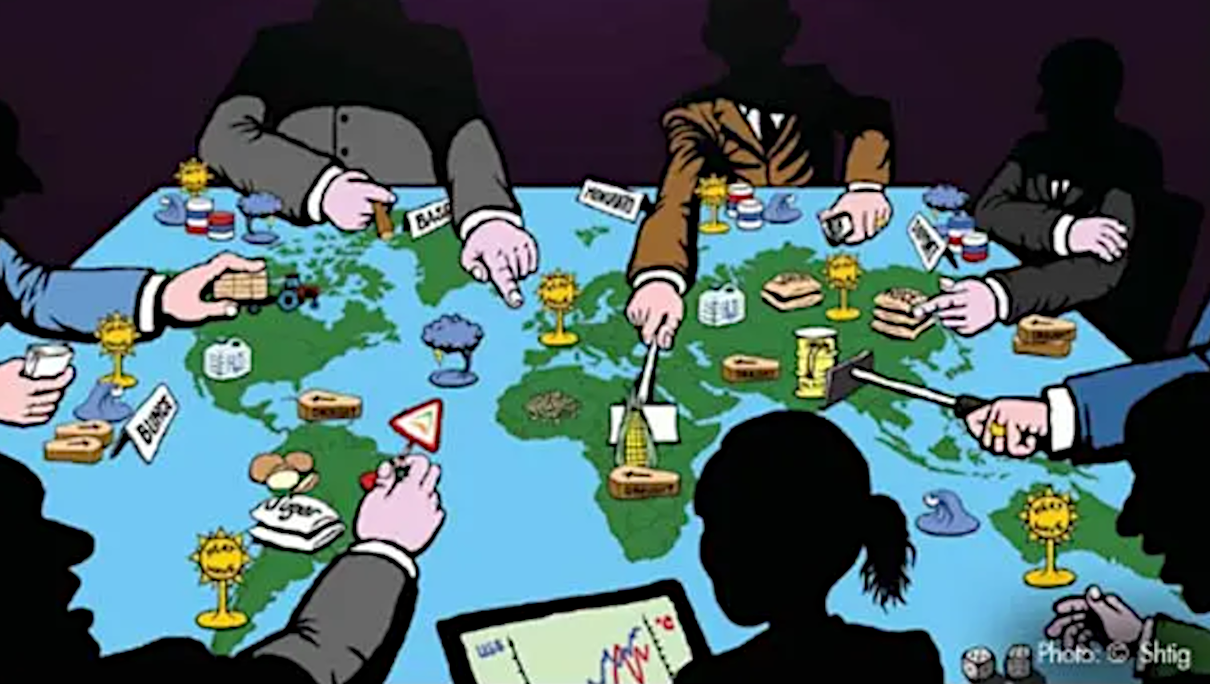
This inversion, Wolin argues, creates an environment where corporate interests dominate the political process, and the state serves as a tool to perpetuate the status quo of wealth and power.
From an anarchist perspective, the idea of inverted totalitarianism is not just an academic critique; it reveals the underlying mechanisms of control that maintain state power and corporate dominance.
Anarchism challenges the legitimacy of all forms of hierarchical authority, and inverted totalitarianism exposes the way in which democratic facades can obscure and legitimise systems of oppression.
In this article, we will explore the concept of inverted totalitarianism, its impact on modern societies, and how anarchist theory and practice provide a critical lens for understanding and resisting it.
What Is Inverted Totalitarianism?

Inverted totalitarianism is a term used to describe a system where democracy, in a formal sense, continues to function, but the true power in society resides in the hands of corporations and economic elites. Unlike classical totalitarian regimes, which directly control all aspects of life through a single party or dictatorship, inverted totalitarianism works through a more insidious form of governance.
Here, the state is not the central actor in dictating policy but instead operates as a facilitator for corporate interests, with elected officials serving as proxies for powerful business and financial entities.
Wolin distinguishes inverted totalitarianism from traditional totalitarianism by its subtlety. While regimes like Nazi Germany or Stalinist Russia sought to crush dissent and control all aspects of life through force, inverted totalitarianism creates a system in which control is achieved through corporate influence, the media, and the manipulation of public opinion.
Elections and other democratic processes still occur, but they are largely symbolic, serving to legitimise the authority of the corporate state rather than challenge it.
Historical Context: The Emergence of Inverted Totalitarianism
In order to understand the rise of inverted totalitarianism, it’s essential to look at the historical conditions that have fostered it. The mid-20th century saw the growth of transnational corporations and the rise of neoliberal economic policies. With the collapse of the Soviet Union and the end of the Cold War, global capitalism emerged as the dominant economic system.
This period saw the increasing concentration of wealth and power in the hands of a small elite, while traditional democratic institutions became more vulnerable to corporate influence.
Continue reading “The Rise of Inverted Totalitarianism: An Anarchist Analysis”


 The Free