This started in the early hours of this morning across the Gaza Strip.
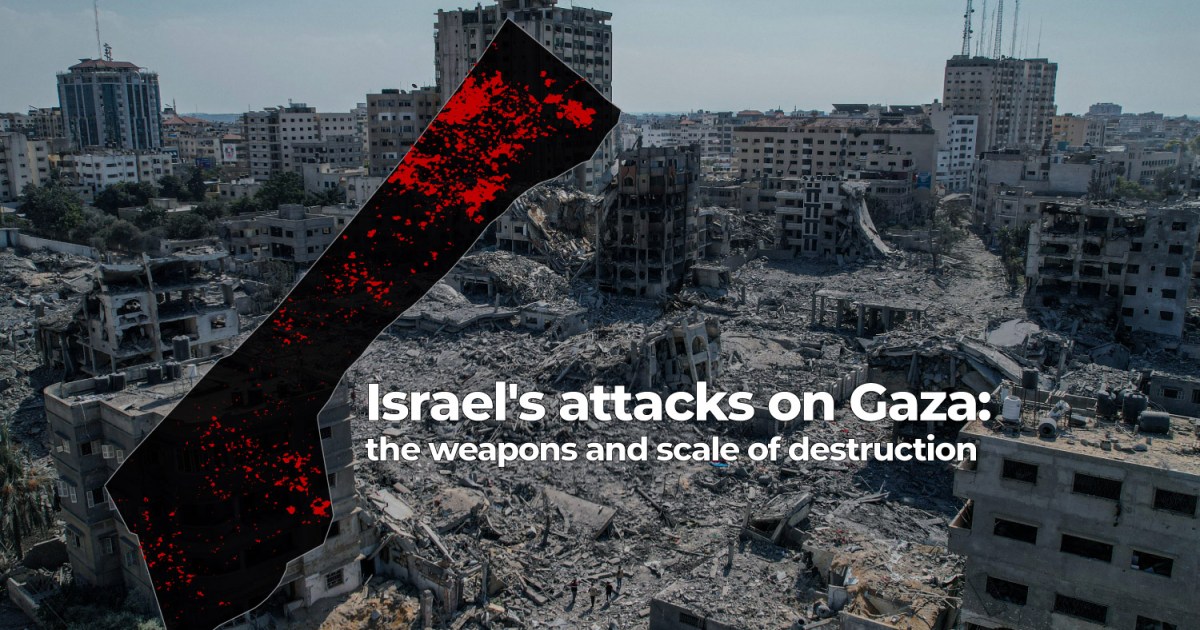
We can confidently say that the entire Gaza Strip has been bombed equally since the early hours of this morning
We can still clearly hear the sound of the fighter jets flying at a very, very low level across the central area of Gaza and Deir el-Balah city.
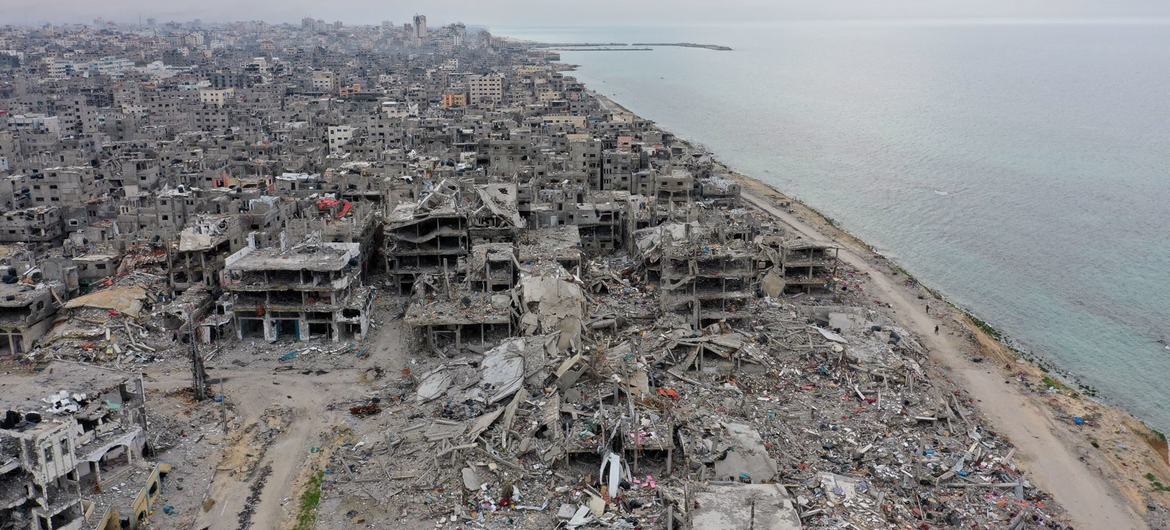
Reports were received from the northern part of the Strip, particularly from Jabalia and the city of Beit Lahiya. These fighter jets carried out deadly attacks that destroyed the remaining residential buildings in Jabalia refugee camp, Jabalia town as well as the northern part of Beit Lahiya Project area and Beit Lahiya city.
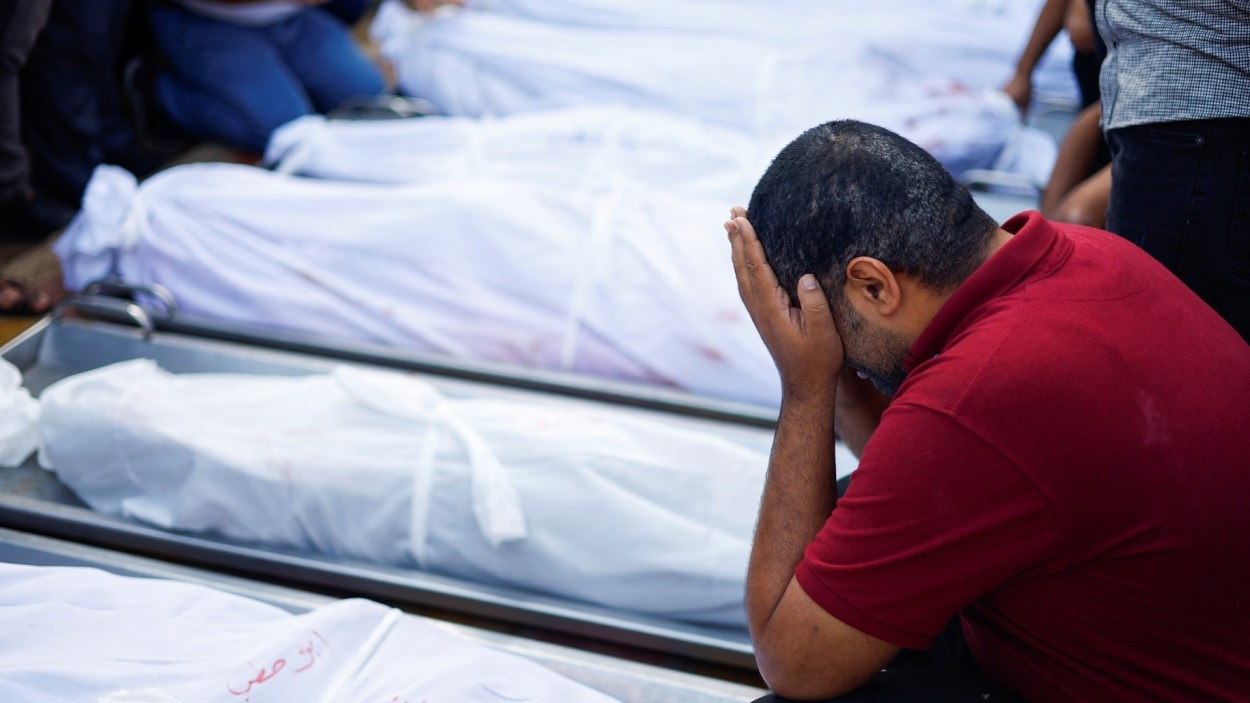
This is just pushing people into further internal displacement and causing massive civilian casualties.
In the Nuseirat refugee camp, particularly in the northern area of the camp, very close to the Netzarim junction, the Israeli military on the ground is conducting a policy to expand the junction. In doing so, it carries out these attacks to destroy remaining residential buildings.
These buildings are residential homes and residential towers that the Israeli military claims are being used as observation points by Palestinian fighters.
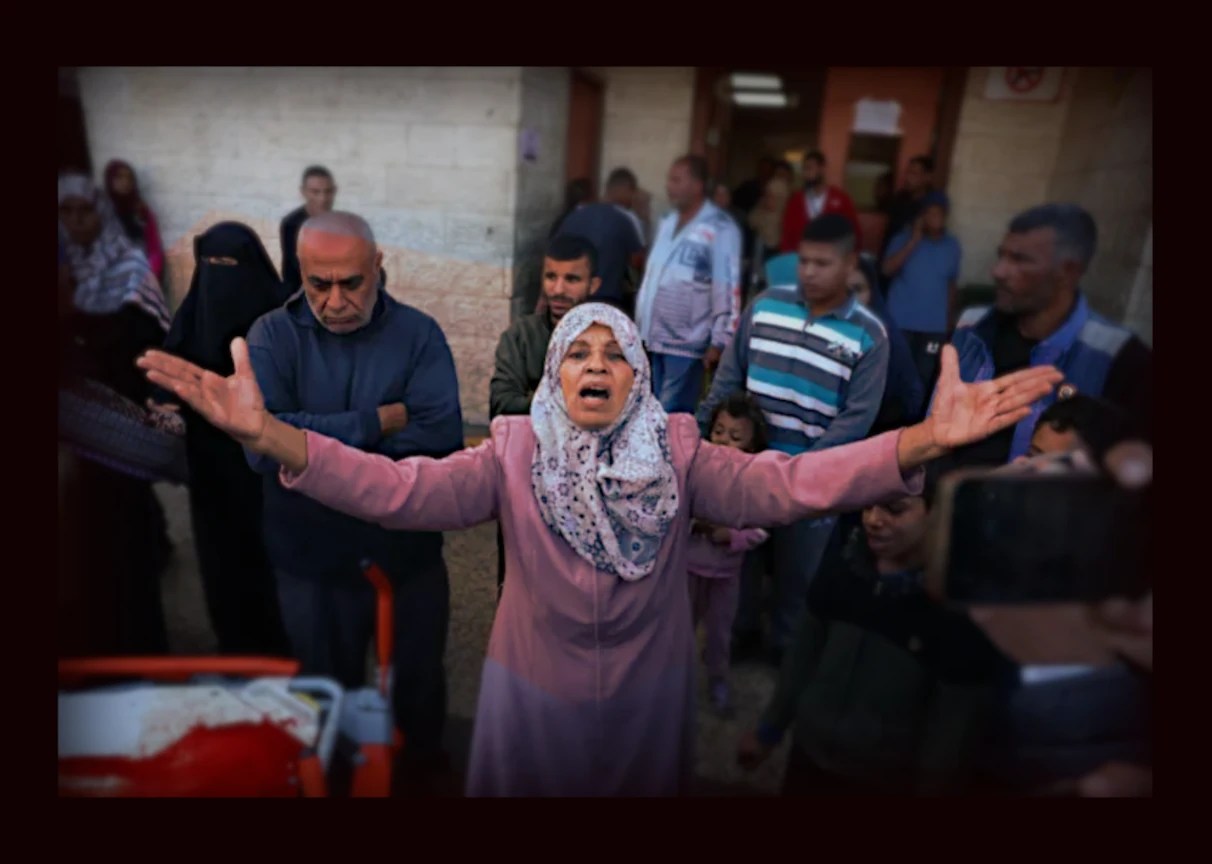
But from what we’ve heard from witnesses, there were massive numbers of civilians inside these residential buildings.
16m ago
(06:30 GMT)
US arms sales to Israel
The ceasefire between Hezbollah and Israel has been in place for almost a day now and Lebanese troops have started moving to the south of the country under the terms of the deal.
People are travelling back to towns, villages and homes they were forcibly displaced from but Israel’s military has imposed movement restrictions on Lebanese civilians in parts of south Lebanon.
US media are also reporting that President Joe Biden’s administration has approved new weapons sales to Israel. $640 million
In 2019, I moved into a tiny, black A-frame cabin nestled into the woods—there were maybe two neighbors who could have heard me scream. But there was no one in sight...
The first night I spent in that cabin, I felt like I was in, you know, a horror movie.
There I was, a dark and stormy night, too distracted by the flashes of lightning through the glass window in the door to pay attention to my sweetheart. I was waiting for the next flash to illuminate a silhouette against trees.
Instead, it was fine. The next day, we laid flooring and they talked about their love, as a queer sex worker, of true crime podcasts.
For the first month or so, as I walked up the hill at night to my cabin, I was afraid. I clutched a knife; I jumped at shadows. It wasn’t long before I stopped being afraid of those woods..
Maybe, more than anything, I stopped being afraid because I realized: I was the scary thing in those woods.
I live in West Virginia, and I’m no more afraid to live here than elsewhere.
To be clear, there are specific and tangible threats that queer people are facing from the legal systems of red states. If I had, or was, a trans child or teenager, I’d likely be looking hard at other places to live, other places where access to medical care was more certain.
To be brave in the face of threats isn’t to ignore those threats. While I would never advise anyone to run (or to stay), I think it behooves a lot of people, especially trans people, to keep their passports in order and make some contingency plans. I’ve been pondering changing my name legally for awhile, but recent events have made me a lot less interested in doing so anytime soon–I’d rather that my government name be unconnected with my political writing and I’d rather that my government name match the gender I pass more easily as.
But just because there are very real threats facing us—both now and clearly visible on the horizon—doesn’t mean we don’t have agency, and it doesn’t mean that we ought to give up, to flee, or despair. It has never been safe to be a trans person in this country. We, after enormous effort and bloodshed, had reached some high water marks in terms of legal protections and cultural acceptance, and we’re seeing that high tide recede in front of us. That’s okay. We’ve been through it before. Maybe not as individuals, but certainly as a culture.
A journalist named Edward R Murrow has a quote that floats through my head often enough: “remember that we are not descended from fearful men.”
We queers have a lineage of bravery that simply cannot be argued.
The longer quote from Murrow is actually worth bringing up too, in this context and this moment. He was writing about Senator McCarthy, he was writing against the red scare. “We will not walk in fear, one of another. We will not be driven by fear into an age of unreason, if we dig deep in our history and our doctrine, and remember that we are not descended from fearful men–not from men who feared to write, to speak, to associate and to defend causes that were, for the moment, unpopular.”
The idea in that quote is that we must fight McCarthyism, for sure, but also that we ought not to be driven by fear into an age of unreason. We ought not to let fear of one another dominate our lives. For the most part, I want to say this to all of the people who have bought into the propaganda against queer people, especially trans people, of late. But I also want to remind myself of this. We ought not walk in fear, one of another.
I have enemies, to be sure. They’ve sent me photos of my family. They’ve told me they would burn down my house with me inside. But the average person, including the average person here in West Virginia where I live, is not my enemy. I am frustrated–beyond frustrated–to know that an overwhelming majority of my neighbors voted for a president who explicitly spreads hatred against queer people. Yet these people have never made me feel unsafe personally.
I’ve lived in an awful lot of places, and frankly I’ve dealt with far more harassment in cities (coincidentally blue state cities, based on where I’ve lived) than I’ve ever gotten in small towns (often in red states). This isn’t because the countryside is some magical place free from bigotry, but simply because there are fewer people here. If I walk down the street in New York City, I will pass literally thousands of people, so it’s far more likely that someone will say something terrible to me.
My data is also skewed by the fact that I subconsciously expect to be safer in big liberal cities, so I take fewer precautions and dress more provocatively. Where I live, sometimes I “boy mode.” Sometimes I don’t. Some of the people around here know I’m a trans woman, some just think I’m a weird queer man with bangs and earrings (and pickup truck and a Carhartt coat, which helps). No one really gives me shit.
It’s not like you cross the imaginary line from Maryland to West Virginia and suddenly everyone is a different type of person. The people here aren’t, you know, monsters. No matter what horror movies have told you.
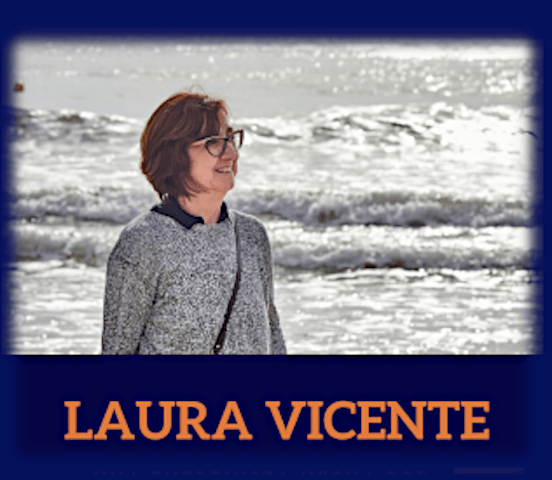
“La revolución de las palabras. La revista Mujeres libres”, de Laura Vicente Villanueva, una autora que está especializada en historia social, sobre todo en dos temáticas: historia de las mujeres y el anarquismo”
Precisamente, de esos dos campos trata este libro editad recientemente, en 2020. Las mujeres sufrían una situación de subordinación, no existía de igualdad respecto al hombre, incluso dentro del movimiento libertario a pesar de lo que las ideas sostenían.
El título del libro alude a que las mujeres eran expropiadas de las palabras, por lo que tomarlas era llevar a cabo ya una auténtica revolución.
Desde el anarquismo, se trató siempre de paliar el problema del analfabetismo, de no dominar la lectura y la escritura, a través de escuelas, ateneos o el autodidactismo, que fue una vía para muchas personas.
La palabra, oral o escrita, proliferaba en los espacios libertarios, pero insistiremos que sobre todo para los hombres; hubo publicaciones de todo tipo, algunas de gran relevancia y otras no tanto, así como escritores y oradores de gran talento, también otros medios literarios o representados como las obras de teatro, los poemas o las novelas sociales.
Las mujeres intentaron tomar la palabra ya desde el siglo XIX, con todos los impedimentos e incluso burlas y menosprecio, que tuvieron que soportar por parte de los hombres; debido a estas circunstancias y humillaciones, muchas tuvieron que esconderse mediante seudónimos masculinos.
The opening plenary of the U.N. climate conference in Baku, Azerbaijan, November 11, 2024. Kamran Guliyev / U.N. Climate Change
At least 1,773 fossil fuel lobbyists are attending the U.N. climate negotiations now underway in Baku, Azerbaijan, according to a tally by a coalition of climate groups.
“Fossil fuel corporations and their surrogates shouldn’t have a seat at the negotiating table where climate policy is being made — allowing them that access is like setting the cat loose among the pigeons,” said Kathy Mulvey, a campaigner at the Union of Concerned Scientists, one of more than 450 groups belonging to the coalition.
Every conference attendee must disclose which organization they work for and the nature of their role. Climate groups scoured the provisional list of attendees, identifying those who could “be reasonably assumed” to represent the interests of fossil fuel firms.
The groups found that fossil fuel lobbyists outnumber delegates from every country except Turkey, Brazil, and Azerbaijan. The 1,773 lobbyists also dwarf the number of delegates from countries at greatest risk from warming. The 10 most vulnerable nations, as rated by experts at Notre Dame University, sent a combined 1,033 delegates to the negotiations.
ExxonMobil alone sent as many delegates as Guyana, a small South American country at imminent risk from rising seas. Said Mulvey, “Corporations such as ExxonMobil, which have engaged in a decades-long campaign to deceive the public and policymakers and block or delay climate action, have repeatedly shown that they can’t be trusted as good-faith players in climate policymaking.”
Después de que Rusia advirtiera en septiembre de que el uso de misiles de la OTAN, imposibles de operar sin la supervisión de ésta, significa una guerra directa de los países de la OTAN contra ella, Estados Unidos y sus aliados europeos han dado ese paso.
Moscú ha respondido modificando su doctrina nuclear, abriendo el uso de armas atómicas al escenario de ataques, incluso con armas convencionales, “si tal agresión creara una amenaza crítica a su soberanía e integridad territorial”.
Pese a la evidencia no solo doctrinal, sino también histórica, de que el uso de armas nucleares es perfectamente real y creíble en caso de que Rusia se vea confrontada a un enemigo superior en recursos convencionales, como es la OTAN –esa fue, precisamente, la doctrina de la OTAN en Europa cuando la URSS disponía de esa superioridad en el continente, los políticos europeos rechazan esas peligrosas advertencias de Moscú como “retórica” (el jefe de la diplomacia europea, Josep Borrell).
Incluso proponen la entrada de tropas de la OTAN contra Rusia (Margus Tsahkna, ministro de Exteriores de Estonia).
Desde la misma génesis del conflicto, cuando la OTAN se metió en Ucrania a finales de los noventa, invitó a su gobierno a ingresar en la alianza (2008), forzó un cambio de régimen en el país (2014) y financió y armó después a su ejército con miles de millones, infraestructuras y entrenamiento
Esta escalada ha despreciado claramente la voluntad de la mayoría de la población ucraniana expresada en múltiples encuestas. La actual escalada mantiene esa misma pauta.
En Ucrania, el 52% de la población desea poner fin a la guerra lo más rápido posible, admitiendo gran parte de la sociedad concesiones territoriales al invasor ruso, frente a un 38% que quiere continuarla, según una encuesta de Gallup conocida esta semana.
En el conjunto de Europa una gran mayoría rechaza también esa política.
Hay que decir que en la cima de esta última grave y temeraria decisión de escalada se encuentra un presidente saliente errático y senil al que apenas le quedan dos meses al mando.
La combinación del propósito que encierra la guerra de Ucrania –que no es la defensa de ese país agredido por Rusia, sino debilitar a Rusia con una “derrota estratégica” más el cambio de su régimen, como han declarado repetidamente los máximos dirigentes de Estados Unidos y la Unión Europa–, con la respuesta nuclear que advierte Moscú para el caso de una “amenaza existencial” a su régimen, y un presidente gagá con sus facultades mentales mermadas en Washington que va a ser sucedido por un sociópata, configura un escenario absolutamente inquietante para el mundo.
Sobre todo si se tiene en cuenta que la coalición occidental que está escalando la guerra en Ucrania es la misma que anima un genocidio en Gaza, permite el bombardeo israelí de Líbano e Irán y calienta motores para un enfrentamiento con China en Asia.
Two weeks ago, diplomats from almost 200 countries arrived at a sports stadium on the outskirts of Baku, Azerbaijan, to debate a subject that had never before been at the center of a United Nations climate conference: money. World leaders have long agreed, in theory, on a dire need to scale up international investment in…







 The Free