Andrew Korybko* La búsqueda de acceso al mar por parte de Etiopía será impulsada diplomáticamente, pero recurrirá a medios militares en defensa propia si es atacada por el Eje de Asmara, y existe una gran probabilidad de que también defienda a Somalilandia de la agresión.
20 Palestinians were killed in an Israeli shelling that targeted a house in Beit Lahia in the northern Gaza Strip.
Two Palestinians were killed as a result of a drone attack and shelling carried out by the occupation forces on the village of Al-Shuhada, south of Jenin in the […]
Imagen: Nicole Eisenman , El triunfo de la pobreza (2009) Estados Unidos: Lo que no se puede arreglar y nunca lo será En vísperas de las elecciones, Estados Unidos parece más dividido que nunca. Pero detrás de la polarización hay identidad. Ni Kamala ni Trump quieren enfrentar la desigualdad, la búsqueda de rentas o la guerra: tres características cruciales […]
Over the weekend Channel 4’s Dispatches programme revealed the extent to which the public is being milked by the greedy and money grabbing Windsor family.
Or rather, at least the extent to which the programme and the investigative reporters of the Sunday Times were able to uncover.
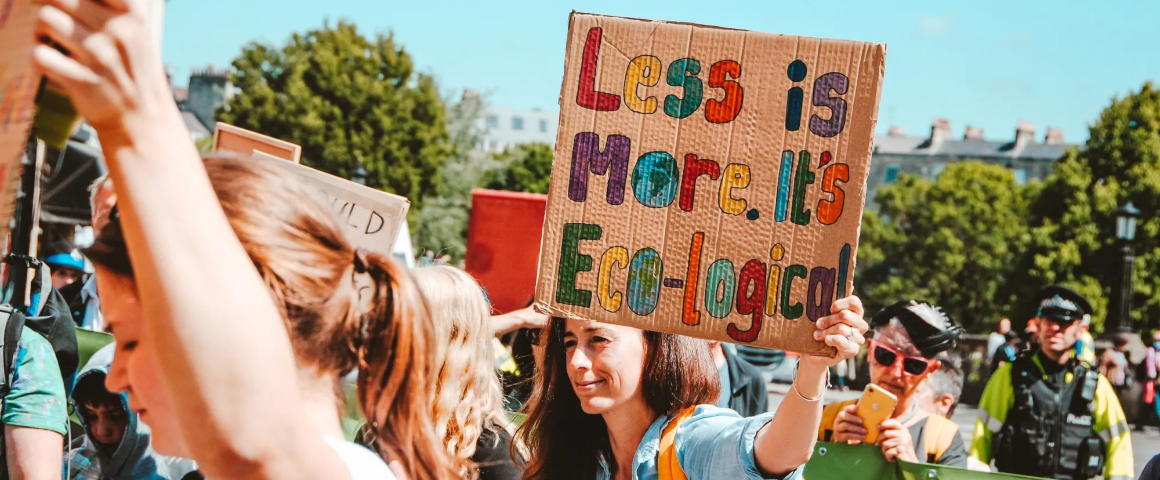
Environmental destruction is driven by the fundamental contradiction in capitalism – between the forces and relations of production and its relentless drive for profit.
Capitalism depends on continued growth, without which it would collapse.Non-exploitative capitalism is a contradiction in terms.
There is not a single “human ecology” – every social system has its own ecological dynamic, and capitalism’s is a particularly destructive one.
Just as capitalism, as an economic system, depends on exploiting workers, so too does it depend on exploiting the resources – living and non- living – of our planet. That was something recognized by Marx and Engels with their concept of the “metabolic rift” between humans and nature.
Marx focused on agriculture, the depletion of soil nutrients and the pollution of waterways by run-off and human sewage. He was an early advocate of recycling. Today we recognize that the wider impacts of capitalism threaten the whole planet.
As Barry Commoner, a Marxist ecologist and one of the founders of the modern environmental movement wrote a half-century ago:
“The world is being carried to the brink of ecological disaster, not by a singular fault, which some clever scheme can correct, but by the phalanx of powerful economic, political and social forces that constitute the march of history. Anyone who proposes to cure the environmental crisis undertakes thereby to change the courseof history.”
Fifty years later, that observation – both the origins of the environmental crisis and the need to “change the course of history” as part of the cure – has greater force than ever.
from Surviving Leviathan by Peter Gelderloos- a reader-supported publication. (…….)
I’m not going to vote, because the difference between these parties is not enough to save life on this planet.
Whether the Left, the Right, or the Center has been in the saddle, emissions have been rising, life-sustaining habitats and ecosystems are being destroyed, and false solutions get more free advertising.
We are now crossing irreversible tipping points.
Tens of millions of people are already dying every year because of this catastrophe. If we are not personally facing starvation, disease, and homelessness already because of so-called natural disasters, our children will, and it will get worse every generation after that.
The forces that are causing this still have all the power and resources and what they are doing now will be felt most acutely fifty or a hundred or two hundred years from now.
We need to dedicate all our imagination and all our energies to a deeply rooted social transformation, in order to urgently create a society of survival, a society of healing, and a society of mutual aid, rather than propping up the system responsible for this massive death and suffering.
No single party is responsible. They all bear responsibility.
I’m not going to vote, because I refuse to support people or institutions that are complicit in genocide
Although the turnout fell short of the rumoured 25,000 attendees, it was substantial enough to underscore the persistent influence of the far-right, which appears strategically positioned within the UK political landscape.
An antifascist migrant worker bloc was formed to face the fascist march, organised by groups like United Voices of the World, Black Lives Matter, Plan C, Anti-Fascist Network, Revolutionary Socialism in the 21st century, Brighton Anti-fascists, Independent Workers Union, and Hackney Anarchists. The bloc gathered at Piccadilly Circus, aiming to distance themselves from the sinful Stand Up To Racism assembly, who had unsurprisingly called for their meeting point at Piccadilly only days after the antifascist migrant worker bloc announced theirs.
After joining the UVW picket march from the Science Museum — in solidarity to the striking security guards, the bloc moved assertively down Shaftesbury Avenue toward Charing Cross Road. Though initially caught off guard, police regrouped, creating a standoff at Haymarket. Despite police warnings, the bloc held firm, chanting slogans until the pigs eventually allowed them to proceed. They marched to Whitehall to join the United Friends & Families Campaign, who had also marched earlier on that day, setting aside banners in a silent show of respect upon arrival.
Both the antifascist migrant worker bloc and SUTR numbered several hundred participants each, being significantly outnumbered by the fascists and confronted by a heavy police presence that nullified any chance of exerting meaningful pressure. Minor skirmishes ensued, resulting in five arrests, including one counter-protester allegedly involved in an assault on a police officer.
Thinking strategy These events illustrate the ongoing struggle of grassroots movements in the UK, particularly as peaceful demonstrations emerge as the only permitted option in a heavily policed environment that shows little tolerance for diverse street tactics. Consequently, these movements often fail to apply significant pressure, let alone create conditions that might challenge authority, inadvertently reinforcing the state’s narrative around superficial reforms and allowing its institutions to maintain control over dissent.
Peaceful protests can easily be co-opted into legal and political frameworks, making them predictable and manageable for the state. This co-optation can also hinder transformative justice within movements themselves, depriving them of the disruptive power necessary to effectively challenge informal leaderships within activist organisations. As a result, non-conflictual tactics will keep falling short to make a significant impact or shift public opinion against the government, as seen in the limited, if not backfiring, effects of initiatives like Just Stop Oil
(………….)
Continúe reading here… Avoiding the ‘peaceful protest’ trap







 The Free