The Great Malaysian Timber and Palm Oil Swindle

by PalmOilDetectives / Malaysiakini on 4th March 2025, via thefreeonline at https://wp.me/pIJl9-GbA

The joint investigation reveals alarming deforestation in Pahang, #Malaysia, caused by one of the country’s largest #palmoil plantations.

The plantation threatens endangered species like and pollutes local water supplies. It has been described as “the worst-managed oil palm plantation in Malaysia.”

Elephants Use ‘Names’ to Call One Another

Palm oil yields are low, while the #deforestation is chaotic, leaving the land barren and overrun with #elephants.

Land clearing by burning is prohibited in Indonesia and Malaysia. However, penalizing foreign companies for palm oil and timber deforestation has been hampered by cronyism and corruption.

The report highlights links between developers and political or royal ownership and rampant corruption and strongly pushes for more transparency, improved government oversight and regulatory enforcement. #BoycottPalmOil #Boycott4Wildlife

Located near an environmentally protected area, the plantation’s operations have resulted in chaotic deforestation, disrupted water supplies, and threats to endangered wildlife, including tigers.
Developers often cite “wildlife conflict” to justify failures, shifting focus to logging valuable timber instead of sustainable plantation development.

Malaysiakini’s investigation also shed light on troubling links between plantation developers and political or royal interests, with 95% of the land developed by such entities.

In December, the investigative team revealed that prominent banks provided large loans to plantation developers despite repeated project failures, questioning the banks’ credibility and oversight practices.

The investigation calls on the Malaysian government to tighten plantation approval processes and enforce environmental protections to prevent further harm to biodiversity and local communities.

For detailed insights, read the full Malaysiakini report via GIJN.

Continue reading “The Great Malaysian Timber and Palm Oil Swindle”
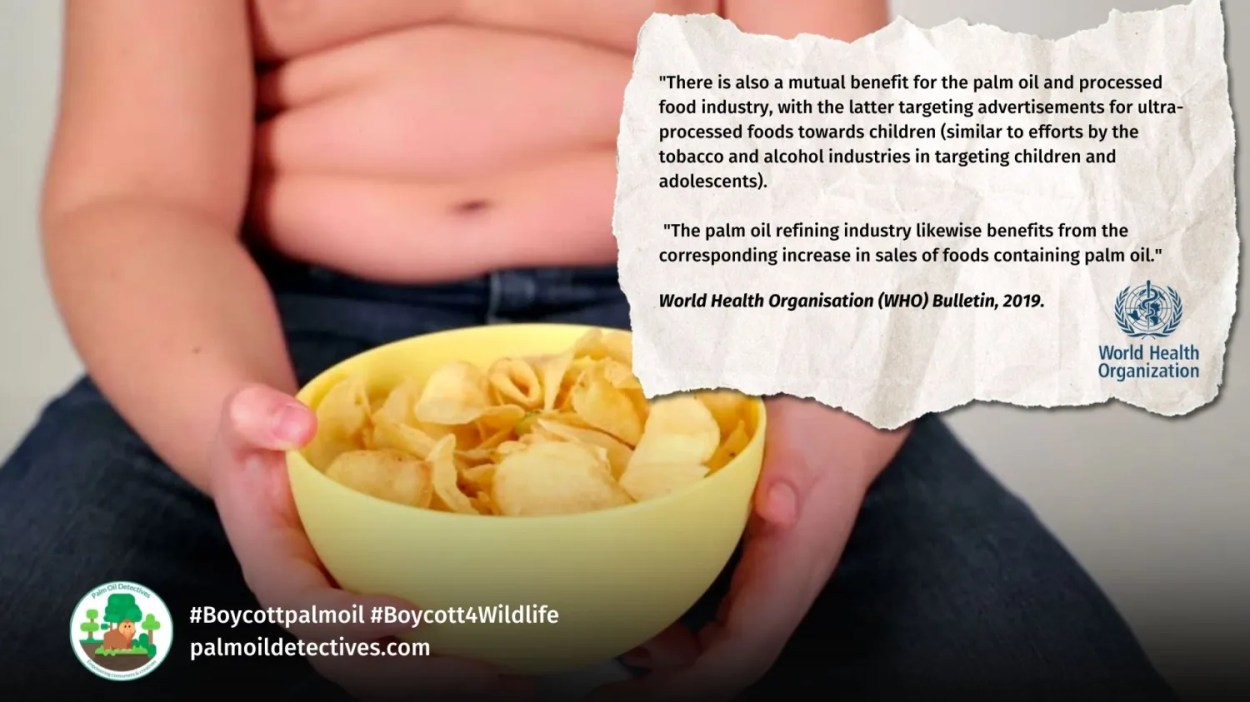
Major Food Companies Sued Over Addictive Ultra-Processed Foods Targeting Children

by Palm Oil Detectives on 14th Jan 25 via thefreeonline at https://wp.me/pIJl9-FzY Telegram https://t.me/thefreeonline

A landmark lawsuit filed in Philadelphia names major food companies:

Kraft Heinz, Mondelez, Post Holdings, Coca-Cola, PepsiCo, General Mills, Nestlé, Kellogg’s, Mars, and ConAgra and accuses them of designing and marketing ultra-processed foods (UPFs) with addictive qualities, particularly targeting children.

The case and its repercussions echo sinister marketing tactics employed by Big Tobacco in decades past. In a similar way it is alleged, global food giants manipulate consumers with misleading health claims and aggressive marketing. A large body of research shows that cutting UPFs could save millions of lives, while palm oil’s role in deforestation and biodiversity loss compounds the crisis. It’s time to reject harmful foods and demand accountability. Choose wholefoods, protect wildlife, and fight for a healthier planet. #BoycottPalmOil #Boycott4Wildlife every time you shop.

In a groundbreaking legal action, some of the world’s largest food and beverage corporations are facing allegations of deliberately engineering ultra-processed foods (UPFs) to be addictive, with a specific focus on marketing these products to children. The lawsuit, filed in the Court of Common Pleas of Philadelphia County, names companies including Kraft Heinz, Mondelez, Post Holdings, Coca-Cola, PepsiCo, General Mills, Nestlé, Kellogg’s, Mars, and ConAgra.

The 148-page complaint drawing unsettling parallels with insidious strategies employed by the tobacco industry, asserts that these companies have employed strategies reminiscent of those used by tobacco giants, utilising research on addiction to create hyper-palatable food products that are difficult to resist. This approach is alleged to have contributed to a rise in serious health conditions among children, notably Type 2 diabetes and non-alcoholic fatty liver disease—ailments that were once rare in this age group.

The plaintiff, represented by the law firm Morgan & Morgan, contends that the defendants have prioritised profit over public health, leading to a public health crisis characterised by increased rates of chronic diseases linked to diet. The lawsuit seeks to hold these corporations accountable for their role in promoting and distributing products that may pose significant health risks to consumers, particularly vulnerable populations like children.

This case underscores the growing scrutiny of ultra-processed foods and their impact on health, especially among younger demographics. It raises critical questions about corporate responsibility, marketing ethics, and the need for greater transparency in the food industry.

The compliant alleges that these tactics originate from a time when tobacco giants acquired and operated major food brands, using the same addiction research once employed to hook smokers on cigarettes. This same research was subsequently applied to make ultra-processed foods tasty and irresistible to children.

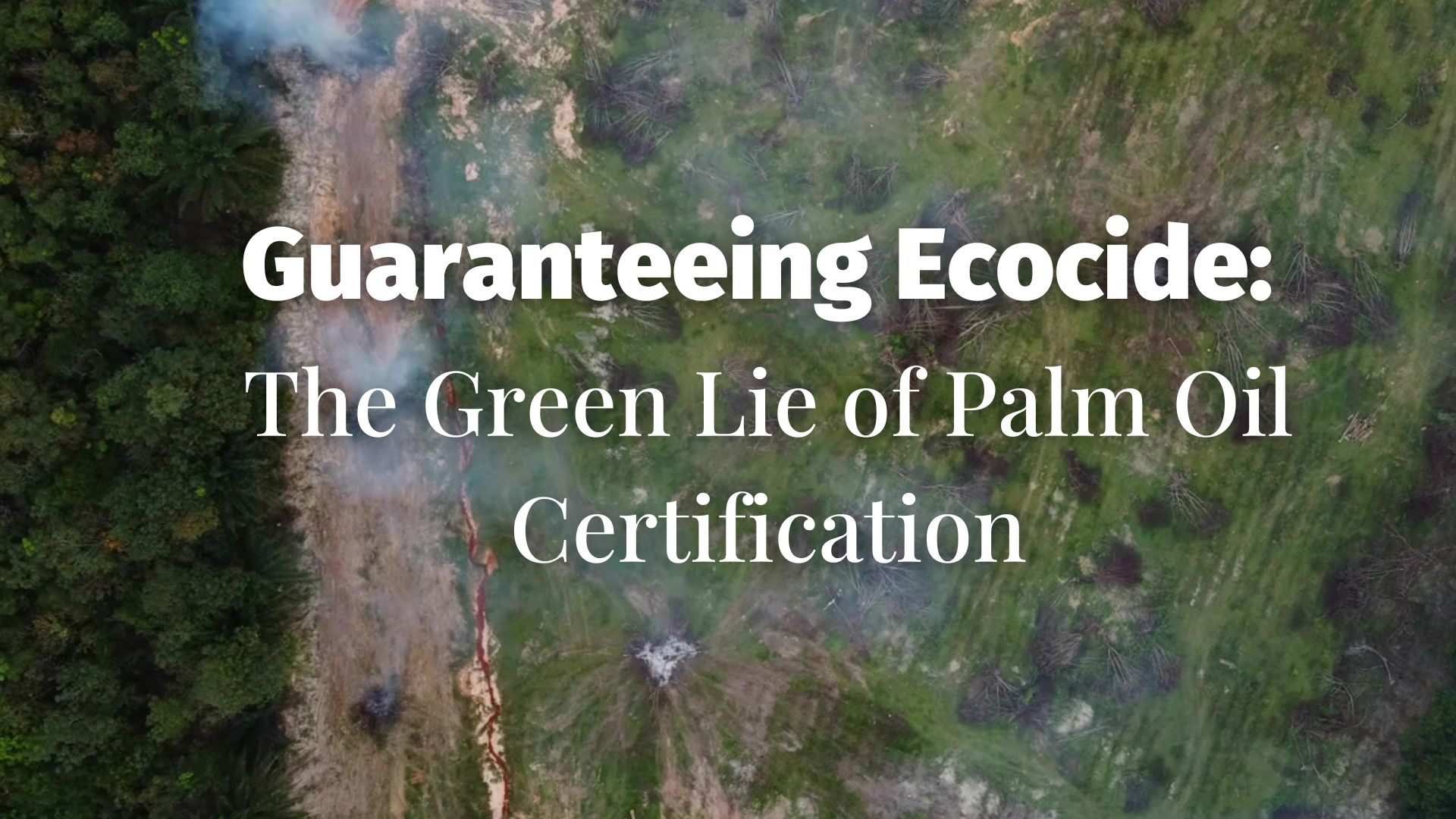
Guaranteeing Ecocide: The Green Lie of Palm Oil Certification

For decades, the palm oil industry, backed by the RSPO, has misled consumers with the false promise of “sustainable” palm oil.

Behind this green façade lies a brutal reality of deforestation, human rights abuses, and the destruction of endangered species’ habitats.

Dozens of investigations from many different industry watchdogs have exposes the RSPO’s certification as a sham, enabling continued environmental devastation under the guise of sustainability.

However it’s not only the palm oil industry that is an environmental liability, gold mining and meat deforestation also deserves to be strongly condemned for its ongoing ecocide.

Read on to discover the examples of greenwashing deception from these industries, so that you don’t fall for their corporate greenwashing.

Protect our planet and all human and non-human beings by refusing to support these lies…………… 

—#Boycottpalmoil and every time you shop.

Guaranteeing Ecocide: The Green Lie of Palm Oil Certification

Giant Pangolin Smutsia gigantea

The Giant Pangolin is are the largest and heaviest of the pangolin species weighing up to 35 kilos. These majestic creature are cloaked in keratin armour and embark on nightly quests through Central and West Africa’s lush landscapes. By the light of the moon, they use their keen sense of smell to hunt down ants and termites. As they navigate a world fraught with dangers from habitat destruction, poaching and illegal hunting, the survival of these enigmatic beings hangs in balance, urging us to reflect on our impact on their dwindling world. Help them to survive every single time you shop and , be and

Giant Pangolin Smutsia gigantea

Philippine tarsier Carlito syrichta

The Philippine tarsier, Carlito syrichta, epitomises nocturnal secrecy, leading a mostly concealed life in the dense recesses of impenetrable bushes and forests. They boast large and mesmerising eyes that aid in night vision, these tiny creatures have a distinct appearance. Measuring around 8 to 16 cm, their fur is soft and comes in various shades, often blending with their natural surroundings. Known for their incredible leaping abilities, tarsiers are agile hunters, relying on their keen sense of hearing to locate prey. Despite their small size, they play a vital role in maintaining the ecological balance in their habitat. They are now vulnerable due to multiple human-related threats including palm oil deforestation and the pet trade. Help them to survive

Philippine tarsier Carlito syrichta

PalmWatch: A Tool to Hold Palm Oil Greenwashers to Account! – Palm Oil Detectives

from thefreeonline om 2nd Aug 2024 via PalmWatch: by Barbara Crane Navarro (on Telegram: /t.me/thefreeonline)

PalmWatch: An Open-Source Tool That Empowers You To Hold Palm Oil Greenwashers To Account

A groundbreaking open-source tool by the University of Chicago called PalmWatch, shines a light on the darkest parts of the palm oil industry.

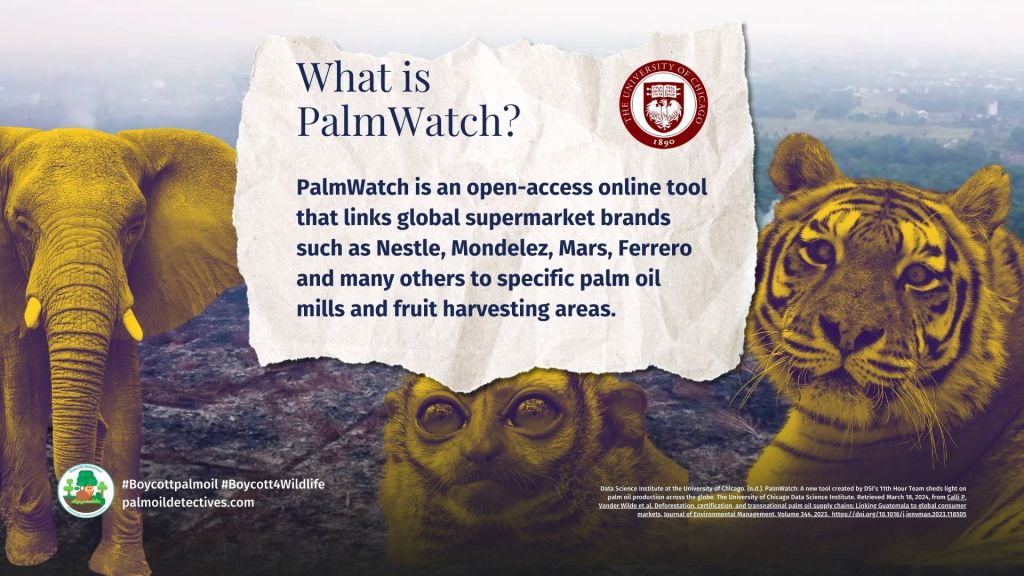
PalmWatch is a free web-based tool that reveals links between major multinational brands using supposedly “sustainable” palm oil, and palm oil supply chain.

This means that concerned consumers, animal rights advocates and human rights advocates can clearly see the toll of palm oil ecocide in their daily supermarket purchases.

Covering hundreds of thousands of kilometres, PalmWatch gives everyone open-source, free and unprecedented access to what “sustainable” palm oil really looks like..

Help animals and indigenous peoples and every time you shop!

Pioneering tool reveals dark and corners of the industry. Including so-called “sustainable” palm oil used by global brands.

Uncover the and @palmoildetect https://wp.me/pcFhgU-7lp

Game-changing free tool helps you track and abuses by “sustainable” RSPO members: @Nestle @CP_news @MDLZ @Unilever @Kelloggs_US. Uncover their and @palmoildetect https://wp.me/pcFhgU-7lp

Posted byPalm Oil Detectives

    PalmWatch: An Open-Source Tool That Empowers You To Hold Palm Oil Greenwashers To Account

    Look Up Brands on PalmWatch


    The media release below is provided by the University of Chicago and had the original title ‘PalmWatch, a new tool created by DSI’s 11th Hour Project team, sheds light on palm oil production across the globe’, published February 22nd, 2024. Read the original.

    Media release:


    PalmWatch, a new tool jointly created by DSI and Inclusive Development International, tracks deforestation by palm oil mills and connects that information to the palm oil sourcing of supermarket giants.

    Palm oil is a required ingredient for a plethora of household products, from food items like packaged pastries and chips to cosmetics and soaps or even biofuels. But most palm oil is produced on mono-crop plantations, grown on huge tracts of land that were once tropical rainforests and other biodiverse ecosystems.

    Continue reading “PalmWatch: A Tool to Hold Palm Oil Greenwashers to Account! – Palm Oil Detectives”