‘Authoritarian ideas control (Sudan) in the state, the tribe, and the military and religious system..’
by CNT-AIT 3 commentaires Leer en Español / Francés via thefreeonline at https://wp.me/pIJl9-G0r
QUESTION: Hello mate!
I’m X., with the French CNT AIT, I ‘d like to thank you dearly for taking some time to answer these questions.
First I hope you are safe. Rest assure you have all our support.
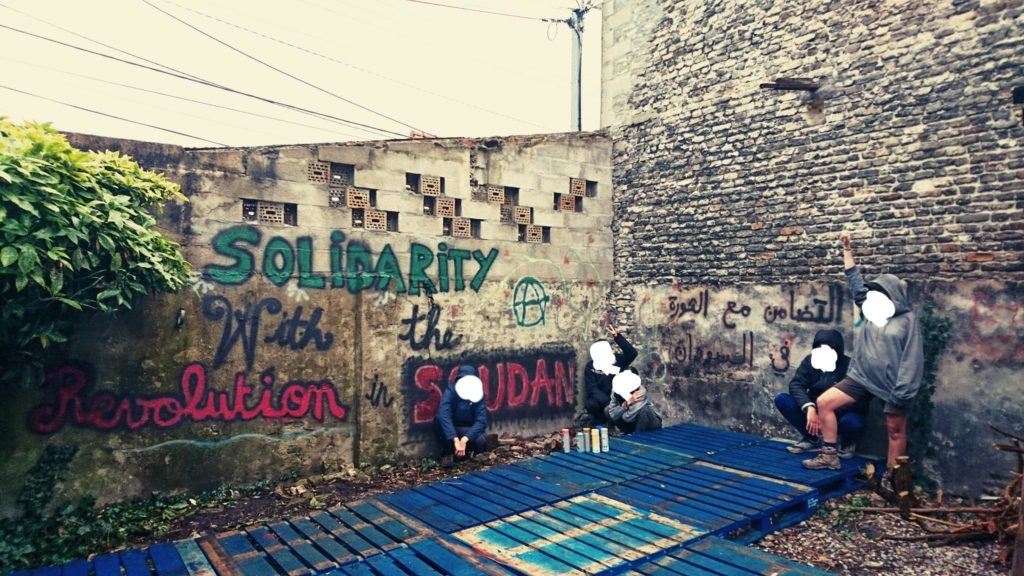
As you know, we’ve been relaying information about revolution and global situation in Sudan and about your anarchist group to the readers of our magazine « Anarchosyndicalisme! » (http://cntaittoulouse.lautre.net/spip.php?article1396). Following the articles published in the newspaper, many readers and also some groups expressed their solidarity with you. For example, the Ephémère library in Clermont Ferrand organized two debates, in the cities of Clermont and of Aubert, and a collective supporting migrants in the city of Calais organized a debate and a graffiti workshop in solidarity. We would be interested in knowing a little more from your personal experience, so we have prepared a list of questions, the first (1) comes from the CNT AIT, the second (2) from L’éphémère, and the third (3) from the Calais migrant support collective.
I hope you ‘ll find some time to answer.
REPLY: Hello companions!
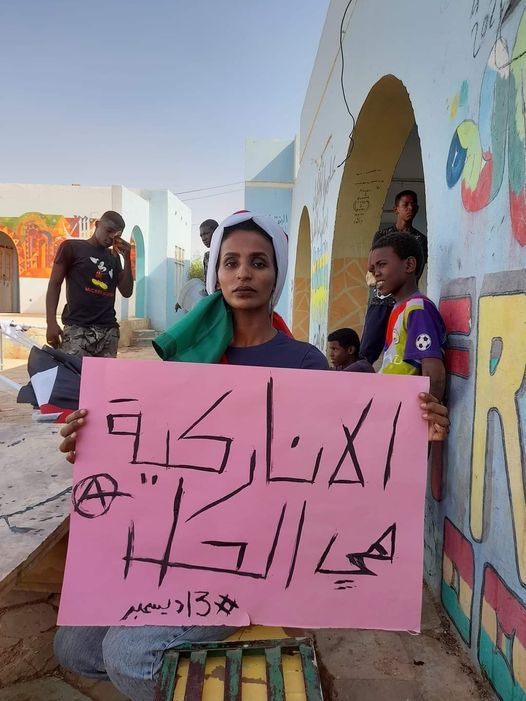
Revolutionary greetings from the comrades in Sudan to the CNT-AIT and to the AIT, and to all those who support us in France and elsewhere. We thank you for your support and interest in the issues of Sudan, the revolution, the war, and our anarchist activity. We are also happy to convey our experience to you, share our daily struggle with you, and exchange opinions
QUESTION (1): First I’d like to ask you a few questions about your anarchist group in Sudan.
For how long has your group been organised? Did your group start during the last revolution or before?
Did you personally participate in the creation of this group or did you join?
Do you have an official name for your group?
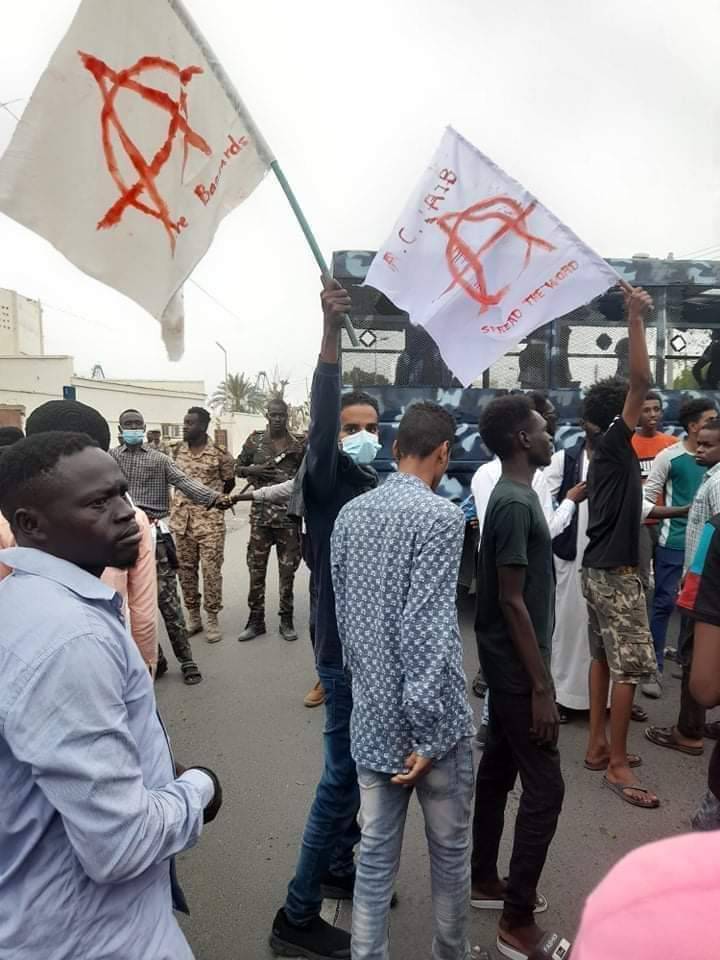
REPLY: The formation of our group began in April 2017, before the December [2018] Revolution, and I personally participated in its formation. It was a small group of 5 individuals. The name of the group is the Anarchist Federation.
QUESTION (1): There seem to have been very few examples of anarchist organisations in African countries, could you tell us how you and other members of your movement became familiar with the anarchist ideas?
Was anarchism rooted in prior social movements and revolutions in Sudan? What were the other forms of socialist ideas in the previous social movements?
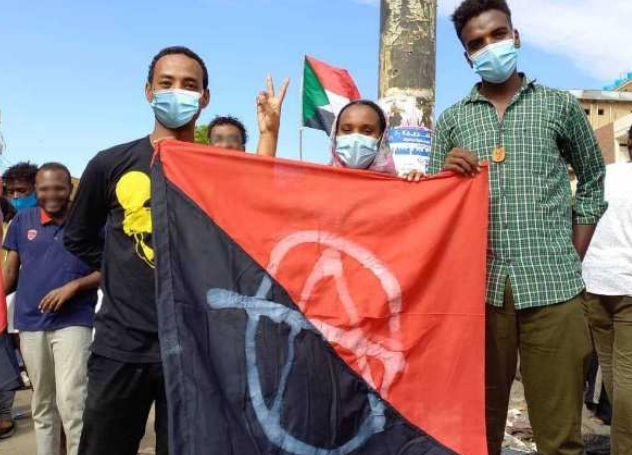
REPLY: Yes, anarchist movements in Africa are not widespread. As for Sudan, there was no anarchist organization or group before. Most of Sudan may be self-administered in a complex manner, but authoritarian ideas control it in the state, the tribe, and the military and religious system. This is what makes the anti-regime social movement complex. We gained our revolutionary awareness and knowledge of anarchism through our exposure and self-education about social movements in the world, and the injustice inflicted upon us contributed mainly to the adoption of anarchist ideas. The socialist ideas present in Sudan contribute directly or indirectly to supporting and consolidating power, such as Marxist communist ideas and the ideas of neoliberal armed movements [guerrillas others than RSP and official army, Note of typist], and their continuous search for positions in the state and even their demolition of the social movement.
QUESTION (1): Could you tell us about the social composition of your group, were you mostly students or were there workers to?
I understand women took a great part in the revolutionary movement, were there many women among your group?
Were you mostly city based or did people also come from the rural areas?
REPLY: Our group was initially composed of students, as students represent the tip of the spear in the social change movement and the December Revolution. After the formation of our groups and their spread in several universities in various states of Sudan, we were able to participate and form groups through comrades in their areas of residence in cities and rural areas, and to form groups outside the student community in various areas in Sudan Women are an essential part of the formation of our groups in universities and even in rural areas and cities. Women constitute more than 60 percent of the composition of our groups.
QUESTION (1): If that’s possible could you tell us about how many members you had in your groups, after the movement spreads in several universities and various parts of the country?
REPLY: The number of group members was estimated at more than 60 comrades at the beginning, but now the number has increased, but there is no accurate count due to the loss of contact with many comrades.
QUESTION (1): Could you tell us about activities you were able to carry as an anarchist group during the past years? How did people react to the diffusion of your ideas?
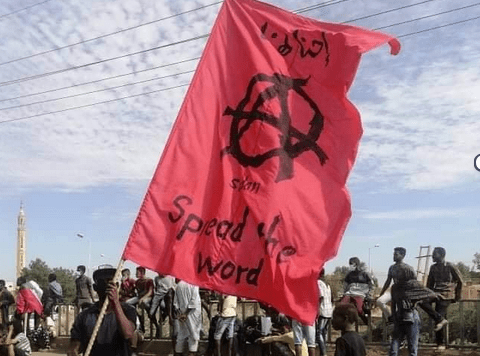
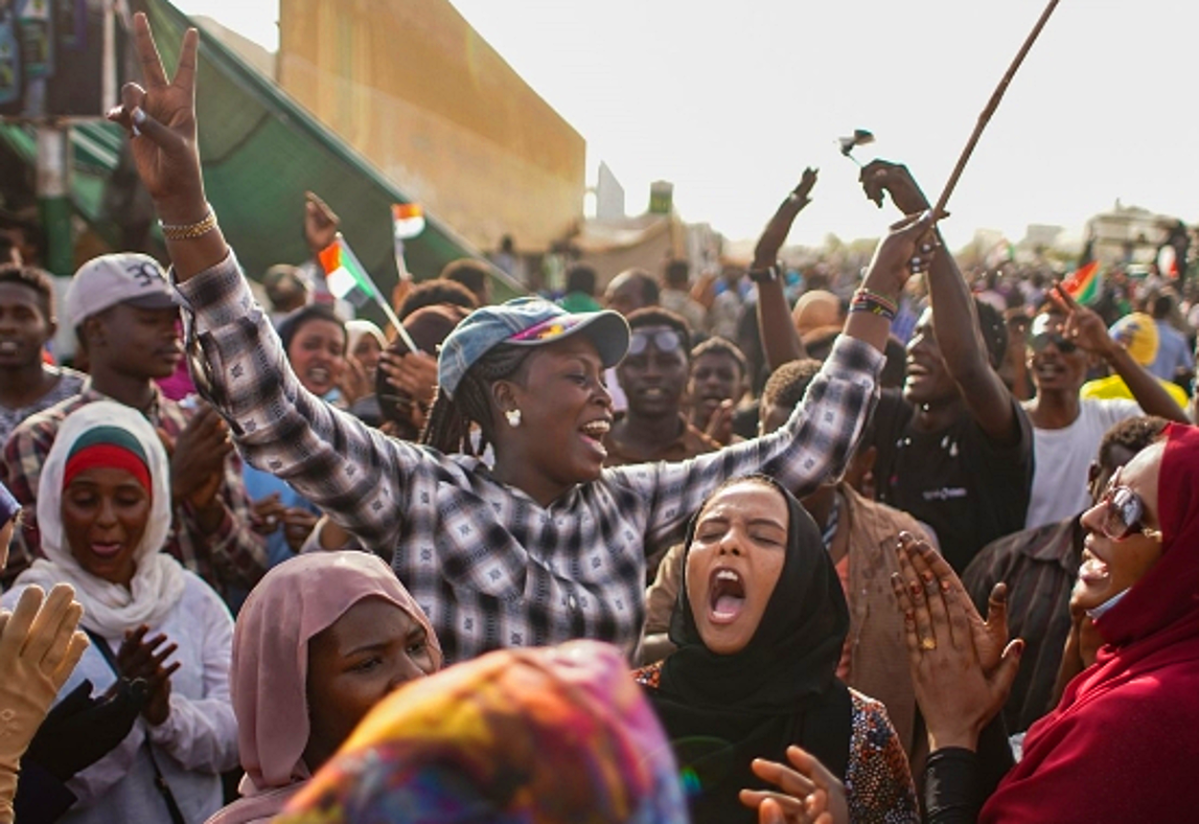
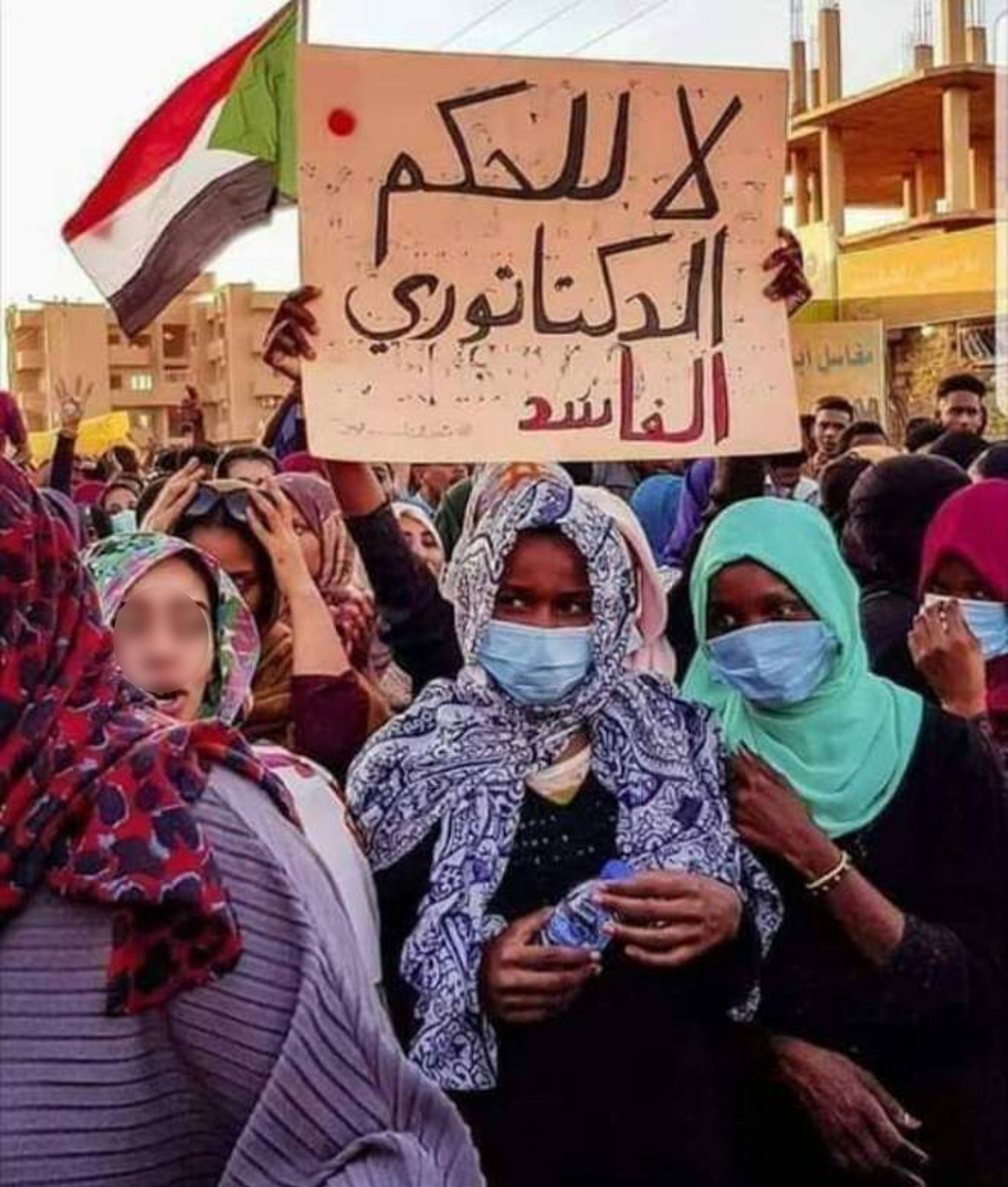
REPLY: One of the most important activities that we carried out in 2017 and 2018 was to call on young people and students to overthrow the regime, break the barrier of fear, and unite around overthrowing the dictatorial rule of Bashir. We held activities in universities and seminars against the regime and began organizing spontaneous processions that brought together all Sudanese. This cost us the loss of comrade (Abu Al-Rish), comrade (Qusay) and comrade (Mudawi). After the fall of the Omar Al-Bashir regime, we called for the continuation of the struggle to overthrow the military regime in Sudan, and the abdication of General Ibn Auf came quickly due to the terrible pressure of the people on power. Brutal repression was strong against us and we were subjected to arrest, flogging, abuse and death threats
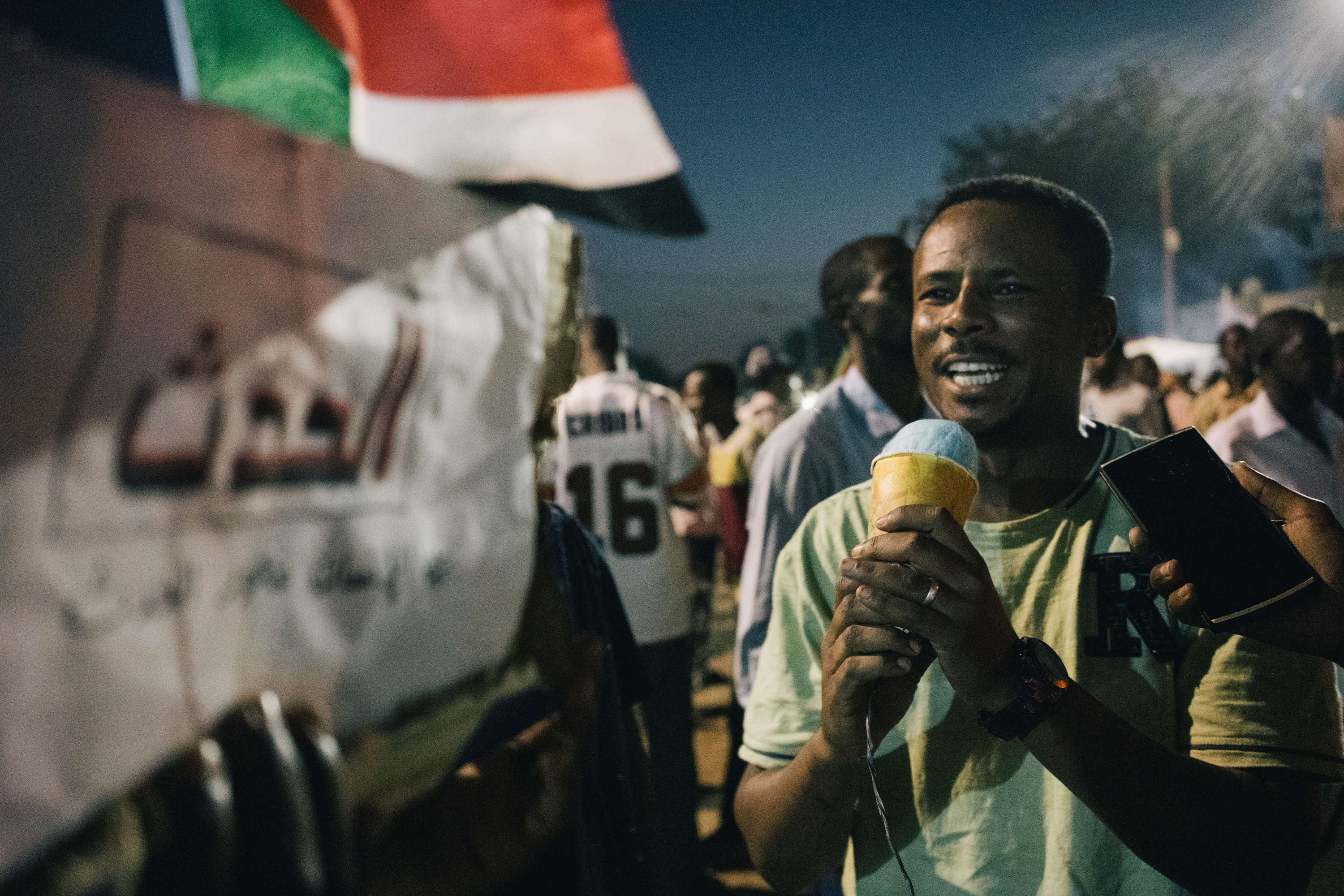
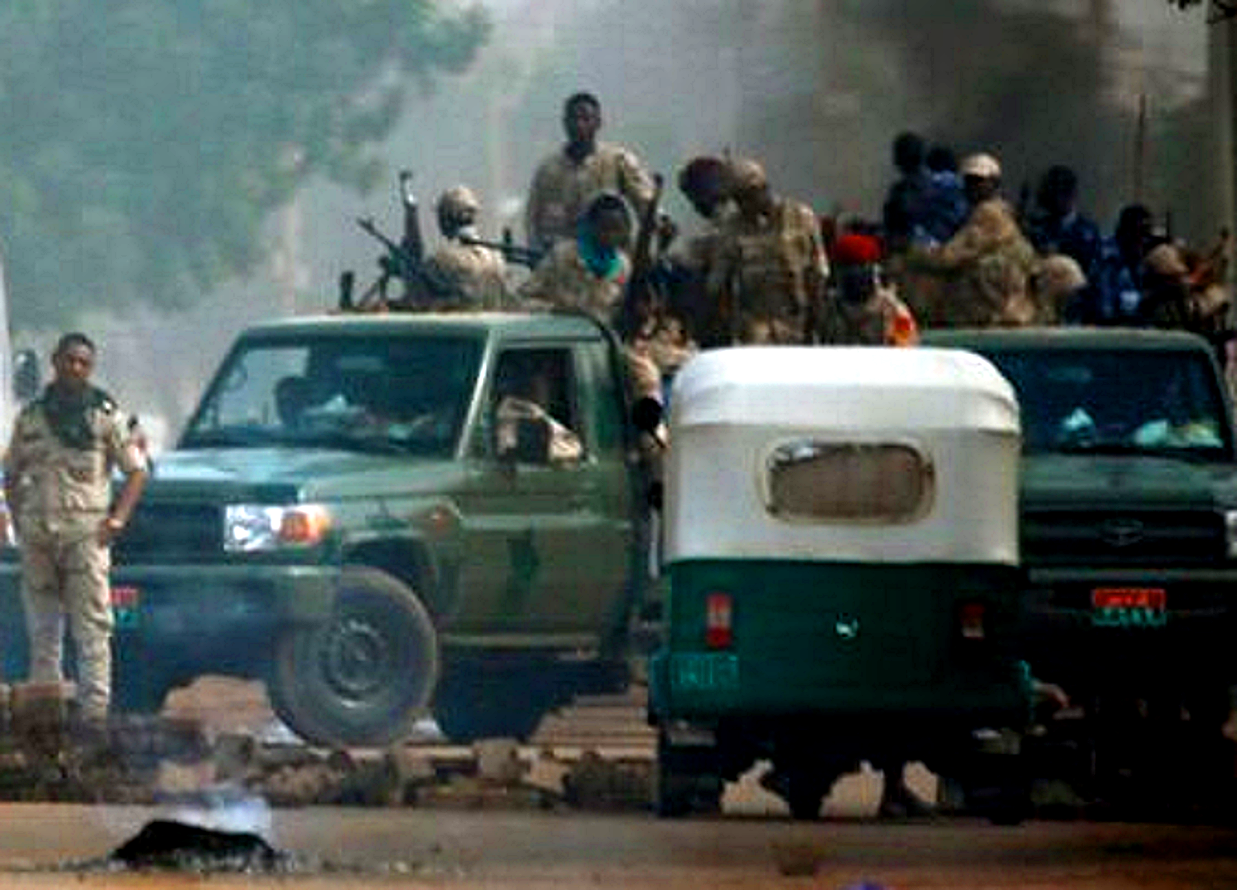
But this did not make us give up our cause and our struggle against the authorities We called for a sit-in at the General Command, which represented a small self-administration community in which the greatness of anarchist ideas was evident. It was a living example of the self-administration of Sudan, as it included millions of Sudanese from all states. The dictatorial authority sensed the danger in this and carried out a massacre that dispersed the sit-in, to which the political force contributed greatly and facilitated this hideous massacre in which more than 700 unarmed civilian revolutionaries died and were drowned in the Nile. Many of the revolutionaries are still suffering from psychological problems due to the ugliness of the killing they saw. He was beaten and insulted horribly
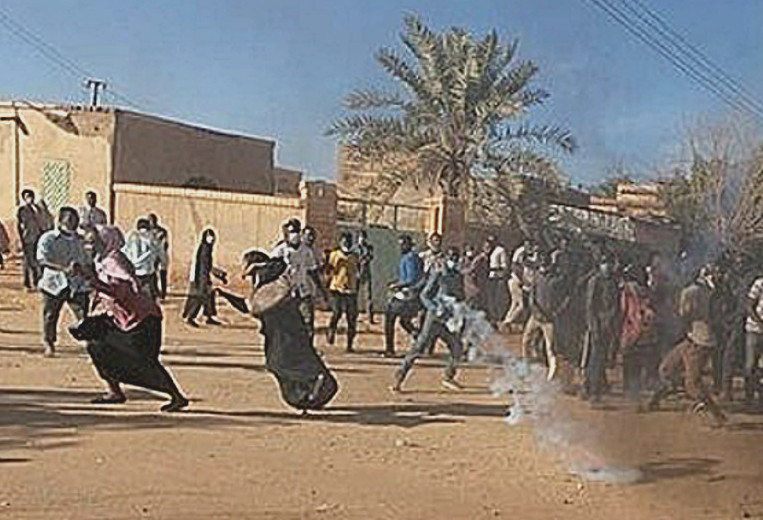
This also did not break us, but rather made us more determined and convinced of the importance of the fall of this brutal, murderous regime So we began to form resistance committees in the neighbourhoods, gather the revolutionaries into organized groups, and unify the banner of struggle Brutality, killing, and violent suppression of processions were an inherent characteristic of every procession. We knew that we might pay a price for this with our lives, and we were also going out seeking a social revolution.
QUESTION (1): The resistance committees seemed to organise themselves in a very interesting -and quite close to anarchist-way, can you describe it for us? How did you and your group could participate in those committees?
REPLY: We participate continuously in resistance committees, which are groups of revolutionaries in the neighbourhoods and regions of Sudan.
Resistance committees make decisions collectively for each committee.
QUESTION (1): The general understanding I got of the last years social movement in Sudan, especially after the military coup d’etat in October 2021, is that people strongly rejected the authority army and militias, official political parties and unions, and elites both from Sudan and foreign countries, and wanted to build a society from bottom to top while developing on a daily basis a strong sense of social solidarity and self-organisation, which I found very encouraging and rooted in a perspective of struggle of class and direct democracy.
Nevertheless, the main political goal as described in the « charter for the power of people » is still the creation of a government and a state, even if democratic – which is without any doubt better than war and military or religious dictature – and so seemed a bit in contradiction with the achievements of day to day popular self-organisation as developed in the resistance committees, from my anarchosyndicalist point of view. Can you comment on that ?
REPLY: It is important to know that the liberation struggle involves a lot of persistent and patient work that is not achieved overnight. We see that what the awareness of the youth, revolutionaries and society in Sudan has reached is a turning point in the revolution What the Revolutionary Charter proposes to establish people’s authority is what the resistance committees agree upon, and they are not union bodies or professional bodies, but rather groups of revolutionaries who differ in their orientations to running the country or organizing. What we need now, and we are working on, is to preserve the unity of this force from the catastrophe of the civil war that is tearing apart the social fabric. Certainly, self-administration is the points that we can easily raise, and this is considered one of the gains of the revolution, but implementing it now in light of this catastrophic situation is very complicated.
QUESTION (1): War is going on for more than a year now, can you tell us how you managed to get through this last year, and were you and your group able to maintain some of your political activities during those hard times?
REPLY: The outbreak of war in Sudan directly affected our organization, as all the comrades in Khartoum, Madani, and El Fasher fled to different cities and outside Sudan, and the suspension of universities, damage to infrastructure, farmers, unions, and the Internet made it difficult to communicate and communicate with the comrades. We lost comrade Sarah and comrade Omar Habbash, and we lost an ambulance that we had allocated. In Zamzam camp for displaced people in El Fasher to transport patients. It has been a disastrous year, with terrorism everywhere, arbitrary arrests and liquidation by the army of revolutionaries and politicians, and killings on an ethnic basis on both sides.
QUESTION (1): Can you tell us about the situation today in Sudan?
REPLY : The situation in Sudan is catastrophic More than 25 million were displaced and education stopped for more than 15 million children More than 4,000 thousand civilians were killed, although the numbers are inaccurate Famine has begun in Sudan. There are no life-saving medicines, there is no work, and more than 70 percent of hospitals are not working in Sudan. The situation is horribly disastrous
QUESTION (1): I understand some of your comrades had to leave Sudan recently. Do you manage to keep in touch with them? Do you have some perspective of carrying on with your organization even in a distance?
REPLY: Yes, we are in contact with most of our comrades abroad. We have a plan to manage the organization remotely and manage its activities
QUESTION (2): To what extent is it possible to maintain anarchist positions under civil war?
REPLY: Maintaining the anarchist group in Sudan is possible, but it is not easy, and this is an additional burden now in light of the war and the displacement of most of the comrades outside Sudan.
QUESTION (2): During the insurrection in Egypt, anarchists had started a newspaper. Although they were all atheist, they didn’t criticize Islam in their writings, it was hardly possible. How is it in Sudan ?
REPLY: As for criticism of Islam in Sudan, it is very prevalent in revolutionary youth. The Revolution occurred against the Muslim Brotherhood regime and its extremist authoritarian reactionary ideas, it has been was a turning point in the youth’s awareness of religion itself.
QUESTION (3): Our collective in the city of Calais works with some exiles who have relatives in Sudan.
Concerning medicine distributions and activities for children, they’d like to know in which area, which town or even which neighbourhood do you conduct your humanitarian actions?
Does your anarchist group organise such actions or do you take part in other groups’ actions?
Do you take part as individuals or as an anarchist collective?
REPLY: At the beginning of the war, we distributed meals in shelter centres in Dongola, Atbara, and Khartoum in Karari locality. Regarding medicines, they are distributed according to the needs of the displaced people in shelter centres, in cooperation with the Al-Hawadith Street Initiative, medical supplies, and sometimes the Sudanese Red Crescent. Regarding infant formula and sanitary pads for women, we conducted inventory and distributed it to 8 centres in Al-Damer and Atbara, and 5 centres in Dongola, and now we are distributing in Al-Dabba locality, where it received thousands of displaced people fleeing from El-Fasher.
In our anarchist group, we have several comrades working in the health professions who were instrumental in providing health supplies. We distribute it through our group most of the time, and we also cooperate with anybody that contributes to solving the humanitarian crisis in Sudan, initiatives and sometimes organizations. At the beginning of the war in Sudan, I directed our group to volunteer in hospitals and emergency centres in the nearest locality to our comrades.
QUESTION (3): In the « Sudanese anarchist forum » some of the Sudanese exiles we help have seen that you shared in July 2022 a piece concerning the “Forces of Freedom and Change”.
Is the « Sudanese anarchist forum » the page of your group? How does it work: can anyone publish what he wants or do you moderate or sanction the articles that are released?
What do you think about the Forces of Freedom and Change?
In a more general way what do you think about the Rapid Support Forces and the army?
Is this possible to refuse to support one side or another, or are you forced to take side?
REPLY: As for our group, it does not have an official platform, as we avoid propaganda work in this critical political situation, and we do not have an online platform. The only way to contact us is via email
The “Forces of Freedom and Change” is a Sudanese political body that has its own conflicts and has no authority over the state. The war is now led by two army generals.
We do not support any party to the war; on the contrary we support its immediate cessation
We strongly condemn the massacres committed by the Rapid Support Forces and the army against innocent citizens, and we do not support any of them. What we want is an end to war and peace
QUESTION: Do you wish to tell us something more?
REPLY: Yes. We must be in constant communication. You are the only party that supports us and stands with us. You are saving the lives of revolutionaries and anarchists in Sudan. Do not stop spreading our cause and supporting our revolution. Tell revolutionaries and anarchists all over the world about us.
Long live peace, not wars!
[Interview realized via email, in June and July 2024]
ttps://nt-ait.info/2025/02/09/entrevista-sudan/
Some articles to understand the context of war in Sudan from an anarchist perspective:
Similaire
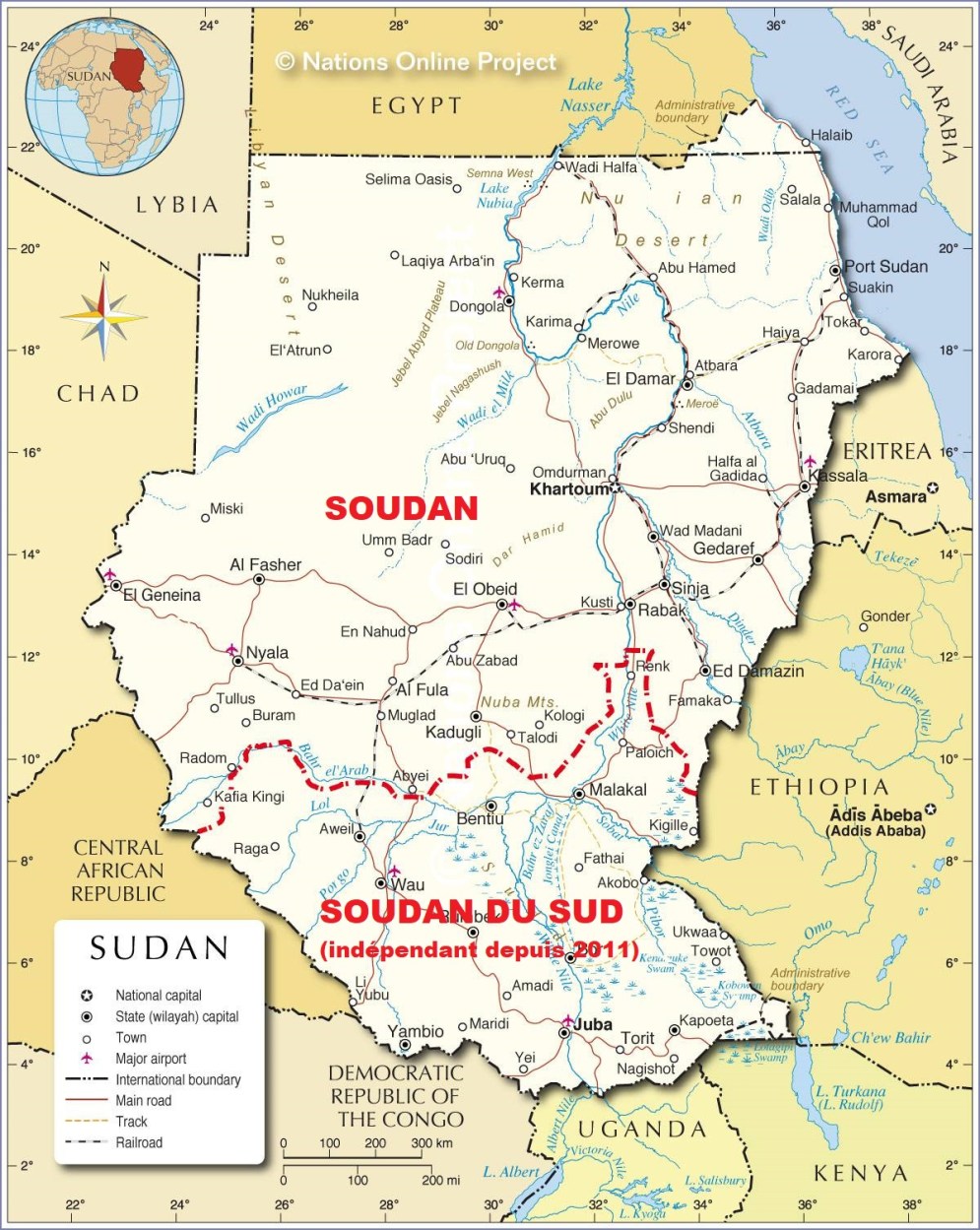
The Tribe and the State : An Attempt to Analyze Authoritarian Conflict in Sudan from an Anarchist Perspective28 octobre 2024
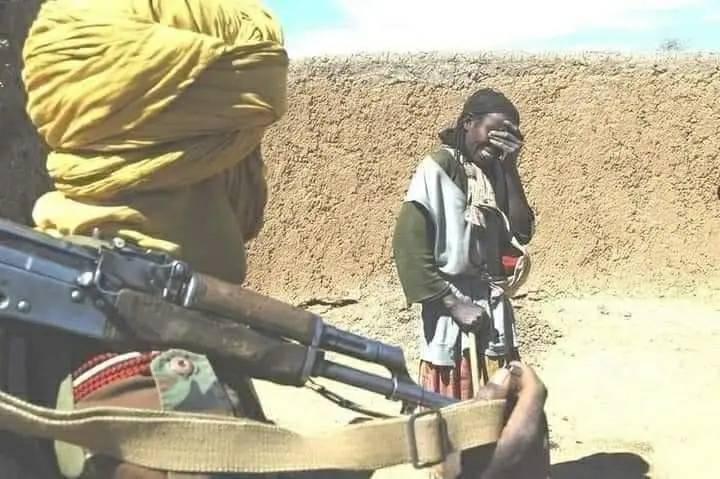
Sudan: they are not satisfied with this blood !9 février 2025
حن الاتحاد النقابي الدولي، جمعية الشغيلة العالمية (https://cnt-ait.info/2025/02/09/nous-ait-ar)
إلى طغاة العالم – أبو القاسم الشابى (https://cnt-ait.info/2024/09/26/tyrans-monde)
مكتبة القطة السوداء[Black Cat Library] (https://cnt-ait.info/category/inter/arabe/bcl)
INTERVIEW D’UN COMPAGNON ANARCHISTE SOUDANAIS « Nous ne soutenons aucune des parties engagées dans la guerre et voulons son arrêt immédiat. » ( https://cnt-ait.info/2024/08/16/interview-soudan)


 The Free