
Radioactive Japanese reactors
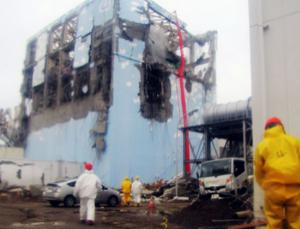
Japan’s damaged nuclear plant in Fukushima has been emitting radioactive iodine and caesium at levels approaching those seen in the aftermath of the Chernobyl accident in 1986. Austrian researchers have used a worldwide network of radiation detectors – designed to spot clandestine nuclear bomb tests – to show that iodine-131 is being released at daily levels 73 per cent of those seen after the 1986 disaster. The daily amount of caesium-137 released from Fukushima Daiichi is around 60 per cent of the amount released from Chernobyl………..
….Iodine is rapidly absorbed by the thyroid, and leaves only as it decays radioactively, with a half-life of eight days. Caesium is absorbed by muscles, where its half-life of 30 years means that it remains until it is excreted by the body. It takes between 10 and 100 days to excrete half of what has been consumed.
While in the body the isotopes’ radioactive emissions can do significant damage, mainly to DNA. Children who ingest iodine-131 can develop thyroid cancer 10 or more years later; adults seem relatively resistant. A study published in the US last week found that iodine-131 from Chernobyl is still causing new cases of thyroid cancer to appear at an undiminished rate in the most heavily affected regions of Ukraine, Belarus and Russia.
Caesium-137 lingers in the environment because of its long half-life. Researchers are divided over how much damage environmental exposure to low doses has done since Chernobyl. Some researchers think it could still cause thousands of new cases of cancer across Europe.
via Fukushima radioactive fallout nears Chernobyl levels – health – 24 March 2011 – New Scientist.

 The Free