PLOWBOY: And did all your contact with the wilds have any effect on your perceptions of our modern agricultural system?
MOLLISON: Oh yes! Everything I did, either in research or in fieldwork, indicated that there was something fundamentally wrong with modern farming methods. For instance, every problem I found in commercial agribusiness was actually caused by the industry itself. Usually — when a farmer called in the CSIRO for a consultation — the results of our investigation pointed the finger straight at the grower him- or herself!
As I saw the same situation occur time and time again, I gradually came to the conclusion that most contemporary crop-raisers must be doing things the wrong way. So my last few years with the CSIRO were spent in the forest,
permaculture is mutual aid
observing the plant and animal species on location . . . and there I learned that everything in nature is self -controlled and self -balancing.
You know, a lot of modern thought suggests that the planet — as a living organismic — seeks to protect itself by rejecting any species that causes it harm. For instance, if cattle damage part of the earth, the harmed region will respond by growing thorn bushes and poisonous plants, thus rejecting the animals. Well, I think we — the members of the human race — are perilously close to being rejected by the earth in that same way . . . and quite rightly so, since we’ve created some terrible damage.
Show your support for the Indigenous Peoples of TIPNIS!Avaaz.orghas sponsored a petition in support of the ongoing march to defend the Isiboro Sécure Indigenous Territory and
Since August 15, 2011, Indigenous Peoples from the TIPNIS have been marching against a new highway that the government of Bolivia wants to build through the protected territory.
So far, more than 1,500 people have joined the 375-mile journey from the eastern lowlands of Bolivia to La Paz–a number that’s growing by the day.
Sadly, President Evo Morales has responded to the march by labeling the protesters “enemies of the nation.” He is also trying to discredit the protesters by portraying them as being confused by NGOs. He even tried to denounce the march as another strategy of US imperialism.
As of late, this misleading rhetoric has turned into action. According to NACLA,
urgent 24 sept.police block march. No water...
“The government has sent in 450 federal police for the stated purpose of avoiding a confrontation. Rather than guarantee the marchers’ safe passage, the police have prevented them from advancing and, according to news reports, have impeded their access to water, while the colonists have blocked delivery of other supplies. The colonists contend, and the government agrees, that some of the indigenous groups’ demands ‘violate their rights,’ and should be dropped before the march is allowed to proceed.”
At this point, there’s no telling what will happen next. Sufficed to say, the international community should be on alert for the worst possible outcome.
#OCCUPYWALLSTREET is a week old and roaring strong. We, the people, are finding our voice, realizing that, yes we can revive our democracy. It is beautiful. It is an achievement. And it has the potential to grow into something even more wild and wonderful over the next few weeks and months. This Saturday at noon at the people’s assembly in Liberty Plaza there will be a celebration of our incredible first week. Last Saturday, 5,000 people flocked nonviolently to Wall Street … this Saturday there will be 10,000. And then in the weeks that follow, we will swell to 50,000 … and maybe even to 100,000+ by mid-October. Wouldn’t that be something!
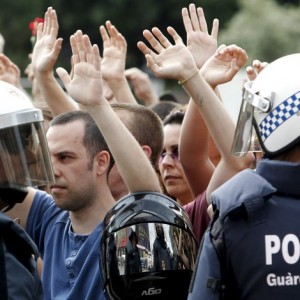
MALAGA, Spain, Sep 23, 2011 (IPS) – “I want to thank the 15-M. I will not forget them,” Algerian immigrant Sid Hamed Bouziane, whose deportation order was revoked after a group of activists from this burgeoning Spanish protest movement held an 11-day demonstration on his behalf, told IPS
The 15-M held protests to demand that the deportation be halted, and that the CIEs be closed “because they violate the most fundamental rights of human beings,” according to the members of the movement, who call themselves the “indignados” or “indignant” or “angry” ones.
“Managing to stop Bouziane’s sentencing to death was a success for our movement. No human being is illegal,” said Cosín. He also noted that the government cancelled the deportation order in August after the Algerian activist married his Spanish girlfriend, Candela Mayorgas, thus gaining the right to stay in Spain.
Four months after the original May 15 sit-in protest stretched into a full-fledged tent camp at Madrid’s Puerta del Sol square, giving rise to a growing wave of massive rallies and protests around Spain, the “Spanish revolution” – as it has been dubbed by the press – has been making bigger and bigger waves.
The movement has so far blocked more than 65 evictions, although an average of 175 evictions a day were carried out in Spain in the first quarter of 2011 as a result of the real estate bust. Due to the economic crisis, thousands of people have failed to keep up on their mortgage payments and have been forced out of their homes under a law “that shamefully protects banks and leaves citizens completely defenceless.
The 15-M set up camps outside the health centres, where they demonstrated alongside health professionals, neighbourhood associations and health consumers.
On Sunday Sep. 18, the “indignados” poured onto the streets of Spain’s largest cities to protest the reduction of budgets for public services, demanding the right to health care and quality education.
Chanting slogans like “divert military spending to schools and hospitals” and “less corruption, more education”, hundreds of people responded to the 15-M’s calls to march through the streets of Málaga behind a huge banner reading “free quality public health care and education for all”.
In Catalonia, hundreds of health clinics and wings of hospitals have been closed; in Castilla-La Mancha in central Spain hundreds of pharmacies went on strike to protest the non-payment of bills by the government health authority; and in Madrid, teachers protested cuts in education, a 15-M statement says.
Dia 38 de la marcha por el Tipnis. 1000 marchistas por el Tipnis están ‘sequestrados’ por el bloqueo masivo de policias sin sombra y con poca agua, bajo un sol tropical peligroso.
El cordón de policías instalado en el puente del arroyo Chaparina permite el paso de las movilidades, que dejan una estela de polvo a los marchistas sentados o parados al lado del camino, donde sea que hubiere una mancha de sombra. “Aquí estamos totalmente incómodos, directamente al calor del sol. Desde que partió la marcha (de la ciudad de Trinidad el 15 de agosto pasado) siempre hemos enviado una comisión de avanzada que buscaba lugares con arboleadas para poder realizar nuestro campamento. Pero aquí estamos detenidos a la fuerza, estamos a la intemperie, porque la Policía está aquí enfrente y no deja avanzar a la marcha. Además, no permiten que pasen vehículos con donaciones para los marchistas. Incluso los bloqueadores retienen a los vehículos que nos traen alimentos, agua y medicamentos. Esto tiene que saberlo el mundo entero: el gobierno nacional está frenando el derecho de reclamar por el cumplimiento de nuestros derechos. Como pueblos indígenas clamamos justicia, porque en nuestro país pareciera que viviéramos en una dictadura”, sostuvo Vargas.
Ha habido manifestaciones de apoyo en todo Bolivia y en muchas lugares del mundo (incluso en Barcelona) además que una petición gigante hecho por Avaaz
COB iniciarán marchas si no solucionan conflicto de TIPNIS
Última Actualización Viernes, 23 de Septiembre de 2011. 06:57h.
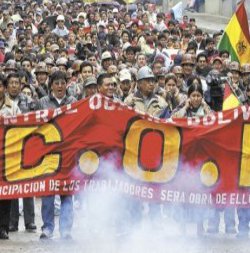
El Comité Ejecutivo Nacional de Central Obrera Boliviana (COB) determinó ayer respaldar la marcha indígena del Territorio Indígena y Parque Nacional Isiboro Sécure (TIPNIS) y advirtieron con movilizaciones si el Gobierno no soluciona hasta fin de semana el conflicto indígena.
HUELGA PARA EL MIERCOLES….COB !
ultima noticia..La Paz, 23 Sep. (ANF).- La dirigencia Central Obrera Boliviana (COB) determinó, este viernes en su ampliado nacional, ejecutar un paro de 24 horas el miércoles próximo, en respaldo a los indígenas que marchan en defensa del TIPNIS. Los trabajadores exigen al gobierno que se instale el diálogo a brevedad posible.
Agencias.- El alcalde Luis Revilla anunció que se realizará una campaña de recolección de alimentos y vituallas en favor de los indígenas del Parque Nacional Isiboro Sécure (TIPNIS) que el 15 de agosto iniciaron una marcha en rechazo a la construcción de la carretera Villa Tunari – San Ignacio de Moxos y que pasaría por medio de este parque nacional. Asimismo, reiteró el apoyo que brindó la Asamblea de la Paceñidad a la marcha de los indígenas, a su derecho a manifestarse y a transitar libremente por el territorio nacional para hacer conocer su legítimo reclamo para la preservación del Parque Isiboro
”El presidente dijo en Estados Unidos que en Bolivia los pueblos indígenas quieren enfrentar a este gobierno, que queremos que este gobierno sea destruido, que estamos impulsados por la derecha, por las ONG y que estamos cometiendo el delito de conspiración –dijo Vargas-. Creemos que el Presidente debería hacer al revés, más bien debería decir que el gobierno nacional está en una franca conspiración para deshacer a los pueblos indígenas de la Amazonía, que conspira para deshacer a la Madre Tierra, para destruir al medio ambiente. Creemos que ese debería ser su discurso, para dejar de estar mintiendo al mundo entero y al pueblo boliviano”.
16:00 Viernes 23 | Sociedad
Medios radiales, televisivos y escritos registraron lo sucedido con los policías en Chaparina, que además de cerrarles el paso se opusieron a que los indígenas acceden a las aguas del arroyo existente en el lugar, para que se aseen y refresquen, ante las elevadas temperaturas que se registran en el lugar.
A deep change of attitudes to Gays and Lesbians is slowly percolating through the Indian subcontinent. Now helped on by the new UN gay rights declaration.
In 2009, British colonial law dating back more than 150 years ago that held same-sex relationships as ‘unnatural’, was overturned by the Delhi High Court, responding to a clamour for change from gay rights activists and members of civil society.
“A level of dialogue around sexuality began after the Delhi High Court ruling,” Magdalene Jeyarathnam, founder-director of the Centre For Counselling in southern Chennai city, told IPS. “There has been a surge in the number of young people who have come out over the past couple of years.”
“I see this movement gaining power, strength and momentum with each passing day,” she added. Pawan Dhall, director of the Kolkata-based NGO ‘Solidarity and Action Against the HIV Infection in India’ which pioneered a sensitisation movement on gay rights in the late 1990s, said the country’s top campuses are in fact leading gay rights activism.
In Kolkata, a group called ‘Students against Campus Homophobia’ is active in the city’s Jadavpur University (JU), well known for its liberal ambience as well as academic excellence. JU already offers ‘Queer Studies’ as an optional subject at the post-graduate level in its English department.
Kolkata also hosted the first Gay parade in India in 2003. The ‘Rainbow Walk’ is now an annual feature and other metros like New Delhi and Mumbai have followed.
Gay rights activism and awareness followed the AIDS awareness campaigns that were launched in the country in the 1990s and quickly caught the imagination of the country’s vibrant media.
“We have been fighting for a rights-based approach and inclusiveness from the 1990s. Today, it is heartening to see some change coming our way,” says Malobika, founder-member of ‘Sappho’, a forum for lesbians in Kolkata. She had to flee the town with her partner in the 90s under family pressure.
GENEVA – The United Nations endorsed the rights of gay, lesbian and transgender people for the first time ever Friday, passing a resolution hailed as historic by the U.S. and other backers and decried by African and Islamic countries.
The declaration was cautiously worded, expressing “grave concern” about abuses suffered by people because of their sexual orientation, and commissioning a global report on discrimination of gays. But activists called it a remarkable shift on an issue that has divided the global body for decades, and credited the Obama administration’s push for gay rights at home and abroad with helping win support for the resolution.
Gay rights percolating through Indian sub-continent
“This represents a historic moment to highlight the human rights abuses and violations that lesbian, gay, bisexual, and transgender people face around the world based solely on who they are and whom they love,” U.S. Secretary of State Hillary Rodham Clinton said in a statement.
Following tense negotiations, members of the Geneva-based U.N. Human Rights Council narrowly voted in favor of the declaration put forward by South Africa, with 23 votes in favor and 19 against.
Backers included the United States, the European Union, Brazil and other Latin American countries.
Those against included Russia, Saudi Arabia, Nigeria and Pakistan.
China, Burkina Faso and Zambia abstained, Kyrgyzstan didn’t vote

self!

 Troy Anthony Davis (October 9, 1968 – September 21, 2011.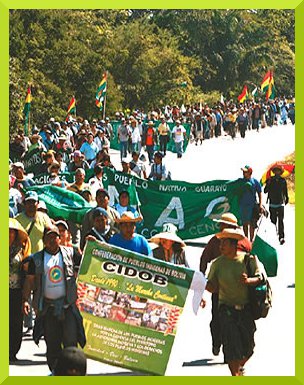
 If you haven’t already signed the petition, please do so now! Visit: http://www.avaaz.org/en/save_tipnis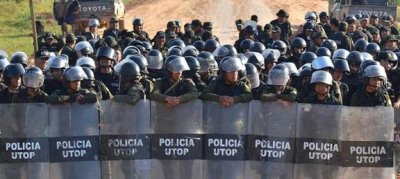
 MALAGA, Spain, Sep 23, 2011 (IPS) – “I want to thank the 15-M. I will not forget them,” Algerian immigrant Sid Hamed Bouziane, whose deportation order was revoked after a group of activists from this burgeoning Spanish protest movement held an 11-day demonstration on his behalf, told IPS
 The 15-M set up camps outside the health centres, where they demonstrated alongside health professionals, neighbourhood associations and health consumers.
 Moxos y que pasaría por medio de este parque nacional. Asimismo, reiteró el apoyo que brindó la Asamblea de la Paceñidad a la marcha de los indígenas, a su derecho a manifestarse y a transitar libremente por el territorio nacional para hacer conocer su legítimo reclamo para la preservación del Parque Isiboro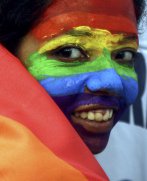
 Action Against the HIV Infection in India’ which pioneered a sensitisation movement on gay rights in the late 1990s, said the country’s top campuses are in fact leading gay rights activism.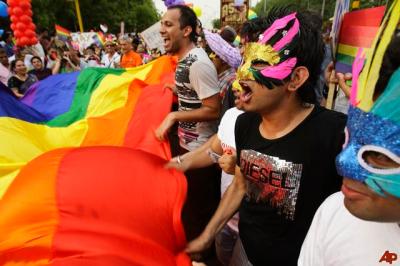
 The Free