
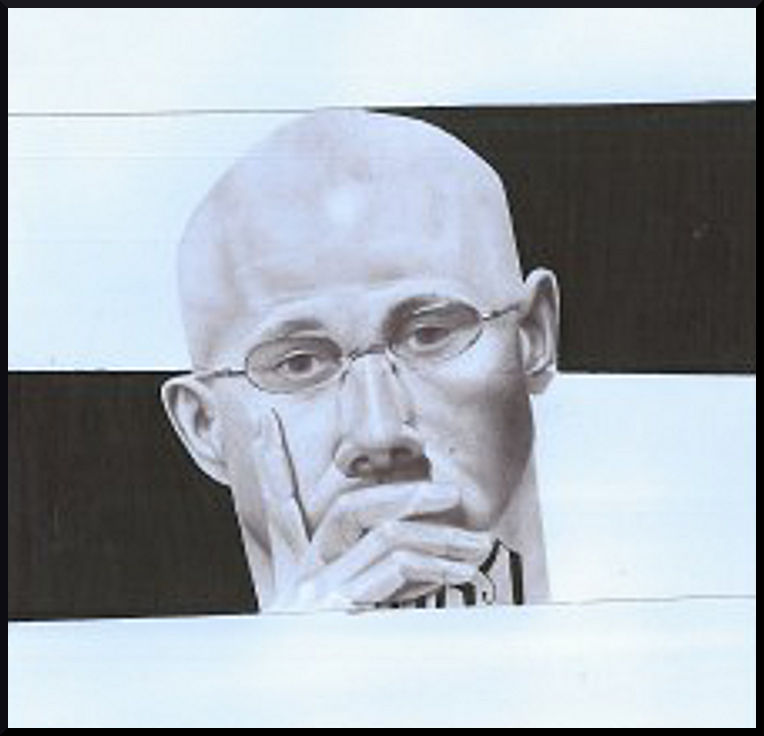
Self-Portrait of Billy Sell, who committed suicide on July 22nd Courtesy Prisoner Express
The California Department of Corrections and Rehabilitation (CDCR) released a statement this morning that all hunger strike participants had resumed eating, ending a two month long hunger strike. 100 hunger strikers were participating as of yesterday afternoon, with 40 on hunger strike the entire 59 days since the launch of the strike. Protesting long-term solitary confinement and sensory deprivation in California’s Security Housing Units (SHUs), 30,000 prisoners in 24 prisons across the state and in out-of-state facilities housing CDCR prisoners launched a hunger strike on July 8th.
Following up on two statewide hunger strikes in 2011, the hunger strike focused on the long-term segregation of alleged prison gang affiliates for indefinite terms in SHUs at Pelican Bay State Prison, Corcoran State Prison, Tehachapi State Prison, and recently constructed SHU at California State Prison, Sacramento.
Last week, State Senator Loni Hancock and Assemblyman Tom Ammiano announced their intention to hold hearings on SHU policies.
Three days into the hunger strike, strike leaders at Pelican Bay and Corcoran were removed from their cells and isolated from others. All hunger strike participants had sandbags placed at their cell doors. Some had their property seized and all had items purchased from the prison canteen taken from them. Hunger strike participants in the SHU were assessed 60-90 day extensions on their SHU terms.
Two weeks into the strike, Corcoran hunger striker Billy Sell committed suicide within a day of ending his participation. He is the second known death of a hunger striker in the last two years. Christian Gomez died in February 2012 in the Corcoran Administrative Segregation Unit (ASU) one week into his participation in a small-scale hunger strike inspired by the 2011 hunger strikes.
Several hunger strikers at Pelican Bay and Corcoran were transported to California State Prison, Sacramento, officially because the facility is better suited to treat them. Of concern during the strike was CDCR’s obtained court permission to force feed hunger strikers even if they had signed a “do not resuscitate” order. The medical receivers office has consistently denied that the order was ever used.
Throughout the hunger strike, many were hospitalized, some lost more than 20% of their body-weights, and some had to be sent to community hospitals due to complications from resuming eating.
Sal Rodriguez | September 5, 2013 at 12:56 pm | URL: http://wp.me
Related articles
- California prison hunger strike called off (cnn.com)
- California prisoners end hunger strike against the use of solitary confinement (noliesradio.org)
- Day 59 of California Prison Hunger Strike: “Their Spirits Are High, Their Bodies Are Weak” (solitarywatch.com)

 The Free