
The Canary Islands is a group of seven major islands of Spain situated in the Atlantic Ocean just 160 kilometers (around 100 miles) from Morocco and Mauritania in Northwest Africa. Their location makes them a unique ecosystem, with at least 2,000 native animal species. Since 2005, they have been part of the United Nations’ Particularly Sensitive Sea Areas, together with 12 more ecosystems including the Galapagos Archipelago, Australia’s Great Barrier Reef, and Hawaii’s Papahanaumokuakea National Monument.
As a result of the designation, hundreds of oil tankers that cross the Canary Islands’ waters every year have to give notice in advance to Spanish authorities and follow strict corridors when they cross the 7,000 square kilometer (4,300 square miles) protected zone.
That area, however, will be drilled in the coming weeks by Repsol now that the court has cleared the last hurdles for its plans. The company plans to drill the wells at a depth of around 1 kilometer (a bit more than half a mile) and then 3.5 kilometers more inside the Earth’s crust.
The go-ahead concludes a 14-year-long feud that has pitched many interests against each other: the Canary Islands regional governments against the Spanish authorities; the tourism industry against the oil industry; and conservatives against socialists (and, sometimes, different factions inside those both parties against each other). Even Spain and Morocco have argued about how to divide the waters where the oil is.
Morocco has been drilling on its side of the field for more than one decade, but so far it has not found oil. Two oil companies—Britain’s Cairn, and Genel, formally Turkish although incorporated in the tax haven of the British Channel Islands—have just abandoned their efforts in the area.

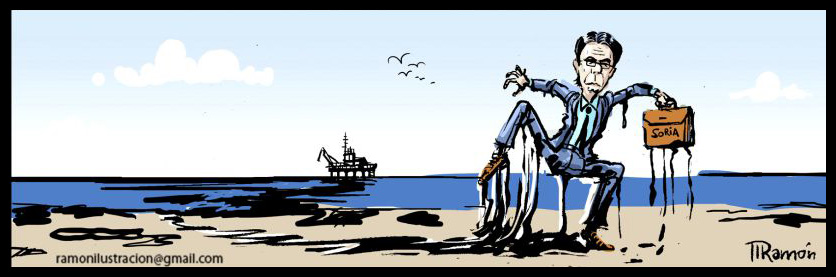


“DOBLE RASERO” del PP. El Gobierno canario critica que Rajoy sopese suspender las prospecciones petrolíferas en Baleares y no en Canarias europapress “El PP defiende los intereses de Repsol”elconfidencial “Rajoy (PP) aún no se ha enterado de que las actividades petrolíferas son altamente peligrosas y ponen en riesgo el medio ambiente y las actividades asociadas como el turismo” intereconomia
CRECE EL DESÁNIMO ENTRE LAS COMPAÑIAS PETROLERAS QUE EXPLORAN LA COSTA ATLÁNTICO DE MARRUECOS.market
“falta grave de responsabilidad” que ASOLAN no se haya pronunciado sobre “la amenaza” del petróleo. Soria en la Isla “supone una nefasta publicidad para el destino turístico Lanzarote” ya que la mayoría de las referencias en medios de comunicación “están yendo aparejadas a los términos ‘ilegalidad’ y ‘petróleo’” lavoz diario
El ministro Soria llega al hotel ilegal donde veranea rodeado de pancartas en contra de las prospecciones vozpopuli
View original post 228 more words

 The Free