
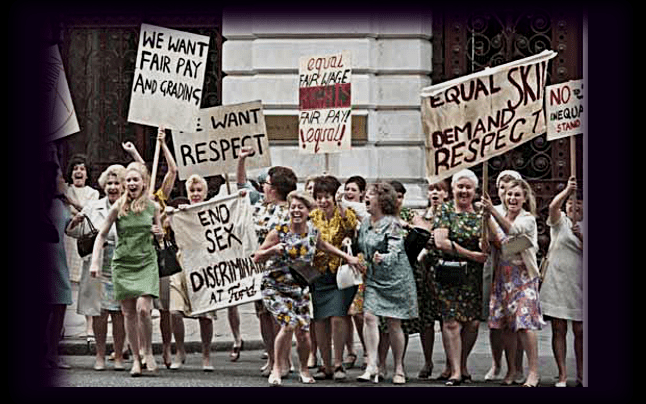
 At work as at home, men reap the benefits of women’s “invisible labor” (by @schemaly)
via feimineach SORAYA CHEMALY (piece on QUARTZ):
“Women’s work” and its benefits for men. (Reminded me that someone said to me again the other day: “behind every great man stands a great woman”. We all know what that’s meant to mean but let’s unpick it…)
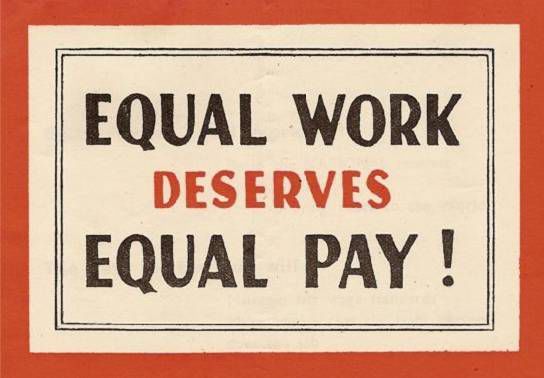
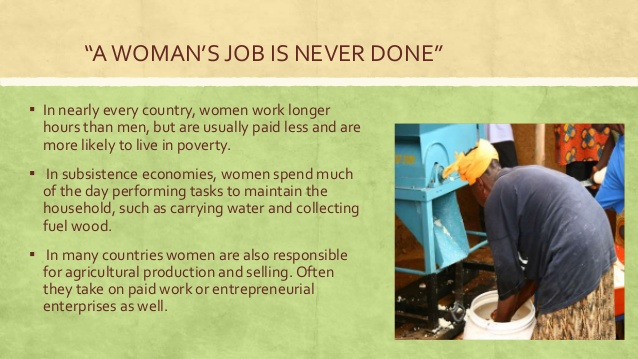
On any given day, one fifth of men IN THE US, compared to almost HALF OF ALL WOMEN DO SOME FORM OF HOUSEWORK. Each week, according to Pew, mothers spend NEARLY TWICE AS LONG as fathers doing unpaid domestic work. But while it’s important to address inequality at home, it’s equally critical to acknowledge the way these problems extend into the workplace. Women’s EMOTIONAL LABOR—which can involve everything from tending to others’ feelings to managing family dynamics to writing thank-you notes—is a big issue that’s rarely discussed.
In the early 1980s, University of California, Berkeley sociologist Arlie Russell Hochschild coined the term “emotional labor” in her bookThe Managed Heart. Hochschild observed that women make up the majority of service workers—flight attendants, food service workers, customer service reps—as well as the majority of of child-care and elder-care providers. All of these positions require emotional effort, from smiling on demand to prioritizing the happiness of the customer over one’s own feelings.
Gender norms kick in early
Stereotypical expectations about what constitutes women’s and men’s work are not simply the outmoded relics of past generations. Research shows they persist even among LGTBQ FAMILIES as well as MILLENNIAL COUPLES.Indeed, the pattern of gendered labor is disrupted primarily among SINGLE-PARENT FAMILIES.
The pervasiveness of the issue becomes especially evident when children’s chores, WHICH REMAIN HIGHLY GENDERED, are taken into account. When girls are paid CHORE-RELATED ALLOWANCES, they are likely to be paid less frequently than boys and less money than boys. The message that women’s time and work is inherently less valuable is a systemic one.
The message that women’s time and work is inherently less valuable than that of their male peers’ is a systemic one.
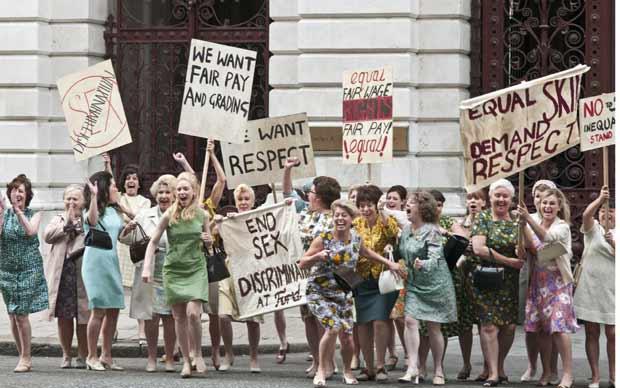
The message that women’s time and work is inherently less valuable than that of their male peers’ is a systemic one. It doesn’t end with chores. When men grow up and begin working in fields where their gender dominates, SALARIES GO UP. But when women work in female-dominated fields, salaries GO DOWN.
Indeed, women continue to struggle with what Hochschild called the “second shift” impact, in which they come home from a long day at work and take on the unpaid labor of housework and childcare. But many women are also effectively working two jobs while they’re at the office.
[…] Several decades later, women are still picking up a lot of the slack on office housework—with almost no recognition. A 2005 STUDY conducted by Madeline Heilman, a New York University psychologist, found that a woman who stayed at work late and offered help to a coworker was ranked 14% less favorably than a man doing the same thing. If she declined to help, she was rated 12% lower than a male peer who did the same.
Additionally, Heilman found that women’s assistance usually happens in SMALL, UNSEENways, whereas male help tended to be more visible and public. Adding injury to insult, the study found that work performed by women wasn’t only less visible, it was more consuming.

Women have long been designated the default housewives and mothers in the corporate world.
Workplace discrimination is still rampant
 Jessica Benefield, a former executive chef at a Nashville restaurant called Virago, is accusing CEO Chris Hyndman of subjecting his female employees to physical, verbal, and sexual harassment. Hyndman allegedly had a scale based on “hotness” and asked staff members to bring in “hot chicks for him to meet and entertain.” Despite the fact that Benefield was an award-winning chef and received great performance reviews at work, she was terminated immediately for “making false and malicious statements about superiors” after she complained about the treatment of female workers. ..Source: tennessean.com
This is an inherently sexist dynamic, and—for women of color—an implicitly racist one. Professional black and Hispanic women, subjected to a sort of double jeopardy in corporate situations, report being regularly mistaken for cleaning ladies and janitors.
The time women spend on these necessary but unrecognized chores taxes their energy, undermines their workplace authority, and reduces the time they could be spending on more socially and professionally recognized and valued work.
Recent research has revealed another dimension of the same phenomenon. In December of 2015, Heather Sarsons, an economist completing her PhD in economics at Harvard, released a working paper: “Gender Differences in Recognition for Group Work (pdf).”
As part of her study, Sarsons analyzed 40 years’ worth of publications produced by economists at top US universities. She found that women who wrote on their own had the same chance of receiving tenure as men. However, women who collaborated with men had lower chances. The value of the women’s contributions were erased.
 Meanwhile, men who collaborated with women didn’t suffer any penalty. In fact, they were four times more likely to succeed. Sarsons’ working conclusion? Women get almost no credit at all for collaborating and are tacitly perceived as subservient employees. Their gender, essentially, renders them assistants by default.

These issues can even compromise women’s mental health. A study published by Columbia University’s Mailman School of Public Health earlier in January found that women who earn less than their male peer group counterparts are four times more likely to develop anxiety and 2.5 times more likely to be depressed.
The power of stereotypes
Gender stereotypes create a destructive cycle in the workplace that affects even the most egalitarian, diverse and, progressive workers. This is a global issue. The idea that men are in charge of their destinies, while women are in charge of helping men, retains a very powerful cultural hold. Today, the top jobs for women in the United States include, as they did in 1950, secretary/administrative assistant and teacher—jobs that still, in many occasions, are designed to support higher-paid men with more impressive titles.
This is not to suggest that the issue is hopeless. In a highly 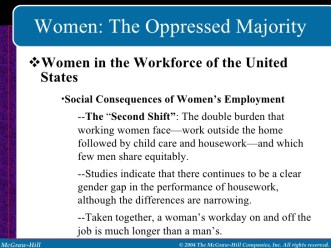 publicized New York Times op-ed published in 2015, Sheryl Sandberg and Adam Grant suggested men men can help by taking on additional office and mentoring responsibilities, and by giving credit to women where it is due.

The idea that men are in charge of their destinies, while women are in charge of helping men, retains a powerful cultural hold. Another solution would be to incorporate metrics related to invisible work into job reviews. Joan Williams, co-author of the 2014 book What Works for Women at Work and director of the Center for Work/Life Law,argues that we should establish job rotations and keep track of which employees perform which tasks.
 She also recommends mastering what she calls “gender judo”: using a multi-gendered approach by “doing something masculine (saying no) in a feminine way (being nice and showing that you’re a ‘good team player’).
Meanwhile, Deborah M. Kolb and Jessica L. Porter recommend that women estimate the value of the work they do and share it with their employers, using the additional labor they perform to negotiate for benefits. Last year, taking the argument one step further, activists Lauren Chief Elk launched the hashtag #GiveYourMoneytoWomen to further the critique of neoliberal capitalist exploitation and appropriation of women’s emotional labor.

Clearly, there is no magic solution for dealing with systemic issues like the wage gap and invisible work. Rather, we need to listen and build on each other’s ideas as we bridge longstanding divides. Transparency is key. Whether we’re talking about salaries or chores, we can literally no longer afford to think about these issues as private or impolite concerns. Talking about inequality can be awkward. Living with inequality is much, much worse.
Follow Soraya on Twitter at @schemaly. We welcome your comments atideas@qz.com.

 The Free

Reblogged this on The Most Revolutionary Act and commented:
*
*
Women’s invisible labor is always unpaid of course.
LikeLike