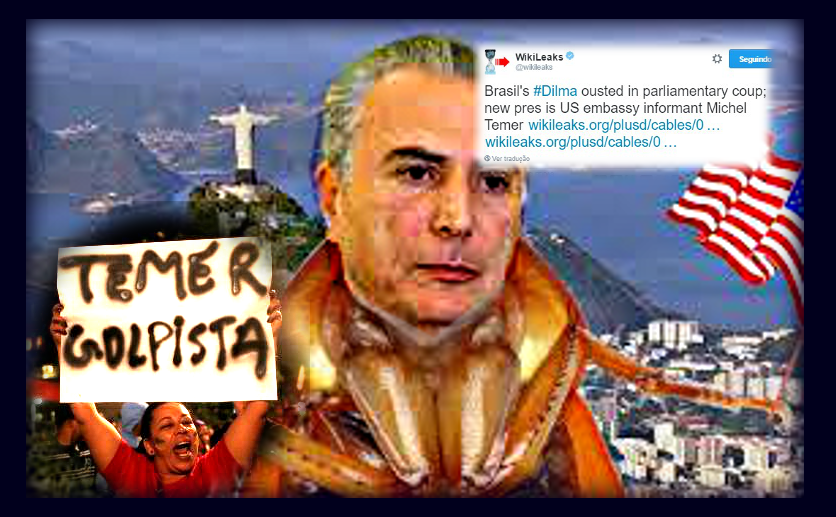
US takes control of Brasil as Corrupt Left replaced by US Spies… Brazil’s new president is U.S. [+CIA?] informant
A Wikileaks cable tells the tale, reporting on a meeting between newly installed Acting President Michael Temer and U.S. Embassy officials including political officers [poloffs], a position often used as official cover by agents of the Central Intelligence Agency.
Official cover posts come with diplomatic immunity, unlike the more perilous non-official cover [NOC] positions, where work can result in prison and even death sentences…..
Temer is also named in 21 other cables, including one naming him as one of several conservative legislators caught on camera taking bribes. That cable follows after the jump.
We are very suspicious of the legal coup which has unseated progressive President Dilma Rousseff, given the unrelenting opposition of successive administrations to any Latin American government veering slightly to the left.
From the Wikileaks cache of cables released by Chelsea Manning, a cable from Christopher J. McMullen, then Consul General in São Paulo and currently Deputy Assistant Secretary of State for Andean, Brazilian and Southern Cone Affairs:
Date: 2006 January 11, 14:02 (Wednesday)
Canonical ID: 06SAOPAULO30_a
Original Classification: UNCLASSIFIED,FOR OFFICIAL USE ONLY
Current Classification: UNCLASSIFIED,FOR OFFICIAL USE ONLY
TAGS: BR – Brazil | ETRD – Economic Affairs–Foreign Trade | PGOV – Political Affairs–Government; Internal Governmental Affairs | PINR – Political Affairs–Intelligence
From: Brazil São Paulo
To: Argentina Buenos Aires | Bolivia La Paz | Brazil Brasilia | Brazil Recife | Brazil Rio De Janeiro | Chile Santiago | National Security Council | Paraguay Asunción | Secretary of State | United States Southern Command (Miami) | Uruguay Montevideo
NCLAS SECTION 01 OF 03 SAO PAULO 000030
SIPDIS
SENSITIVE
SIPDIS
NSC FOR CRONIN
STATE PASS USTR FOR SULLIVAN/LEZNY
E.O. 12958: N/A
TAGS: PINR, PGOV, ETRD, BR
SUBJECT: PMDB Leader Ponders Party’s Electoral Options
REF: (A) 05 Sao Paulo 1402; (B) Sao Paulo 1372
1. (U) Sensitive but Unclassified – protect accordingly.
2. (SBU) Summary: Federal Deputy Michel Temer, national president of the Brazilian Democratic Movement Party (PMDB), believes that public disillusion with President Lula and the Workers’ Party (PT) provides an opportunity for the PMDB to field its own candidate in the 2006 presidential election. However, party divisions and the lack of a compelling choice as a candidate could force the PMDB into an alliance with Lula’s PT or the opposition PSDB. If Lula’s polling numbers do not improve before the PMDB primaries in March, Temer said his party might nominate its own candidate. This would still allow the party to forge an alliance with the PT or PSDB in a runoff, assuming that the PMDB candidate fails to make the second round. Given its centrist orientation, the PMDB may hold the balance of votes between the two opposing forces. It is also likely to remain a force at the local and state level. Temer believes it has a chance to win as many as 14 gubernatorial races. End Summary.
—————————
With Allies Like This . . .
—————————
3. (SBU) Michel Temer, a Federal deputy from Sao Paulo who served as president of the Chamber of Deputies from 1997 through 2000, met January 9 with CG and poloffs to discuss the current political situation. Lula’s election, he said, had raised great hope among the Brazilian people, but his performance in office has been disappointing. Temer criticized Lula’s narrow vision and his excessive focus on social safety net programs that don’t promote growth or economic development. The PT had campaigned on one program and, once in office, had done the opposite of what it promised, which Temer characterized as electoral fraud. Worse, some PT leaders had stolen state money, not for personal gain, but to expand the party’s power, and had thus fomented a great deal of popular disillusion.
————————-
PMDB Perceives an Opening
————————-
4. (SBU) This reality, Temer continued, opens an opportunity for the PMDB. The party currently holds nine statehouses and has the second-highest number of federal deputies (after the PT), along with a great many mayoralties and city council and state legislative seats. Polls show that voters are tired of both the PT and the main opposition party, the Brazilian Social Democratic Party (PSDB). For example, a recent poll showed former governor (and PMDB state chairman) Orestes Quercia leading in the race for Sao Paulo state governor.
———————–
Divisions Dog the Party
———————–
5. (SBU) Asked why the PMDB remains so divided, Temer said the reasons were both historical and related to the nature of Brazilian political parties. The PMDB grew out of the Brazilian Democratic Movement (MDB) under the military dictatorship, which operated as an umbrella group for legitimate opposition to the military dictatorship. After the restoration of democracy, some members left the PMDB to form new parties (such as the PT and PSDB), but many of those who remained now act as power brokers at the local and regional level. Thus the PMDB has no real unifying national identity but rather an umbrella organization for regional “caciques” or bosses. Temer noted that the PMDB is not the only divided party. Although there are 28 political parties in Brazil, most of them do not represent an ideology or a particular line of political thinking that would support a national vision.
There’s much more, after the jump. . .
PMDB Primaries Set for March
—————————-
6. (SBU) Temer confirmed press reports that he is seeking to move the March 5 primary date to a date later in the month. (Note: March 31 is the deadline for executives and Ministers to resign their offices if they plan to run for public office. End Note.) There will be some 20,000 electors, he said, including all PMDB members who hold electoral office (federal and state deputies, governors, mayors, vice-governors and -mayors, and other elected municipal officials) as well as delegates chosen at state conventions.
—————————————
Lula’s Numbers Will Drive PMDB Strategy
—————————————
7. (SBU) If, between now and the primary, the Lula government’s standing in the polls improves, it is still possible the PMDB will seek an electoral alliance with Lula and the PT, Temer said. If not, the PMDB will run its own candidate. So far, Rio de Janeiro ex-governor Anthony Garotinho has been working the hardest, reaching out to the whole country in search of support. But there is resistance to him from within the PMDB, in part due to his populist image, in part because there appears to be a ceiling to his support. Germano Rigotto, governor of Rio Grande do Sul (reftels) is a possible candidate, though he is still not well known outside the south. Nelson Jobim, a judge on the Supreme Federal Tribunal (STF) who has announced his intention to step down, is another possibility; however, he can’t campaign until he leaves the Tribunal, and he may not have time to attract the support necessary to win the primary.
——————————————–
PMDB’s Fallback – PT or PSDB in Second Round
——————————————–
8. (SBU) Temer was confident that despite its current division, the PMDB will unite for the election, whether in support of its own candidate or in alliance with another party. If it runs a candidate who fails to make it to the second round, the party will seek to negotiate an alliance with one of the two finalists. He noted that the PMDB had supported the government of PSDB former president Fernando Henrique Cardoso, and said there should be a “re-fusion” of the two parties into a permanent grand alliance. The PMDB would have no problem with either Sao Paulo Mayor Jose Serra or Sao Paulo state governor Geraldo Alckmin, who are competing for the PSDB nomination. In 2002, the PMDB supported Serra against Lula.
9. (SBU) Asked about the party’s program, Temer indicated that the PMDB favors policies to support economic growth. It has no objection to the Free Trade Area of the Americas (FTAA). It would prefer to see Mercosul strengthened so as to negotiate FTAA as a bloc, but the trend appears to be moving the other way.
——————————
Comment: PMDB As Power Broker?
——————————
10. (SBU) For now, the PMDB is keeping its options open. Though Temer didn’t mention it, the party’s leadership is waiting to see whether the “verticalizacao” rule will remain in force for the 2006 elections. This rule, decreed by a 2002 decision of the Supreme Electoral Tribunal (TSE), dictates that electoral alliances at the national level must be replicated in races for governors and federal deputies. The Senate passed a measure repealing the rule, and the lower chamber is expected to vote on it shortly, with prospects uncertain. There is also a legal challenge to the rule pending which the TSE will likely take up in February. The PMDB wants to know the rules of the game before deciding on possible alliances, since most observers believe that a PMDB presidential candidate would not fare well under the current system of “verticalizacao.” Temer appeared open to the possibility of an alliance with either the PT or the PSDB, or to a stand-alone PMDB candidate. Given its centrist orientation, the PMDB may hold the balance of votes between Lula’s PT and the opposition PSDB, and thus bears watching closely in the months ahead.
End Comment.
11. (U) Biographic Note: Michel Miguel Elias Temer Lulia has served as federal deputy from Sao Paulo since 1987, except for a two-year period (1993-94) when he was Secretary for Public Security in the Sao Paulo state government. He studied at the University of Sao Paulo and earned a Doctorate in Law from the Catholic University of Sao Paulo. From 1984 through 1986 he was the state’s Prosecutor General. He served as the PMDB’s leader in the Camara de Deputados 1995-97 and as President of the Camara 1997-2000. He was national president of the PMDB 2001-03 and 2004-present.
12. (U) This cable was cleared/coordinated with Embassy Brasilia.
McMullen
And the second cable, dating from the end of the first year of the Obama administration, was sent from the U.S. embassy in Brasilia by Charge d’Affaires Lisa Kubiske and details bribery accusations against Temer:
BRAZIL: DEM, CORRUPTION, AND THE DECLINE OF THE RIGHT
Date: 2009 December 18, 19:33 (Friday)
Canonical ID: 09BRASILIA1429_a
Original Classification: CONFIDENTIAL
TAGS: BR – Brazil | KCOR – Corruption and Anti-Corruption | PGOV – Political Affairs–Government; Internal Governmental Affairs
From: Brazil Brasilia
To: Brazil Brasilia | Brazil Rio De Janeiro | Brazil São Paulo | Secretary of State
CLASSIFIED BY: Lisa Kubiske, Charge d’Affaires; REASON: 1.4(B), (D)
1. (C) Summary. Federal District (Brasilia) Governor Jose Arruda, caught on camera accepting bribes in late November, continues in office to fight the charges against him, ensuring a drawn-out and damaging scandal for the Democratas (DEM), Brazil’s leading center-right opposition party. The Arruda scandal revolves around a monthly bribe system very similar to the mensalão (“monthly pay-off”) corruption scheme associated with President Lula’s Workers Party (PT); this case and other recently revealed bribery charges will hurt the opposition’s ability to sell itself to the electorate as champions of good governance. The leading opposition party, the centrist Brazilian Social Democratic Party (PSDB), has only been marginally implicated to date but many fear additional charges pending. DEM pushed Arruda out of the party and will try to showcase itself as having reacted responsibly in the face of scandal, but finds itself – like so many other center-right Brazilian parties – in the precarious position of having no clear message to distinguish itself on policy or administrative competency. PT has been little affected by the latest wave of scandal, leading center-right parties within Lula’s coalition to solidify their alliances with PT, further hindering the already-weak ability of the center-right to play an influential role in Brazilian politics. End summary.
Caught on Camera
2. (SBU) Governor Arruda, considered DEM’s bright star of the future and a top-tier prospective vice-presidential candidate for Jose Serra, fell into disgrace when he and several political allies in Brasilia’s state government (many from other parties) were caught accepting bribes on camera. The comical, you-tube friendly nature of the footage – including elected officials shoving envelopes of money from contractors into pockets, socks, and blouses – will likely stick in the public consciousness for some time. Despite the visual evidence and the paper trail against him, Arruda insists on remaining in office, fighting the charges against him, and running for re-election. Dep. Onyx Lorenzoni (DEM-Rio Grande do Sul) and other party members told poloff (with no small degree of anger and frustration) that Arruda will probably remain in office through the October 2010 elections, despite the multiple legal cases against him and an impeachment motion. On December 10, Arruda left DEM in advance of an internal party vote the following day, in which he would have been expelled from the party.
3. (SBU) The Arruda scandal revolved around monthly payments made by several contracting firms building the Brasilia metro system and other major construction projects. As such, the scandal very closely resembles the mensalão (monthly payment) scandal that significantly damaged PT late in Lula’s first term, and which created difficulties for him in his 2006 re-election campaign. (The present scandal is increasingly being referred to as the “Arruda mensalão”) Two similar monthly payment scandals have surfaced over the past week, including one in which the Federal Police has announced that it will imminently file a case against the construction company Camargo Correa, charging that it paid out approximately R30 million (17 million USD) to various politicians in recent years. Initial reports released by the Federal Police list several opposition and coalition politicians as recipients of funds, including heavy hitters such as Chamber of Deputies President Michel Temer (São Paulo). Federal and state contracts generally release funds to contracting companies on a monthly basis, with weak rules for detailing and justifying line item expenses, making it easy for the mensalão to become Brazil’s bipartisan favorite corruption scheme.
Effects on DEM
4. (C) For DEM, which has the third-largest bench in both the Senate and the Chamber, the Arruda mensalão strikes a crippling blow to a party that was already slowly losing support. Dep. Ronaldo Caiado (DEM-Goias), leader of the party in the Chamber, admitted that the scandal will hurt them in the elections but argued that the party at least distinguished itself by taking action to expel Arruda, in contrast to PT, which took no action against offenders in its own mensalão scandal. Though true, it is hard to see the party getting much credit from the public for such a stand. As one party advisor admitted to us, DEM never did get around to expelling Arruda before the Governor left the party, largely because several leading DEM politicians stalled the action out of concerns about having their own ties to Arruda exposed. The Arruda mensalão may not ultimately have a large impact on DEM in the 2010 federal elections, Dep. Lorenzoni argued, since most of its key figures are well-established in their northeast and rural bases. News of corruption in Brasilia will have limited impact, especially when it becomes old news by October. But the vice-presidency slot on the PSDB ticket, which DEM has held in the last two elections, is almost certainly gone. It will also be difficult for the country’s largest right-of-center party to win a single governor’s seat in the elections. Perhaps the most serious problem for DEM arising from the scandal, as Dep. ACM Neto (DEM-Bahia) told poloff, is that his party, which planned to run on an effective governance platform, “does not have an identifiable message.”
Effects on the Opposition and PSDB
5. (C) It is not clear at this point whether or how the latest wave of scandal will affect PSDB and its front-running presidential candidate, JosC) Serra. Two Federal District state deputies caught taking bribes in the Arruda mensalão were PSDB members, and Arruda has his public defenders within PSDB ranks, much to the chagrin of the rest of the party. The greater worry with the Arruda mensalão is that three of the same contracting companies prominent in paying bribes in the Federal District are also prominent in other state governments with PSDB governors, including Sao São Paulo (Serra) and Minas Gerais Aécio Neves). Sen. Gim Argello (PTB-Federal District), vice-leader of Lula’s governing coalition in the Senate, told poloff last week that he believes these companies were likely not engaging in the same practices outside Brasilia, and that the scandal will not affect Serra or Neves. According to Argello, also a real estate investor with his own contracting interests, Arruda’s corruption had been known among the local contracting community and created an environment in which bribes were necessary.
6. (C) Dep. Bruno Araújo (PSDB-Pernambuco) expressed confidence in his party’s ability to weather the Arruda scandal, and even saw the benefit in PSDB gaining at DEM expense, but expressed concern that more news about corruption was coming and that PSDB would have to fight hard to burnish its image as the party of good government. He noted the case of Sen. Eduardo Azeredo (Minas Gerais), Chairman of the Foreign Affairs and Defense Committee, now under investigation for a mensalão-type scheme during his campaign for Governor in 1998. Araújo characterized the Azeredo case as all smoke, no fire – but conceded that there will probably be a lot of smoke for PSDB to deal with in the coming months. He also asserted, like other PSDB contacts recently, that an all-PSDB Serra-Neves presidential ticket would be the silver bullet means of overcoming voter concerns about corruption and good governance.
Where Does the Center-Right Go?
7. (C) The immediate impact of the Arruda mensalão scandal seems fairly obvious: that it weakens Brazil’s leading center-right party and challenges the opposition’s claim that it would govern more cleanly and effectively than PT and its ally PMDB. More broadly, the scandal further limits the ability of the center-right to articulate policy positions, both within the opposition and the conservative wing of the governing coalition. The governing coalition’s center-right parties – including PP, PR, PTB, PDT and parts of PMDB – have moved away from their previous independence on key issues and has become increasingly acquiescent to Lula’s agenda in Congress. All but one senator from this bloc voted for Venezuela’s accession to Mercosul and the vote on the Pre-Salt oil exploration legislation is expected to yield a similar count. Senators from those parties, such as Sergio Zambiasi (PTB-Rio Grande do Sul) often tell us that they have concerns with some of the votes they’re asked to cast, but there’s no indication of any coming rebellion. After all, as one political analyst told us, the leaders of many of these parties have corruption concerns themselves, and are safer within Lula’s coalition than outside of it. As Dep. Neto told poloff, “in Brazil today, a party can only be genuinely conservative on economics if it has no scandals.”
KUBISKE


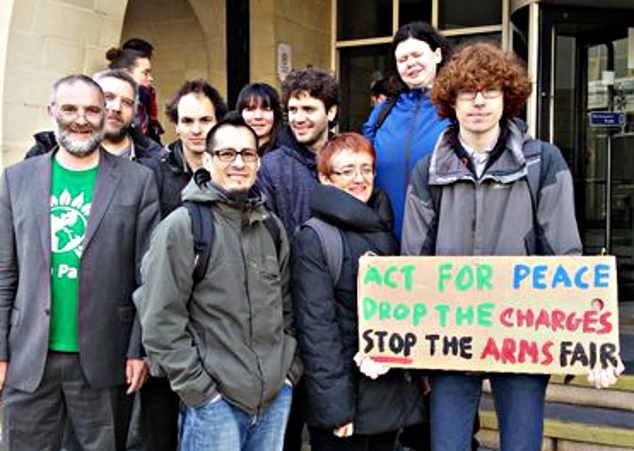
 A more immediate court date is coming up for the alleged YPG volunteer who’s facing charges for allegedly helping fight with the Kurdish resistance against ISIS. After the incompetents at the CPS delayed his first court date, he’s now due back for a court hearing on the 17th of May, and Nottingham Kurdish solidarity campaigners will be standing in solidarity with him outside the court from 1pm on the day.
 In individual news, it’s great that anti-fascist comrade (and brother of the hacker Jeremy), Jason Hammond has now been freed. It’s less great that Janye Waller has been jailed for involvement in the Bay Area uprising that followed the Ferguson verdict – you can support him by donating here, and keep an eye on his support tumblr or facebook to find out how to write to him once he’s got a permanent address.



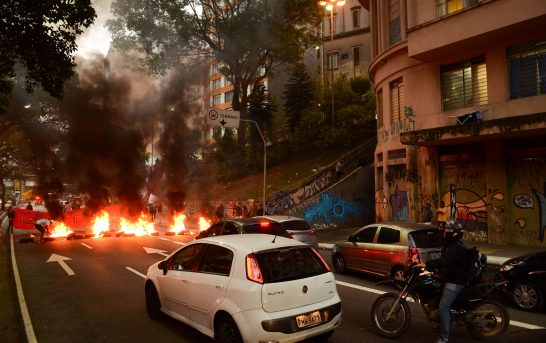 Anti-impeachment protests in Brazil.



 The Free