

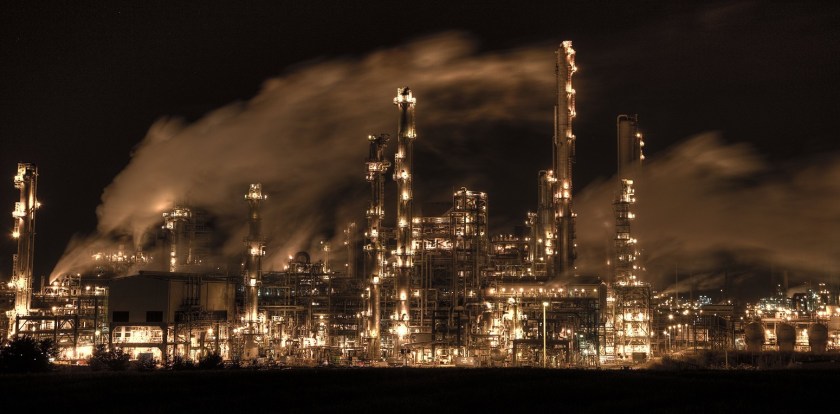
The Gulf coast 0f Louisiana and Texas has the world’s greatest concentration of fossil fuel plants, built and operated as National priority with scant attention to human or environmental health.
Now, even as grass roots victims are fighting back, the monstrous industries are doubling in size, with dozens of new fracking and liquid gas pipelines being laid, gigantic LNG export plants built, and a huge new plastics industry underway as the dirt cheap fuels from the West Texas field and elsewhere arrive.
As coronavirus ravages Louisiana, ‘cancer alley’ residents haven’t given up the fight against polluters
- from Grist, shared with thanks (illustrations added)
- by Rachel Ramire
Four years ago, Sharon Lavigne was diagnosed with autoimmune hepatitis. Blood tests revealed that she had aluminum inside her body.
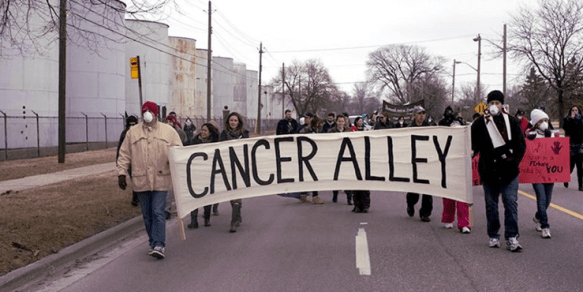
Lavigne has lived all her life in St. James Parish, which sits on an 85-mile stretch of the Mississippi River that connects New Orleans and Baton Rouge, Louisiana. Since the 1980s, it’s been known as “cancer alley.”
According to Environmental Protection Agency (EPA) data, seven out of 10 U.S. census tracts with the nation’s highest cancer risks are located in this corridor, which is already home to more than 150 chemical plants and refineries. When she got her diagnosis, Lavigne didn’t think any of this might be related to her failing health, or that of so many of her friends and neighbors.
“That should’ve been my wake-up call,” Lavigne, 67, told Grist. “But I was teaching in school, uninterested with what’s going on. I was only interested in my job, going home, resting, and taking care of my children and grandchildren. That all changed when I found out that a new plant was coming.”

When she heard that another petrochemical company was planning to set up shop nearby, Lavigne left her job as a special education teacher in 2018 and founded RISE St. James, a grassroots environmental justice group, to try to stop any new development that could further endanger the health of her community. Though the novel coronavirus has hit her parish especially hard — its COVID-19 death rate is the fourth highest in Louisiana and five times higher than the overall U.S. death rate — Lavigne and her allies have not given up the fight.
But the company has a head start. In 2014, the St. James Parish Council had quietly changed the land use plan for Lavigne’s district from “residential” to “residential/future industrial,” welcoming new industry with little public input.

Then, this January, the Louisiana Department of Environmental Quality (LDEQ) approved permits for the Taiwanese plastics manufacturer Formosa to build a $9.4 billion petrochemical complex in St. James Parish, despite data showing that it could more than double the amount of toxic pollutants in the area. Formosa’s own models show that it could emit more of the carcinogenic compound ethylene oxide than just about any other facility in the country.
These levels would exceed the benchmark that the EPA uses to determine if exposure poses cancer risks. (That benchmark is not legally binding, and a Formosa spokesperson wrote in a statement to Grist that the company does not expect its emissions to reach the level specified on its permit applications.) The gargantuan facility will consist of 14 separate plastics plants, two of which are ethylene glycol plants.
On March 31, the EPA’s Office of Inspector General, an independent agency watchdog, put out a report stating that the EPA and LDEQ failed to provide critical information to nearby residents about ethylene oxide emissions and the elevated cancer risks associated with the toxic chemical. In response, however, EPA Administrator Andrew Wheeler demanded that the OIG withdraw the report.

Adding insult to injury for the predominantly black residents who live near the proposed facility in Lavigne’s district, Formosa’s chosen location sits on two former 19th century sugarcane plantations and a slave burial ground.
Although Formosa did not initially disclose this information, a public records request by RISE showed that the company knew that formerly enslaved people were buried beneath the land during its obligatory land survey in 2018. Legal complaints filed against the proposed development cite not only the environmental impacts of building the facility but also the historic and cultural harm of erasing this history.
Formosa has publicly maintained that it followed thorough and conscientious procedures to identify and mitigate both the environmental and cultural impacts of its proposed development. The spokesperson wrote to Grist that Formosa “has met with hundreds of people in the parish” and regularly updates community leaders and stakeholders. The company has also paused construction during the COVID-19 pandemic, citing “an abundance of caution” and concern for its workers.

“Emission modeling was conducted and demonstrated that [Formosa’s] emissions will have predicted ambient concentrations that will be below the state and federal standards established to protect human health and the environment with an added margin of safety,” Janile Parks, the Formosa facility’s director of community and government relations, wrote in an email to Grist. “To address community concerns and as part of [Formosa’s] land use ordinance with St. James Parish, [Formosa] will voluntarily place air quality monitoring along its eastern property boundary to provide data on air emissions.”
A deadly combination

African Americans in “cancer alley” are facing not only the country’s most severe health outcomes in terms of pollution-linked cancer, but also some of its most severe COVID-19 outcomes. As of late April, about 56 percent of those dying from the novel coronavirus in Louisiana were African American, though they comprise only 33 percent of the state’s population. And as of April 26, eight out of the 10 parishes in Louisiana with the highest COVID-19 death rates are in the southeast industrial corridor that includes “cancer alley.”
The Formosa spokesperson wrote to Grist that “officials have not suggested there to be any link between industrial emissions and COVID-19.” The company instead pointed to Louisiana’s elevated rates of diabetes, obesity, and hypertension, which “are especially high among minority communities.”

But research has suggested a link between air pollution and COVID-19 outcomes, independent of other factors. When researchers at Harvard’s school of public health released a study last month showing a relationship between particulate matter (PM 2.5) pollution levels and increased death rates from COVID-19, experts and advocates in Louisiana began to think about what the study means for their state. Kimberly Terrell, director of community outreach at the Tulane University Environmental Law Clinic, identified Louisiana’s PM 2.5 hotspots and looked at the COVID-19 outbreaks in those locations.
“There’s a cluster of COVID-19 deaths along the industrial corridor,” Terrell said at an online press briefing. “The strength of that Harvard study is that it looked at the entire nation, and it looked at a really huge population of people and found this relationship between pollution and death rate — and that relationship can be hard to see, because it’s often obscured by other things like access to healthcare, poverty, unemployment, risk of getting the virus.”
So Terrell set out to look more closely at that relationship. She scraped the raw data from the Harvard study and performed her own analysis. The majority of PM 2.5 hotspots are concentrated along “cancer alley” — and so are the highest death rates from COVID-19. Terrell also measured other COVID-19 risk factors and preexisting health conditions by plotting out the geographic distribution of diabetes and obesity across the state.

Lydia Gerard, right, a member of the Concerned Citizens of St. John, expressing her concerns to David Gray, a regional EPA official, at a public meeting on February 11, 2020.
She found that “cancer alley” residents do not suffer from conditions like diabetes or obesity at higher rates than folks in other parts of the state. This suggests that high levels of PM 2.5 concentrated in Louisiana’s southeast industrial corridor could have had a decisive effect on the severity of its COVID-19 outcomes.
And based on recent trends, the pollution behind all this is set to continue or even worsen. In Louisiana, air quality measurably improved from 2000 to 2015. However, since 2016 the state has reversed that trend. PM 2.5 pollution is increasing again, specifically in the southeast part of the state.
A red light
Myrtle Felton, a member of RISE St. James, has seen her loved ones pass away one by one from cancer and other respiratory illnesses. Back when no industrial facilities loomed over her backyard, she used to enjoy tending to her garden for most of the day. But in the 45 years that Felton has lived in St. James Parish, petrochemical plants have been appearing left and right. Since then, Felton said that she doesn’t like to be outside anymore because of the dirty air.
“So many people here have died of cancer. 2014 was a real awakening for me, because I lost five people that were very close to me,” Felton told Grist. “My sister-in-law died first of cancer in February, then my brother-in-law the next month, then my husband, he died of respiratory problems. If that’s not a red light going on telling me something is wrong, then what is?”
Outside her window, she can already see two chemical facilities on the horizon, and if it wasn’t for the pandemic, she said dark smog would usually obscure her view of the facilities. She worries about what will happen when Formosa’s operations begin.
“Somebody needs to come in and do something,” Felton told Grist as she broke into tears. “Don’t just listen to what I’m saying, feel my heart.”
For now, Formosa is weathering the coronavirus outbreak, but with their permits approved by the state, the next step is to gear up for construction. Residents of St. James Parish vow to continue their fight by telling their stories.
“Feel my pain,” Felton said. “I’m tired. We’re tired.”
This story was originally published by Grist with the headline As coronavirus ravages Louisiana, ‘cancer alley’ residents haven’t given up the fight against polluters on May 4, 2020.
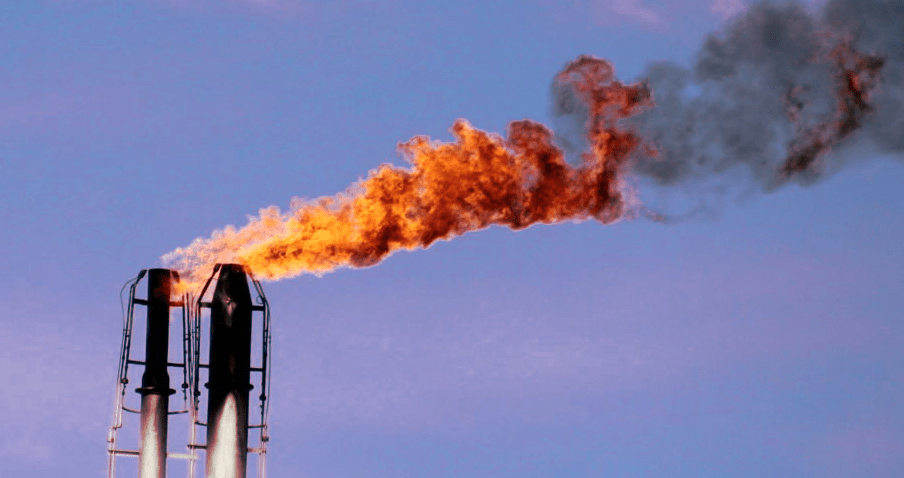
Seeing is Believing Earthworks: Community Empowerment against fracking pollution and climate change.
Creative Commons reuse allowed) shared with thanks
see also: It’s a Vast, Invisible Climate Menace. We Made It Visible.. HERE:https://wp.me/pIJl9-e8w
Texas & New Mexico communities & experts urge COP25 to defuse Permian’s carbon bomb…
Impacted residents travel to Madrid to highlight that planned infrastructure to process & export Permian oil & gas would guarantee catastrophic climate change
- FOR IMMEDIATE RELEASE
Madrid, Dec 4 — Today at an official COP25 side event Texas and New Mexico residents — impacted by the extraction of Permian Basin oil & gas, and by planned infrastructure to transport, process and export it — informed delegates and other attendees that catastrophic climate change is inevitable unless the Permian infrastructure expansion is stopped.
“The Permian Basin is an oil and gas carbon bomb that’s exploding, and it’s happening right now. If we can’t defuse it, the world cannot avoid catastrophic
climate change. Major oil companies are trying to lock in decades more oil and gas demand by building infrastructure from the Permian to the Texas Gulf Coast to transport, process and export the world’s largest current oil & gas play,” said Earthworks’ Energy Campaigner Ethan Buckner.
Between 2018 and 2050, production of new U.S. oil and gas reserves could unlock 120 billion metric tons of new carbon pollution. Meanwhile the U.S. — thanks to Permian production — just marked its first month as a net exporter since records have been kept. If production and expansion are not curtailed, U.S. oil and gas expansion will impede the rest of the world’s ability to manage a climate-safe, equitable phase out of oil and gas production.
Although communities across the region are bearing the brunt of impacts from oil, gas and petrochemical development, those most at risk from the Permian expansion are those already the most impacted by social and environmental injustice. And on Texas’ Gulf Coast — where the oil & gas is processed and exported — they’re suffering twice: from the operations’ toxic pollution, and from intensified climate change.
“I live less than two miles from the Ship Channel in the East End of Houston, TX. My dad was a United Steelworker who died of cancer in 2016, and I was diagnosed with an autoimmune disease that same year. So I’m well aware that workers and fenceline communities are paying with their health the price of daily exposure to toxic pollution from oil and gas infrastructure,” said Ana

No One Should Have to Breathe These Chemicals – AnaParras of Texas Environmental Justice Advocacy Services (@tejasbarrios). HOUSTON — While families across the country celebrated Thanksgiving with their loved ones, more than 50,000 people in Port Neches, Tex., were forced to evacuate from their homes and spend the holiday in makeshift shelters
“America’s national leadership has failed by placing short term gain over global sustainability and ecological responsibility. I am deeply concerned that the wild abandon and insane profits of the oil patch in Carlsbad have exacerbated the divide between rich and poor, creating serious economic injustices,” said Reverend David Rogers, First Christian Church Disciples of Christ, Carlsbad, NM

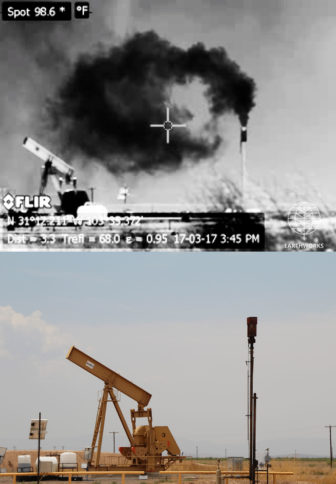
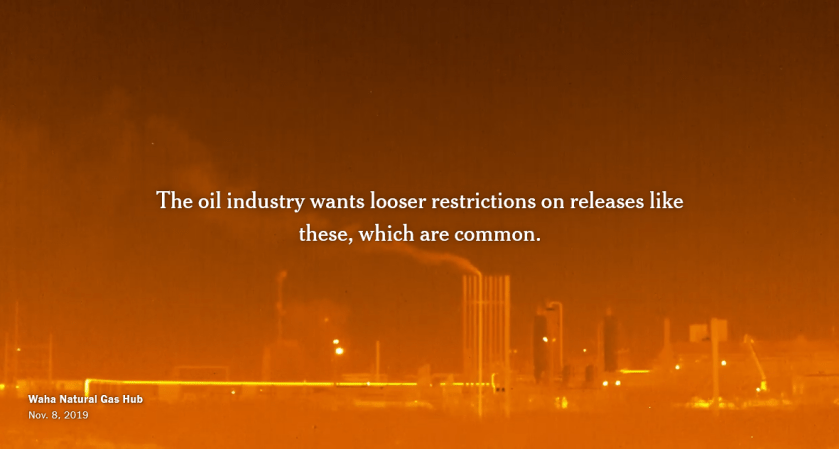
Scientific study and optical gas imaging videos demonstrate that the worst recorded oil and gas methane pollution is in the Permian Basin of Texas & New Mexico. Because methane is 86 times more powerful a climate pollutant than carbon dioxide, and because it only stays in the atmosphere for 12 years while carbon dioxide remains for as long as 200 years, eliminating methane pollution is among the quickest, if not the quickest, way to mitigate future climate change impacts.


photo shared with thanks from The Times exposé https://www.nytimes.com —
“I travel the Permian Basin with an optical gas imaging camera that makes visible the normally invisible methane pollution the oil & gas industry often claims doesn’t exist. If you could see what I see, there might not be a fracking boom. Seeing is believing,” said Earthworks Field Advocate Nathalie Eddy.
Contact: Nathalie Eddy (in Madrid): +1.720.935.7404, neddy@earthworks.org; Alan Septoff (in United States): +1.202.271.2355, aseptoff@earthworks.orghttps://yubanet.com/enviro/texas-new-mexico-communities-experts-urge-cop25-to-defuse-permians-carbon-bomb/Seeingisbelieving,”saidEarthworksFieldAdvocateNathalieEddy
Partnering with communities to protect against fracking-related pollution.Home » Campaigns » Community Empowerment Project
Earthworks’ Community Empowerment Project (CEP) works with communities to protect their health and the climate by making visible normally invisible air pollution from oil and gas facilities. With video evidence in hand, we work side-by-side with impacted residents to pressure regulators and companies to reduce pollution.
Earthworks’ Community Empowerment Project (CEP) works with communities to protect their health and the climate by making visible normally invisible air pollution from oil and gas facilities. With video evidence in hand, we work side-by-side with impacted residents to pressure regulators and companies to reduce pollution.

Together we spotlight regulators’ responsibility to protect the public from the industry’s pollution — and hold them accountable when they don’t.
Find Pollution Near You & Take Action
Earthworks ITC-certified staff travel the United States and internationally exposing oil and gas air pollution using our optical gas imaging cameras. Zoom in on the map below to find camera icons indicating the worst of our 700+ videos of pollution from oil and gas sites.
Earthworks’ team of experts uses these videos to file official complaints with state and national regulators, and to help communities do the same. Once regulators respond to our complaints we add them to the map. Zoom in on the map below to find paper and pencil icons that track closed complaints and any related actions.

You are not alone. Over 12.6 million people in the United States live within half a mile of an oil and gas facility, a distance within which health impacts have been most clearly correlated by peer-reviewed science. Zoom in on the map below to find a person icon and hear some of their stories. To add your story, contact us at info [at] earthworks.org.
Get help. Fill out a form at the bottom of this page to bring Earthworks’ CEP to your community, get help filing an official complaint or to share a complaint you already filed with Earthworks.
There is a huge global spike in methane, one of the most potent greenhouse gases driving climate change over the last decade, according Harvard University Studies. The U.S. is the biggest culprit, mostly from oil and gas fracking wells, there are over a million of them, with half already abandoned. Obama introduced laws so that the industry would -voluntarily- at least measure the leaks. But even that is being repealed by the Trump administration, a criminal and ecocidal policy in the light of years of concrete scientific proof that the methane emissions are tipping us towards imminent uncontrollable climate chaos.. Controlling methane emissions would be a quick way to pause climate change, while CO2 remains in the atmosphere for many decades.
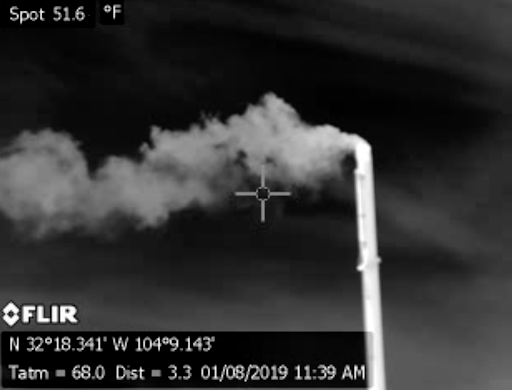
Invisible Air Pollution
Oil and gas pollution can cause health problems for nearby communities ranging from asthma and nosebleeds to increased risk of cancer. It also releases large volumes of methane, a potent climate pollutant 86 times worse for climate than carbon dioxide.
Our state-of-the-art OGI cameras, operated by our ITC-certified thermographers, make visible 20 normally invisible volatile organic compounds, including the carcinogens benzene and toluene, and methane.
Thanks to generous Earthworks supporters, we have been documenting pollution with FLIR GasFinder 320 optical gas imaging (OGI) cameras since 2014. Our cameras are the same model used by industry and government agencies to detect leaks and chronic pollution, and our camera operators receive the same training.
How can CEP help you?
- Request a Visit
- Get Help Submitting a Complaint
- Share Your Complaint with Earthworks
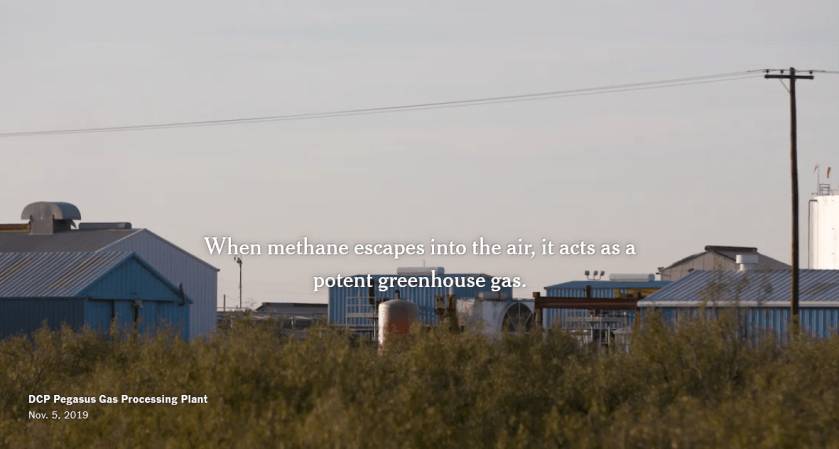

photo shared with thanks from The Times exposé https://www.nytimes.com — https://www.youtube.com/embed/UwAvP-vrHsw?version=3&rel=1&fs=1&autohide=2&showsearch=0&showinfo=1&iv_load_policy=1&wmode=transparent https://www.youtube.com/embed/G7_na2a6u00?version=3&rel=1&fs=1&autohide=2&showsearch=0&showinfo=1&iv_load_policy=1&wmode=transparent

Related Posts

Climate-lethal US frack-gas arrives in Spain via Gas Natural Fenosa
US to flood EU with ‘Frack Gas’, now proven ‘Much Worse Than Coal’
What is the real cost of cheap Russian gas? STOP both US and Russian Climate Criminals
The US Fracked Gas has been shown to be at least twice as lethal for the world climate as coal, due to massive methane leaks. However the Trump led regime has cancelled all methane measuring regulations in the industry, despite a a recent study from Harvard, and still sells the myth that gas is a less dangerous ‘transition fuel’.
U.S. And European Activists Host #BreakTheFrackingCycle demonstrations have sought to amplify, … fighting back against the expansion of fracked gas projects. If built, the Rio Grande LNG terminal would be the single-largest source emitter
Public Resistance in the US is limited as Water and Environmental laws were suspended for the gas and oil fracking entrepeneurs and compensation is impossible for the huge public and animal health epidemics caused by exploding lethal chemicals in huge quantities close to groundwater.
US Fracking has benefited from state support, free loans and exemption from environmental and climate costs. Even so the industry has always been close to bankruptcy, wells are short lived and up to half a million are abandoned, many with lakes of toxic chemicals.
Nevertheless Fracking has made the US self sufficient in energy, and the web of pipelines bringing the gas and oil mostly to the Texas Gulf coast has spawned a huge LNG export industry, now set to expand fivefold, and a giant LPG volume supplying a mushrooming plastics industry.
RELATED POSTS
see also: It’s a Vast, Invisible Climate Menace. We Made It Visible.. HERE:https://wp.me/pIJl9-e8w
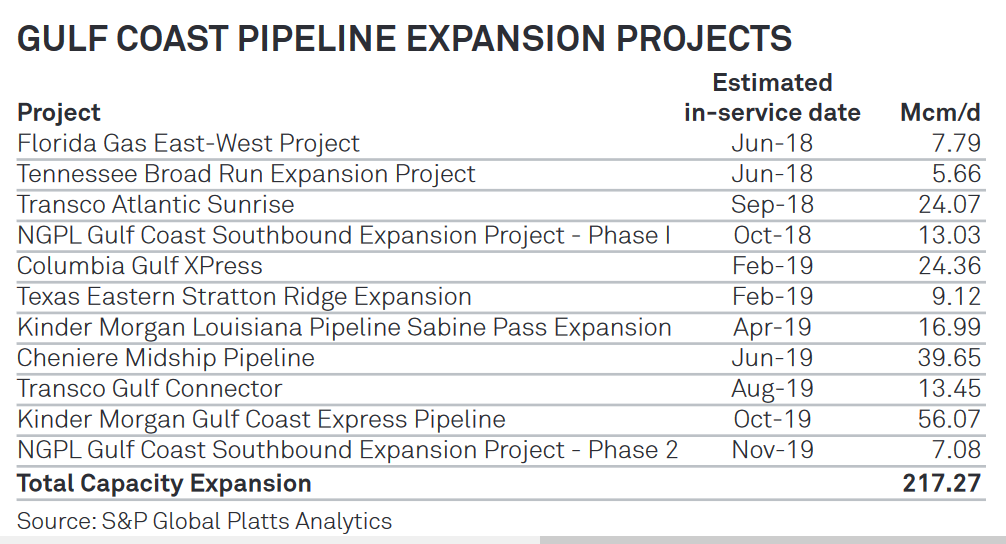
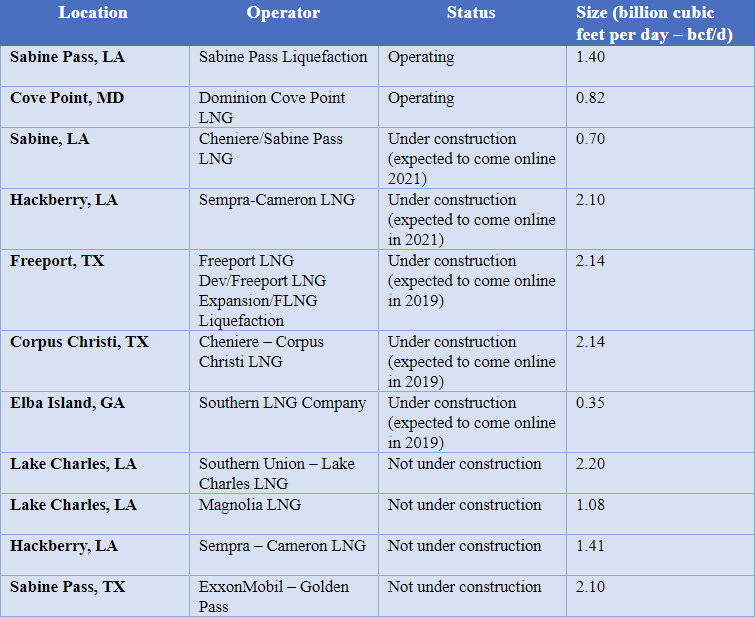
Gulf Coast Fracked Gas pipeline projects Oct 2018
Plants to Export US LNG Fracked Gas, 2018.
Efforts to force the Fracked Gas on Europe continue, with open blackmail of US dependent European states, linking anti Russian sanctions relief to buying Fracked Gas and vetoing the Russian Northstream 2 pipeline. New terminals have been built in US friendly Lithuania and Poland, as well as a new scheme of discounts to the Henry Hub US pricing system the Fracked Gas is pegged to.
Algeria Green-lights climate-lethal Fracking Gas with EU Imperialists TOTAL and CEPSA

Repsol Looting Libya: profits unaffected by Pipeline Sabotage:
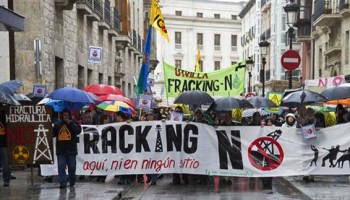
- STOP el Gas de Fracking que Gas Natural Fenosa Lleva a España
- Climate-lethal US frack-gas arrives in Spain via Gas Natural Fenosa
- Noise Demo as new LNG Tanker Docks in illegal Galicia plant where 1st Frack Gas arrived


- Natural Gas & Climate Change: A Bridge to Nowhere – Greenpeace
- First U.S. Natural Gas Shipped to Poland
- Trump To Urge European Allies To Dump Russia, Buy U.S. Gas
- US and Russia step up fight to supply Europe’s gas – Financial Times
- U.S. LNG Exports to Lithuania A Chink in Russia
- Map of Fracking in US
- US forcing and bribing Europe to accept Frack Gas
- Informe Fracking España: el Gran Fracaso del Mister Millonario
- US to flood EU with ‘Frack Gas’, now proven ‘Much Worse Than Coal’
- The Methane Bomb: New Proof that Frack Gas is Twice as Bad as Coal for Climate
- El Constitucional suspèn la primera llei contra el ‘fracking’—
- La-situacion-escandalosa-de-gas-natural-fenosa-y-su-responsabilidad-en-la-creacion-de-pobreza-energeticaA recent study from Harvard, published in Geophysical Research Letters by Turner et al used satellite data over the US and found a 30% increase in methane releases since 2002.
- **UPDATE: The Cornell paper is now available in final, published format here: “Methane and the greenhouse-gas emissions footprint of natural gas from shale formations.”[PDF]
- Stop Frack Oil! Stop Fossil Fuels! ..Save Earth for our Kids!
- First-Ever US Shale Gas Export To Hit Brazil’s Shores With Sabine
- Repsol gana 5% con ‘Fracking’ Argentina
- HUGE SUN TAX OUTLAWS USE OF SOLAR ENERGY IN SPAIN
- Watch: River Explodes Into Flames From Methane Coming From Nearby Fracking Sites
- Fracking water causes Cancer: Here’s the proof
- Repsol causes worst ever Fracking Earthquake
- Chris Hedges: Death by Fracking
- 70m toxic frack barrels pumped into California aquifer
- #Fracking Spain Report: Millionaire exposes himself in Public
- Fracking Resistance spreads
- Fracking for ‘tight oil’..huge toxic boom in US.
- BBC changes fracking story to help ‘deniers’
- https://thefreeonline.wordpress.com/2016/08/19/native-americans-block-pipeline/
EN TWITTER…https://twitter.com/search?q=%23+NoAlFrackGasDelTrump. #NoAlFrackGasDelTrump
Failure of US bid to flood Europe with Gas from Fracking

Cancer Alley Communities battle Exxon in Louisiana

More proof Methane spike due to US ecocidal Frackers.. Stopping it could delay Climate Catastrophe
Ecocidal US Frackers, to get a Bailout: Nationalism, Oil and Climate Crime in Texas
In “social revolution”

 The Free
Reblogged this on NoMésGas.
LikeLike