

https://kaosenlared.net/
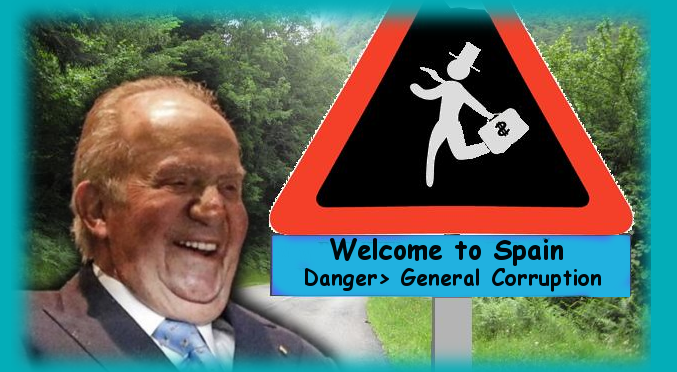
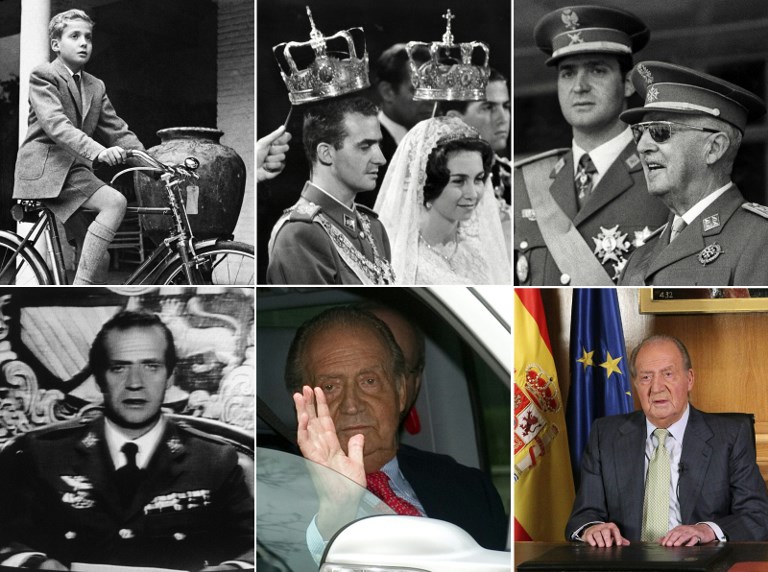
In recent days, the Supreme Court hearings continue for the crimes of “insulting the Crown” by the twelve rappers of La Insurgencia, Pablo Hasel, and Valtonyc, among others. Meanwhile, the ex king prepares his luxurious exile in the Caribbean.
By Jose Lavín at https://kaosenlared.net/ translations/ images added
“The person of the King is inviolable and is not subject to liability.”
The Supreme Court has confirmed the sentence of nine months in prison for rapper Pablo Hasel for the crime of insulting the Crown and the Security Forces. Regarding the twelve rappers of The Insurgency, the Supreme has met this week to decide on the sentence of nine months in prison.
The rapper Valtonyc escaped and is in exile iun Belgium. The Belgian Court of Appeal will announce the final decision next September 8 after meetings on Tuesday with the defense of the Mallorcan rapper. Valtonyc fled the Spanish State with the aim of avoiding a sentence ratified by the Supreme Court of three and a half years in prison for, among other things, insulting the Crown.
Meanwhile, the Spanish Supreme Court has finally agreed to take up the investigation opened by Anticorruption on the role of ex King Carlos in the construction of the High Speed Train lines in Saudi Arabia, without considering, however, the clarification of corruption cases.
If the money laundering resulting from those commissions occurred before 2014, Juan Carlos will remain, once again, unpunished as a consequence of the “inviolability” of the monarchy.
Several sources affirm that the judicial investigation on the former Head of State may be accelerating his decision to leave Spain to settle in the Dominican Republic.
The crime of Insulting the Crown continues to give us a lot to talk about, there are numerous convictions and fines in this regard, such as, for example, the fine of 3,000 euros for cartoonists of the magazine Jueves. Fines are also common for social networks posts on Facebook or Twitter, etc that the Spanish Justice considers insulting or “unnecessary vilification”.
Organizations such as the European Court of Human Rights have already criticized the existence of the crime of Insulting the Crown, stating that protecting the king in a special way in terms of insults and calumnies does not comply with the spirit of the European Convention on Human Rights that Spain signed.
Furthermore, the UN Human Rights Committee has reiterated its “concern” about the existence of crimes that criminalise “disrespect for flags and symbols or defamation of the head of state.”
Another local characteristic and very peculiar in Spanish jurisprudence is the use of the “hate crime” against the burning of images of the monarchs. The criminal type of “hate crime” was created, supposedly, with a view to combating discrimination against vulnerable groups.
However, on several occasions the Constitutional Court has justified the convictions for insults to the Crown, considering them one more manifestation of the aforementioned “hate crime”. Burning photographs of the King in public protests can be punished with prison terms of between six months and two years.
However, while Justice is severe against public rejection of the monarchy, insults, and criticism of the institution, the material act of corruption, money laundering and tax fraud go completely unpunished.
The paradox of this repression of Spanish Justice of freedom of expression in relation to insults and criticism of the monarchy, is this complete impunity and the absence of clarification of the numerous cases of corruption of the Royal Household.

Royal Impunity, far from being an isolated event, is a structural piece of the Spanish ‘Regime of 1978‘ that is established in article 53.6 of the Constitution: “The person of the King is inviolable and is not subject to liability.” This article of the Constitution is, in fact, a “free reign” guarantee for the Royal House and for the actions of the monarch’s commission agent, a key element in relations with the Saudi dictatorships and an essential contact for the great fortunes of the Spanish State. .
Last Monday it was announced that the Supreme Prosecutor’s Office will investigate the royal bribery charges of 100 million euros. The investigation process taken up by the Supreme Court will directly investigate Juan Carlos for his role in the alleged commissions for the award of the works of the high speed train to Mecca, a construction carried out by a consortium of 12 Spanish companies.
According to a public note released by the Prosecutor’s Office, the investigation will focus merely on “delimiting or ruling out the criminal relevance of the events” only after June 2014, when Juan Carlos stopped being protected by the inviolability of article 56.3 of the Constitution. . Tax sources affirm that Anticorruption has verified indications of crimes related to money laundering and tax fraud.
The limitations imposed by inviolability will lead the investigation to restrict itself to trying to confirm these indications and see if they extend to the post-abdication stage of Juan Carlos I. If it was before 2014, the robbery will be covered by law in the constitutional article of the “inviolability” of the monarch.

What happens to the Supreme Court investigation largely depends on how far the Swiss Prosecutor’s investigation goes. Meanwhile, different sources in the Dominican Republic have confirmed to Diario16 that Juan Carlos has already prepared his new luxury residence in the Dominican Republic, a paradise for fortunes like himself (around 2,000 million euros according to Forbes magazine) and large businessmen from all the world.
He may flee to that Carribean residence if the judicial and media siege continues to narrow. Journalist for the British newspaper The Telegraph, James Badcock, who uncovered the main economic scandals of the Bourbons, has stated that “there are many more scandals that can come out”. The journalist affirms that it is questionable “that Felipe VI was able to make a separation by cleaning his reign from that of his father”, and, he continues, “some sources are telling me that pressure is being received from Spain not to investigate too much into the King’s fortune” .
The corruption of the Spanish monarchy, now embodied in the figure of Juan Carlos, endangers the increasingly questioned image of his son Felipe VI, and, therefore, all the client networks that keep the Spanish monarchy united with other great fortunes of the State. The Juan Carlos scandals have already pushed Felipe VI to announce that he was renouncing his personal inheritance and to remove from Juan Carlos the “stipend” established in the Casa del Rey’s budgets: 194,232 euros per year.
The exit of Juan Carlos seeks to function, again, as a kind of “firewall”, it is the same firewall effect that was sought with his abdication in favour of Felipe VI, that is, to prevent a joint questioning of the institution of the monarchy , of his relations with other great personalities of Spanish capital, and, consequently, of the whole of the Regime of 1978. (translators note: ‘The Regime of 78’ refers to the agreement to end the fascist dictatorship, on the condition of a general amnesty and eternal impunity for the hundreds of thousands of killings and massive usurpation of property, etc during its 40 year rule.)
However, this is not all. The possible departure of Juan Carlos de Borbón to the Dominican Republic is also a way to protect himself against possible summons or claims by the courts, since the extradition treaty between Spain and the Caribbean country in its article 8 indicates that: “It will not be granted extradition when the criminal liability has been extinguished by prescription or other cause, in accordance with the legislation of either Party. ” Therefore, it would be very difficult for the Dominican State to grant Spain extradition if it were required.

While Spanish Justice pursues the freedom of expression of the rappers and rejection of the cases of corruption of the monarchy, it keeps the Royal House untouched and undefiled. Spanish Justice is, by omission, complicit in its crimes. The political parties of the regime are not far behind, as good participants in that monarchical order, PP, Ciudadanos, VOX and the PSOE have already repeatedly refused to allow the corruption scandals of the royal house to be investigated by Congress.
In the case of Unidas Podemos, ( the new ‘radical left‘) the same ministers are now part of the ruling PSOE coalition. The scandalous support of Unidas Podemos of the veto in Congress to the initiative of the CUP party for the King to appear in Congress about the contracts with Saudi Arabia has signalled the party’s total integration of Unidas Podemos in the ‘Regime of 78’.
Source: La Izquierda Diario via https://kaosenlared.net/ translations/ images added
VER ORIGINAL EN CASTELLANO MÁS ABAJO
Related Posts
Spain extends Gagging Laws to the Internet by Royal Decree – The Free
Rapper on the Run .. Valtònyc, fleeing 3.5 years in Spanish Jail for anti-Royal Lyrics | The Free
Dozens of Festivals invite jailed anti-royal Rapper Valtonyc to Perform | The Free
40.000 convicted by Spanish Gag Laws, 6.217 for Insulting Police | The FreeEdit
Gagging Resistance: Rappers face up to 30,000 fine for Anti Police song | The Free
Bankia occupied after Debt Suicides
España, paraíso de los políticos Corruptos
Spain: 30 anti-fascists held. New law fines up to 600,000 euros for demos
Ten shocking facts about fascist crimes in Spain
Women hold Biggest Ever Feminist Strike Day yet
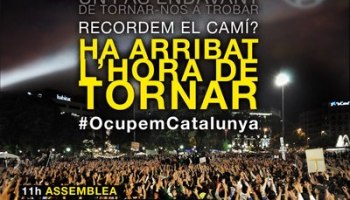
Occupy the Plaza 2013.. starting already

La Cooperativa Integral y el Caído del Capitalismo
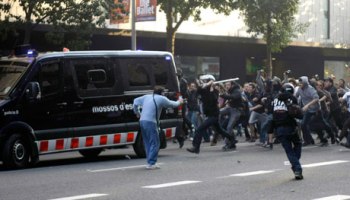
Videos From 14 Nov General Strike in Europe
Massive Fight for Social Revolution. Sat 22M Madrid

regalados 10.000.000.000 robados

Sábado 17 febrero [Concentración] Paremos la guerra de Turquía contra Efrîn

Ocupamos el Congreso martes 25 sept
España, paraíso de los políticos Corruptos
Deluge of Scandals and Poverty as Spanish elite claim ‘Recession is Over”.
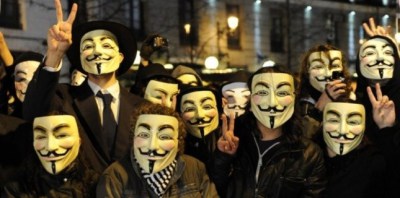
lista actualizado Oct 2014...http://wiki.15m.cc/wiki/Lista_de_pol%C3%ADticos_imputados
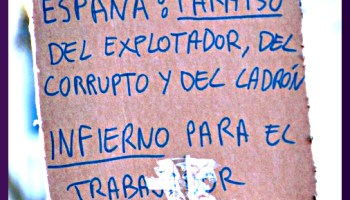
Ley de Alquileres: España: Paraíso del Explotador
PP es Corrupción : ..Delincuentes Organizados ”gobiernan” el Estado
I
Politicos corruptos reeligidos..Luz Verde para Robar
Cables contables
- Documents ‘implicate Spanish PM’ (bbc.co.uk)
- Spanish Anonymous 3 still await Show Trial
- Open the Box! Far right Politicos to face Jail?!
- Politicians continue Mass Evictions, order Police to attack Doorstep Demos
- Bárcenas confirms allegations of illegal financing of Spain’s PP to El Mundo’s director (eurointelligence.com)
- Spanish corruption scandal threatens to unseat prime minister Mariano Rajoy (irishtimes.com)
- España, paraíso de los políticos Corruptos
- General Strikes..Surround Spanish Congress..14to15 Nov « The Free
- Estafa en la luz: Desmontando Mentiras | The Free
- Swindled, evicted and denounced as ‘The New Nazi of Spain’
- Spain: Pressure grows as Giant Demos Join
- Spain: Farsa electoral/Both Parties to cut dole /health /schools..
- King called a ”drunken idiotic brainless bastard pimp..”..State demands 15 months prison
Related
Deluge of Scandals and Poverty as Spanish elite claim ‘Recession is Over”.
Open the Box! Far right Politicos to face Jail?!
In “Stop State and Capitalist criminals”
Trial of Anonymous in Spain.. Evidence Questioned or Missing
Spain’s Fascist rulers let slip their Mask of Democracy
Informe Fracking España: el Gran Fracaso del Mister Millonario
General Strike 14-N, Spain: 155 arrests, 77 injured, woman loses an eye.
Ley de Alquileres: España: Paraíso del Explotador
…
…
original en Castellano
El rey corrupto al caribe y los raperos a la cárcel por injurias a la corona
Durante los últimos días continúan los procesos del Supremo por los delitos de “injurias a la Corona” a los doce raperos de La Insurgencia, Pablo Hasel, y Valtonyc, entre otros. Mientras tanto, el rey emérito prepara su exilio de lujo en el caribe.
Durante los últimos días e
El Tribunal Supremo ha confirmado la condena a nueve meses de prisión para el rapero Pablo Hasel por el delito de injurias a la Corona y a las Fuerzas de Seguridad. Respecto a los doce raperos de La Insurgencia, el Supremo se ha reunido esta semana para decidir sobre la condena de nueve meses de prisión. Ante una tesitura similar se encuentra el rapero Valtonyc. La Corte de Apelación belga dará a conocer el 8 de septiembre la decisión final tras las reuniones de este martes con la defensa del rapero mallorquín. El rapero se encuentra en Bélgica tras salir del Estado español con el objetivo de evitar la condena ratificada por el Supremo de tres años y medio de cárcel por, entre otras cosas, injurias a la Corona.
Mientras todo esto sucede, el Tribunal Supremo retoma la investigación abierta por Anticorrupción sobre el papel del rey emérito en la construcción del AVE en Arabia Saudí, sin plantearse, sin embargo, profundizar en el esclarecimiento de los casos de corrupción.
Si el lavado de dinero producto de aquellas comisiones se produjo antes del 2014, Juan Carlos quedará, una vez más, impune como consecuencia de la “inviolabilidad” de la monarquía. Varias fuentes afirman que el cerco judicial sobre el ex Jefe del Estado puede estar acelerando su decisión de salir de España para afincarse en la República Dominicana.
El delito de injurias a la Corona continúa dando mucho que hablar, son numerosas las condenas y multas al respecto, como, por ejemplo, la multa de 3000 euros a los dibujantes de El Jueves. Multas que también tienen lugar como consecuencia de aquellas publicaciones en redes sociales como Facebook o Twitter que la Justicia española considera insultantes o “vilipendios innecesarios”.
Organismos como el Tribunal Europeo de Derechos Humanos ya han criticado la existencia del delito de injurias a la Corona, afirmando que proteger de manera especial al rey en materia de injurias y calumnias no se ajusta al espíritu del Convenio Europeo de Derechos Humanos que España suscribió. Es más, el Comité de Derechos Humanos de la ONU ha reiterado su «preocupación» por la existencia de delitos que protegen especialmente «las faltas de respeto por las banderas y los símbolos o la difamación del jefe de Estado».
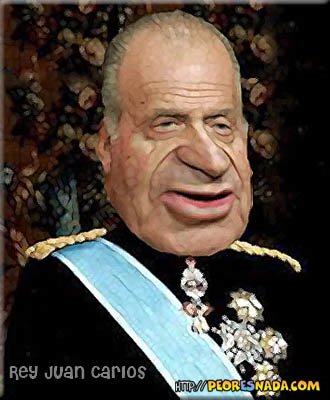
Otra característica “autóctona” y muy peculiar en la jurisprudencia española es la instrumentalización del “delito de odio” en defensa de la monarquía ante la quema de imágenes de los monarcas. El tipo penal del “delito de odio” fue creado, supuestamente, con vistas a combatir la discriminación de colectivos vulnerables.
Sin embargo, en varias ocasiones el Tribunal Constitucional ha justificado la condena de delitos de injurias a la Corona considerándolos una manifestación más del susodicho “delito de odio”. La quema de fotografías del Rey en protestas públicas puede llegar a ser castigada con penas de prisión de entre seis meses y dos años.
Sin embargo, mientras que la Justicia se muestra severa contra el acto simbólico y legítimo de rechazo público hacia el monarca, el insulto, y la libertad de crítica a la institución, el acto material de la corrupción, el blanqueo de dinero y el fraude fiscal quedan completamente impunes.
Lo paradójico de esta “mano dura” de la Justicia española hacia la libertad de expresión en lo relativo a los insultos y críticas a la monarquía, es la completa impunidad y la ausencia de esclarecimiento de los numerosos casos de corrupción de la Casa Real. Una mano dura que siempre va “hacia abajo”.
La impunidad, lejos de ser un hecho aislado, se trata de una pieza estructural del Régimen del 78 que queda establecido en el artículo 53.6 de la Constitución: “La persona del Rey es inviolable y no está sujeta a responsabilidad”. Este artículo de la Constitución es, en los hechos, una garantía de “barra libre” para la Casa Real y para las acciones de comisionista del monarca, pieza clave en las relaciones con las dictaduras saudíes y contacto imprescindible para las grandes fortunas del Estado español.
Este lunes se ha conocido que la Fiscalía del Supremo investigará las acusaciones de cohecho de 100 millones del emérito. El proceso de investigación retomado por el Tribunal Supremo investigará directamente a Juan Carlos por su papel en las supuestas comisiones pagadas por la adjudicación de las obras del llamado AVE a La Meca, una construcción realizada por un consorcio de 12 empresas españolas.
Según una nota pública difundida por la Fiscalía, la investigación se centrará meramente en “delimitar o descartar la relevancia penal de los hechos” posteriores al mes de junio de 2014, cuando Juan Carlos dejó de estar protegido por la inviolabilidad del artículo 56.3 de la Constitución.
Las fuentes fiscales afirman que Anticorrupción ha constatado indicios de delitos relacionados con el blanqueo de capitales y fraude fiscal. Sin embargo, las limitaciones impuestas por la inviolabilidad llevarán a que la investigación se restrinja a tratar de confirmar esos indicios y ver si se extienden a la etapa posterior a la abdicación de Juan Carlos I. En caso de ser antes de 2014 el robo estará amparado por la ley en el artículo constitucional de la “inviolabilidad” del monarca.
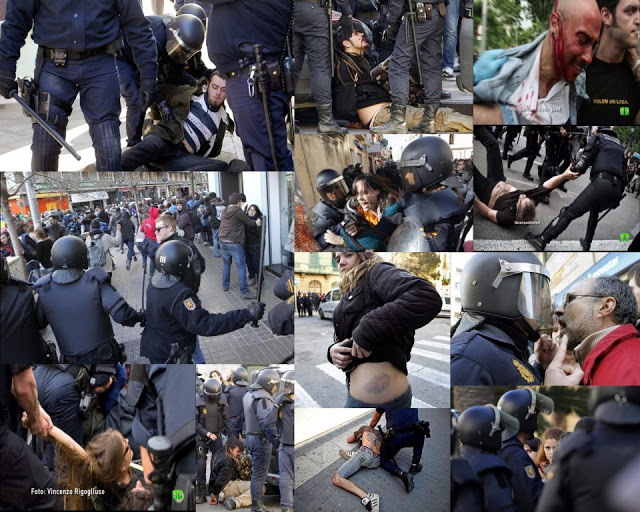
Lo que ocurra con la investigación del Tribunal Supremo depende en gran parte de hasta dónde llegue la investigación de la Fiscalía de Suiza. Mientras tanto, diferentes fuentes en República Dominicana han confirmado a Diario16 que Juan Carlos ya tiene preparada su nueva residencia de lujo en República Dominicana, un paraíso para fortunas como él (en torno a 2.000 millones de euros según la revista Forbes) y grandes empresarios de todo el mundo.
A esa residencia podría tener intención de acudir en caso de que el cerco judicial y mediático continúe estrechándose. El periodista del diario británico Telegraph, James Badcock, que destapó los principales escándalos económicos de los Borbones ha afirmado que “hay muchísimos más escándalos que pueden ir saliendo”. El periodista afirma que es cuestionable “que Felipe VI haya podido hacer una separación limpiando su reinado del de su padre”, y, continua, “algunas fuentes me están contando que están recibiéndose presiones desde España para no investigar demasiado en la fortuna del Rey”, finalizó Badcock.
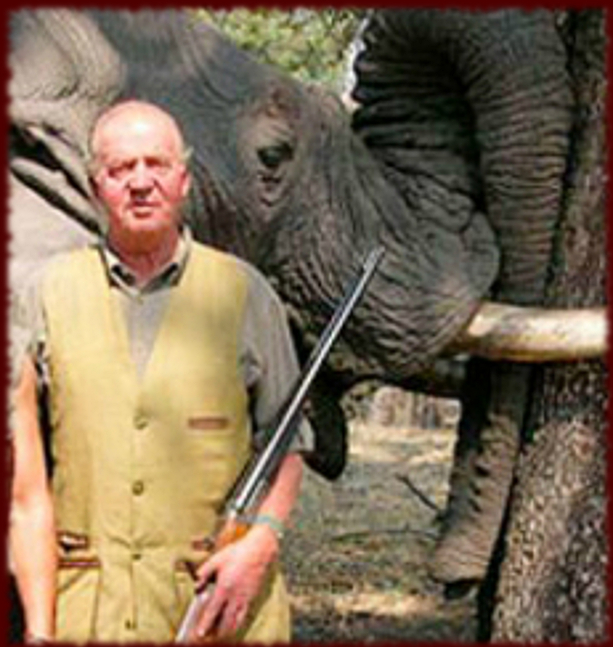
La corrupción de la monarquía española, encarnada ahora en la figura de Juan Carlos, pone en peligro la cada vez más cuestionada imagen de Felipe VI, y, por tanto, todas las redes clientelares que mantienen cohesionada a la monarquía española con otras grandes fortunas del Estado.
Los escándalos de Juan Carlos ya empujaron a Felipe VI a anunciar que renunciaba a su herencia personal y a quitar a Juan Carlos el “estipendio” establecido en los presupuestos de la Casa del Rey: 194.232 euros anuales. Ahora la marcha de Juan Carlos buscaría funcionar, otra vez, como una suerte de “cortafuegos”, se trata del mismo efecto cortafuegos que se buscó con su abdicación en Felipe VI, esto es, impedir un cuestionamiento de conjunto de la institución de la monarquía, de sus relaciones con otras grandes personalidades del capital español, y, en consecuencia, del conjunto del Régimen del 78.
Sin embargo, esto no es todo. También la posible marcha de Juan Carlos de Borbón a República Dominicana es una vía para protegerse frente a posibles citaciones o reclamaciones de los tribunales, puesto que el tratado de extradición entre España y el país caribeño en su artículo 8 indica que: “No se concederá la extradición cuando la responsabilidad penal se hubiere extinguido por prescripción u otra causa, conforme a la legislación de cualquiera de las Partes”. Por lo cual sería muy difícil que el Estado dominicano le concediera a España la extradición en caso de que fuera requerida.
Mientras la Justicia española persigue la libertad de expresión de los raperos en rechazo a los casos de corrupción de la monarquía, mantiene intocable y sin mácula a la Casa Real. La Justicia española es, por omisión, cómplice de sus delitos. Los partidos del régimen no se quedan atrás, como buenos partícipes de ese orden monárquico, PP, Ciudadanos, VOX y el PSOE ya se han negado varias veces a que los escándalos de corrupción de la Casa real se investiguen desde el Congreso.
En el caso de Unidas Podemos sus mismos ministros son parte de un gobierno promonárquico junto al PSOE. El escandaloso apoyo de Unidas Podemos al veto en el Congreso a la iniciativa de la CUP para que el Rey comparezca por los contratos con Arabia Saudí vino a rubricar la integración total de Unidas Podemos al régimen del 78.
Fuente: La Izquierda Diario

 The Free