Video of the protests in Oakland over last few days. Also see articles on Minneapolis and the crisis of US capitalism, and other related articles including a solidarity letter from the Somali Public Trade Union.
In this video, we provide an update on the Julian Assange case and recap the main points from the June 1st administrative hearing. Assange, who was too ill to attend the hearing, faces the second half of his substantive extradition hearings in September. Judge Baraitser failed to secure a venue for the September hearings and […]
Below, we present a letter from anarchist participants in la primera línea, the “first line” of the powerful social movements that broke out in Chile in late 2019.
Expressing solidarity with the demonstrators responding to the murders of George Floyd, Breonna Taylor, and countless other Black people, they relate their experiences in the uprising in Chile and discuss the challenges facing movements for social change today.
At the end, they include an English translation of a guide from Chile for dealing with tear gas and other threats during demonstrations.
A wall memorializing demonstrators murdered by the Chilean state in the course of the 2019 protests.
Latin America looks at the United States as the imperial power. Our dictators were installed by the support of US governments. US companies monopolize our economy and collude to raise prices and decrease wages. Meanwhile, Wall Street finances the extractive industries that are poisoning our water, soil, and bodies.
Most Chileans only know the US from movies and television—skyscrapers and wealth. On October 18, Chile despertó, [woke up] as Santiago’s metro was shut down, one out of every six of the country’s Walmarts were looted, and protests erupted against an entire political class—both the right and the left—that are merely the middlemen between the population and the wealthiest ones who manage the country’s position in the global economy.
Since the widespread revolt against the police after the killing of George Floyd, the Chilean news has no choice but to show the true character of US poverty, racial inequality, and popular rage. Chilean meme pages created during the October revolt now turn their eyes to the energy and passion in the streets across the US. The view from the south—in the words of the fruit vendor next to my house—is that estados unidos despertó, the United States woke up.
We are a group of friends, writing to all of you in the US about our experience of what such a revolt can look like as it stretches on for months. When the governments declare state of emergency and call on the military and citizens alike in an attempt to force a return to normalcy.
They attempt to portray a world of clear divisions—between peaceful protestors and criminal delinquents, between normalcy and crisis, between human rights and national security, between good cops and bad apples. We would like to offer our reflections from the past few months in Chile to suggest that these divisions are far from clear and that the struggle for dignity rests on ignoring them all together.
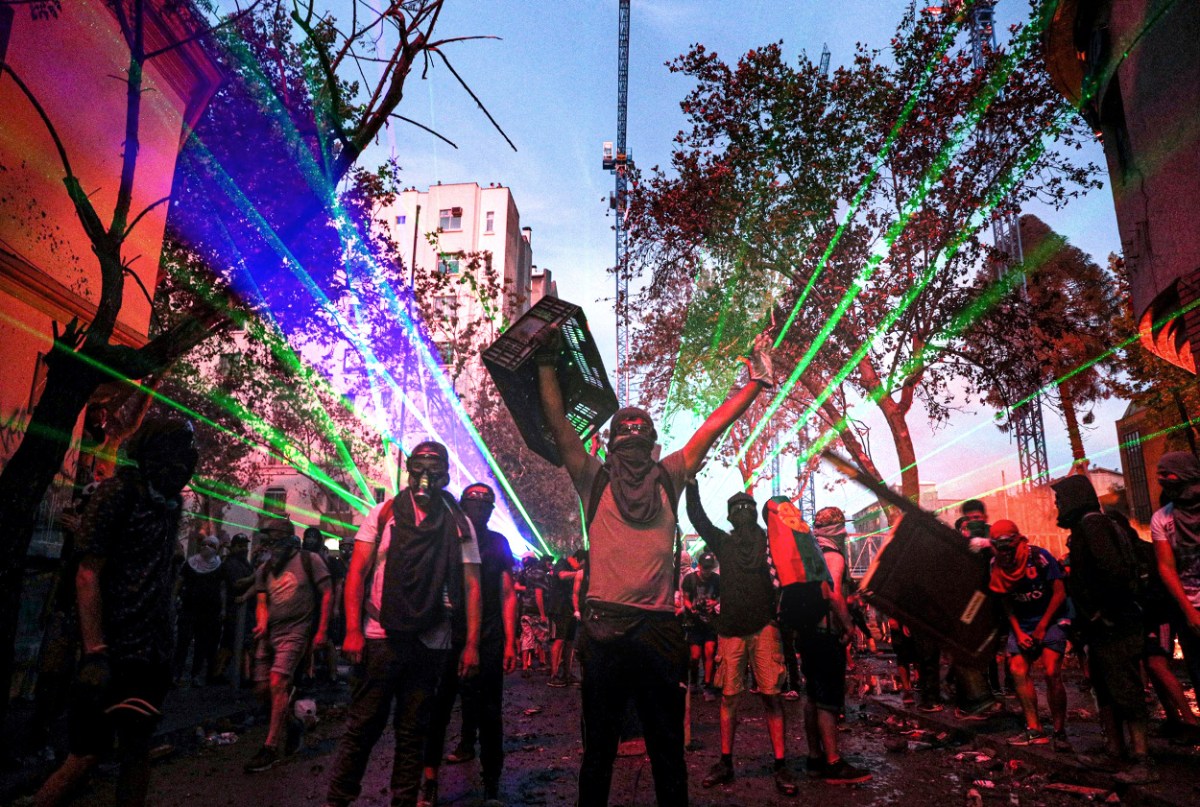
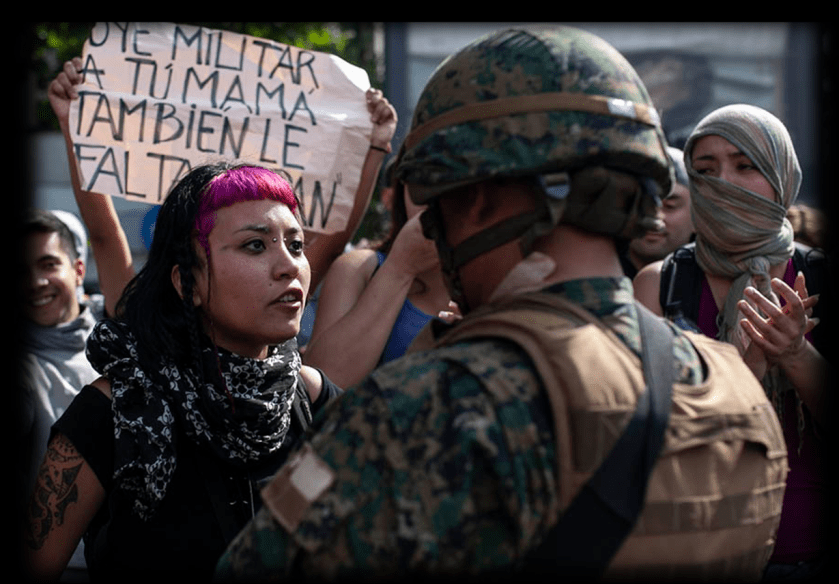
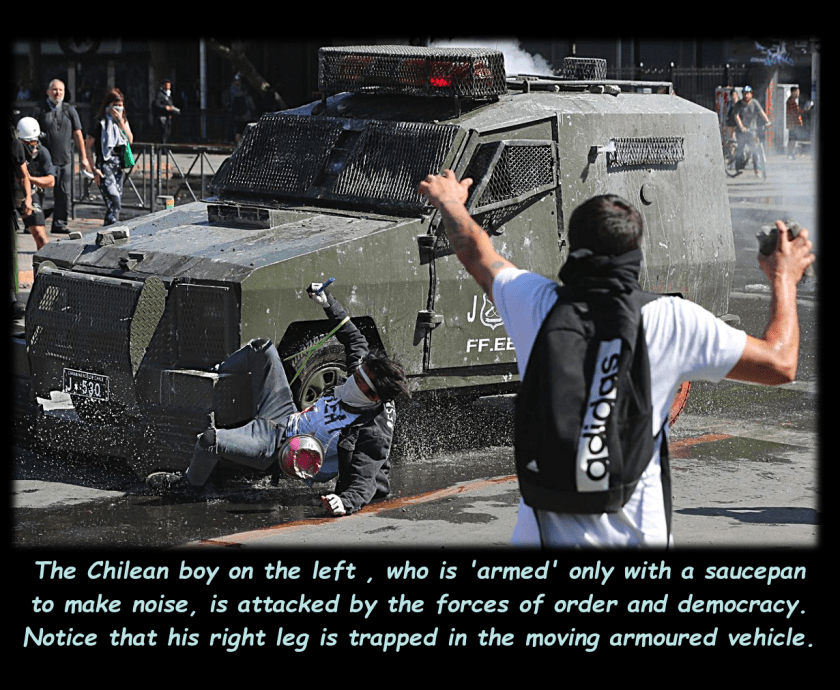
The first night of citywide rioting was followed by a week of peaceful protests cohabiting the same streets as flaming barricades, looted stores and bands of masked youth throwing rocks and Molotov cocktails at the police. In response to widespread unrest, the government declared a state of emergency and called in the military to patrol the streets.
3,762 total views, 498 views today on Its Going Down
Police reforms post-Ferguson haven’t led to lower numbers of police killings. CrimethInc. asks – what would it take to stop them?
We’ve reached a breaking point. The murders of George Floyd—and Breonna Taylor, Tony McDade, and the other Black people whose lives were ended by police just this month—are only the latest in a centuries-long string of tragedies.
But in the context of the COVID-19 pandemic, when the state is openly treating Black communities as a surplus population to be culled by the virus, the arrogance and senselessness of the murder carried out by Officer Derek Chauvin crossed a line. Supported by hundreds of thousands across the US and beyond, the people of Minneapolis have made it clear that this intolerable situation must end, no matter what it takes.
Since the Ferguson uprising of 2014, considerable attention has focused on racist police killings in the United States. Reformers of many stripes have introduced new policies in hopes of reining in the violence. Yet according to the Police Shootings Database, the police killed more people in the US last year than in 2015. If police killings are continuing or even increasing despite widespread public attention and reform efforts, we need to revisit our strategy.
How can we bring an end to racist police murders once and for all?
Criminal Charges and Civil Lawsuits
It’s widely known that the chances of individual officers or departments suffering real consequences for killing people, especially Black people, are next to nothing. It makes sense that protestors and grieving families often demand criminal charges against murderous cops—the US criminal legal system offers no other model for “justice,” and by refusing to press charges, the authorities show how little they value Black lives.
But locking ordinary people in cages doesn’t prevent anti-social activity—and considering that police violence is legitimized by exceptional laws and powerful institutions, this deterrent seems to be even less effective for police. Johannes Mehserle, the officer who murdered Oscar Grant in Oakland in 2008, was one of very few police to serve prison time; yet the 2018 killing of Joshua Pawlik and many other police murders in the region suggest that this precedent has not deterred Bay Area police from fatally shooting people.
Nor do lawsuits seem to make a difference. The family of Justine Damond received a $20 million settlement after her murder by Minneapolis police—an extremely rare occurrence, likely related to the unusual circumstance of a Black male officer killing a white woman. But forcing the city’s taxpayers—some of whom suffer police violence daily—to shell out millions to pay for their murderous activity doesn’t work to stop police killings.
If it did, George Floyd would still be alive.
Civilian Review Boards and Police Accountability Measures
People hold up their fists after protesting near the spot where George Floyd died in Minneapolis police custody, on May 26, 2020, in Minneapolis, Minnesota. Photo: Kerem Yucel/AFP via Getty Images On Sunday, in the midst of the largest popular uprising in at least a decade, President Donald Trump posted a most Trumpian tweet. It…








 The Free