2019: El año con la cifra más alta de defensores de la tierra asesinados
2019: El año con la cifra más alta de defensores de la tierra asesinados
Un promedio de más de cuatro defensores de la tierra y el medio ambiente fueron asesinados por semana el año pasado.
Servindi, 29 de julio, 2020
El informe anual de la organización Global Witness (GW) acaba de revelar que el 2019 ha sido el año con el mayor número de personas defensoras de la tierra y el medioambiente asesinadas.
En total, la oenegé documentó 212 asesinatos de personas a consecuencia de su rol de la defensa de sus hogares y sus intentos de detener la destrucción de la naturaleza.
Con un incremento de 48 asesinatos a diferencia del año 2018 (164), los 212 homicidios registrados en 2019 representan un promedio de más de cuatro personas asesinadas por semana.
Según los resultados del informe, más de dos tercios de los asesinatos ocurrieron en América Latina, clasificada constantemente como la región más afectada desde que esta organización comenzó a publicar datos en 2012.
Los hallazgos también revelan que más de la mitad de todos los asesinatos reportados el año pasado ocurrieron solo en dos países: Colombia (64) y Filipinas (43).
Fuente: Informe anual 2019 de Global Witness
Industrias letales
Rachel Cox, encargada de campañas de GW, señaló que la agroindustria y el petróleo, el gas y la minería aparecen como los principales detonantes de los ataques contra personas defensoras de la tierra y el medio ambiente.
«Al mismo tiempo, son las industrias que propician el cambio climático a través de la deforestación y el aumento de las emisiones de carbono», agregó.
En efecto, el informe precisa que la minería fue el sector más letal a nivel mundial, con 50 defensores asesinados en 2019.
En tanto, revela que la tala fue el sector con el mayor aumento de asesinatos desde el 2018, con un 85% más de ataques registrados contra defensores que se oponen a dicha industria y 24 asesinatos en 2019.
Enseguida, aparece la agroindustria que, sigue siendo una amenaza, particularmente en Asia, donde el 80% de los ataques estuvo relacionado a este sector.
Minería es el sector más letal a nivel mundial con 50 defensores ambientales asesinados en el 2019. Foto: Infobae
Comunidades y mujeres atacadas
El informe también destaca la tendencia desproporcionada de comunidades indígenas atacadas por defender sus derechos y territorios.
Esto, a pesar de que sus tierras tienen menores tasas de deforestación y mejores niveles de conservación que zonas de protección que los excluyen.
«La desprotección en su tenencia de la tierra, las prácticas comerciales irresponsables y las políticas gubernamentales que priorizan las economías extractivas a costa de los derechos humanos, están poniendo en riesgo a estas personas y sus tierras», apunta GW.
De igual modo, la organización alerta que las cifras del 2019 exponen que más de una de cada 10 personas defensoras asesinadas eran mujeres.
Ellas, indican, «enfrentan amenazas específicas, incluidas campañas de desprestigio centradas a menudo en su vida privada, con contenido sexista o sexual explícito».
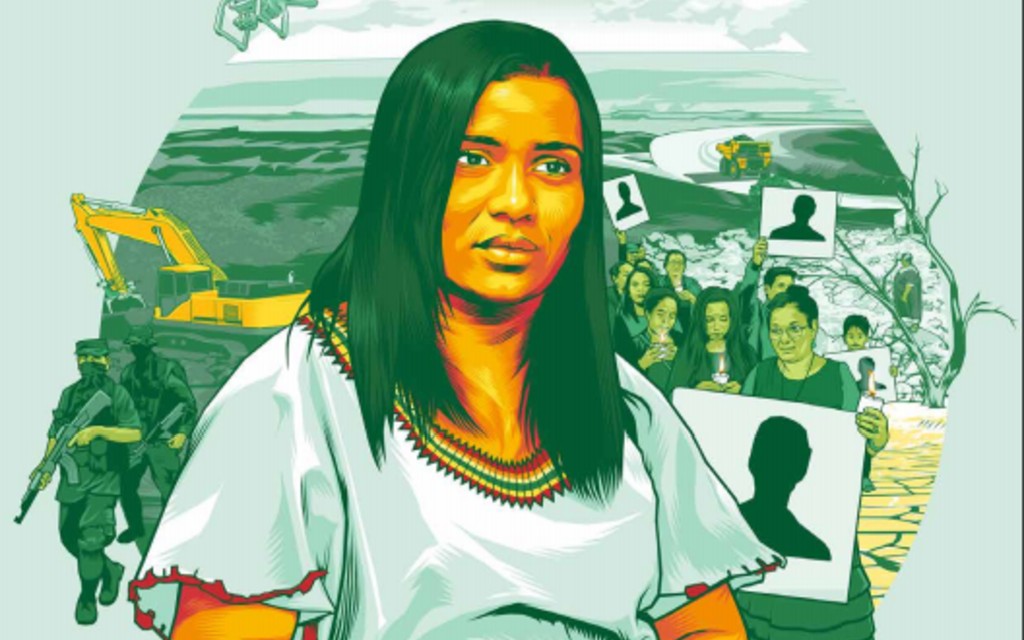
Las defensoras Janeth Pareja Ortiz y Angélica Ortiz del clan Ipuana en el cauce del arroyo Aguas Blancas. Ambas recibieron amenazas de muerte tras denunciar a compañías mineras que han contaminado las tierras de su comunidad y la violencia de los actores armados que controlan la región. Foto: Pablo Tosco / Oxfam Intermón
Hora de seguir su ejemplo
Para la organización GW, si realmente se busca hacer planes para una recuperación ecológica, es necesario abordar las causas fundamentales de los ataques contra las personas defensoras.
La oenegé destaca el importante rol que ocupan estas personas en la lucha contra el cambio climático, oponiéndose a las industrias intensivas en carbono que están acelerando el calentamiento global y el daño ambiental de manera insostenible.
«Muchos de los peores abusos contra el medio ambiente y los derechos humanos en el mundo son consecuencia de la explotación de los recursos naturales y la corrupción en el sistema político y económico mundial», señala Rachel Cox.
Enseguida, agrega que «las personas defensoras de la tierra y el medio ambiente son quienes se oponen a esto».
De anhelar un cambio, se debe «seguir su ejemplo para proteger el medio ambiente y detener el cambio climático», apunta la representante de GW.
2019: El año con la cifra más alta de defensores de la tierra asesinados
Un promedio de más de cuatro defensores de la tierra y el medio ambiente fueron asesinados por semana el año pasado.
Servindi, 29 de julio, 2020
Elinforme anualde la organización Global Witness (GW) acaba de revelar que el 2019 ha sido el año con el mayor número de personas defensoras de la tierra y el medioambiente asesinadas.
En total, la oenegé documentó 212 asesinatos de personas a consecuencia de su rol de la defensa de sus hogares y sus intentos de detener la destrucción de la naturaleza.
Con un incremento de 48 asesinatos a diferencia delaño 2018(164), los 212 homicidios registrados en 2019 representan un promedio de más de cuatro personas asesinadas por semana.
Según los resultados del informe, más de dos tercios de los asesinatos ocurrieron en…
published on Monday, July 27, 2020 by Nonprofit Quartely shared with thanks. Illustrations added
Transferring ownership to workers, communities, and/or the state allows for a shift in the entire focus of the economy from generating profit for the top one percent to serving all the people.byEmily Kawano, Julie Matthaei 2 Comments
Alternative finance for a solidarity economy. (Photo: CC)
The COVID-19 pandemic has upended our world. It has laid bare the inequity, the limits, and the failures of capitalism. The door to a better future beyond capitalism, already cracked open by the Great Recession, has been pushed open a little wider.
Things that seemed impossible a few months ago now seem both possible and necessary. This historic moment calls for us to push hard and through that door to build a world that centers people and planet. To do so, we need to be clear about what we’re trying to leave behind (capitalism) to have greater clarity about what it is that we’re moving towards (post-capitalism and solidarity economy).
And yet, there is a great deal of confusion about both what socialism and capitalism mean. Here we look at different systems or models of socialism, capitalism, and solidarity economy.
For those working for system change, clarity is imperative. In its absence, the default is likely to be to “reform” capitalism, without even considering the possibility of building an economy and world beyond it. We respect those who seek a just and sustainable world by reforming capitalism. We just disagree as to whether that is possible.
Table 1 provides a framework that distinguishes capitalism and post-capitalism. It identifies the main modern capitalist and post-capitalist economic systems, which we discuss below. Within post-capitalist systems, the solidarity economy, as detailed below, does not include undemocratic systems such as authoritarian state socialism.
One characteristic alone does not make an economy capitalist. For example, markets pre-date capitalism by thousands of years and can also exist in socialism. The same goes for commodity production—production for sale, rather than use.
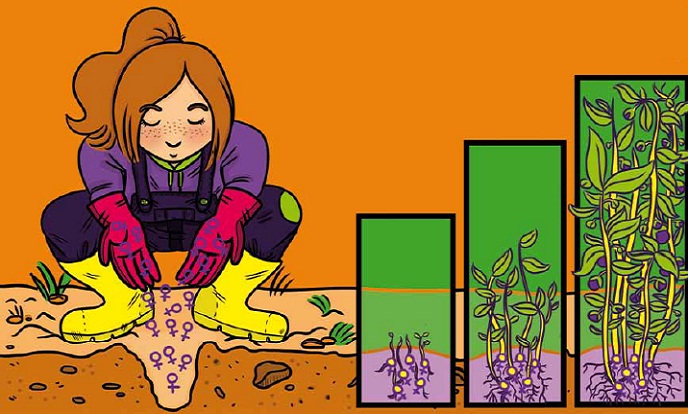
These days I have just planted my little garden and I’m watching the patches of the tomatoes, the peppers, the zucchini and the chard, a little withered when first planted out. How they stretch and grow green on the ground when I water them.
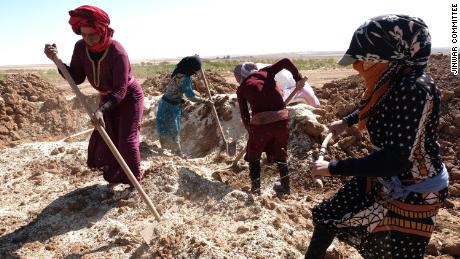
Concepts like food sovereignty, ecofeminism and Rojava come to mind. These are strange days and observing this small garden and watching it grow also helps me to better cope with this situation that seems to never end. It’s like sticking to life, as if this little experience made me feel more intensely this important bond with the earth and with the rest of humanity.
44 years ago the term Ecofeminism arose. And it was coined by a woman who was also an anarchist: Françoise d’Eaubonne, daughter of an Aragonese mother and French anarcho-syndicalist father, who in 1974 related concern for the environment and equality between men and women as the basis of a new society. She is a French writer and thinker who in her book Feminism or Death also introduces the term Phallocracy. ” Phallocracy is at the very base of an order that can only assassinate Nature in the name of profit, if it is capitalist, and in the name of progress, if it is socialist.” No more no less.
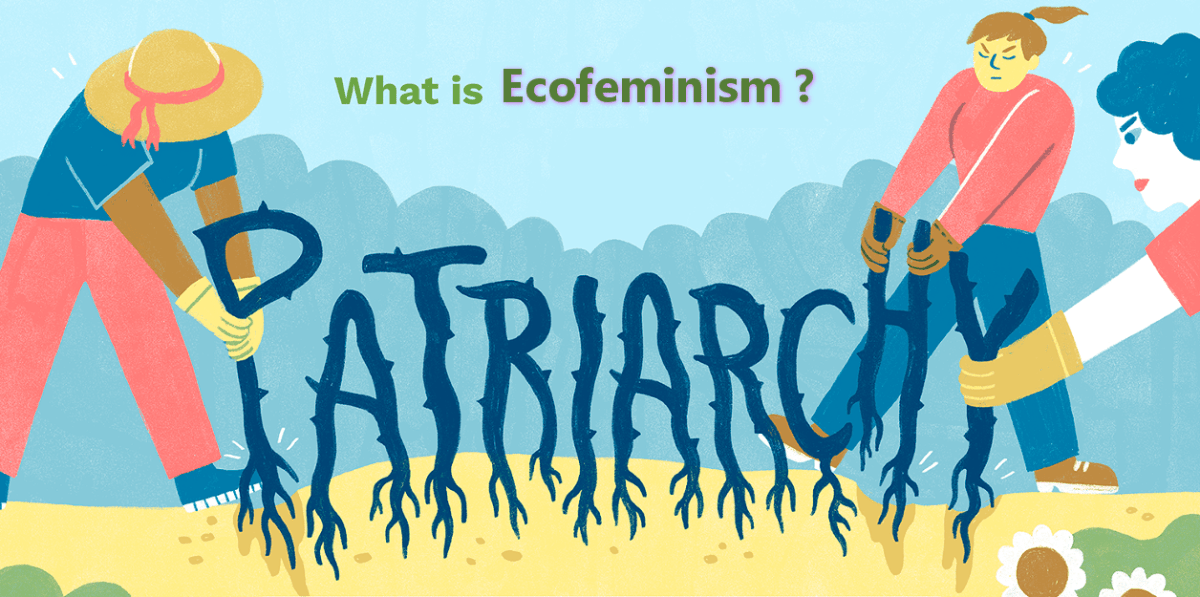
Ecofeminism is a global movement that links ecology and feminism, denouncing the oppression of women and the exploitation of nature and other animals as part of the same logic of patriarchal domination.
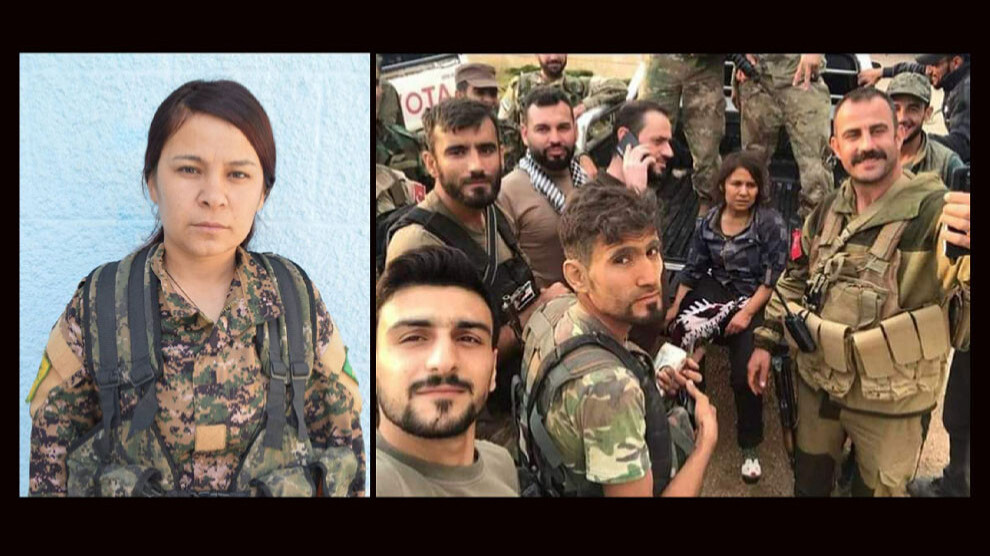
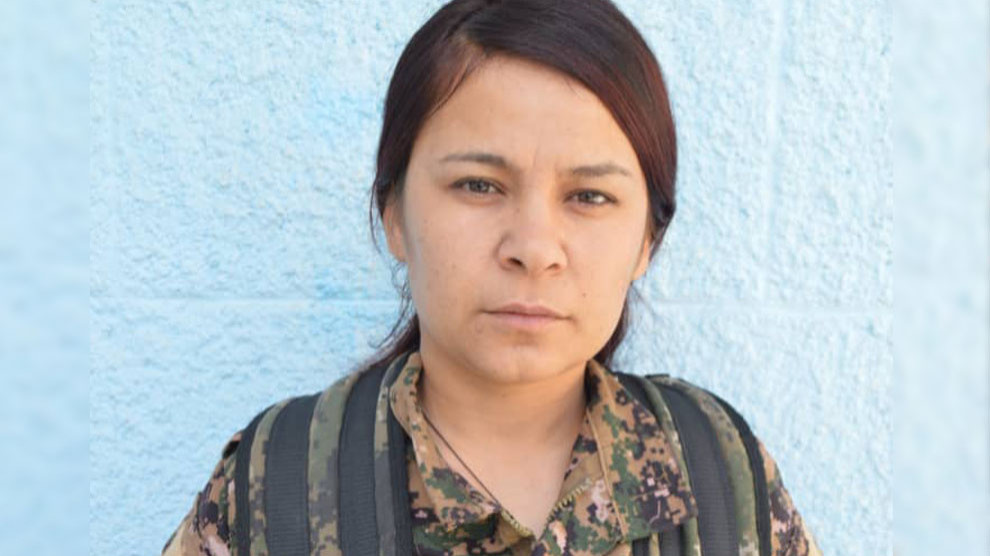
Turkey demands aggravated life in jail for YPJ member Çiçek Kobanê, after 1 year already in jail.
Third Hearing
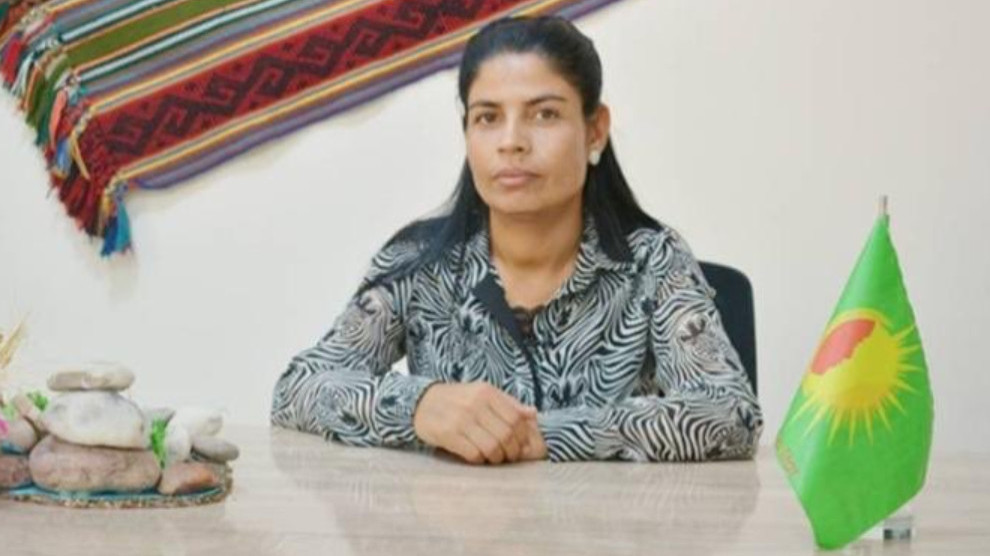
Prosecutor demanded aggravated life sentence in the third hearing of the case against Çiçek Kobanê, who was arrested after being taken prisoner in the invasion attacks launched by the AKP-MHP fascist alliance and its gangs on Rojava on October 9, 2019.
The trial against prisoner of war Çiçek Kobanê (civil name: Dozgin Temo) continued on Thursday at the 5th Heavy Penal Court in the province of Urfa, Turkey.
The YPJ (Women’s Defense Units) member is accused of disrupting the unity and integrity of the state, membership of an armed terrorist organisation and deliberate murder attempt in several cases.
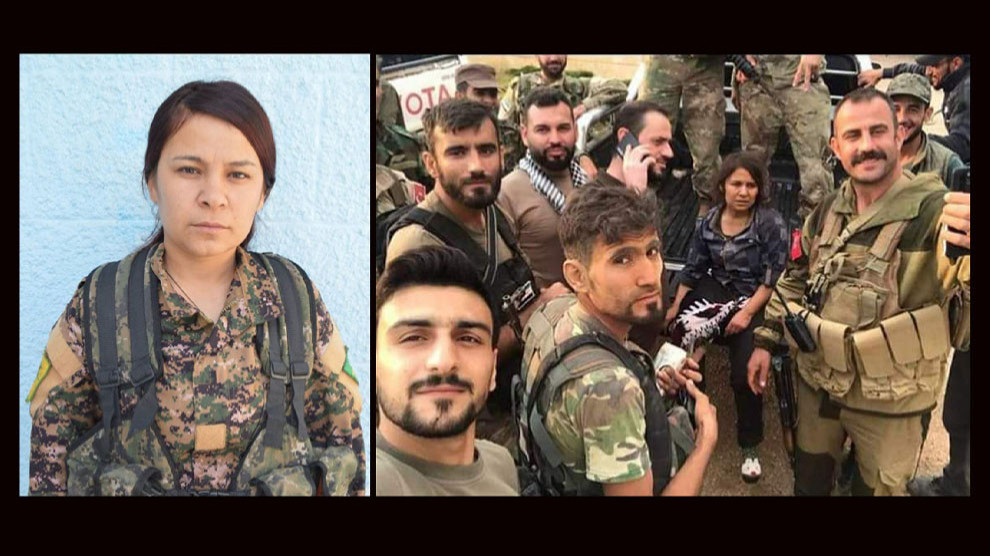
Çiçek Kobanê was captured last October in the village of Mishrefa near Ain Issa in northern Syria by the jihadist militia Ahrar al-Sham, which is part of Turkey’s jihadist proxy troops, the so-called “Syrian National Army” (SNA), and has participated in the invasion of Rojava alongside Turkish forces.
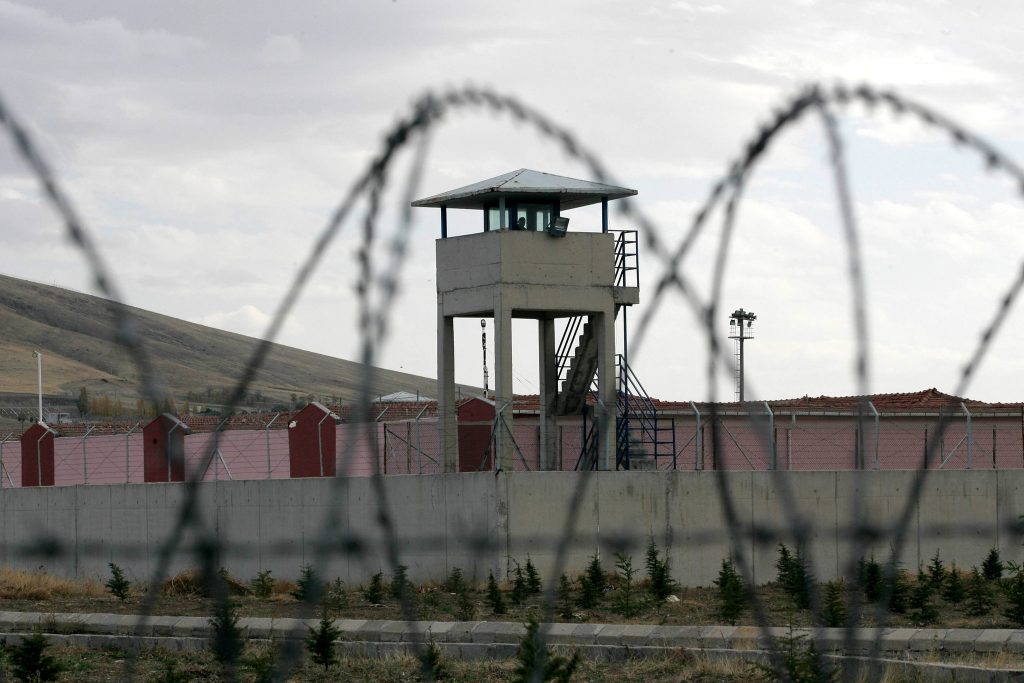
After her capture, the Raqqa-born Kurdish woman from Kobanê was deported across the border into Turkish territory. Since then she has been held on remand in a high-security prison in Urfa.
While Çiçek Kobanê was brought to the hearing from Urfa T Type Prison No 2, where she is detained, her lawyer was present in the courtroom.
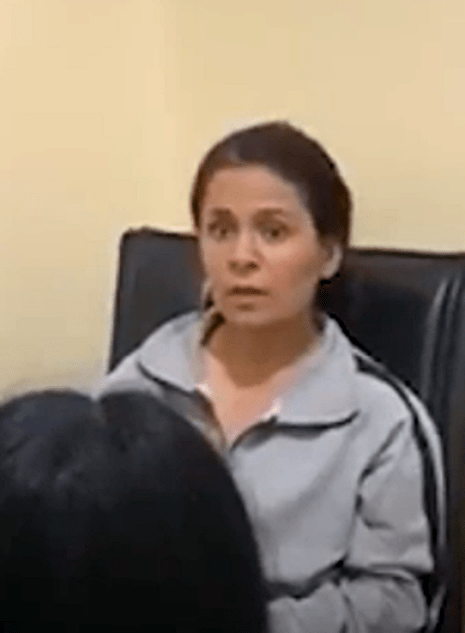
Çiçek Kobanê, who made a defense with the help of a Kurdish interpreter, said that she was a YPJ fighter, did not participate in any armed conflict, and was shot in the foot after being caught.
Kobane’s lawyer Hidayet Enmek, who made a defense at the hearing, said that there was no due process of arrest, that the people who made the arrest were members of the groups called FSA (Free Syrian Army) and that this group does not have the authority to arrest a person.
The lawyer stated that the arrest procedure was not carried out based on the 90th article of the CMK (Turkish Code of Criminal Procedure) as there is no detail in the case file, and no record of who his client was detained by.
The prosecutor demanded an aggravated life sentence for Çiçek Kobanê in his opinion, while her lawyer asked for additional time to defend against the opinion.
After the break, the court ruled continuation of Çiçek Kobanê’s detention and adjourned the verdict hearing to 24 November.
****************************
The FIRST HEARING..
The trial of prisoner of war Çiçek Kobanê, who was deported from Rojava to Turkey, has continued in Urfa. The YPJ member said in court that she was shot twice in the leg after being captured. Çiçek is one of tens of thousands of political prisoners in Turkey, many of them for years awaiting trial.
ANF in URFA Tuesday, 28 Jul 2020, 18:36
Second Hearing
The trial against prisoner of war Çiçek Kobanê (civil name: Dozgin Temo) continued on Tuesday 28th July at the 5th Heavy Penal Court in the province of Urfa.
The YPJ (Women’s Defense Units) member is accused of disrupting the unity and integrity of the state, membership of an armed terrorist organisation and deliberate murder attempt in several cases. Çiçek Kobanê was captured last October in Ain Issa in northern Syria by the jihadist militia Ahrar al-Sham, which is part of Turkey’s jihadist proxy troops, the so-called “Syrian National Army” (SNA), and has participated in the invasion of Rojava alongside Turkish forces.
After her capture, the Raqqa-born Kurdish woman from Kobanê was deported across the border into Turkish territory. Since then she has been held on remand in a high-security prison in Urfa.
Photos and videos of the capture of Çiçek Kobanê appeared on social networks, in which the gangs announced that the female fighter would be executed.
In court, Çiçek Kobanê again rejected the dubious accusations against her. She repeated the statement she had made at the start of the trial, according to which, at the time of her capture in northern Syria, she was not involved in armed action but was providing humanitarian aid to the civilian population.
For the first time she also commented on the background to her injuries and stated that she was shot twice in the leg after she had been wounded when she was captured. Prior to her transfer to the Urfa detention centre, Kobanê had a platinum plant inserted into her foot during an operation.
The operation was obviously unsuccessful, as she has not been able to stand up on her own and look after herself since then. It would not be the first time that medical operations on Kurdish prisoners have been deliberately botched.
Çiçek Kobanê’s lawyer Hidayet Enmek stated in court that there was not a single piece of evidence to support the accusations against his client. Only a transcript of her statement was part of the taking of evidence. In addition, the lawyer again criticised that it was still unclear who had “arrested” Kobanê and how the arrest had taken place.
“Nor does the bill of indictment indicate in what way she was injured,” said Enmek, and asked the court to request relevant documents from the competent military police. The judges agreed to the request and adjourned the trial. The trial will continue on 22 September.
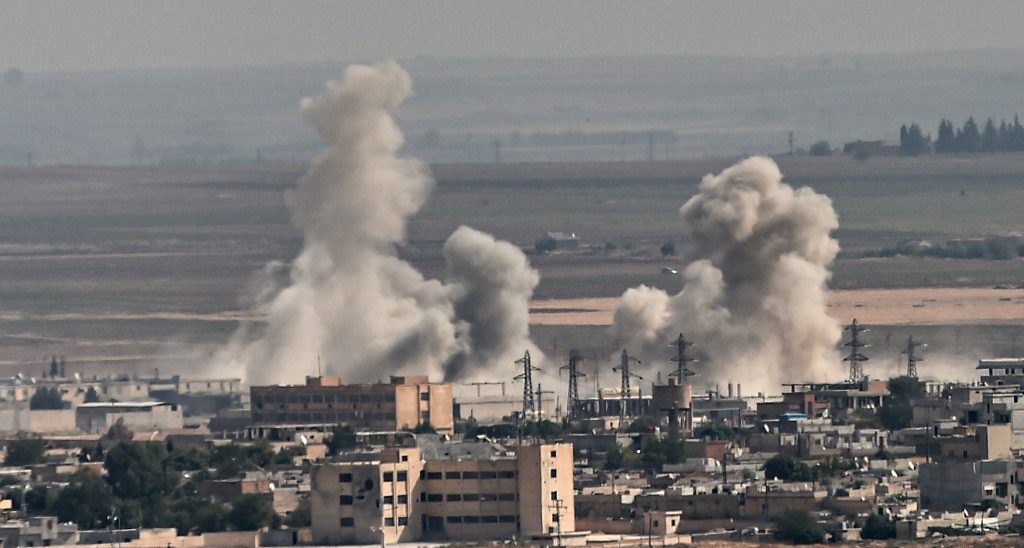
During the offensive launched on October 9th, 2019, in NE Syria, by the Turkish state, the Jihadist group under the flag of the Syrian National Army ( SNA), invaded Serêkaniyê and Tel Abyad (Girê Spî) regions.
The city of Serêkaniyê (Ain Issa) which was liberated by the YPG forces and taken from Jabhat al-Nusra terrorist in 2013, has been occupied and is now under control Turkish state and so-called SNA.
Local journalist Diyar Ahmed, affirms that: “[The SNA factions] don’t have a well-organized structure. There are 20 armed groups in the city, and they fight against each other. The only system which is there has been imposed by Turkey.”
The humanitarian impact of the war has been severe. There have been 250,000 people displaced from their homes, dozens of neighborhoods and crucial infrastructure destroyed by shelling and airstrikes, and the irretrievable loss of human life.
Attacks in Serêkaniyê on October 2019
On the 17th October, the so-called “ceasefire agreement” was signed and announced following the USA and Turkish negotiations. Five days later another agreement between Turkey and Russia was announced and the so-called “security zone” was put under their control.
Never the less the Turkish attacks on NE Syria haven’t stopped. Crimes and atrocities are constantly committed against the population.
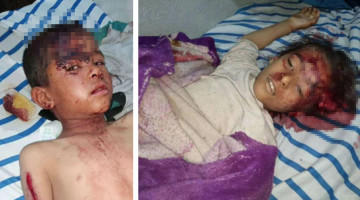
On a daily basis, villages are bombed and thousands of hectares of fields are burned. Many civilians have been hurt and killed, including numerous children. In this occupied region, houses of people have been plundered and women kidnaped, raped and killed.
The Turkish state and its Jihadist proxies, through this barbaric ethnic cleansing practice, are forcing demographic changes in the region and opening space to all kinds of terrorist groups in this area.
During this occupation, Çiçek Kobane, was in Rojava, her homeland, when the Turkish invaded and occupied Gire Spî. She was wounded and captured on the 21st of November by one of the allied jihadist groups and sent to a Turkish prison.
This fact also proves the direct connection between the Turkish state and Jihadist groups. Video of her being captured was sent directly to her family and also spread through social media.
We have conducted an interview with her mother who after 7 years living in Turkey, has come back to NE Syria:
What can you tell us about the current situation of your daughter and how she ended up in a Turkish prison?
“In the beginning, we didn’t have have any information for 4 days and when she disappeared, we thought she must have been killed. After four days a video was sen to my husband’s phone of her being captured. We immediately also informed everyone we knew in Rojava and started looking for her.
At this time we were living in Turkey, however, we were able to find a Kurdish lawyer and went to a government establishment with her picture. We were afraid of also getting arrested but wanted to find out where she was and confirm if she was alive.”
In the time of corona, many prisoners were released but she and other political prisoners were not. She was wounded and because of this, she should’ve been released.
There is constant oppression on the Kurdish population and their rights within the Turkish state. The Kurds are the fourth largest ethnic group in the Middle East and one of the most persecuted minorities of our time. Nowhere is their future more threatened than in Turkey where Kurds are one-quarter of the population.
…………………
Women’s Council of NE Syria presents report on Turkish war crimes …l media violate Article 8 of the Geneva Convention. 12-The abduction and execution of health workers Media Bouzan, Mohamed Bouzan Saidi and Havin Khalil Ibrahim (Heyva Sor a Kurd employees) violate Article 7 of the Geneva Convention. 13 members of armed groups published footage of YPJ fighter Çiçek Kobanê, who was wounded and taken prisoner of war and subjected to inhuman treatment. This constitutes a war crime under Articles 13, 14, 15 and 16 of the Geneva Convention and contravenes Articles 7 and 8 of the Rome Statute. 14-On 13 October 2019, fighter planes of the Turkish State of Serêkaniyê and…
……………………
After some days in the hospital and another week Urfa prison Çiçek was brought to Hilwan prison without any medical care and still with metal in her leg.
How are her health and psychology could you communicate with her?
“Her leg is in a really bad state. She can’t move around properly, walk, or change her clothes. She’s really worried about her health. We’ve been struggling to get her medical treatment for her leg but for 6 months, but she still hasn’t received any. She’s unable to be self-sufficient and this is affecting her psychology. The biggest priority is for her leg to be treated.
In the time of corona, many prisoners were released but she and other political prisoners were not. She was wounded and because of this, she should’ve been released.
All visitations were suspended and no precautions against the virus were taken; not even medical checks.”
We received threats and have been humiliated. My husband and two sons were arrested and tortured. They even broke my husband’s fingers.
Turkey has also been implementing various measures to fight COVID-19 within prisons across the country, including a highly contested special amnesty law that enabled the release of some 90 thousand convicts.
According to reports by human rights and prison monitoring organizations, the conditions of prisons have worsened with the pandemic¹.
Turkish authorities do not follow principles and guidelines specified by the World Health Organization, the Committee for Prevention of Torture (CPT), or the human rights commissioners of the United Nations and the Council of Europe. The lives of prisoners are highly at risk.
How often were you able to see Çiçek? How your family was treated?
“We could visit her once a month and speak on the phone once a week for 10 minutes. We’ve lived with the constant pressure of the Turkish police being in our house every month. We received threats and have been humiliated. My husband and two sons were arrested and tortured. They even broke my husband’s fingers.
Our lawyer was also arrested and received the same treatment.
Because of this constant pressure and threat, three months ago we decided to leave Turkey and come to Rojava, where we’re originally from. We haven’t seen our daughter since.”
The Turkish government has not suspended it’s anti-Kurdish policies even under the conditions of a global pandemic. On the contrary, the government is using the pandemic as an opportunity to further repress Kurdish democratic institutions; their municipalities in particular.
Do you want to send any message to the international population?
“ Human rights organisations should not remain silent, because Turkey is violating international law. Cicek was not arrested in Turkey. She was wounded and kidnapped in her country. She was kidnapped in front of the world by jihadist mercenaries and handed over to Turkey. This makes it obvious that Turkey cooperates with jihaddist groups and supports them.
The trial of our daughter was set for July 28, 2020. We want the human rights organisations to be aware of her situation and intervene to help her to come back home to her family.”
Wednesday, 24 Jun 2020, 15:28A Turkish drone deliberately killed three activists of the women’s movement in Kobanê. Zehra Berkel was a leading member of the women’s organisation Kongreya Star, Hebûn Mele Xelîl and Amina Waysî were also active in the women’s revolution in Rojava. On 23 June, three activists of the women’s moveme…
A new dossier published by Kongra Star documents violence against women in Afrin, proceeding from Turkey and the jihadist groups supported by Turkish state. Women Defend Rojava has issued a new report titled ‘Women under Turkish occupation. Femicide and gender-based violence as systematic practice …
……………..
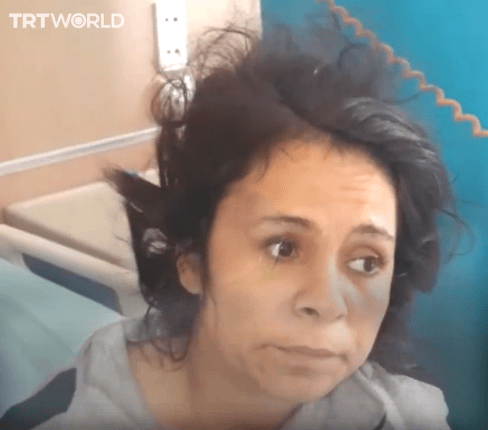
Çiçek was used in a Turkish propaganda video on TRT World
The Turkish site ‘TRT World’ made and aired a propaganda video accusing the YPJ and Çiçek of being KURDISH TERRORISTS for resisting Turkey’s continuing totally illegal and criminal invasion, occupation and massacres in their own country of Syria. see here https://www.youtube.com/watch?v=1jty_NebNKY
…………………..
Report on 1st court appearance. by ANF
..The first hearing in the case against Temo was held at the 5th Heavy Penal Court in Urfa. Temo gave her statement in Kurdish, translated into Turkish by an interpreter. She said that she joined “the most organized force in Northern Syria” of her own accord, used no weapon and took part in humanitarian missions.
Temo’s lawyer Hidayet Emek asked who captured and arrested his client, saying that the case file did not include this information. The lawyer said: “It is not clear who from the FSA groups brought our client in. There is no information either on how our client was injured.
The FSA does not have a law enforcement mission, nor the authority to arrest. There is an unlawful and illegal detention in question, which reveals adeficiency in the indictment. Our client comes from Raqqa, Syria. In consideration of the accusations directed at her, it is essential to understand who she was illegally arrested by. On this basis, we demand the identification of those involved in her arrest.”..
The lawyer’s plea was dismissed and the case adjourned till July 28th.
by: True Activist on July 22, 2020.. shared with thanks
Alzheimer’s disease is a condition which is a form of dementia, that affects around 44 million people around the world, with an estimated 5.5 million people in the US alone. And there is no real cure for the disease, though some drugs can stall the onset of Alzheimer’s, there is nothing that can stop it from progressing. It is also the 6th leading cause of death in the US, more potent than people killed by breast and prostate cancer combined.
Virtually all new treatments have failed in clinical trials. Shannon Macauley, a neuroscientist at Wake Forest School of Medicine says, “We really don’t have much to offer people.”
Those who have loved ones with the disease know the stress and difficulty that comes with it, some eventually lose hope and their ability to continue living with their stricken loved ones. It is sad and unfortunate, but a reality. But there is some research going on that may bring hope for the afflicted and their families.
Audrey Tang says tech can build trust, tame misinformation, and strengthen democracy. Her plan might even work in the US.
In early February, Taiwan had a mask supply problem. Howard Wu, a 35-year-old software engineer, watched as Covid-19-induced stress levels rose in his social media feeds. Friends and family were swamping LINE, Taiwan’s most popular messaging app, with up-to-the-minute reports saying which local convenience stores still had masks in stock—or were completely out.
So Wu started hacking. In the space of a single morning, he put together a website using Google Maps to coordinate the crowdsourced info pouring in from the messaging app. Anyone could contribute. Convenience stores stocking masks showed up in green. Out-of-stock stores turned red.
At the time, the World Health Organization was still a month away from declaring a global pandemic. But as soon as the first reports of trouble in Wuhan began trickling out on social media in late December, Taiwan had started organizing one of the world’s most successful mobilizations against Covid-19. By February, with dozens of deaths being reported in Wuhan every day, Taiwan was on high alert. The mask map was an instant hit.
But there was a catch. When a developer integrates Google Maps into a web application, Google charges a few dollars for every 1,000 times the map is accessed by users. On the afternoon of the first day after the web site went live, Wu received a bill for $2,000. The next day, the total jumped to $26,000. “Continuing in that direction was not acceptable,” Wu wrote in a document he posted to HackMD, a publicly hosted collaboration tool popular with Taiwan’s “civic tech” sector—a loosely organized community of hackers and computer-literate citizens dedicated to civic engagement.
Enter Audrey Tang, the Taiwan government’s digital minister.
Tang was one of the thousands of Taiwanese who had pounced on Wu’s map. In a Skype interview from Taipei, she laughs as she recalls the moment. “I contributed to his bill!” Tang says. But then she went to work.
Tang is a fervent believer in open data, open governance, and civil society-government collaboration. Wu’s mask app offered a path to putting her principles into action.
The day after the mask map went viral, Tang met with Taiwan’s premier to discuss ways to improve the country’s mask-rationing system. She suggested that the government distribute masks through pharmacies affiliated with Taiwan’s National Health Insurance system, Taiwan’s government-run single-payer health insurer.
As Tang explained it, the key advantage of doling out masks via the pharmacies was that NHI maintains a database of all the products that pharmacies keep in stock, updated in real time. Tang proposed that NHI make the mask data open to the general public. Instead of relying on ad hoc crowdfunded reports, Taiwan’s citizens would gain easy access to more accurate and comprehensive data.
The proposal was greenlit. After receiving approval, she posted the news of the new tracking system to a Slack channel frequented by Taiwan’s civic tech hackers. She invited them to take the data and play with it as they pleased. At the same time, while holding her regular open-to-anyone visiting hours, she whipped together her own website to serve as a central clearinghouse for an ensuing profusion of mask availability apps. (Google also helped out by waiving Maps charges in the interest of fighting Covid-19.)
Although Tang is an accomplished software programmer with a long record of significant contributions to international open-source software projects, she was quick to minimize the extent of her technical contributions to the mask app project. For Tang, the significance of the mask map portal was its function as a space for others to participate in. She hearkened back to first principles: The portal was an example of her “Daoist approach” to political and social action.
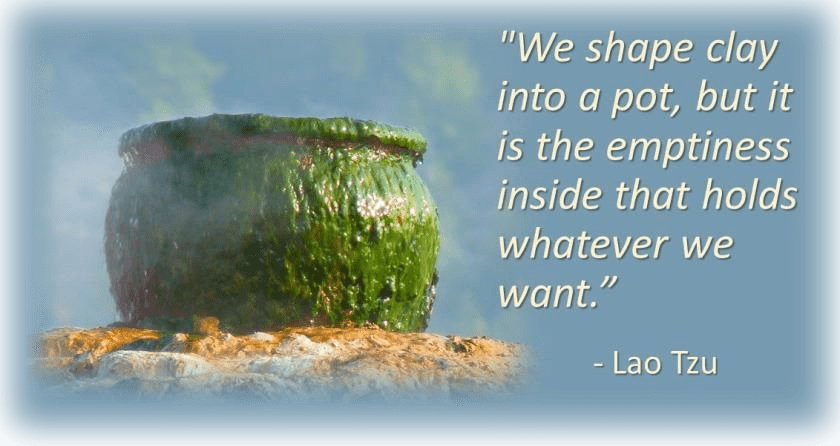
She pulls chapter 11 of the Dao De Jing, a 2,500-year-old classic of Daoist philosophy, up on her monitor, and starts reading:
“Hollowed out,
Where the pot’s not
is where it’s useful.
… So the profit in what is
is in the use of what isn’t.”
“All I did was to hollow out the clay to make a pot,” Tang says. “I didn’t do anything afterwards.”
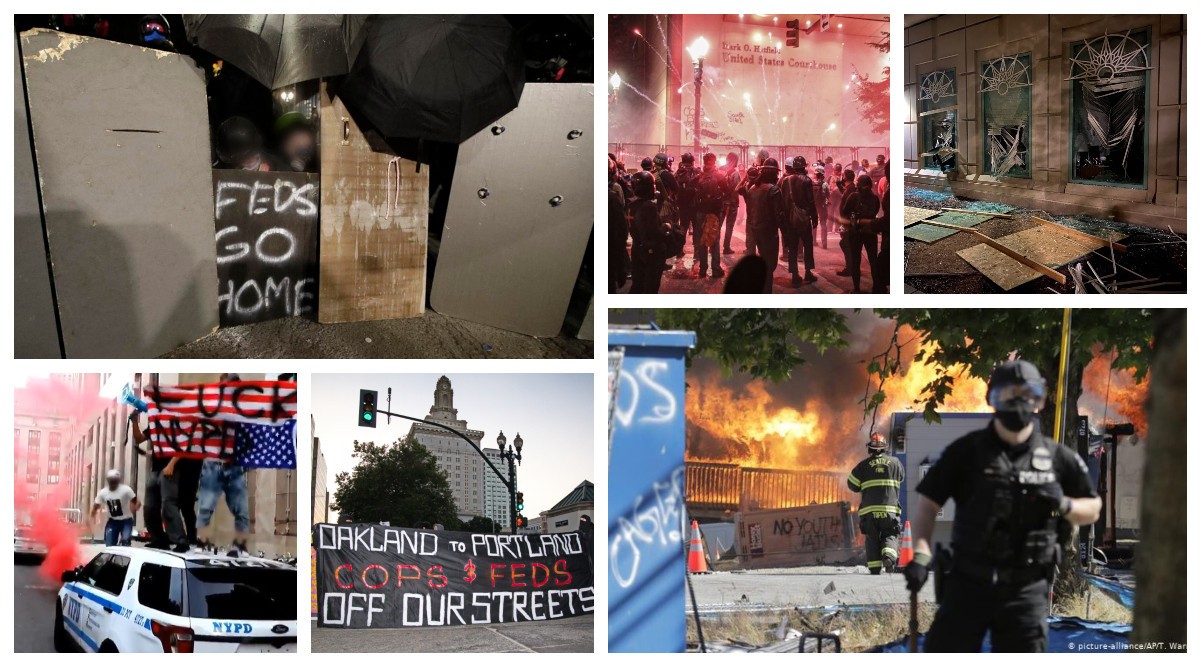
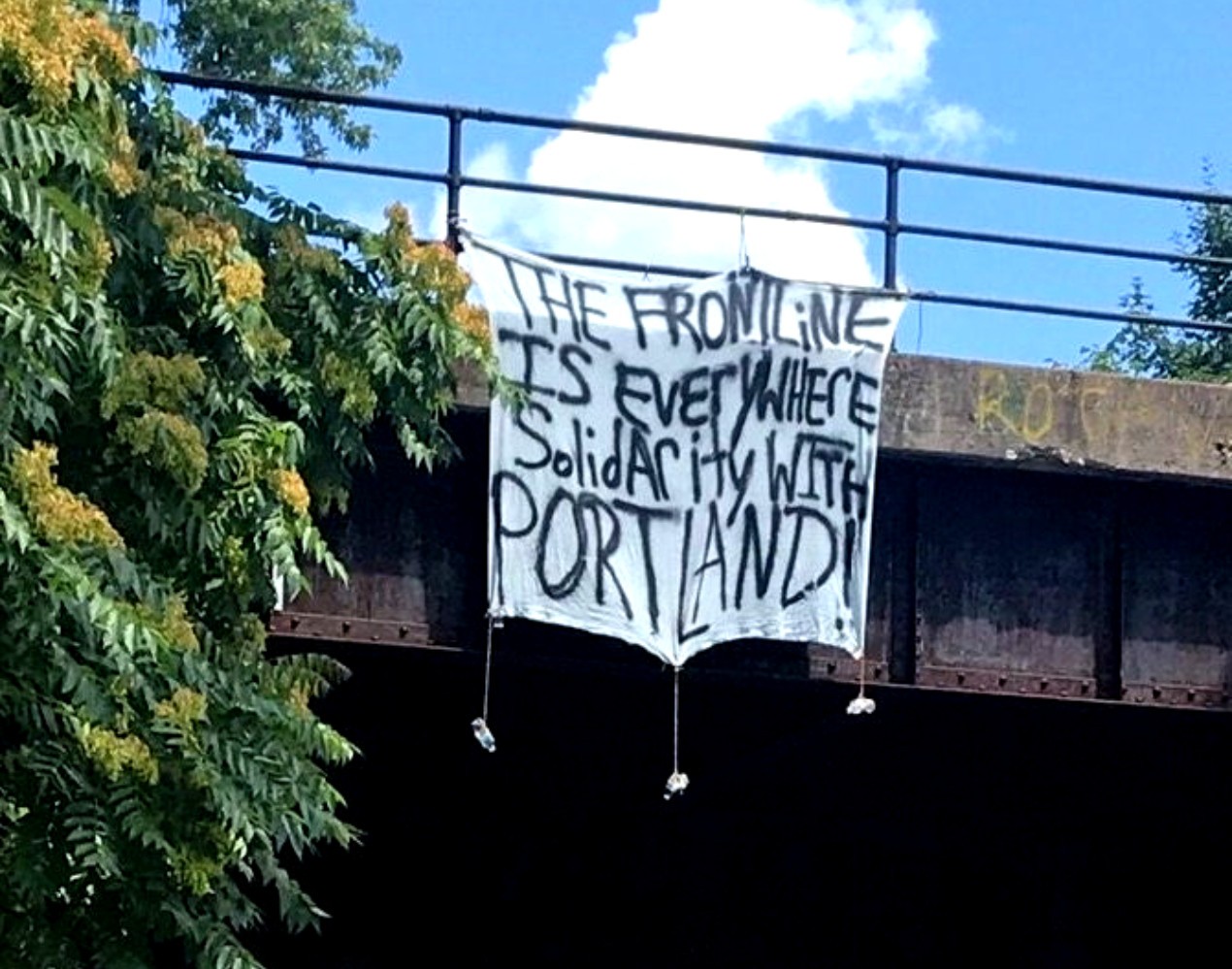
Actions took place both in smaller and rural towns, especially in the Pacific Northwest, as well as in big cities, where massive clashes lasted into the early morning hours. Actions ranged from banner drops, marches, and rallies, to full-on riots and militant marches, often involving thousands, in cities from Seattle to New York. The size of the demonstrations shows that the rebellion that began in late May shows no signs of slowing down, as popular rage against the police over the death of George Floyd and federal brutality in Portland is only growing alongside anger at the burgeoning pandemic and increasingly visible class war.
Like the rising wave of labor and rent strikes, the actions on July 25th point towards a deepening sense of both proletarian militancy and consciousnesses that has yet to be dulled or recuperated by either corporate party. Despite an attempt over the past two months to divert #BlackLivesMatter back into the wider neoliberal project, its clear to many that the Democrats have largely no desire nor ability to either drastically defund the police or put up any fight against Trump’s attempts to flood cities with federal troops. On the contrary, as Ted Wheeler, the Mayor of Portland has recently shown, regardless of his harsh rhetoric against Trump, the police which he controls have been working directly with federal troops on the ground for weeks, while carrying out nightly acts of violence against protesters, journalists, and anyone unlucky enough to be caught in their crossfire. Meanwhile, other Democrats have embraced Trump’s “surge,” under the guise of “fighting crime.”
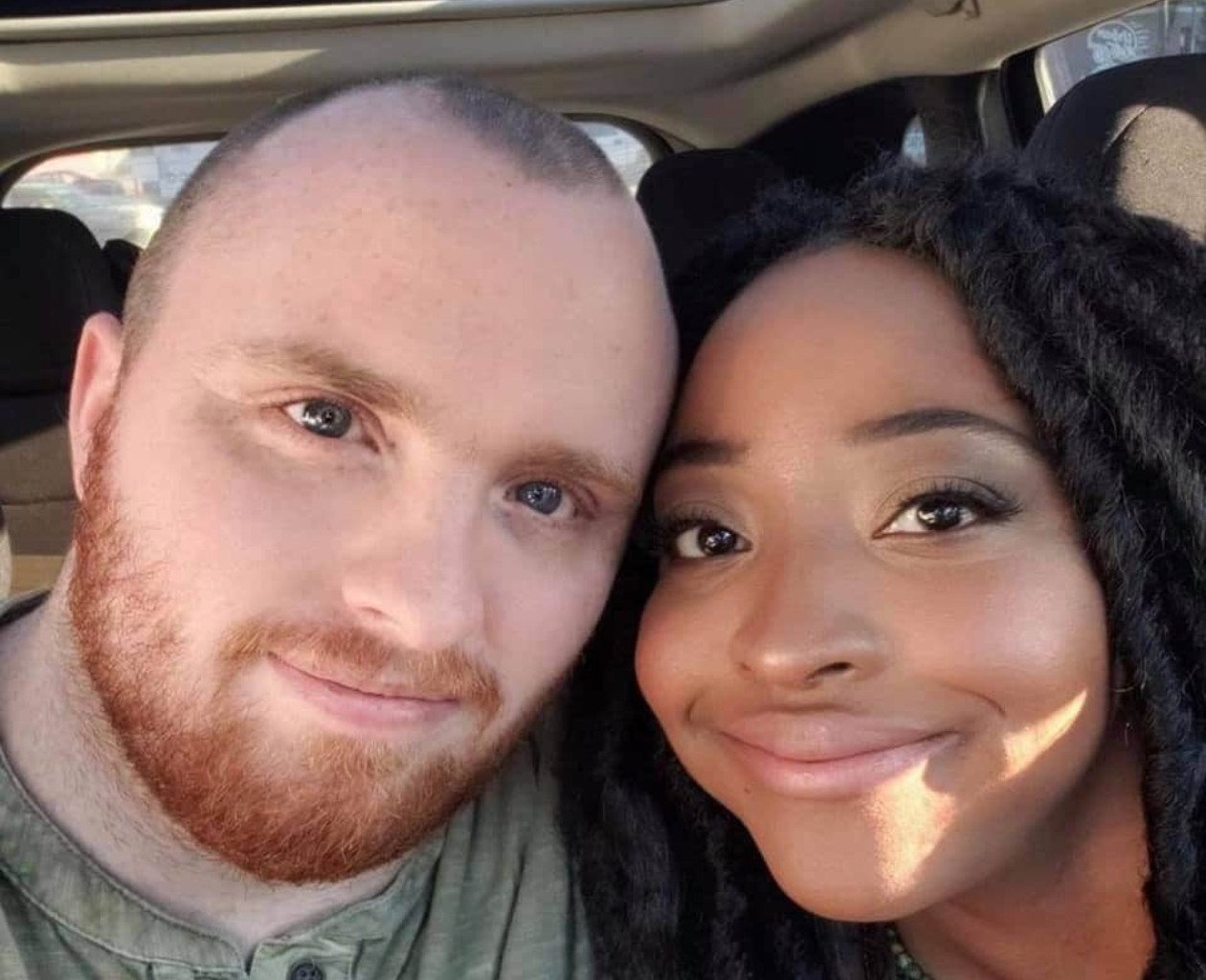
Garrett Foster, 28, was shot and killed by the driver of a vehicle which drove into a Black Lives Matter march in Austin, Texas. Foster was pushing his girlfriend’s wheelchair at the time. After the shooting, far-Right trolls online spread false information, that Foster opened fired first, which has now been debunked.
The actions over the weekend also highlight the continued deadly threat of the far-Right, as in multiple cities counter-demonstrations were organized in an attempt to push protesters off the streets, however, none of these attempts seemed to garnish any degree of success. However, in both Aurora, Colorado and Austin, Texas, vigilantes driving cars into groups of protesters in an attempt to murder them – and in Austin, they succeeded. In Eugene, “Back the Blue” counter-protesters also fired off guns and in one instance, an armed stand-off took place. While the far-Right has yet to successfully counter-mobilize against autonomous social movements in a real way, their ability to engage in one-off acts of violence and murder continues to claim lives.
Meanwhile, Trump, Attorney General Bill Barr, and Chad Wolf at the DHS all continue to double down on their “send in the troops” strategy, while Trump’s numbers continue to tank and polls show even formerly solid “red states” turning against him.
While much of this represents cracks in Trump’s suburban and elderly support base due to the coronavirus, there’s no question that there is growing anger over his response to the rebellion and his push to send in troops to Portland.
Those on the streets fighting have expanded this conflict and helped generalize the struggle; bringing in more and more sectors of the population. Trump is now in a strange position. If he withdraws, he looks weak at a time when Republicans are already plotting for a world without him and Fox News is even giving him a hard time. If he continues to double down, he also risks the rebellion expanding.
Just as with Occupy, the Prison Strike, or the fight against DAPL – when both corporate parties realize that social movements can’t be recuperated and defanged, they seek to shut them down and split them along lines that benefit State power and alienate the public from them. pic.twitter.com/7frjRYkaAO










 The Free