Mujeres de diversas latitudes del planeta, nos reunimos para dialogar, compartir saberes y entretejer luchas y esperanzas en defensa de los territorios y las aguas.
MESA DOMINGO 12:00 A 13:00 HRS JORNADAS ECOFEMINISTAS
Partiendo de que somos mujeres que luchan, eco-feminismo y en torno a los temas de: migraciones, en el marco de la crisis climática, la soberanía alimentaria, la agroecología, los modelos energéticos alternativos; así como la afectación ecológica de los megaproyectos y el extractivismo a nivel mundial.
Este 4 y 5 de julio de 10 a 16 hrs se llevarán a cabo de manera virtual las Jornadas Ecofeministas Antiextractivistas por el Buen Vivir, a través de las plataformas Facebook y YouTube de Mujeres y la sexta.
Invitamos a las mujeres a construir juntas alternativas a los proyectos de muerte y el llamado «desarrollo» capitalista.
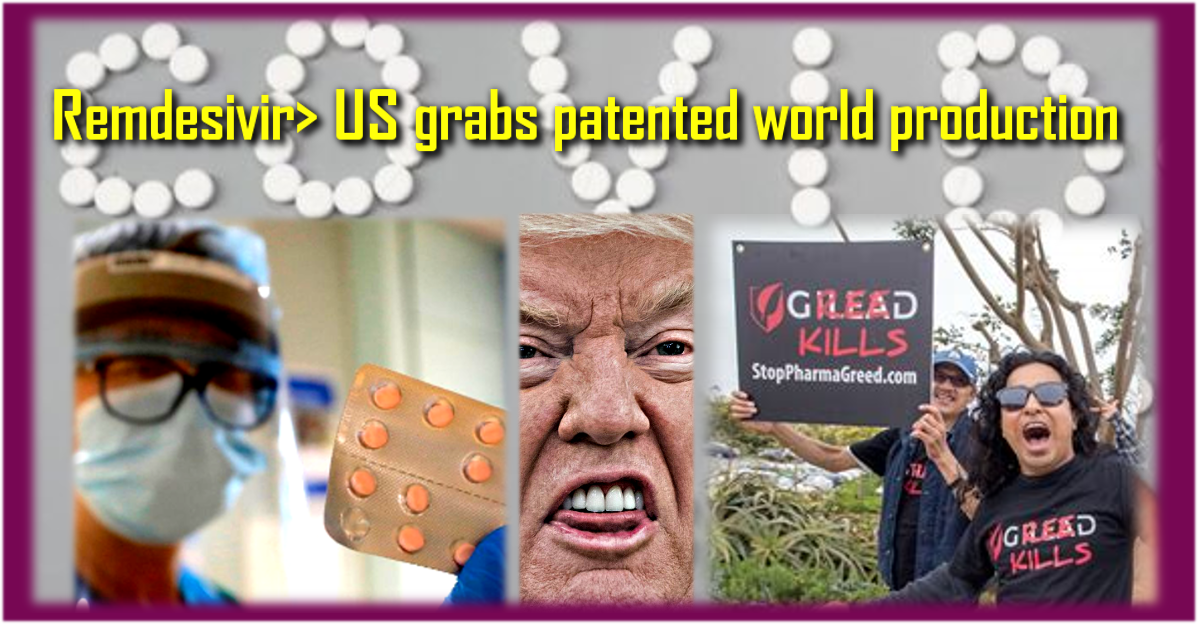
Yet again the US appears as a terrorist pariah State, using its superpower privilege of infinite unpayable debt to buy up the entire future production, depriving the rest of humanity of life itself. Instead of taking just one month and arranging a temporary patent free regime the US has grabbed the entire next 3 months production by the unscrupulous patent holder Gilead.
The US government has bought a massive stock of the only drug licensed to treat COVID-19, fanning fears there will be shortages of the anti-viral remdesivir in the rest of the world.
But this does not mean that it will be easy for Americans to access the drug, as it is not yet clear what the final cost to the individuals will be.
A report released this week found pharmaceutical companies have raised prices for 245 drugs since January – many of them used to treat COVID-19. Al Jazeera’s Shihab Rattansi reports from the US capital, Washington, DC. – Subscribe to our channel: http://aje.io/AJSubscribe –
US secures world stock of key Covid-19 drug remdesivir
No other country will be able to buy remdesivir, which can help recovery from Covid-19, for next three months at least
Remdesivir is patented by California-based Gilead. Photograph: Mike Blake/Reuters
The US has bought up virtually all the stocks for the next three months of one of the two drugs proven to work against Covid-19, leaving none for the UK, Europe or most of the rest of the world.
Experts and campaigners are alarmed both by the US unilateral action on remdesivir and the wider implications, for instance in the event of a vaccine becoming available. The Trump administration has already shown that it is prepared to outbid and outmanoeuvre all other countries to secure the medical supplies it needs for the US.
“They’ve got access to most of the drug supply [of remdesivir], so there’s nothing for Europe,” said Dr Andrew Hill, senior visiting research fellow at Liverpool University.
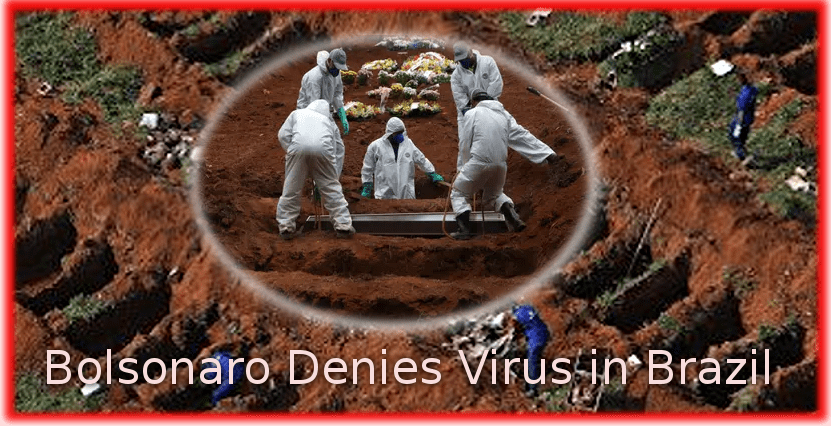
The Bolsonaro government’s recent decision to stop releasing data on the COVID-19 pandemic as the death toll surges above 40,000 has caused an international uproar and deepened domestic discontent. A DataPoder360 survey, published on June 11 showed that the sum of those who see the administration of Jair Bolsonaro as “regular” (22%) or “bad or awful” (47%) have become the large majority.
Bolsonaro has isolated himself internationally and even his main ally, U.S. President Donald Trump, has criticized the way in which he has dealt with the pandemic – not without first sending two million doses of Hydroxychloroquine, a treatment that the global far right has promoted as a miracle cure for the disease despite the lack of a medical consensus. With approval ratings in free fall, but still maintaining a base of about 30% of Brazilians, the Brazilian president has increasingly moved to the far right.
Black lives and favelas matter
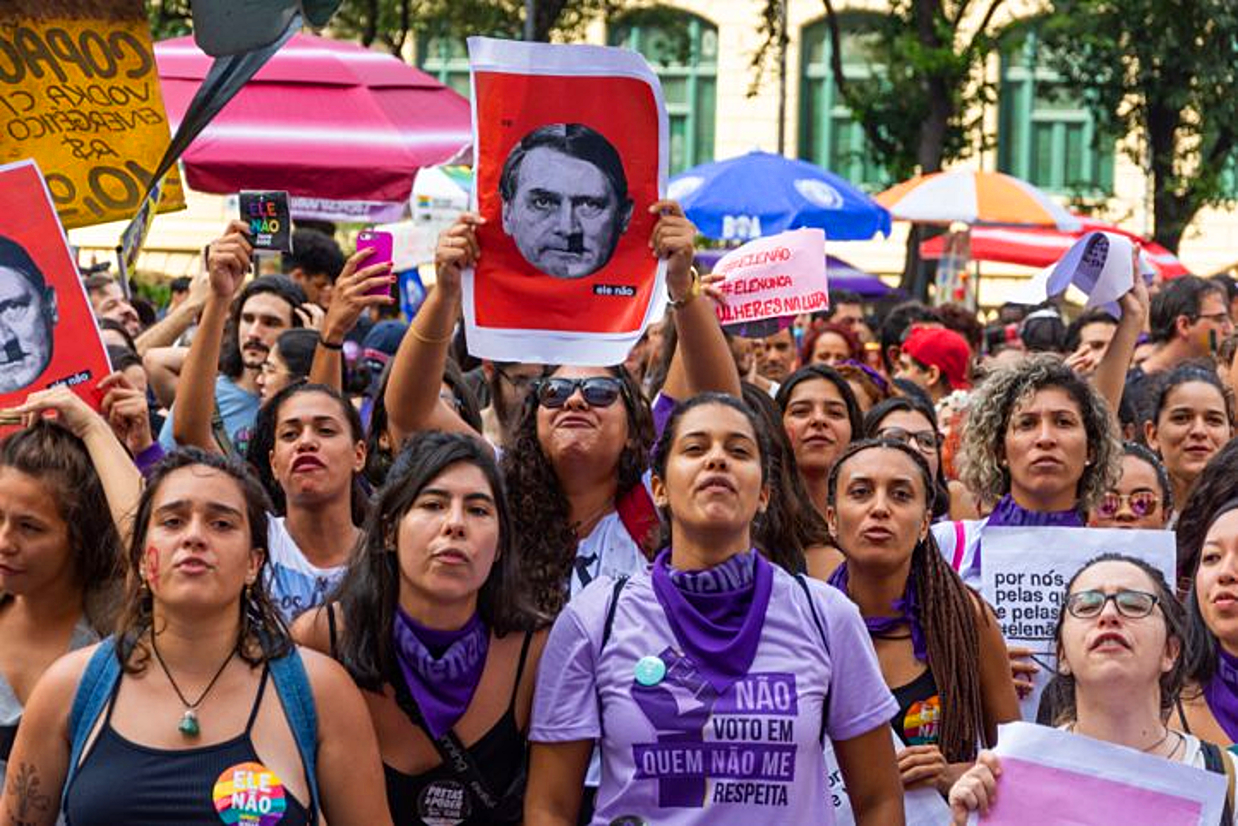
As his popularity wanes, Bolsonaro relies more and more on the support of ultraright groups and social media activists. Several of the most prominent among them are being investigated by Congress and the Supreme Court for spreading fake news and hate speech and attacking institutions. They advocate for violent repression of left-wing activists and count among their ranks growing fascist and neo-Nazi activists and groups. Some have openly called for a military coup d’état and a regimen of violent repression of Brazil’s black and indigenous populations.
“In these past two years we have seen a gradual erosion of Bolsonaro’s support base,” says David Magalhães, International Relations professor at the Pontifical Catholic University of São Paulo. “When he was elected in 2018 he had the support of various groups within the Brazilian right wing, the anti-middle class vote, the vote of those who seemed to have an allergy to politicians, but opted for Bolsonaro in the wake of the Lava Jato [Car Wash] operation, the ‘liberals,’ etc. The majority of this electorate moved away from Bolsonaro for a number of reasons, leaving a hard, ideological and increasingly fanatical core,” he says.
In another provocative and essential text, the Bolivian activist María Galindo proposes to think and act on 5 emergencies that, she says, cannot be justified by the advance of the coronavirus: fascism, colonization, corruption and state neglect, male violence and hunger .
How each of these other “pandemics” plague the Latin American countries that she baptizes “Culo del Mundo (The essof the world)”, “in the ambiguous sense of a place of pleasure and contempt at the same time.”
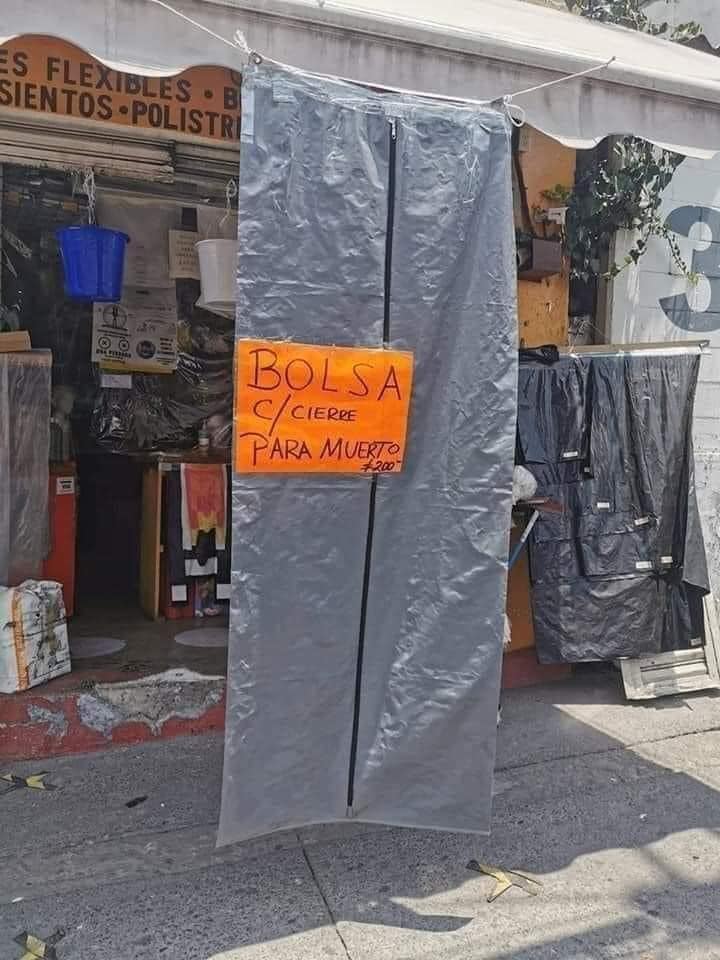
Body Bags, wirh zip. On Sale Herein La Paz
Fear and hunger as a control formula; financial loans as a method of colonization; the ancestral views of health, closer to health care; the role of non-institutional popular ‘pots’ (communal funds) managed by women; the question of whether the exits are going to come from the broken and corrupt states; sexist violence, care crisis and the phrase of George Floyd translated by Galindo: «In the center of the pandemic the movement I CANNOT BREATHE is born, which in Andean code means.. I Can Take NO MORE ».
By María Galindo, life-long inhabitant of the abnormality. Women Creating / Bolivia.
Grateful for the critical reading of Claudia Acuña and the edition of Helen Álvarez.
La Paz, Bolivia.
In this part of the world from where I write, it is urgent to say that we are not facing one pandemic but five, and at the same time. Or, if you prefer, to a pandemic then multiple layers, attached to each other, where the visible and external layer is that of the coronavirus. That layer functions as the obvious surface behind which the five pandemics hide and legitimize themselves, namely:
1) The fascism pandemic that affects democratic structures and freedoms and that mobilizes all the prejudices around the disease, contagion and the “protection” of the population.
2) The colonial pandemic that affects the North / South relations, and the relations with the south of the world present in all societies, the relation with the knowledge and management of the disease and the over-indebtedness of the entire region for the intensification of a more severe global colonial debt contract.
3) The pandemic of corruption and state apathy.
4) The pandemic of sexist violence that directly affects the place of women and the care crisis.
5) The pandemic of pandemics, which is that of hunger.
The Floyd rebellion, if followed by a general strike and People’s Assemblies, can blossom into an instrument of dual power that could radically transform society.
Originally published by Roar Mag. Writtn by Kali Akuno.
The Floyd rebellion is changing the world before our very eyes. What type of change and to what degree it will shift the balance of forces between rulers and ruled, haves and the have-nots remains to be seen. What is clear is that there is an active and open political contest to shape the outcome.
For the moment, the right wing and the Republicans have been relatively sidelined in this debate. The real contest as it stands is between the liberals and Democrats on the one hand and the radical mass that has taken the streets all over the country and the world, which is increasingly examining and advancing critical left demands emerging from anarchist, communist, revolutionary nationalist, and socialist analytical and organizing traditions, such as police and prison abolition, economic democracy, and decolonization. This debate is being played out in the streets, in mainstream media, and through social media.







 The Free