SubMedia.Tv returns with a new episode of System Fail, which looks at the COVID-19 pandemic and features an interview with Peter Gelderloos.
A look at the social and economic devastation caused by the COVID-19 pandemic, with a specific focus on the incompetent state responses of the UK, Brazil and the United States.
U.S. Air Force Thunderbirds fly over the Hudson River during a military flyover as part of July 4th celebrations on July 04, 2020 in New York City. (Photo: Rob Kim/Getty Images)
Win Without War was among the anti-war voices on Friday issuing blistering condemnations of the passage in the U.S. House of a $740 billion defense bill as part of the 2021 Appropriations Minibus.
HungercouldkillmillionsmorethanCovid-19, warnsOxfam.. The UN World Food Programme, which estimates that the number of people facing severe hunger will increase by about 122 million this year as a result of the pandemic, cut food deliveries by almost half in northern Yemen. Oxfam said humanitarian assistance around the world had been curtailed by restrictions on movement and other precautions to prevent the virus spreading. The Oxfam report said only 9% of funding for tackling food security had been met under then UN’s global fund against Covid-19.
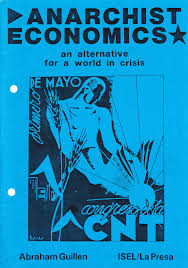
by Pablo Heraklio The anarchist militant and libertarian economist Abraham Guillén Sanz wasn born on March 9, 1913 in Corduente (Guadalajara, Spain), in a peasant family,
PDF book about the economics of the Spanish libertarian collectives 1936-1939.. An improved attempt at describing the possibilities of how production and distribution might be organised on libertarian communist linesfrom an anarcho-syndicalist perspective has been made by SolFed here: http://www.solfed.org.uk/solfed/the-economics-of-freedom
As a young man he did agricultural work and worked extracting resin. Then he studied in Madrid on a scholarship from the republican authorities. Affiliated with the Young Libertarian Youth, he was also a member of the National Confederation of Labor (CNT) and the Iberian Anarchist Federation (FAI).
In 1884, cholera tore through Italy, claiming thousands of lives. Despite a three-year prison sentence hanging over his head, Errico Malatesta joined other revolutionary anarchists on a daring mission to Naples—the heart of the epidemic—to treat those suffering from the disease. In so doing, he and his comrades demonstrated an alternative to coercive state policies that remains relevant today in the age of COVID-19.
The following text recounts the story of the outbreak and Malatesta’s intervention, including all the available primary materials about the Italian anarchists’ participation, some of which have not previously appeared in English. Much of the historical background is drawn from Frank M. Snowden’s excellent Naples in the Time of Cholera, 1884-1911. Thanks to Davide Turcato, the editor of Malatesta’s complete works; the Centre International de Recherches sur l’Anarchisme in Lausanne; and radical archivists and librarians everywhere who preserve anarchist history, enabling us to learn from the past.
“In 1884, cholera blighted several parts of Italy, being especially virulent in Naples. According to the prefect’s statistics, cholera affected upwards of 14,000 people in the province, killing 8000 of them, of whom 7000 perished in the city of Naples alone. The state reacted by imposing a crackdown: the city was placed under martial law, restrictions on movements were imposed, using methods similar to those employed on the occasion of the Messina earthquake or the more recent quake in L’Aquila.
The volunteers from the White Cross, Red Cross, social democrats, republicans, and socialists adopted quite a different approach. Felice Cavallotti, Giovanni Bovio, Andrea Costa, and Errico Malatesta, no less, were active on the streets of Naples. And not without some risk to their own health: the socialist volunteers Massimiliano Boschi, Francesco Valdrè, and Rocco Lombardo caught cholera and perished.”
-Alessia Bruni Cavallazzi’s elegy for Florentine Lombard, an English anarchist who served in the Red Cross during the epidemic
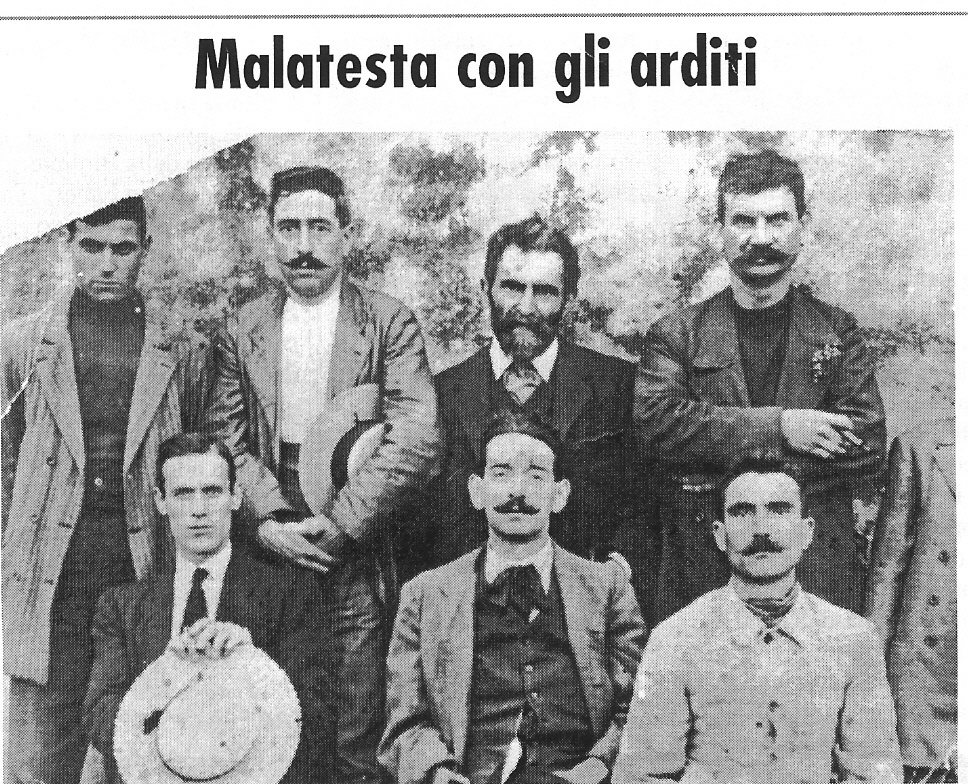
Malatesta and other comrades from various parts of Italy went to Naples as medical volunteers to care for those stricken by a cholera epidemic. Two anarchists, Rocco Lombardo and Antonio Valdrè, died there, taken by the illness. The well-known anarchist Galileo Palla especially distinguished himself by his selflessness, energy, and spirit of sacrifice.
As a former medical student, Malatesta was entrusted with a section of sick people; they had a particularly high recovery rate because he knew how to force the city of Naples to turn over food and medicine in abundance, which he distributed liberally. He was offered an official decoration, the order of good merit, which he refused. When the epidemic ended, the anarchists left Naples and published a manifesto explaining that “the true cause of cholera is poverty, and the true medicine to prevent its return can be nothing less than social revolution.”
Cholera is an infectious bacterial disease, typically contracted from infected water supplies, that can cause vomiting and diarrhea to the point of death. Was “the true cause of cholera” indeed poverty, or was that just ideological rhetoric? Read on and decide for yourself.
The Origins of Italy—and Italian Anarchism
Italy was still a new country when the cholera epidemic struck in 1884. To understand why Naples was hit so hard and what it meant that anarchists traveled there from all around the country in solidarity, we have to back up two decades.
Until 1861, there was no such thing as Italy. The peninsula was divided up into various kingdoms and duchies under many different local rulers. The original proponents of Italian unification were nationalists like Giuseppe Mazzini, who called on revolutionary republicans around Europe to overthrow the old monarchs and establish new nations on the basis of shared language, geography, and “unity of purpose.” The idea was that rich and poor should work together in solidarity beneath the banner of the nation.
In fact, people on the Italian peninsula did not possess a common language or culture. Many of the dialects spoken on different parts of the peninsula were mutually unintelligible; there were massive cultural and economic differences between different regions. Mazzini was seeking to invent a common language and culture where none existed, in order to create the foundation for a competitive modern state.
Contrary to their intentions, those who sought to carry out Mazzini’s program of national liberation ultimately brought about the unification of Italy under a monarchy. Revolutionaries like Giuseppe Garibaldi risked their lives in guerrilla warfare to unify the peninsula as a republic, but whenever they succeeded in toppling one king, another simply assumed control of the area, until King Victor Emmanuel of Sardinia ruled all of Italy.
Once he came to power, King Victor Emmanuel did not work beneath the banner of the nation for the betterment of all Italians; rather, he immediately set about looting the southern part of the peninsula to enrich his own coffers. In imagining that all Italians could share a common interest, Mazzini had failed to apprehend the class conflict at the basis of capitalist society.
In exile in London in 1864, Mazzini participated in the founding of the International Workingmen’s Association, a worldwide federation of labor unions. Karl Marx forced Mazzini out early on, only to lose control of the International as workers gravitated to the ideas of anarchists like Mikhail Bakunin. Bakunin was himself a former participant in national liberation struggles who had become disillusioned with the shortfalls and betrayals of nationalism.






 The Free