
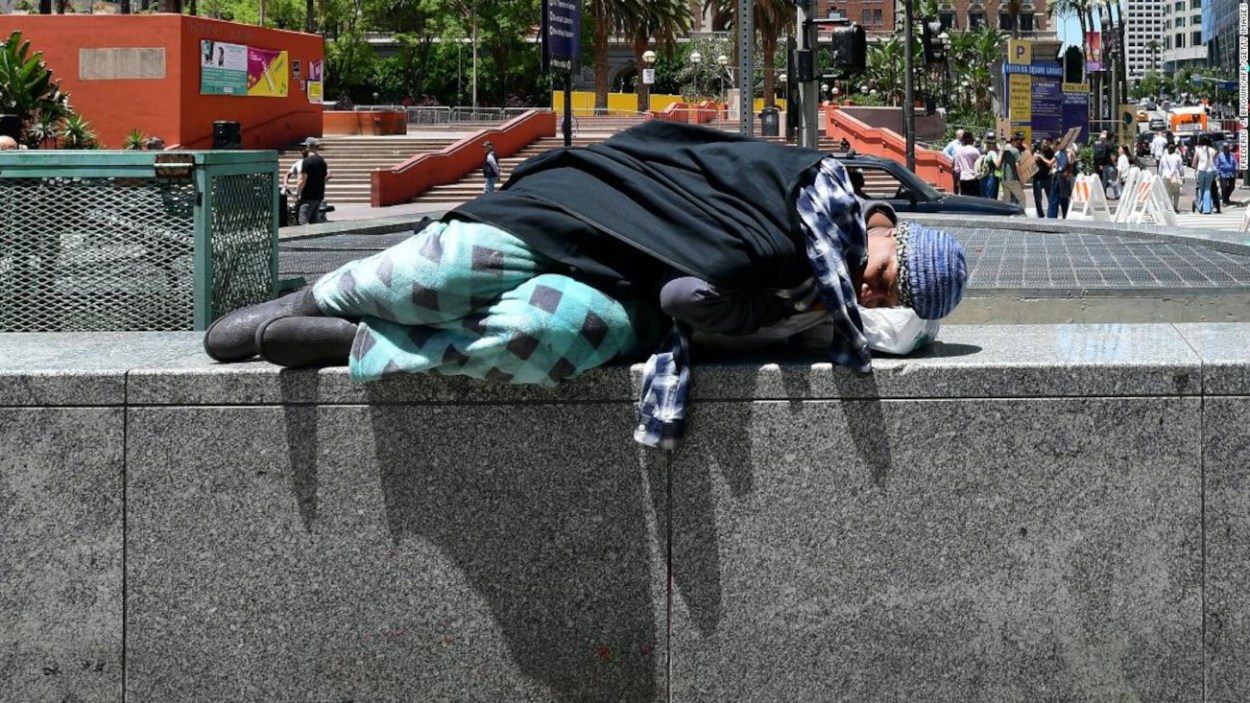
A migrant carries a blanket in Tijuana
Undocumented U.S. migrants
by Ilka Oliva Corado. on Crónicas de una Inquilina translation thefreeonline
I haven’t seen him at his job for a month, he’s in charge of placing carrots, mushrooms, okra, on that long shelf in the supermarket where there are always two workers placing vegetables on the shelves.
/cdn.vox-cdn.com/uploads/chorus_image/image/64846422/0a848e4111.7.jpeg)
Has he gotten sick? Did he get the virus? I wonder while I look carefully at the other shelves to see if I can find him, but no, he’s not there, there are only young people doing the work.
The new litter, those coming from internet scams, those who have all the strength to work , the recently emigrated: their little faces say it all. The recently undocumented immigrants are as if they were carrying a large poster announcing that they have just arrived and that they do not have papers, the fear of the circumstances emerges twice over them.
Those looks, those ways of walking, the clothes, their accents, so from their places of origin that it is as if they are spotlighted.
All that fades over the years like a tempera painting that receives the sun every day and pales until its tones become haggard, that is what time does to undocumented migrants who go crazy in the frenzy of wanting to run away towards freedom and then enormous wall of exclusion they encounter, which is devouring them physically and emotionally.
For the undocumented, there is no retirement, although they paid taxes during their working years, they do not have labor rights or retirement benefits.
Excuse me, I ask one of the young people who is on one of the fruit shelves, hasn’t the man who always works on that shelf come? He no longer comes, he changed jobs. Did he change jobs or did he get sick from the virus?
I ask as if the young man were going to answer me the truth or if he even knew. He tells me that he retired, as if retirement existed for the undocumented. He was the oldest of those who remained, rather the only one, they all left in recent months, as if the pandemic had thrown them away or disappeared them.
For an undocumented there are no better job options, it is the thousand uses, which in the end always ends up receiving the same pay, pennies less, pennies more and; ending the day with the same fear of finding the Immigration Police on the way home or the next morning on the way to work.
In the world of the undocumented it is difficult to have friends, start conversations with strangers, create emotional ties with others. Due to the fear of being discovered without documents and being deported it is difficult to trust others, so people isolate themselves, go from home to work and vice versa and so they can live for decades, their families and those children do not know uncles or grandparents except in photographs or through stories told by their parents, they do not go to friends’ houses or lead a normal life like those that do.
Although of course, there are a very few exceptions compared to the reality of thousands in that physical and emotional confinement of not having a sealed role that makes them visible as a human being.

And this drags down entire families. The psychological damage experienced by the other generation, that of the children that often touches the grandchildren, is also invisible to the system, it is as cheap labor as their undocumented parents, even if they were born in the country.
Why, what country today has humane laws for undocumented migrants? Chana is the same as Juana.
So as there are no relatives, as there are no close friends, those people who meet along the way in daily life become the ties with which they interact and many undocumented people manage thus to get out of their emotional confinement.
The good morning greeting in the bakery, with the supermarket workers, in the corner store, in the liquor store, the people who travel on the train, on the bus, that simple greeting is a world, it opens a world of light momentarily, it is a respite.
A breath of fresh air that perhaps someone with papers will never be able to understand because only those who do not have documents know what it is to live as undocumented and the emotional and physical confinement that this entails.
And there are losses, each time one of these characters disappears from daily life, the street becomes emptier, the supermarket has less color, the bus trip can be more tedious and the silence and solitude with which very few can living together become huge labyrinths with no way out.
I leave the supermarket thinking about the man in the plaid shirt who always greeted me when I passed his shelf, has he returned to his native Mexico? Has he changed jobs or was it the virus?
In any case, the shelves will not be the same, the supermarket is not the same without those who left, although one greets the new ones, those who arrived with all the desire to work and the dream of returning in two years, buying a little land, making their house and starting a business in their country of origin.
Author’s blog: https://cronicasdeunainquilina.com
Ilka Oliva Corado. @ilkaolivacorado
September 02, 2020.
Blog: Chronicles of a Tenant
Publisher: https://ilkaeditorial.com

The famous phrase “stay home” can be said from economic comfort, but not from necessity. Because those who live from day to day have to go to work, because either they die of the virus or they starve. The undocumented in any part of the world, is below the human being, is not counted as a person other than as the back that must be burst at the end of work.
Denuncia migrantes EEUU indocumentados
EEUU: Los que se fueron yendo
35m ago
A migrant walks as he carries a blanket on his back in Tijuana
EEUU: Los que se fueron yendo
Hace un mes que no lo veo en su puesto de trabajo, es el encargado de colocar en las estanterías las zanahorias, hongos, ocras, en esa larga estantería del supermercado donde siempre hay dos trabajadores colocando las verduras. ¿Se habrá enfermado?
¿Le habrá dado el virus? Me pregunto mientras observo detenidamente las otras estanterías a ver si lo encuentro, pero no, no está, solo hay jóvenes haciendo el trabajo. La nueva camada, los del cambio de estafeta, los que tienen toda la leche para trabajar, los recién emigrados: sus caritas lo dicen todo. Los recién emigrados indocumentados es como si llevaran un gran cartel donde anunciaran que acaban de llegar y que no tienen papeles, el miedo propio de las circunstancias a ellos les aflora el doble.
Esas miradas, esas formas de caminar, la ropa, sus acentos tan de sus lugares de origen que es como si los remarcara.
Todo eso se va diluyendo con los años como una pintura a témpera que recibe el sol todos los días y palidece hasta que sus tonalidades se vuelven macilentas, eso hace el tiempo con los migrantes indocumentados que se enloquecen en el vaivén de las ganas de salir corriendo hacia la libertad y el enorme muro de reclusión con el que topan, que los va devorando física y emocionalmente.
Para los indocumentados no existe el retiro, aunque pagaron impuestos durante sus años laborales, no tienen derechos laborales que les beneficie un retiro.
Disculpe, le pregunto a uno de los jóvenes que está en una de las estanterías de frutas, ¿el señor que siempre trabaja en aquella estantería no ha venido? Ya no viene, se cambió de trabajo. ¿Se cambió de trabajo o se enfermó del virus? Pregunto como si el joven fuera a contestarme la verdad o si supiera.
Me dice que se jubiló, como si para los indocumentados la jubilación existiera. Era el mayor de los que quedaban, más bien el único, todos se fueron yendo en los últimos meses, como si la pandemia los hubiera echado para otro lugar o desaparecido. Para un indocumentado no existen mejores opciones laborales, es el mil usos, que al final siempre termina recibiendo la misma paga, centavos menos, centavos más y; terminando el día con el mismo miedo de encontrarse a la migra en el camino de regreso a casa o a la mañana siguiente de camino al trabajo.
En el mundo de los indocumentados es difícil tener amigos, entablar conversaciones con desconocidos, crear lazos emocionales con otros, por la misma situación y el miedo de ser descubiertos sin documentos y ser deportados es difícil confiar en otros, entonces las personas se aíslan, van de la casa al trabajo y viceversa y así pueden vivir durante décadas, tener sus familias y esos hijos no conocer tíos ni abuelos más que en fotografías o a través de historias contadas por sus padres, no van a casas de amiguitos o llevar una vida normal como los que sí los tienen.
Aunque claro está, hay excepciones son muy pocas comparadas con la realidad de miles en ese encierro físico y emocional de no tener un papel sellado que lo haga visible como ser humano. Y esto arrastra a familias enteras. El daño psicológico que vive la otra generación, la de los hijos que muchas veces toca a los nietos, es invisible también para el sistema, es tan mano de obra barata como sus papás indocumentados, aunque hayan nacido en el país.
¿Porque, qué país hoy en día tiene leyes humanas para migrantes indocumentados? Lo mismo es Chana que Juana.
Entonces como no hay familiares, como no hay amistades cercanas, esas personas que se van encontrando en el camino en la vida diaria se vuelven los lazos con lo que se interactúa y muchos indocumentados logran salir de su encierro emocional.
El saludo de los buenos días en la panadería, con los trabajadores del supermercado, en la tienda de la esquina, en la licorería, las personas que viajan en el tren, en el bus, ese simple saludo es un mundo, abre un mundo de luz momentáneamente, es un respiro.
Una bocanada de aire puro que tal vez alguien con papeles jamás podrá entender porque solo quien no tiene documentos sabe lo que es vivir como indocumentado y el encierro emocional y físico que esto conlleva.
Y son pérdidas, cada vez que uno de estos personajes desaparece de la vida diaria, la calle se vuelve más vacía, el supermercado tiene menos color, el viaje en autobús puede ser más tedioso y el silencio y la soledad con los que muy pocos pueden convivir se vuelven enormes laberintos sin salida.
Salgo del supermercado pensando en el señor de camisa a cuadros que siempre me saludaba cuando pasaba frente a su estantería, ¿habrá regresado a su México natal? ¿Se habrá cambiado de trabajo o fue el virus? De cualquier manera la estantería no será la misma, el supermercado no es el mismo sin los que se fueron yendo, aunque uno salude a los nuevos, a los que llegaron con toda la leche para trabajar y sueñan con regresarse en dos años, comprar un terrenito, hacer su casita y poner un negocio en su país de origen.
Blog de la autora: https://cronicasdeunainquilina.com
Ilka Oliva Corado. @ilkaolivacorado 02 de septiembre de 2020.
Blog: Crónicas de una Inquilina Editorial: https://ilkaeditorial.com


 The Free