
Okay so this is the scam.
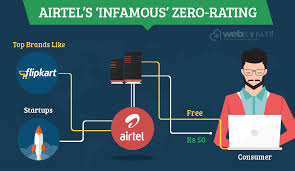
Your mobile internet provider charges you much too much, by the month. Then he commonly gives you access ”FREE” for big US sites like Facebook, who in turn give him ‘discount’.
This becomes more common daily with lots of variations, especially in Europe. Till little by little all the corporations ‘buy into’ it and all other sites become expensive (also due to other scams) and marginalised.
They call this “Zero-Rating”
It’s now been called out by an EU Court.. Lets see what that means in practice!
‘Huge Victory for Net Neutrality’: Top EU Court Rebuffs Zero-Rating Schemes
The open internet win comes from the Court of Justice of the European Union’s first-ever interpretation of the EU’s 2015 net neutrality law.by Andrea Germanos, staff writer 0 Comments

“Zero rating is the opposite of net neutrality, the notion that all data on the internet should be treated equally,” digital rights group Access Now previously explained. (Photo: Tim Carter/CC BY-NC-ND 2.0)
The European Union’s highest court on Tuesday said that so-called “zero-rating” plans that prioritize certain Internet data are “incompatible” with the net neutrality regulations of the 27-country bloc.

see also> Zero Rating: the massive loophole that could undermines Net Neutrality
Nikolas Guggenberger, executive director the Information Society Project at Yale Law School, called the decision a “huge victory for net neutrality.”
Huge victory for #netneutrality in EU: ECJ interprets Regulation to prohibit zero rating.
Do we see similar development as in antitrust? US creates/advances successful policy, EU copies/adopts it, US gives up on it, EU seriously enforces it & consumers benefit. If yes, why? https://t.co/tmMPE4HXUa— Nikolas Guggenberger (@nikenberger) September 15, 2020
“The requirements to protect internet users’ rights and to treat traffic in a non-discriminatory manner preclude an internet access provider from favouring certain applications and services by means of packages enabling those applications and services to benefit from a ‘zero tariff’ and making the use of the other applications and services subject to measures blocking or slowing down traffic,” the Court of Justice of the European Union (CJEU) said in a statement (pdf) about its landmark interpretation of the 2015 net neutrality law.
see also> AP Explains: What is Net Neutrality and Why
As Reuters explained, “The European court’s judgment came after a Hungarian court had sought guidance in a case involving Hungarian mobile telecoms operator Telenor Magyarorszag which offers its customers preferential or so-called zero-tariff access packages which meant that the use of certain applications did not count towards consumption.”
Forbes has more on the background:
At the time of the law’s passage, net-neutrality advocates were deeply concerned that loopholes would allow operators to get away with practices that prioritize some traffic over other traffic, for commercial rather than technical reasons. Zero-rating was a particular worry, because the law did not specifically mention it. Therefore, it seemed operators might be able to get away with blocking or slowing down customers’ general Internet use once they reached their data caps, while still allowing favored services to run unimpeded.
In fact, zero-rating is “at the heart of the current debate over the future of the free and open internet” and is “antithetical to net neutrality,” according to digital rights group Access Now. As the group previously explained:
Zero rating is the opposite of net neutrality, the notion that all data on the internet should be treated equally. Net neutrality is central to maintaining the internet’s potential for economic and social development, and to the exercise of human rights such as the right to free expression. Its principles help ensure that that anyone, anywhere in the world, can receive and impart information freely over the internet, no matter where they are, what services they use, or what device they operate. Seen in this light, zero rating is a form of “network discrimination”—it deliberately sets up a system where “the internet” you get is different for different people.
Zero rating programs manifest in different forms, the most frequent being “sub-internet” offers, where only a part of the internet is offered for “free,” and what we’re calling the “telco” model, where a telco prioritizes either its own content or that of third parties. All forms of zero rating amount to price discrimination, and have in common their negative impact on users’ rights.

In light of those threats, Access Now called the CJEU’s decision “great news.”
“We welcome this decision,” the group tweeted, “and hope that it will help bring an end to *all* zero-rating offers in the EU.”Our work is licensed under a Creative Commons Attribution-Share Alike 3.0 License. Feel free to republish and share widely.
Zero Rating: the massive loophole that undermines net neutrality in the EU and keeps the Internet from thriving.
ISPs could cement their role as gatekeepers. They would decide which sites and apps you use the most, not you.

Fight for the FutureJun 21, 2016
If you want to use the Internet on your phone in most parts of Europe, expect it to suck. Data allowances are low and the telecoms force you onto their own, inferior apps for doing things like watching videos or listening to music.
For example, if you’re on Magyar Telekom Nyrt, a T-Mobile service offered in Hungary, your measly 500 megabyte monthly Internet allowance could get used up in less than an hour on video sites like Vimeo and YouTube. If you want to watch video, you’ll basically be forced to use their IPTV platform instead, a video service based around local television offerings that T-Mobile allows subscribers to stream unlimited amounts of for free.

It’s actually been like this for so long that Europe has fallen behind much of the world in online innovation. Open services are walled off and prohibitively expensive, while services that feel more like American cable television than the Internet are essentially force fed.
The problem is that ISPs and telecoms in Europe have been allowed to discriminate against certain data in order to encourage their subscribers to use their own websites and apps, and those of their partners, over others. It’s known as “zero rating,” and it has been widely used in many European countries for years (and it’s becoming more common in the US).
Here’s how it works. ISPs, both mobile and home Internet providers, set caps on how much data their customers can use each month before their service is either shut off or degraded to a point that it is unusable. Then, they make arrangements with companies like Spotify or Facebook to allow their customers to use those services without having the associated data usage count against their monthly caps. The result is that Internet users are less likely to use services that are outside their ISPs zero rating plan.
Unfortunately, in the regulatory documents for implementing net neutrality rules in the European Union that were recently released, zero rating is not banned. According to the document, regulators would approve or reject zero rating arrangements on a case-by-case basis.

Zero rating clearly violates the basic net neutrality principle that all data on the Internet should be treated the same, but ISPs have been getting away with it by saying they are giving away something for “free,” (even though it’s subsidized by the money users pay each month).
Bad for consumers
Fact is, zero rating is basically a scam, and when ISPs are allowed to do it, consumers end up with inferior Internet access. According to research from Rewheel, which tracks the European mobile market, mobile operators in Europe that zero-rate their own video services or video services of their partners offer data caps that are 50 percent lower than what their competitors that don’t zero-rate offer for the same prices. They also found that zero-rated video services launched in 2014 by European mobile carriers were accompanied by sharp increases in the per-gigabyte costs for mobile data.

 The Free