

leer en castellano más abajo
Gunfire, tear gas and threatening hordes mounted on ATVs
By Claudia Rafael and Silvana Melo Posted on Oct 31, 2020
(APe) .- Minutes before four in the morning it was black night. The dreams of the inhabitants of the Guernica estate were violently interrupted: some girls and boys were ran outside, in a race against time, against the inevitable.
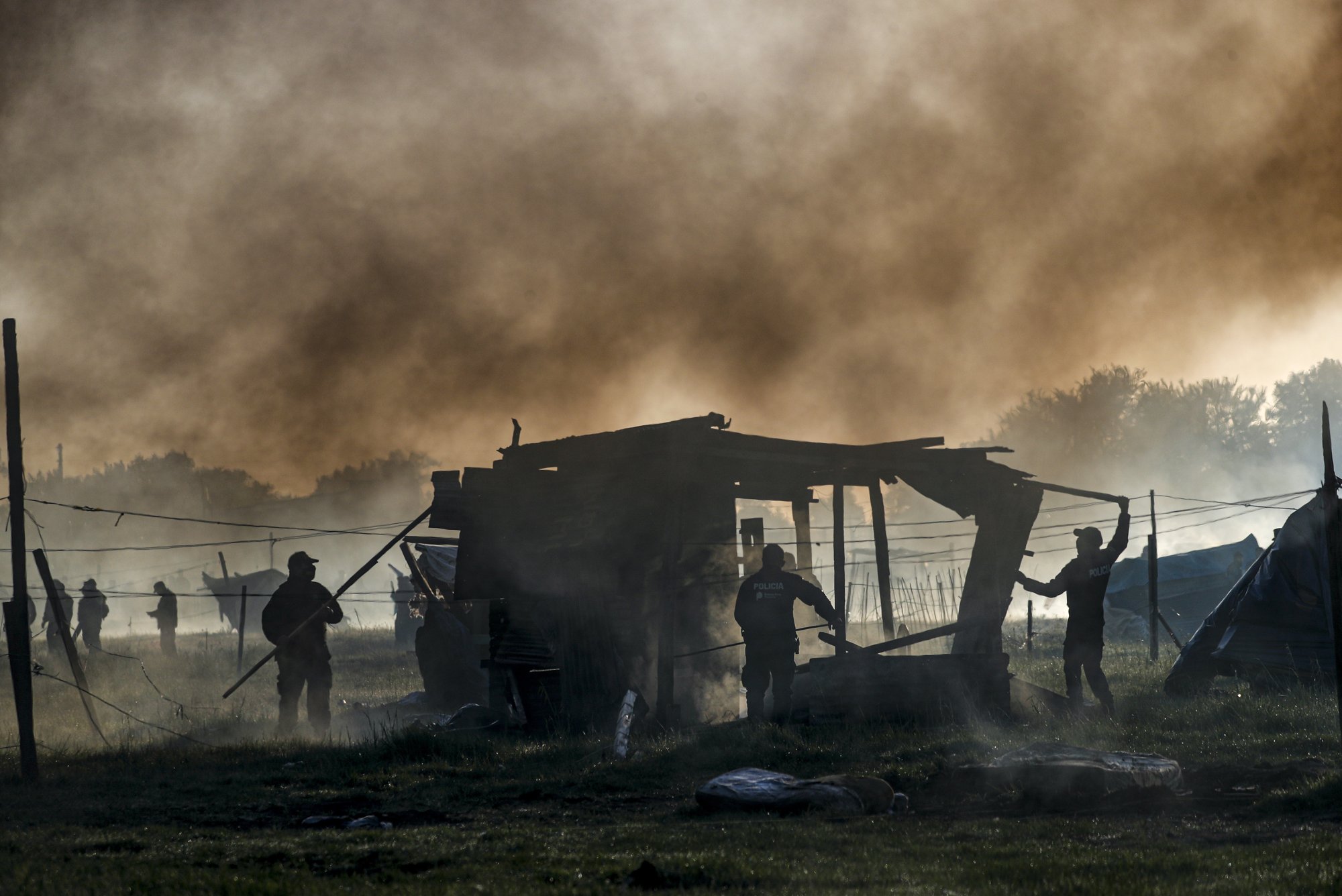
Hundreds of families had been living in shacks on the land in the area of Guernica for more than three months, in a reflection of the growing poverty and lack of housing for many people in Argentina. The pandemic and lockdowns aimed at stopping the spread of COVID-19 have aggravated the country’s economic problems.
A warning of what would come shortly after allowed some to escape. Others, the majority, had to stay there. The images of horror will be tattooed by fire in her memories. Of the human hunt. “They entered at 4 in the morning, the boys were sleeping, people running with the boys. They left us stranded, the children were crying and running.

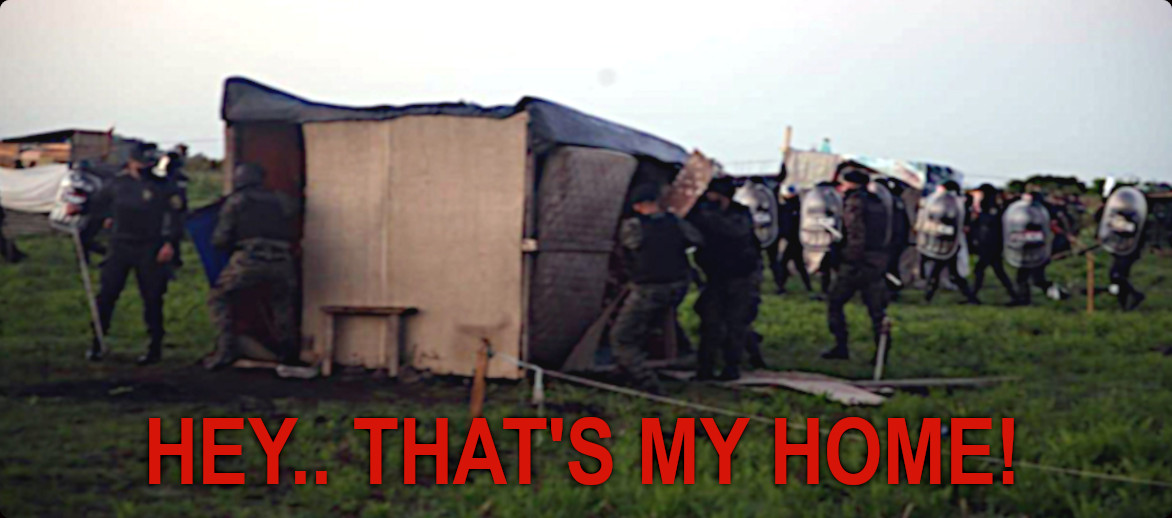
Alternative Media Network from the testimony of a woman in the territory. The succession of photographs of flesh and blood will accompany them for all their lives. The burning of boxes at the steady pace of the police that swept everything away.
Far back in time, trampled, buried, shattered, remains the hope of a promise of paradise.
On August 13, the children said – for the judicial presentation of the lawyers Laura Taffetani and Carolina Vilchez, from the Lawyers’ Union – that “this land means hope for us, to stop changing all the time and know that we are going to sleep there every day without anyone kicking us out.
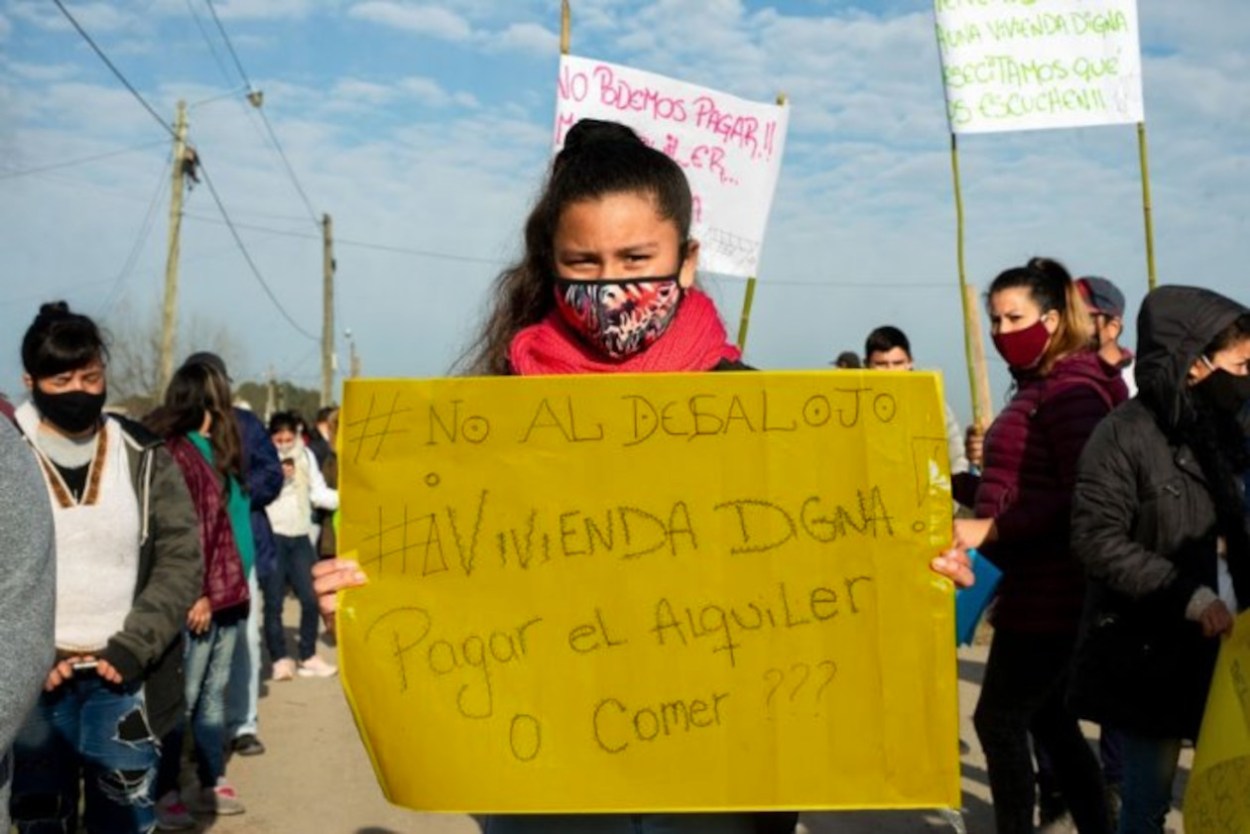
We also want a beautiful neighborhood, with places to play, with streets as our mothers and fathers wanted ”.
And the parents – with the wisdom of the historically overwhelmed experience of childhood – “we come to say that we want a place to live and we also want it for all the boys and girls who live on the land where we are.”

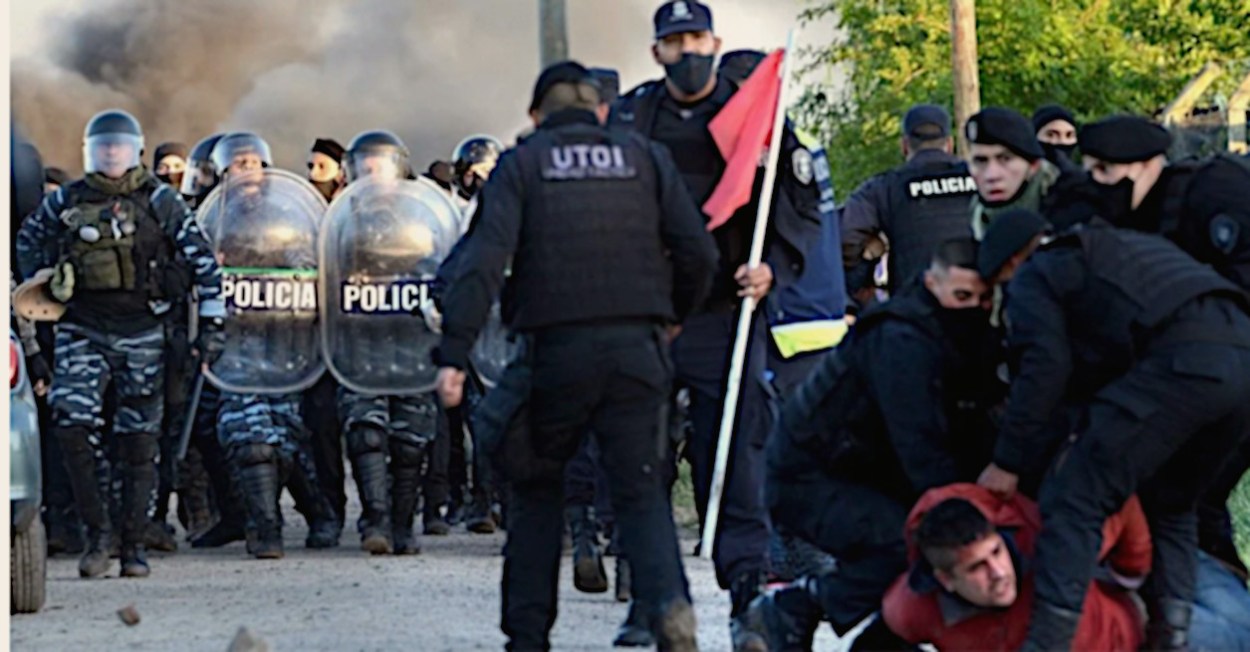
Today the experiential photo is another. It is dressed in gunshots. Tear gas. Of menacing hordes mounted on quadricycles. Of 7, 8, 10 policemen surrounding each detainee in a long line, simulated army in action.
Girls and boys keep crying. There is no way to sweeten tears and fears. The terror of the screams. The terror that broke in, as terror tends to break, during the early morning. When darkness rules. When nightmares, real, concrete, all-consuming, feed with panic.
Hope stripped 4,400 people of utopia, in numbers that have been oscillating since that July 20, when a group of families settled in the July 20 sector. And that was completed with the arrival in the sectors called “San Martín”, “La Lucha” and “La Unión”.
And with what happened to the history of these months as “the taking of Guernica” they dared to do the forbidden. Their mere presence outraged the real estate trades of large financial operators and certain political powers that negotiate under the table.
They shed light, as this Agency rebuilt in September, the systemic inequality: “San Cirano, Malibu, Casuarinas, El Paraíso are just a bunch of elite names from the lands of President Perón’s party. On the other side, the homeless, the landless. Those who, like snails without strategy, roam with their lives in tow.
The problem is the poor. And the space they naturally occupy on earth. A space -whatever they occupy- inexorably usurped privilege, the system that seeks a world for fewer, for few.
They are in villas, settlements, under bridges, in boxes that are blown up in storms, piled up in multi-family houses, sleeping on street corners, in cheap but inaccessible hotels, on the sidewalks of eviction.
The problem is the poor. And not the usurpers of contiguous classes, from Roca to the occupant of the little camp ………
And since the poor are indigestible but at the same time the factory works prodigiously (18 and a half million fell under that invisible line), the strategies for their confinement outside any white border are very creative……….

A symbol of the inequity of capitalism that distributes most of the income and assets to 1% of the population and condemns half to homelessness, to a collapsed health system in normal times, to a lousy diet and to an education that generally cannot grasp poor childhood.
Argentine children and adolescents.
Governor Axel Kicillof tried housing plans and subsidies so that people would not have to go to occupy land because they have nowhere to fall with their bones at night or put food on a table . Everything was diluted in the social paranoia of the occupations and the advance on private property.

It was concluded that 50 thousand pesos would be distributed among to those who occupied land. And there are things that cannot be played months before the legislative elections. Then the police and military were sent to Guernica under the command of the Berni. The Minister of Development, Andrés Larroque, said yesterday that “the negotiation ended”, when the reality was different for the organizations and families.
Berni, who had already prepared the 4,000 police officers who would enter the 100-hectare property at 4 in the morning today, asked for the delay of the eviction “for climatic reasons.” They say it was a typical wartime diversionary maneuver.

The Secretary of Government, Teresa García, spoke to the media. And she claimed that the eviction had nothing to do with the government. “Judicial order”, she said. And they even enunciated the warlike “collateral damage.” The prosecutor took a selfie in the middle of the operation, when it had already dawned, people had been burned out and the boxes were still smoking.
They arrested and transferred 27 men and 10 women to La Plata “for the crime of usurpation and attack and resistance to authority.” They seized, according to the police report, “20 iron traps and a homemade shield.”
From one of them, “a knife, a cloth backpack with bolts and a whip.” With these logistics they resisted 4000 super-armored policemen, with shields, long weapons and quadricycles. The mass media spoke of confrontation.
More than 1,600,000 inhabitants of the suburbs are destitute. Six million are poor. The country’s housing deficit includes 3.5 million families. Accumulated for decades. Five million people live in 4,400 villages and settlements throughout the country, without basic services or land ownership.
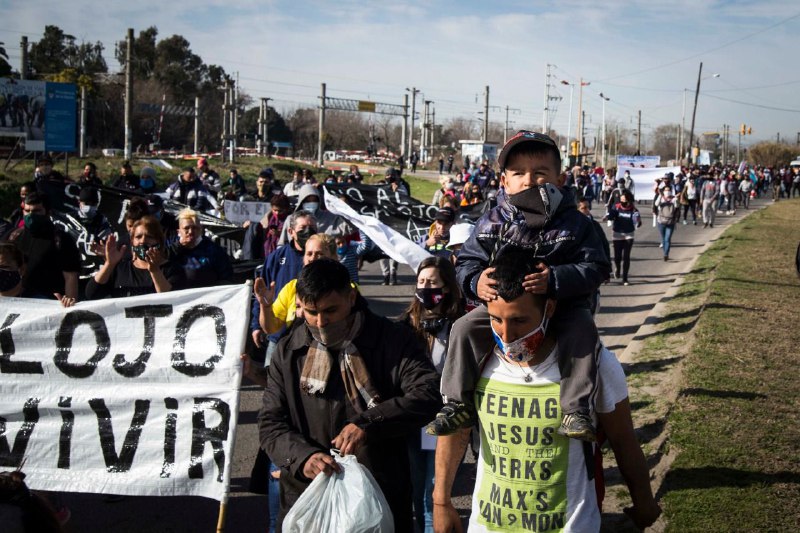
The problem is the poor, historically hidden from the eyes of the good neighborhood. The day they appear, when they decide to build a neighborhood or two or four that contains them and where to build some kind of dignity, the country tears its clothes.
For months now, a shameful contribution from the richest people to sustain the collapse of almost twenty million Argentines for at least five minutes cannot be discussed in Congress. But the rich organize banners to nationalize their family feud.
Edition: 4108
.
Argentina. Desalojo en Guernica: el problema son los pobres
Disparos, gases lacrimógenos y hordas amenazantes montadas sobre cuatriciclos
Por Claudia Rafael y Silvana Melo Publicado el 31 Oct, 2020Compartir
(APe).- Minutos antes de las cuatro de la mañana era noche cerrada. El sueño sobresaltado de los habitantes del predio de Guernica fue interrumpido violentamente: algunas niñas y niños fueron llevados fuera, en una carrera contrarreloj contra lo inevitable.
Una advertencia de lo que vendría poco después permitió resguardarlos. Otros, la mayoría, debieron quedarse allí. Quedarán tatuadas a fuego en sus memorias las imágenes del horror. De la cacería humana. “Entraron a las 4 de la mañana, estaban los chicos durmiendo, la gente corriendo con los chicos. Nos dejaron tirados, los nenes lloraban y corrían. No veíamos nada. Ellos avanzaron y no les importó nada. Fue horrible ver a los chicos, todos corriendo y llorando”, reconstruye la Red Nacional de Medios Alternativos a partir del testimonio de una mujer en el territorio. La sucesión de fotografías de carne y hueso los acompañarán para todas sus vidas. La quema de casillas al paso firme policial que arrasó con todo. Muy atrás en el tiempo, pisoteada, enterrada, destrozada, queda la esperanza de una promesa de paraíso.
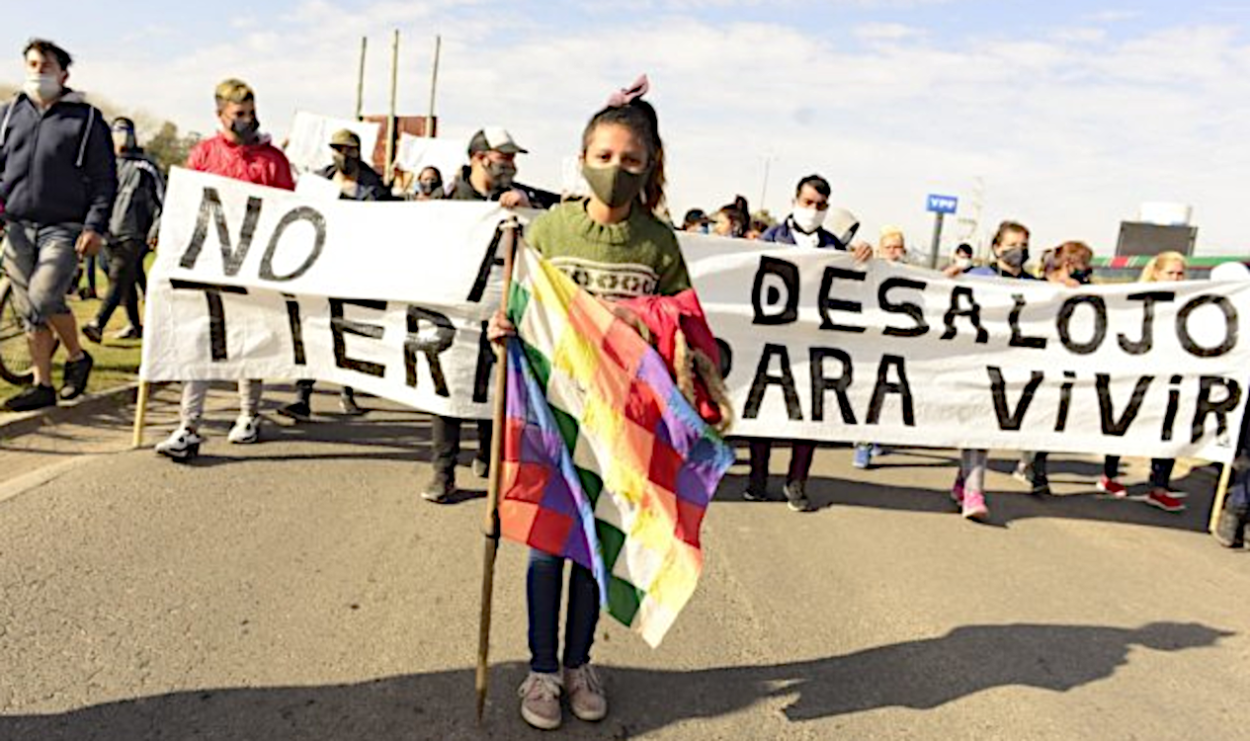
El 13 de agosto decían los niños -para la presentación judicial de las abogadas Laura Taffetani y Carolina Vilchez, de la Gremial de Abogados- que “este terreno nos significa una esperanza, dejar de estar cambiando todo el tiempo y saber que vamos a dormir allí todos los días sin que nadie nos eche. Queremos también un barrio lindo, con lugares donde jugar, con calles como lo están pensando nuestros papás y mamás”. Y que –con la sabiduría de la experiencia históricamente avasallada de la infancia- “venimos a decir que queremos un lugar donde vivir y también lo queremos para todos los chicos y chicas que viven en los terrenos donde estamos”.
Hoy la foto vivencial es otra. Está vestida de disparos. De gases lacrimógenos. De hordas amenazantes montadas sobre cuatriciclos. De 7, 8, 10 policías rodeando a cada detenido en una larga fila, simulacro de ejército en acción. Niñas y niños siguen llorando. No hay modo de endulzar las lágrimas y los miedos. El terror de los gritos. El espanto que irrumpió, como suele irrumpir el espanto, durante la madrugada. Cuando la oscuridad manda. Cuando las pesadillas, reales, concretas, devoradoras, nutren de pánico.
La esperanza desvistió de utopía a 4400 personas, en números que fueron oscilando desde aquel 20 de julio en que un grupo de familias se asentó en el sector 20 de Julio. Y que se completó con la llegada a los sectores llamados “San Martín”, “La Lucha” y “La Unión”.

Y con lo que pasó a la historia de estos meses como “la toma de Guernica” se atrevieron a lo prohibido. Su sola presencia hizo tambalear, con una contundencia irrefrenable, los negociados inmobiliarios de grandes operadores financieros y ciertos poderes políticos que negocian por debajo de la mesa. Echaron luz, como reconstruyó esta Agencia en septiembre, la inequidad sistémica: “San Cirano, Malibú, Casuarinas, El paraíso, son apenas un manojo de nombres de elite de los countries del partido de Presidente Perón. Del otro lado, los sin techo, los sin tierra. Los que, como caracoles sin estrategia, deambulan con sus vidas a cuestas”.
Son los pobres

El problema son los pobres. Y el espacio que ocupan naturalmente en la tierra. Un espacio –cualquiera que ocupen- inexorablemente usurpado al privilegio, al sistema que busca un mundo para menos, para pocos. Estén en villas, asentamientos, bajo los puentes, en casillas que se vuelan en los temporales, amontonados en las casas multifamiliares, durmiendo en las esquinas, en los hoteles baratos pero inaccesibles, en las veredas del desalojo. El problema son los pobres. Y no los usurpadores de clases contiguas, desde Roca hasta el ocupante del campito con vacas en terreno ajeno al que defendía de los invasores el fiscal Juan Cruz Condomí Alcorta ante las preguntas del periodista.
Y como los pobres son indigeribles pero a la vez la fábrica funciona prodigiosamente (18 millones y medio cayeron bajo esa línea invisible) las estrategias para su confinamiento fuera de toda frontera blanca son muy creativas. Tanto la derecha reconcentrada como la hegemonía mediática se dio el lujo de asimilar a Guernica y sus 2000 familias exiliadas del sistema y despojadas de todo, al reclamo ancestral mapuche de Mascardi y al conflicto familiar de los ricos de Entre Ríos. Para ellos son todas tomas. Y amenazas a la sacralidad de la propiedad privada.
Un símbolo de la inequidad del capitalismo que distribuye la mayor parte de los ingresos y los bienes en el 1% de la población y condena a la mitad a la falta de vivienda, a un sistema de salud colapsado en tiempos normales, a una alimentación pésima y a una educación que generalmente no puede asir a la niñez pobre. Que son seis de cada diez niños y adolescentes argentinos.

El gobernador Axel Kicillof intentó planes de viviendas y subsidios para que la gente no tuviera que ir a ocupar tierras porque no tiene dónde caer con sus huesos en las noches ni plantar una mesa para la comida de los días. Todo se diluyó en la paranoia social de las tomas y el avance sobre la propiedad privada. Se llegó a titular que se les repartirían 50 mil pesos a los que tomaran tierras. Y hay cosas que no pueden jugarse a meses de las elecciones legislativas.
Entonces mandó la policía a Guernica al mando del militar Berni. El ministro de Desarrollo, Andrés Larroque, había dicho ayer que “la negociación terminó”, cuando para las organizaciones y las familias la realidad era otra. Berni, que ya tenía preparados los 4000 policías que entrarían a las 4 de la mañana de hoy al predio de 100 hectáreas, salió a pedir la prórroga del desalojo “por cuestiones climáticas”. Dicen que fue una maniobra distractiva típica de la guerra.
De hecho, la secretaria de Gobierno, Teresa García, habló con los medios. Y dijo que el desalojo no tuvo nada que ver con la gobernación. “Manda judicial”, definió. Y hasta enunció el bélico “daños colaterales”. El fiscal se sacó una selfie en medio del operativo, cuando ya había amanecido, la gente había sido corrida y las casillas estaban todavía humeantes.
Detuvieron y trasladaron a La Plata a 27 hombres y 10 mujeres “por el delito de usurpación y atentado y resistencia a la autoridad”. Les secuestraron, según el informe policial, “20 trampas de hierro y un escudo de fabricación casera”. A uno de ellos, “un cuchillo, un morral de tela con bulones y un rebenque”. Con esa logística resistieron a 4000 policías superpertrechados, con escudos, armas largas y cuatriciclos. Los medios masivos hablaban de enfrentamiento.
Más de 1.600.000 habitantes del conurbano están en la indigencia. Seis millones son pobres. El déficit habitacional del país incluye a 3,5 millones de familias. Acumulado durante décadas. Cinco millones de personas viven en las 4400 villas y asentamientos en todo el país, sin servicios básicos ni titularidad de terrenos.
El problema son los pobres, históricamente escondidos de los ojos del buen vecindario. El día que aparecen, que deciden armar un barrio o dos o cuatro que los contenga y donde construir alguna clase de dignidad, el país se rasga las vestiduras. Hace meses que no se puede discutir en el Congreso un aporte vergonzoso de los más ricos para sostener al menos cinco minutos el derrumbe de casi veinte millones de argentinos. Pero los ricos organizan banderazos para nacionalizar su disputa de familia.

Edición: 4108
.

 The Free