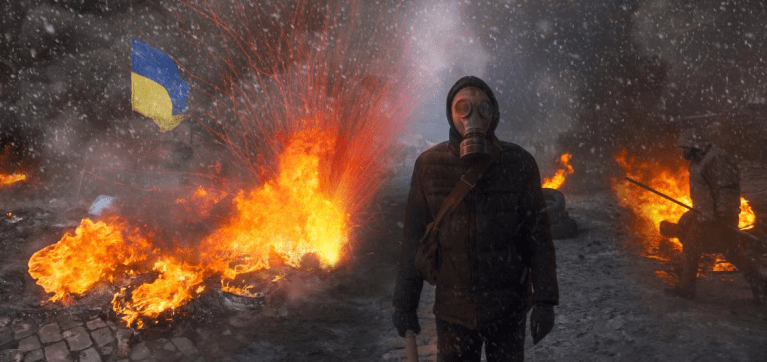
I was planning a story arc with Stepan and Andriy being sent on a Ramboesque mission to rescue a group of Ukranazi saboteurs stuck behind enemy lines, but I had to scrap that for obvious reasons and draw this instead.
*********************
Moscow Food Not Bombs Statement
A hasty translation of a statement from Food Not Bombs Moscow, which appeared on their Telegram channel a few hours ago.
We will never take the side of this or that state, our flag is black, we are against borders and freeloader presidents. We are against wars and killings of civilians.
Palaces, yachts, and prison sentences and torture for dissenting Russians are not enough for Putin’s imperial gang, they should be given war and the seizure of new territories. And so, “defenders of the fatherland” invade Ukraine, bombing residential areas. Huge sums are being invested in murder weapons while the people are impoverished more and more.
There are those who have nothing to eat and nowhere to live, not because there are not enough resources for everyone, but because they are distributed unfairly: someone has a lot of palaces, while others did not even get a hut.
In order to keep and increase the benefits in their hands, the government declares wars. Who will collect their intestines with their hands, who will have their arms and legs torn off by explosions, whose families will bury their children? Of course, all this does not apply to the ruling minority.
We must resist the militaristic regime and the war it is waging with all our might. Spread information among your comrades, fight as best you can. No war but the class war. Solidarity instead of bombs.
The war continues. Russian and Donbass forces continue to advance in the south of the DPR and in the center of Ukraine. The ukrop army continues terrorist attacks against civilians and civilian life support systems such as electricity, food stores, gasoline storage and water systems. Resistance in some areas is substantial, but our victory is assured.
DAY Z+3 RUSSIAN LIBERATION /DE-NAZIFICATION OF UKRAINE . Donetsk
Resulta de gran importancia recurrir a las genealogías femeninas para encontrar líneas de actuación que nos permitan estudiar los procesos de cambio desde la perspectiva de las mujeres. Estas genealogías contribuyen a esclarecer fenómenos sociales que han transformado nuestras vidas en el momento actual y ayudan a reconstruir los hitos y las mujeres que contribuyeron a ese cambio.
Es fundamental nombrar a las mujeres, construir la genealogía en formas de hacer y de estar a través de los textos fundacionales del movimiento feminista y recuperar las voces históricas de mujeres para transmitirlas en la educación formal e informal.
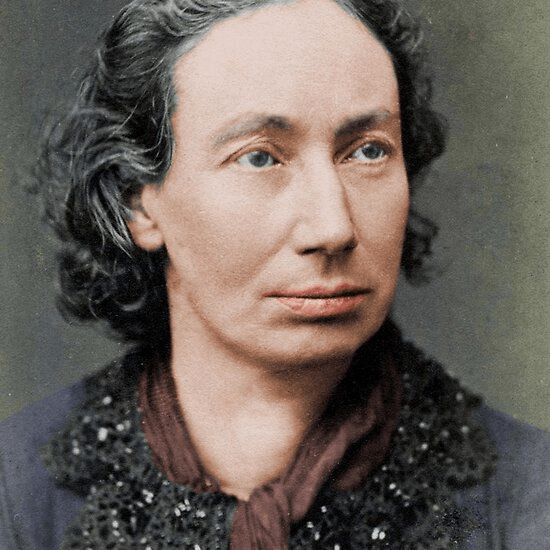
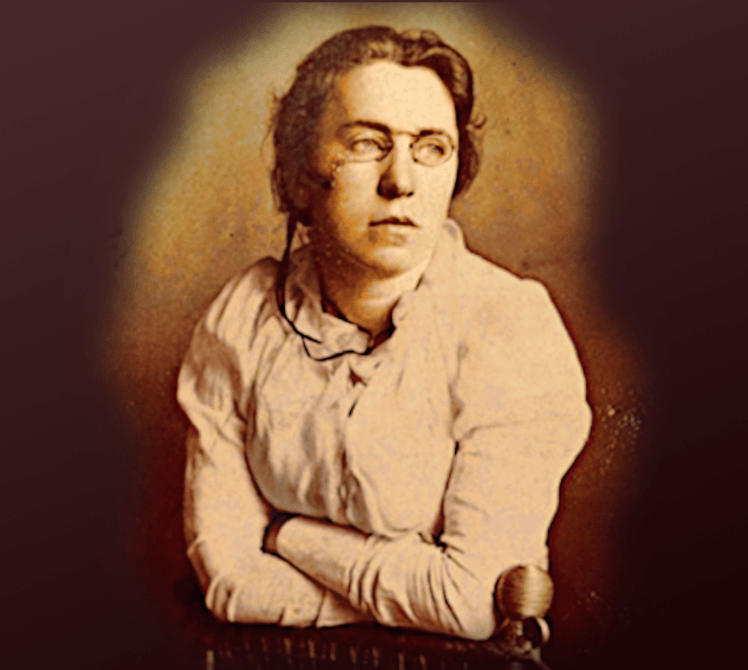
La actuación social-cultural de las mujeres no siempre es el producto de la excepcionalidad, sino que arranca de una trayectoria que conviene resaltar. Nos proponemos reconstruir una parte de la genealogía del feminismo anarquista a través de tres mujeres: Louise Michel, Teresa Claramunt y Emma Goldman.
Louise Michel (1830-1905) pertenecía a una generación anterior a Teresa Claramunt (1862-1931) y Emma Goldman (1869-1940). Las tres se conocieron, aunque nunca coincidieron juntas.
Teresa conoció a Louise en 1897, ambas habían sido juzgadas por sendos Tribunales Militares y deportadas. La comunera había regresado a Francia tras su deportación en 1880 y, finalmente, se exilió a Inglaterra en 1890. Claramunt junto con veintisiete personas más, pese a ser declaradas inocentes en el Proceso de Montjuïc, llegaron deportadas a Inglaterra en 1897.
Cuando llegaron a Londres, tras desembarcar en Liverpool, les estaban esperando Louise Michel[1], Fernando Tarrida y el Comité de protección a las víctimas de las atrocidades españolas[2].
Teresa debía conocer a Louise porque su gran amiga Teresa Mañé (que se reunió con las personas deportadas poco después) fue una de las divulgadoras de la obra de Michel en España. Quizás por ese motivo, su hija Federica Montseny conoció y tuvo interés en la Comuna y en Louise Michel[3].
Federica Montseny
Las dos eran excelentes comunicadoras tanto en mítines como a través de artículos en la prensa obrera. Ambas llevaron a cabo múltiples giras de propaganda difundiendo la Idea y se vincularon a periódicos como El Productor en el caso de Claramunt y Le Libertaire en el caso de Michel. Sus vidas personales fueron difíciles, sobre todo cuando dejaron de ser jóvenes, por los pocos ingresos de que disponían.
El paralelismo de las historias de estas dos mujeres podemos presuponer que debió vincularlas, pese a la brevedad del encuentro, en un sentimiento de empatía y solidaridad, además de explicar porqué Teresa fue llamada la Louise Michel española.
Emma y Louise se conocieron también en Inglaterra en 1895. Emma viajó a Europa para estudiar en Viena y su primera parada procedente de Estados Unidos fue en Londres donde conoció a diversas personalidades anarquistas entre las cuales estaba Louise (ese era su objetivo al visitar Inglaterra según dice ella misma).
También fue un encuentro breve puesto que Emma siguió viaje a Viena donde estudio un curso de comadrona y otro de enfermedades infantiles.
Las impresiones de Emma en su autobiografía[4] dejan clara la gran admiración que sentía por ella y por su intervención en la Comuna: «Louise Michel había destacado por su amor a la humanidad, por su gran fervor y su valor»[5].
Su descripción física dejaba claro que Michel era una mujer avejentada por todas las penurias vividas (tenía sesenta cinco años y no sesenta y dos como señalaba Goldman): «Era huesuda, estaba demacrada y parecía más vieja de lo que era en realidad (…); pero sus ojos estaban llenos de juventud y ánimo, y su sonrisa era tan tierna que ganó mi corazón inmediatamente»[6].
Cuando Emma conoció a Louise se preguntó: «cómo podría haber alguien que no viera su encanto» pese a que no se preocupaba por su apariencia y mostraba un gran desinterés por sí misma: «su vestido estaba raído, el gorro era viejísimo. Todo lo que llevaba puesto le sentaba mal»[7].
No olvidemos que Emma era una joven de veintiséis años que miraba con admiración a Louise pero que debía verla como una mujer mayor. Era su admiración hacia la vieja comunera la que transformó su impresión realista en una sensación completamente diferente, casi mística[8]:
«(…) todo su ser estaba iluminado por una luz interior. Se sucumbía rápidamente al encanto de su radiante personalidad, tan irresistible por su fuerza, tan conmovedora por su sencillez infantil. La tarde que pasé con Louise fue una experiencia no comparable a nada de lo que me había sucedido hasta entonces en mi vida. Su mano en la mía, el tierno roce de su mano sobre mi cabeza, sus palabras de cariño e íntima camaradería hicieron que mi alma se expandiera, ascendiera hacia las esferas de belleza donde moraba ella».
Emma y Teresa se conocieron en España en una breve visita que hizo Emma entre diciembre de 1928 y enero de 1929, para recoger información.
Fue el historiador austriaco Max Nettlau (1865-1944), intelectual anarquista de cultura enciclopédica, entregado al estudio de la historia del anarquismo y de la vida de Bakunin, quien animó a su amiga Emma, con quien mantenía asidua correspondencia desde que se conocieron en Londres en 1900, a visitar un país que a él le había cautivado.
España no era para ella un país desconocido. Su internacionalismo anarquista la había llevado desde muy joven a querer conocer la situación de sus camaradas del resto del mundo.
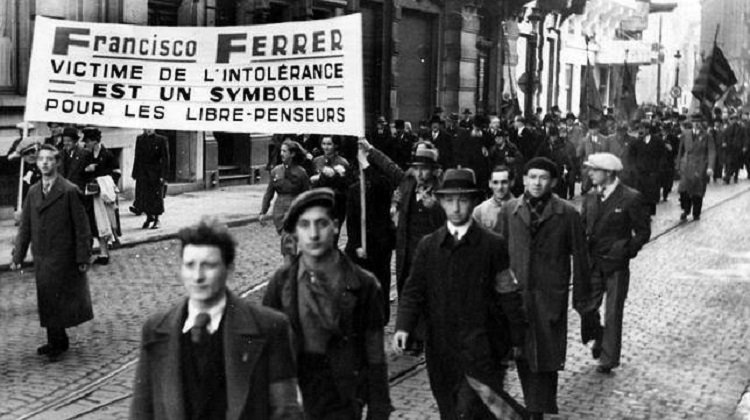
En Estados Unidos participó en diversas campañas contra la política represiva de los gobiernos de la monarquía de Alfonso XIII, en concreto a raíz de las brutales torturas a los presos/as de Montjuic (probablemente conocía a Claramunt como consecuencia de esta campaña), y a raíz de la ejecución del pedagogo Ferrer y Guardia tras la Semana Trágica de Barcelona de 1909.
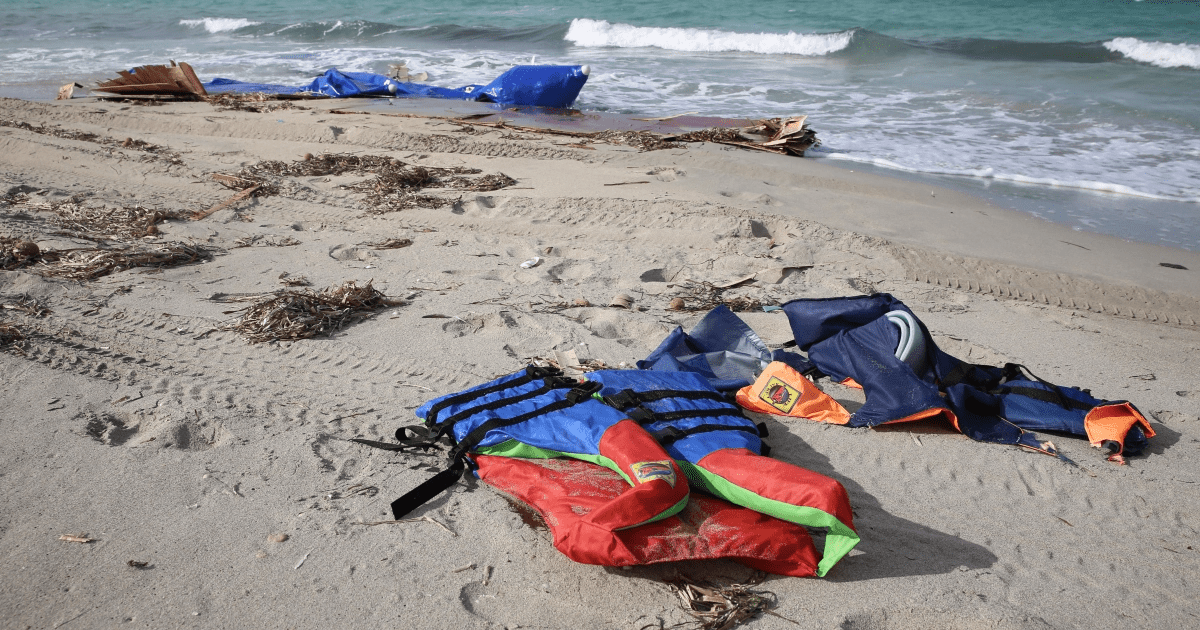
#LouiseMichel , the rescue boat saving migrants in the Mediterranean
Louise, Teresa y Emma, tres mujeres que pese al poco tiempo que compartieron estaban unidas por fuertes lazos de cordialidad. Las tres activistas eran mujeres fuertes, vigorosas, enérgicas y vitales; eran excelentes oradoras y propagandistas, se embarcaron en múltiples giras de conferencias y de mítines.
Las tres eran mujeres independientes, que valoraban mucho su autonomía, las tres sufrieron la represión, la cárcel y las deportaciones. Vivieron huelgas, revueltas y revoluciones sobre las que pensaron y escribieron. El anarquismo y el feminismo fueron sólidos hilos que tejieron la genealogía en la que estas tres mujeres ocupan un lugar destacado.
Louise Michel desarrolló un feminismo que se inscribía en el conjunto de su lucha a favor de la libertad y la igualdad desde el punto de vista social y político.
Se trata de un feminismo republicano y librepensador que evolucionó, tras la Comuna, hacia un incipiente feminismo anarquista. Diversos aspectos indican que Michel estaba configurando un feminismo proletario de influencia anarquista.
note – Antti’s talk was recorded before the Invasion began
“The results of the first 30 years of “democracy” in Ukraine are, to put it mildly, unconvincing. The economy and the media are in the hands of rival oligarchs, corruption is at staggering levels, economic development lags behind many African countries, and in addition, the country has become the center of the neo-Nazi movement around the world. And these problems are basically home-grown, not the result of the Kremlin’s intrigues.
Yet, the alternative is even worse. Putin is not just the gendarme of Europe, but the gendarme of the whole world —from Syria to Myanmar, whenever a dictator tortures and kills thousands of his own people, Putin is there to support him. There are no elections in Russia anymore. Even the most moderate attempts to change something results in criminal cases and persecutions.
I do not believe that the result of this, yet another, round of threatening declarations and building up pressure is a full-scale war. But as the conflict is not disappearing, a full scale war may start after 5-10 years, even as a result of a cycle of escalation, even if no-one really wants it.
Kiev’s War Without Mercy against rebel ethnic Russians in Donbass.. /Antti Rautiainen suggests, surprisingly, that anarchists should side with Ukraine against the ‘greater Russian evil’.
And in case of a full-scale war, we should be on the Ukrainian side. As Malatesta said, “For me there is no doubt that the worst of democracies is always preferable, if only from the educational point of view, than the best of dictatorships.”*. Neutrality in a war between Ukraine and Russia would mean neutrality in an invasion of a democracy by a dictatorship.
Anarchists in Ukraine have shared this tree with links for support, including how to donate to their defense work and how to keep up on their experiences or get in touch as invasion looms on the horizon: https://t.co/S4IvoJfJ9wpic.twitter.com/THpgBVJ7yz
I may not take seriously leftists that declare that «they are against any kind of imperialism in Ukraine, American or Russian». Obviously, American imperialism exists, for example in Iraq and Central America, *but not in Ukraine. (*note> see comment 2 below against Antti’s statement above. ed.)
Nato and USA have de-facto agreed to give Ukraine to the Russian sphere of influence. Whatever military or other aid Ukraine has received, it is not enough to stop a theoretical invasion. No-one would send military detachments to support Ukraine in case of an invasion.
People wave Russian national flags celebrating Moscow’s recognition Donetsk and Lugansk, eastern Ukraine, Feb 21, 2022
Russia’s recognition of the ‘people’s republics’ of Luhansk and Donetsk in the eastern Ukrainian region of Donbass on Monday is a watershed event.In a manner of speaking, by this decision President Vladimir Putin crossed the Rubicon.
Russia has launched “a full-scale invasion” of Ukraine with explosions heard across major cities. Vladimir Putin, in a statement on Russian TV, said warned allies of Ukraine who try to interfere…
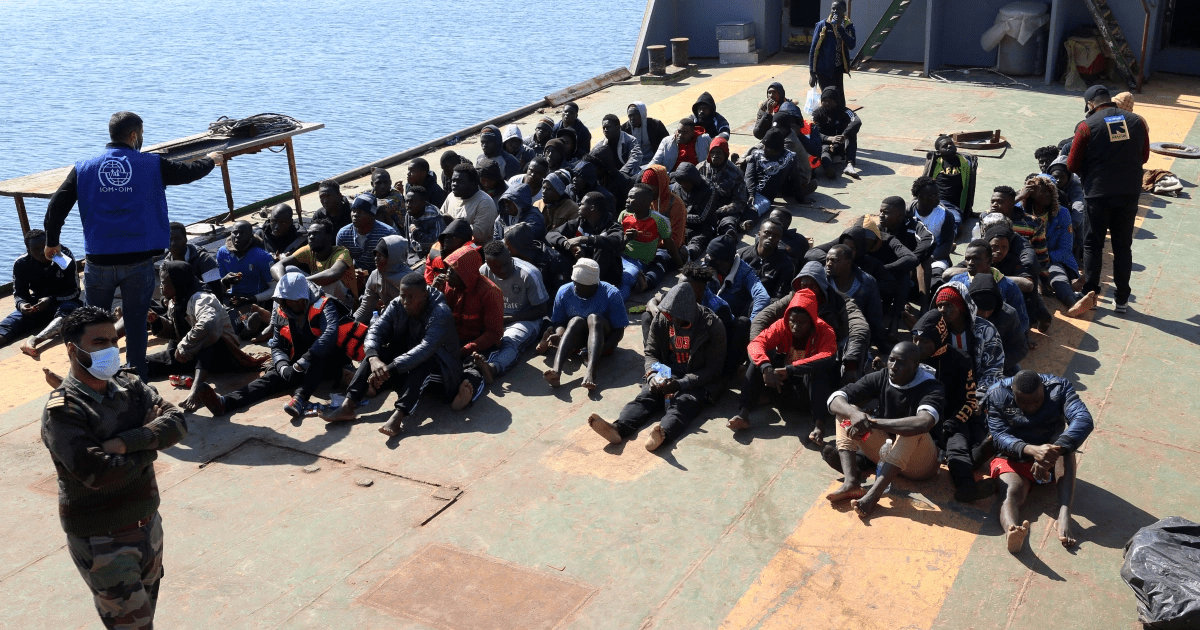
Asylum seekers in Libya speak of inhuman detention conditions after raids outside the UN refugee agency compound in Tripoli.
Asylum-seekers in the detention centre of Ain Zara say they are crammed in one room, where they remain from 5pm until around midday the next day with no food or water. [Al Jazeera]
Yasin has lost count of how many times he has been shot at – but he does remember the last time.
On January 10, Libyan militias and security forces opened fire as they moved in to disperse a months-long sit-in by more than 2,000 asylum seekers outside a United Nations compound in Tripoli, many of whom had been violently evicted from their homes in October during raids in the western town of Gargaresh.
“It would have been better to die than to be arrested,” Yasin, who has asked to go by a nickname for his own safety, told Al Jazeera by voice message.
The refugee from Sudan’s war-torn western region of Darfur was among the 600 people apprehended in front of the Community Day Centre run by the UN refugee agency (UNHCR) and taken to Ain Zara detention centre, also in the Libyan capital.
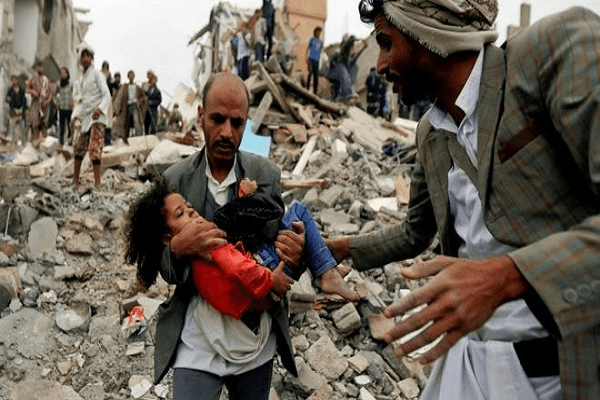
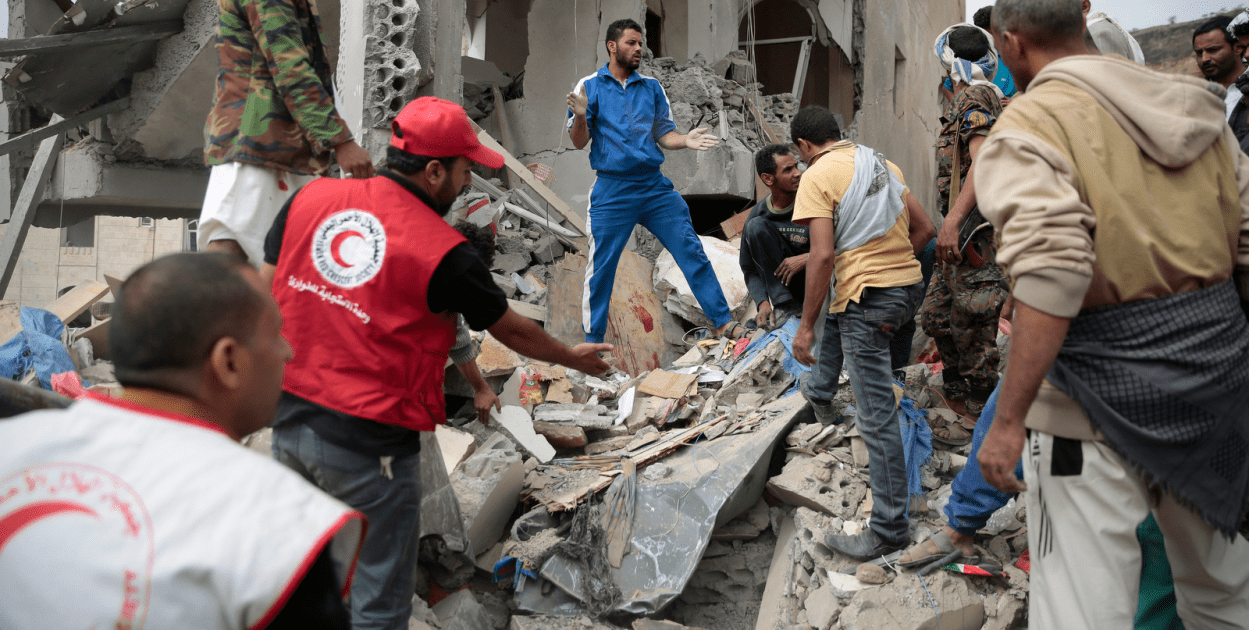
When you read “British Prime Minister Boris Johnson said he wanted people to understand the sheer cost in human life that an incursion into Ukraine would bring, with casualties on both sides.”And if you have any idea about UKs war crimes in the on going war on Yemen, you’ll be utterly disgusted by the sheer hypocrisy and manipulation of the British government since 2014 , where not just Made in UK bombs are dropped on civilians but its a known fact that they have boots on the ground in Yemen , training the Saudis in their control rooms , guiding them to kill innocent children . According to UN figures “More than 650 civilians were killed or injured in January by air raids, shelling, small arms fire and other violence, “by far the highest toll in at least 3 years”… and this is just the beginning of 2022 , how…
This crazy man must be stopped. People are dying and running and crying and suffering. What crazy man could have wanted this? A crazy man !!! Stop this stupid man cause destruction is not a solution !!! Stop this madman !!!











 The Free