Russian evacuation of Mariupal blocked 4 times by Azov Nazi Batallions using Human Shields.
Russia and Ukraine persist in their attempts to secure evacuation of civilians from the Ukrainian cities which were completely or partially blockaded by the joint Russian and LDPR forces.
On March 8, despite the fact that the attempts to secure the humanitarian corridors from the most affected cities like Mariupol failed once again, there were the first successes in other regions. A humanitarian corridor in the city of Sumy allowed for the evacuation of 723 foreigners from India, China, Jordan and Tunisia have been evacuated along the Sumy-Poltava route, said Colonel-General Mikhail Mizintsev, head of the National Defense Control Center of the Russian Federation.
The success was likely due to the mass protests carried out by the foreigners, mainly students, when they blamed the Ukrainian authorities of inability to secure their evacuation from the war-torn cities, what caused discontent in foreign states.
Meanwhile, the general number of those who left Ukraine by their own means has exceeded 2 million people.
On March 9, the Russian side will declare another ceasefire regime to ensure the operation of humanitarian corridors from Kiev, Chernihiv, Sumy, Kharkiv and Mariupol to Russia, Belarus as well to other Ukrainian cities, the Interdepartmental Coordination Headquarters of the Russian Federation for Humanitarian Response in Ukraine claimed in a statement.
“From 10:00 Moscow time on March 9, 2022, the Russian Federation declares a “regime of silence” and is ready to provide humanitarian corridors,” says the statement signed by the chief of staff, head of the National Defense Control Center of the Russian Federation Mikhail Mizintsev.
The Russian side offered to evacuate civilians from Sumy to Poltava, from Kharkiv by agreement to Lviv, Uzhgorod, Ivano-Frankivsk, from Mariupol to Zaporozhye, from Chernihiv to the south by agreement with the Ukrainian side.
March 9 should mark the 5th day of attempts to secure the evacuation of civilians, while the situation in the blockaded cities like Mariupol is worsening.
The head of the European Bureau of the World Health Organization, Hans Kluge, claimed that Ukraine has faced a humanitarian catastrophe, and the local health system is under stiff pressure.
The most difficult situation is currently in the city of Mariupol which has been blockaded for a week.
On March 8, the Mariupol City Council confirmed that a civilian car exploded on a mine while trying to reach a humanitarian corridor and leave the city.
The locals who managed to escape from the city confirmed that members of the Azov nationalist battalion mined the roads leading to the humanitarian corridors. Almost all roads were blockaded, and civilians could not even reach the highways that were secured by the joint Russian and DPR forces.
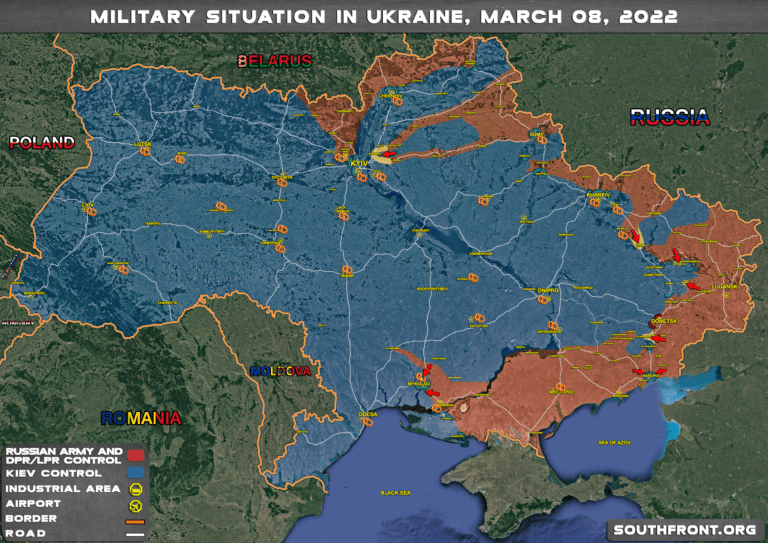
Click to see full-size image
The official representative of the DPR People’s Militia Eduard Basurin claimed that today “the servicemen of the Donetsk People’s Republic, risking their own lives, penetrated into the suburbs of the city and evacuated citizens.”
After the end of the ceasefire regime in Mariupol, the units of the DPR advanced about 800-900 meters in the city. Clashes took place in the Left Bank region, which is the main stronghold of the Ukrainian nationalist forces in Mariupol.
At the same time Russian forces began the moping-up from the eastern and north-eastern directions. They reportedly managed to liberate all suburbs in the west of the city.
The front lines are now on the city streets. Operations of the joint forces in Mariupol and Volnovakha are carried out with close air support of the Russian Aero Space Forces (VKS).
Some advances of Russian forces were reported in the Kiev region.
On March 8, units of the Russian Armed Forces expanded their control zone around Kyiv. Russian units took control over the village of Bogdanovka to the north-east of the capital. Clashes were also reported in Brovary.
Fighting continues in Bucha, Irpen and on the Borodyanka-Vorzel front lines to the northwest of Kiev.
The mayor of Boryspil confirmed the destruction of a military base in the city by a missile.
Reports indicate that the grouping of Russian forces around the Ukrainian capital is currently focused on consolidating their gains north, northeast and northwest of Kyiv and prepare to fully block the city.
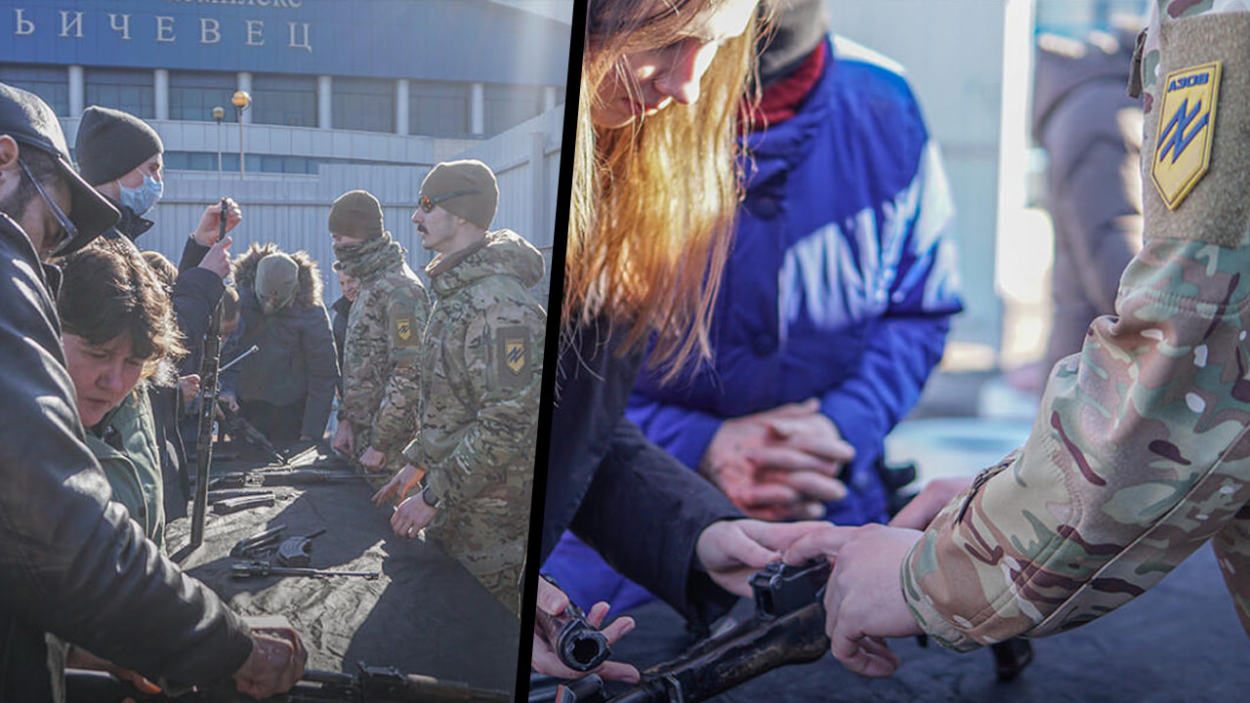
The capital is not shelled with missiles, only military facilities in the city’s suburbs. Civilians are trying to leave the city, but in general, the situation is stable enough. Stores, pharmacies, as well as city transport are working. Checkpoints were established in the city and its suburbs. Civilians are looking for Russian saboteurs, what leads to more victims. Sporadic clashes between the gangs who have been recently armed by local authorities continue.
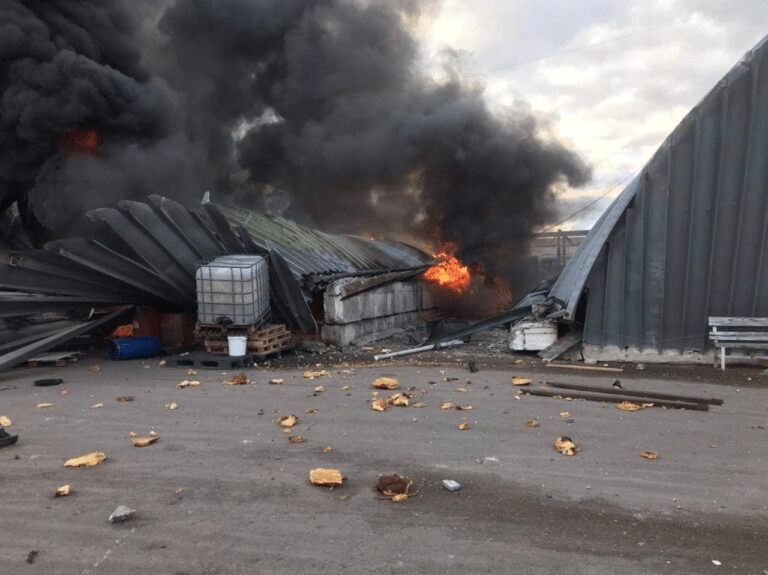
A customs warehouse was destroyed near Kiev
The city of Chernihiv is yet to be blockaded by Russian forces. Sumy, Konotop and Akhtyrka also remain under the AFU control.
According to unconfirmed reports, Russian troops left the city of Kharkiv, and crossed back the ring road in the city. There were no reports of fierce street fighting in the city for several days.
Russian VKS are active over the city. And artillery fire continues mainly in the city suburbs. Ukrainian forces continue to use residential areas, as well as civilians left in the city, to hide from the enemy attacks.
The following video shows the tactics used by the AFU.
The Ukrainian MLRS “Hurricane” fired a salvo from Traktorostroiteley Avenue in the northern direction, towards the Severnaya Saltovka district. Then, they quickly left the area. The Severnaya Saltovka ana district is just one of the most affected in the city today. The combat vehicle was deployed near the city’s children’s activity center and residential buildings, provoking Russian forces to target residential areas. The city is not blockaded from the western and south-western directions. The town of Chuguev is also under the AFU control.
On March 7, Russian entered the town of Izyum. There were fierce clashes in the town and surrounding areas. However, there was still no confirmation that the city is completely under control of the Armed Forces of the Russian Federation.
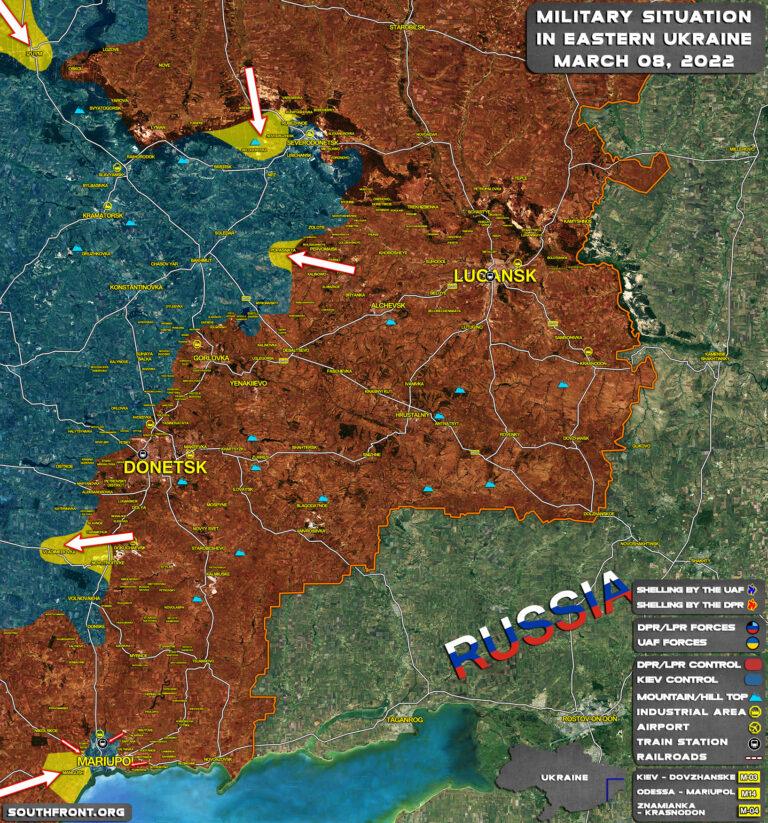
On the Donbass front lines the joint Russian, LPR and DPR are steadily advancing, trying to incircle the largest UAF grouping in the region.
LPR forces continue to take control over the villages in the suburbs of the Severdonetsk. On March 7, they advanced in the Eastern suburbs, on March 8 LPR units approached the city from the West. The town of Rubezhnoe, as well as village of Belogorovka are now under the LPR control.
The village of Popasnaya was also liberated from the UAF, what is an important tactical gain for the LPR. The town is located on a key road in the area south of Lysychansk. Advance towards Bahmut continues.
LPR forces advancing from the Popasnaya area seek to prevent the retreat of pro-Kyiv units towards the south and southwest. If the towns of Seversk and Bahmut are taken by Russia and its allies, the Ukrainian grouping in the Severodonetsk-Lysychansk agglomeration will be in a de-facto tactical encirclement.
In their turn, DPR forces are steadily encircling the AFU in Volnovakha. The villages of Novotroitskoye and Vladimirovka are now under the DPR control, thus the road to region in this villages was cut off.
On March 8, units of the People’s Militia of the DPR took control over the settlements of Olenovka, Polnoe and Yuzhnodonbasskoye.
The UAF were repelled to Olginka, where artillery battles continue. the village is reportedly blockaded from three directions.
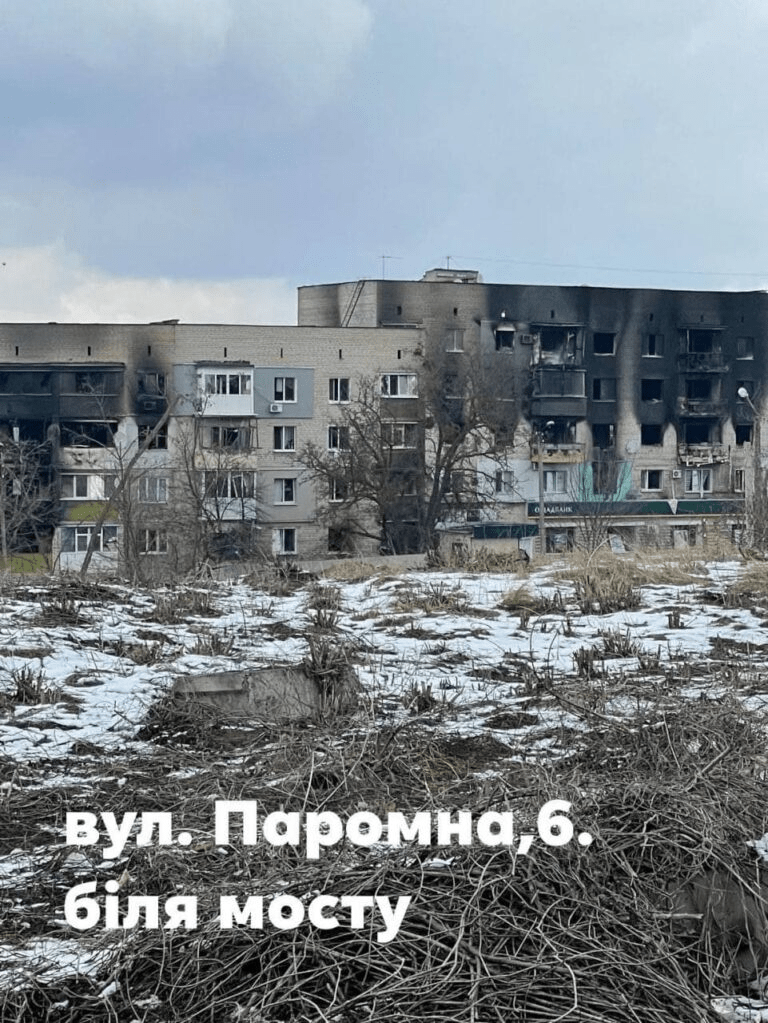
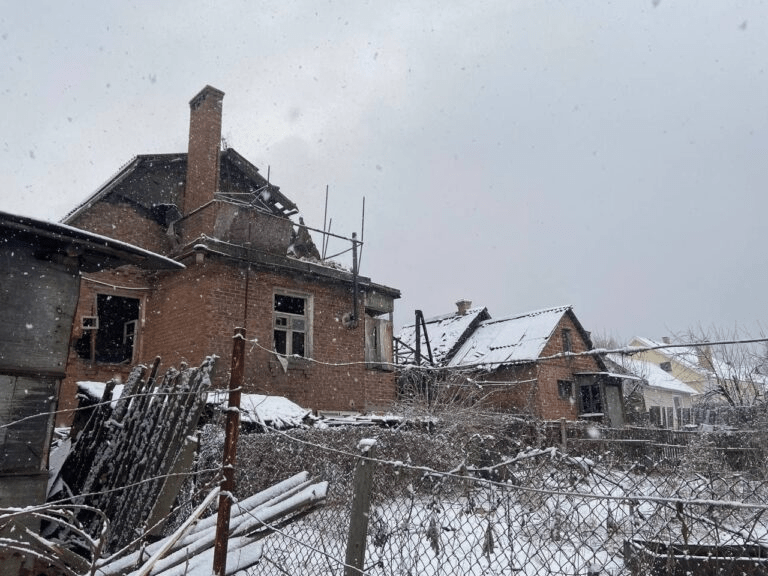
At the same time, the massive shelling of territories under the control of the DPR and the LPR continues. The UAF are targeting residential buildings. Civilians are diying under Ukrainian fire.
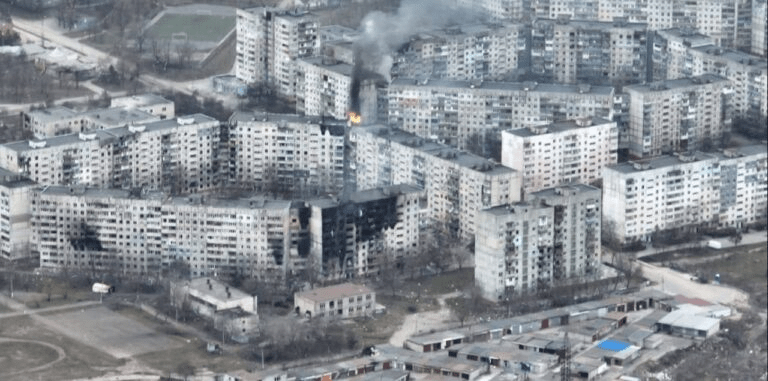
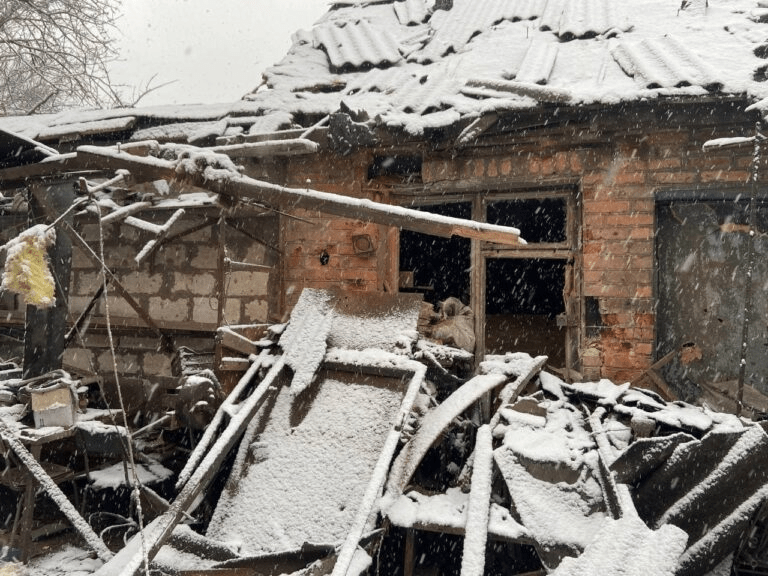
Destructions in Gorlovka
Destructions in Gorlovka
In the Zaporizhya direction, the UAF are holding the defense along the Kamenskoye-Orekhov-Gulyai-Pole-Velikaya Novoselka front line. No significant military developments were reported in the region.
Ukrainian soldiers firing form the roof of the Mykolaiv airport:
After some tactical setbacks in the area of operations on the western bank of Dnipro River, Russian units readjusted their tactics and blocked Mykolaiv from the south, southeast and southwest. Forward units of the Russian Armed Forces were also spotted to the north of Mykolaiv, near the village of Kandibino. Meanwhile, the governor of the Mykolaiv region reported on the preparation of the Russian army to storm the city.
The Russian army is also strengthening its presence in the Kriviy Rig direction in the area of Snegireva and Bashtanka.
The Russian armored train provided evacuation of 248 foreigners, including 40 Ukrainians, from the Kherson region to the Crimea. The servicemen secured evacuation of citizens of Turkey, Egypt, Azerbaijan, Pakistan, Sweden, Italy, Brazil, India and Morocco.
by a special correspondent Welcome to the second phase of the Great Reset: war.
While the pandemic acclimatised the world to lockdowns, normalised the acceptance of experimental medications, precipitated the greatest transfer of wealth to corporations by decimating SMEs and adjusted the muscle memory of workforce operations in preparation for a cybernetic future, an additional […]
The main difference between anarchists and authoritarians (…on both the right and the left), is that anarchists have faith in people (in fact, I’m not sure that authoritarians even like people).
This faith is born from the understanding that relationships are key to building a better, braver, brighter future for all (indeed, in modern physics, it is relationships, rather than atoms, which seem to be the building blocks of the universe).
Upon reading Carissa Honeywell’s recent book Anarchism (Polity Press, 2021), I was reminded of the following Gustav Landauer quote:
“The state is a relationship between human beings, a way by which people relate to one another; and one destroys it by entering into other relationships, by behaving differently to one another.”
This quote sums up perfectly the nature of our struggle and the immediatism inherent in all truly anarchist activism. Where the authoritarians simply want to change who is in the driving seat and/or where the car is going, we anarchists want to stop the car, bask in the sunshine, and have a picnic while we enjoy each other’s company and every minute of what Mary Oliver perfectly described as our ‘one wild and precious life’.
Carissa herself says of anarchism:
“[In anarchism] we can identify a radically interpersonal (or inter-being) philosophy of grassroots relationship building that aims to foster or model ideals of community wherein all needs are taken seriously. The practices that emerge from these ideas (or the ideas that emerge from these practices) may be a source of new thinking in difficult political times.”
Carissa and I are both admirers of Freedom’s Colin Ward. In his own favourite — and most often cited — quote, Ward shows that this relational/ interpersonal feeling is embraced by all self-organised, grassroots, working class initiatives.
Last month, the Centers for Disease Prevention and Control (CDC) issued new developmental language standards for American children. The updated guidance states that a 2-and-a-half-year-old child is now expected to say only 50 words.
As an autism specialist and American Speech-Language-Hearing Association-certified speech-language pathologist, I am appalled the CDC would quietly lower long-held pediatric language expectations by normalizing significant language delays as “the new normal.”
I have worked in hospitals, schools and clinics, and have been the lead director in developing autism programs and centers in multiple states.
I am considered an expert in pediatric development of speech, language, communication, oral motor function and swallowing, and an expert in providing appropriate treatment approaches and protocols when such functions are “abnormal.”
For 25 years, I have been an advocate for early identification and treatment because research shows the earlier a child is identified, the better their treatment outcomes will be.
Now the CDC wants to normalize delayed speech and language skills in American children, depriving them of early identification and treatment.
This will inevitably adversely impact our children’s future successes in school, in relationships, in their communication and in their self-esteem, leaving them to possibly face years more of speech and language therapy and educational support.
What is “normal?”
Children over age 2 are expected to have huge verbal vocabularies. They should have a word for almost everything in their environment.
Two-and-a-half-year-olds are expected to be using multiple 2+word to 3+word phrases and even merging into full sentences.
If the CDC is seeing a significant decrease in pediatric language acquisition, agency officials need to be asking why — instead of simply changing the standard expectations.
Yet this isn’t new for the CDC. The CDC has been changing IQ standards and student testing outcomes for years. American children are getting dumber and dumber, with more learning disabilities, and more health issues (54% of American children suffer from a chronic disease … but I will save that for another article.)
The CDC needs to just stop with this nonsense of making abnormal = normal, and start looking into what is negatively affecting our children’s development.
Let’s start by asking: Why the sudden change in speech and language in 2021-2022?
We can only assume the national implementation of mask mandates for the past two years has much to do with our current situation.
I have been screaming from the rooftops for the last two years that masking is inappropriate and harmful.
The American Speech and Hearing Association wrote letters to the CDC expressing concern about the potential negative impact of masks on speech and language, but unfortunately, the CDC didn’t waiver.
Apparently, the CDC felt such harms didn’t outweigh the disinformation agenda that masks stop the spread of SARS-COV-2. (There are decades of scientific research demonstrating masks don’t stop the spread of aerosolized viral particles.)
Here is how mask-wearing affects speech and language development:
Seeing and hearing: Children learn through watching and hearing. Masking hinders both of these learning modalities. Children need to see the mouths of their parents, teachers and peers.
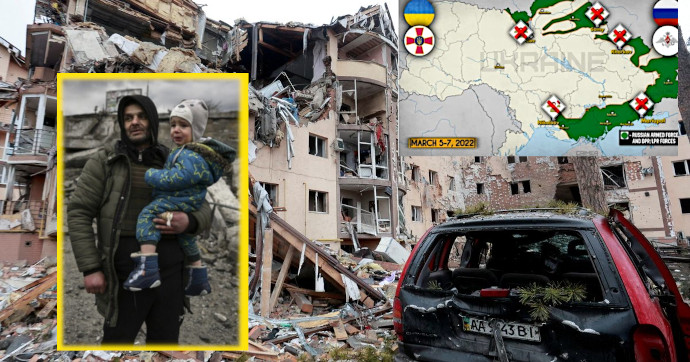
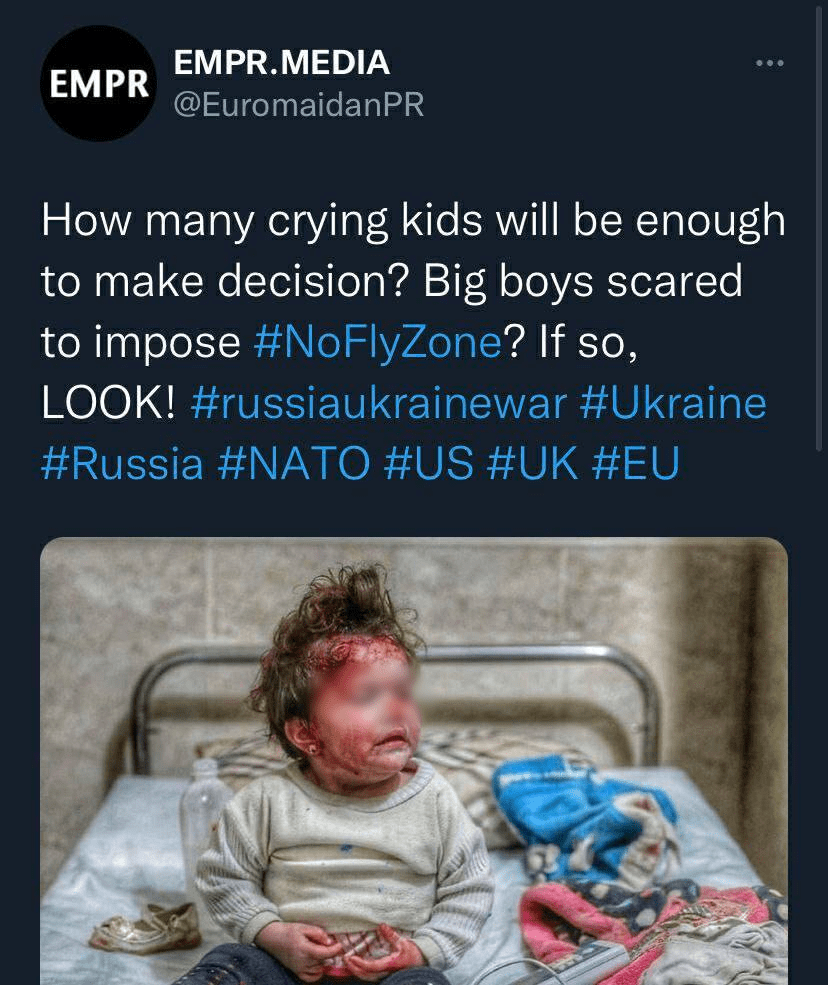
Heart-rending propaganda image of a “Ukrainian” child, deployed to get us screaming for a no-fly zone over Ukraine:
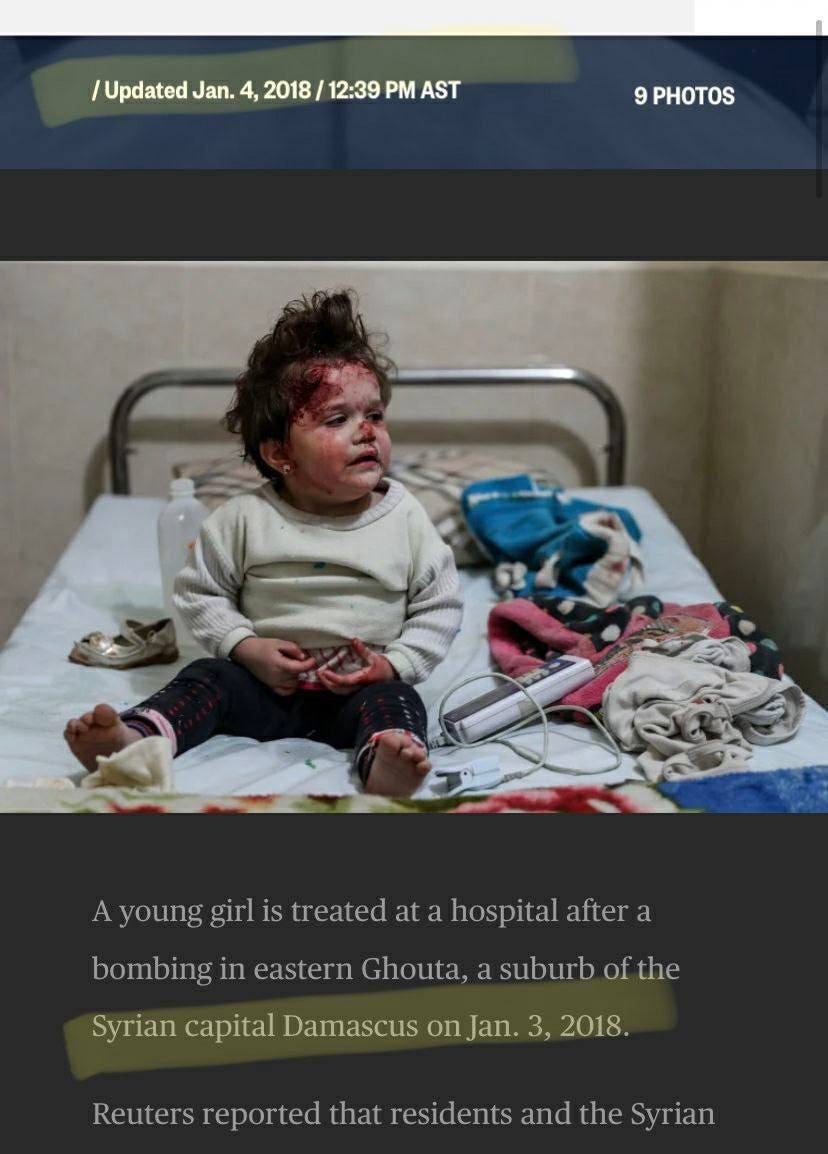
That “Ukrainian” child in 2022 is actually a Syrian, whose image was deployed four years ago, to get us screaming in support of US intervention to bring down the government of Syria (and confront the Russian military):
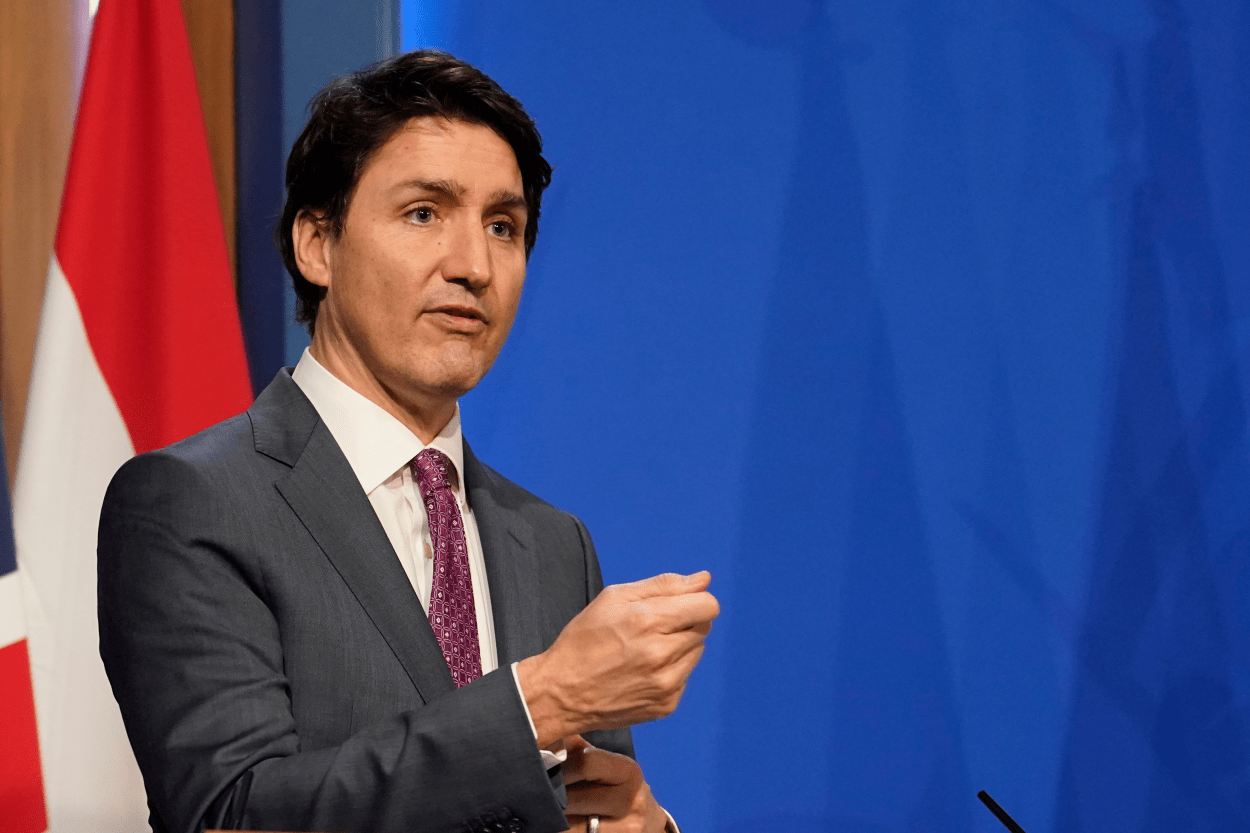
Prime Minister Justin Trudeau says Canada is extending its NATO military mission in central and eastern Europe for several more years as part of his government’s response to Russia’s invasion of Ukraine.
“The troops here are not only defending Latvia or eastern Europe, they’re defending all NATO allies, including Canada,” Trudeau told an outdoor press conference at Latvia’s Ādaži Military Base, which provided a backdrop of soldiers and military vehicles. “They’re defending our freedom and our security…..”
Trudeau was joined at the announcement by NATO Secretary General Jens Stoltenberg, Latvian Prime Minister Krišjānis Kariņš, Spanish Prime Minister Pedro Sánchez and Canadian Defense Minister Anita Anand.
Operation REASSURANCE, which was due to expire next year, is Canada’s component of NATO’s mission in the region. As part of the mission, hundreds of Canadian Armed Forces’ personnel have been conducting training and exercises in central and eastern Europe.
Trudeau called the announcement a “multi-year” renewal, but didn’t offer specifics.
Trudeau said 540 Canadian military personnel are deployed in Latvia and that, following a recent announcement, 130 more will be joining them in the coming weeks. Canada has also sent a frigate and maritime patrol aircraft to the region
Late last month, the Trudeau government said around 3,400 CAF personnel were authorized to deploy to the NATO Response Force should they be required.









 The Free