
By Kit Klarenberg | The Cradle | October 1, 2022
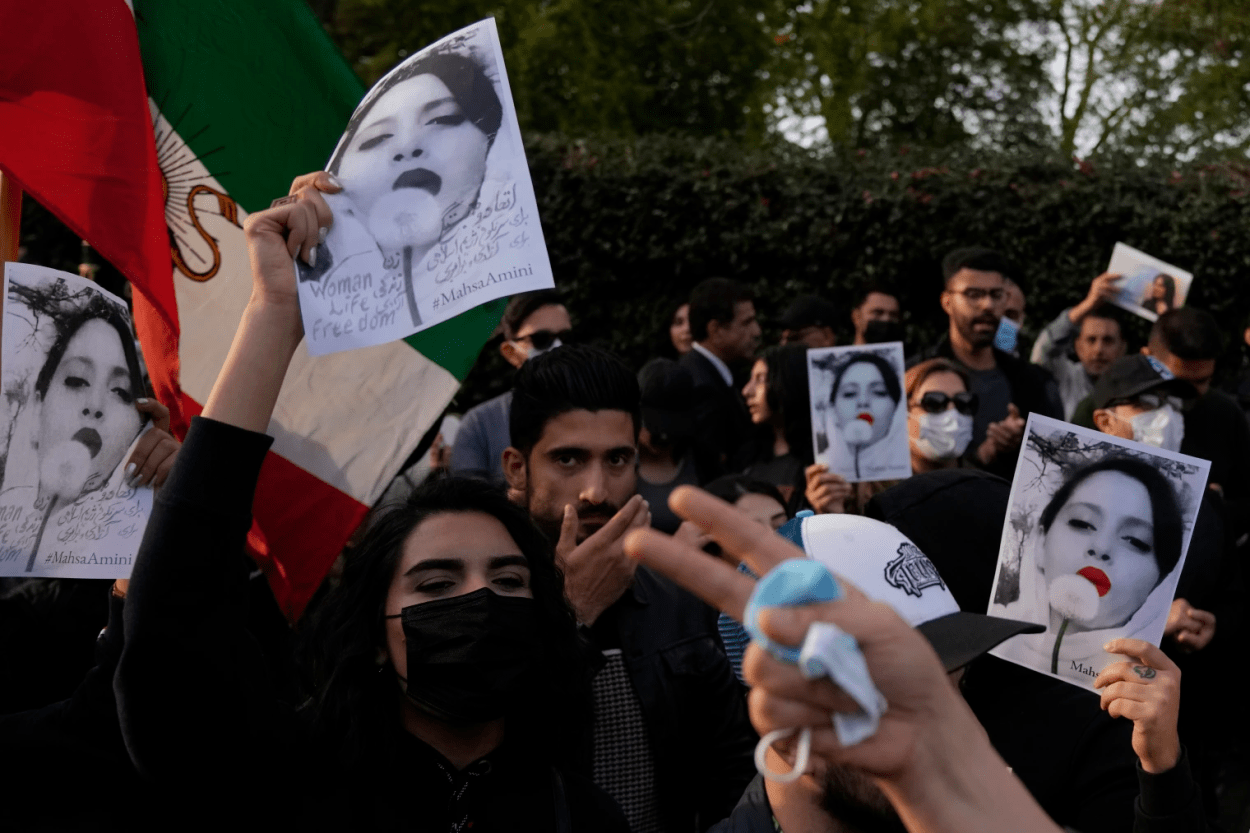
The civil unrest in Iran in response to the recent death of 22-year-old Mahsa Amini while she was waiting at a Tehran police station, although rooted in legitimate grievances, also bears the hallmark of a western-sponsored covert war, covering multiple fronts.
Key Background
The protests, led largely by women, have been held in cities across Iran for more than a week, and have even spread to cities around the world in countries including the U.K., Turkey,Canada, France, Austria and Norway.
The first protests in Iran began last Saturday, the day of Amini’s funeral, and are the biggest public demonstrations in Iran since 2019. Police said Amini, who was taken into custody for wearing a headscarf improperly, died after a three-day coma stemming from a heart attack.
Amini’s family dispute the police account, saying the 22-year-old was healthy and have accused police of mistreatment, which authorities denied.
Witnesses say the morality police beat Amini immediately after her arrest. At least 41 people have died during the ensuing protests, according to state media, but some experts believe the toll is much higher.
Dirty money: Meet the US agent driving the CIA-led riots in Iran Meet Masih Alinejad, Washington’s weapon of choice for flaring up the largest color revolution attempt in Iran today. “I’m leading this movement,” Alinejad, 46, told The New Yorker on Saturday. “The Iranian regime will be brought down by women. I believe this’.
Mere days after the protests erupted on 16 September, the Washington Post revealed that the Pentagon had initiated a wide-ranging audit of all its online psyops efforts, after a number of bot and troll accounts operated by its Central Command (CENTCOM) division – which covers all US military actions in West Asia, North Africa and South and Central Asia – were exposed, and subsequently banned by major social networks and online spaces.
The accounts were busted in a joint investigation carried out by social media research firm Graphika, and the Stanford Internet Observatory, which evaluated “five years of pro-Western covert influence operations.”
Published in late August, it attracted minimal English-language press coverage at the time, but evidently was noticed, raising concerns at the highest levels of the US government, prompting the audit.
Continue reading “Decoding the Pentagon’s online war against Iran”






 The Free