Entire world’s protein could be produced with Brewing on an area of land smaller than London, say COP27 campaigners.
Reboot Food is a campaign led by the citizen-led green group RePlanet. We want to phase out animal agriculture for new sustainable alternatives, see the farming of plants revolutionised to use less land and fewer chemicals and see our planet rewilded as a result
A new environmental campaign chose this weekend — COP27’s Agriculture Day —to announce an ambitious food system proposal. Stop funding animal agriculture and start investing in alternative proteins and land restoration —to the tune of 2.5 percent of GDP over 10 years.
Rebooting the Food System
As climate scientists have made abundantly clear — the time for urgent action was yesterday, so the Reboot Food manifesto is appropriately ambitious.
Entire world’s protein could be produced with Brewing on an area of land smaller than London, say COP27 campaigners.
Reboot Food is a campaign led by the citizen-led green group RePlanet. We want to phase out animal agriculture for new sustainable alternatives, see the farming of plants revolutionised to use less land and fewer chemicals and see our planet rewilded as a result
A new environmental campaign chose this weekend — COP27’s Agriculture Day — to announce an ambitious food system proposal. Stop funding animal agriculture and start investing in alternative proteins and land restoration — to the tune of 2.5 percent of GDP over 10 years.
Rebooting the Food System
As climate scientists have made abundantly clear — the time for urgent action was yesterday, so the Reboot Food manifesto is appropriately ambitious.
Launched by scientists and environmental advocates, the manifesto proposes that governments pay farmers to rewild lands and invest in technologies that can transition livestock-based economies to plant-rich food systems.
The Reboot Food proposal doesn’t rest on the meat eaters of the world switching to lentils and pulses. Instead the report calls for major public investment in a technology called “precision fermentation.” As the report points out, it’s technology but it’s also been around for a very long time, used for brewing beer, rennet and even insulin.
Precision fermentation can also be used to brew yeasts and bacteria into plant-based and animal-free proteins. And it’s already on the market, albeit at a very small scale.
There’s an ice cream company called Brave Robot that uses precision fermentation to brew the milk proteins into animal-free ice cream. Impossible Foods genetically engineered yeast to make its meaty-tasting heme ingredient for its plant-based burgers.
Several other companies are close to market-ready too — Meati, in Boulder Colorado, is using precision fermentation to make meat from mushrooms and a German-based startup called Formo is making cheese.
JOIN THE CAMPAIGN
Scaling — and Selling — Brewed Proteins
The size of the companies that use this technology are just a tiny fraction of the behemoth that is the global animal agriculture industry. Definitions of what constitutes a precision fermentation company vary to some degree but Reboot report author Joel Scott-Halkes figures the “meat industry is over 800 times bigger — or nearly three orders of magnitude.”
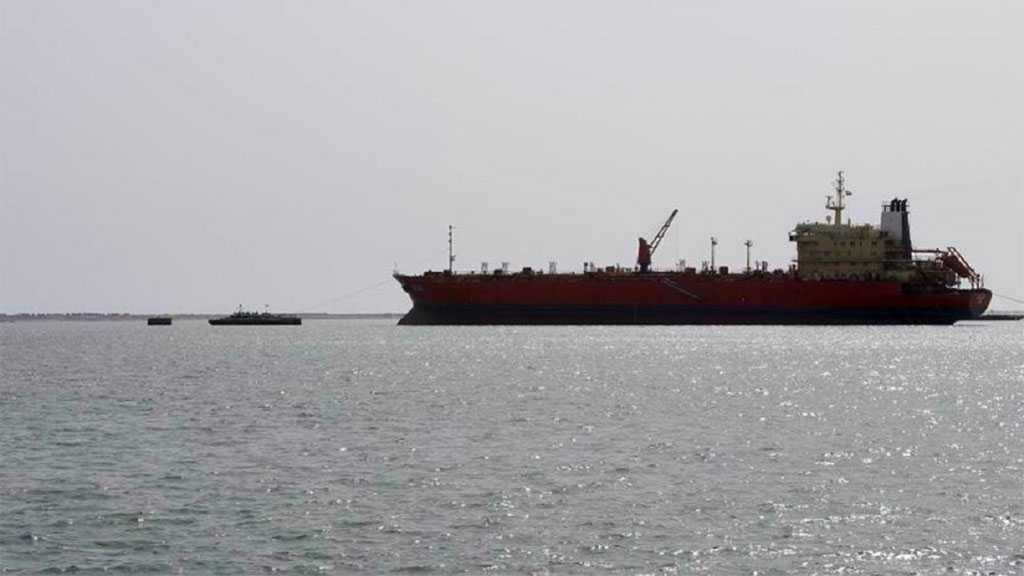
The Yemen Petroleum Company [YPC] said the Saudi-led coalition has seized yet another Yemen-bound fuel tanker and prevented it from docking at Hudaydah port, in a new act of piracy against the besieged Yemeni people.
Essam al-Mutawakel, a spokesman for the YPC, said in a tweet on Monday that the Saudi-led coalition impounded the ship named Red Ruby, which was carrying thousands of tons of petrol.
The senior Yemeni energy official noted that the ship was detained and prevented from reaching the port of Hudaydah despite having undergone inspection in Djibouti and obtaining necessary permits from the United Nations Verification and Inspection Mechanism [UNIVM].
The development comes days after the Riyadh-led alliance, which has been waging a devastating military campaign against Yemen since 2015, seized two vessels named Fos Energy and Princess Halimah, which were carrying thousands of tons of diesel fuel, and banned…
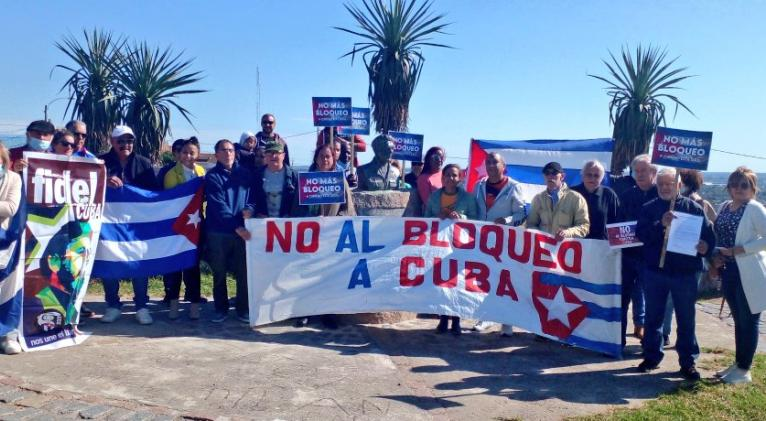
#DiazCanel #Cuba #IntercambioEconómico #EnergíaSolar Primero lo primero:
Argelia ha recibido a Cuba con los brazos abiertos y los ha cerrado en fraternal gesto, con importantes acuerdos de carácter económico y comercial, anunciados por su presidente, Abdelmadjid Tebboune, al finalizar el encuentro con su homólogo cubano, Miguel Díaz-Canel Bermúdez y la delegación ministerial que le acompaña. […
Algeria defers debt, will deliver a solar power plant and will supply #Fuel to #Cuba — Alma Cubanita
Algeria has received Cuba with open arms and has closed them in a fraternal gesture, with important economic and commercial agreements, announced by its president, Abdelmadjid Tebboune, at the end of the meeting with his Cuban counterpart, Miguel Díaz-Canel Bermúdez and the accompanying ministerial delegation. […]
The world dodged a bullet this week, with some NATO members trying, but failing, to trigger Article 4 as a means of confronting Russia in Ukraine. We may not be so lucky next time.
The fervor with which Poland and others sought to drag NATO into a war with Russia should ring alarm bells for everyone
The recent scandal surrounding what most of the world now agrees was an errant Ukrainian surface-to-air missile landing on Polish soil, killing two Polish citizens in the process, has exposed an ugly reality about the eastern reaches of NATO today:
Despite the more reserved stance of the old NATO establishment (the US, UK, France, and Germany), the new upstarts in eastern Europe seem hell-bent on finding a mechanism that will justify NATO intervention in Ukraine.
This predilection for nuclear annihilation (no one should have any misgivings that a NATO-Russia conflict would end any other way) should send alarm bells ringing in the halls of power throughout NATO and the rest of the world, because left to their own devices, the Russophobic officials that dominate the governments of Poland and the three Baltic republics act like lemmings, running toward the Ukrainian cliff, oblivious to their fate as they chase the fantasy of NATO defeating Russia on a European battlefield.
The rush to judgment that accompanied the arrival of the Ukrainian surface-to-air missile on Polish soil serves as a stark reminder about how the supposedly defensive characteristics of the NATO Charter can be used to promote, rather than deter, conflict.
Let there be no doubt – NATO was aware that the missile that impacted near the village of Przewodów in Poland, killing two Polish citizens, was a Ukrainian surface-to-air missile the moment it was launched.
The airspace over Ukraine is one of the most highly-monitored locations in the world. Without revealing sources and methods, suffice it to say there isn’t anything that happens over Ukraine that isn’t registered in real time on a NATO display in headquarters throughout Europe – including Poland.
And yet … Poland saw fit to summon the Russian ambassador and lodge a protest.
Moreover, Poland declared that it would increase its military readiness while contemplating the activation of Article 4 of the NATO Treaty, a mechanism which allows the alliance to discuss security threats to member states with an eye on possibly using NATO military force to rectify the situation.
Article 4 is behind every combat deployment of NATO since its inception, from Serbia, to Libya, to Afghanistan.
On cue, Lithuanian President Gitanas Nausėda, whose country borders Poland, tweeted that “every inch of NATO territory must be defended!”
Czech Prime Minister Petr Fiala likewise turned to Twitter to exclaim: “If Poland confirms that the missiles also hit its territory, this will be a further escalation by Russia. We stand firmly behind our EU and NATO ally.”
For its part, Estonia called the news “most concerning,” with its foreign minister declaring via Twitter, “We are consulting closely with Poland and other allies. Estonia is ready to defend every inch of NATO territory.”
While all parties concurred that there was no basis for triggering Article 5 of NATO (i.e., the collective security clause), Article 4 was very much in play. Poland was adamant: The missile “attack” against Poland was clearly a crime, one that could not go unpunished.
As such, under Article 4, Poland would be pushing “for NATO members and Poland to agree on the provision of additional anti-aircraft defense, including in part of the territory of Ukraine.”
And there you have it: “Including in part of the territory of Ukraine.”means War with Russia
Enter Germany, stage left: “As an immediate reaction to the incident in Poland, we will offer to strengthen air policing with combat air patrols over its airspace with German Eurofighters,”a German Defense Ministry spokesperson declared.
Cue NATO Secretary General Jens Stoltenberg, who convened an emergency meeting of NATO ambassadors in Brussels to discuss the Polish incident. According to the Finnish foreign minister (Finland, although not a NATO member, was invited to the meeting), “Closing the airspace [above Ukraine] will definitely be discussed. Various options of how we can protect Ukraine are on the table.”
While Germany reportedly rejected the establishment of a no-fly zone over Ukraine, noting that such an action would pose a threat of direct confrontation between Russia and NATO, one is left pondering how such a discussion came to be in the first place: Ukraine fired a surface-to-air missile, which was tracked by NATO as it impacted on Polish soil.
And, as a result, NATO members end up discussing the possibility of invoking Article 4 of the NATO Charter, seeking to extend NATO air defense into Ukrainian air space in concert with the establishment of a no-fly zone enforced by NATO aircraft.
“Even if it was a blue on blue [incident] with a Ukrainian rocket that landed in Poland, I think there is still enough ground for Poland to invoke Article 4,”a former director of policy planning for NATO, Fabrice Pothier, declared.
Just to clarify what Mr. Pothier is saying: Because Ukraine fired a surface-to-air missile that ended up landing on Polish soil, NATO is justified in invoking Article 4, setting the stage for a possible NATO-Russia conflict in Ukraine which could lead to global nuclear annihilation.
If there was ever any doubt about the threat NATO posed to the entire world, there is no more.
That this is being promulgated on behalf of a Ukrainian leader who, despite universal consensus that the missile which hit Poland was Ukrainian, denies this possibility, all the while blaming Russia in the hopes that NATO will intervene, only adds to the insanity of this crisis.
While it appears that the world has dodged the potential death sentence triggered by the NATO Article 4 this time, the hair-trigger aspect of NATO’s Pavlovian response mechanism when it comes to seeking causal justification for military intervention in Ukraine should have everyone on high alert.
Image by Justin Norman via Flickr by Rivera Sun Writer, Dandelion Salad November 17, 2022 In the drizzling rain, I yank up the military recruitment sign and throw it into the tall grasses on the side of the road. If anyone asks, I didn’t “destroy” government property. I merely relocated it. Think of me like […]
By Larry Johnson | Son Of The New American Revolution | November 16, 2022 I believe the evidence is overwhelming that Ukraine tried and failed to manufacture a “Russian” attack on Poland that would have justified NATO coming to Poland’s defense under Article 5 of the NATO Treaty and solved Kiev’s dilemma over how to […]








 The Free