from thefreeonline on 18 Jan 2024 by Joel Cornell

Middle-earth is arguably the most primordial, intricate, and influential fantasy world in the canon of Western literary culture. John Ronald Reuel Tolkien’s most complete narrative works, The Lord of the Rings and The Hobbit, have sold millions of copies in dozens of languages, have come to life in a series of Academy Award-winning films, and have inspired generations of artists, writers, misfits, trogs, freaks, and all sorts of awkward adolescents alike.
It is a complete and utterly expansive world of harmonious wizards, ethereal elves, and hardy hobbits, brought to ruin by greedy sorcerers, corrupted orcs, evil monsters, and disruptive technologies—a fantastic and exhaustive escape from the trials and tribulations of the everyday.
Tolkien’s world of Middle-earth is ruined by greed and malice, and saved by heroes of varying yet unimportant stature. Small farmers from idyllic lands and humble kings from ancient lineages play equally important roles throughout Tolkien’s comprehensive, fictional history.
But in exploring his writing, the foundational reasoning and philosophy that built the world’s first legendarium come to light, and it leaves us wondering what other parallels there might be between the narratives of Middle-earth and our own unfolding narratives here on this planet.
In this moment of crisis we find ourselves in, people across the country and across the world are questioning all kinds of status qui, no longer willing to just accept the way things are as inevitable.
Just as Tolkien himself was drawing complicated maps of his imaginary worlds and inventing new and complete languages and cultures, he did all of that conjuring in the war-torn world of the early 20th century, when populations all around him were forced to reorganize and survive the consequences of the Industrial Revolution, the ravages of the first Gilded Age, and the crushing of what he saw as naturally harmonious ways of life.
He saw a corrupting influence on the desperately poor and working classes. Not only did it destroy the environment and bastardize traditional labor expectations, it engendered a materialistic lust for power as even the most power-deprived individuals could still seek the smallest degree of power over other men by one day becoming their boss.
The simpler world he had idealized as a child was expressed by his Shire, and the evil ravages of wars and dehumanizing machines and the few ‘industrialists’ who controlled once intimately connected communities were embodied in all of the seductive power and destructiveness of his infamous Ring.
Today, we too find ourselves in a tidal wave of globalization, misunderstood systems of digital technological oppression, and a discordance overall in our communities and society as a whole.
We find ourselves in the second Gilded Age, and ominously enough, the age of surveillance technology. Perhaps this explains why the core tenet behind Tolkien’s ultimate fantasy realm was his embrace of anarchy.
And though it might seem counterintuitive to use concepts of anarchy—a frequently dismissed ideology— to somehow restore our more perfect union, if we step back and think about what anarchy really means, in all of its complexity, we may understand more about what is really in the hearts and minds of the inhabitants of Middle-america.
It is a term associated with a supposed breakdown of polite society, fictional or otherwise. It is commonly—and incorrectly—associated with violence and chaos, with a lawless world where the mighty prey on the weak. Tolkien, however, saw systems like capitalism, fascism, white supremacy, misogyny, and the like as the power-hungry systems responsible for driving men to capitalize on the oppressed to feed their own desire for power.
Most forms of anarchy demand overwhelming proof to justify the existence of any institution which holds power over others. So while Tolkien expressly denied claims of metaphorical messaging, he wrote often in support of anarchic principles in both his world and ours.
To Tolkien, anarchy represented a natural peace, lived out in total harmony, wholly free from even the slightest need for political power.
This anarchy is not the wanton demolition of justifiable governance, but the sometimes-violent dismantling of systems of power. The goal of Tolkien’s anarchistic philosophy is to loudly demand a justification for any and all systems of power, and when they fail to provide that justification, to speak in what Dr. Martin Luther King, Jr. called, “the language of the unheard.” When those systems fail to justify themselves to the people, they are taken apart. No exceptions.
As Noam Chomsky, the father of modern linguistics and someone even the most liberal media deems an “anarcho-syndicalist” puts it, “institutional structures are legitimate insofar as they enhance the opportunity to freely inquire and create, out of inner need; otherwise, they are not.” To Tolkien, anarchy represented any actions that worked to restore a natural peace; one lived out in total harmony, wholly free from even the slightest need for political power.
He believed, like Chomsky, that his natural order was not aligned along the basis of race, class, or nationality, but rather along lines of language and culture which can be shared, adopted, and beloved by all.
Neither were these natural barriers an intentional thing to be lauded; they simply were, and the men and women who worked for peace and harmony outside of the natural confines of society were sometimes the most unusual, but always the most interesting.

Was Tolkien an “Anarchist”? – Joseph Pearce
The heroes of The Lord of the Rings and 21st century anarchists for that matter, do not pursue political or martial power, though they may wield it when a dire situation demands it, in order to establish peace or destroy evil. Instead, Elven heroes and progressive real world leaders alike rely on a political or martial revolution generated by a grassroots organization that stems exclusively from the express will of the people.
The natural states of Middle-earth’s societies, from the idyllic Shire to the nightmarish Mordor, are all accompanied by heavily moralized implications for how one’s political power is sourced and wielded. Anarchy has no use in an idyllic society like the Shire; simply because there are no systems to overthrow, no illness or starvation, no invaders to fight back against (until there are).
One of the primary reasons anarchy cannot be functionally established and endure in today’s world is the fact that such a system would inevitably put an end to certain basic institutions which can only exist as strict hierarchies—the best example being our armed forces.
Without generals and admirals and a strictly structured system of processes and commands, the military as we know it would cease to exist and therefore the nation would be left defenseless in an imperfect, violent, power-hungry world.
It follows in Tolkien’s world that all military actions in Middle-earth are only considered to be morally good when a grassroots community is existentially threatened by power and leverages what might they have to defend themselves.
ç As Chomsky noted, “This much, at least, is true of people who regard themselves as moral agents, not monsters—who care about the effects of what they do or fail to do.”

Tolkien The Anarchist — The Culture Crush
Then, how do we act heroically, like Aragorn or Frodo did against the armies of the Dark Lord Sauron?
We must stand together, unified under a truly grassroots banner, in the face of wholly and clearly unjustified systems of power.
çEspecially against those who have twisted Tolkien’s ideas to serve their nouveau libertarian strangling grip on power. One highly privileged soul, empowered by wealth and exclusionary institutional access, has amassed an army of underlings to build a network that corrupted the truth, weaponized malicious intent, and brought about the emboldening of our society’s most vile and hateful actors.
Are we referring to the Dark Lord, forger of the One Ring of Power, Lieutenant of Melkor, Sauron? Or does this more closely resemble the Mark Zuckerbergs and Elon Musks who may have been a little bit too influenced by the seductive power found in their own disruptive technologies—their own one true Rings— that have a seemingly supernatural level of control and oppressiveness over the global population?
They have dragged the culture of Tolkien up from their teenage man cave basements and out into their frightening corporate cultures.
In 2018, Facebook even developed a notification for employees that would trigger when other Facebook staff were accessing their private information. It was called, “the Sauron alert.”
While fellow libertarian overlord, PayPal Mafia billionaire, and neo-fascist Peter Thiel actually named his secretive data scraping firm Palantir after the magical stones Sauron used to corrupt the forces of good across Middle-earth and enlist them in his evil machinations.
Irony has its place in this misuse and misinterpretation of Tolkien’s language and mythology. Like many of the great writers, Tolkien wrote for a very specific, and limited, audience: his children first, himself second, and thirdly he wrote for his immense love of the myth-dusted history of language.

J.R.R. Tolkien on anarchy… – Liberty & Freedom
In fact, the entirety of Middle-earth creation was largely an exercise in linguistics. If an Elven King must have a name, that name must mean something; it must come from somewhere. That meaning was derived from Tolkien’s intimate knowledge of language, an obsession that manifested itself mainly in the forms of Quenya and Sindarin, two very distinct Elvish languages, each of which had several dialects based on the (fictional) speaker’s (again, fictional) place of birth.
There is no one who would better understand the power of language to define culture and the incredible strength that lay behind the entities capable of disseminating it than J.R.R.Tolkien. He spent more time crafting the history and languages of Middle-earth than he did its heroes and villains.
Every child has a father, every sword has a smith, and every word he created had its own history, sourced from the languages he built, which themselves drew deeper still from the rich realms of Old English, as well as ancient Norse and Germanic languages, most notably Finnish.
In Tolkien’s mind, the origin of a thing is its only source of power. Thus, any action taken whose motivational origin is to acquire power over others is noted as evil, while those actions which free people from power are inherently good.
If the industrialization of his bucolic countryside after the war was, to Tolkien, an overreach of the highest order, the complete demolition of individual privacy in the age of social networking, data mining, and election hacking we are experiencing today would have likely inspired a far greater villain than Sauron.
The power in the hands of the few, be them in politics or communication, is counterbalanced in Tolkein’s worlds by the immense, if often underestimated power in the hands of the many.
The road to dismantling systems of unjustifiable power depends on the small actions of small groups of small people confronted with unimaginable evil. In our world, Tolkien, like Chomsky, wished for anarchy universally, suggesting that this totality was the only way the concept as a whole might ever work.
The school-to-prison pipeline, the mass incarceration complex, and police brutality in communities of color are some of the most pervasive and oppressive systems of power in America today, but they cannot be dismantled by one protest, one new law, or even one vote.
They are in fact the civil rights battle of our century. In other words, this will require a movement.
As Tolkien said in a letter to his editor, “you can make the [One] Ring into an allegory of our own time, if you like: an allegory of the inevitable fate that waits for all attempts to defeat evil power by power. But that is only because all power, magical or mechanical, does always so work.”
Today, the armies of the Dark Lord Sauron and the corrupting influence of his One Ring of Power take the form of “a transnational crime syndicate masquerading as a government,” to quote anti-authoritarian scholar and journalist Sarah Kendzior.

J.R.R. Tolkien : AnarchismOnline
As a supposed anathema to this administration’s unprecedented dismantling of American democracy, and the further consolidation of oppressive power, we now are being seduced by the idea that to fight this kind of authoritarianism we need more authoritarianism, just in a better fitting suit and an incomprehensibly large television ad buy.
This siren’s call of power today—whatever the ring may look like for the individual— is not necessarily drawn along party lines.
Just as the interpretations of Tolkien’s stories may lend themselves to either peaceful anarchy or toxic libertarianism, the reader’s interpretation plays a pivotal role in who is a villain and who is a hero and what constitutes an unjustifiable system of power.
From the most progressive, socialist, far-left voter to the MAGA red-hat crowd, the Americans that feel betrayed, left behind, or blatantly ignored and oppressed by their system of government are alike in believing themselves to be the unheard, and are, ultimately, alike in that they have far greater power to decide what comes next than the singular rulers—king, politicians, heroes—that stand out from the masses.
It is not the idea of the individual that changes the system, but the idea of the people—the collective acceptance that could lead to a more peaceful countryside, in Middle-earth or in Middle America for that matter.
Anarchy, in America today, cannot exist as a permanent state. But it can efficiently be used as a selfless catalyst by the people, a way of restoring our Shire to peace, be it though the backing of political candidacy, the marching in the streets, or the usurping of corrupt magical entities by force.
When rebellious anarchy serves as a pathway forward, it is peaceful anarchy upon which the next system may be built. It’s a glimmer of hope for a more peaceful future.
Throughout the long histories of pain and struggle, above all there truly is hope and love in Tolkien’s words.
Words that ring truer than ever as we face the rise of highly modernized modes of power across the globe in the forms of fascism, authoritarianism, and white supremacy.
“I have found that it is the small everyday deeds of ordinary folk that keep the darkness at bay. Small acts of kindness and love.”
— Gandalf the Grey
Tolkien El anarquista – La Tierra Media, Chomsky y la búsqueda de la Comarca de cada día (2020) – Joel Cornell

Tolkien El anarquista – La Tierra Media, Chomsky y la búsqueda de la …
La Tierra Media es posiblemente el mundo fantástico más primordial, intrincado e influyente del canon de la cultura literaria occidental. Las obras narrativas más completas de John Ronald Reuel Tolkien, El Señor de los Anillos y El Hobbit, han vendido millones de ejemplares en docenas de idiomas, han cobrado vida en una serie de películas ganadoras del Oscar y han inspirado a generaciones de artistas, escritores, inadaptados, trogs, freaks y todo tipo de adolescentes torpes por igual.
Es un mundo completo y absolutamente expansivo de magos armoniosos, elfos etéreos y hobbits resistentes, llevado a la ruina por hechiceros codiciosos, orcos corruptos, monstruos malvados y tecnologías perturbadoras: un escape fantástico y exhaustivo de las pruebas y tribulaciones del día a día. El mundo de la Tierra Media de Tolkien está arruinado por la avaricia y la malicia, y salvado por héroes de diversa pero insignificante estatura. Pequeños granjeros de tierras idílicas y humildes reyes de antiguos linajes desempeñan papeles igualmente importantes a lo largo de la exhaustiva historia ficticia de Tolkien.
Reseña: El hobbit – J.R.R. Tolkien – Lectora
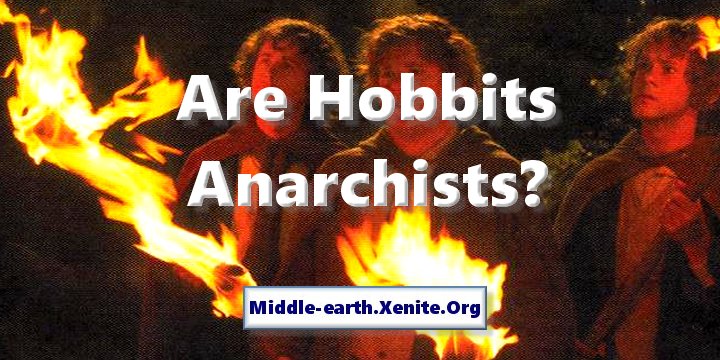
Are Hobbits Anarchists? – Middle-earth & J.R.R. Tolkien Blog
Pero al explorar sus escritos, salen a la luz el razonamiento y la filosofía fundamentales que construyeron el primer legendarium del mundo, y nos hace preguntarnos qué otros paralelismos puede haber entre las narraciones de la Tierra Media y nuestras propias narraciones en desarrollo aquí, en este planeta. En este momento de crisis en el que nos encontramos, la gente de todo el país y de todo el mundo se cuestiona todo tipo de statu qui, ya no está dispuesta a aceptar sin más que las cosas son como inevitables. Al igual que el propio Tolkien dibujaba complicados mapas de sus mundos imaginarios e inventaba lenguas y culturas nuevas y completas, todo eso lo conjuraba en el mundo devastado por la guerra de principios del siglo XX, cuando las poblaciones a su alrededor se veían obligadas a reorganizarse y sobrevivir a las consecuencias de la Revolución Industrial, los estragos de la primera Edad Dorada y el aplastamiento de lo que él veía como formas de vida naturalmente armoniosas.
No sólo destruyó el medio ambiente y bastardeó las expectativas laborales tradicionales, sino que engendró un ansia materialista de poder, ya que incluso los individuos más desprovistos de poder podían buscar el más mínimo grado de poder sobre otros hombres convirtiéndose algún día en sus jefes. El mundo más sencillo que había idealizado de niño se expresaba en su Comarca, y los estragos malignos de las guerras y las máquinas deshumanizadoras y los pocos «industriales» que controlaban comunidades antaño íntimamente conectadas se encarnaban en todo el poder seductor y la destructividad de su infame Anillo.
El anarquismo – Historia y evolución – IDEAL para estudiar – YouTube
Hoy en día, nosotros también nos encontramos en un maremágnum de globalización, sistemas de opresión tecnológica digital incomprendidos y una discordancia general en nuestras comunidades y en la sociedad en su conjunto. Nos encontramos en la segunda Edad Dorada y, lo que es más inquietante, en la era de la tecnología de la vigilancia. Quizá esto explique por qué el principio básico del reino fantástico por excelencia de Tolkien era su adhesión a la anarquía. Y aunque pueda parecer contradictorio utilizar conceptos de anarquía -una ideología frecuentemente descartada- para restaurar de algún modo nuestra unión más perfecta, si damos un paso atrás y pensamos en lo que significa realmente la anarquía, en toda su complejidad, quizá comprendamos mejor lo que hay realmente en los corazones y las mentes de los habitantes de la América Media.
Tolkien, sin embargo, veía sistemas como el capitalismo, el fascismo, la supremacía blanca, la misoginia y otros similares como los sistemas hambrientos de poder responsables de que los hombres se aprovechen de los oprimidos para alimentar su propio deseo de poder.
La mayoría de las formas de anarquía exigen pruebas abrumadoras para justificar la existencia de cualquier institución que ostente poder sobre los demás. Así, aunque Tolkien negó expresamente las afirmaciones de mensajería metafórica, escribió a menudo en apoyo de los principios anárquicos tanto en su mundo como en el nuestro. Para Tolkien, la anarquía representaba una paz natural, vivida en total armonía, totalmente libre de la más mínima necesidad de poder político.
El objetivo de la filosofía anarquista de Tolkien es exigir en voz alta una justificación para todos y cada uno de los sistemas de poder y, cuando no la ofrezcan, hablar en lo que el Dr. Martin Luther King, Jr. llamó «el lenguaje de los que no son escuchados». Cuando esos sistemas no consiguen justificarse ante el pueblo, son desmantelados, sin excepciones.
Como dice Noam Chomsky, el padre de la lingüística moderna y alguien a quien incluso los medios de comunicación más liberales consideran un «anarcosindicalista», «las estructuras institucionales son legítimas en la medida en que aumentan la oportunidad de investigar y crear libremente, por necesidad interior; de lo contrario, no lo son». Para Tolkien, la anarquía representaba cualquier acción que sirviera para restaurar una paz natural; una paz vivida en total armonía, totalmente libre de la más mínima necesidad de poder político.
Al igual que Chomsky, creía que el orden natural no se basaba en la raza, la clase o la nacionalidad, sino en el lenguaje y la cultura, que pueden ser compartidos, adoptados y amados por todos. Tampoco estas barreras naturales eran algo intencionado que hubiera que alabar; simplemente lo eran, y los hombres y mujeres que trabajaban por la paz y la armonía fuera de los confines naturales de la sociedad eran a veces los más inusuales, pero siempre los más interesantes.
Los héroes de El Señor de los Anillos y los anarquistas del siglo XXI no persiguen el poder político o marcial, aunque puedan ejercerlo cuando una situación extrema lo exija, para establecer la paz o destruir el mal. En cambio, tanto los héroes élficos como los líderes progresistas del mundo real confían en una revolución política o marcial generada por una organización de base que surge exclusivamente de la voluntad expresa del pueblo. Los estados naturales de las sociedades de la Tierra Media, desde la idílica Comarca hasta la pesadillesca Mordor, van todos acompañados de implicaciones fuertemente moralizadas sobre cómo se obtiene y se ejerce el poder político. La anarquía no tiene utilidad en una sociedad idílica como la Comarca; sencillamente porque no hay sistemas que derrocar, ni enfermedades ni hambre, ni invasores contra los que luchar (hasta que los hay).
Una de las principales razones por las que la anarquía no puede establecerse funcionalmente y perdurar en el mundo actual es el hecho de que un sistema así acabaría inevitablemente con ciertas instituciones básicas que sólo pueden existir como jerarquías estrictas: el mejor ejemplo son nuestras fuerzas armadas. Sin generales y almirantes y un sistema estrictamente estructurado de procesos y mandos, el ejército tal y como lo conocemos dejaría de existir y, por tanto, la nación quedaría indefensa en un mundo imperfecto, violento y ávido de poder. En el mundo de Tokien, todas las acciones militares en la Tierra Media sólo se consideran moralmente buenas cuando una comunidad de base se ve amenazada existencialmente por el poder y aprovecha el poder que tiene para defenderse. Como señaló Chomsky: «Esto, al menos, es cierto para las personas que se consideran a sí mismas agentes morales, no monstruos, que se preocupan por los efectos de lo que hacen o dejan de hacer».
Entonces, ¿cómo actuamos heroicamente, como hicieron Aragorn o Frodo contra los ejércitos del Señor Oscuro Sauron? Debemos permanecer juntos, unificados bajo una verdadera bandera popular, frente a sistemas de poder total y claramente injustificados.
Los anarquistas viviendo en anarquía ( la Autogestión obrera )
Anarquistas 9.05K subscriberz 133K views 9 years ago 641 Comments
La Anarquía ¿Qué es la anarquía? la anarquía es, Vivir en Anarquía, https://laanarquia.wordpress.com/2015… Historia de la anarquía,los anarquistas hoy, anarquistas es ..Anarquía, Los Anarquistas ¿Qu …
Especialmente frente a aquellos que han tergiversado las ideas de Tolkien para ponerlas al servicio de su nuevo estrangulamiento libertario del poder. Un alma muy privilegiada, empoderada por la riqueza y el acceso institucional excluyente, ha acumulado un ejército de subordinados para construir una red que corrompió la verdad, armó intenciones maliciosas y envalentonó a los actores más viles y odiosos de nuestra sociedad.
El Secreter de Tolkien #12: Tolkien y el anarquismo
¿Nos estamos refiriendo al Señor Oscuro, forjador del Anillo Único de Poder, Lugarteniente de Melkor, Sauron? ¿O se parece más a los Mark Zuckerberg y Elon Musk, que quizá se hayan dejado influir demasiado por el poder seductor de sus propias tecnologías disruptivas -sus propios Anillos Únicos y Verdaderos-, que tienen un nivel aparentemente sobrenatural de control y opresión sobre la población mundial?Han sacado la cultura de Tolkien de los sótanos de sus cuevas de adolescentes y la han trasladado a sus aterradoras culturas corporativas. En 2018, Facebook incluso desarrolló una notificación para los empleados que se activaba cuando otros empleados de Facebook accedían a su información privada. Se llamaba «la alerta de Sauron». Mientras que su colega, el señor libertario, multimillonario de la mafia de PayPal y neofascista Peter Thiel bautizó a su empresa secreta de robo de datos Palantir con el nombre de las piedras mágicas que Sauron utilizó para corromper a las fuerzas del bien en toda la Tierra Media y alistarlas en sus malvadas maquinaciones.
La ironía tiene su lugar en este mal uso y mala interpretación del lenguaje y la mitología de Tolkien. Como muchos de los grandes escritores, Tolkien escribió para un público muy específico y limitado: sus hijos en primer lugar, él mismo en segundo lugar, y en tercer lugar escribió por su inmenso amor por la historia del lenguaje enraizada en los mitos. De hecho, la totalidad de la creación de la Tierra Media fue en gran medida un ejercicio de lingüística. De hecho, toda la creación de la Tierra Media fue en gran medida un ejercicio de lingüística. Si un Rey de los Elfos debe tener un nombre, ese nombre debe significar algo; debe venir de alguna parte. Ese significado se derivaba del profundo conocimiento que Tolkien tenía del lenguaje, una obsesión que se manifestaba principalmente en las formas del Quenya y el Sindarin, dos lenguas élficas muy distintas, cada una de las cuales tenía varios dialectos basados en el lugar de nacimiento (de nuevo, ficticio) del hablante (ficticio).
No hay nadie que entienda mejor el poder del lenguaje para definir la cultura y la increíble fuerza que se esconde tras las entidades capaces de difundirla que J. R. R. Tolkien. Pasó más tiempo elaborando la historia y las lenguas de la Tierra Media que a sus héroes y villanos.
Cada niño tiene un padre, cada espada un herrero, y cada palabra que creaba tenía su propia historia, procedente de las lenguas que construyó, que a su vez se nutrían aún más profundamente de los ricos reinos del inglés antiguo, así como de las antiguas lenguas nórdicas y germánicas, entre las que destaca el finés. En la mente de Tolkien, el origen de una cosa es su única fuente de poder. Si la industrialización de su bucólica campiña después de la guerra fue, para Tolkien, una extralimitación del más alto nivel, la completa demolición de la privacidad individual en la era de las redes sociales, la minería de datos y el pirateo electoral que vivimos hoy en día probablemente habría inspirado a un villano mucho mayor que Sauron.
El poder en manos de unos pocos, ya sea en la política o en la comunicación, se ve contrarrestado en los mundos de Tolkein por el inmenso, aunque a menudo subestimado, poder en manos de muchos. El camino hacia el desmantelamiento de sistemas de poder injustificable depende de las pequeñas acciones de pequeños grupos de pequeñas personas enfrentadas a un mal inimaginable. En nuestro mundo, Tolkien, al igual que Chomsky, deseaba la anarquía de forma universal, sugiriendo que esta totalidad era la única forma en que el concepto en su conjunto podría llegar a funcionar.
El proceso de escolarización, el complejo de encarcelamiento masivo y la brutalidad policial en las comunidades de color son algunos de los sistemas de poder más omnipresentes y opresivos de Estados Unidos en la actualidad, pero no pueden desmantelarse con una protesta, una nueva ley o incluso un voto. En otras palabras, esto requerirá un movimiento. Como dijo Tolkien en una carta a su editor, «puedes convertir el Anillo [Único] en una alegoría de nuestro propio tiempo, si quieres: una alegoría del inevitable destino que espera a todos los intentos de derrotar al poder maligno mediante el poder. Pero eso es sólo porque todo poder, mágico o mecánico, siempre funciona así».
En la actualidad, los ejércitos del Señor Oscuro Sauron y la influencia corruptora de su Anillo Único de Poder adoptan la forma de «un sindicato del crimen transnacional que se hace pasar por un gobierno», en palabras de la académica y periodista antiautoritaria Sarah Kendzior.
Como supuesto anatema al desmantelamiento sin precedentes de la democracia estadounidense por parte de esta administración, y a la mayor consolidación del poder opresivo, ahora nos seduce la idea de que para luchar contra este tipo de autoritarismo necesitamos más autoritarismo, sólo que con un traje más adecuado y una compra de anuncios televisivos incomprensiblemente grande.
Al igual que las interpretaciones de las historias de Tolkien pueden prestarse tanto a la anarquía pacífica como al libertarianismo tóxico, la interpretación del lector desempeña un papel fundamental a la hora de determinar quién es un villano y quién un héroe, y qué constituye un sistema de poder injustificable. Desde el votante más progresista, socialista y de extrema izquierda hasta la multitud de gorras rojas de MAGA, los estadounidenses que se sienten traicionados, dejados de lado o flagrantemente ignorados y oprimidos por su sistema de gobierno se parecen en la creencia de que son los que no son escuchados y, en última instancia, se parecen en que tienen mucho más poder para decidir lo que viene a continuación que los gobernantes singulares -reyes, políticos, héroes- que destacan entre las masas.
No es la idea del individuo la que cambia el sistema, sino la idea del pueblo -la aceptación colectiva- la que podría conducir a un campo más pacífico, en la Tierra Media o en la América Media para el caso. La anarquía, en la América de hoy, no puede existir como estado permanente. Pero puede utilizarse eficazmente como catalizador desinteresado por parte del pueblo, una forma de devolver la paz a nuestra Comarca, ya sea mediante el respaldo de candidaturas políticas, la marcha en las calles o la usurpación de entidades mágicas corruptas por la fuerza. Cuando la anarquía rebelde sirve como camino hacia adelante, es una anarquía pacífica sobre la que puede construirse el siguiente sistema. Es un rayo de esperanza para un futuro más pacífico.
A través de las largas historias de dolor y lucha, por encima de todo hay esperanza y amor en las palabras de Tolkien, palabras que suenan más ciertas que nunca cuando nos enfrentamos al auge de formas de poder altamente modernizadas en todo el mundo en forma de fascismo, autoritarismo y supremacía blanca.
«He descubierto que son las pequeñas acciones cotidianas de la gente corriente las que mantienen a raya la oscuridad. Pequeños actos de bondad y amor». Gandalf el Gris
[]
https://theanarchistlibrary.org/library/joel-cornell-tolkien-the-anarchist
Comparte esto:
Relacionado
El discurso anarquista en los estudios asiáticos (2016) – Apichai Shipper
28 de julio, 2023
En «anarquismo»
Al pie de la letra alada – Cuando el surrealismo cumple cien años (2022)
9 de septiembre, 2022
En «anarquismo»
Piel blanca, máscaras negras: Raíces marxistas y antirracistas del anarquismo estadounidense contemporáneo (2012) – Andrew Cornell
7 de agosto, 2022
En «anarquismo»

 The Free