Protest in São Paolo in honor of Julieta Hernández on January 12 2024.Photo by Rovena Rosa/Agência Brasil. Used with permission.
Notice: This post contains mentions of murder, sexual assault, and violence against women, which may be disturbing to some readers.
In the wake of the femicide of 38-year-old Venezuelan artist and cyclist Julieta Inés Hernández Martínez, activists, feminist movements, and cycling advocacy groups from across South America have highlighted the cruelty of the crime through tributes, street protests, and cyclists’ urban rides in more than 150 cities, especially in Brazil and Venezuela.
Hernández Martinez’s body was found buried in a wooded area on January 5 in Presidente Figueiredo, a municipality in the state of Amazonas, northern Brazil. She had previously been reported missing on December 23, by family and friends who contacted police authorities in Brazil and launched a campaign on social media to find her.
She was crossing Brazil, where she had lived for the past eight years, by bicycle on her way to Puerto Ordaz, Venezuela, to celebrate the holidays with her family.
Hernández Martínez identified herself as a migrant, nomad, clown, puppeteer, and cycle tourist, and was also a beloved street artist and cycling advocate. She was the founder of the Venezuelan Female Clown Network, part of the Circo di SóLadies collective, a theater group in which she performed as the clown Jujuba, and a member of Pé Vermêi, a collective that brings together artists and cyclists who travel around Brazil by bicycle. She was always close to a culture that promoted a connection with social movements. both in Brazil and Venezuela.
According to the Amazonas’ Civil Police, a local couple confessed to the crime of murdering the artist. The 32 year-old man and a 29 year-old woman are suspects of robbing, raping, killing Hernández Martínez and hiding her corpse afterwards. She was also stabbed, strangled, and lit on fire before being buried in the backyard along with her bike. Her body was found after a neighbor saw parts of a broken bicycle and called the police.
According to Sophia La Roja, Hernández Martínez’s sister, in a message sent to a WhatsApp cyclists group chat, Hernández Martínez spent the night at the aggressors’ home because she noticed their five children were underfed:
Screenshot of the message sent by Julieta Hernández’s family and friends (her sister Sophia La Roja, and her friends Veronica Seijas, Veronica Gabriela and Cinthia Caracciolo) in a cycling advocacy Whatsapp group on January 2024. Screenshot taken by Gabriela Mesones Rojo.
She used the little money she had to buy them food and spent the night with the poor and miserable family. It wasn’t the first time she was deeply moved by the pain of children, and she always looked forward to sharing her joy and love. (…) The children are now in a refuge, and let us hope that Julieta’s last moments gave them a better future.
Riding for justice
On January 13, a group of cyclists rode through the city of Caracas while chanting for justice for Julieta and highlighting the violence that women riders experience in Caracas and also as travelers in Latin America: “We’re not all here: Julieta isn’t!,” “We have the right to move, the right to travel alone,” “We want our sisters alive.”
The ride was organized by collectives Ser Urbano (“Urban beings”), which promotes good public life in Caracas, and The Assembly of Urban Cycling, which promotes “bike-activism.”
Ride in honor of Julieta Hernández Martínez in Caracas, Venezuela, one of the many tributes organized by Ser Urbano and Asamblea de Ciclismo Urbano. January 13, 2023. Photo by Gabriela Mesones Rojo. Used with permission.
More than 150 peaceful protests, tributes, and cultural events have taken place in Venezuela, Brazil, Paraguay, Uruguay and Chile since the news of the murder of Hernández Martínez broke.
In Brazil, a state ride, hundreds of tribute events and bike rides have honored the artist, to celebrate her life, values, and legacy as a woman traveler and cyclist advocate. The movement gained momentum on social media, with the hashtag #JustiçaParaJulieta (Justice for Julieta) going viral.
Being a woman, a clown, and a Venezuelan migrant are three intertwined things. At the moment I am an itinerant migrant traveling by bicycle through the interior of the northeastern states of Brazil.
Being a woman, a clown, and a migrant is a great responsibility because, whether we want to or not, we become references for women who travel alone, references for women who choose a profession that is generally for men. Because it is difficult for clowns to arrive in many places, and even less so for female clowns.
Femicides in Amazonas: a pressing issue
Statistics from the Justice Ministry in Brazil show that four women are killed in femicides in the country every day — a crime that is considered heinous under the Brazilian law since 2015, and means women or girls being killed for their gender.
Brazil was ranked the fifth leading country in femicide rates in Latin America in a 2021 poll. Hernández Martinez’s murder has become a symbol of this violence, but also of the risks that affect women cyclists and those who travel by themselves around the world.
According to the report “Violence against girls and women in the 1st half of 2023,” from the Brazilian Public Security Forum, the number of femicides in the state of Amazonas grew by 87.5 percent compared to the same period of 2022. There were 15 deaths recorded in 2023 compared to eight the previous year year.
The silence from authorities has also been critizised by protestors and cycling advocates in the tributes in honor of Hernández Martínez. Neither the government of Amazonas or its governor, Wilson Lima from the União Brasil party have publicly spoken about the crime, or mentioned the pressing issue of gender violence in the country. Independent Brazilian media outlet Vocativo, has also highlighted that the members of the Amazonas caucus in the state assembly have also remained silent in face of the femicide.
The president of the Brazil’s National Arts Foundation (Funarte), Maria Marighella, lamented Hernández Martinez’s death and said the foundation follows the investigations alongside Amazonas state government:
With all joy and irreverence, Julieta travelled with her art driving children and adults to the circus world and, therefore, will always be remembered. Restless regarding gender inequality, her search for equality is an inspiration for all of us.
UN chief António Guterres denounces Israel for the ‘heartbreaking’ deaths of Palestinian civilians in Gaza.
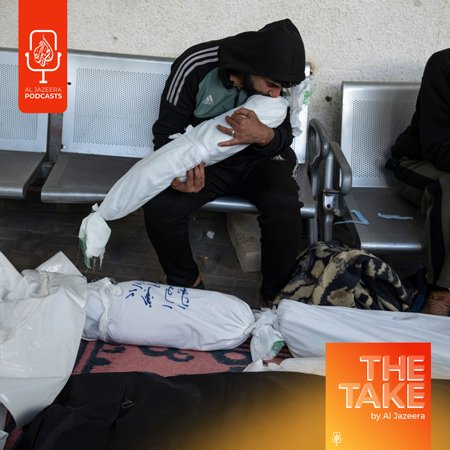
A Palestinian woman reacts at the grave of her son killed in an Israeli strike, in Khan Younis [Arafat Barbakh/Reuters]
The Palestinian death toll in Israel’s assault on Gaza has surpassed 25,000, according to the Ministry of Health in the territory.
Ministry spokesperson Ashraf al-Qudra said on Sunday that 178 people had been confirmed killed in the previous 24 hours, with the death toll in more than three months of Israel’s war on Gaza reaching 25,105.
The Israeli bombardment began after Hamas’s surprise attack on southern Israel on October 7 killed at least 1,139 people, according to an Al Jazeera tally based on official Israeli statistics. Around 250 other people in Israel were taken hostage by Palestinian armed groups.
Reporting from Rafah in southern Gaza, Al Jazeera’s Hani Mahmoud said there was intense ground fighting near a key hospital in Khan Younis on Sunday.
“Snipers have taken positions in high-rise buildings, shooting people on the street below. People in [Nasser] hospital have no place to go,” said Mahmoud, adding that “It’s street-to-street, house-to-house fighting.”
The previous day, Israeli shelling east of the Jabalia refugee camp in northern Gaza killed four Palestinians and injured 21 others, according to the Palestine Red Crescent Society.
‘Heartbreaking’ deaths: UN chief
United Nations Secretary-General António Guterres denounced Israel for the “heartbreaking” deaths of Palestinian civilians in Gaza.
“Israel’s military operations have spread mass destruction and killed civilians on a scale unprecedented during my time as secretary-general,” Guterres said at the opening of the G77+China summit in the Ugandan capital of Kampala.
Advertisement
Guterres told Al Jazeera that the resolution to the decades-long Israeli-Palestinian conflict lies in “the acceptance of the right of the Palestinians to statehood and the acceptance of a two-state solution”.
At least 62,681 people have been wounded in the Israeli assault on Gaza, according to Palestinian authorities.
Some 85 percent of the territory’s population has been displaced, with thousands sheltering in UN-run camps in the southern part of the coastal enclave in squalid conditions.
The UN has said there are “famine-like” conditions in Gaza as around one in four of the population of 2.3 million people face extreme hunger.
Only a fraction of the aid needed has been delivered due to fighting and severe Israeli restrictions on shipments.
Women and children are the biggest victims in the war, according to the UN.
Netanyahu has vowed to keep up the offensive until Hamas is wiped out, with Israel also ramping up fighting on other fronts, sparking fears of tensions boiling over regionally.
Camillo Berneri (1897-1937) was an important anarchist intellectual and anti-fascist activist who came to prominence after the First World War during the “Red Years” (1919-1920) in Italy, when anarchists, syndicalists and some revolutionary socialists came close to bringing down the Italian state and capitalism through a series of strikes and factory occupations. Berneri was an early anarchist critic of the Bolshevik (Communist) dictatorship in Russia. By 1922, Italian anarchists were engaged in armed resistance to the Fascist movement, which soon established its own dictatorship in Italy. Berneri was eventually forced into exile, living a precarious existence, mostly in France, from which he was expelled and where he was imprisoned more than once for his revolutionary activities. With the outbreak of the Spanish Civil War and Revolution in July 1936, he made his way to Spain to support the anarchist cause, only to be murdered, most likely by Stalinist agents, during the May Days in Barcelona in 1937.
Since then, some of his writings have been published in English translation, but never before in book form (I have previously posted Paul Sharkey’s translation of Berneri’s 1934 essay, “The Racist Delirium”). Now Freedom Press in England has published a collection of some of Berneri’s most important writings, The State – or Revolution: Selected Works of Camillo Berneri, edited by Iain McKay.From this new collection, I am posting Berneri’s 1920 essay, “State and Bureaucracy,” in which he argues that there can be no state without an inefficient and authoritarian bureaucracy, whether socialist or capitalist. Berneri advocates instead a decentralized federation of autonomous groups.
State and Bureaucracy
The scandals that have occurred in ministerial and military circles, the millions absorbed vampire-like by the thieves with a medal, the farce and the anxiety, the bureaucratic errors that flushed millions and millions down the drain in misguided or shady deals, in delays to shipments of goods due to the mammoth and lazy bureaucracy, the whole ensemble of robberies and errors due to the complicated and parasitic mechanism on which State centralisation rests is not an evil of a given regime, but is the result of the existence of the State, a centralised body that hinders, constricts, corrupts the whole of national life.
The unitary and centralising State, be it bourgeois or Bolshevik, is a lead-cloak which suffocates the economic and political life of a nation. In the crisis caused by the economic conditions concomitant with the war, the State machine has revealed all its impotence. Legislative and administrative uniformity is absurd in a nation like ours, where there are such marked economic and psychological differences between the North, the Centre and the South. A Bolshevik State that wanted to centralise powers and functions in a Bolshevik-like bureaucracy would only foster, like the current government, parasitic functions to the detriment of all productive functions.
The problems of the economic and social life of the Italian people have their own physiognomy, different from region to region, from place to place, and each require their own specific solution. A socialist government that wanted to do everything would end up in centralisation, that is in the most mammoth and irresponsible bureaucracy. From this point of view, the anarchist anti-State critique coincides with the democratic-federalist one, differing from it in various points which, for now, there is no need to examine.
One of the necessities of centralised regimes is bureaucracy, which is all the more parasitic, oppressive and irresponsible, the more the government tends to concentrate the administration of the various branches of the economic and legal life of the nation into its hands. The ministries are the main hubs of bureaucracy. Thousands of people every day turn to them who have measures to solicit, claims to make, interests to protect. From the responses given after months and months, the confusion of documents, not to mention the intrigues and corruption, is a whole collection of things that makes the ministerial bureaucracy the most monstrous expression of technical, legal and administrative centralisation.
Many socialists are inclined to [support] municipal autonomy. This decentralisation is fictitious if it does nothing more than make the Municipalities into small ministries. Let us see what would happen if, having overthrown the central government, that is to say ministerial government, administrative power passed to the Municipalities, which remain what they are today but with greater powers.
The people’s commissar, having taken over the Municipality, issues a manifesto in which he invites the citizens to address their grievances, frustrated by bourgeois administrations, to him and, if he does not continue with the old methods of intrigue, what will happen is that this commissar will be swamped by complaints, questions, petitions, befuddled by requests and protests, and will be at his wit’s end.
The socialist Municipality will naturally want to take care of everything: roads, lighting, education, hygiene, etc., etc., and the commissar will have to work miracles: to have a hundred eyes like Argus, to have St. Anthony’s gift of ubiquity, to have a hundred arms like a statue of an Indian deity. Given that pulsate et aperietur vobis[1] will be mandatory in a communist administration, assuming that it can listen to all those who want something, how can it discern the real from the fake, the necessary from the superfluous?
Assuming that instead of a people’s commissar there is a communal Soviet and that the functions are divided, I doubt that in the large Municipalities it is possible to supervise the spectacular stream of requests, suggestions, protests pouring from the population into the administration. The need will therefore remain, on the part of the custodians of central power, to get help from other people who will not lend their labour free of charge: that is, for officials.
These officials will have to be earnestly supervised by their superiors so that they do not spend their eight hours smoking, chatting, reading newspapers rather than regulating. Therefore bureau chiefs will be needed. These who need the services of the administration will have to, in order to spur the lazy employee, avail themselves of a friend or a superior of the employee. In centralised schemes the intermediary becomes necessary. Hence lobbying and favouritism.
Let us not mention the huge costs that this bureaucracy would represent. The budgets of centralised administrations amount to millions: like the Municipality of Naples which, in 1901, spent 23 million. When it comes to governments, bureaucratic expenses reach billions. Centralisation becomes more parasitic and mafia-like the higher up it goes: the ministries are more parasitic and mafia-like than the provincial administrations, the provincial ones more than the municipal ones.
No centralised administration can escape its inherent flaws which are due its constitution. In southern Italy, corruption caused by the centralisation of the administrations expresses itself with more pronounced symptoms than in other parts of Italy. As Gaetano Salvemini has shown, the administrative unity of Italy was an unprecedented economic disaster for the South.
Many believe that centralisation is an inevitable outcome of urban development and conclude that it is only possible to apply more decentralised autonomy to small countries. This deduction, which starts from a factual observation, is not correct. Decentralisation has more justification to be applied in a metropolis than in a village. And the metropolis does not prevent the development of a federal administration by the magnitude of its population and its lifestyle. An example is London which, although much larger than Naples, is not affected by the bureaucratic-mafioso diseases that afflict the Neapolitan city because it is federally administered.
Suppose a large city is federally administered. In this case it would not form a single Municipality but ten, twenty Municipalities, depending on its geographical conditions and the setup of local interests. In each of these Municipalities, the administration is not concentrated into a single council but splits into several independent councils, each of which has its own administration and is elected by the interested parties; these councils have a given task to perform: education, lighting, roads, hygiene, etc. If all these functions are amassed in a single council, the accumulation of so many activities would require the daily work of administrators who would be paid, that is officials paid by the community. The single council having many responsibilities would end up having none and could not cope with the numerous and varied matters [it has to handle] if it is not composed of many members.
On the other hand, in the federal system each council, having its share of the administration, can be made up of a few people who can carry out their tasks with a few hours work a day; many employees are thus eliminated and many expenses abolished. These elected administrators have a specific, well-defined responsibility and are under the immediate and continuous control of the voters who, being interested in the proper functioning of that administration, will keep their eyes open and will intervene to prevent any problems.
In order to administer well, you need to have special expertise: from the food supply to street rubbish. Each of the specialised councils would have its own particular budget. In centralised administrations, the figures cannot be checked and by virtue of little thefts, the general budget is found to have huge holes and so it goes down the drain. There is no one who will waste his time studying the budget and who can check if the expenses are all regular. This is demonstrated by the military administrations which send reams of administrative paperwork to ministerial offices, where the missing sums and other administrative mischief of the officers and quartermasters are certainly not discovered. In a small administration you see at a glance the revenue and expenditure and the right of control of contributors and interested parties is not hindered by complicated bureaucratic procedures.
The federal system has a social, educational as well as an economic value.
All this participation of the citizens in the administrative life of the nation contributes to the development and improvement of their civic capabilities. “In the federal system,” writes Gaetano Salvemini, “the citizen is educated in public life, he governs himself, he is accustomed to rely only on his own initiative and not on that of a distant authority; and at the same time that the sense of his own individuality develops within him, he sees that he is not an atom separate from other atoms and united by a central point, but is part of a much more complex system in which he is closely united with his neighbour, and then with others who are less close, and then with others more distant: the sentiment of individual autonomy will therefore be nurtured in him with the sentiment of social solidarity.”
The concept of autonomy, while becoming increasingly important in the field of legal science, tends to go beyond the sealed realm of law to enter the wider and more fruitful field of political economy. Only in this field can autonomy find its natural, stable foundation to become a real structure. Many distinguished scholars and thinkers study the current tendencies towards [free] association, follow its development in its various aspects and in its many forms, and recognise that the supreme sovereignty of the State is declining, and some who view State sovereignty as a glorious conquest of modern constitutionalism fear that autonomy would, in their view, lead today’s society back to the Middle Ages. This tendency of political life to return to the autonomy of the era of the [Medieval] Communes is not a step backwards but a leap forwards; it is a healthy recourse that has in itself the possibility of restoring the innermost rationale, the real conditions for its viability.
Autonomy is the bedrock upon which the political edifice will rest; it will be its natural and solid base. A realistic reconstruction of politics based on the autonomist concept, while it must draw upon several findings from our modern life, must not fail to draw upon examples from the past, from our national past. Our Middle Ages, in the period called Communal, gives us a model of a free political constitution, although we do not yet know its inner historical structure in depth.[2]
Historians and politicians have debased historical truth with their academic manipulations so that even today, due to ad asum delphini, the history of the Middle Ages is synonymous with obscurantism and barbarism.
Modern history has brought the Middle Ages out of obscurity and neglect so that today it shines with a new and living light in the face of modern life and culture. Historical science as shown us that autonomy was the dominant note, the main constitutive element of the public life of our medieval towns, and that it was an idea-force and a lived fact that left a great legacy in the fields of Law, politics and art.
Autonomy was the expression and sufficient condition for the emergence and development of freedom and association. External causes and congenital deficiencies constricted, arrested, cancelled the impetuses, the vital impulses that had made the life of the Communes free, strong and rich, but this does not detract from the fact that the era of the Communes remains to demonstrate the beneficial effects of communal autonomy.
The idea of the State is more alive than ever in the scientific and political mindset of the ruling classes and is the backbone of legalitarian and centralising communism. There is however a decentralising force, an element of autonomy, and it is very strong, in the nature of the Italian people and in the geographic-economic conditions of our peninsula. The theorists of autonomy have conducted a lot of research and have seen in it more a judicial concept than a political and social concept, as it is in reality and as it is looks to those who consider it from a broader and more comprehensive point of view than that of jurists, economists and cabinet and academy politicians.
Our concept of autonomy is more board and more libertarian than that of those for whom autonomy represents the restoration of regional independence, but it is certain that the administrative and legislative autonomy of individual regions is likely to encourage that of individual municipalities, of individual councils and trade unions; so that a pyramidal form of Confederation is achieved whose base rests on the will of the association and the reciprocity of the citizens and whose top is represented by a central body for consultation or implementation, but not of actual command.
True freedom is expressed and is protected only in autonomy, in its various federative forms. Traditional individualism, now outdated by the associational spirit of the century, must be replaced by the individualism, or rather the liberalism, of groups, of associations, of councils, of Communes. The practical implementation of the concept of autonomy awaits its trials and will have its achievements. For now, let us fight the centralising spirit of State socialism and follow the autonomist currents that are taking shape in today’s political and economic life with an attentive and critical spirit.
A French jurist, Boncour, says that “contemporary society is on the way to full decentralisation, an integral federalism, both industrial and administrative”, and other distinguished scholars of legal, economic and political sciences enrich the decentralist and federalist programme of libertarian communism, a programme that will find a fruitful engagement with the federalist republican thought of [Carlo] Cattaneo and [Giuseppe] Ferrari and will find elements of life in the treasure trove of autonomist and federalist experiences that the history of the medieval Communes provides us.
Camillo Berneri
Umanità Nova, 25 December 1920
End Notes
[1] Latin for “ask and it will be given you” (Translator)
[2] Kropotkin discusses this period in his lecture “The State: Its Historic Role” (1896) later issued as a pamphlet and then revised as Part III of Modern Science and Anarchy (1913) as well as in chapters V and VI of Mutual Aid: A Factor of Evolution (1902). (Translator)
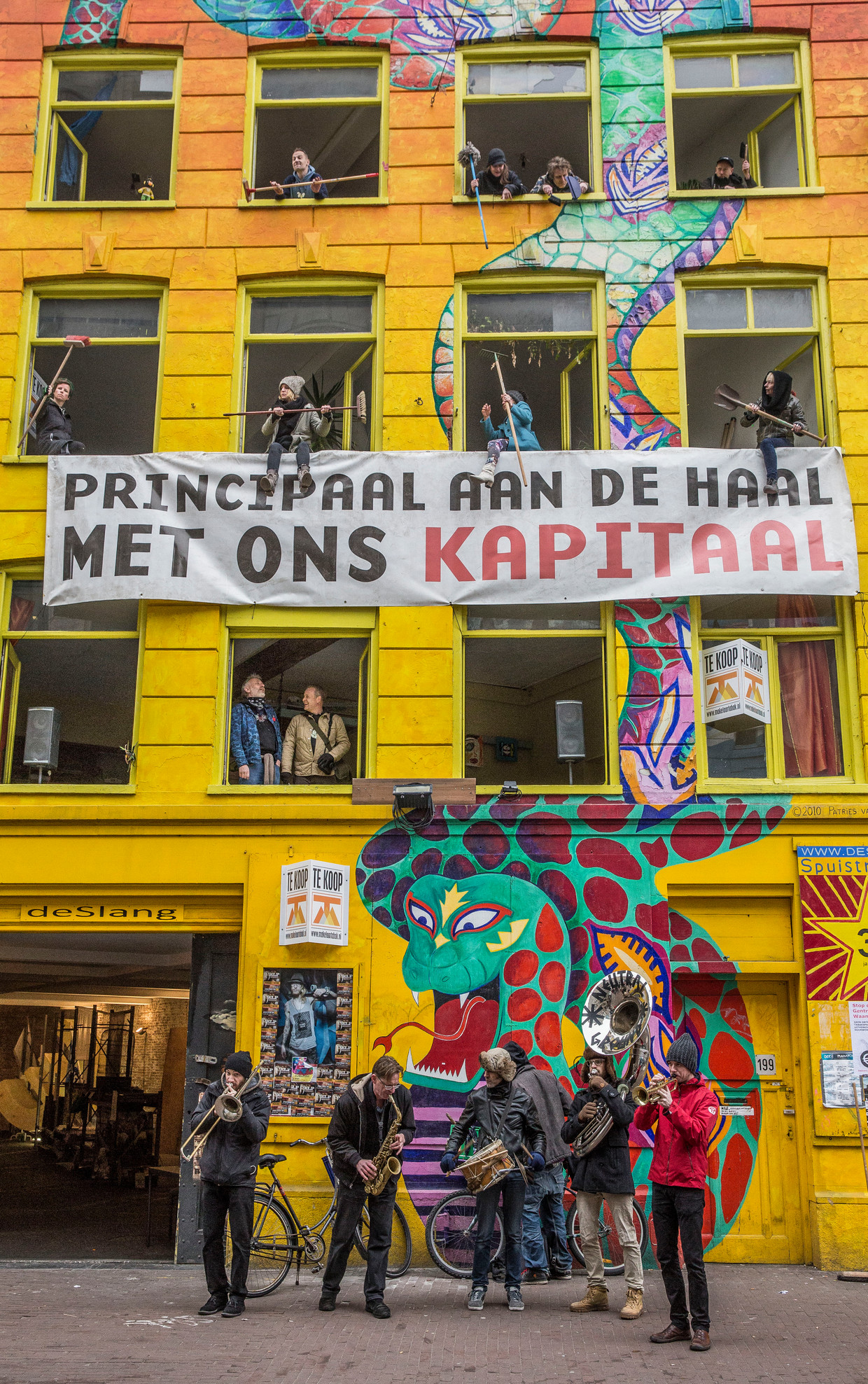
Mokum Kraakt squats on the Dollebegijnensteeg in the Red Light District in solidarity with the sex workers and against the arrival of the erotic center. During a protest against the planned erotic centre, squatting collective Mokum Kraakt announced it has squatted a number of former sex work windows in De Wallen, Amsterdam’s red light district.
The squatters say the windows were squatted in solidarity with sex workers who fight against plans for an erotic centre on the outskirts of the city. Sex work has been a part of De Wallen for over 400 years and sex workers have clearly and repeatedly said they want to stay in the city centre.
The people living close to the location of the prospective location of the erotic centre are also against it. And still, mayor Halsema is pushing through her plans.
According Mokum Kraakt, the planned erotic centre is in fact an erotic prison, in which the state has total control over who can and can’t sell, or buy, sex. In this, we see only the latest state attempt to control sex workers and restrict people’s right to sex and sexuality. Also, closing windows in De Wallen would force a part of the sex workers active there now into illegality, where exploitation and coercion are much more prevalent.
Although the municipality presents closing windows as a way to reduce mass tourism in the area, research shows that limiting sex work would barely have an impact on the number of tourists that flock to De Wallen. We previously occupied an empty hotel close to Leidse square to protest Amsterdam’s tourism policy and we say the municipality itself is to blame for out-of-control tourism.
The municipality was never against mass tourism, and isn’t now. The real aim is for a different kind of tourist to come to the city, a richer kind. In the meantime, the city becomes more and more unaffordable for its citizens, sex workers are stigmatised and pushed away, and the large numbers of tourists stay as they are.
The former sex work windows have been vacant for nearly two years, and are owned by Stadsgoed NV, the real estate company responsible for introducing the maligned waffle shops to Amsterdam’s city centre. In the squat, we will create a meeting place for sex workers to organise. We demand more sex and less Halsema. We are against pushing out sex workers and against a prudish city. What’s fundamental for us is that inhabitants and workers decide what the neighbourhood looks like, instead of the municipality changing things unrecognisably from the top down. If it’s up to the mayor, De Wallen will become a sanitised shopping mall for the moneyed class. We don’t accept that and that’s why we will sabotage every step that’s taken towards the erotic centre.
The foreseeable effects of climate change on the Caatinga, the semi-arid shrubland and thorn forest biome in Brazil’s Northeast region, will be catastrophic for most terrestrial mammal species that live there. A study reported in the journal Global Change Biology by researchers in Brazil affiliated with the State University of Campinas (UNICAMP), the Federal University of (UFPB) and the […]
By Barry Healy On January 13 the Democratic Progressive Party (DPP) won the Taiwanese presidential election. The result is important because of Taiwan’s frontline status in the US war drive against China. The New York Times describes newly elected president, Lai Ching-te, as “a staunch separatist”. The DPP, which is generally considered to be more […]


 Protest in São Paolo in honor of Julieta Hernández on January 12 2024. Photo by Rovena Rosa/Agência Brasil. Used with permission.








 The Free