
“Rightwing groups intend to stop progress in the recognition of sexual and reproductive rights,” feminists warn..

thefreeonline on 6th June, 2024 by Maricel Drazer at Stigmatis↗ NEW now on Telegram: https://t.me/thefreeonline..
“Authoritarianism is getting stronger,” they say.
“Violence against women continues to be a persistent and serious problem,” says Magdymar León Torrealba, coordinator of the Venezuelan Association for Alternative Sexual Education
“It is time to disobedience the patriarchy.”
“The fire is ours.” “We are all workers.”
“In the face of financial discipline, feminist rebellion.” “We are moved by desire, now and always.”
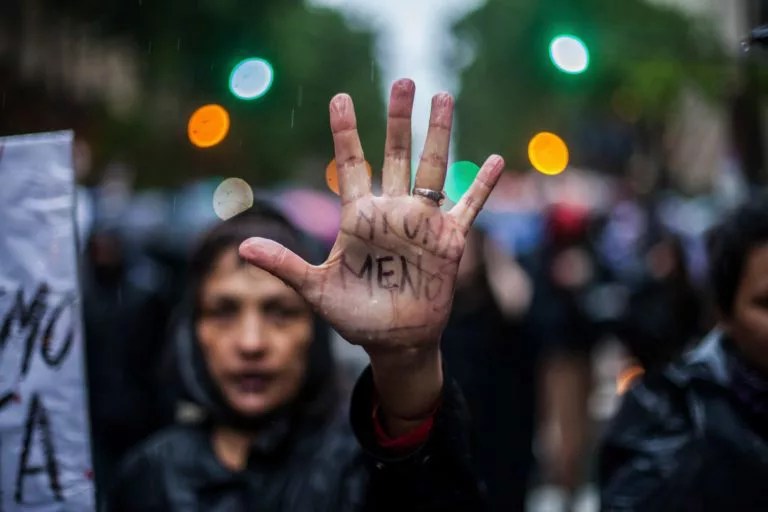
These are some of the slogans that can be read on the official website of the Ni Una Menos (Not One of us Less) Movement of Argentina, recognized as a pioneer on the continent in the fight for women’s rights..
Now, what is the current state of feminisms in Latin America?
“It is a moment of relaunching the organizational plots, after a moment of great mass that was seriously affected by the pandemic” of covid-19, analyzes sociologist Luci Cavallero, national representative of the Ni Una Menos collective, in dialogue with DW.
“The great economic crisis that many countries in the region are going through, with such a profound attack on living conditions, makes it very difficult to sustain organizational bodies,” she adds.
And that’s not all. According to its members, there are also other factors that condition the actions of feminisms today.
“One of the biggest challenges facing the movement is to move against the current, in a context where authoritarianism is strengthening,” says Liz Meléndez, executive director of the Flora Tristán Peruvian Women’s Center in an interview with DW.
In the same sense, Cavallero warns about “the emergence of far-right movements, and even governments, that are deploying policies of stigmatization and violence against the feminist movement.”

Feminisms vs. conservative groups
“It is essential to confront the advance of conservative groups that seek to stop, and even reverse, the advances in the recognition and guarantee of sexual and reproductive rights, and comprehensive sexual education,” agrees the Venezuelan feminist psychologist Magdymar León. Torrealba, consulted by DW.
“These groups, which include evangelical churches, maintain permanent work against the advances of the feminist agenda. They operate in an articulated manner in the region and also have financial resources that allow them to carry out this work,” says the coordinator of the Venezuelan Association for Alternative Sexual Education (Avesa) from Caracas.
It is essential to incorporate men
However, the challenges faced by feminisms do not end there nor do they only concern women.
“Violence against women continues to be a persistent and serious problem: incorporating men in the process of transforming this reality is essential,” says León Torrealba.

And also “deepening collaboration with other social movements” should be part of the movement’s list of goals, according to the Peruvian feminist.
“Which implies removing gender inequality from the niche where it has been placed and linking it with a more comprehensive and universal vision,” she explains.
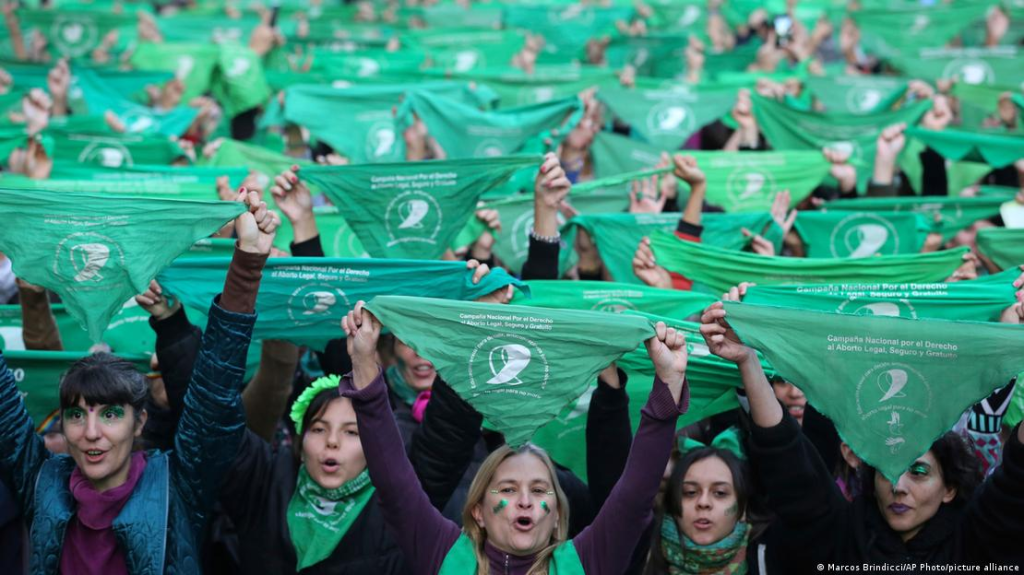
“It is time for disobedience to patriarchy,” condenses one of the slogans of the “Ni Una Menos” Collective of Argentina. Image: Marcos Brindicci/AP Photo/picture allianc
“Feminism must continue to criticize colonialism and the various forms of inequality that affect everyone’s daily lives,” she asserts.
As a balance
With historical perspective, the movement also has a long list of objectives achieved.
“One of the most recent achievements has been to place women’s right to decide strongly on the public and political agenda through the legalization of voluntary interruption of pregnancy, making it effective in several countries in the region,” he highlights. Melendez.
Likewise, “the care agenda has gained great visibility and relevance, especially after the post-pandemic period,” she highlights.
“We have managed to sensitize the population in relation to gender violence, we have massified the movement, and we have managed to do pedagogy on the economic conditions of gender-based violence,” adds Cavallero from Buenos Aires.
Regarding the difficulties, they are confident in the forces of the movement.
“I am optimistic because I have seen it grow from the grassroots,” summarizes the Argentine leader. “It has extraordinary potential,” says Meléndez for her part. “It is a living and deeply transformative movement,” she concludes.
published by Roxana Vanessa– Art director Author Artist- View all posts
Feminismos: “El desafío es avanzar contra la corriente»
Feminismos: “El desafío es avanzar contra la corriente»
Maricel Drazer
“Los grupos conservadores pretenden frenar los avances en el reconocimiento de los derechos sexuales y reproductivos”, alertan expertas feministas. “Los autoritarismos se están fortaleciendo”, aseguran.

“Es tiempo de desobediencia al patriarcado”. “El fuego es nuestro”. “Trabajadoras somos todas”. “Frente al disciplinamiento financiero, rebeldía feminista”. “Nos mueve el deseo, ahora y siempre”.
Estas son algunas de las consignas que pueden leerse en la página oficial del Movimiento Ni Una Menos de Argentina, reconocido como pionero en el continente en la lucha por los derechos de las mujeres.
Ahora bien, ¿cuál es el estado actual de los feminismos en América Latina?
“Es un momento de relanzamiento de las tramas de organización, después de un momento de mucha masividad que fue afectado seriamente por la pandemia” de covid-19, analiza en diálogo con DW la socióloga Luci Cavallero, referente nacional del colectivo Ni Una Menos.
“La gran crisis económica que atraviesan muchos países de la región, con un ataque tan profundo a las condiciones de vida, hace muy difícil sostener las instancias de organización”, agrega.
Las mujeres y el racismo: en la encrucijada de la doble discriminación
Y no es todo. Según sus integrantes, también hay otros factores que condicionan el accionar de los feminismos en la actualidad.
“Uno de los mayores desafíos que enfrenta el movimiento es avanzar en contra de la corriente, en un contexto donde los autoritarismos se están fortaleciendo”, afirma Liz Meléndez, directora ejecutiva del Centro de la Mujer Peruana Flora Tristán en entrevista con DW.
En el mismo sentido, Cavallero alerta sobre “la aparición de movimientos, e incluso gobiernos, de ultraderecha que están desplegando políticas de estigmatización y violencia contra el movimiento feminista”.
Feminismos vs. grupos conservadores
“Es imprescindible hacer frente a la avanzada de los grupos conservadores que pretenden frenar, e incluso echar atrás, los avances en el reconocimiento y garantía de los derechos sexuales y reproductivos, y de la educación sexual integral”, coincide la psicóloga feminista venezolana Magdymar León Torrealba, consultada por DW.
“Estos grupos, entre los que se incluyen las iglesias evangélicas, mantienen un trabajo permanente en contra de los avances de la agenda feminista. Operan de manera articulada en la región y además poseen recursos financieros que les permiten llevar adelante este trabajo”, apunta desde Caracas la coordinadora de la Asociación Venezolana para una Educación Sexual Alternativa (Avesa).
Imprescindible incorporar a los hombres
Con todo, los desafíos que enfrentan los feminismos no acaban allí ni atañen solo a las mujeres.
“Las violencias contra las mujeres siguen siendo un problema persistente y grave: incorporar a los hombres en el proceso de transformación de esta realidad es imprescindible”, asegura León Torrealba.
Y también “profundizar la colaboración con otros movimientos sociales” debería integrar la lista de metas del movimiento, según la feminista peruana. “Lo cual implica sacar la desigualdad de género del nicho donde se le ha querido colocar y vincularla con una visión más integral y universal”, explica.

“El feminismo debe continuar criticando el colonialismo y las diversas formas de desigualdad que afectan la vida cotidiana de todos”, asevera.
A modo de balance
Con perspectiva histórica, el movimiento también contabiliza una larga lista de objetivos alcanzados. “Uno de los logros más recientes ha sido colocar fuertemente en la agenda pública y política el derecho de las mujeres a decidir a través de la legalización de la interrupción voluntaria del embarazo, logrando que se haga efectivo en varios países de la región”, destaca Meléndez.
Asimismo, “la agenda de cuidados ha cobrado una gran visibilización y relevancia, especialmente tras el período postpandémico”, resalta.
“Hemos conseguido sensibilizar a la población en relación con la violencia de género, hemos masificado el movimiento, y hemos logrado hacer pedagogía sobre los condicionantes económicos de la violencia por razones de género”, suma Cavallero desde Buenos Aires.
Sobre las dificultades, se muestran confiadas en las fuerzas del movimiento. “Soy optimista porque lo he visto crecer desde las bases”, resume la referente argentina. “Tiene un potencial extraordinario”, afirma Meléndez por su parte. “Es un movimiento vivo y profundamente transformador”, concluye.

 The Free