Work and Play could be the same thing in a Society organised on Anarchist Principles
by The Slow Burning Fuse. on 3rd December 2024 viathefreeonline at https://wp.me/pIJl9-F1I Telegram t.me/thefreeonline
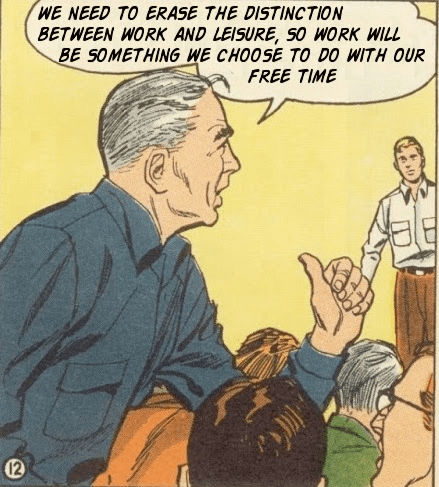
The capitalist system thrives on a fundamental lie: that work, and leisure are inherently distinct. Work, under this system, is framed as drudgery—a necessary evil performed to earn survival in a society where basic needs are commodified.
Leisure, meanwhile, is a fleeting escape from the grind, squeezed into evenings and weekends, or reserved for the lucky few who can afford it.
This dichotomy traps us in a life of alienation, where our labour serves not our communities or ourselves, but the relentless accumulation of capital by the ruling class.

But what if we could destroy this artificial division?
Anarcho-communism offers us a vision where labour and leisure are not opposing forces but intertwined aspects of a liberated existence. In a world free from hierarchies, exploitation, and scarcity, “work” would no longer be a compulsory exchange of time for money.
Instead, it would be a voluntary and creative expression of our collective humanity—something we choose to do, not because we must, but because it enriches our lives and the lives of others.
The Tyranny of Compulsory Work
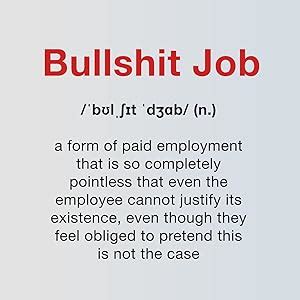
Capitalism enforces the false dichotomy of work and leisure through systemic coercion.
For most, survival depends on selling their labour to a system that values profits over people. Jobs are rarely chosen freely. Instead, they are dictated by circumstances: the rent that’s due, the bills that pile up, the crushing weight of debt.
Whether it’s a gruelling factory shift, a monotonous office job, or precarious gig work, the purpose of labour under capitalism is clear: to generate wealth for those who already have too much.
This dynamic robs work of any intrinsic meaning or joy. Tasks that could be creative, fulfilling, or socially valuable are reduced to mere means to an end, alienating workers from the fruits of their labour.

The idea of leisure, then, emerges as a temporary reprieve—a fleeting reward for enduring the daily grind. This dynamic fosters resentment toward work, creating a cycle where people live for the weekend or the next brief holiday, only to be dragged back into the machinery of production.
Anarcho-Communism: A New Vision of Work
Imagine a world where the very concept of “having to work” no longer exists. In an anarcho-communist society, labour would be decoupled from survival. Everyone’s basic needs—housing, food, education, healthcare—would be guaranteed through collective effort and shared resources.
This isn’t utopian dreaming; it’s a practical vision rooted in mutual aid, direct democracy, and the elimination of capitalist hierarchies.

Under such a system, labour would serve the community and the individual rather than the accumulation of capital. Without bosses, landlords, or billionaires extracting value from our work, the purpose of labour would shift toward creating and sustaining systems that enrich everyone’s lives.
The act of contributing to the collective good would be driven by personal fulfilment and communal solidarity—not fear of poverty.
The most radical transformation, however, would be the voluntary nature of work. Instead of being forced to labour to survive, people would choose to contribute in ways that align with their passions, skills, and interests.
Work would become a meaningful extension of our humanity, something we approach with excitement and creativity rather than dread.
Merging Work and Play
In a liberated society, the artificial line between work and leisure would blur and eventually dissolve.
Activities traditionally labelled as “work,” such as farming, teaching, or building infrastructure, would be approached with the same joy and creativity as hobbies. Conversely, activities once relegated to “leisure” would no longer be seen as mere distractions from productivity but as valuable and enriching parts of life.
Imagine a community garden where people gather not out of obligation but because they genuinely enjoy nurturing the earth, learning from one another, and sharing its bounty.
Or consider the musicians and artists who contribute their talents not for survival but to bring beauty and inspiration to their neighbours. In this world, activities like repairing a neighbour’s roof or teaching a child to read would be acts of communal care infused with pleasure and meaning.

When liberated from the profit motive, the barriers between work and leisure crumble. Work becomes a natural extension of play and creativity—a way to build relationships, solve problems, and explore the world around us.
Addressing Necessary Labor
One common critique of this vision is the question, “But who will do the necessary work?”
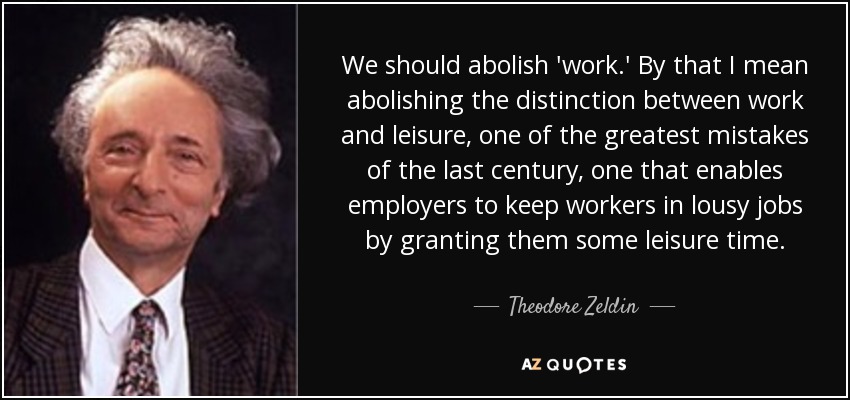
Tasks like waste management, infrastructure maintenance, and caregiving may not always feel enjoyable, but they remain essential for a functioning society.
However, under capitalism, these tasks are disproportionately assigned to the most exploited workers, often along lines of race, gender, and class. An anarcho-communist society would address this inequity by redistributing labour fairly and collectively.
Through advanced technology, shared knowledge, and cooperation, the burden of necessary labour could be significantly reduced. Imagine automation and innovation driven not by profit but by the goal of eliminating tedious and dangerous tasks.
Essential roles could be shared equitably among all members of a community, ensuring no one is overburdened or excluded from more fulfilling contributions. Rotational systems, mutual aid networks, and collective decision-making would ensure fairness and solidarity in managing these tasks.
Beyond the Myth of Scarcity
A key barrier to this transformation is the capitalist myth of scarcity, which claims there is never enough to go around.
This myth justifies hoarding by the wealthy and imposes austerity on the rest of us. In reality, the world produces enough food, housing, and resources to meet everyone’s needs many times over.

By eliminating wasteful practices like planned obsolescence, overproduction, and the accumulation of wealth by a tiny elite, we can redirect resources toward communal well-being. A society built on abundance, rather than artificial scarcity, creates the conditions for everyone to live freely and creatively.
The distinction between work and leisure is a weapon wielded by capitalism to alienate us from our labour, our communities, and ourselves. Anarcho-communism offers us a way to dismantle this division, creating a world where work is not a burden but a joyful expression of our humanity.
In this society, work would no longer be something we do to survive but something we choose to do with our free time—because it brings us closer to one another and helps build the liberated lives we all deserve.
Once we see the possibility of freedom, we cannot unsee it.

 The Free