. The suit alleges that these practices have led to serious childhood health issues, such as Type 2 diabetes, obesity, heart disease and non-alcoholic fatty liver disease.
A landmark lawsuit filed in Philadelphia names major food companies:
Kraft Heinz, Mondelez, Post Holdings, Coca-Cola, PepsiCo, General Mills, Nestlé, Kellogg’s, Mars, and ConAgra and accuses them of designing and marketing ultra-processed foods (UPFs) with addictive qualities, particularly targeting children.
The case and its repercussions echo sinister marketing tactics employed by Big Tobacco in decades past. In a similar way it is alleged, global food giants manipulate consumers with misleading health claims and aggressive marketing. A large body of research shows that cutting UPFs could save millions of lives, while palm oil’s role in deforestation and biodiversity loss compounds the crisis. It’s time to reject harmful foods and demand accountability. Choose wholefoods, protect wildlife, and fight for a healthier planet. #BoycottPalmOil #Boycott4Wildlife every time you shop.
In a groundbreaking legal action, some of the world’s largest food and beverage corporations are facing allegations of deliberately engineering ultra-processed foods (UPFs) to be addictive, with a specific focus on marketing these products to children. The lawsuit, filed in the Court of Common Pleas of Philadelphia County, names companies including Kraft Heinz, Mondelez, Post Holdings, Coca-Cola, PepsiCo, General Mills, Nestlé, Kellogg’s, Mars, and ConAgra.
The 148-page complaint drawing unsettling parallels with insidious strategies employed by the tobacco industry, asserts that these companies have employed strategies reminiscent of those used by tobacco giants, utilising research on addiction to create hyper-palatable food products that are difficult to resist. This approach is alleged to have contributed to a rise in serious health conditions among children, notably Type 2 diabetes and non-alcoholic fatty liver disease—ailments that were once rare in this age group.
The plaintiff, represented by the law firm Morgan & Morgan, contends that the defendants have prioritised profit over public health, leading to a public health crisis characterised by increased rates of chronic diseases linked to diet. The lawsuit seeks to hold these corporations accountable for their role in promoting and distributing products that may pose significant health risks to consumers, particularly vulnerable populations like children.
This case underscores the growing scrutiny of ultra-processed foods and their impact on health, especially among younger demographics. It raises critical questions about corporate responsibility, marketing ethics, and the need for greater transparency in the food industry.
The compliant alleges that these tactics originate from a time when tobacco giants acquired and operated major food brands, using the same addiction research once employed to hook smokers on cigarettes. This same research was subsequently applied to make ultra-processed foods tasty and irresistible to children.
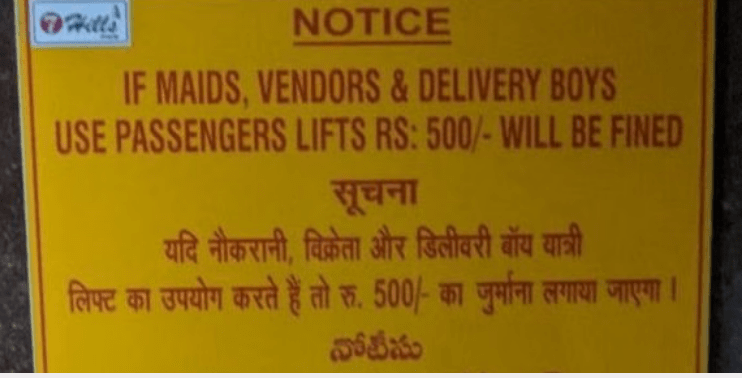
The breathtaking combination of patriarchal condescension and capitalist exploitation would make the zamindars of feudal India blush. BUT DONT WE ASK THE SAME FROM OUR COOKS AND CLEANERS!?!?
We are back to that time of the year when a man who earns Rs 51 crore tells the rest of us that we need to work harder.
At least once a quarter, India’s business leaders poke their heads out of their luxurious offices, and scold us into believing that a 40-hour work week represents the very pinnacle of laziness.
This time, it was the turn of the chairman of L&T, SN Subrahmanyan, to tell his colleagues—who earn 535 times less than him—that they need to work 90-hour weeks.
On an internal call that was later made public, Subrahmanyan also wondered aloud what people do with their time at home.
“How long can you stare at your wife or husband?” he asked, because apparently, the purpose of human existence is to generate quarterly profits for shareholders.
The breathtaking combination of patriarchal condescension and capitalist exploitation would make the zamindars of feudal India blush.
Naturally, corporate India’s workforce – already stretched thin between endless Teams meetings and “Do you have time to jump on a quick call” messages – responded with the derision these comments deserved.
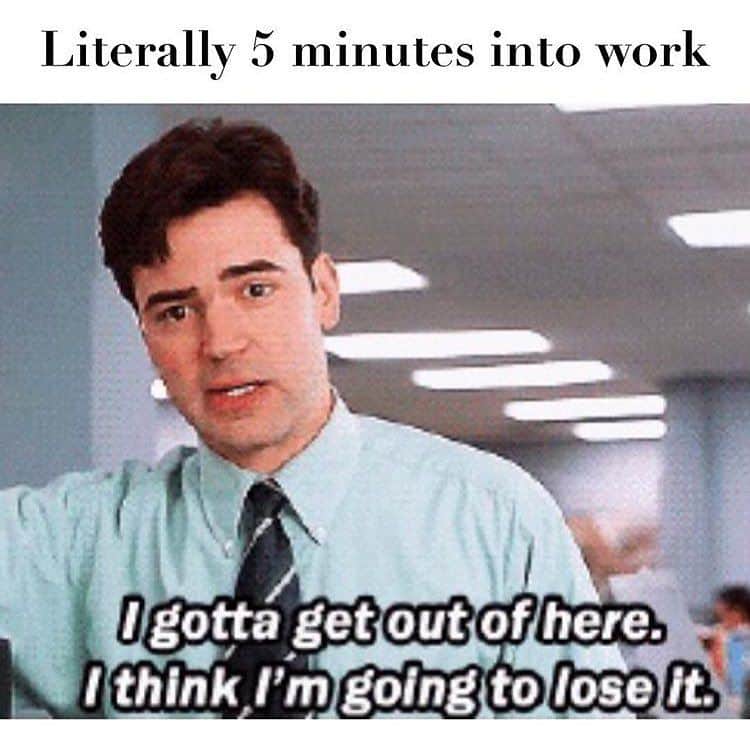
The internet turned Subrahmanyan’s words into memes faster than you can say “toxic work culture”.
India’s most respected business leaders and start-up founders have made a habit of displaying just how deeply disconnected they are from the realities of working people’s lives.
Subrahmanyan is hardly the only culprit. Just months ago, Infosys co-founder Narayana Murthy prescribed a 70-hour work week as the cure for India’s productivity challenges.
While the rest of India ridiculed that view, Murthy drew support from Bhavish Aggarwal, the founder of Ola, who labelled work-life balance a western concept.
Here’s what I find most fascinating about these periodic sermons from India’s business elite.
Not once do they mention overtime pay for these extra hours.
Not once do they discuss additional benefits or support systems for workers who are expected to sacrifice their personal lives at the altar of corporate growth.
Instead, they wrap their demands in the flag of patriotism, speaking of “India’s decade” and “nation building” as if working people into the ground is somehow serving the country.
The outrage that we’re witnessing from India’s professional class is entirely justified.
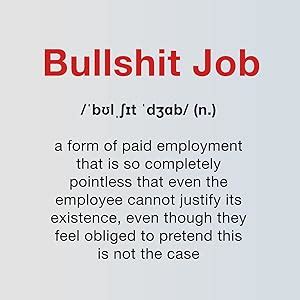
A 90-hour work week is a blueprint for collective burnout packaged as ambition.
Overnight, dozens of people are speaking the language of Marxism. Still, this moment of solidarity and empathy among urban professionals goes only as far as a corporate boardroom.
It does not extend to our homes, and the workers who toil to run it for us….
DONT WE ASK THE SAME FROM OUR COOKS AND CLEANERS!?!?
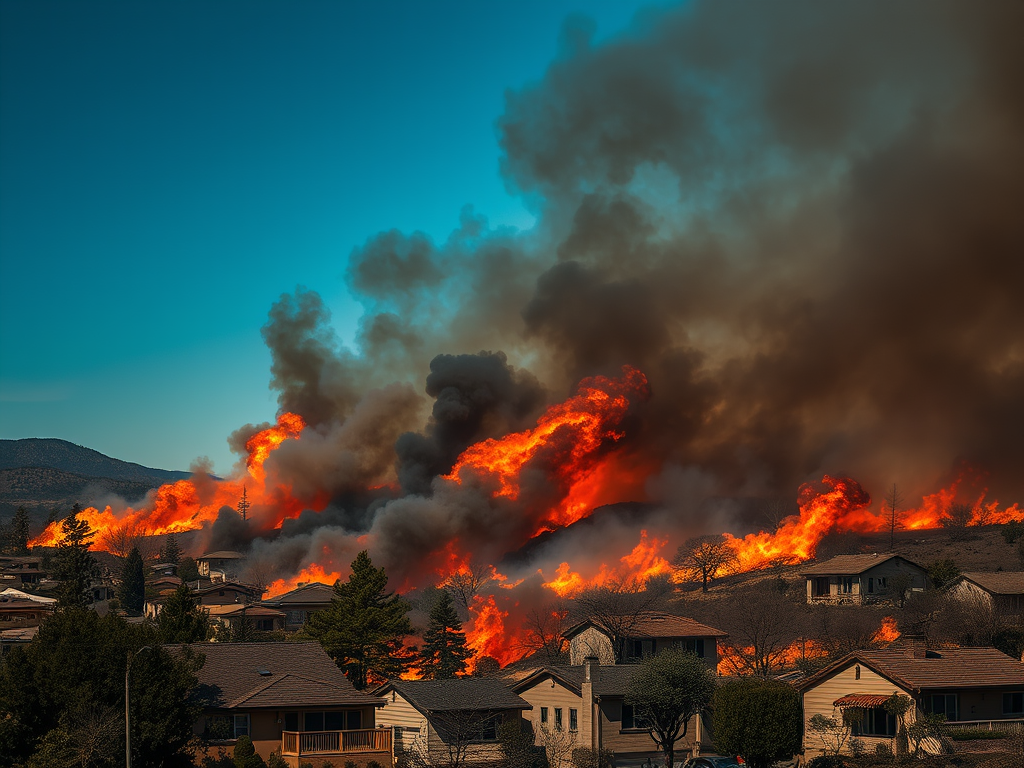
Severe winds increase fire risks in Southern California, exacerbating an already devastating fire season with significant casualties and damages reported.
Tuesday’s forecast predicts wind gusts up to 70 mph, with the National Weather Service warning of explosive fire growth in Los Angeles and Ventura counties
Recent fires, including the Palisades and Eaton fires, have already killed at least 24 people, displaced over 100,000, and destroyed entire neighborhoods.
The Palisades fire, covering over 23,000 acres, is only 14% contained, and the Eaton fire has killed 16 people and consumed over 14,000 acres.
New fires, like the Auto fire in Ventura County, have rapidly spread. The power outages aimed at preventing fires have affected over 60,000 customers.
Meanwhile, the fires have worsened Los Angeles’ housing crisis, prompting emergency measures to fast-track rebuilding and temporary housing.
Some lawsuits have been filed against Southern California Edison, accusing the company’s equipment of sparking the Eaton fire. (New York Swines)
After failing to destroy its opponent anywhere in Gaza, and instead murdering art least 100,000 innocents, has Israel been dragged to the negotiating table to deal with Hamas?
It seems possible that Israeli prime minister Benjamin Netanyahu has been presented with a fait accompli.
Hamas operatives have been cropping up in north Gaza – a place Israel has been trying to ethnically cleanse for months – to fire missiles Israel didn’t know they had into Israeli territory, past the so-called “Iron Dome” defence screen that was supposed to have been created specifically to shoot down these weapons.
Israel’s policy of indiscriminately murdering Gazan men, women and children seems to have backfired badly, creating a huge recruitment pool for Hamas. It’s the cycle of international destruction in microcosm:
First, a group of extremists is targeted by ‘allies’ of western powers.
Civilians die.
Those who are left become angry at the destruction of their friends and relatives’ lives – and their own.
They become radicalised and join the extremist group in order to strike back.
Isn’t that what we’ve seen here?
And now Hamas has called for a ceasefire, putting to the side all the sticking-points that Israel has previously said meant it couldn’t happen.
So now Netanyahu is allegedly scrabbling around for an excuse not to do it, because his government’s supporters have said they will abandon him if he does not continue the attempted purge of the Palestinian territory in order to hand it over to settle-colonial invaders.
This would once again underline the claim that Netanyahu has never intended to rescue any hostages or have them returned via negotiation, which will look bad among the western countries that have backed Israel.
So the optics are terrible, as far as he is concerned.
Sadly, history indicates that this won’t make much difference to the tyrant of Tel Aviv.
Oh, but Donald Trump has said he wants peace in Gaza before he is sworn in as US President on January 20. That should concentrate everybody’s minds wonderfully.
Here’s a video clip by Damo that puts everything in perspective for you:
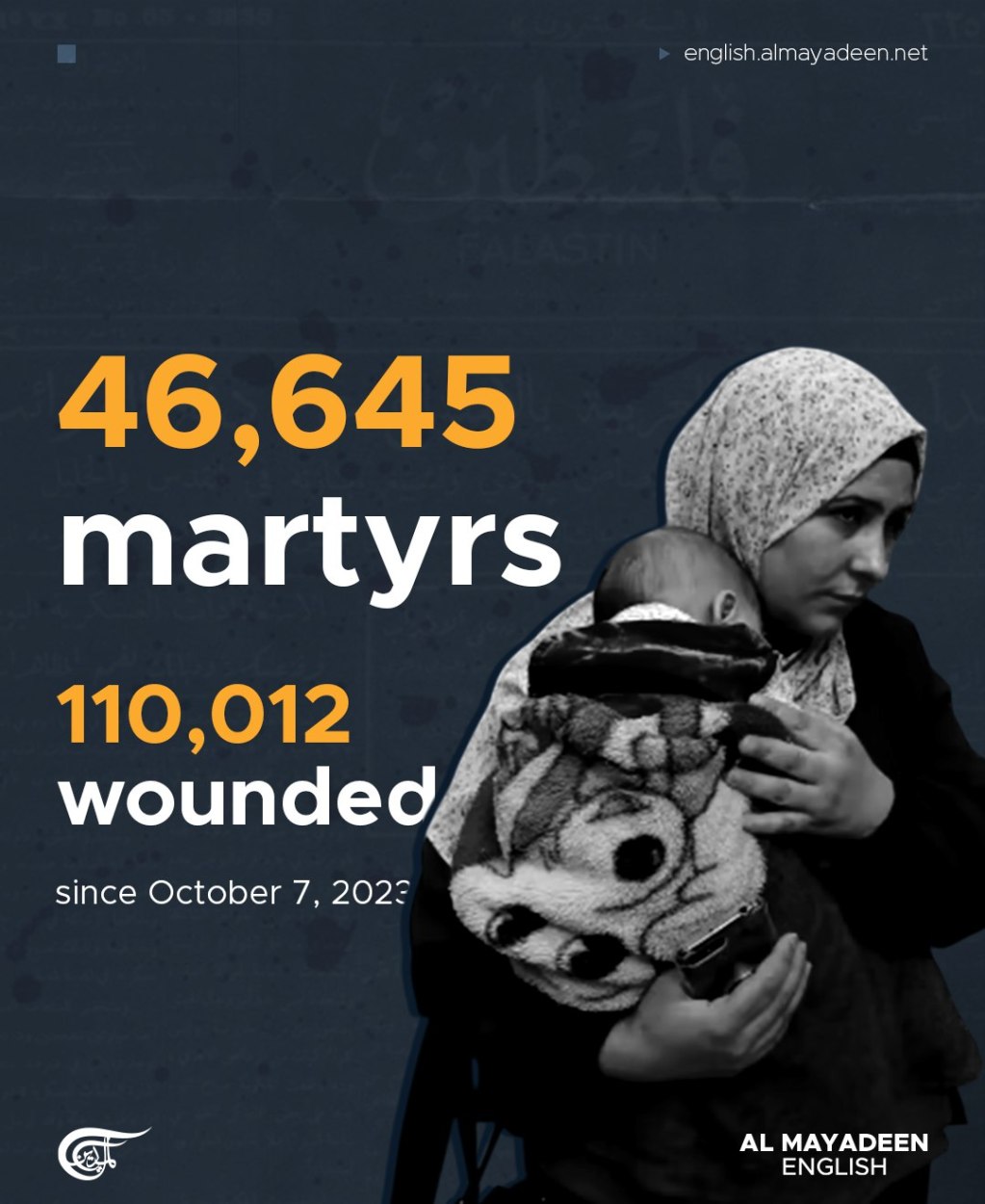
Amid increasing ceasefire talks, today marks the 466th day of the Israeli genocide against Gaza.
The Israeli occupation forces committed four massacres against Palestinian families in Gaza, killing 61 Palestinians and injuring 281 others who were transported to hospitals over the past 24 hours, according to the Health Ministry in the enclave.
This brings the total number of Palestinians killed by “Israel” in Gaza since October 7, 2023, to 46,645 martyrs alongside 110,012 others wounded, the Ministry confirmed.
Rationale: Persistent frustrations Organizing within our movements: Building mutual care, accountability, and collective responsibility Collaboration in diversity: The strength of heterogeneity Resisting the triple supremacy of globalized capitalism: intergovernmental organizations, corporations, and international alliances Conclusion
*********
It goes without saying, but it seems like almost every individual and collective we interact with has trouble with self-organization and mutual support.
Almost every conversation we have with the people we interact with brings up the same problems. We hear complaints from groups who prefer to focus on “increasing numbers” even as they dedicate themselves to supporting and defending abusers and bigots within their ranks, further ousting people.
We hear complaints of exclusionary behavior from groups or organizers who completely ignore almost any degree of accessibility and often refuse to do what is necessary to maintain a healthy environment.
We continue to see people trying to create hierarchies of inclusion that they claim are the result of “not having enough resources” to do it all and having to focus only on the “most important” actions.
This isn’t to say that everyone is struggling in exactly the same way, because there are quite a few nuances and contexts in our various regionalities, but there certainly seems to be an immense amount of overlap.
So when we talk to people, we often realize how exhausted they seem to be and how unbearably tired everyone is.
It’s also really hard not to notice, in our own experiences, how many people seem to think they have no responsibility to others, especially when most people’s complaints seem to be very similar and are treated as nothing more than a broken record when they keep pointing out problems that haven’t been addressed.
We don’t understand this attitude. If there are problems, why is there such a desire to sweep them under the rug or ignore them until something changes for the better?
We say this now because, as we’ve listened to so many others and engaged or reflected on our own collectives and groups, we’ve noticed another common theme: Many people have really lost faith in those around them, and often feel that those people and groups who claim to support them would never actually do so when the need arises.
It also seems that many are tired of the lack of community and constantly feel like there’s nowhere they truly belong. Not only have they had to struggle to find a place to belong, but they have found that the few organisations and collectives they have been able to find are either completely unequipped or unwilling to support them and everyone else.
This can be seen in the sudden dissolution of many of the online communities that sprang up during the COVID lockdown, which fell apart almost as quickly as they were created.
Very little was done to ensure these connections were maintained once everything returned to ‘normal’, especially in regards to those who have been unable to be physically present for whatever reason.
Perhaps – although this is said with a glimmer of hope for a better explanation for the dissipation of our organisational and community spaces – most of the people who had previously collaborated with others online are now busy participating in local movements offline.
Perhaps, we hope, collectives are doing more to build and support their local communities.
Because if we look at online spaces, almost all of the spaces we had created have crumbled and refocused on offline spaces and activities, leaving many of the most vulnerable in even more lonely, alienated, and precarious positions.
We have been left scrambling to find remnants of the communities we had before the pandemic began, but we have also been left watching our online communities gradually deteriorate in favor of things that feel “more real,” because many of us have never truly shifted our understanding that online spaces are not a substitute for offline ones, but are in fact part of the same realities and should support each other.
So we still have to ask ourselves if they are doing what they can to to meet the needs of everyone, rather than just offering empty platitudes and half-baked excuses..
It’s hard to know. We can only really speak from our own experiences in the spaces we inhabit, seeing how they have seen their participation dwindle due to their unwillingness to ensure the safety of the people they claim to support.
We’ve seen people proudly proclaim that they are part of a particular collective and trumpet their position within it, knowing full well that they have done very little within it – or in some cases supported causes antithetical to the aims of their collective – and are only using the name to try to bolster themselves and their reputation among others.
They want to build their own version of some kind of “anarchist” credentials, adding every interaction to their activist resume.
We also feel that the spaces we have are totally atomized and often alienated, both from the place around us and from broader movements.
Sometimes it is because others refuse to engage with certain ideas because some element of them would upset the status quo they enjoy. For us, this has been clearest in regards to marginalized anarchisms, especially anarcha-feminism and queer and trans anarchisms.
It has also been brutally obvious whenever we have mentioned anything related to the abolition of school and academia or when we have clearly stated that we should support and encourage youth liberation.
We have seen the co-optation of non-white anarchisms (by people who refuse to reflect on their own whiteness) and non-Western anarchisms (by people who think it is logically consistent to support certain imperialist states over others).
The many anarchisms of the marginalized are continually used as tools and weapons by those who, even if they deny it, maintain support for the very hierarchies we seek to dismantle. It is clear that there are problems that we desperately need to address.
To top it off, we see groups who are virtually paralyzed by fear in this highly-surveilled world where we are in the crosshairs of the increasingly fascist and authoritarian governments that thrive around us.
NATO is using Romania as “a door for war,” aiming to launch a major offensive into Russia, independent presidential candidate Calin Georgescu has warned.
The expansion of the MK Air Base is aimed at starting a conflict, Calin Georgescu has claimed
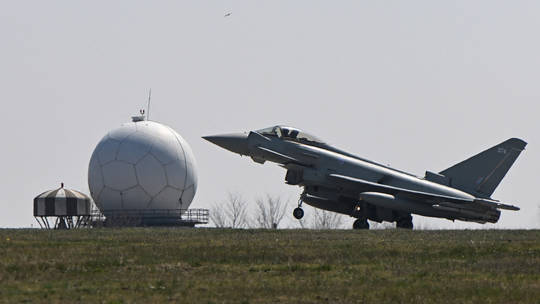
During an episode of ‘The Shawn Ryan Show’ published on Saturday, Georgescu and former US Navy SEAL Shawn Ryan discussed the coup d’etat in Romania and the potential implications of the military buildup at the Mihail Kogalniceanu (MK) Air Base, the largest NATO facility near the Black Sea.
The presidential candidate has raised concerns over the bloc’s military presence in Romania, warning that the country’s NATO bases could be used to trigger a war with Russia.
“What is happening now in Romania and the fact that there is no reaction from abroad, especially from the United States, shows that they do not understand what is going on here. Because if they use Romania as a door for war, what would be next,” Georgescu told the host in response to a question about whether Romania is “in the midst of a coup right now.”
No official reason has been given for Romania’s constitutional court voiding November’s vote, despite days earlier signing off on the results.
Romania’s Constitutional Court annulled the vote last month, just days after officially endorsing it, citing since-debunked claims by intelligence services that front-runner Calin Georgescu had been boosted by a Russian campaign on TikTok. It has since emerged that the campaign had been the work of a rival Romanian party, but the court has refused to reverse its ruling.
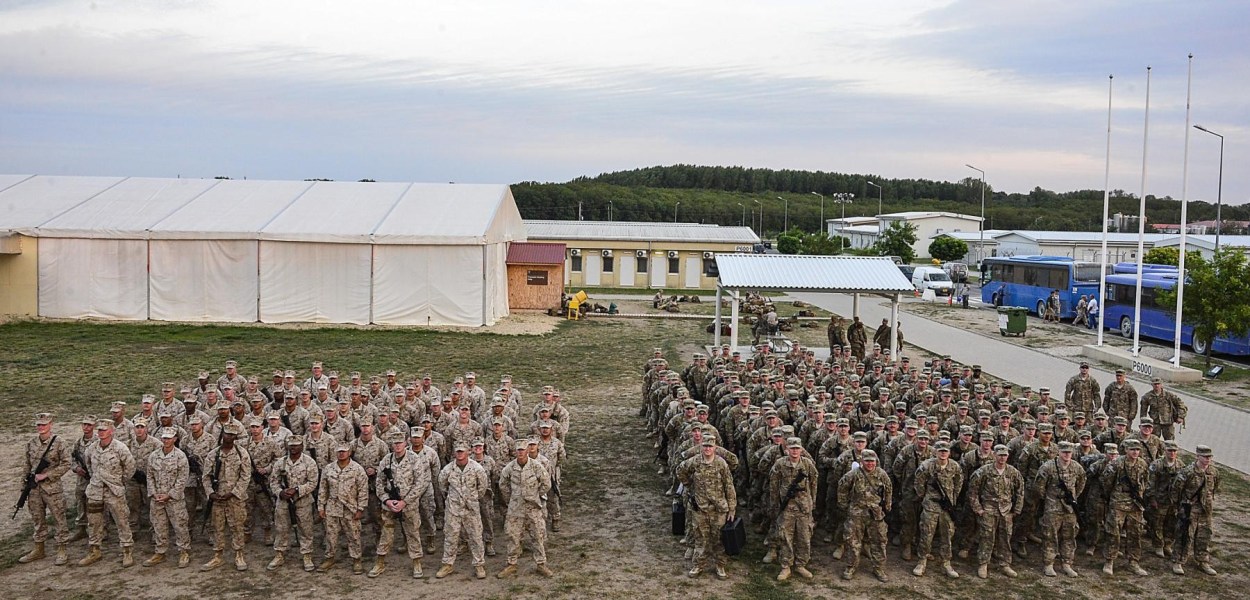
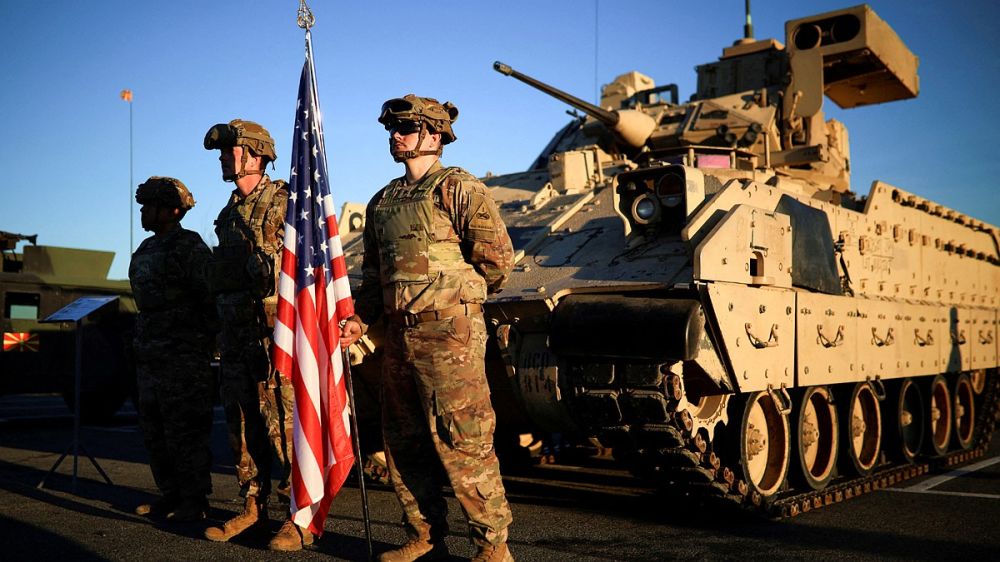
Romania, a NATO member since 2004, has been expanding the MK Air Base to accommodate more troops and military equipment. The project is intended to be NATO’s largest base in Europe. The development was criticized by Moscow, with Andrey Klimov, the deputy chairman of the Federation Council Committee on Foreign Affairs, calling it a “threat for Bucharest.”
According to Klimov, the larger the “anti-Russian” military base and the “closer it is to Russia’s borders, the more likely it is to be among the first targets for retaliatory strikes.”
Asked whether the base would be used to conduct “a major offensive into Russia,” Georgescu responded, “Exactly. This is the word – offensive – which is wrong. And we cannot accept this,” he stated. “Because this is not our business. It’s not our war.”
Georgescu, who is known for his strong Euroskeptic and anti-NATO views, emerged as a frontrunner in Romania’s presidential race in November, securing 22.94% of the vote. His rise fueled speculation that he would push for Romania’s withdrawal from NATO or at least attempt to reduce military cooperation with it.
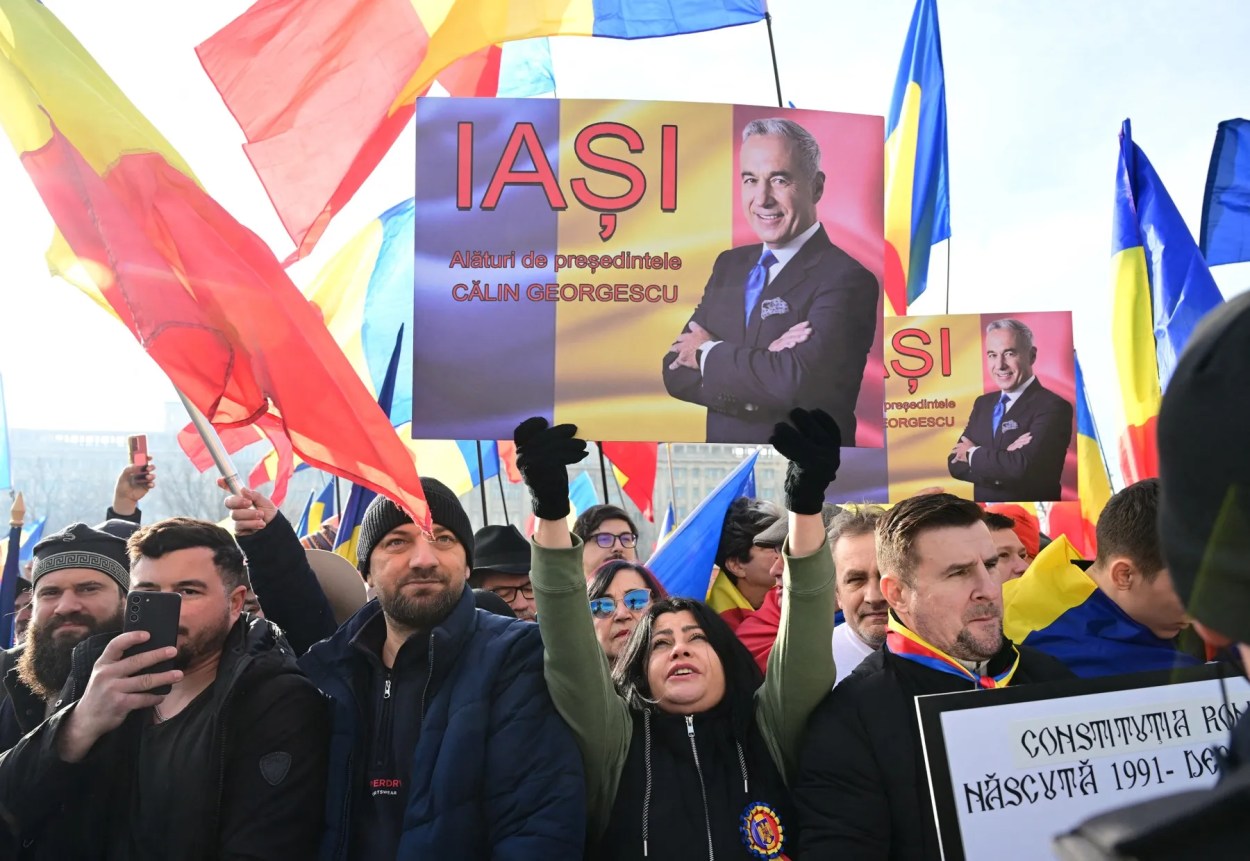
Romania’s Constitutional Court annulled the election ahead of the second-round vote, citing intelligence documents alleging “irregularities” in Georgescu’s performance. This decision sparked rounds of street protests in Bucharest.
Although now admitting that Georgescu was inniocent of the suspivions the Court refuses to back down, its members are extremely pro NATO and open to the heavy pressure from the US and EU, which were shocked by Georgescu’s landslide win in the first election round.
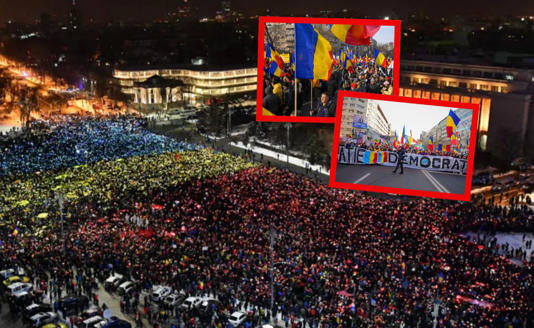
On Friday, thousands of demonstrators gathered outside Romania’s top court, demanding transparency and accusing the authorities of orchestrating an electoral coup.
“Nine people inside, they decide instead of 19 million what they have to do,” the presidential candidate told the host while discussing the cancelation of the second round of the elections. “We ask for help for the democratic institutions, and we want to protect our life, our family, our nation,” he added.
You can share this story on social media:
**********
After NATO’s Romanian Coup, Where Next? -Kit Klarenberg
On December 6th, Romania’s constitutional court made an extraordinary decision to inexplicably overturn first round results of the country’s November 24th presidential election.
The rerun of Romania’s presidential election is scheduled for May 4, 2025, with a potential runoff on May 18, 2025.That’s IF the US gets the right result.
Conveniently, the ruling was made mere days before a runoff that, according to polls, would’ve seen upstart outsider Calin Georgescu win via landslide.
In the process, citizens of all NATO member states were provided with a particularly pitiless, real-time crash course on what could now happen in their own countries, should the ‘wrong’ candidates be elected fair and square.
Georgescu’s stunning victory in the first round caught Romania’s political elite and their Western sponsors off guard, while leaving him the most popular political figure in the country.
Campaigning on a traditionalist, nationalist platform, he extolled views some might consider unsavoury, but also advocated nationalisation, and state investment in local industry. Perhaps predictably, the Western media has universally smeared him as “far-right”, “pro-Putin” and a “conspiracy theorist”, among other now-familiar sobriquets commonly levelled at political dissidents.
Georgescu’s greatest crime is to determinedly oppose continued Romanian involvement in and backing for the Ukraine proxy war.
As Kiev’s Black Sea-facing neighbour, Bucharest has offered significant financial, material and political succour since February 2022, all along running the risk of getting caught in the crossfire.
But in interviews with Western news outlets, Georgescu boldly proclaimed any and all “military or political support” would be reduced to “zero” under his watch:
“I have to take care of my people. I don’t want to involve my people…Everything stops. I have to take care just about my people. We have a lot of problems ourselves.”
No official reason has been given for Romania’s constitutional court voiding November’s vote, despite days earlier signing off on the results.
Nonetheless, in the intervening time, Bucharest’s security apparatus released declassified reports intimating – without making direct accusations or providing any concrete evidence whatsoever – Georgescu’s victory may have resulted from a wide-ranging, Moscow-sponsored influence campaign, delivered via TikTok. Details provided instead pointed to a rather mundane – albeit successful – social media marketing effort.
The plot further thickened in late December, when it was revealed the TikTok campaign that purportedly boosted Georgescu was in fact financed by Romania’s National Liberal party.
This backing helped propel the hitherto obscure candidate to national prominence, the objective potentially being to harm the National Liberal party’s arch nemesis Social Democrats. No evidence of Muscovite funding, let alone support, for Georgescu has ever emerged.
Nonetheless, despite these disclosures, the narrative of Russian destabilisation catapulting him into power has since been invincibly minted.
NATO’s grand and ever-expanding military base in Romania Bucharest’s sprawling territory is home to multiple US missile facilities, and a giant NATO military base, scheduled to soon be greatly expanded, explicitly in service of decisively changing the region’s “balance of power” in the West’s favour. Meanwhile, Romanian presidents wield significant clout in domestic and international affairs.
They dictate foreign policy, serve as commander-in-chief of the armed forces, and appoint prime ministers. All of which points to a far more likely rationale for the presidential election’s abrogation than “Russian meddling”.
‘Without Hope’
On December 10th, the BBC published a striking report on how Romanians were “stunned by the eleventh-hour cancellation of their presidential election.”
The British state broadcaster was at pains throughout to justify the vote’s unprecedented, despotic annulment as proper, reasonably motivated by a “massive” and “aggressive” malign meddling campaign on TikTok – whether of Russian origin or not – improperly skewing the result.
However, the BBC evidently had little choice but to admit Georgescu was enormously, and organically, popular.
For example, NATO veteran Mircea Geoana, Bucharest’s former foreign affairs minister who ran for president in November and finished sixth, was quoted as saying “Romania dodged a bullet” and “came very close” to an all-out coup.
“If Moscow can do this in Romania, which is profoundly anti-Russian, it means they can do it anywhere,” he ominously cautioned.
Still, Geoana conceded there was “a whole cocktail of grievances in our society,” and it would be “hugely mistaken to believe” Georgescu’s success “was just because of Russia.”
The BBC acknowledged immense “fatigue” with Romania’s doggedly pro-Western political establishment widely abounds among the local population, who harbour an ever-growing number of completely legitimate grievances, entirely unaddressed in the mainstream.
By contrast, the British state broadcaster recorded, Georgescu not only spoke openly and passionately about these manifold problems, but offered concrete solutions for tackling them.
And a great many average citizens “liked what he said.” Several Georgescu supporters were duly quoted in the article, issuing effusive praise. One evangelised:
“He’s like a preacher, with a Bible in his hand, and I thought he spoke only the truth…He talks about rights and dignity.
Romanians go to other countries for work, but we have so many resources here. Wood, grain – and our soil is very rich. Why should we be vagrants in Italy?”
The BBC further noted Georgescu’s “pledge to Make Romania Great Again helped him perform particularly strongly among the vast Romanian diaspora.” Given Bucharest’s mass depopulation in recent years, significantly assisted by EU membership, this is hardly surprising.
We’ve always used fermentation- think bread, or beer. Finally we’ve learned to make any food you choose, from air and a little water – no farm needed. Solar food production has just been accepted in the US, and when mass produced could decimate CO2 levels and halt the collapse of our Biosphere.










 The Free